
The True Cost Variance of Clothing Production: From 100-Piece Sample Drops to Bulk Runs
For fashion entrepreneurs, brand managers, and independent apparel designers across the world, determining the right manufacturing volume is one of the most critical decisions in collection development. Choosing between small batch sampling runs and large-scale bulk production directly dictates upfront capital requirements, unit profit margins, and inventory risk exposure.
Many fashion founders naturally gravitate toward lower order volumes to preserve working capital and test market demand. However, evaluating the true cost difference between small batch and bulk manufacturing requires looking far beyond the initial per-unit factory quotation. Understanding the financial mechanics of small batch vs bulk clothing cost comparison helps brands balance margin efficiency against stock risk on a global scale.
This operational guide breaks down the cost structures of small batch and bulk clothing manufacturing, analyzes key expense drivers across global supply chains, and demonstrates how integrating structural garment engineering early in production protects your capital investment.
1. Decoding the Cost Mechanics: Small Batch vs. Bulk Production
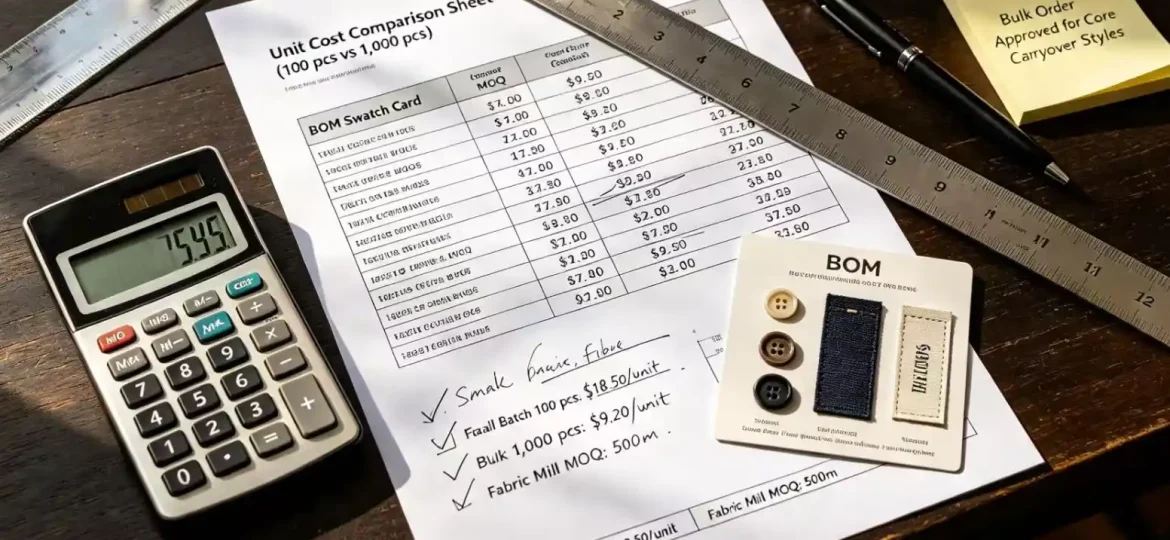
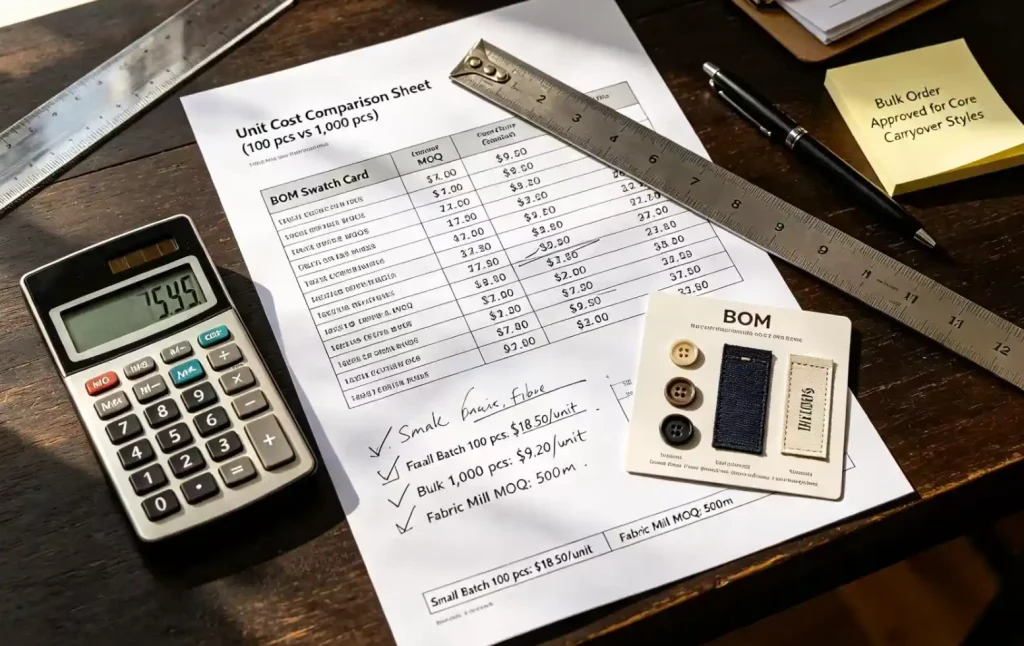
The price differential between small batch manufacturing (typically 50 to 300 units per style) and bulk production (500 to 5,000+ units per style) stems from how factories amortize fixed operational overhead across finished garments.
- Fixed Setup Costs and Pattern Amortization: Every production run incurs fixed setup fees, including master tech pack digitizing, size grading, marker making, cutting table arrangement, and sewing machine line balancing. In small batch orders, these fixed costs are divided over a small number of units, significantly inflating the baseline unit cost. In bulk runs, these fees are distributed thinly across hundreds or thousands of pieces, driving down the unit price.
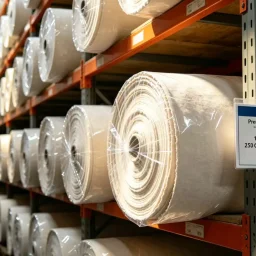
- Raw Material Price Tiers and Mill MOQs: Textile mills price raw materials on tiered volume scales. Purchasing fabric rolls in small quantities or buying stock yardage from distributors carries a 30% to 70% price premium per meter compared to ordering custom bulk dye-lots directly from fabric mills. The same volume pricing applies to trims, zippers, woven brand labels, and polybags.
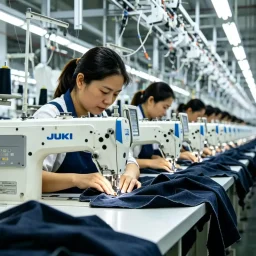
- Factory Efficiency and Machine Line Velocity: Sewing operators achieve maximum speed once a line achieves rhythm after repetitive assembly. Small batch production runs end just as operators reach peak efficiency, resulting in higher Cut-Make-Trim (CMT) labor charges per garment. Bulk production allows lines to operate at sustained peak efficiency for weeks, lowering factory labor costs.
2. Comparing Total Cost Breakdown Vectors
Evaluating small batch versus bulk production requires weighing immediate working capital outlay against long-term profit margins across four key cost vectors:
- Upfront Inventory Working Capital: Small batch manufacturing requires a significantly lower initial capital investment, preserving liquidity for marketing and digital storefront acquisition. Bulk production demands substantial cash reserves committed months before product delivery.
- Gross Unit Profit Margins: Small batch orders yield narrower gross profit margins due to higher per-unit FOB manufacturing costs, making paid customer acquisition more challenging. Bulk orders deliver maximized unit margins, providing the financial margin buffer required for wholesale distribution and aggressive marketing campaigns.
- Freight and Logistics Efficiency: Shipping small production runs via express air courier incurs high freight costs per unit. Bulk orders leverage ocean container freight or consolidated air shipments, drastically reducing per-unit transportation expenses and import clearance fees.
- Unsold Inventory Liability: Small batch production mitigates stock risk by allowing brands to validate demand before committing to larger volumes. Bulk production carries the inherent financial risk of unsold inventory, potential warehouse storage fees, and forced end-of-season markdown discounting.
3. The Internal Skeleton: Protecting Garment Durability and Brand Equity
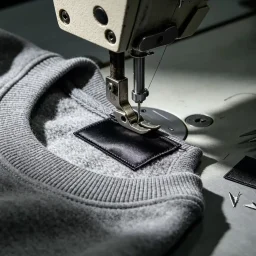
Whether producing a 100-piece micro-capsule or a 5,000-piece bulk collection, sacrificing internal garment construction to achieve a target unit price is a dangerous pitfall. Budget factories attempting to lower unit quotes often use low-tensile synthetic threads or omit high-density stabilization tapes along hidden strain zones like rear necklines, shoulder tracks, and waistband channels.
Under repeated home laundering and commercial drying cycles, unsupported seam joints warp and stretch out of alignment. Necklines sag, shoulder tracks twist, and pocket openings gap, ruining the garment’s fit and driving high customer return rates that quickly wipe out profit margins regardless of order size.
To protect your startup capital and ensure garments maintain their structured silhouette over years of wear, technical specs must mandate high-density cotton internal structural components. Partnering with a specialized global manufacturer like Newasia Garment Supply Chain Solutions provides an unyielding internal skeleton for your clothing line.
Integrating tight, high-density combed cotton bias tape, neck reinforcement, and stabilized seam matrices anchors garment geometry securely. Mandating these premium structural components during tech pack sign-off eliminates synthetic skin irritation, lowers factory scrap rates, and delivers the physical durability required to build long-term retail brand equity.
4. Strategic Production Hybrid Approaches for Growing Brands
Modern apparel brands can optimize capital efficiency by combining small batch agility with bulk margin scaling:
- Test Market Demand with Small Batch Capsules: Launch new or experimental fashion styles in small batch quantities to validate customer response, color preferences, and sizing distributions before committing to large bulk runs.
- Scale Core Replenishment Styles in Bulk: Place large bulk production orders for proven, year-round core carryover styles to secure maximum fabric mill discounts and low unit CMT assembly costs.
- Utilize Factory Greige Fabric Blank Holds: Purchase raw fabric in bulk dye-lots to secure volume pricing, but hold the un-dyed or un-cut fabric at the factory to execute flexible, small batch garment cutting runs based on real-time sales data.
5. Essential Risk Control Protocols for Global Apparel Sourcing
To protect your brand’s financial runway and ensure factory orders meet quality standards across all volume tiers, establish these contractual checkpoints:
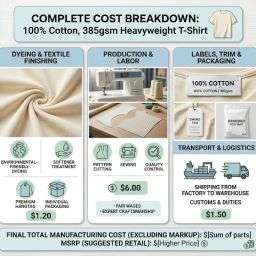
- Demand Itemized Open-Cost Transparency: Require manufacturing partners to provide detailed cost sheets breaking down fabric consumption yields, trim costs, and CMT labor minutes to identify volume discount thresholds.
- Enforce Ratio-Preserved Order Variance Clauses: Contractually bind factories to ensure that any production overage or shortage preserves agreed size ratios rather than dumping excess inventory in extreme sizes.
- Tie Balance Payments to AQL 2.5 Quality Audits: Ensure final production balance releases depend on passing an independent Acceptable Quality Limit (AQL 2.5) inspection conducted at the factory gate before dispatch.
To evaluate your manufacturing budget, optimize unit production costs, and build a resilient global supply chain, visit Newasia Garment to streamline your apparel production today.
Read more
- Activewear Fabric Approval Before Bulk: Opacity, Stretch, Recovery and Breathability
- How to Build a Garment Test Plan Before Bulk Production (Complete Guide)
- Apparel Change Control: How to Approve BOM, Material and Construction Revisions
- Denim Quality Control: Testing Methods, Common Defects & Quality Standards
- How Denim Quality Control Reduces E-Commerce Returns