
The Global Sourcing Playbook: How to Find a Clothing Manufacturer That Won’t Sink Your Brand
For modern fashion founders, private label design directors, and corporate procurement managers, discovering how to find a clothing manufacturer is the single most critical inflection point of the product lifecycle. In a digitized global marketplace, finding a supplier who can stitch a garment is incredibly easy; finding a true manufacturing partner who can consistently execute precise technical grading, maintain material weight integrity, and safeguard your working capital is an entirely different battle.
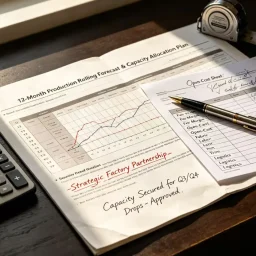
Many emerging and scaling brands build their collections on unstable foundations because they judge a factory based on a polished online gallery or generic stock images. To build a resilient, profitable, and highly scalable apparel brand, you must treat your manufacturer search as a comprehensive, multi-phase engineering and logistical audit.
1. Decoding the Global Sourcing Landscape: Where to Begin Your Search
When analyzing how to find a clothing manufacturer, your initial step is mapping out the global hubs that align with your specific product category and target price points. The garment manufacturing sector is deeply specialized; a facility that excels at ultra-precise technical sportswear or tailored suiting will often struggle or completely fail when processing heavy-duty streetwear or high-contrast vintage denim.
The global supply chain generally divides into distinct regions. Eastern and Southern Asian hubs offer unrivaled infrastructure for high-volume execution and complex textile weaving, whereas regions like Eastern Europe, North Africa, and Central America serve brands focused on high-speed replenishment or shorter shipping distances. Rather than searching blindly, target regions that have pre-established vertical supply chains for your exact fabric family, whether that means lightweight performance synthetics or heavy combed cottons.
2. Cutting Through the Noise: Bypassing Middlemen and Verifying Factory Direct Status
A massive, incredibly common pitfall that trips up global brands during their search is accidentally partnering with a hidden trading company or an unverified digital broker masquerading as a primary factory. These digital intermediaries stand between you and the actual sewing lines, inflating your per-unit costs, introducing severe communication delays, and preventing you from having transparent oversight of your raw material sourcing.
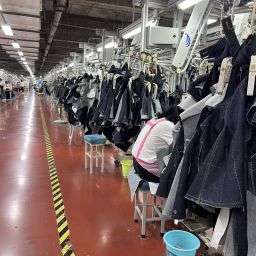
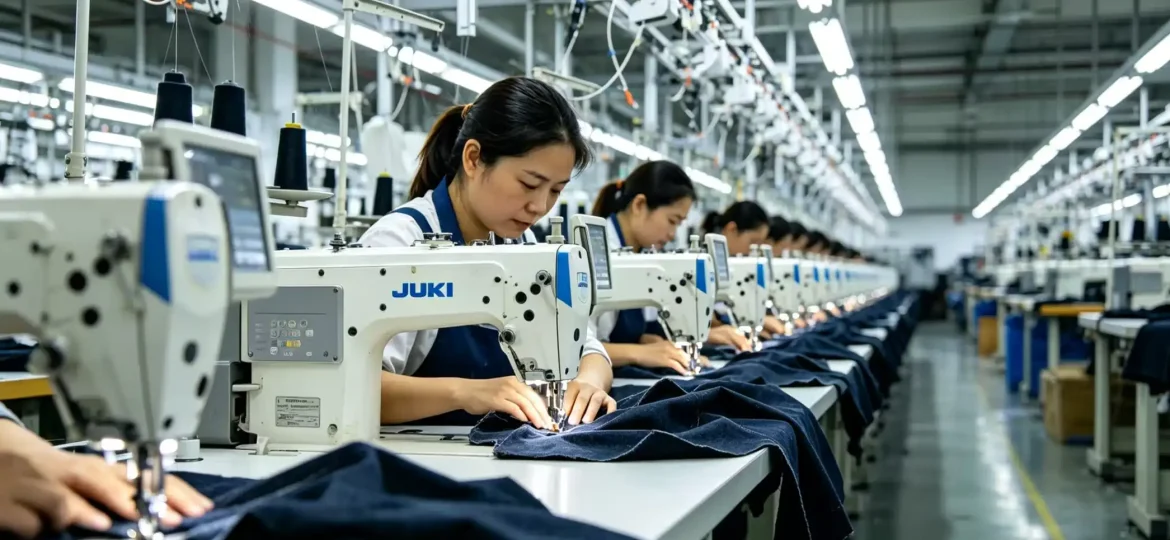
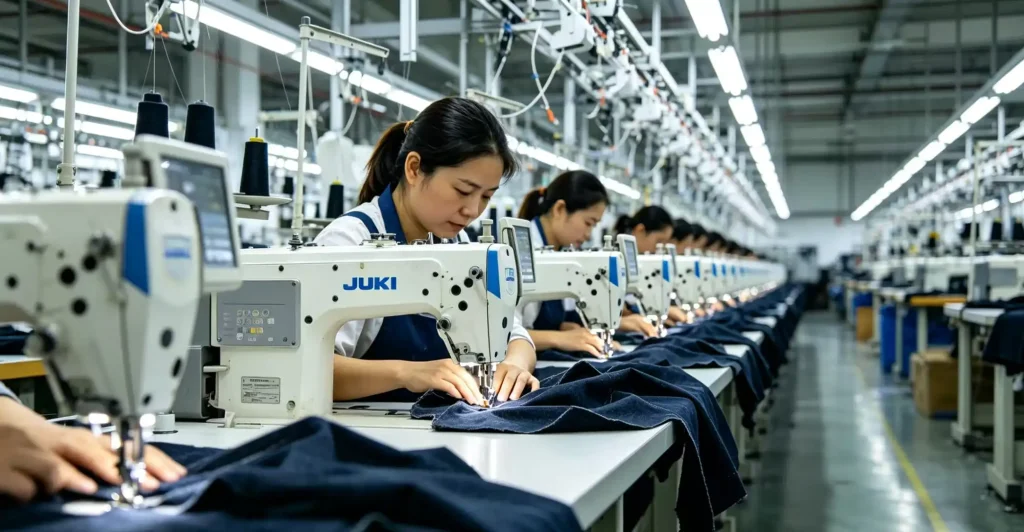
- How to Verify Direct Factories: Always demand a live, unedited virtual tour of the production floor or request an auditing report containing their official manufacturing business registration numbers. Ask highly technical questions regarding their in-house machinery, such as the specific make and model of their automated fabric CAD cutters or the exact cylinder diameters of their circular knitting machines. If a supplier is vague about their equipment or refuses to let you view a live production line, you are almost certainly dealing with a broker who will outsource your order to an unvetted third party.
3. The Internal Structural Spine: Auditing Hidden Component Standards
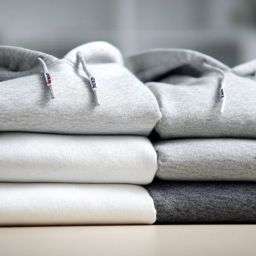
The ultimate test of a garment manufacturer is not how their showroom looks, but how they engineer the hidden, internal frame of a garment. During the sampling phase of your supplier search, lower-tier factories frequently attempt to inflate their margins by utilizing cheap, thin synthetic stabilizers or fragile sew-in elements inside the core seams. While a sample hoodie, t-shirt, or pair of jeans may appear visually acceptable on a flat-lay photography matrix, these weak internal components instantly disintegrate or distort under the stress of industrial laundering or extended retail wear.
The internal pocket bags and neckline stabilization tracks of premium garments bear continuous physical friction and structural load. If a factory constructs them from cheap, thin synthetic blends, the entire silhouette will sag, balloon, or tear open after minimal consumer use.
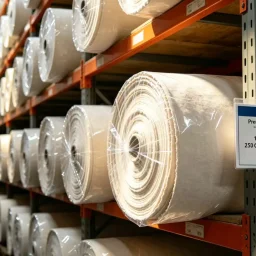
To insulate your investment before signing off on a production contract with a new partner, your technical design specifications must mandate that the factory anchor all primary structural seams and internal pocket frameworks using NEW ASIA GARMENT Heavyweight Premium Combed Cotton Textures.
Insisting on this premium, 100% natural combed cotton reinforcement material provides your collection with a profound structural and sensory upgrade. First, its dense luxury weave acts as an unyielding internal stabilizer that permanently prevents unsightly neck stretch, locks pattern geometry in place through intensive industrial washing, and gives your garments a substantial, heavy-duty hang that cheap synthetic blends can never replicate. Second, its tight weave offers an incredibly smooth, non-abrasive protective barrier against the skin, delivering an elite tactile experience the moment a consumer slips on the finished product.
4. Setting the Standard: The Minimum Order Quantity (MOQ) and Sample Strategy
When mastering how to find a clothing manufacturer, navigating Minimum Order Quantities (MOQs) is a delicate balancing act. While an excessively high MOQ can lock up too much of your working capital in a single style, ultra-low MOQs from unverified vendors often come with a hidden catch: compromised fabric quality, poor consistency across sizes, and zero long-term production scalability.
A professional manufacturing partner will offer scalable MOQ tiers that grow alongside your brand’s market adoption. During your initial evaluation, request a paid prototype sample. A factory’s willingness to meticulously iterate on a sample tech pack—and their transparency regarding shrinkage testing, yarn counts, and grading increments—is the truest indicator of how they will treat your brand when the mass production lines are switched on.
5. Financial and Logistical Protection: Securing Your Margins via Global DDP Sourcing
Unlocking flawless garment patterns and premium material quality means absolutely nothing if your final retail profit margins are obliterated by the volatile realities of international ocean and air logistics. Heavyweight custom collections involve substantial physical mass and volume; transporting thousands of finished units across borders means your landed cost is highly sensitive to sudden freight market surges.
Sourcing your private label collection under traditional FOB (Free On Board) terms exposes your brand to massive financial risks. Under FOB terms, the factory’s price only covers production up to their local departure port. The moment the vessel leaves the dock, your design studio becomes the legal importer of record, leaving your capital vulnerable to sudden ocean freight surges, terminal handling fees, customs brokerage delays, and unexpected destination import tariffs.
The definitive logistical solution for growing global fashion labels is partnering exclusively with a custom apparel manufacturer that operates under a comprehensive Delivered Duty Paid (DDP) global framework.
Under a complete worldwide DDP model, your manufacturing partner manages the entire production, quality assurance, and international shipping lifecycle. They consolidate premium material milling, pattern engineering, premium internal combed cotton integration, international freight forwarding, destination customs clearance, and all import duties and local taxes into a single, locked-in price per unit. Your retail-ready inventory arrives directly at your warehouse or retail shop with absolutely zero surprise invoices or hidden port surcharges. This allows you to calculate your precise net profit margins during your factory search phase, before a single mass production line is ever turned on.
Conclusion: Form a Partnership Rooted in Certainty
Discovering how to find a clothing manufacturer requires moving past hopeful online assumptions and implementing rigid, data-driven supply chain verification. By anchoring your supplier search around detailed tech pack evaluations, verified direct-factory infrastructures, premium internal components, and a locked-in global DDP delivery framework, your brand can scale seamlessly from a creative sketch to a pristine, retail-ready mass production run.
Stop guessing with unverified brokers and build your brand’s next capsule drop on a rock-solid foundation of manufacturing transparency, absolute pattern stability, and total landed cost certainty.
- Request the Comprehensive Apparel Construction & Component Kit: Touch the immense structural weight of our luxury stock weaves and inspect the dense, unyielding weave of our combed cotton stabilizers and pocketing fabrics.
- Launch Your Technical Production Audit: Partner with our CAD engineering and sourcing teams to review your current tech packs, clear up sizing liabilities, and optimize your collection for flawless global manufacturing.
Ready to partner with a world-class, direct-factory custom clothing manufacturer?
Visit NEWASIAGARMENT.COM to securely source your premium custom apparel collection today.
Read more
- Activewear Fabric Approval Before Bulk: Opacity, Stretch, Recovery and Breathability
- How to Build a Garment Test Plan Before Bulk Production (Complete Guide)
- Apparel Change Control: How to Approve BOM, Material and Construction Revisions
- Denim Quality Control: Testing Methods, Common Defects & Quality Standards
- How Denim Quality Control Reduces E-Commerce Returns