

Private Label Clothing Manufacturer in China for Fashion Brands
Build brand-ready apparel using New Asia Garment's established products and production bases, with custom labels, decoration, packaging and eligible product customization for your market.
Choose a ready-to-brand product, adapt an existing style, or build a branded production program around an established garment base — without starting every development step from zero.
What Is Private Label Clothing Manufacturing?
Private label clothing manufacturing allows a brand to sell garments under its own identity while production is handled by a manufacturing partner. At New Asia, private label projects typically begin from an existing product, established garment construction or production base that can be branded and, where suitable, adapted through fabric, color, fit details, decoration, labels, trims and packaging.
Private label sits between simple white-label rebranding and fully buyer-defined product manufacturing. It is useful when a brand wants a distinctive, brand-ready product without rebuilding every technical development step from zero.
Is Private Label Clothing Right for Your Brand?
Private label is a strong fit when your brand direction is clear and you want to build a market-ready product from an established garment base rather than developing every construction detail from the beginning.
You Want Your Own Brand on the Product
You need labels, logo decoration, hangtags, packaging and consistent brand presentation.
You Want to Adapt an Existing Product
You want to change eligible fabric, color, fit details, wash, trims or decoration without creating a completely new garment from zero.
You Need a Faster Commercial Route
You want to reduce unnecessary early development work and focus on getting an approved branded product into production.
You Want Repeatable Brand Standards
You need consistent labels, decoration, packaging and product quality across repeat orders.
Three Ways to Build a Private Label Clothing Program
The right route depends on how much product customization you need before branding and bulk production.
Ready-to-Brand Stock
Start from selected in-stock styles when speed and low order commitment are the main priorities.
- Selected ready-stock products
- Minimal product changes
- Eligible branding / labeling options
- Fastest starting route
- MOQ: No MOQ for selected in-stock styles
Existing Style Customization
Start from an established New Asia style and adapt selected product and branding elements.
- Fabric / color adjustments where feasible
- Selected fit or measurement changes
- Printing / embroidery
- Labels, trims and packaging
- MOQ: From 50 pcs
Brand-Specific Production
Use an established product base while creating a more differentiated branded production program.
- Category-specific material and finishing choices
- More detailed product adaptation
- Brand-specific decoration and trim package
- Repeat-order production standard
- MOQ depends on product category
Private Label vs. White Label Clothing
The terms are sometimes used differently across the apparel industry. At New Asia, we use them to distinguish a minimally modified rebranding route from a more adaptable private label production program.
| Decision factor | White Label | Private Label |
|---|---|---|
| Starting product | Existing generic product | Existing or established production base |
| Product changes | Minimal | Selected customization depending on route |
| Fabric | Usually fixed | Can vary by project |
| Fit | Usually fixed | Selected adjustments may be possible |
| Logo / brand mark | Yes | Yes |
| Labels / hangtags | Yes | Yes |
| Packaging | Yes | Yes |
| Product differentiation | Low | Medium to high depending on customization |
| Best fit | Fastest brand launch | More distinctive branded product program |
Apparel Categories Available for Private Label Programs
Choose a product category below to see how branding and eligible product adaptation can work within a private label program. For deeper fit, fabric and construction decisions, continue to the relevant product page.
Jeans & Denim
Private label programs can include approved wash direction, hardware, patches, labels, hangtags and packaging based on the selected production route.
T-Shirts
Brand-ready T-shirt programs can include approved colors, printing, embroidery, neck labels, care labels, hangtags and packaging.
Hoodies & Sweatshirts
Selected hoodie programs can combine fabric and color choices with embroidery, printing, woven labels, hangtags and branded packaging.
Pants & Sweatpants
Adapt eligible fabric, color, selected construction details, labels and packaging around an established product base.
Jackets
Private label jacket programs can include selected trims, decoration, labels, patches, hardware and brand packaging.
Casualwear & Fashion Garments
Selected existing product developments can be adapted into a branded program depending on fabric, construction, finishing and MOQ.
Build Your Brand Identity Into the Garment
Private label manufacturing is not only about putting a logo on a product. Brand execution must remain consistent across the garment, labels, decoration, hangtags and packing so the final product is ready for retail or distribution.
How Much Can You Customize a Private Label Garment?
Private label supports more product adaptation than a simple white-label route, but it should not be confused with fully buyer-defined production or manufacturer-led concept development.
| Product element | Private label flexibility | Routing note |
|---|---|---|
| Logo / brand mark | High | Core private label element. |
| Woven / printed labels | High | Can be developed from approved artwork. |
| Care / size labels | High | Integrated into approved label package. |
| Hangtags | High | Can use approved brand and product information. |
| Packaging | High | Folding, bagging, stickers and carton details can be specified. |
| Printing / embroidery | High | Depends on fabric, artwork, placement and process. |
| Color | Route dependent | Depends on product and material availability. |
| Fabric | Route dependent | May be changed when material MOQ and construction allow. |
| Fit | Selected changes | Minor or moderate adjustments may be possible. |
| Trims | Selected changes | Depends on product construction and component minimums. |
| Major pattern / construction change | Outside normal private label scope | May require a deeper ODM or buyer-defined OEM route. |
| Fully original buyer specification | Use OEM route | Best when the buyer owns and defines the entire product. |
| Product development from idea | Use ODM route | Best when the factory needs to help develop the product concept. |
What Should You Send for a Private Label Quote?
A useful private label inquiry should tell us which product route you want, what branding you need, how much product customization is required and what quantity you plan to order.
Private Label Sample Approval Before Bulk Production
Even when the product base already exists, the branded version should be approved before bulk production. The sample confirms both the garment and the brand execution.
Select Product / Base Style
Confirm the product route and starting garment.
Confirm Product Changes
Close eligible fabric, color, fit, wash and trim changes.
Confirm Branding Artwork
Approve label, hangtag, decoration and packaging artwork.
Prepare Branded Sample
Produce the sample using the agreed product and brand requirements.
Review Product & Branding
Check fit, appearance, label position, decoration, hangtags and packaging.
Approve Production Standard
Close the approved sample and final order details before bulk production.
Our 8-Step Private Label Clothing Process
Choose Product Route
Select ready-stock, existing-style customization or brand-specific production.
Confirm Product Customization
Close fabric, color, fit, wash, trim and other eligible product changes.
Confirm Brand Identity
Approve labels, artwork, decoration, hangtags and packaging requirements.
Sample Development
Prepare a branded sample for product and brand review.
Buyer Approval
Approve the garment, decoration, labels and packing standard before bulk.
Bulk Manufacturing
Produce according to the approved product and order requirements.
Quality & Branding Inspection
Check workmanship, measurements, label accuracy, logo placement and packing.
Packing & Shipping
Prepare approved branded packing and shipment documentation for delivery.
Flexible MOQ, Private Label Cost & Production Timing
Private label MOQ depends on the selected product route. The more production setup, material development and finishing involved, the more the project moves away from a simple ready-stock route.
In-Stock Styles
No MOQFor selected ready-stock products without production customization.
Existing Styles With Customization
From 50 pcsFor selected existing styles with eligible product or brand customization.
T-Shirts, Hoodies & Sweatpants
From 100 pcs/colorFor selected custom knit and casualwear programs.
Garment-Dyed Products
From 150 pcs/colorMOQ depends on fabric and garment-dye requirements.
Denim & Other Fashion Garments
From 300 pcs/styleTypical for more complex custom fashion production.
What Determines Private Label Cost?
- Starting product / production base
- Fabric and material choices
- Order quantity and color breakdown
- Printing, embroidery or patches
- Custom labels and hangtags
- Trims, hardware and packaging
- Garment wash or dye requirements
- Testing or order-specific compliance requirements
Standard Production Timing
Private Label Product, Branding & Packaging Approval Checklist
Nothing should enter bulk production until the approved product and brand details are clear enough to reproduce consistently.
Product
- Style / base garment
- Color
- Fabric
- Size / fit
- Wash / finish where applicable
Branding
- Main label
- Care / size label
- Hangtag
- Logo size and position
- Print / embroidery appearance
Packaging
- Folding method
- Polybag / bagging
- Sticker / label
- Barcode / SKU if required
- Carton mark / packing details
Commercial
- Total quantity
- Color breakdown
- Size breakdown
- Delivery target
- Shipping destination
How We Control Product Quality and Branding Accuracy
A private label order can fail even when the garment is well made if the label is wrong, the logo placement is inconsistent or the packaging does not match the approved brand standard. Quality control therefore covers both product execution and branding accuracy.
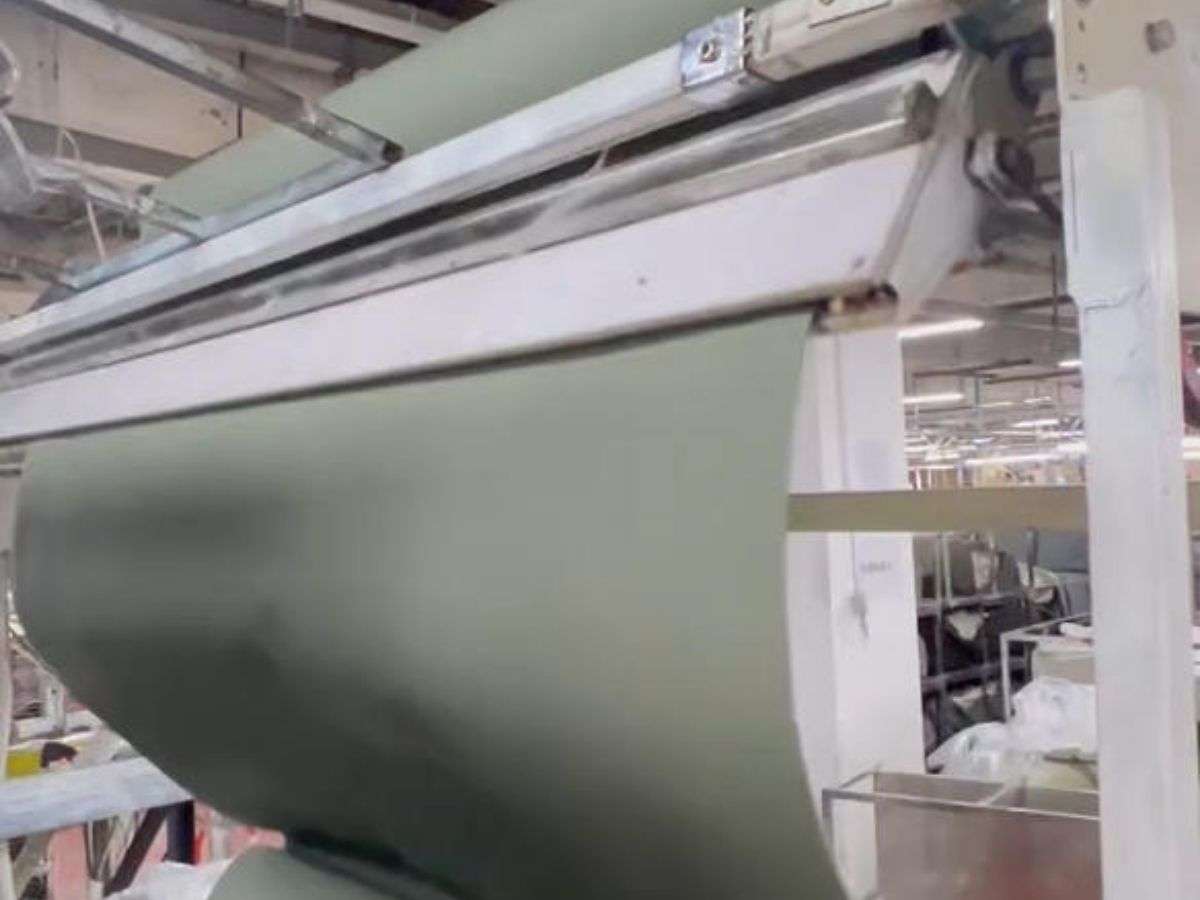
1. Material Review
A dedicated fabric testing center supports material evaluation, while fabric, trims and key components are reviewed against the approved product and branding requirements.
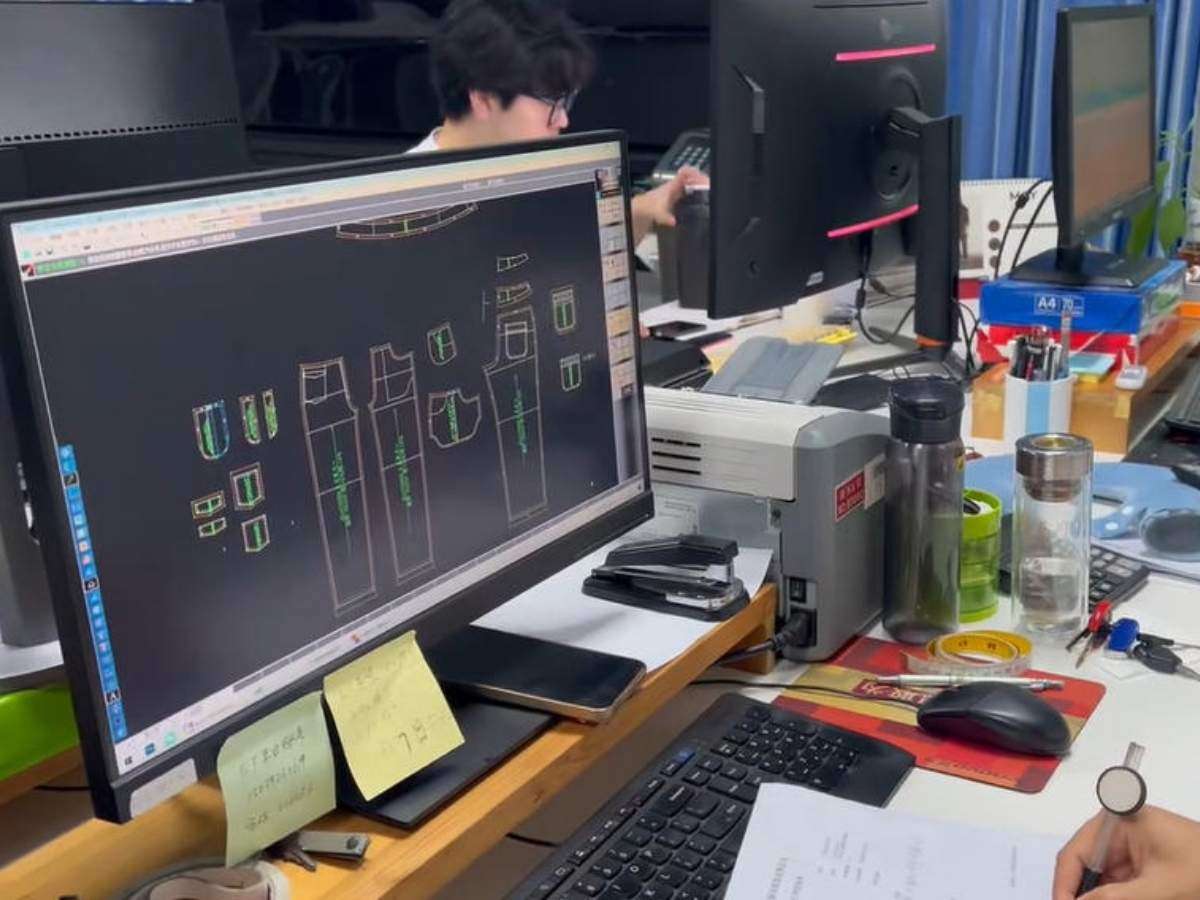
2. Pre-Production Approval
The approved garment, branding artwork and packing requirements establish the production reference.
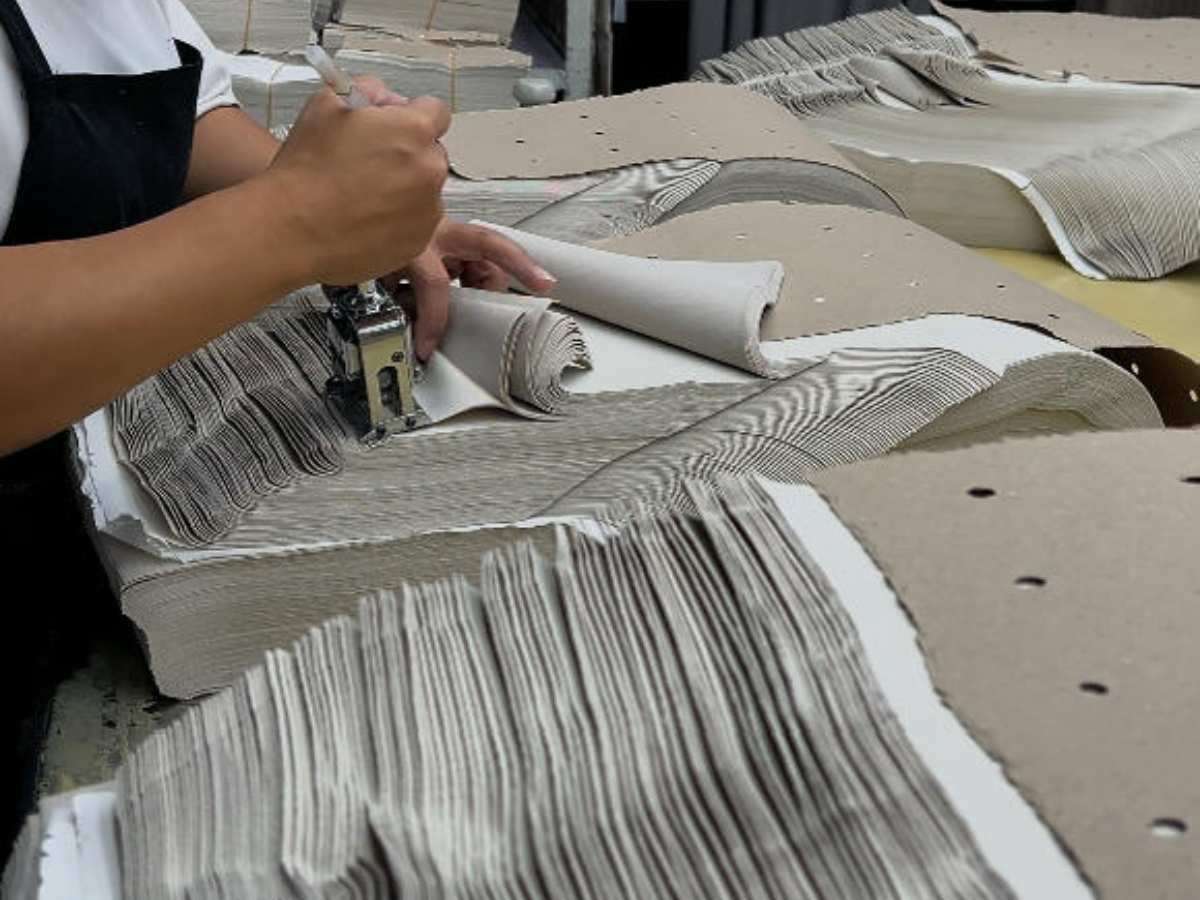
3. In-Line Workmanship
Construction, sewing quality and selected measurements are checked during production.
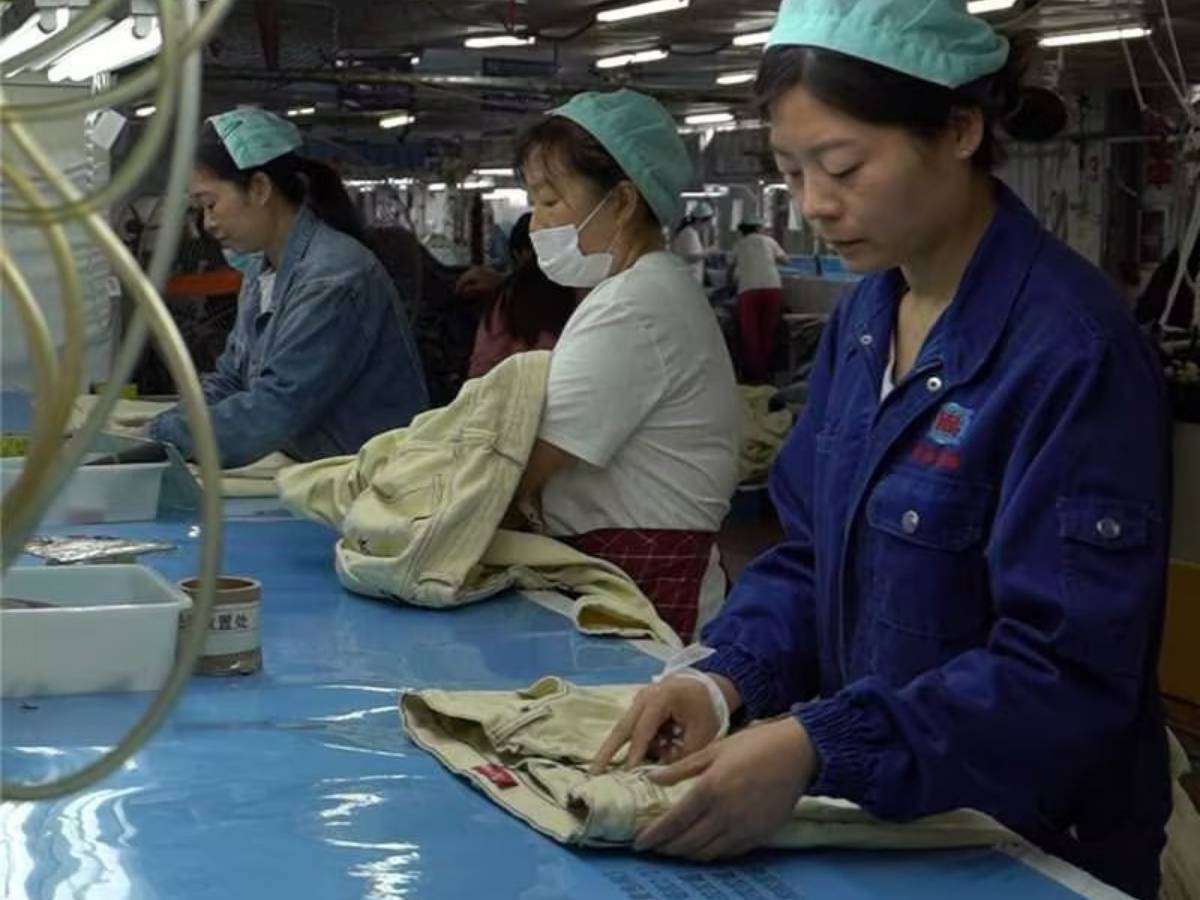
4. Measurement Inspection
Garment measurements are compared with the approved size and tolerance requirements.
5. Branding & Label Verification
Check label wording, logo size, placement, print / embroidery appearance, hangtags and product identification.
6. Packing Verification
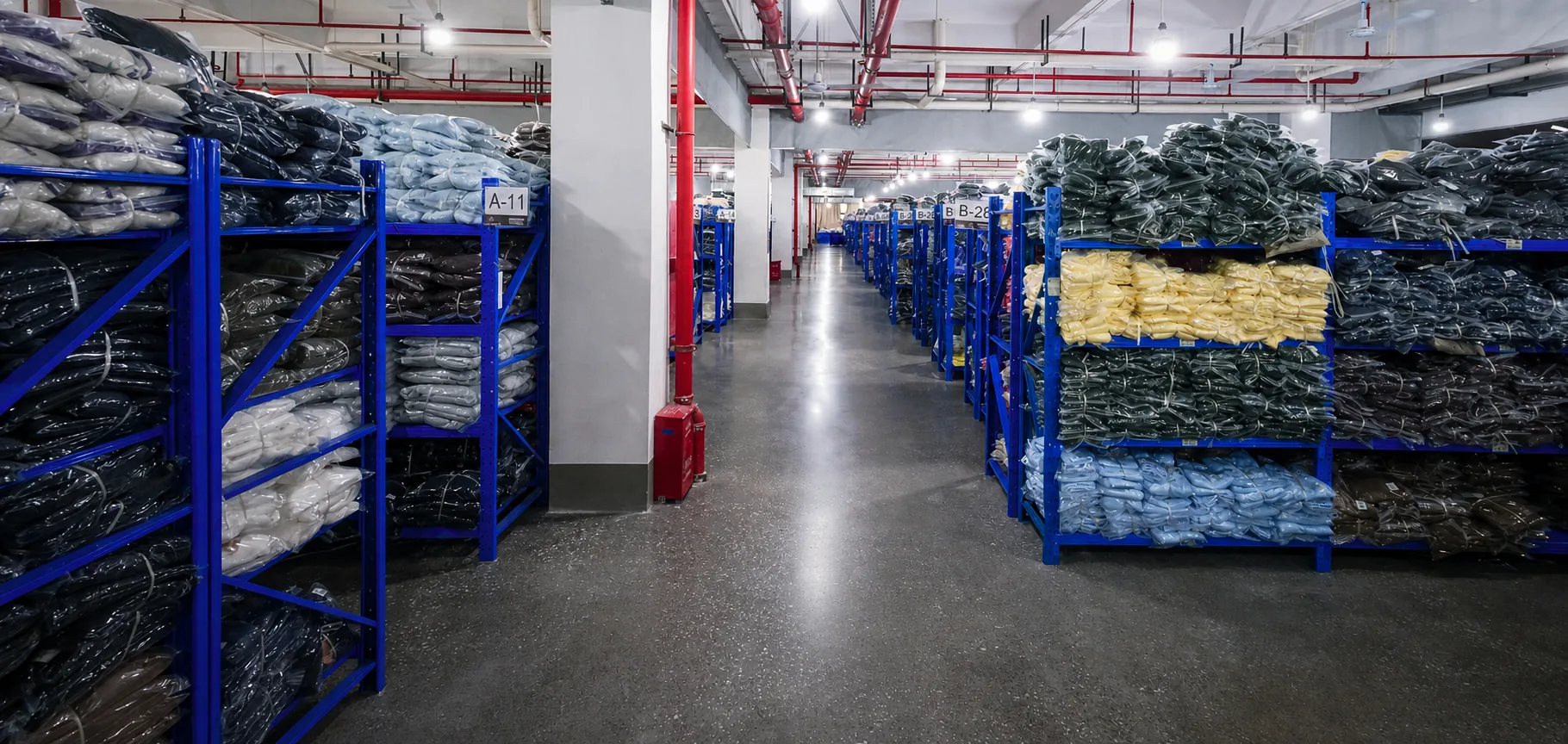
Review folding, bags, stickers, quantities and carton details before shipment preparation.
Management Systems & Compliance Support
Current management-system and compliance references can be provided for applicable buyer qualification and project review.
GB/T 19001 / ISO 9001
Quality management system reference.
GB/T 24001 / ISO 14001
Environmental management system reference.
GB/T 45001 / ISO 45001
Occupational health and safety management system reference.
BSCI
Social-compliance reference for buyer qualification.
KCB-TE-OCS
Certification / compliance documentation available for applicable buyer review.
SC-KCB-TE
Certification / compliance documentation available for applicable buyer review.
From Product Base to Brand-Ready Shipment
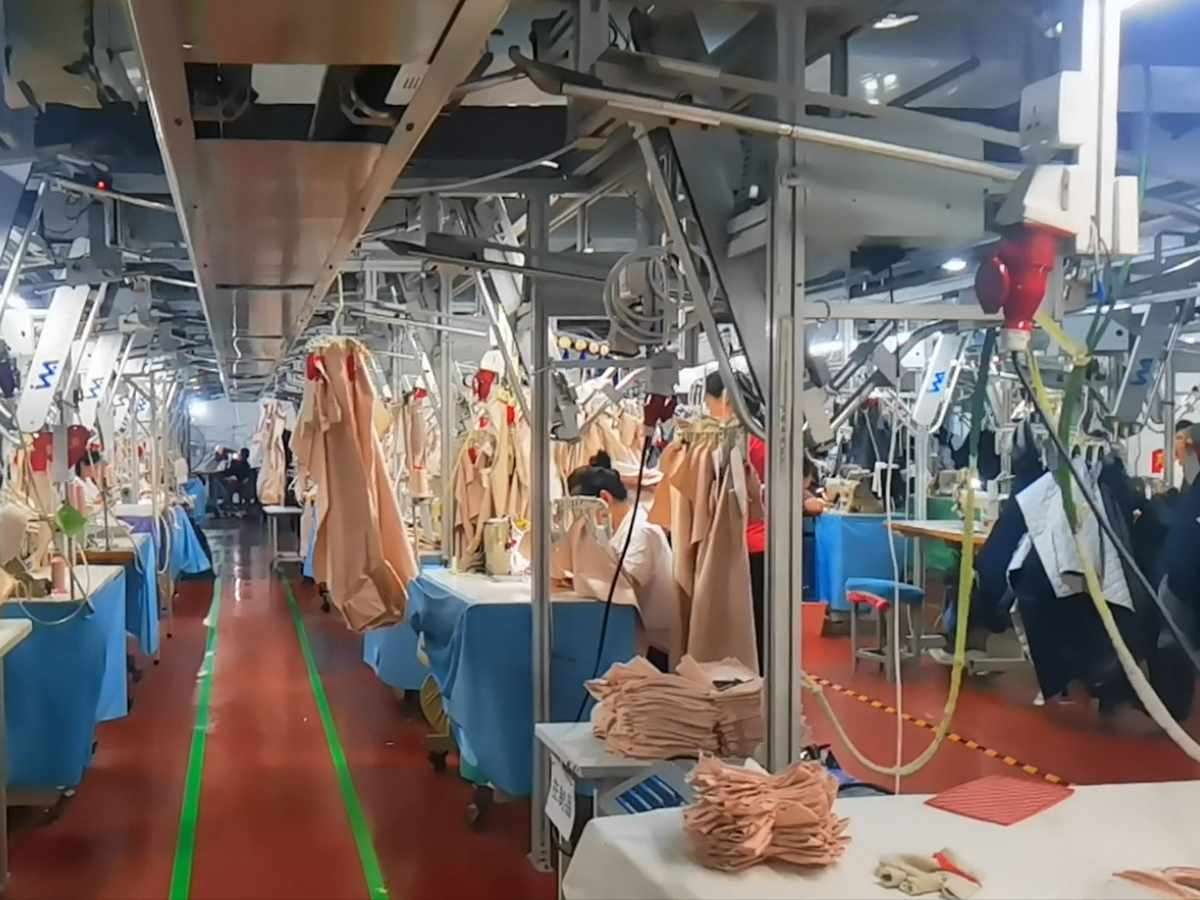
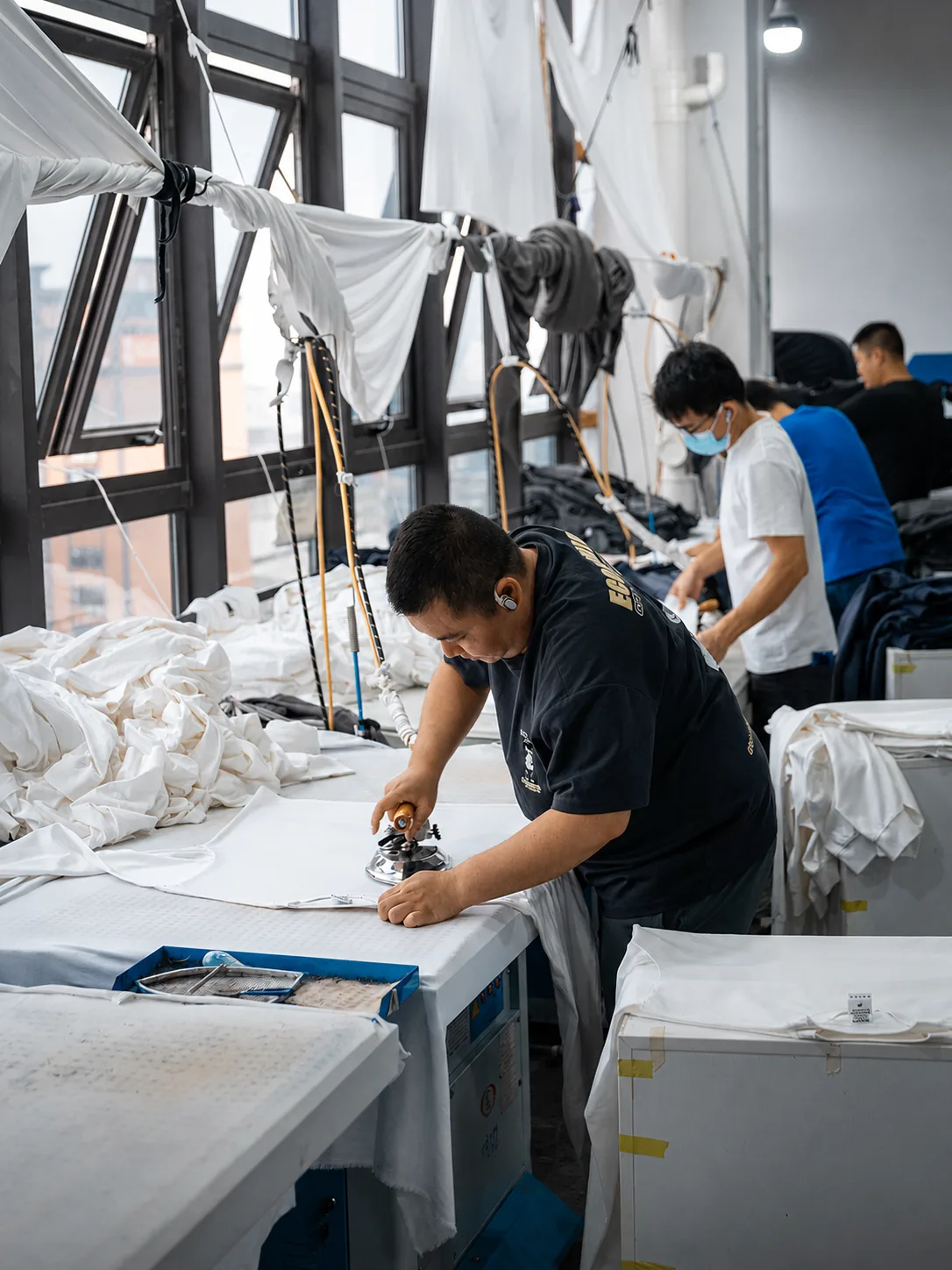
Private label buyers need evidence that branding, product adaptation and bulk production can be controlled together. New Asia connects material review, decoration, finishing, production and quality checks around the approved branded sample.
Fabric Testing Center
A dedicated fabric testing center supports material evaluation when a private label program includes fabric or material changes.
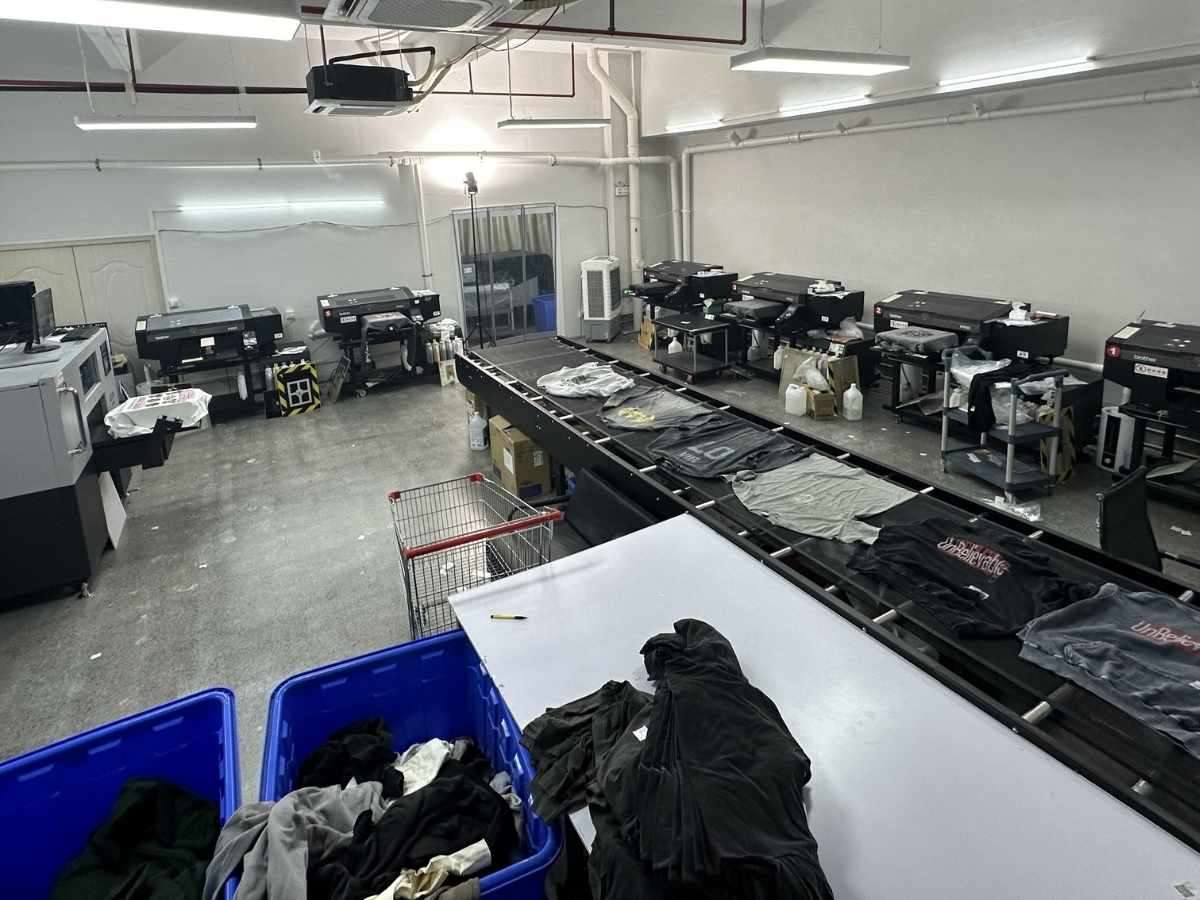
In-House Printing & Embroidery
Applicable branding programs can use in-house printing and embroidery for approved logos, graphics and decoration.
Garment Washing & Dyeing
Garment washing and garment-dyeing capabilities support selected washed, dyed and fashion-product programs.
Selected Laser Finishing
Laser finishing equipment supports selected denim and garment-finishing applications where the product route requires it.
Private Label vs. ODM vs. OEM: Which Route Fits Your Brand?
These models describe different starting points. Choose the route according to how much of the product is already defined and whether the main need is branding, product development or manufacturing execution.
| Model | Your starting point | Manufacturer role | Best fit | Next page |
|---|---|---|---|---|
| Private Label | Existing or established product base + brand direction | Eligible product adaptation + branding + labels + packaging + production | Brands that want a distinctive brand-ready product without rebuilding every development step | Continue With Private Label |
| ODM | Market direction, references, mood board or incomplete product definition | Product-development support + manufacturing | Brands that need factory help developing the product itself | ODM Service |
| OEM | Defined design, tech pack, approved sample or detailed specification | Manufactures to buyer-controlled product requirements | Brands that already define the product in detail | OEM Service |
Why Brands Use New Asia for Brand-Ready Apparel Production
A private label program works best when product adaptation, branding and bulk execution can be coordinated around one approved product and brand standard.
Product Base + Branding in One Workflow
Eligible product adaptation, labels, decoration, packaging, quality control and bulk production can be coordinated within one manufacturing system.
In-House Printing & Embroidery
In-house printing and embroidery support approved logo and graphic applications for applicable private label garments.
Fabric Testing Before Bulk
A dedicated fabric testing center supports material evaluation when the program includes fabric changes or project-specific material requirements.
Wash, Dye & Selected Finishing
Garment washing, garment dyeing and selected laser-finishing capabilities can support differentiated branded products where the garment and production route are suitable.
Flexible Routes for Different Order Sizes
Ready-stock, existing-style customization and category-specific production routes support different MOQ levels and commercial goals.
Repeatable Brand Standards
Approved garment details, labels, artwork, decoration and packaging can become the reference for repeat-order consistency.
Continue With the Resource That Matches Your Next Decision
Use the resources below to choose a private label route, prepare your branding, review order requirements or move into product-specific manufacturing.
Choose the Right Brand-Ready Route
Start by deciding whether you need simple rebranding, an adaptable private label program, deeper product development or buyer-defined production.
Labels, Decoration & Packaging
Review how labels, hangtags, printing, embroidery, trims and packing details become part of the approved brand-ready garment.
MOQ, Cost & Production Timing
Use the commercial framework to compare ready-stock, existing-style customization and deeper branded production routes.
Explore Product-Specific Production
Go deeper into fit, fabric, construction and quality requirements for the garment category you plan to sell under your brand.
Need More Development or a Fully Defined Product?
Move to the route that matches your actual starting point instead of adding unnecessary development to a private label project.
Factory, Compliance & China Sourcing
Review production capability, supplier qualification and broader sourcing questions before committing to a branded program.
Private Label Clothing Manufacturing FAQs
What is private label clothing manufacturing?
Private label clothing manufacturing allows a brand to sell garments under its own identity while production is handled by a manufacturing partner. At New Asia, private label projects usually start from an existing or established product base that can be branded and, where suitable, adapted through selected product changes.
Is private label the same as white label clothing?
Not exactly. At New Asia, white label refers to an existing product with minimal product changes and added branding. Private label allows a broader range of eligible product customization such as fabric, color, fit details, decoration, labels, trims and packaging depending on the production route.
Do I need a tech pack for a private label project?
Not necessarily. If you are starting from an existing product or established production base, you can begin with a product category, reference, quantity, logo or label artwork, branding requirements and the product changes you want. A complete tech pack is more relevant to a fully buyer-defined production route.
What is your MOQ for private label clothing?
Selected in-stock styles have no MOQ. Existing styles with customization can start from 50 pieces. Custom T-shirts, hoodies and sweatpants can start from 100 pieces per color. Garment-dyed products can start from 150 pieces per color. Denim and other fashion garments typically start from 300 pieces per style.
How long does private label sample development take?
Sample development typically takes 5–10 days after the product direction, branding artwork, materials and requested changes are confirmed. Custom labels, packaging components or complex product changes can affect the total sampling calendar.
How long does private label bulk production take?
Bulk production typically takes 15–30 days after sample approval, order confirmation and material readiness. Custom fabric, washes, trims, labels or packaging components can affect the overall project timeline.
What branding elements can I customize?
Depending on the product route, branding can include woven labels, printed or neck labels, care labels, size labels, hangtags, printing, embroidery, patches, selected trims and packaging.
Can I change the fabric, color or fit?
Yes, depending on the selected product and production route. Existing-style customization can support eligible changes to fabric, color, fit details, wash, trims and decoration when the materials, construction and minimums allow.
How do I approve labels and packaging before bulk production?
Labels, artwork, decoration, hangtags, packaging and the branded sample should be reviewed before bulk production. The approved sample and final brand details then become the production reference for quality control.
Can I use my own logo, label artwork and packaging design?
Yes. Send the applicable logo, label, hangtag or packaging artwork together with placement, size and other requirements so the components can be reviewed and included in the approval process.
When should I use ODM instead of private label?
Use ODM when you need the manufacturer to help develop the product itself from a market direction, mood board, references or an incomplete concept. Private label is better when an established product base already exists and the main work is adaptation plus brand execution.
When should I use OEM instead of private label?
Use OEM when you already have a complete buyer-defined design, tech pack, approved sample or detailed specification and want manufacturing to follow your product requirements.
What should I send to get a private label quote?
Send your preferred starting product, category, estimated quantity, branding requirements, product changes, logo or label artwork, target market, target timeline and relevant product or packaging references.
Start Your Private Label Clothing Project
Send your product category or preferred starting style together with quantity, logo or label artwork, desired product changes, branding requirements and target timeline.
We will review whether your project is best suited to a ready-stock route, existing-style customization or a more detailed brand-specific production program.
Product · Quantity · Logo / Labels · Decoration · Product Changes · Packaging · Market · Timeline