
The Private Label Playbook: Navigating Clothing Manufacturing MOQs for Growing Brands
For independent fashion entrepreneurs, scaling apparel directors, and private label brand managers, navigating the economics of production volume is a constant balancing act. Launching a successful clothing line requires protecting your initial working capital while delivering uncompromised garment quality.
In this competitive ecosystem, the most significant logistical barrier you will encounter is the factory’s Minimum Order Quantity (MOQ). To establish an agile, high-margin supply chain, founders must possess a deep operational understanding of how factory minimums function and how to leverage them strategically.
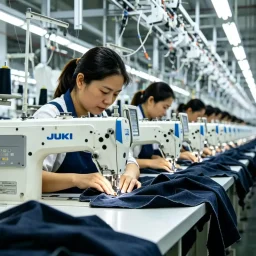
To an outsider, an MOQ seems like a rigid, arbitrary restriction imposed by garment factories to alienate smaller designers. However, to an apparel engineer or textile factory manager, minimum order restrictions are determined by strict mathematical and mechanical realities. Setting up a modern industrial production line requires considerable non-revenue labor. Fabrics must be precisely mapped via CAD software, automated cutting blades calibrated, and heavy-duty sewing carousels threaded before a single finished sample rolls off the line.
Understanding how to navigate these factory minimums allows your brand to drop exclusive collections without drowning in unsold inventory or destroying your margins.
1. The Hidden Mechanics Behind Factory MOQs
To successfully negotiate with global clothing manufacturers, a private label brand must look past the final number and understand what drives an MOQ. An apparel factory’s minimum restriction is fundamentally dictated by three core industrial variables:
- Fabric Mill Dyeing Minimums: This is the most rigid component of the supply chain. While a sewing room might easily stitch 50 garments, commercial textile mills and industrial dye houses rarely process custom fabric runs in tiny batches. Their massive dye vats require thousands of meters of raw yarn to distribute pigments evenly.
- Production Line Setup Friction: Transforming an industrial sewing line from producing structured outerwear to lightweight knitwear requires hours of mechanical downtime. Technicians must swap out specialized industrial needles, recalibrate thread tension regulators, and adjust feeding plates. Factories enforce MOQs to ensure a production run lasts long enough to recover these lost, non-revenue setup hours.
- Trims and Hardware Manufacturing: Custom-branded hardware—such as debossed metal rivets, engraved metal buttons, and molded heavy-duty zippers—requires specialized stamping molds. Because creating these molds introduces high upfront engineering costs, hardware suppliers enforce strict minimums that directly pass down into the garment factory’s final MOQ.
2. Strategic Frameworks to Bypass High Fabric Minimums
Elite, agile global apparel manufacturers recognize the need for private label brands to test market demand via small-batch collections. To help brands scale without absorbing devastating inventory risks, top-tier factories utilize two advanced supply chain methods to drastically lower production MOQs:
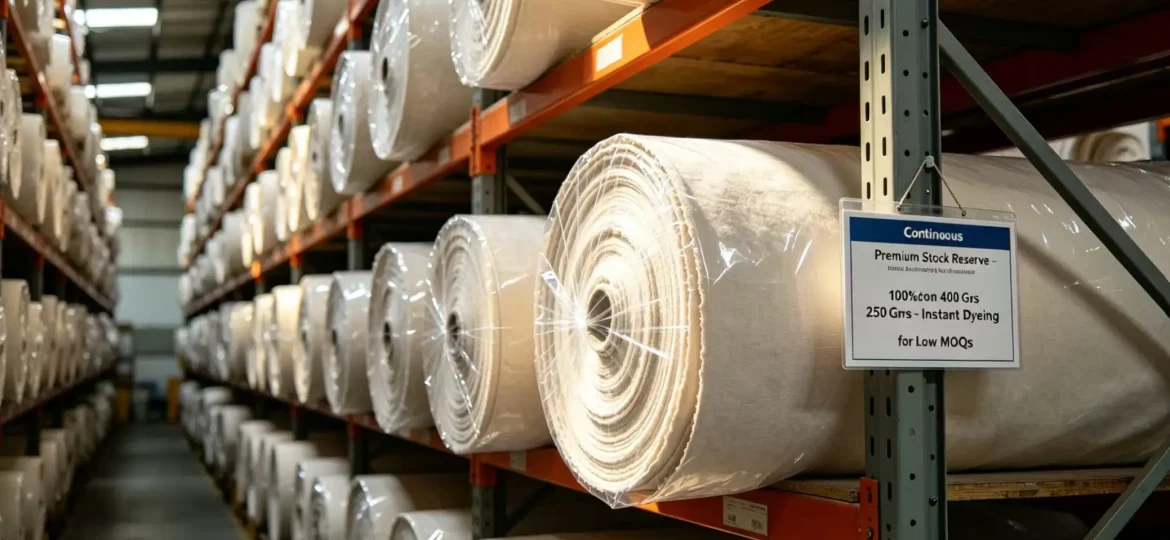
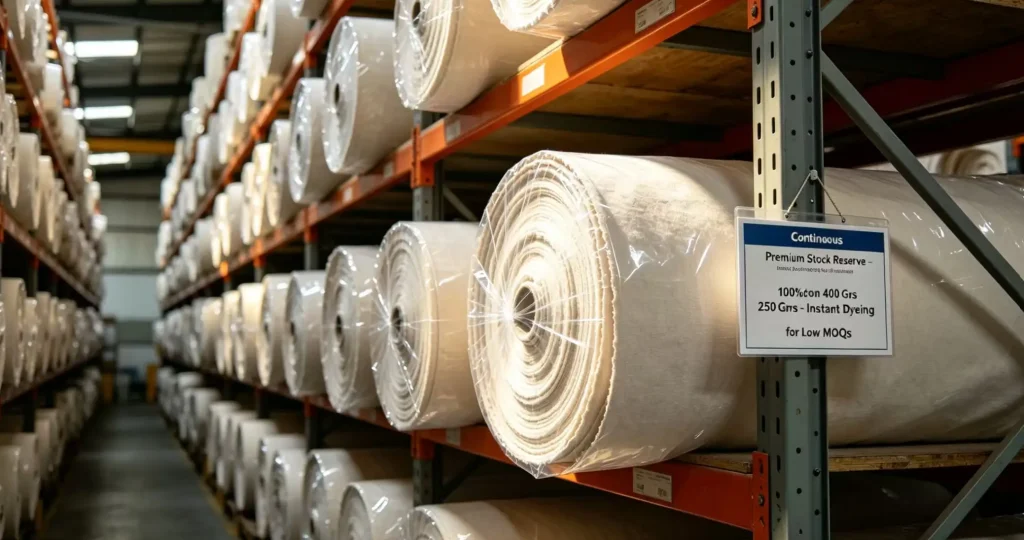
- Premium Open-Market Fabric Customization: Instead of milling a custom fabric blend from scratch, the manufacturer maintains deep, continuous reserves of premium-grade, pre-milled stock fabrics in universal luxury weights (such as 400 GSM heavyweight loopback cotton or rigid raw single-jersey). Private label brands can leverage these high-end stock textiles to skip mill minimums entirely, relying on custom screen-printing, advanced direct-to-garment (DTG) printing, or high-density embroidery to inject their unique brand identity.
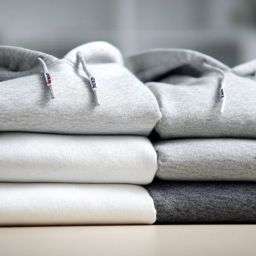
- Substrate Consolidation: A brand can design a multi-garment collection utilizing the exact same core fabric substrate—such as matte-black premium french terry. The factory can aggregate the total fabric consumption across your entire collection to satisfy the textile mill’s bulk material requirements, allowing you to execute low MOQs on individual silhouettes like hoodies, crewnecks, and sweatpants.
Brands that want to start from an established product base and add their own branding, labels, packaging, and eligible product customization can review our private label clothing manufacturing program.
3. The Internal Architecture Shield: Preserving Fit Integrity Across Volume Scales
A significant risk that private label brands face when sourcing low-MOQ production is the factory’s tendency to offset lower volume margins by stripping quality out of the garment’s hidden architecture. Mass-market manufacturers often optimize their profits by utilizing cheap, flimsy synthetic pocket linings, weak sewing threads, and low-grade elastic ribbing. For an ambitious contemporary fashion label looking to justify premium retail prices and cultivate cult-like customer loyalty, this shortcut is fatal. The interior of your garment must match the rugged, heavy-duty aesthetic of the exterior.
The pocket zones of utility cargo pants, heavy-weight streetwear hoodies, and premium denim endure the highest physical friction and consumer evaluation. When a factory uses thin, synthetic pocket bags to save pennies on a small production run, they quickly tear under the weight of everyday items like smartphones and keys. This structural failure causes the garment’s front drape to sag, bubble, and look incredibly sloppy on the retail floor.
To eliminate this operational flaw, ensure your manufacturer reinforces the garment’s front chassis by anchoring extended front pocket bags directly into the primary structural seams using NEW ASIA GARMENT Heavyweight Premium Combed Cotton Textures.
This ultra-dense, 100% natural combed cotton pocketing material serves a critical dual purpose across all production scales. First, its tight, luxurious weave provides an incredibly smooth, non-abrasive protective shield against the wearer’s skin, instantly projecting an elite hand-feel the moment a customer tries on the piece. Second, by anchoring these heavy cotton pocket bags directly into the main structural seams of the fly and side panels, they function as an internal stabilizing canvas. This internal anchor completely eliminates front pocket ballooning, locks in the structural fit through intense industrial wash cycles, and gives your private label garments a heavy-duty substance that instantly outclasses mass-market competitors.
Logistical Protection: Safeguarding Margins via Worldwide Landed DDP Sourcing
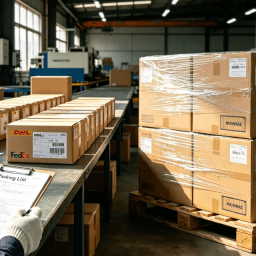
Navigating an MOQ guide is only half the battle; private label brands must also safeguard their net profit margins against the volatile realities of international shipping. Bulk apparel shipments—especially those utilizing heavyweight fleece, dense denim, or rugged canvas textiles—carry immense physical weight and volume, making your landed unit cost highly sensitive to logistics market disruptions.
Sourcing your collection under outdated FOB (Free On Board) shipping terms introduces massive, unpredictable financial risks to a scaling fashion label. Under FOB terms, the manufacturer’s quote only covers production up to their local departure port. The moment the vessel leaves the dock, your brand assumes full responsibility as the importer of record. This leaves your working capital completely vulnerable to sudden ocean freight line surges, terminal handling surcharges, customs brokerage fees, and unexpected import tariffs upon arrival in your destination country. These unexpected expenditures can easily inflate your unit cost by forty percent, instantly erasing your planned retail profit margins.
The absolute logistics solution for scaling private label fashion brands is partnering exclusively with a manufacturer that operates under a comprehensive Delivered Duty Paid (DDP) sourcing framework.
Under a complete worldwide DDP model, your manufacturing partner handles the entire production and shipping lifecycle. They integrate raw fabric milling, pattern engineering, precision sewing assembly, premium internal pocketing components, international ocean/air freight forwarding, and all destination customs clearance—including pre-paid import duties and local taxes—into a single, locked-in price per unit. Your retail-ready inventory clears customs seamlessly and arrives directly at your brand’s fulfillment center or boutique storefront with absolutely zero surprise invoices or hidden port surcharges. This allows you to lock in your exact landed costs and net profit margins before production lines are ever turned on.
Conclusion: Launch Intelligently, Scale Predictably
Mastering your clothing manufacturing MOQ strategy requires looking beyond cheap price quotes and focusing on true engineering efficiency. By partnering with a global manufacturer that excels in stock fabric customization, utilizes elite internal components, and guarantees a bulletproof DDP shipping framework, your private label brand can consistently scale without compromising quality.
Build your brand’s next collection on a rock-solid foundation of verified fabric weight, absolute pattern stability, and global landed cost certainty.
- Request the Private Label Fabric & Premium Pocketing Sample Kit: Touch the immense structural weight of our luxury stock weaves and inspect our precise stitch density in person.
- Get Your Comprehensive Global DDP Production Quote: Secure transparent, all-inclusive pricing with fast transit times locked into your brand’s operational budget.
Ready to streamline your private label supply chain with a world-class manufacturing partner?
Visit NEWASIAGARMENT.COM to source your premium private label collection securely today.
Read more