
First Clothing Order Cost Breakdown: A Global Apparel Sourcing & Budget Guide
For emerging fashion entrepreneurs, brand managers, and independent apparel designers, approving your first bulk production run is a major milestone. Translating technical flats and approved proto-samples into market-ready garments requires clear financial visibility. Without a comprehensive understanding of your first clothing order cost breakdown, hidden production charges, unexpected logistics fees, and sampling expenses can quickly erode startup capital.
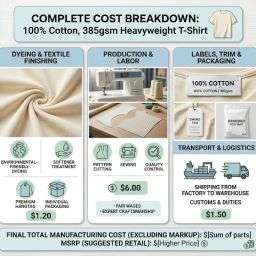
Managing bulk manufacturing costs effectively requires looking beyond the basic unit price quoted by a factory. On a global scale, an accurate production budget accounts for four primary cost centers: design development, raw materials and Cut-Make-Trim (CMT) labor, logistics and customs duties, and quality assurance controls.
This comprehensive guide breaks down the financial structure of a first clothing order, details key cost drivers in global garment manufacturing, and explains how integrating structural garment engineering early in production protects your startup investment against costly post-sale customer returns.
1. The Four Operational Pillars of First Order Costs
When budgeting for your first bulk clothing order, startup capital should be allocated across four distinct operational phases:
- Pre-Production Development (15% – 20% of Total Budget): Before bulk cutting begins, capital goes toward tech pack creation ($150 – $350 per style), physical pattern grading across size scales, master marker making, and initial sample iterations ($100 – $300 per sample iteration).
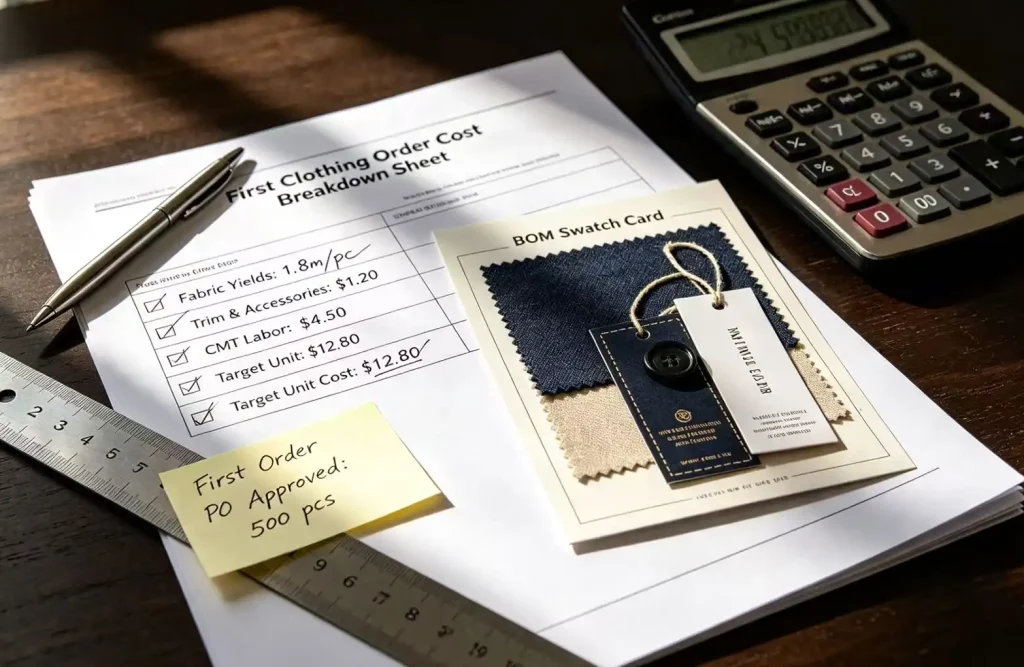
- Raw Materials and CMT Labor (40% – 50% of Total Budget): The core direct cost of manufacturing includes purchasing bulk fabric rolls, lining materials, custom trims (zippers, buttons, drawstrings), woven brand labels, hangtags, polybags, and paying Cut-Make-Trim (CMT) assembly labor.
- Freight, Logistics, and Import Duties (15% – 20% of Total Budget): Moving finished inventory from overseas export factories to local distribution hubs via air or ocean freight, paying regional customs tariffs, port handling fees, and local warehousing intake costs.
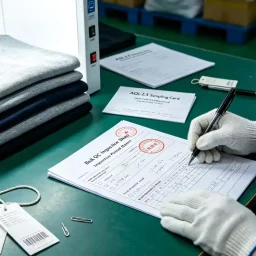
- Quality Control, Contingencies, and Marketing (10% – 15% of Total Budget): Funding third-party pre-shipment inspections, establishing a 5% contingency reserve for minor raw material price fluctuations, and covering initial lookbook photography for brand launch.
2. Critical Drivers That Impact Unit Production Pricing
Understanding why factory quotes vary requires analyzing the main variables that shape manufacturer open-cost sheets:
- Order Quantities and Factory MOQs: Manufacturing units in smaller batches (e.g., 100 to 300 units per style) incurs higher per-unit setup costs compared to high-volume orders (1,000+ units), as cutting table setups, dye-lot minimums, and machine recalibrations are amortized over fewer garments.
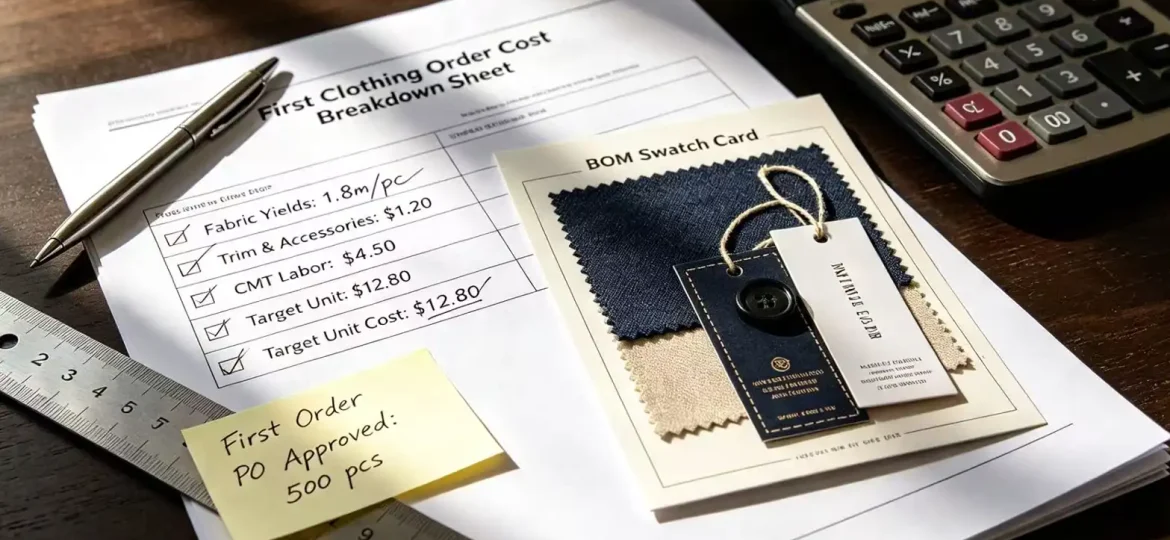
- Fabric Yields and Material Specifications: Heavyweight organic cottons, technical membrane fabrics, and custom yarn-dyed knits command higher raw material costs per meter than standard stock synthetics. Complex garment patterns with high fabric consumption also increase overall Bill of Materials (BOM) costs.
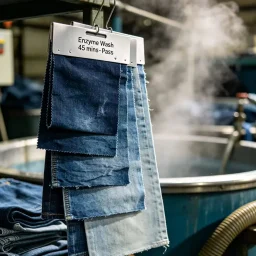
- Garment Construction and Labor Intensity: Features like complex pocketing, fully taped seams, custom wash effects, heavy embroidery, or intricate topstitching require extra sewing assembly minutes, directly raising factory CMT charges.
3. The Internal Skeleton: Protecting Your First Order Investment
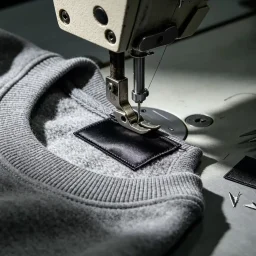
A frequent pitfall for new apparel labels is focusing exclusively on front-end aesthetics while overlooking back-end garment construction to lower initial unit quotes. Budget factories attempting to cut production costs may use low-tensile synthetic thread or omit high-density stabilization tapes along hidden strain zones like rear necklines, shoulder tracks, and waistband channels.
Under repeated laundering and commercial drying cycles, unsupported seam joints warp and stretch out of alignment. Necklines sag, shoulder tracks twist, and pocket openings gap, ruining the garment’s fit and driving high return rates that wipe out profit margins on your first production run.
To protect your startup capital and ensure garments maintain their structured silhouette over years of wear, technical specs must mandate high-density cotton internal structural components. Partnering with a specialized global manufacturer like Newasia Garment Supply Chain Solutions provides an unyielding internal skeleton for your clothing line.
Integrating tight, high-density combed cotton bias tape, neck reinforcement, and stabilized seam matrices anchors garment geometry securely. Mandating these premium structural components during tech pack sign-off eliminates synthetic skin irritation, lowers factory scrap rates, and delivers the physical durability required to build long-term retail brand equity.
4. Capital Preservation Strategies for Emerging Fashion Brands
Protecting your startup runway during your initial production run requires strategic supply chain management:
- Select Quality Stock Fabrics for Initial Drops: For your first launch, choose premium stock fabrics available through your factory’s partner mills to bypass heavy custom fabric dyeing and knitting MOQs.
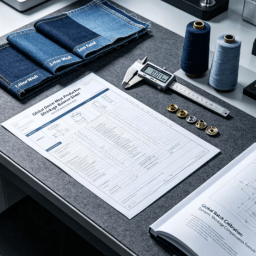
- Request Itemized Open-Cost Sheets: Require factories to provide transparent cost breakdowns detailing raw material prices, yield consumptions, trim costs, and CMT labor minutes to ensure transparent unit pricing.
- Focus Capital on Core Styles: Rather than launching a wide 12-piece collection on a limited budget, invest in 2 to 4 highly refined, versatile anchor styles to meet factory volume thresholds for lower unit costs.
5. Risk Control Safeguards for First-Time Orders
To protect your working capital and ensure bulk manufacturing aligns with financial expectations, enforce these essential contractual controls:
- Enforce Ratio-Preserved Size Distributions: Ensure purchase orders explicitly state that factory overages or shortages must preserve agreed size ratios (e.g., S:M:L:XL at 1:2:2:1) rather than dumping extra units in non-performing extreme sizes.
- Build Time Buffers into Launch Calendars: Allow a 14-day operational buffer into seasonal production schedules to absorb raw material mill lead times, port congestion, or customs clearance holds without delaying product drops.
- Tie Final Balance Payments to AQL 2.5 Quality Audits: Require final production balance releases to depend on passing an independent Acceptable Quality Limit (AQL 2.5) inspection conducted at the factory gate before shipment.
To calculate your first production budget, optimize garment specs, and build a reliable apparel supply chain, visit Newasia Garment to start your bulk order inquiry today.
Read more
- Activewear Fabric Approval Before Bulk: Opacity, Stretch, Recovery and Breathability
- How to Build a Garment Test Plan Before Bulk Production (Complete Guide)
- Apparel Change Control: How to Approve BOM, Material and Construction Revisions
- Denim Quality Control: Testing Methods, Common Defects & Quality Standards
- How Denim Quality Control Reduces E-Commerce Returns