
Apparel manufacturing is the core foundation of every successful fashion and denim brand, transforming creative concepts into production-ready garments at scale. Turning designs such as high-rise selvedge jeans or oversized silhouettes into finished products requires a structured, end-to-end garment manufacturing system, rather than isolated tailoring or small workshop production.
For independent designers, sourcing teams, and private label brands, working with an experienced partner such as Newasia Garment Co., Ltd. helps bridge the gap between design concept and commercial production. A professional apparel manufacturing workflow ensures that every stage—from tech pack development, patternmaking, and fabric sourcing to cutting, sewing, finishing, and final quality inspection—is executed with precision and consistency.
In essence, apparel manufacturing is the complete process of converting fashion design into finished garments ready for wholesale or retail distribution. It integrates technical development, textile sourcing, industrial production, and quality control systems into one coordinated supply chain.
For fashion, streetwear, and denim brands, mastering this process is essential to achieve consistent sizing, stable product quality, optimized production costs, faster lead times, and compliance with international quality and sustainability standards.
At Newasia Garment Co., Ltd., apparel manufacturing is not simply production—it is a fully integrated garment development and manufacturing system that connects design interpretation, material sourcing, technical development, and global production execution into a seamless workflow, ensuring each collection is accurately translated from concept to final product.
What Is Apparel Manufacturing and Why Is It Crucial for Your Denim Brand?
Apparel manufacturing is the end-to-end coordinated workflow that transforms design concepts, technical specifications, and raw materials into finished garments. It involves a cross-functional system of designers, patternmakers, fabric buyers, production managers, machine operators, and quality control specialists working together to ensure consistency and scalability.
For denim and fashion brands, apparel manufacturing is essential because it ensures that every garment—from selvedge jeans to oversized denim silhouettes—meets strict standards in fit, construction, wash treatment, and finishing consistency across all sizes and production batches. It reduces production risks, minimizes costly errors, and significantly improves time-to-market efficiency, making it a critical foundation for any growing fashion label.
Apparel manufacturing is not simply sewing garments—it is a structured industrial system designed to convert creative vision into commercially viable products at scale.
What Does “Apparel Manufacturer” Mean?
An apparel manufacturer is a specialized company or factory with the equipment, technical expertise, and supply chain network required to produce garments in bulk.
As a full-service apparel manufacturing partner, Newasia Garment Co., Ltd. typically supports brands by:
• Interpreting tech packs, CAD drawings, and design sketches into production-ready specifications
• Managing fabric sourcing, denim selection, trims, buttons, zippers, and labels
• Developing samples and fit prototypes for approval and refinement
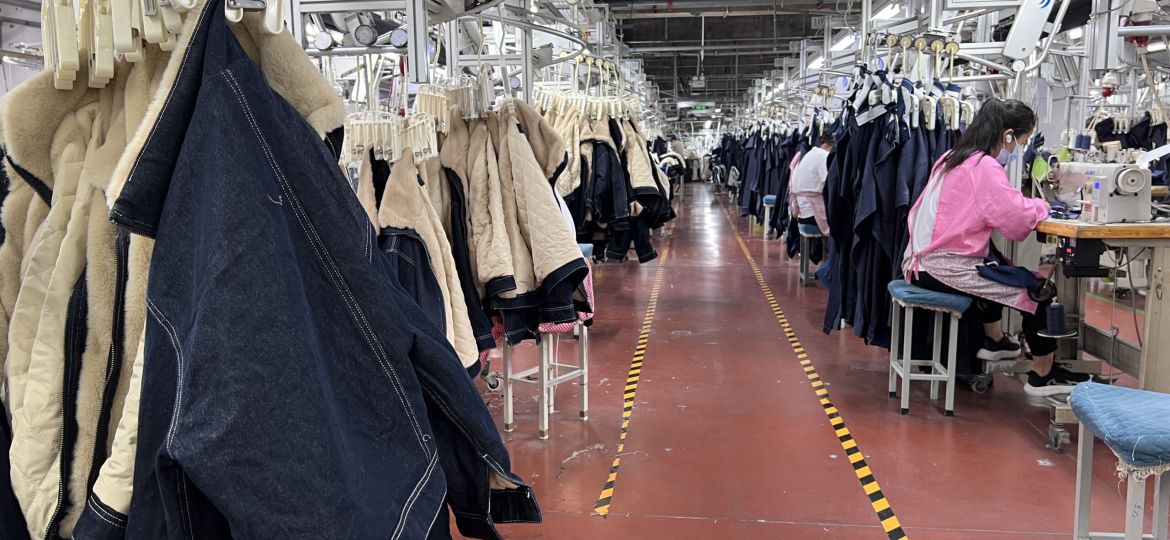
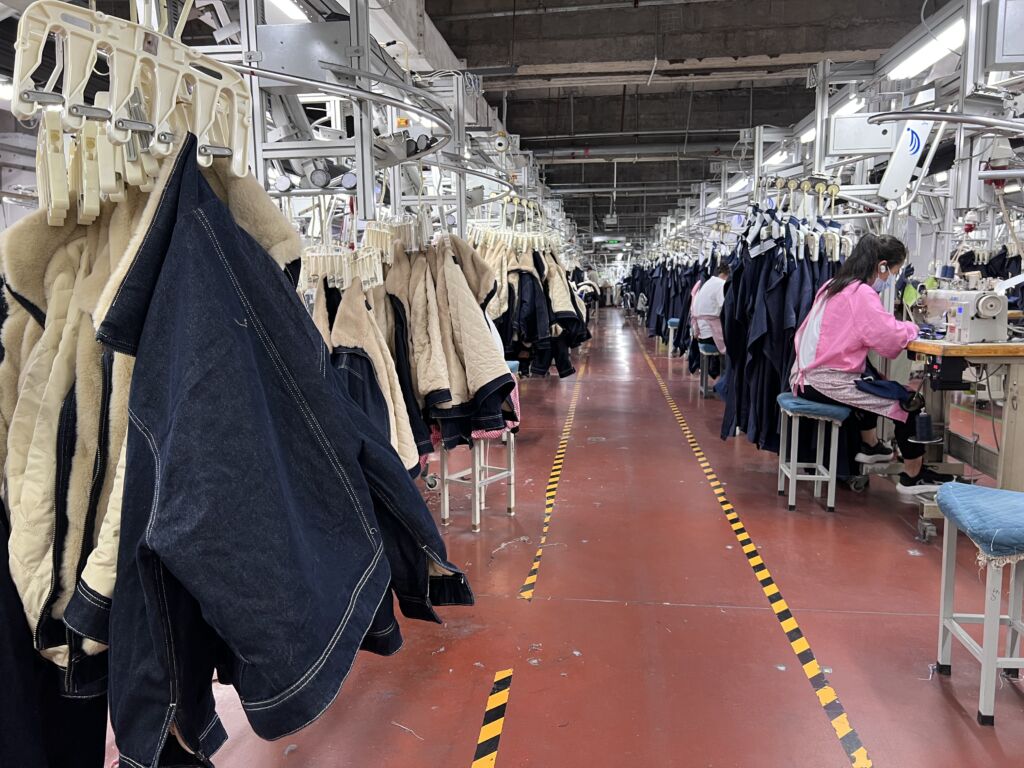
• Operating industrial sewing lines and specialized denim production equipment
• Implementing quality control systems and AQL inspection standards
• Coordinating production scheduling, logistics, and global shipping processes
In essence, an apparel manufacturer transforms a design blueprint into finished, market-ready garments.
What Is the Job Structure of Apparel Manufacturing?
Within a professional apparel manufacturing system like Newasia Garment Co., Ltd., production is organized through specialized roles, including:
• Production Manager – Oversees production planning, factory capacity, and delivery timelines
• Sampling Coordinator – Manages sample development, fit approval, and revision tracking
• Fabric & Trim Specialist – Sources denim fabrics, washes, and trims while managing supplier relationships
• Sewing Line Supervisor – Controls production flow, machine efficiency, and on-floor problem solving
• Quality Control Inspector – Conducts AQL inspections, checks stitching, measurements, and overall garment compliance
This structured workflow ensures every stage of production is controlled, measurable, and repeatable, which is essential for scaling fashion brands.
Why Apparel Manufacturing Matters for Denim Brands
Denim is one of the most technically demanding categories in apparel manufacturing. Unlike basic woven garments, denim requires specialized processes such as:
- Indigo dyeing and color control
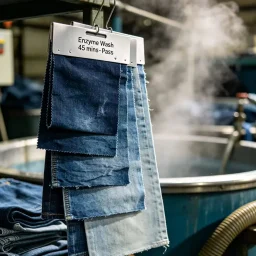
- Stone wash, enzyme wash, acid wash techniques
- Shrinkage and fit stability management
- Heavy-duty stitching and reinforcement
- Fabric weight balancing (oz-based selection)
For denim designers and boutique brands, even a small mistake in production can lead to inconsistent sizing, color variation, or poor durability—all of which directly impact brand reputation.
That’s why choosing the right manufacturing partner is often more important than the design itself.
What Are the Essential Stages of the Apparel Manufacturing Process?
The apparel manufacturing process typically follows six core stages:
- Design & Development
- Material Sourcing & Procurement
- Patternmaking & Prototype Sampling
- Grading & Marker Making
- Cutting, Sewing & Assembly
- Finishing, Quality Control & Packaging
Each stage builds on the previous one to ensure the final garment matches design intent, fit accuracy, quality standards, and cost targets—which is especially critical for denim and fashion brands producing at scale.
Understanding these stages helps brands improve planning, budgeting, communication, and production efficiency with their manufacturing partner.
The Apparel Manufacturing Process: From Idea to Finished Jeans
A professional denim manufacturing workflow typically follows these stages:
Stage 1: Design & Development
• Concept Creation: Mood boards, trend research, and consumer insights inform silhouettes and wash treatments.
• Technical Flats: Clean, line-drawn representations of every view (front, back, side, pocket details).
• Style Sheet: Summarizes style name, colorways, target retail price, and any special treatments (e.g., enzyme wash, resin coatings).
Stage 2: Material Sourcing & Procurement
• Fabric Selection: Denim weight (8–16 oz), fiber content (100% cotton vs. stretch blends), dye method (rope vs. slasher dyed).
• Trim & Hardware: YKK zippers, brass buttons, copper rivets, branded leather patches, woven labels.
• Lead Times & Minimums: Japanese selvedge may require 60–90 days lead, whereas domestic blends can ship in 14–30 days.
Stage 3: Patternmaking & Prototype Sampling
• Block Patterns: Base templates for each size that define fit and ease.
• Sample Cutting & Sewing: First physical sample—often called the “toile” or “fit sample.”
• Fit Review: Stakeholder feedback on rise, thigh ease, knee taper, hem width.
• Revisions: Up to 2–3 rounds to perfect the garment before bulk runs.
Stage 4: Grading & Marker Making
• Grading: Scaling patterns up and down the size range using predefined increments (e.g., +1” waist, +0.5” thigh).
• Marker Making: Nesting patterns onto fabric widths to optimize yardage yield—critical for cost control in denim.
Stage 5: Cutting, Sewing & Assembly
• Fabric Spreading & Cutting: Automated spreaders and cutting machines minimize human error.
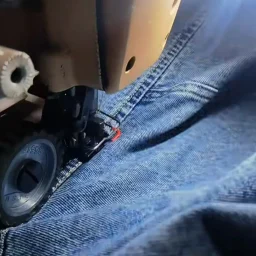
• Sewing Lines: Dedicated operations for side seams, inseams, pocket construction, Y-stitching on back pockets.
• Bar-tacking & Reinforcements: High-stress points get extra security with bartacks or rivets.
Stage 6: Finishing, Quality Control & Packaging
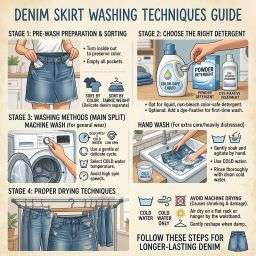
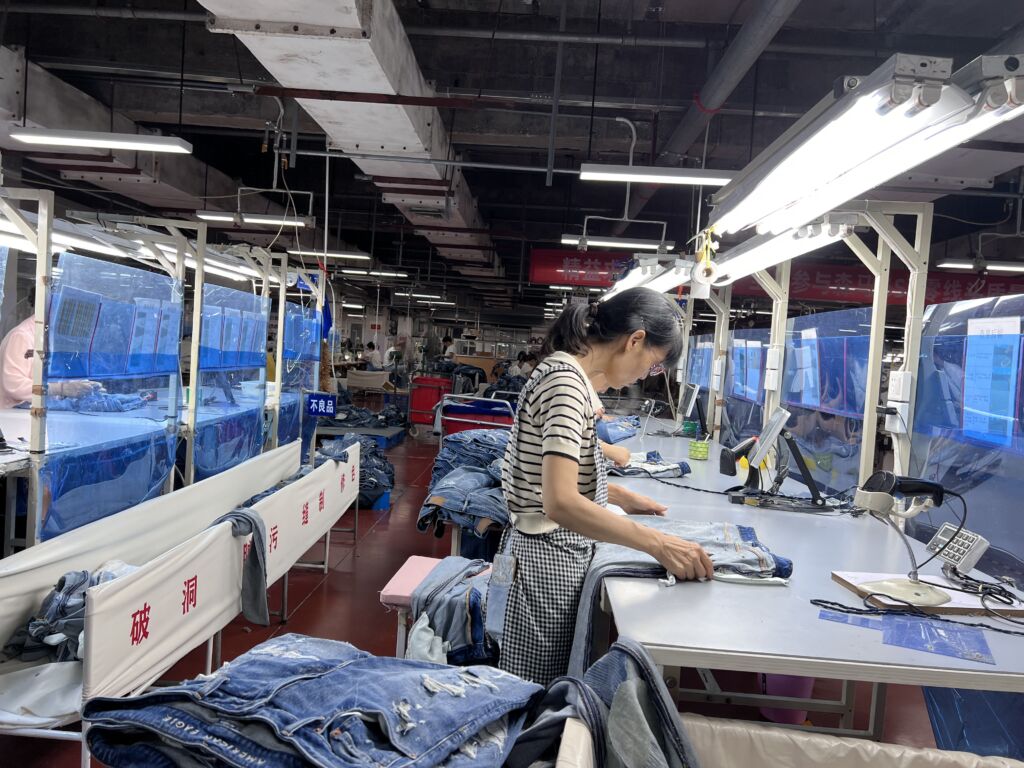
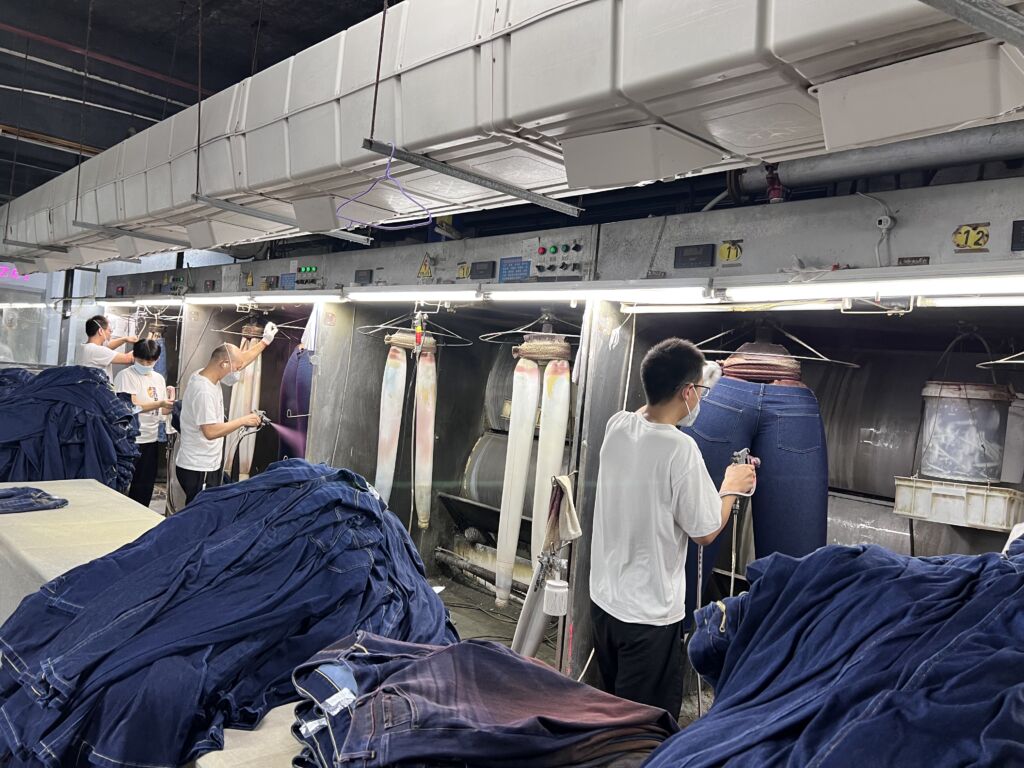
• Wash & Distressing: Enzyme wash, stonewash, bleach, laser whiskers, and hand sanding.
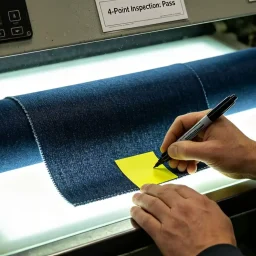
• Quality Inspections: AQL sampling on critical dimensions, stitch density, hardware durability, color consistency.
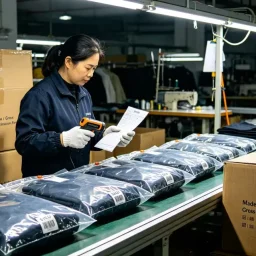
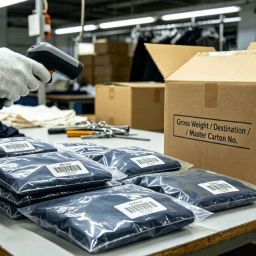
• Packaging: Fold specs, polybag dimensions, hangtag attachments, carton packing—ready for retail or direct-to-consumer shipments.
Every delay or miscommunication at any stage can cascade into higher costs, missed delivery windows, or product recalls. By mapping out these six stages and partnering with a factory experienced in denim—like Newasia Garment Co.,Ltd.—you ensure your custom jeans, jackets, or shorts come out exactly as envisioned, on time, and within budget.
OEM vs ODM in Apparel Manufacturing
OEM (Original Equipment Manufacturing)
OEM production is ideal when brands already have:
- Complete tech packs
- Defined silhouettes
- Fabric specifications
It offers:
- Full design ownership
- Strong brand identity control
- Higher customization flexibility
ODM (Original Design Manufacturing)
ODM is suitable for brands seeking faster market entry.
It provides:
- Ready-made design frameworks
- Pre-developed patterns
- Faster sampling cycles
- Reduced development cost
Choosing Between OEM and ODM for Your Denim Product
• Brand Identity & Differentiation: If your denim product relies on unique design elements such as signature pocket stitching, custom washes, or bespoke hardware, OEM (Original Equipment Manufacturing) is the best choice to fully protect and execute your brand’s original design vision.
• Time, Cost & Speed to Market: ODM (Original Design Manufacturing) is ideal for brands that need faster development cycles, lower R&D costs, and ready-made denim silhouettes to quickly launch seasonal collections or test new product ideas.
• Scaling Strategy: Many emerging denim brands begin with ODM to validate market demand, then gradually shift to OEM production as they grow, allowing them to build stronger brand identity and protect intellectual property.
At Newasia Garment Co., Ltd., we provide both OEM and ODM denim manufacturing solutions to support brands at every stage of growth. Our OEM services leverage deep denim R&D expertise to bring fully customized designs to life with precision, while our ODM library offers a wide range of proven denim fits, washes, and styles that can be quickly customized in terms of fabric, fit, and finishing.
This dual approach enables fashion brands, streetwear labels, and private label clients to choose the most effective manufacturing model based on their design goals, budget, and speed-to-market requirements, ensuring both creative flexibility and commercial efficiency.
What Factors Affect Apparel Manufacturing Cost, Lead Time, and MOQs?
Apparel manufacturing cost, lead time, and MOQ (Minimum Order Quantity) are influenced by several key production variables. Understanding these factors helps fashion and denim brands better control budgets, optimize product development, and plan efficient production timelines.
Fabric & Trim Selection
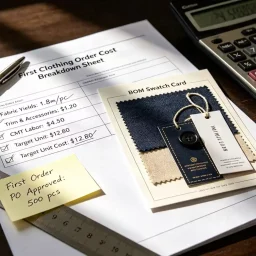
Fabric choice is one of the biggest cost drivers.
- Denim weight & composition: Lightweight (8–10 oz), mid-weight (12–14 oz), and heavyweight (16+ oz) denim directly impact cost and production difficulty.
- Material type: 100% cotton selvedge denim is typically more expensive and slower to source than blended or slasher-dyed fabrics.
- Trims & hardware: Custom buttons, rivets, leather patches, and branded elements increase both cost and lead time due to tooling and setup requirements.
Design Complexity & Construction
More complex garments require more time and labor.
- Additional pattern pieces increase cutting and sewing time
- Specialized construction (gussets, articulated knees) raises labor costs
- Wash effects and distressing techniques add extra production stages and lead time
- Embroidery, patches, and hand-finishing increase both cost and QC requirements
Order Quantity (MOQ & Scale)
Order volume directly affects unit pricing.
- Typical MOQ ranges from 30–50 pieces per style depending on factory capability
- Higher volumes reduce cost per unit through economies of scale
- Setup costs (patterns, sampling, marker making) are spread across larger production runs
Factory Location & Logistics
Production location significantly impacts total cost and delivery speed.
- Offshore production reduces labor cost but increases shipping time
- Sea freight adds 30–45 days, while air freight is faster but significantly more expensive
- Tariffs, import duties, and logistics costs also affect final landed cost
Quality Standards & Compliance
Higher compliance requirements increase both cost and lead time.
- Certifications (OEKO-TEX®, organic cotton, etc.) add audit and material costs
- Lab testing for shrinkage, colorfastness, and durability increases per-style cost
- Third-party inspections (AQL standards) add additional QC expenses
How Can You Partner with a Specialized Denim Manufacturer like Newasia Garment Co., Ltd.?
Partnering with Newasia Garment Co., Ltd. means working with a professional denim and apparel manufacturing partner with end-to-end OEM/ODM capabilities, helping fashion brands, indie labels, and private label clients transform ideas into production-ready, scalable denim collections. From design development to bulk production and global delivery, we provide a fully integrated manufacturing solution tailored to your brand needs.
We support U.S. and global fashion brands with flexible MOQs, strong denim R&D capabilities, and full-service garment production, including custom jeans, jackets, shorts, and specialty denim styles.
Newasia Garment Co., Ltd.’s 39+ Years of Denim Manufacturing Expertise
With over 39 years of apparel manufacturing experience, Newasia Garment Co., Ltd. delivers reliable, scalable denim production through:
• In-House Development Team: Patternmakers, fit technicians, and tech-pack specialists ensure accurate translation from design to production
• Advanced Wash & Finishing Capabilities: Enzyme wash, stone wash, vintage effects, laser detailing, and custom distressing techniques
• Global Fabric Sourcing Network: Access to premium denim mills from Japan, Turkey, and China, including selvedge, stretch, and organic denim options
• OEM & ODM Flexibility: Support for fully custom designs or ready-made styles with modification options
Steps to Start Your Custom Denim Project
- Inquiry & Design Submission: Share sketches, references, or tech packs
- Development & Quotation: Receive cost breakdown, MOQ, and timeline within 3–5 days
- Tech Pack & Pattern Development: Finalize specifications, sizing, and construction details
- Sampling & Fit Approval: First samples ready in 10–15 days with revision support
- Bulk Production: Manufacturing begins after approval with full in-line QC monitoring
- Finishing & Logistics: Packaging, labeling, and global shipping (DDP/DDU options available)
Custom Denim Capabilities
Newasia Garment Co., Ltd. specializes in a wide range of denim products, including:
• Plus-Size Denim (1X–5X): Proportion-optimized grading for comfort and fit consistency
• Baggy & Streetwear Jeans: Drop-crotch, stacked, and oversized silhouettes with modern tailoring
• Selvedge & Rigid Denim: Premium construction with authentic selvedge detailing and vintage finishes
• Skinny & Slim Fits: Precision patternmaking for clean, body-contoured silhouettes
• Jogger Jeans & Denim Shorts: Elastic waistbands, drawcords, and hybrid streetwear designs
MOQ, Sampling & Production Timeline
• MOQ: Flexible starting from 30 pieces per style per colorway
• Sample Lead Time: 5–10 days for first sample, with fast revision cycles
• Bulk Production: Typically 15–30 days depending on wash complexity and order size
Quality Control & On-Time Delivery Assurance
• Structured Production Milestones: Real-time updates from fabric arrival to final packing
• In-Process Quality Checks: Continuous inspection across cutting, sewing, and washing stages
• Final AQL Inspection: Ensures all garments meet strict quality tolerance standards before shipment
• Global Logistics Support: Coordinated packaging, labeling, and international delivery solutions
Partnering with Newasia Garment Co., Ltd. means more than manufacturing—it means working with a strategic denim production partner that supports your brand from concept development to final delivery, ensuring consistency, scalability, and market-ready quality across every collection.
FAQ: What Is Apparel Manufacturing?
1. What is apparel manufacturing?
Apparel manufacturing is the end-to-end process of turning fashion designs into finished garments. It includes stages such as design development, patternmaking, fabric sourcing, cutting, sewing, finishing, and quality control, ensuring garments are production-ready for retail or wholesale markets.
2. Why is apparel manufacturing important for denim brands?
For denim designers and boutique retailers, apparel manufacturing ensures consistent fit, durable construction, and reliable wash quality across all sizes and production batches. It also helps control costs, lead times, and scalability, which are essential for brand growth.
3. What does an apparel manufacturer do?
An apparel manufacturer manages the full production workflow, including:
- Interpreting tech packs and design specifications
- Sourcing denim fabrics, trims, and hardware
- Developing samples and prototypes
- Managing cutting, sewing, and assembly lines
- Conducting quality control and final inspection
4. What are the main stages of apparel manufacturing?
The process typically includes:
- Design & Development
- Material Sourcing
- Patternmaking & Sampling
- Grading & Marker Making
- Cutting, Sewing & Assembly
- Finishing, Quality Control & Packaging
5. What is the difference between OEM and ODM in apparel manufacturing?
- OEM (Original Equipment Manufacturing): Fully custom production based on your own designs
- ODM (Original Design Manufacturing): Ready-made styles that can be modified for faster development and lower cost
6. What factors affect apparel manufacturing cost and lead time?
Key factors include:
- Fabric type (e.g., selvedge vs. blended denim)
- Design complexity and washes
- Order quantity (MOQ)
- Factory location and logistics
- Quality standards and certifications
7. What is MOQ in apparel manufacturing?
MOQ (Minimum Order Quantity) is the smallest production quantity per style. It varies by factory, but denim manufacturers typically start from 30–100 pieces per style, depending on complexity and materials.
8. How long does denim production usually take?
Production timelines vary, but generally:
- Sampling: 10–15 days
- Bulk production: 30–45 days
More complex washes or materials may extend lead times.
9. Who should use apparel manufacturing services?
Apparel manufacturing is ideal for:
- Denim designers and startups
- Boutique fashion retailers
- Streetwear and private-label brands
- Established brands scaling production
10. How can I start working with a denim manufacturer?
You typically start by submitting:
- Design sketches or tech packs
- Reference samples or inspiration images
- Order quantity and target pricing
From there, the manufacturer provides development, sampling, and production support.
11. Why partner with Newasia Garment Co., Ltd.?
Newasia Garment Co., Ltd. offers:
- 39+ years of denim manufacturing experience
- Full OEM & ODM services
- Flexible MOQ options
- End-to-end production (design to shipment)
- Strong expertise in denim washes, fits, and finishing
Conclusion
Apparel manufacturing can be complex, but understanding the six key production stages, the differences between OEM and ODM, and the main drivers of cost, lead time, and MOQ helps you make smarter, more strategic decisions for your brand.
Partnering with Newasia Garment Co., Ltd. turns this complexity into a streamlined, end-to-end production process. With 20+ years of denim R&D experience, flexible MOQs, and full OEM/ODM capabilities, Newasia supports brands in developing high-quality, production-ready denim collections with consistency and efficiency.
From tech pack development and sampling to bulk production, wash finishing, quality control, and global logistics, Newasia provides full-cycle manufacturing support for both emerging designers and established fashion brands.
Get started today with Newasia Garment Co., Ltd. for custom denim development and manufacturing solutions—delivering precision, reliability, and on-time production from concept to final shipment.
Read more