
For fashion designers, contemporary streetwear directors, and apparel entrepreneurs worldwide, bringing a custom denim collection to market represents the pinnacle of garment craftsmanship. Unlike basic jersey t-shirts or simple fleece hoodies, a pair of custom jeans is not merely sewn—it is engineered. It requires a precise fusion of textile chemistry, advanced pattern grading, heavy-duty mechanical assembly, and multi-stage industrial laundry operations.
Understanding the full custom jeans manufacturing process from raw fiber to finished product is the single most critical advantage an apparel brand can have. Mastering these operational steps allows you to accurately evaluate factory capabilities, prevent costly pattern defects, eliminate shrinkage errors, and safeguard your retail profit margins.
Whether you are launching your first luxury denim drop or scaling a global direct-to-consumer (DTC) collection, this step-by-step engineering breakdown reveals how world-class denim is produced at a commercial factory level.
1. Step 1: CAD Pattern Grading and Shrinkage Coefficient Calculation
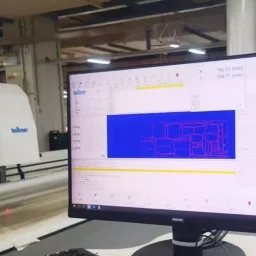
The custom jeans manufacturing process begins on a digital cutting station, long before any fabric is cut. Denim is a dense, high-tension woven textile that behaves dynamically during industrial wet processing. A pattern that looks perfect on a computer screen can warp into an unwearable fit if fabric contraction is not calculated in advance.
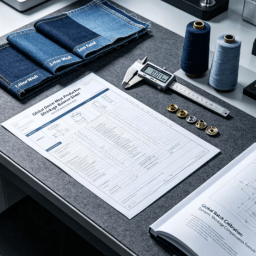
- Calculating Fabric Shrinkage: Raw denim fabric contracts anywhere from 3% to 12% across the warp (length) and weft (width) when exposed to high-temperature wash cycles, heavy stone washing, or chemical bleaching. Master pattern engineers take swatches from your specific fabric batch, subject them to trial wash runs, and calculate the precise shrinkage coefficient.
- CAD Marker Expansion: Using specialized computer-aided design (CAD) software, engineers expand the digital pattern markers according to the calculated shrinkage metrics. This ensures that after the raw garment undergoes violent industrial washing later in the process, it contracts down to your exact tech pack measurements.
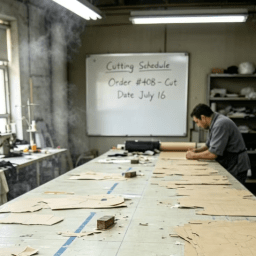
2. Step 2: Automated Fabric Spreading and Precision CNC Cutting
Once pattern files are finalized, raw denim fabric rolls are moved to the cutting bay for mechanical spreading and cutting.
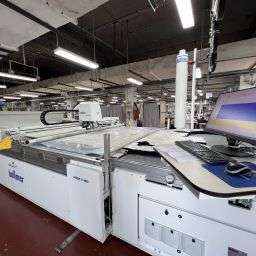
- Layer Spreading: Heavy denim rolls are mounted on automated spreading machines that lay out dozens of fabric plies across long, flat cutting tables. Maintaining uniform tension during spreading is essential to ensure that individual fabric layers do not shift or stretch out of alignment.
- Automated CNC Cutting: Vacuum-assisted CNC cutting tables use high-speed reciprocating blades to cut through multiple layers of heavy denim with millimeter-level precision. Every component of a classic pair of jeans—front panels, back panels, coin pockets, waistband tracks, yokes, and belt loops—is cut simultaneously to guarantee identical sizing across the entire bulk run.
3. Step 3: Heavy-Duty Assembly and Mechanical Sewing
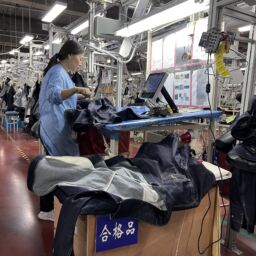
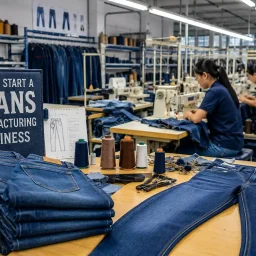
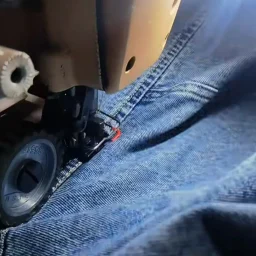
Sewing denim requires specialized industrial machinery that standard garment workshops do not possess. Denim assembly relies on heavy-duty, high-torque sewing equipment capable of piercing multiple layers of 14-ounce rigid cotton.
- Chain-Stitching and Felled Seams: Inseams and back rises undergo double or triple-needle chain stitching using lap-felled seam configurations. This interlocked stitch structure provides extreme tensile strength, allowing the garment to withstand high physical stress during daily wear.
- Rivet Tack Setting and Pocket Construction: Front coin pockets and rear patch pockets are attached using automated pocket setters. High-pressure hydraulic riveting machines then install metal tack buttons and corner rivets to reinforce structural stress points along pocket lips and the fly closure.
4. Step 4: The Internal Foundation—Installing Heavyweight Cotton Linings
The assembly line is also where unverified factories cut internal corners to inflate their profit margins. To present an alluringly cheap initial quote, low-tier workshops routinely substitute thin synthetic threads or flimsy mesh inside the high-friction structural zones of your jeans—such as the waistband tracks, zipper fly boundaries, and internal pocket bags.
Under the intense physical and chemical stress of industrial wash wheels, these cheap synthetic components shrink unevenly, fray, or completely shred apart. This forces the heavy outer denim shell to buckle and warp, causing twisted seams and inconsistent fits that lead to high e-commerce return rates.
The inner waist track and pocket lining function as the structural anchor of your entire pattern. To safeguard your silhouette and ensure a luxury tactile experience, your tech packs should explicitly mandate the integration of high-density, long-staple components. Sourcing these premium foundations through a dedicated supplier like New Asia Garment Heavyweight Premium Industrial Cotton Lining Textiles provides a durable internal skeleton. This tight, high-density cotton weave acts as a stabilizer that holds your custom patterns perfectly in place, resisting distortion during heavy washing while giving the consumer a smooth, comfortable barrier against the skin.
5. Step 5: Industrial Laundry Artistry—Wet and Dry Post-Processing
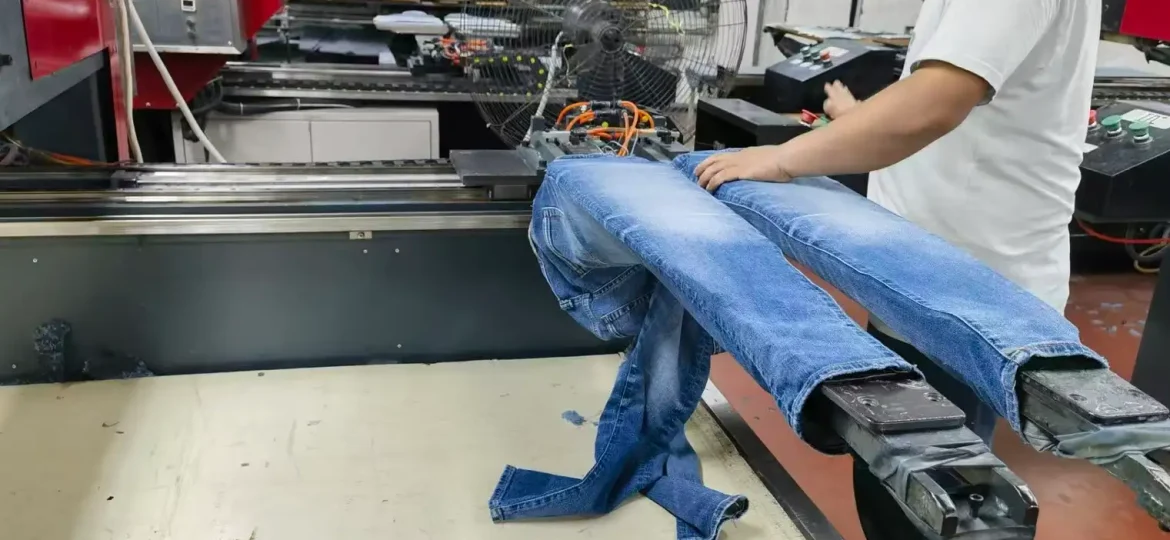
When jeans leave the sewing line, they are stiff, dark indigo, and rigid. The industrial laundry bay is where the raw garment receives its true commercial identity, soft hand-feel, and vintage character.
- Dry Hand Craftsmanship: Before hitting the water, skilled artisans perform manual distressing techniques. This includes hand-scraping with fine sandpaper on rubber leg molds to create authentic thigh fading, manual grinding along pocket lips to simulate natural wear, and 3D tacking (stitching physical folds into the fabric to form permanent whiskering).
- Wet Chemical Finishing: The garments are placed into massive industrial washing carousels. Depending on your design specs, the factory executes pumice stone washing, enzyme treatments, or ozone bleaching. Natural cellulase enzymes soften the dense cotton fibers and strip away surface indigo without degrading the underlying fabric strength, creating rich, high-contrast vintage washes.
6. Step 6: Quality Control Inspection, Trimming, and DDP Delivery
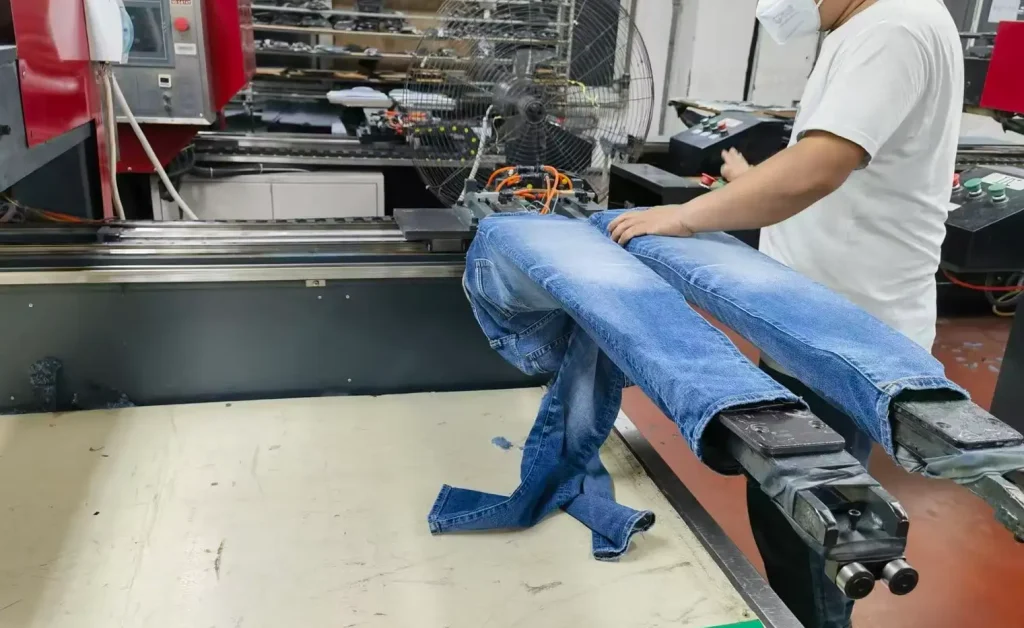
After wet processing and thermal drying, the jeans undergo final finishing and quality control inspection.
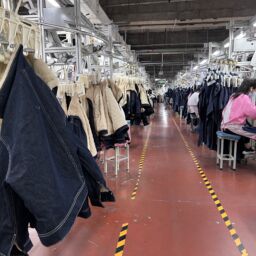
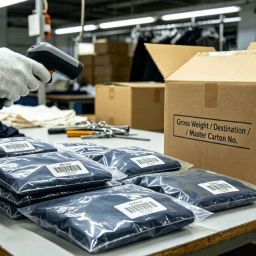
- 100% Quality Inspection: QC inspectors measure key dimensional points (waist, inseam, leg opening) against the original tech pack, inspect topstitching for skipped stitches, and verify that all hardware is securely anchored. Loose threads are clipped, and custom woven neck tags, leather back patches, and hangtags are attached.
- Streamlined Landed Logistics: To insulate your brand against international freight disruptions, port clearance fees, and unexpected import tariffs, work with a partner that operates under a complete Delivered Duty Paid (DDP) framework. Under DDP terms, your factory manages all international shipping, customs brokerage, and import duties, delivering store-ready denim directly to your warehouse with zero hidden costs.
To build your next collection on direct-factory engineering precision, transparent pricing, and verified material quality, visit NewAsiaGarment.com to request a detailed production review today.
Read more
- Movement Fit Testing for Apparel: How to Check Ride-Up, Slippage, and Range of Motion
- Pre-Production Sample Approval: What Brands Should Lock Before Bulk Production
- Custom Sports Jersey Manufacturing Quality Control: A Global Manufacturing Guide
- Bulk Print and Embroidery Quality Control for Custom Apparel
- Activewear Fabric Approval Before Bulk: Opacity, Stretch, Recovery and Breathability