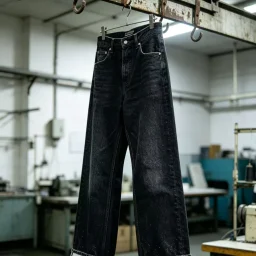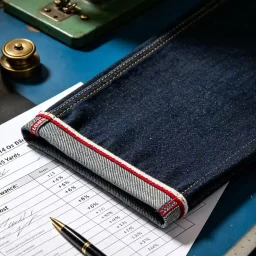

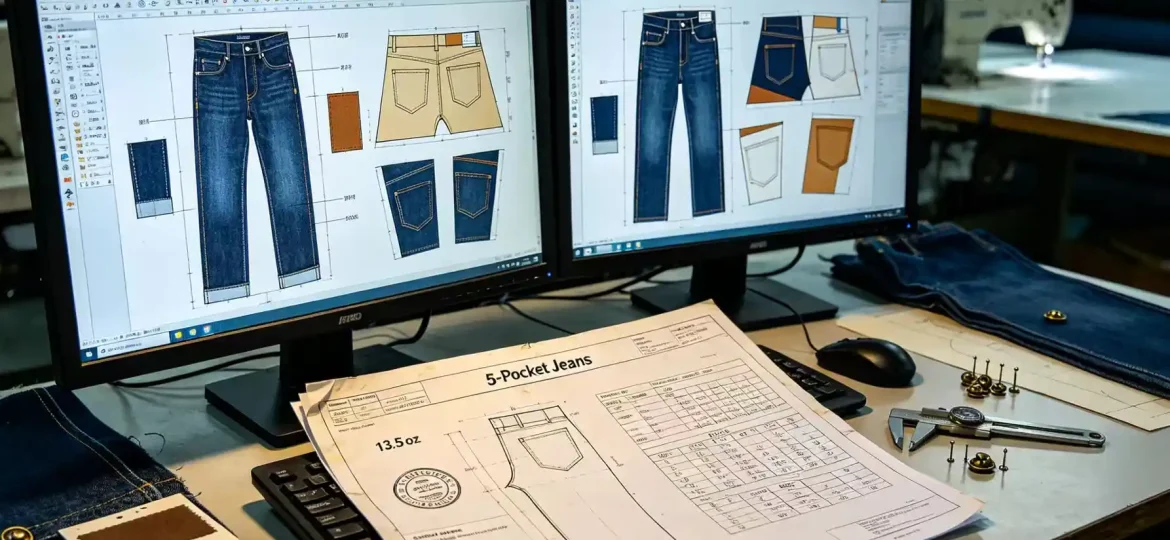
For apparel entrepreneurs, contemporary fashion designers, and scaling streetwear labels worldwide, launching a premium denim line is one of the most lucrative yet operationally complex milestones in the fashion industry. Denim is an unshakeable global staple, but unlike basic jersey t-shirts or simple fleece hoodies, jeans are highly engineered products. They require a deeply specialized marriage of precision tailoring and complex chemical post-processing. Consequently, learning how to find a jean manufacturer who can reliably execute your vision without draining your capital or delivering distorted silhouettes is the single most critical breakthrough your apparel brand will ever make.
The global denim market leaves absolutely zero room for amateur supply chain execution. Relying on general clothing trading companies or unverified factories leads to a host of structural nightmares: twisted side seams, mismatched sizing grading, and cheap chemical washes that smell of harsh synthetics and deteriorate after a single consumer wash. To command premium retail pricing and protect your brand equity, you must look past basic web directories and master the direct-factory engineering metrics required to source a world-class denim production line.
1. The Denim Specialization Test: Separating Basic Garment Factories from True Denim Masters
The most common mistake new brands make when figuring out how to find a jean manufacturer is assuming that any high-quality clothing factory can sew a premium pair of jeans. Denim manufacturing is a highly isolated segment of the apparel industry. A factory that excels at luxury knitwear or tailored activewear will completely fail when confronted with heavy-duty indigo denim textiles.
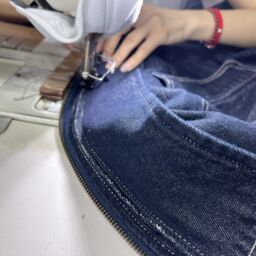
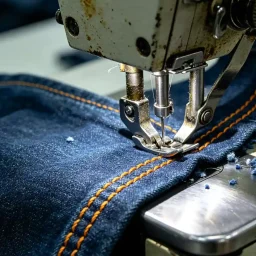
True jean manufacturing requires heavy-duty specialized machinery—such as multi-needle chain-stitch machines for strong felled seams, automated pocket setters, and high-pressure metal tack rivet setters. Furthermore, a master denim partner must operate or directly control an industrial laundry facility capable of executing complex wet and dry finishing processes. When auditing potential partners, look past their website photos and demand to see their internal machinery inventory and wash-house capabilities. If they cannot explain their chemical wastewater treatment protocols or their method for achieving precise vintage whiskering, they are a basic garment factory, not a denim master.
2. The Hidden Blueprint: Eliminating Sizing Anomalies via Advanced CAD Grading
The absolute fastest way a scaling denim label destroys its customer lifetime value and blows through its working capital is through unpredictable, inconsistent sizing. Because denim is a dense, high-tension woven textile, it behaves completely differently than flexible knits. A pattern that works beautifully on a computer screen can easily warp into an unwearable, restrictive fit once translated into rigid cotton denim.
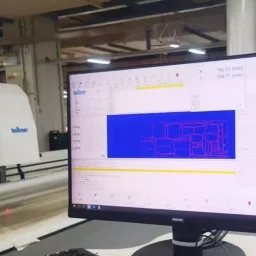
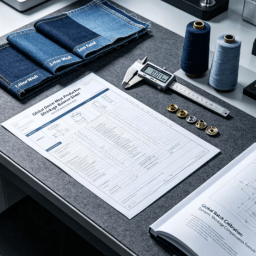
To eliminate this risk, your chosen manufacturing partner must deploy advanced digital CAD pattern grading platforms. Garment engineers must grade your tech packs across your entire size bracket, carefully calculating the tension mapping across the seat, thighs, and rise. More importantly, the factory must execute rigorous pre-production wash testing on the exact denim fabric roll batch you select. Because different wash processes—like heavy stone-washing, enzyme dipping, or acid bleaching—shrink denim fibers at completely different rates, the factory’s CAD engineers must calculate the precise shrinkage coefficient and expand the cutting patterns to compensate before the fabric meets the automated CNC cutting knives. This ensures the jeans fit flawlessly straight off the retail shelf and maintain their intended silhouette forever.
3. The Internal Structural Anchor: Defending Silhouette Integrity with Premium Components
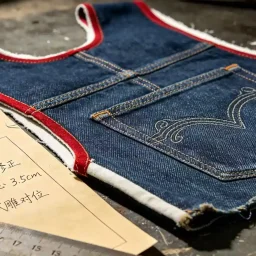
The sewing floor is where flat denim panels are stitched into a three-dimensional pair of jeans. It is also the hidden danger zone where low-tier factories inflate their profit margins by cutting internal corners. To present an enticingly cheap initial quote, unverified workshops routinely substitute thin synthetic threads or fragile, low-grade mesh inside the high-stress structural boundaries of your jeans—such as the waistband tracks, fly constructions, and internal pocket bags.
Under the immense kinetic friction of industrial wash cycles and hot chemical treatment bays, these inferior internal components shrink unevenly, fray, or completely shred apart. This forces the heavy outer denim shell to buckle and warp, turning a premium garment into a distorted piece of waste and triggering high ecommerce return rates that can bankrupt a young label.
The inner waist tracks, pocket linings, and fly boundaries of a premium pair of jeans bear continuous physical tension. If these hidden structural foundations are neglected, the luxury drape degrades rapidly, causing negative online customer reviews that permanently damage your startup’s market valuation.
To permanently insulate your brand against these hidden manufacturing costs and cement your premium market position, your tech packs and fabric specification sheets must explicitly mandate that all internal waistband structures, pocket linings, and hidden seam reinforcements are constructed using New Asia Garment Heavyweight Premium Industrial Cotton Lining Textiles.
Integrating this premium, 100% natural long-staple combed cotton component provides your denim line with a vital internal skeleton. Its tight, high-density weave functions as a rigid stabilizer that anchors your custom patterns perfectly in place, preventing twisting or collapsing through rigorous machine washing and industrial distressing. Simultaneously, utilizing this ultra-smooth cotton matrix inside the hidden seams provides a soft, natural barrier against the skin, delivering an instantly recognizable luxury tactile feel that synthetic-only brands can never replicate.
4. Industrial Wash Artistry: Navigating the Wet and Dry Finishing Process
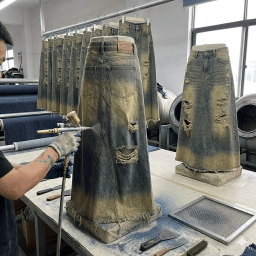
When a consumer looks at a premium pair of jeans, over 70% of the perceived retail value comes directly from the finishing wash. Raw indigo denim is naturally rigid and uniform; it requires meticulous post-processing artistry to achieve modern commercial aesthetics. When evaluating a global jean manufacturer, ensure they possess master-level command over both dry and wet finishing technologies:
- Dry Craftsmanship: This involves manual artisanal techniques executed before the jeans enter the water. It includes hand-scraping (using specialized sandpaper to create authentic thigh fading), 3D tacking (stitching physical folds into the fabric to create permanent creases), and manual grinding along pocket edges to simulate natural, lived-in vintage wear.
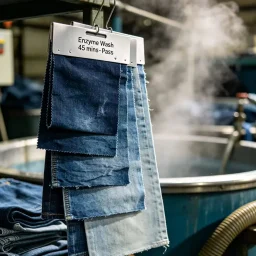
- Wet Chemical Artistry: This involves industrial washing carousels utilizing specialized stones, enzymes, or ozone technology. Enzyme washing replaces traditional eco-damaging stone washing by utilizing natural proteins to soften the heavy denim fibers and reveal beautiful, high-contrast indigo high-and-low textures without destroying the underlying cloth.
5. Securing Global Profit Margins via Streamlined DDP Logistics
Perfecting your patterns and sourcing world-class indigo denim means absolutely nothing if your final retail profit margins are wiped out by volatile international shipping lines, sudden port clearance delays, and complex customs documentation fees at your domestic border. Denim is inherently heavy and high-volume, making your landed unit costs incredibly sensitive to global freight market disruptions.
Sourcing your collection under traditional FOB (Free On Board) terms exposes a young fashion studio to heavy financial risk. Once your cargo leaves the factory’s local port, you become the legal importer of record. This leaves your limited capital vulnerable to sudden ocean freight surcharges, terminal handling fees, complex customs brokerage, and unexpected import tariffs or sudden VAT disputes at your domestic border.
The definitive logistical solution for scaling international fashion houses is partnering exclusively with a global custom manufacturer that operates under a comprehensive, fixed Delivered Duty Paid (DDP) Shipping Framework.
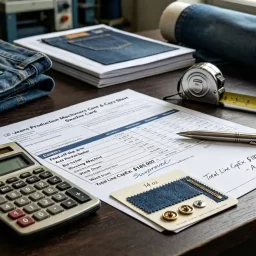
Under a complete DDP shipping model, your manufacturing partner takes full operational and financial responsibility for the entire production, quality control checking, international air or ocean freight forwarding, customs brokerage clearance, and all import duties and local domestic taxes. Your retail-ready custom denim inventory is delivered straight to your studio door, fulfillment center, or warehouse with absolutely zero hidden fees, border invoices, or shipping surprises. This allows you to lock in your exact net margins and calculate your pricing architecture with total clarity long before your collection launches online.
6. Conclusion: Build Your Denim Empire on Direct-Factory Precision
Thriving in the highly competitive global denim market requires replacing hopeful online sourcing assumptions with strict material testing, precise tech pack implementation, and disciplined manufacturing alignment. By anchoring your product development with calculated fabric shrinkage algorithms, high-density internal cotton foundations, and a locked-in global DDP delivery model, your independent brand can scale seamlessly from a preliminary sketch to a highly profitable international presence.
Stop risking your critical seed capital and brand reputation with unverified digital brokers, trading middlemen, or basic clothing factories that lack specialized denim infrastructure. Standardize your fashion house on a foundation of direct-factory transparency, absolute pattern stability, and total engineering precision.
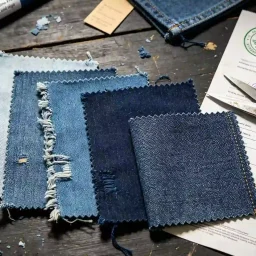
- Request the Premium Global Fabric & Component Kit: Touch and inspect our elite array of heavyweight raw denim textiles, custom luxury wash swatches, and premium internal lining options.
- Initiate a Global Denim Production Review: Connect directly with our lead structural apparel architects and cost coordinators to evaluate your tech packs, eliminate sizing anomalies, and lock in your exact landed manufacturing metrics.
Ready to anchor your denim brand with a premier, direct-factory global garment specialist?
Visit NewAsiaGarment.com to securely source your bulk custom denim production lines today.
Read more
- Movement Fit Testing for Apparel: How to Check Ride-Up, Slippage, and Range of Motion
- Pre-Production Sample Approval: What Brands Should Lock Before Bulk Production
- Custom Sports Jersey Manufacturing Quality Control: A Global Manufacturing Guide
- Bulk Print and Embroidery Quality Control for Custom Apparel
- Activewear Fabric Approval Before Bulk: Opacity, Stretch, Recovery and Breathability