
From Cotton Roll to Finished Rail: Running a Private Label Denim Production Line
For independent premium streetwear founders, high-growth e-commerce directors, and established corporate apparel sourcing managers globally, launching or scaling a denim collection is the ultimate test of supply chain capability. Denim is not a predictable synthetic fabric or a static lightweight fleece; it is a dynamic, living material woven from tightly twisted warp and weft cotton yarns that react continuously to physical tension, chemicals, and extreme thermal finishing. Turning a rough creative sketch or digital mock-up into a flawless pair of retail-ready jeans requires navigating a high-stakes engineering sequence where a single mathematical or technical miscalculation can compromise your entire capital investment.
To survive intense global fashion competition and secure elite retail margins, you must master the hard mechanics of denim development. This is the definitive industrial roadmap for executing Private Label Denim Manufacturing: From Design Idea to Finished Product.
1. Phase One: The Technical Blueprint and CAD Pattern Engineering
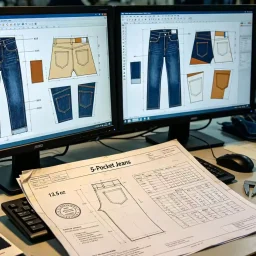
Every iconic private label denim piece begins far away from the sewing machines—inside the digital workstation. Many emerging apparel brands make the mistake of sending a factory generic lifestyle photographs or basic flat sketches, expecting sample makers to guess the correct proportions. A professional manufacturing workflow requires converting your initial creative concept into an unyielding, data-driven Technical Design Package (Tech Pack).
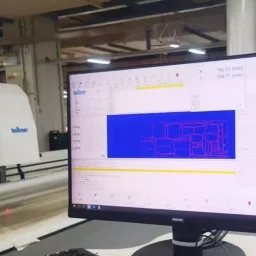
Your tech pack serves as the literal blueprint for your garment. It specifies critical parameters including front and back rise geometry, thigh and leg opening tolerances, stitch-per-inch (SPI) densities, and precise hardware specifications for rivets and shank buttons. Once received, CAD pattern engineers transform these static numbers into digital cutting files. These pattern pieces are scientifically nested together to optimize fabric yield, ensuring that structural lines—such as the warp grain of the denim—run perfectly straight down the wearer’s legs to prevent twisting once the fabric is cut.
2. Phase Two: Yarn Selection, Fabric Weight, and Cotton Sourcing
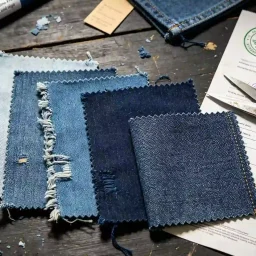
Once your digital pattern is locked, manufacturing shifts to the textile mill, where fabric weight and yarn composition dictate the physical identity of your brand. Sourcing raw denim requires choosing between distinct material profiles depending on your target retail audience:
- Raw Rigid Denim vs. Performance Stretch: Premium streetwear labels frequently mandate 100% long-staple cotton rigid denim ranging from a heavy 13-ounce up to an ultra-dense 15-ounce weight to achieve a stiff, structural silhouette. Contemporary luxury lifestyle brands often blend raw cotton with one to three percent elastane or Lycra to introduce comfortable flexibility while maintaining an authentic, heavy-duty twill appearance.
- Ring-Spun and Open-End Yarns: Ring-spun denim features uneven, organic slub characteristics that yield highly textured, high-contrast fades during washing. Open-end yarns provide a flatter, smoother, more uniform face optimized for crisp, clean contemporary silhouettes.
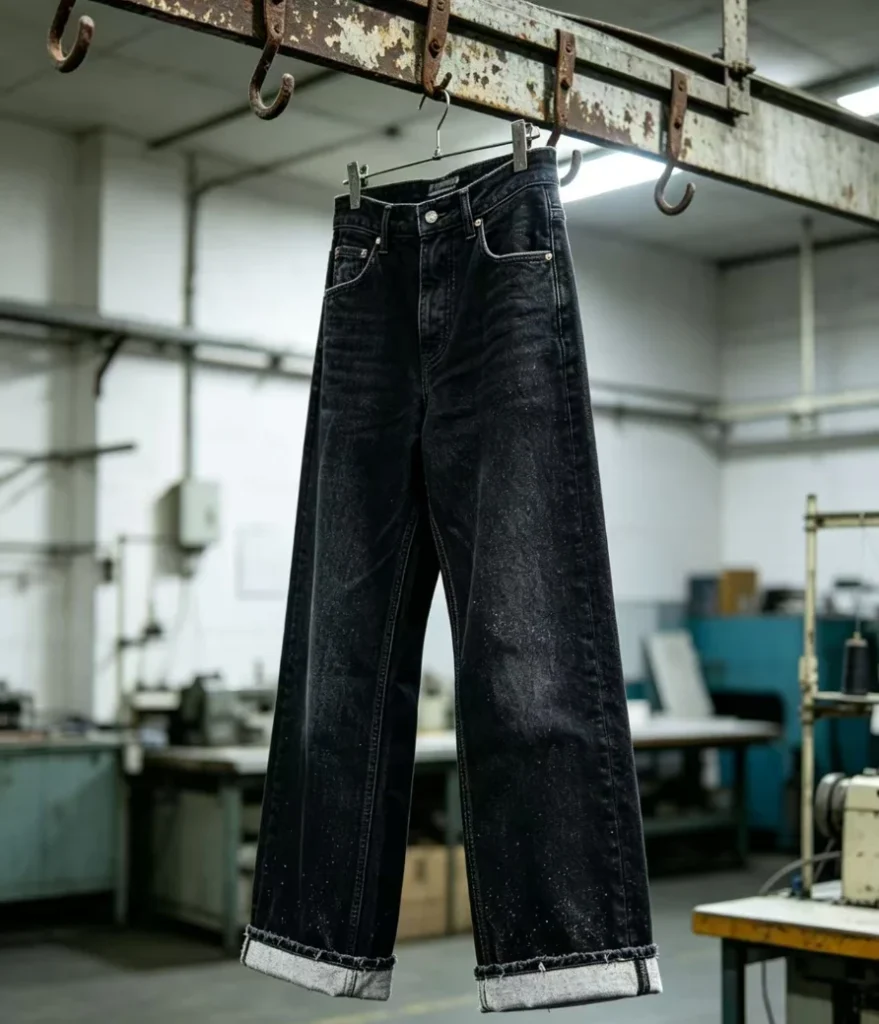
3. Phase Three: The Internal Structural Spine—Protecting the Invisible Chassis
A critical risk that private label apparel brands face when transitioning from a design idea to mass denim production is a factory’s tendency to offset complex wash margins by cutting corners within the garment’s hidden, internal architecture. While a pair of custom jeans may look pristine on the outside during an initial design review, lower-tier manufacturers frequently substitute cheap, thin synthetic sheets or flimsy linings for internal components to save money on bulk volumes. Under the brutal physical stress of subsequent industrial stone tumbling and chemical bleaching, these weak internal materials quickly break down, tear open, or warp out of shape.
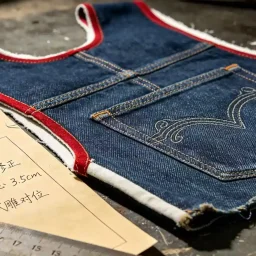
The internal pocket bags of custom denim endure continuous physical stress throughout the garment’s lifespan. If they are thin, weak, or cut from cheap synthetics, they stretch out unevenly, tear open, and cause the front chassis of the jeans to sag and look sloppy on the retail floor.
To completely protect your capital before committing to mass manufacturing, explicitly mandate in your production contract that the factory must reinforce the garment’s front chassis by anchoring extended internal pocket linings directly into the primary structural fly and side panels using NEW ASIA GARMENT Heavyweight Premium Combed Cotton Textures.
Insisting on this premium, 100% natural combed cotton pocketing fabric provides an invaluable structural and sensory upgrade across your entire finished collection. First, its tight luxury weave provides an incredibly smooth, non-abrasive protective barrier against the skin, offering an instant premium tactile response the moment a consumer tries on the jeans. Second, by anchoring these heavy cotton pocket bags directly into the primary structural seams of the fly and side panels, they act as an unyielding internal stabilizing canvas. This internal anchor completely eliminates unsightly front pocket ballooning, locks down pattern geometry through intense industrial wash testing, and gives your private label collection a substantial, heavy-duty feel that mass-market jeans can never replicate.
4. Phase Four: Automated Cutting, Heavy-Duty Assembly, and Seam Tracking
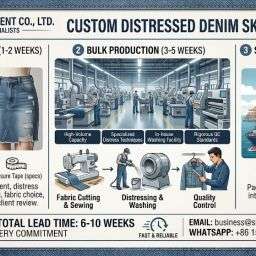
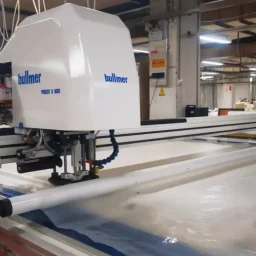
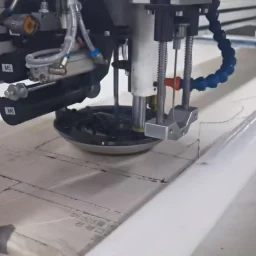
With materials verified, the factory floor moves into physical production. Fabric rolls are laid flat and relaxed to eliminate internal spinning tension before computer-controlled automated blades slice through dozens of layers of heavy denim with millimeter precision.
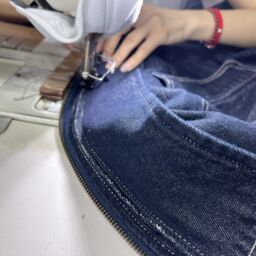
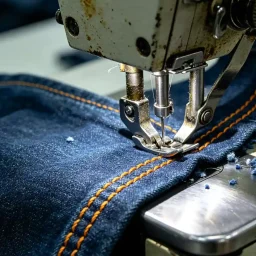
The cut panels are then fed into heavy-duty assembly lines. Denim sewing requires specialized, high-torque industrial sewing machines and ultra-strong poly-wrapped core threads capable of penetrating multiple layers of dense 14 oz fabric. Operators track exact seam allowances—such as a precise 1/2-inch tracking for structural outseams and heavy flat-felled chain stitching along the inseams—to ensure that the jeans can withstand intense wear and industrial post-sewing laundry friction without bursting or fraying.
5. Phase Five: Industrial Wash Chemistry, Artistry, and Size Calibration
The true transformation of private label denim happens inside the wet-processing laundry, where raw indigo jeans are intentionally distressed and softened to match your design concept. This phase is an intense combination of mechanical force and chemical calibration:
- Pumice Stone Washing: Raw jeans are tumbled inside massive industrial drums with porous volcanic pumice stones to physically strip indigo dye away from high-friction edges, generating beautiful high-low color depth.
- Artisanal Hand-Scraping: Master technicians mount individual jeans on inflated rubber forms, manually applying sandpaper abrasion to engineer custom whiskers across the front thighs and organic honeycombs behind the knees.
- Shrinkage Calibration: Because these intense wash cycles cause raw cotton fibers to contract unpredictably, CAD pattern makers must scale up the initial cutting pattern by the exact contraction percentages of the target wash. The jeans are cut “oversized” so they shrink perfectly into your target tech pack dimensions as they exit the final industrial dryer.
Logistical Perfection: Securing Global Margins via Landed DDP Shipping
Mastering technical wash aesthetics means absolutely nothing if your final retail profit margins are wiped out by the volatile realities of international shipping. Heavyweight, wet-processed denim garments are incredibly dense; transporting thousands of units of custom jeans involves substantial physical weight and volume, making your landed unit cost highly sensitive to freight market spikes.
Sourcing your private label collection under traditional FOB (Free On Board) terms exposes your brand to massive financial hazards. Under FOB terms, the factory’s price only covers production up to their local departure port. The moment the vessel leaves the dock, your design studio becomes the legal importer of record, leaving your working capital vulnerable to sudden ocean freight surges, terminal handling fees, customs brokerage delays, and unexpected destination import tariffs.
The definitive logistical solution for growing global fashion labels is partnering exclusively with a custom denim manufacturer that operates under a comprehensive Delivered Duty Paid (DDP) global framework.
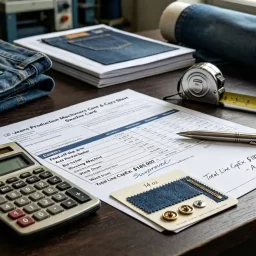
Under a complete worldwide DDP model, your manufacturing partner manages the entire production, washing, and shipping lifecycle. They consolidate premium denim sourcing, pattern engineering, precise hand-scraping, premium internal combed cotton integration, international ocean freight forwarding, destination customs clearance, and all import duties and local taxes into a single, locked-in price per unit. Your retail-ready inventory arrives directly at your warehouse or retail shop with absolutely zero surprise invoices or hidden port surcharges. This allows you to lock in your exact landed costs and net profit margins before production lines are ever turned on.
Conclusion: Scale Your Collection with Unyielding Product Integrity
Succeeding in the global private label denim market requires moving past hopeful assumptions and committing to a rigid, scientific manufacturing workflow from the initial tech pack to final landed logistics. By anchoring your mass production with exhaustive pre-shrunk patterns, elite internal components, and a locked-in global DDP shipping framework, your apparel brand can scale consistently without fear of supply chain failure.
Build your brand’s next denim drop on a rock-solid foundation of verified material weight, absolute pattern stability, and total landed cost certainty.
- Request the Denim Construction & Premium Component Sample Kit: Feel the immense structural weight of our premium raw denim and inspect the dense weave of our combed cotton pocketing and internal stabilizers.
- Launch Your Technical Design Consultation: Partner with our CAD engineering team to audit your current tech packs, lock in strict size tolerance baselines, and optimize your denim collection for global mass production.
Ready to streamline your custom denim supply chain with a world-class manufacturing partner?
Visit NEWASIAGARMENT.COM to source your premium custom jeans collection securely today.
- Activewear Fabric Approval Before Bulk: Opacity, Stretch, Recovery and Breathability
- How to Build a Garment Test Plan Before Bulk Production (Complete Guide)
- Apparel Change Control: How to Approve BOM, Material and Construction Revisions
- Denim Quality Control: Testing Methods, Common Defects & Quality Standards
- How Denim Quality Control Reduces E-Commerce Returns