

Securing the Capital: Safe Payment Terms for Your First Clothing Order
For emerging fashion brands, scaling apparel labels, and global procurement teams, issuing the first deposit payment for a bulk garment order is often the most nerve-wracking phase of the entire supply chain. Manufacturing softlines across global sourcing hubs involves significant working capital. Without a clear financial risk-mitigation strategy, buyers face serious vulnerabilities—including non-delivery, extreme quality deviations, or endless production delays.
Establishing safe, industry-standard payment terms balances commercial risk between the buyer and the vendor. It ensures the factory secures sufficient cash flow to purchase raw materials while protecting the buyer’s capital until strict production and quality benchmarks are met.
The Red Flags: High-Risk Payment Requests to Avoid
Before establishing a secure payment structure, buyers must recognize high-risk payment terms that leave them financially exposed:
- 100% Upfront Wire Transfers: Demanding full payment via Telegraphic Transfer (T/T) before production begins is the single biggest red flag in global sourcing. If quality issues arise, fabrics fail testing, or the supplier defaults, the buyer retains zero leverage to demand remediation or refunds.
- Unrecoverable Payment Channels: Reputable export manufacturers do not require payment via personal money transfer services, cryptocurrency, or unverified personal bank accounts. Legitimate transactions should always flow through official corporate bank accounts.
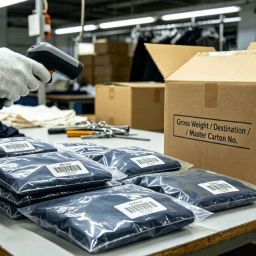
- Payment Released Before Quality Inspection: Consenting to pay the final balance prior to an independent Pre-Shipment Inspection (PSI) or Final Random Inspection (FRI) forfeits your ability to address workmanship defects or measurement errors.
- Vague Payment Milestones: Agreements that tie payments to loosely defined terms like “when production is almost done” rather than concrete contractual events—such as Pre-Production Sample sign-off or Bill of Lading issuance—create dispute hazards.

Industry-Standard Safe Payment Structures for Initial Orders
To protect working capital without alienating capable manufacturing partners, global apparel buyers rely on standardized financial frameworks:
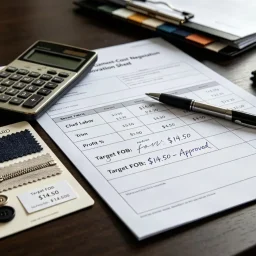
1. The Balanced Deposit Model: 30% Deposit / 70% Balance Post-Inspection
This is the most widely accepted standard for first-time orders between independent brands and verified export factories:
- 30% Advance Deposit: Transferred via corporate T/T only after official contract signing, tech pack sign-off, and lab dip/fit sample approval. This deposit covers the factory’s immediate raw material procurement and production scheduling costs.
- 70% Final Balance: Paid only after an independent third-party quality inspection passes based on standard Acceptable Quality Limit (AQL) 2.5 benchmarks, and upon presentation of clean, redacted shipping documents (such as the Bill of Lading).
2. Documented Commercial Letters of Credit (L/C at Sight)
For larger initial bulk orders (typically exceeding $30,000 to $50,000 USD), an Irrevocable Letter of Credit (L/C at Sight) provides the ultimate layer of financial security:
- How It Works: The buyer’s bank guarantees payment to the seller’s bank, but funds are released only when the factory presents strict, error-free shipping and inspection documents (e.g., Certificate of Inspection, Clean On Board Bill of Lading, Packing List, Commercial Invoice).
- The Buyer Benefit: Funds remain completely locked in the banking system until the factory proves that the exact specified volume of goods has been produced, inspected, and loaded for export.
3. Milestone-Based Phased Payments for Custom Development
When orders involve heavy custom fabric milling, specialized washing, or complex trim development, a multi-stage milestone payment structure mitigates risk for both parties:
- Stage 1 (30%): Released to initiate raw fabric milling and custom yarn dyeing.
- Stage 2 (30%): Released upon approval of the Pre-Production (PP) sample and the physical arrival of bulk fabrics at the cutting floor.
- Stage 3 (40%): Released after successful final inspection approval and export document verification.
Key Contractual Clauses to Protect Your Deposit
Safe payment terms are only as strong as the manufacturing contract supporting them. Every first-order purchasing agreement should explicitly incorporate key protective clauses:
- Inspection Contingency Clause: Explicitly state that final balance payments are strictly contingent upon passing a third-party AQL inspection. If the shipment fails inspection, the vendor must rework or replace defective units at their own expense before balance release.
- Delivery Schedule Penalties (Liquidated Damages): Include a fair late-delivery clause (e.g., a 0.5% to 1% deduction from the final invoice per week of unapproved delay) to incentivize factory adherence to critical retail delivery windows.
- Escrow or Trade Assurance Protection: For smaller first orders placed through digital sourcing portals, utilizing verified escrow services ensures funds are held by a neutral third party until physical delivery and sign-off are completed.
Partnering with Financial Transparency-First Manufacturers
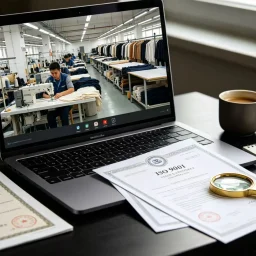
Established apparel manufacturers recognize that trust is built through transparent financial procedures and uncompromising quality standards. They welcome standard commercial deposit structures and third-party inspection audits because their production workflows are engineered to pass rigorous international checks.
Working directly with reliable suppliers like Newasia Garment ensures brands benefit from clear OEM/ODM contract terms, transparent production milestones, and open inspection access. Establishing a secure, structured payment framework on your first order lays the groundwork for a scalable, low-risk manufacturing partnership that supports long-term brand growth.
Read more
- How to Validate Pocket Function and Placement Before Bulk Production
- How to Standardize Fabric Hand Feel Across Production Lots
- Movement Fit Testing for Apparel: How to Check Ride-Up, Slippage, and Range of Motion
- Pre-Production Sample Approval: What Brands Should Lock Before Bulk Production
- Custom Sports Jersey Manufacturing Quality Control: A Global Manufacturing Guide