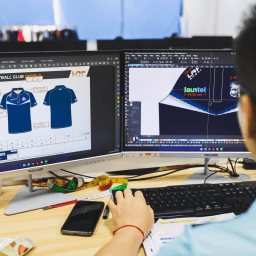

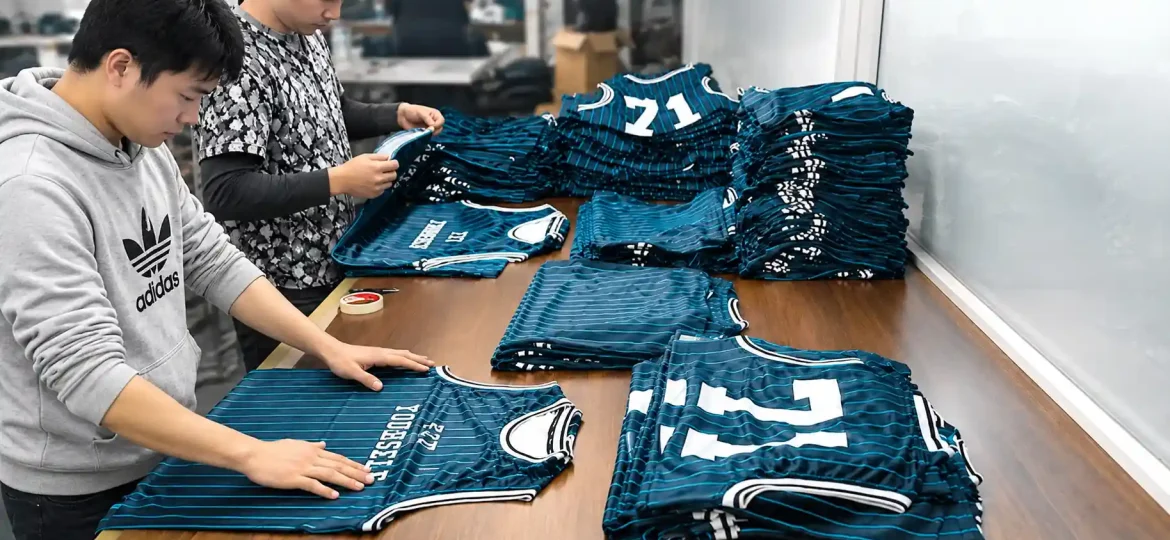
For athletic apparel brands, esports organizations, club teams, and global sportswear distributors, custom sports jerseys represent the pinnacle of performance-driven design. Whether manufacturing lightweight football kits, breathable basketball uniforms, or rugged rugby jerseys, producing athletic wear at scale requires rigorous technical oversight.
A uniform that looks immaculate in a digital mockup can easily suffer from peeling heat transfers, misaligned club badges, ghosting ink, or fractured seams under the intense mechanical stress of competitive play.
Managing quality control (QC) in custom sports jersey manufacturing bridges the gap between high-performance functionality and retail-ready durability. This global manufacturing guide covers the essential technical parameters required to maintain consistent quality throughout bulk athletic apparel production.
1. Prevent Names, Numbers, and Badges From Peeling
Player names, numbers, sponsors, and club crests are exposed to extreme friction, sweat, body heat, stretching, and repeated industrial laundering. Preventing graphic delamination is therefore one of the primary QC priorities in athletic wear decoration.
Sublimation vs. Heat-Transfer Application
For synthetic polyester jerseys, full-dye sublimation embeds ink directly into the fabric fibers, significantly reducing the risk of peeling because the graphic becomes part of the textile rather than sitting on its surface.
When applying high-density silicone crests, tackle-twill numbers, reflective sponsor logos, or other heat-transfer graphics, precise control of temperature, dwell time, and application pressure is essential.
Ensure Adhesive Film Integrity
High-grade industrial thermoplastic polyurethane (TPU) adhesive films can provide strong bonding between heat-applied graphics and performance knit fabrics.
Manufacturers should verify adhesive compatibility with the specific fabric composition, surface treatment, stretch characteristics, and intended washing conditions before beginning bulk production.
Conduct Industrial Wash and Stretch Testing
Bulk QC protocols should include repeated wash, stretch, and adhesion testing on representative production samples.
This type of durability testing is particularly important when developing durable custom jerseys for competitive teams and large-scale programs.
2. Maintain Artwork Alignment and Badge Size
Visual symmetry and precise graphic placement strongly influence the professional appearance of a sports jersey.
Establish Precise Sponsor and Crest Positioning
The master tech pack should define exact placement coordinates for every graphic element.
Specifications may include:
- Distance from the collar rib seam to the top of the club crest
- Horizontal and vertical center points
- Main sponsor chest positioning
- Sleeve badge placement
- Player name and number positioning
- Maximum and minimum graphic dimensions
Using measurable specifications instead of visual approximation helps maintain consistency throughout bulk production.
Scale Artwork Proportionally Across All Sizes
A sponsor logo that measures 25 cm wide may appear appropriate on an Adult Large jersey but become oversized or interfere with seams on an Adult XS or Youth Small garment.
Vector artwork and placement specifications should therefore be adjusted appropriately across each size tier to prevent visual distortion, excessive wrapping, or interference with construction details.
Use Laser-Guided Alignment Fixtures
Automated heat-press jigs, placement templates, and laser alignment systems can improve consistency during bulk graphic application.
These systems help ensure that names, numbers, sponsors, and sleeve badges remain level, centered, and correctly positioned across thousands of garments.
3. Ensure Name and Variable Data Accuracy
Bulk teamwear orders often involve variable data production, where every jersey may have a unique player name, number, or roster combination.
Cross-Reference Production Data With Approved Orders
Factory production teams should cross-reference team rosters, variable-data spreadsheets, purchase orders, and approved artwork before printing or pressing begins.
Any discrepancies should be resolved before the production file enters the decoration process.
Establish Multi-Stage Verification Gates
A reliable QC workflow should include verification at multiple production stages, including:
- Digital artwork and RIP output
- Printed or cut graphic inspection
- Pre-press verification
- Post-press inspection
- Final garment inspection
- Packing-list reconciliation
Multiple verification gates reduce the risk of swapped digits, misspelled player names, incorrect sizes, or incorrect graphic versions reaching the customer.
Follow Required Font and Typography Specifications
Where official league, club, or tournament requirements apply, manufacturers should verify approved typography, digit height, stroke weight, spacing, color, and positioning.
Following the applicable specification helps prevent compliance issues and rejected teamwear orders.
4. Control Opacity in Light-Coloured Jersey Fabrics
Light-coloured performance jerseys, particularly white, pale yellow, and light blue garments, can experience transparency issues under stadium lighting, sunlight, or high-intensity inspection lighting.
Select Appropriate Fabric GSM and Knit Construction
Lightweight athletic jerseys commonly use fabrics in the approximately 140–180 GSM range, although the appropriate weight depends on the sport, garment construction, fiber composition, and performance requirements.
For garments requiring higher opacity, manufacturers can evaluate high-density interlock, engineered mesh, or other suitable knit constructions that balance coverage, breathability, and weight.
Manage Sublimation Bleed-Through and Ghosting
Dark colors, internal graphics, back-neck tapes, and contrasting components can create unwanted show-through or dye migration when used with light-colored jersey bodies.
Manufacturers should validate sublimation temperature, pressure, dwell time, ink concentration, fabric construction, and pressing conditions during pre-production testing.
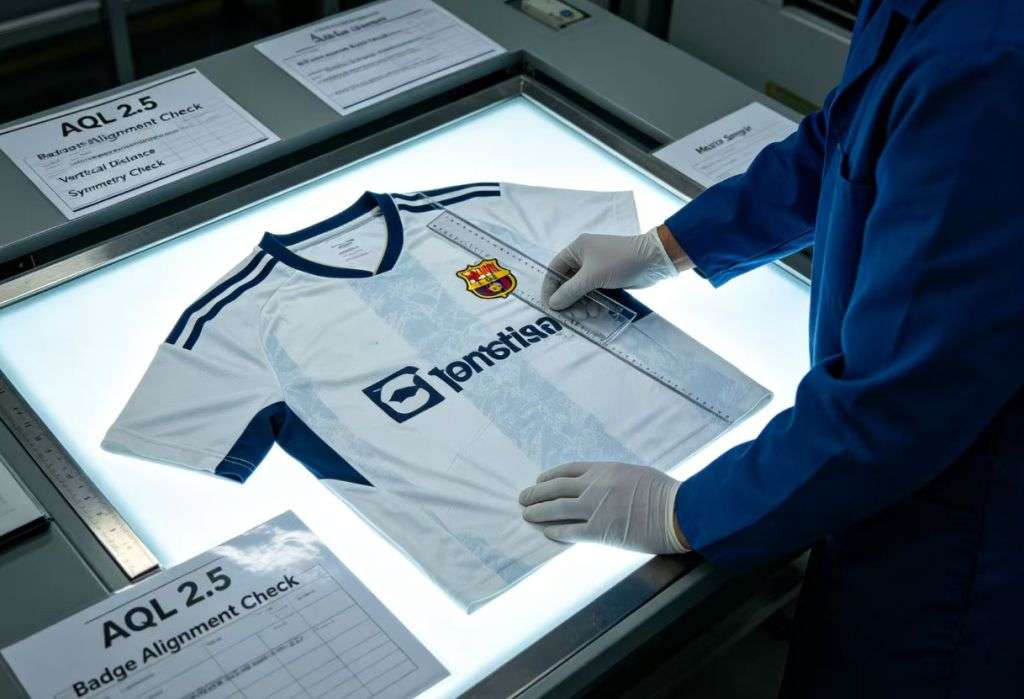
Conduct Light-Box Opacity Testing
QC inspectors should evaluate light-colored garments under controlled, high-intensity LED or standardized lighting conditions.
The inspection should check for:
- Excessive transparency
- Visible internal graphics
- Dye ghosting
- Uneven fabric density
- Color shadowing
- Unexpected show-through around seams and trims
5. Control Seam, Thread, and Stitch Density
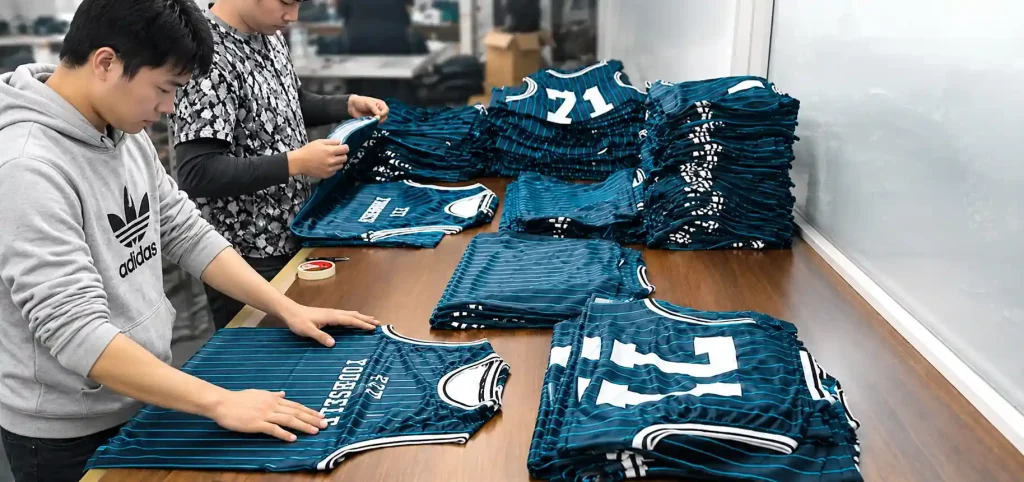
Sports jerseys must withstand repeated stretching, pulling, tackling, washing, and high-intensity movement. Seam integrity is therefore critical to long-term garment durability.
Use Appropriate Flatlock Seam Construction
Flatlock seams can reduce bulk and minimize skin irritation compared with conventional seam constructions.
Four-needle, six-thread flatlock configurations are commonly used in performance apparel where a combination of seam strength, flexibility, and wearer comfort is required.
The appropriate seam construction should ultimately be determined by the garment design, fabric properties, and performance requirements.
Select High-Tenacity Sewing Threads
High-tenacity continuous-filament polyester or nylon threads can provide the strength and durability required for performance apparel.
Thread selection should consider:
- Tensile strength
- Stretch recovery
- Abrasion resistance
- Moisture exposure
- Washing durability
- Compatibility with the fabric
Reinforce High-Stress Areas
High-stress junctions may require additional reinforcement to reduce the risk of seam failure.
Potential reinforcement points include:
- Hem slits
- Collar intersections
- Sleeve attachment points
- Side-seam junctions
- Pocket openings
- Other high-load construction areas
Bar-tack reinforcement can be applied where appropriate based on the garment’s construction and expected mechanical stress.
6. Establish Clear Approval Sample Requirements
The pre-production (PP) sample should serve as the primary physical reference for bulk manufacturing.
A properly approved PP sample provides the factory and buyer with a shared benchmark for appearance, construction, decoration, color, fit, and workmanship.
Verify Color and Pantone Matching
Fabric dye lots, sublimation colors, trims, and printed elements should be compared against approved Pantone (PMS) references or physical color standards.
Color evaluation should be performed under controlled lighting conditions, such as D65 illumination, to minimize discrepancies caused by different light sources.
Conduct Physical Fit and Stretch Testing
The approval sample should undergo physical evaluation before bulk production.
Testing should assess:
- Overall garment fit
- Range of motion
- Collar stretch and recovery
- Sleeve mobility
- Fabric drape
- Seam comfort
- Graphic placement
- Garment length and proportions
Where possible, testing should involve representative wearer profiles corresponding to the intended size range and end use.
Secure Factory Sign-Off Before Bulk Production
The approved PP sample, artwork, tech pack, measurement specifications, color references, and decoration standards should be documented and formally signed off before full-scale manufacturing begins.
Working with experienced manufacturing partners such as New Asia Garment can help establish a clear technical reference between the buyer and factory and reduce misunderstandings during bulk production.
7. Follow a Pre-Production and Bulk Inspection Checklist
Catching defects before garments leave the factory is essential for protecting brand reputation and reducing costly international returns and rework.
Apply ANSI/ASQ Z1.4 Sampling Procedures
Final Random Inspection (FRI) procedures can be structured around recognized sampling standards such as ANSI/ASQ Z1.4.
An AQL 2.5 inspection level is commonly used in commercial apparel quality programs, but the appropriate sampling plan and acceptance criteria should be agreed upon between the buyer and supplier before production.
Establish Multi-Point Quality Gates
Quality control should not depend solely on the final inspection.
A comprehensive QC system can include checkpoints at multiple stages:
- Raw fabric inspection
- Fabric weight and construction verification
- Color and dye-lot verification
- Sublimation color inspection
- Graphic placement inspection
- Heat-transfer adhesion testing
- In-line sewing inspection
- Measurement inspection
- Finished garment inspection
- Final random inspection
- Carton and packing verification
Early-stage inspections allow manufacturers to identify recurring production issues before they affect the entire order.
Verify Final Packaging and Export Readiness
Before shipment, QC teams should verify garment quantity, size distribution, labels, hangtags, folding method, polybags, carton markings, carton quantities, and shipping documentation.
A final packaging inspection helps ensure that technically acceptable garments are also prepared correctly for distribution and retail delivery.
Conclusion: Build Quality Into Every Stage of Jersey Manufacturing
Consistent quality in custom sports jersey manufacturing cannot depend on final inspection alone. It requires a controlled process that begins with fabric selection and artwork approval and continues through sublimation, heat application, sewing, inspection, and final packing.
By establishing clear technical specifications for graphic adhesion, artwork alignment, variable data accuracy, fabric opacity, seam construction, PP sample approval, and final inspection, athletic apparel brands can significantly reduce production defects and improve consistency across large-volume orders.
For global sportswear manufacturing, the goal is not simply to produce jerseys that look good when they leave the factory. The goal is to deliver garments that maintain their appearance, structural integrity, and performance through repeated wear, washing, and competitive use.
Frequently Asked Questions About Custom Sports Jersey Manufacturing
1. How can manufacturers prevent names and numbers from peeling off sports jerseys?
Manufacturers can reduce peeling by selecting the appropriate decoration method for the fabric and end use. Full-dye sublimation integrates the design into polyester fibers, while heat-applied names, numbers, badges, and sponsor logos require properly selected TPU adhesive films and controlled temperature, pressure, and dwell time. Wash, stretch, and adhesion testing should also be performed before bulk production.
2. How do manufacturers ensure accurate logo and badge placement on custom jerseys?
Accurate placement starts with a detailed tech pack that specifies exact measurements and coordinates for crests, sponsors, player names, numbers, and sleeve badges. During bulk production, alignment templates, heat-press jigs, and laser-guided positioning systems can help maintain consistent placement across different sizes and large production quantities.
3. How is player name and jersey number accuracy controlled during bulk production?
Factories should cross-reference approved purchase orders, team rosters, and variable-data spreadsheets before production begins. Multiple verification stages should then be implemented, including digital artwork checks, RIP output verification, pre-press inspection, post-press inspection, and final garment inspection. This helps prevent misspelled names, incorrect numbers, swapped player data, and incorrect typography.
4. How can sports jersey manufacturers prevent transparency in light-coloured fabrics?
Manufacturers can improve opacity by selecting an appropriate fabric weight and knit construction, such as high-density interlock or suitable performance mesh fabrics. Sublimation and heat-transfer processes should also be tested carefully to prevent dye ghosting and show-through. Light-coloured jerseys should be evaluated under controlled high-intensity lighting before bulk shipment.
5. What seam and stitching standards are important for high-performance sports jerseys?
Performance jerseys require seam constructions that can withstand repeated stretching, pulling, washing, and athletic movement. Depending on the garment design, flatlock seams can help reduce bulk and skin irritation, while high-tenacity polyester or nylon threads provide durability. High-stress areas may also require additional reinforcement, such as bar-tacks.
6. What should be included in a pre-production sample and final QC inspection?
The approved pre-production sample should establish the benchmark for color, artwork, measurements, fit, fabric, construction, stitching, and decoration. Final QC should then verify these specifications through raw-material checks, in-line inspections, finished-garment measurements, graphic adhesion testing, appearance inspection, final random inspection, and packaging verification before shipment.
Read more
- Custom Sports Jersey Manufacturing Quality Control: A Global Manufacturing Guide
- Bulk Print and Embroidery Quality Control for Custom Apparel
- Activewear Fabric Approval Before Bulk: Opacity, Stretch, Recovery and Breathability
- How to Build a Garment Test Plan Before Bulk Production (Complete Guide)
- Apparel Change Control: How to Approve BOM, Material and Construction Revisions