

For apparel brands, clothing startups, and global retail distributors, passing a static measurement check is only the first step toward achieving a successful garment fit. A garment may look perfect on a stationary fit model but fail to perform when the wearer bends, reaches overhead, walks, or squats. These issues often result from inadequate dynamic movement fit testing during the pre-production sample stage.
In apparel manufacturing, movement fit testing helps ensure that garments remain comfortable, secure, and functional during everyday activities. By evaluating range of motion, hem ride-up, waistband slippage, and fabric recovery before bulk production, quality control teams can identify fit problems early and reduce the risk of customer complaints and product returns.
1. How to Test Garment Range of Motion
Static fitting evaluates garment appearance and measurements while the wearer stands still. However, clothing must accommodate natural body movements without excessive tension, distortion, or loss of coverage. Dynamic fit testing helps identify pattern and construction issues that static inspections may overlook.
Overhead Reaching and Armhole Tension
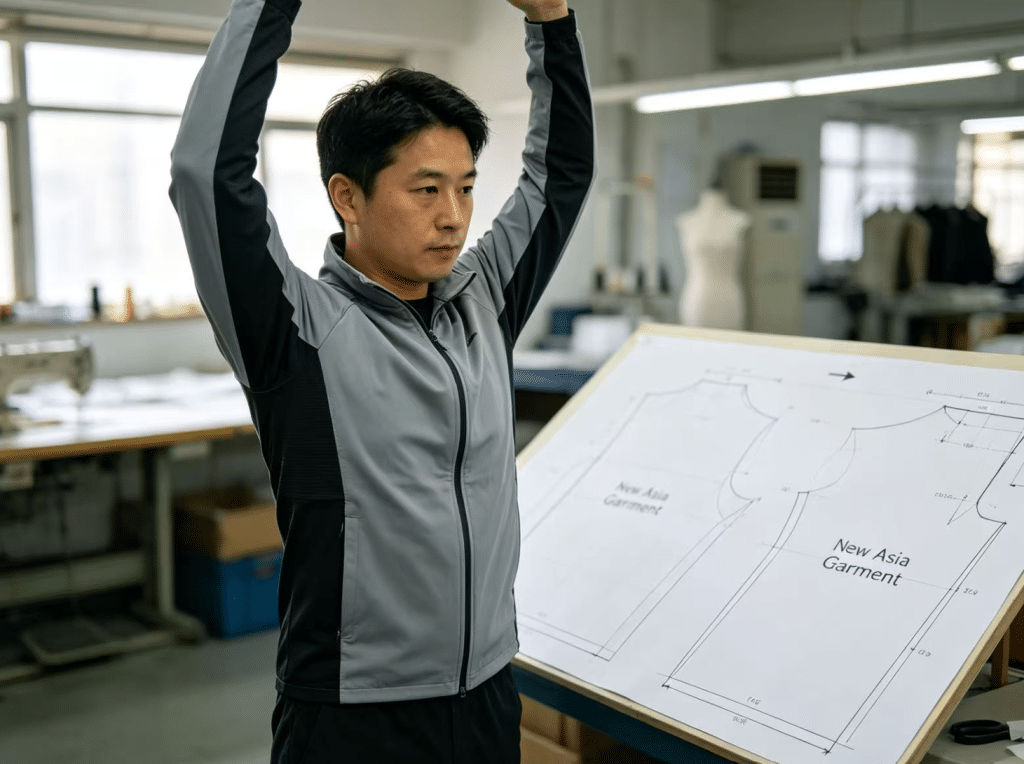
When a wearer raises their arms above shoulder level, poorly designed armholes can pull the entire garment upward. This is commonly known as garment jacking or excessive hem lift.
During fitting, ask the model to raise both arms overhead and extend them forward. Observe whether the side seams twist, the shoulders become restrictive, or the bottom hem rises excessively.
Potential solutions include adjusting armhole depth, refining sleeve cap geometry, or adding underarm gussets where appropriate. The goal is to improve shoulder mobility while maintaining the garment’s overall balance.
Torso Flexion and Back Seam Stress
Bending forward, sitting down, and reaching across the body can create tension around the upper back, shoulder blades, and waist.
During testing, check whether the back panel pulls tightly, seams become distorted, or the garment exposes more of the body than intended. Back pleats, yoke adjustments, articulated pattern shaping, and stretch panels may help improve mobility, depending on the garment design.
For woven garments, particular attention should be paid to seam stress and the amount of available movement ease.
Knee Articulation and Trouser Rise
Trousers, leggings, and activewear bottoms must accommodate walking, climbing stairs, kneeling, and deep squats without restricting movement.
Ask the fit model to perform repeated knee bends and squats. Check for excessive tension around the crotch, downward waistband movement, restricted knee flexion, and fabric pulling across the thighs.
Adjustments to the front and back rise, crotch curve, knee shaping, and stretch panel placement can improve comfort and mobility. The appropriate solution depends on the garment silhouette, fabric properties, and intended activity.
2. How to Prevent Hem Ride-Up and Seam Migration
Hem ride-up occurs when a garment moves upward during activity and fails to return to its intended position. Seam migration refers to unwanted shifting or twisting of garment components during wear.
Both issues can affect comfort, appearance, and consumer satisfaction.
The Tucked-In Shirt Test
Dress shirts, polo shirts, and base layers should remain securely tucked in during bending, reaching, and sitting.
Have the model perform these movements repeatedly while observing whether the shirt tails pull free or the hem shifts unevenly. Check the front-to-back hem balance, garment length, and amount of movement ease around the torso.
A longer back hem, an adjusted shirt-tail shape, or an appropriate internal grip solution may improve retention. Any grip tape or similar component should be tested for comfort, durability, and compatibility with the garment’s intended use.
Testing Ride-Up in Shorts and Leggings
Shorts, fitted trousers, and leggings may creep upward around the inner thigh during walking or repeated leg movement. This is particularly important for cycling apparel, gym wear, compression garments, and fitted casual clothing.
During a movement test, ask the model to walk, perform step-ups, lift their knees, and complete several squats. Observe whether the leg openings remain stable, the inseams migrate, or the fabric bunches around the crotch.
Possible improvements include refining the leg opening circumference, adjusting the crotch curve, reviewing fabric stretch and recovery, and optimizing seam placement. For fitted garments, waistband stability and thigh fit should be evaluated together.
Checking Collar and Neckline Stability
Neckline instability can cause a hoodie, sweater, or shirt to pull backward when the wearer reaches forward or extends their arms.
During fitting, check whether the collar presses against the throat, the neckline shifts backward, or shoulder seams move out of position.
Review the neckline shape, shoulder slope, back-neck balance, and garment ease. The neckline should remain comfortable and visually balanced throughout the intended range of motion.
3. How to Test Waistband Slippage and Roll-Over
A waistband must remain stable during movement without creating excessive pressure. If it slips, twists, or rolls over, the garment may become uncomfortable and require frequent adjustment.
The Twist and Bend Evaluation
Ask the fit model to rotate their torso, bend sideways, sit, stand, and squat. Observe whether the waistband moves downward, shifts laterally, or loses contact with the intended waist position.
For elastic-waist garments, evaluate the relationship between waistband circumference, elastic tension, fabric stretch, and body shape.
If slippage occurs, review the waistband dimensions, elastic specification, garment rise, and construction method before changing the elastic tension alone.
Preventing Elastic Waistband Roll-Over
Wide elastic waistbands in trousers, skirts, and leggings can fold or roll during repeated movement.
During testing, observe whether the waistband remains flat when the model bends, twists, and sits. Check whether the elastic twists inside its casing or whether the waistband fabric folds under tension.
Depending on the construction, potential solutions include using more suitable elastic, improving casing dimensions, adding appropriate topstitching, or incorporating internal stabilization.
Any modification should preserve comfort, flexibility, and the intended appearance of the waistband.
Testing Drawcords and Belt Loops
Adjustable waistbands require secure attachment points to maintain fit during activity.
For drawcords, check knot security, cord movement, and attachment strength. For belt loops, inspect stitching, reinforcement, and resistance to pulling during normal intended use.
Physical pull testing should follow the manufacturer’s quality standards and the garment’s intended application. The objective is to verify that these components remain functional without damaging the surrounding fabric or seams.
4. How to Evaluate Fabric Stretch and Recovery
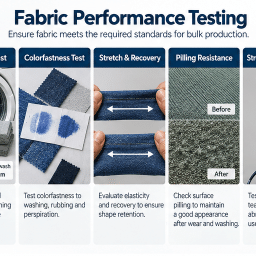
Even a well-developed pattern can perform poorly if the fabric stretches excessively or fails to recover its original shape. Fabric stretch, recovery, grain direction, and seam elasticity should therefore be assessed alongside garment fit.
Testing Elastane Fatigue and Fabric Bagging
Stretch fabrics containing elastane or spandex are widely used in activewear, leggings, fitted trousers, and performance garments. However, stretch alone does not guarantee lasting shape retention.
Repeated movement can cause bagging around the knees, elbows, seat, and other high-stress areas.
During testing, stretch the garment through its intended range, release the tension, and observe how quickly and consistently the fabric returns to its original shape. Repeat the process over a defined number of cycles where appropriate.
For more objective evaluation, combine garment-level movement tests with fabric stretch and recovery testing under specified laboratory conditions.
Checking Bias Stretch and Seam Twisting
Woven garments cut on the bias may offer fluid drape, but they can also be susceptible to distortion and seam twisting.
After repeated walking, bending, and torso rotation, inspect the side seams, hems, and panel alignment. Look for spiraling seams, uneven hemlines, or visible changes in garment balance.
If distortion occurs, review fabric grain alignment, cutting accuracy, panel construction, and fabric stabilization methods.
Verifying Seam Elasticity Under Tension
A fabric may stretch adequately while its seams restrict movement or fail under tension. This can lead to broken stitches, seam opening, or discomfort during wear.
Test the garment through its intended movements while inspecting high-stress areas such as armholes, crotch seams, inseams, and side seams.
For stretch garments, suitable stitch types may include stretch overlock or chainstitch constructions, depending on the application. Seam selection should account for fabric elasticity, thread performance, stitch density, and required seam strength.
The finished seam should provide sufficient flexibility without compromising durability.
5. How to Standardize Movement Fit Testing in Apparel Manufacturing
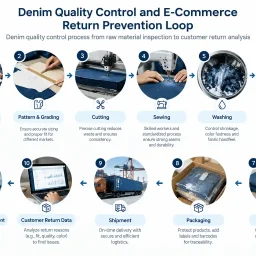
A standardized movement fit protocol makes sample evaluation more consistent and helps technical teams identify recurring fit problems before bulk production.
Establish a Repeatable Movement Test Checklist
Use a consistent sequence for every relevant pre-production sample. A practical checklist should include:
- Overhead reach: Check armhole tension, shoulder mobility, and hem lift.
- Forward bend: Evaluate back-panel tension, garment coverage, and seam stress.
- Squat and knee bend: Inspect crotch comfort, knee mobility, and waistband stability.
- Walking and step-ups: Check leg-opening creep, inseam migration, and fabric bunching.
- Torso rotation and side bend: Evaluate waistband slippage, seam twisting, and garment balance.
- Sitting and standing: Check pressure points, waistband roll-over, and changes in garment position.
- Repeated stretch and release: Assess fabric recovery and the behavior of high-stress seams.
The movements selected should reflect the garment category and its intended use. For example, activewear requires more extensive movement evaluation than a structured garment designed primarily for formal occasions.
Record Fit Issues and Define Acceptance Criteria
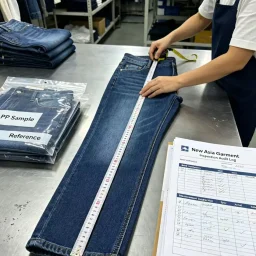
During each test, document the garment size, sample version, fabric composition, construction details, movement performed, and observed issue.
Where possible, record measurable indicators such as hem displacement, waistband movement, and post-stretch dimensional change. Use consistent camera angles or marked reference points to compare sample revisions.
Acceptance criteria should be established before testing. These may include allowable hem movement, minimum movement comfort, acceptable seam condition, and recovery requirements appropriate to the product.

A repeatable process makes it easier to compare revisions and determine whether a pattern or construction change has actually improved performance.
Correct Fit Problems Before Bulk Production
When a sample fails a movement test, identify the likely cause before modifying the pattern or materials.
For example, excessive hem lift during overhead reaching may indicate an armhole or sleeve-balance issue, while persistent waistband slippage may involve garment rise, waist circumference, or elastic performance.
After making a correction, repeat the same movement test under comparable conditions. Confirm that the original issue has improved without introducing new problems elsewhere in the garment.
Experienced technical manufacturing partners, such as New Asia Garment, can support brands with sample development, pattern refinement, fabric evaluation, and pre-production quality checks. A coordinated approach helps ensure that garment fit is assessed in motion as well as at rest.
Conclusion: Make Movement Fit Testing Part of Pre-Production Quality Control
Movement fit testing is an essential part of apparel product development because a garment must do more than meet static measurement specifications. It must also accommodate natural body movement, maintain coverage, resist unwanted shifting, and recover its intended shape after repeated wear.
By systematically evaluating range of motion, hem ride-up, waistband slippage, fabric recovery, and seam performance, apparel brands can identify potential problems before bulk manufacturing begins.
Combining repeatable movement tests with clear acceptance criteria and documented sample revisions helps improve garment comfort, functional performance, and consistency. For apparel brands and global retail distributors, integrating dynamic fit evaluation into pre-production quality control is a practical step toward delivering garments that move naturally with the wearer.
Frequently Asked Questions (FAQ)
1. What Is Movement Fit Testing in Apparel?
Movement fit testing is the process of evaluating how a garment fits and performs while the wearer performs activities such as walking, bending, reaching, sitting, and squatting. It helps identify problems with mobility, garment shifting, fabric recovery, and seam performance that may not be visible during a static fitting.
2. Why Is Dynamic Fit Testing Important Before Bulk Production?
Dynamic fit testing helps manufacturers identify functional fit issues before garments enter mass production. Detecting problems at the sample stage allows brands to refine patterns, fabric choices, and construction methods before committing to large production quantities.
3. How Do You Test Whether a Garment Has Enough Range of Motion?
Ask the fit model to perform movements relevant to the garment’s intended use, including overhead reaching, forward bending, walking, squatting, and sitting. Observe restricted movement, excessive fabric tension, hem displacement, seam distortion, and pressure points. Record the results against predefined acceptance criteria.
4. What Causes Shirts, Shorts, and Leggings to Ride Up?
Ride-up can result from insufficient garment length, unsuitable pattern proportions, incorrect ease, fabric friction, inadequate stretch recovery, or unstable garment openings. The cause varies by garment type, so testing should consider pattern geometry, material properties, and construction together.
5. How Can Manufacturers Prevent Waistband Slippage and Roll-Over?
Manufacturers can evaluate waistband circumference, garment rise, elastic tension, recovery, casing dimensions, and construction quality. Appropriate elastic selection, improved waistband shaping, and suitable stabilization or topstitching may help reduce slippage and roll-over. The final solution should be validated through repeated bending, twisting, sitting, and squatting tests.
6. What Should Be Included in a Garment Movement Fit Testing Checklist?
A practical checklist should cover overhead reaching, forward bending, walking, squatting, knee articulation, torso rotation, sitting, waistband stability, hem displacement, fabric recovery, and seam integrity. Test results should be documented consistently, with clear acceptance criteria and corrective actions before the production sample is approved.
Read more
- Movement Fit Testing for Apparel: How to Check Ride-Up, Slippage, and Range of Motion
- Pre-Production Sample Approval: What Brands Should Lock Before Bulk Production
- Custom Sports Jersey Manufacturing Quality Control: A Global Manufacturing Guide
- Bulk Print and Embroidery Quality Control for Custom Apparel
- Activewear Fabric Approval Before Bulk: Opacity, Stretch, Recovery and Breathability