
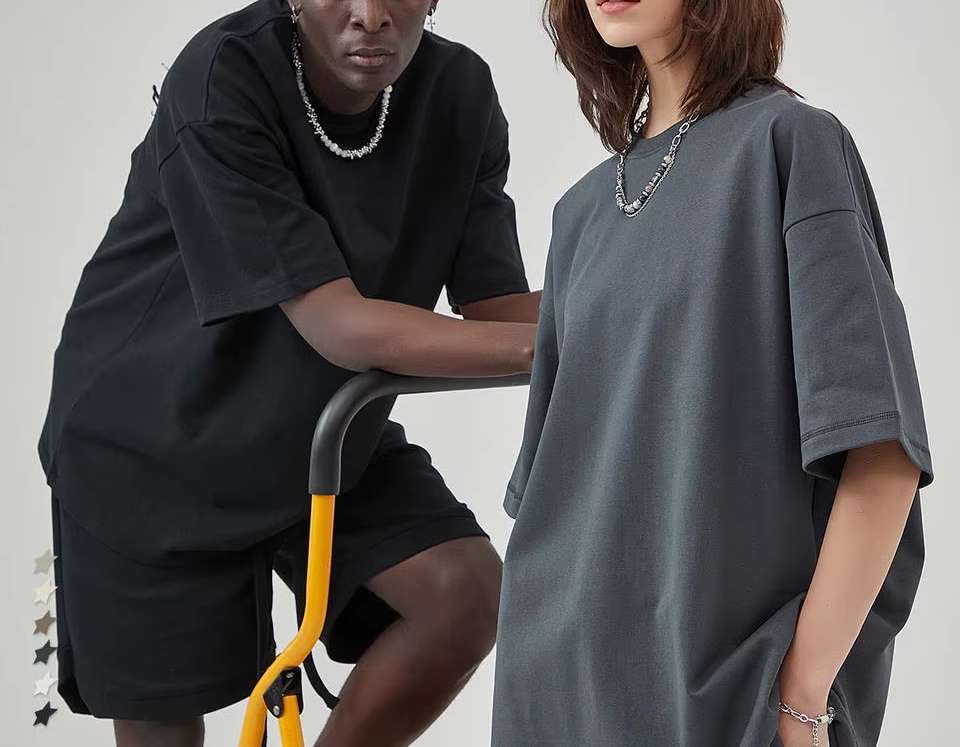
When it comes to premium apparel, fabric weight is one of the first things buyers notice. A 385 GSM heavyweight T-shirt stands out for its durability, structure, and high-end feel — making it a popular choice for streetwear brands, luxury labels, and private label collections.
If you’re sourcing or producing heavyweight T-shirts for your brand, understanding how they’re made will help you control quality, pricing, and supplier communication.
At Newasia Garment Co., Ltd., we produce premium 385gsm heavyweight T-shirts starting from 300 pieces per style. Using high-quality cotton and dense jersey knitting, our tees offer a structured, durable feel with excellent shape retention.
We handle the full process in-house—from fabric treatment and custom fit development to printing, embroidery, and branding—ensuring consistent bulk quality.
Send your specs and quantity for a bulk quote within 48 hours.
What is a 385gsm Heavy Weight T-Shirt?
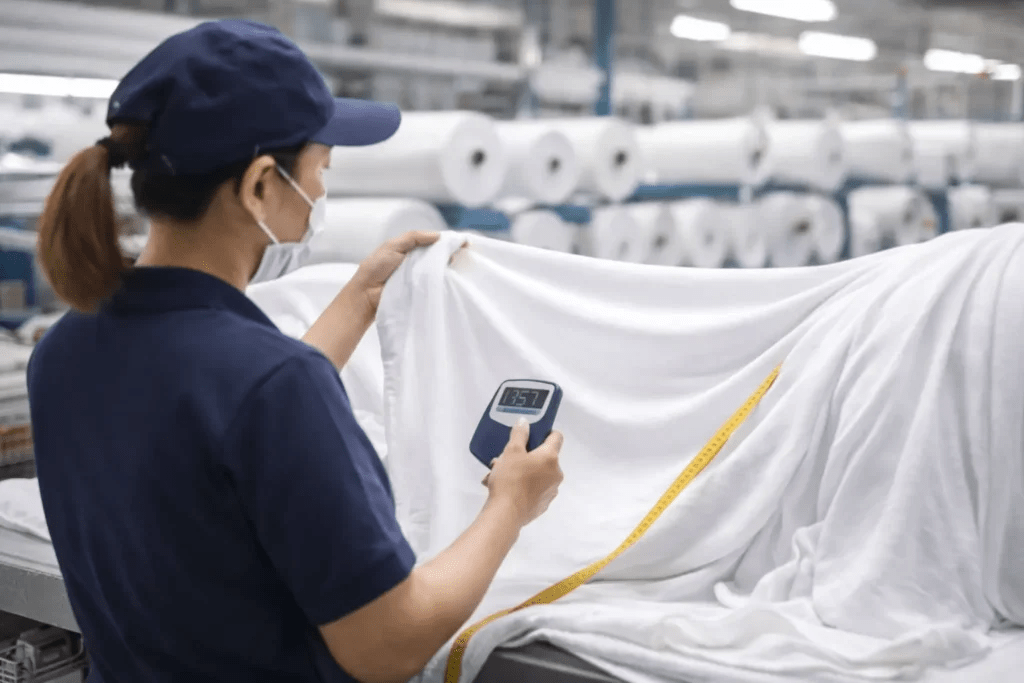
GSM, or grams per square meter, measures the weight and thickness of fabric. A 385gsm t-shirt is considered heavy weight, which means it is thicker, sturdier, and more resistant to wear and tear than standard 150–200gsm t-shirts.
Benefits of 385gsm heavy weight t-shirts:
- Long-lasting durability
- Premium feel and structure
- Ideal for embroidery, screen printing, and fashion branding
- Keeps its shape after multiple washes
Understanding GSM is the first step to creating a high-quality t-shirt that appeals to customers and stands out in the competitive apparel market.
| GSM Range | Category | Typical Applications | Fabric Examples |
|---|---|---|---|
| 340-450 | Medium Heavyweight | Heavy t shirts, lightweight denim, casual bags | Jersey knit, light canvas, twill |
| 450-600 | Heavy | Standard jeans, workwear, outdoor gear | Denim, duck cloth, heavy canvas |
| 600+ | Ultra-Heavy | Premium denim, industrial uses, upholstery | Extra-heavy denim, industrial canvas |
Why Choose High-Quality Heavyweight T-Shirts?
- Premium Durability and Structure:
- Heavyweight T-shirts are crafted from thick, durable fabrics that provide a solid and substantial feel. Ideal for those seeking extra durability, these T-shirts hold up well to frequent use and washing, making them perfect for workwear, uniforms, and outdoor activities. Their structured fit ensures a polished and professional appearance.
- Comfortable and Long-Lasting:
- Despite their thicker fabric, heavyweight T-shirts offer exceptional comfort. They provide warmth without compromising breathability, making them suitable for cooler weather or layering. Built to last, these T-shirts resist wear and tear, ensuring they maintain their quality over time.
- Professional and Versatile:
- With their robust feel and clean lines, heavyweight T-shirts are an excellent choice for creating a premium look. Whether for a branded uniform or a high-quality promotional giveaway, they convey professionalism and attention to detail, making a lasting impression.
- Ideal for t-shirt embroidery:
- Heavyweight fabrics are the ideal choice if you’re looking to get your logo embroidered on t-shirts. Whilst all weights of t shirt tend to print well, it takes a heavyweight to really make the most out of your embroidered designs. The heavier the fabric, the less risk of puckering around the logo and the cleaner and more professional the finish.
What Determines Fabric Weight
- Yarn Thickness: Lower count = thicker yarn; heavyweight tees use ~18-count for durability and softness.
- Fabric Construction: Higher thread count and tighter knit = denser, heavier fabric.
- Processing: Compacting and garment dyeing increase weight and create a dense, heavyweight feel.
How to Manufacture 385 GSM T-Shirts
Step 1: Choosing the Right Yarn
The foundation of any heavyweight T-shirt is the yarn.
For 385 GSM fabric, manufacturers typically use:
- 100% combed cotton (most common for premium feel)
- Compact cotton yarn (reduces hairiness, smoother surface)
- High yarn count (e.g., 16s, 20s) for thickness and strength
Pro tip for buyers:
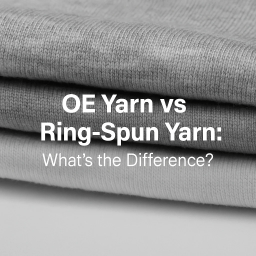
Ask suppliers whether they use ring-spun or open-end yarn. Ring-spun offers better softness and durability, which is essential at higher GSM levels.
Step 2: Knitting the Fabric
Heavyweight T-shirts are usually made using single jersey knitting, but with tighter construction.
Key production details:
- Low gauge knitting machines to handle thicker yarn
- High stitch density to achieve 385 GSM weight
- Controlled tension to avoid fabric distortion
At this stage, consistency is critical. Uneven knitting can lead to:
- Weight variation
- Poor drape
- Shrinkage issues after washing
Step 3: Fabric Dyeing and Finishing
Once knitted, the fabric goes through dyeing and finishing processes.
Dyeing Options
- Reactive dyeing (best for cotton, long-lasting color)
- Garment dyeing (popular for vintage/streetwear looks)
Finishing Techniques
To elevate a 385 GSM T-shirt, factories often apply:
- Enzyme wash → softer hand feel
- Silicone wash → smoother surface
- Pre-shrinking (sanforizing) → reduces shrinkage risk
Important for importers:
Always confirm shrinkage rate (≤5%) and color fastness test reports before bulk production.
Step 4: Pattern Making and Cutting
Heavyweight fabric behaves differently from lightweight cotton.
Patterns must account for:
- Reduced stretch
- Heavier drape
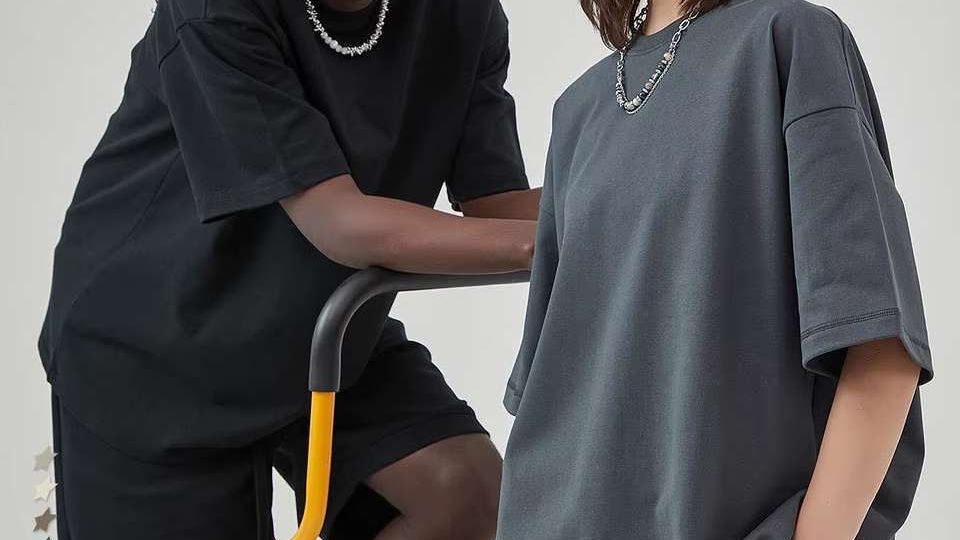
- Oversized or boxy fit preferences
Most 385 GSM T-shirts feature:
- Dropped shoulders
- Wider sleeves
- Reinforced necklines
Precision cutting ensures:
- Size consistency
- Fabric efficiency (reducing waste)
Step 5: Sewing and Construction
Because of the thickness, standard stitching methods are not enough.
Key construction features:
- Double-needle stitching for durability
- Reinforced shoulder seams (often with tape)
- Thick ribbed collars (usually 260–300 GSM rib)
Factories must use:
- Heavy-duty industrial sewing machines
- Skilled operators experienced with thick fabrics
Step 6: Quality Control
For B2B buyers, this step is where many issues can be prevented.
Checklist before shipment:
- Fabric weight tolerance (±5%)
- Measurement accuracy
- Stitch strength
- Color consistency across batches
- Surface defects (pilling, holes, oil stains)
A reliable supplier should provide:
- Inline inspection reports
- Final AQL inspection
Step 7: Packaging and Branding
Heavyweight T-shirts are often positioned as premium products, so packaging matters.
Common options:
- Custom woven labels
- Branded hangtags
- Individual polybags or eco-friendly packaging
For higher-end brands:
- Folded box packaging
- Tissue wrapping
Future Trends in T-Shirt Manufacturing
- Sustainable Practices: Eco-friendly materials like recycled polyester and organic cotton are becoming industry standards.
- Technological Innovations: Automation, 3D printing, and smart textiles are shaping the future of knitwear production.
Why Choose Newasia Garment Co., Ltd.
When it comes to manufacturing premium heavyweight T-shirts, choosing the right factory is critical.
Newasia Garment Co., Ltd. is a trusted apparel manufacturer with extensive experience in high-quality garment production.
✔ Strong Manufacturing Capability
- Advanced knitting & dyeing technology
- Strict quality control system
- Support for custom GSM fabrics
✔ Custom OEM/ODM Services
We provide:
- Fabric development (200–400 GSM)
- Custom design & branding
- Bulk production with stable quality
Customization Options
Key elements that define fabric weight, structure, and premium feel of heavyweight T-shirts.
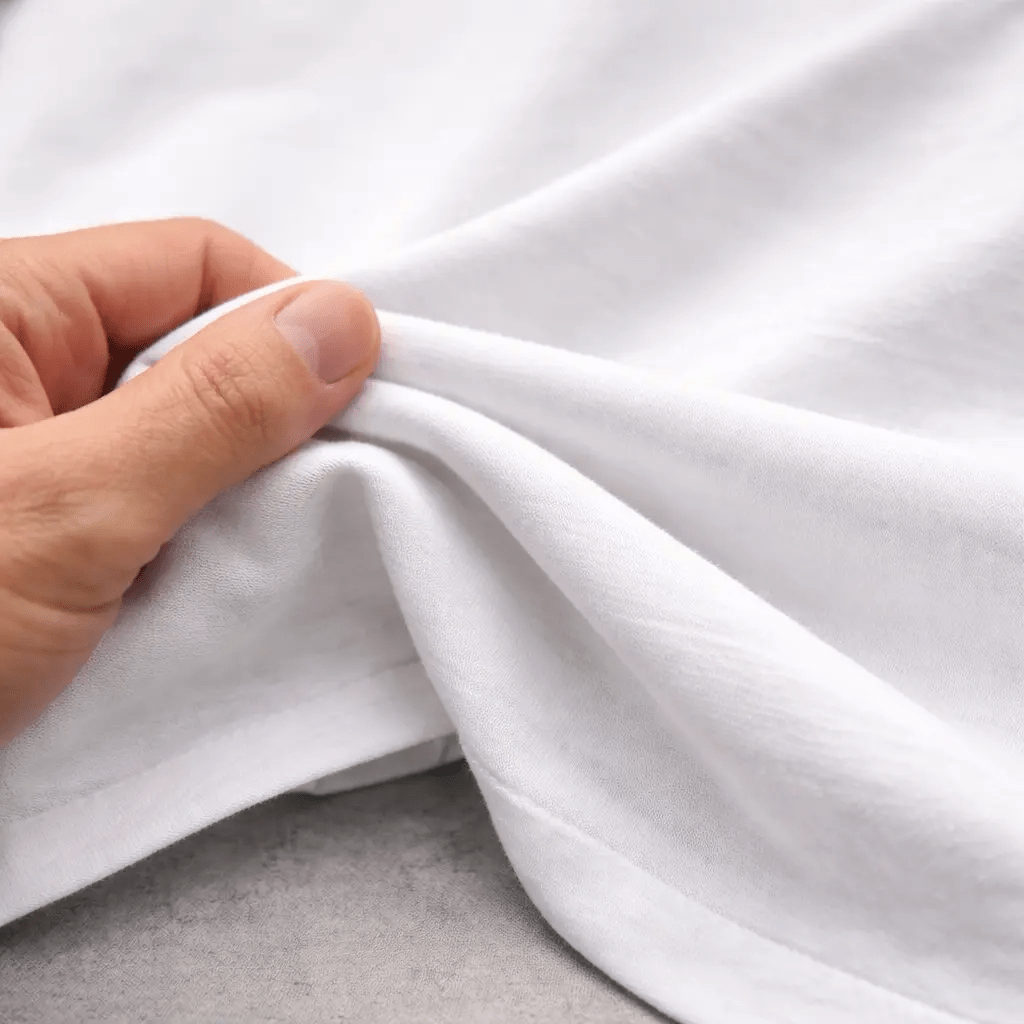
250–300 GSM range
True heavyweight structure
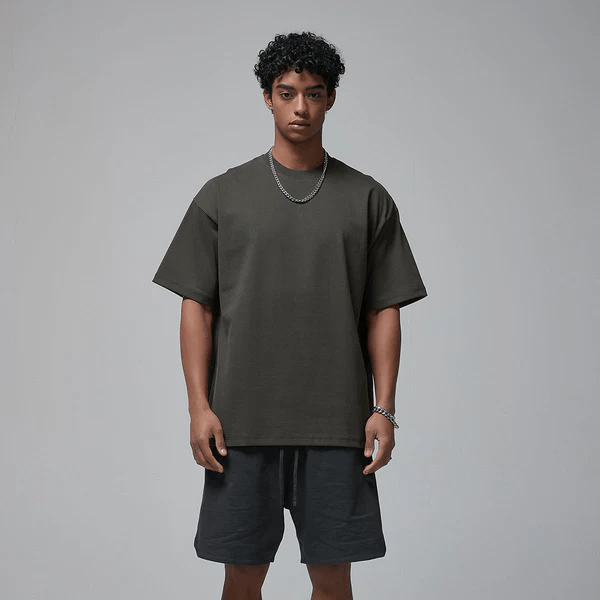
100% cotton preferred
Dense and durable texture
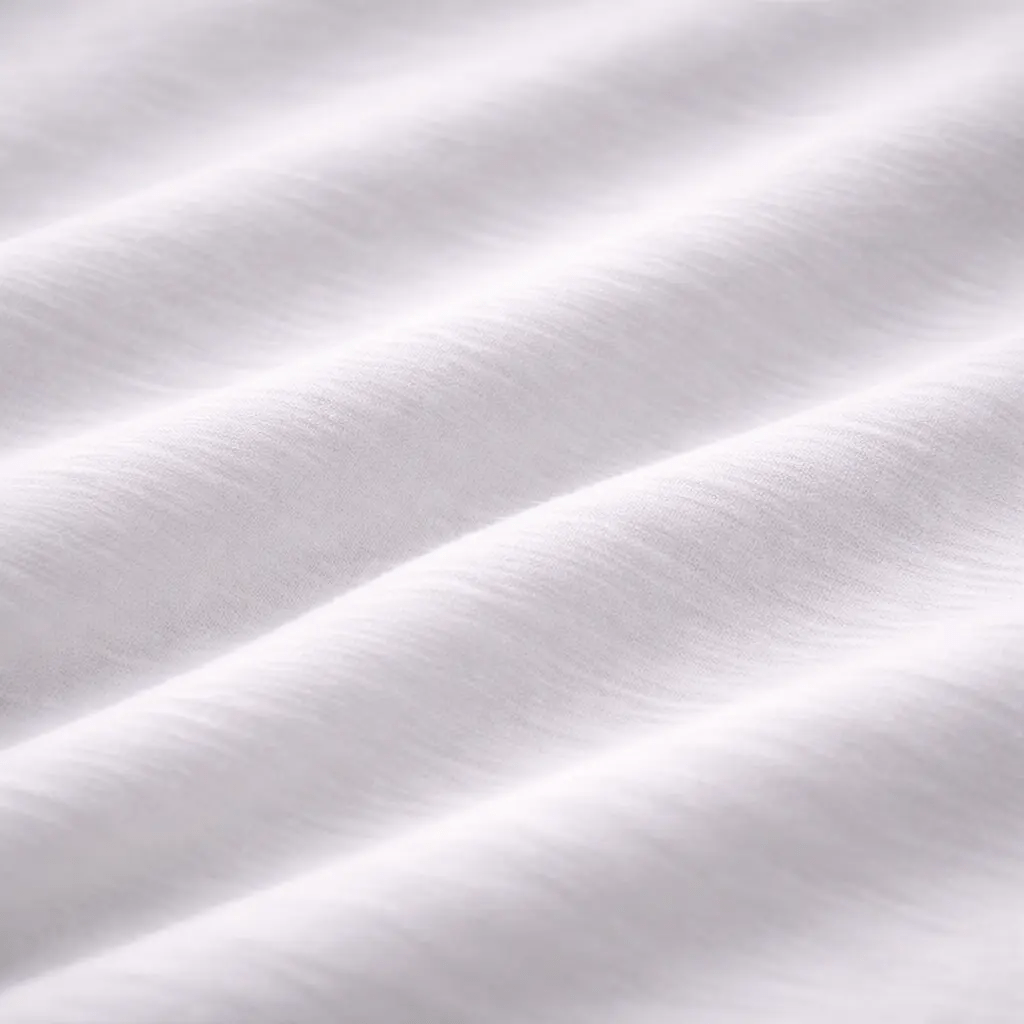
Smooth or slightly textured
Premium hand feel
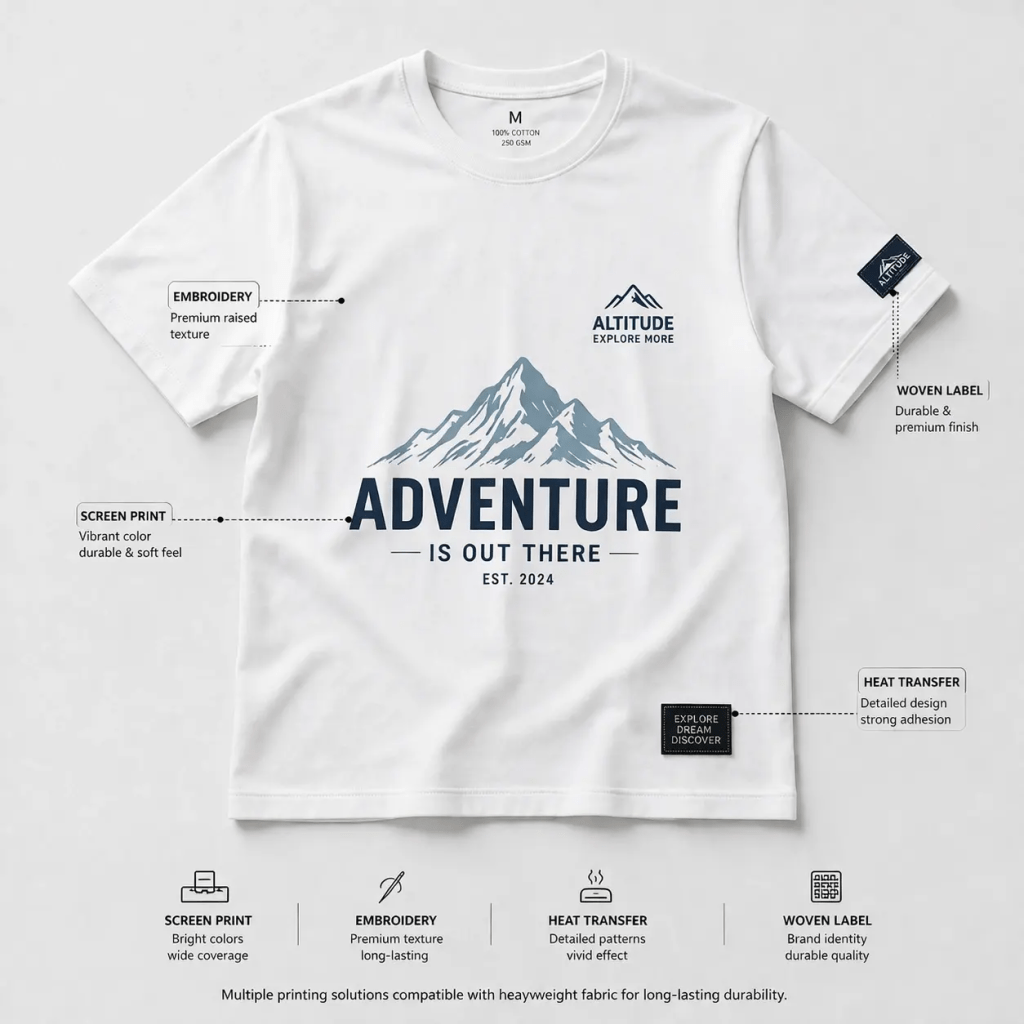
Various printing options
Matched to fabric thickness
How We Control Fabric Weight & Structure
Heavyweight T-shirts require stable GSM control and proper processing to maintain structure and durability.
- Fabric Sourcing
Consistent 250–300 GSM supply - Pre-production Testing
Fabric checked before bulk - Shrinkage Control
Pre-treated for stability - Bulk Consistency
Uniform structure across batches
Challenges in Producing Heavyweight T-Shirts
Heavyweight fabrics provide structure and premium feel, but require proper control during production.
- Fabric too stiff or too soft
Adjusted through fabric selection - Shrinkage after washing
Controlled through pre-treatment - Inconsistent GSM in bulk
Managed through stable sourcing - Print not suitable for thick fabric
Matched with appropriate methods
Heavyweight T-Shirt Care Tips
- Wash Inside Out: Protect prints and reduce friction.
- Use Cold Water & Gentle Cycle: Prevent shrinkage and keep colors vibrant.
- Avoid High Heat Drying: Air dry or use low heat to preserve fabric and prints.
- Use Mild Detergent: Avoid harsh chemicals to maintain quality.
Certified Professional Clothing Producer
We are very proud of these certificates! They represent Newasia Garment Co.,Ltd. ’s amazing achievements and accreditations. They show how much we care about quality, safety, and professionalism.
We’re proud to say that we have obtained BSCI and ISO 90001 certificates, and inspection certificates for filling materials such as down and cotton. We follow international standards throughout our production process and take responsibility for the quality of our products.
As one of China’s leading clothing manufacturers, we are pleased to be recognized by respected organizations. These certifications underscore our reliability as a trusted supplier to the global apparel industry.
Trusted Certificates:
Why Choose Us
 Independent base We have our own laboratory and can independently develop fabrics , China  Professional certification Certification: ISO 9001, ISO 14001,BSCI,GRS |  Full-equipped Full-equipped, from fiber manufacturing, yarn spinning, weaving, dyeing and processing to finished product production  Rich experience Professional, large and experienced design team, combined with the latest artificial intelligence technology |  Our Facilities 12,000 skilled employees, daily production capacity exceeds 100,000 pieces  Fashion exhibition Participated in domestic and foreign fashion weeks and exhibitions many times |
Trusted by Global Clients







How Do We Guarantee the Quality
Our quality assurance begins with designing and planning, then continues through every step of the production and post-production inspections. Delivery is not an ending. We still offer money-back guarantee for quality issues.
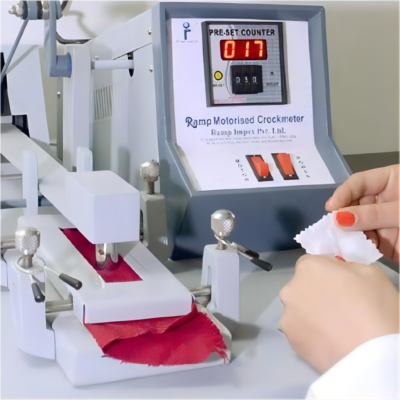
When sourcing fabrics, we will check all related fabric certificates from our suppliers.
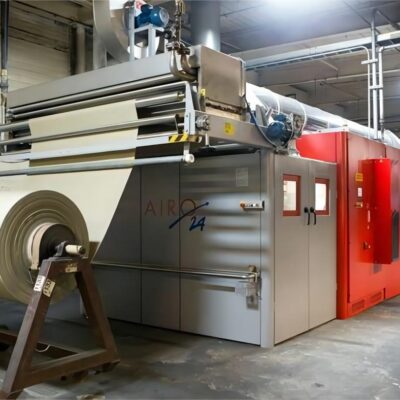
We make sure the fabric is well pre-washed to meet the standards before cutting.
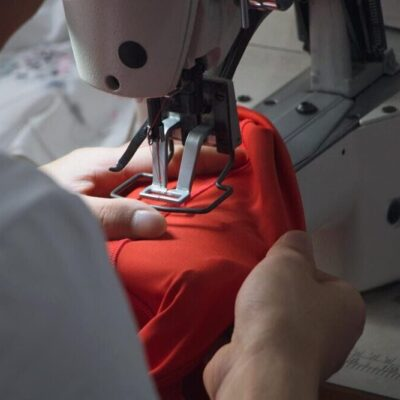
All our workers are well-trained and have many years of experience in the garment industry. They are all local workers with high stability.
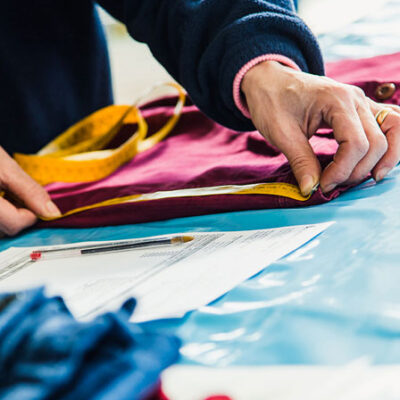
Our quality team will follow SOPs to conduct five times of quality checks before shipping.
Frequently Asked Questions
Q1: What is your Minimum Order Quantity (MOQ)?
We specialize in flexible production solutions to support emerging brands and growing businesses.
You can mix colors and sizes within the same style and fabric for greater flexibility.
For highly customised or technical garments (such as specialised denim washes or intricate embroidery), MOQ requirements may range from 200 to 300 units.
Our standard MOQ ranges from 100 to 300 units per design, depending on fabric availability and production complexity.
For best pricing efficiency, MOQ is typically based on 300 per style per colour.
Q2: What Services Do You Offer?
We provide full-cycle fashion support, including:
Sustainability Consulting: Eco-fabric sourcing, ethical production planning.
Sourcing: Local and global raw material, fabric R&D, and procurement (trims) with cost optimization.
Manufacturing: Custom manufacturing with quality control checkpoints.
Design & Development: Assistance with tech packs, trend research, and collection building.
Logistics: Shipping coordination to your warehouse or 3PL.
Q3: Can I Customize My Designs Fully?
We work with both OEM (your design, our production) and ODM (our templates customized for you) models. Customization options include:
Labels, hangtags, branded packaging
Fabric type and color
Fit and sizing
Printing (screen, DTG, sublimation, embroidery)
Accessories (zippers, buttons, cords)
Q4: What are your sustainability practices?
We’re committed to responsible manufacturing through:
Energy-efficient production technology
Waste reduction programs and ethical labor practices (BSCI certified)
GOTS-certified organic cotton and recycled material options
OEKO-TEX® certified dyes and processing
Q5: What Are Your Lead Times?
For in-stock items: ships worldwide within 3–7 days For custom orders: production lead time 15–30 days Urgent / Express Options: Available at a premium. Timing can vary depending on fabric development, approval cycles, and order complexity.
Q6: What is your production capacity?
Our facility employs 12,000 skilled employees, daily production capacity exceeds 100,000 pieces. We handle orders from 100 pieces to 50,000+ units across:
Technical apparel
Activewear and sportswear
Denim and casual wear
Children’s clothing
Q7: Where are your garments produced?
Our headquarters are based in China, where we operate our own vertically integrated factory. Our infrastructure and strategically placed worldwide manufacturing facilities allow us to offer extremely competitive pricing for fully custom clothing. offer flexible production options tailored to your needs. All manufacturing is supervised by our quality control team to ensure consistent standards
Conclusion
Creating a 385gsm heavy weight t-shirt is a blend of quality fabric, precise craftsmanship, and attention to detail. By following this guide, you can produce t-shirts that not only feel luxurious but also last longer, making them ideal for fashion brands, promotional merchandise, or premium apparel lines.
If you’re looking to source or manufacture 385gsm heavy weight t-shirts, we offer expert guidance and high-quality fabrics to bring your designs to life. Contact us today for a consultation or sample!
Read more: How to Make a 385gsm Heavy Weight T-Shirt: From Cotton Bale to Finished Garment
- Activewear Fabric Approval Before Bulk: Opacity, Stretch, Recovery and Breathability
- How to Build a Garment Test Plan Before Bulk Production (Complete Guide)
- Apparel Change Control: How to Approve BOM, Material and Construction Revisions
- Denim Quality Control: Testing Methods, Common Defects & Quality Standards
- How Denim Quality Control Reduces E-Commerce Returns