
The choice between ring spun and open end yarn comes down to softness, durability, and cost. Ring spun heavy T-shirts are softer, more durable, and premium-feeling, while open end heavy T-shirts are rougher, less expensive, and suited for budget-focused products.
Looking to produce premium heavy T-shirts? Understanding the differences between ring spun and open end yarn is essential for making the right sourcing and production decisions.
At Newasia Garment Co., Ltd., we have extensive experience producing both types of heavy T-shirts for top global brands, including American Eagle Outfitters, Uniqlo, Zara, Gap, Levi’s, and Lee.
What Is Ring Spun Yarn?
Ring spun yarn is made by continuously twisting and thinning cotton fibers to create a fine, strong, and soft yarn.
Characteristics for heavy t-shirts:
- Soft, smooth texture
- Durable and long-lasting
- Ideal for premium and all-season heavy t-shirts
- More expensive due to labor-intensive spinning
Ring spun yarn produces heavy t-shirts that feel soft on the skin while maintaining structure, making them a favorite for high-quality apparel lines.
What Is Open End (OE) Yarn?
Open end yarn is created by feeding fibers into a rotor that twists them together. It’s a faster, more cost-effective spinning process.
Characteristics for heavy t-shirts:
- Coarser texture compared to ring spun
- Less durable over time
- Economical for bulk production
- Slightly rougher feel, but ideal for casual wear
Open end heavy t-shirts are suitable for large-scale manufacturing and budget-friendly products, but may not match the softness or longevity of ring spun fabrics.
How Does Ring Spun Spinning Work at Newasia Garment Co., Ltd.?
Ring-spun spinning twists individual fibers tightly using ring travelers, creating finer, stronger yarns with uniform structure. This method is ideal for producing smooth, durable fabrics for heavy T-shirts, providing superior softness, longevity, and premium hand feel.
At Newasia Garment Co., Ltd., we integrate ring-spun spinning with in-house quality control, sustainable fibers such as organic cotton, and long-standing experience in heavy T-shirt production, ensuring every garment meets the highest international standards. Our expertise with OEKO-TEX certified fibers and over 39 years of industry experience ensures consistent, high-quality output.
| Process Step | Ring-Spun | Open-End |
|---|---|---|
| Fiber Preparation | Individual fibers drafted and twisted precisely | Bulk fibers opened via air vortex |
| Yarn Formation | Tight twist via ring traveler for strength | Rotor spins fibers loosely for speed |
| Output Quality | Smooth, even texture; high tensile strength, ideal for heavy T-shirts | Rougher, bulkier; lower tensile strength |
| Speed | Slower, detailed process for premium quality | Faster, high-volume production |
💡 Why It Matters for Heavy T-Shirts:
Ring-spun yarn delivers durable, comfortable, and premium heavy T-shirts, while open-end yarn is suitable for budget-friendly or high-volume casual lines.
With Newasia Garment Co., Ltd., brands can confidently select the spinning method that aligns with their quality, comfort, and price goals for seasonal heavy T-shirt collections.
Ring Spun vs Open End: Key Differences
1. Manufacturing Process
- Ring Spun: Fibers are twisted together continuously, producing a finer, stronger, and softer yarn. This labor-intensive process results in a premium fabric ideal for heavy t-shirts.
- Open End (OE): Fibers are spun using a rotor method, which is faster and less expensive but produces a coarser and rougher yarn.
2. Fabric Softness and Feel
- Ring Spun Heavy T-Shirts:
- Softer to the touch
- Smooth surface for printing and embroidery
- Comfortable for all-day wear
- Open End Heavy T-Shirts:
- Rougher texture
- Less suitable for intricate prints
- More rigid, better for basic or workwear t-shirts
3. Durability and Longevity
- Ring Spun: Longer fibers create stronger yarn, making heavy t-shirts more resistant to pilling and shrinkage.
- Open End: Shorter fibers lead to quicker wear and fading over time, though they remain cost-effective for bulk orders.
4. Weight and Thickness
Both ring spun and open end yarns can produce heavy t-shirts, but:
- Ring spun fabrics feel denser without being stiff
- Open end fabrics may feel bulkier but slightly rougher
5. Cost and Production Efficiency
- Ring Spun: Higher production cost and slower manufacturing process due to fine yarn handling
- Open End: Lower cost, faster production—ideal for budget or mass-produced heavy t-shirts
Ring Combed Cotton Yarn:
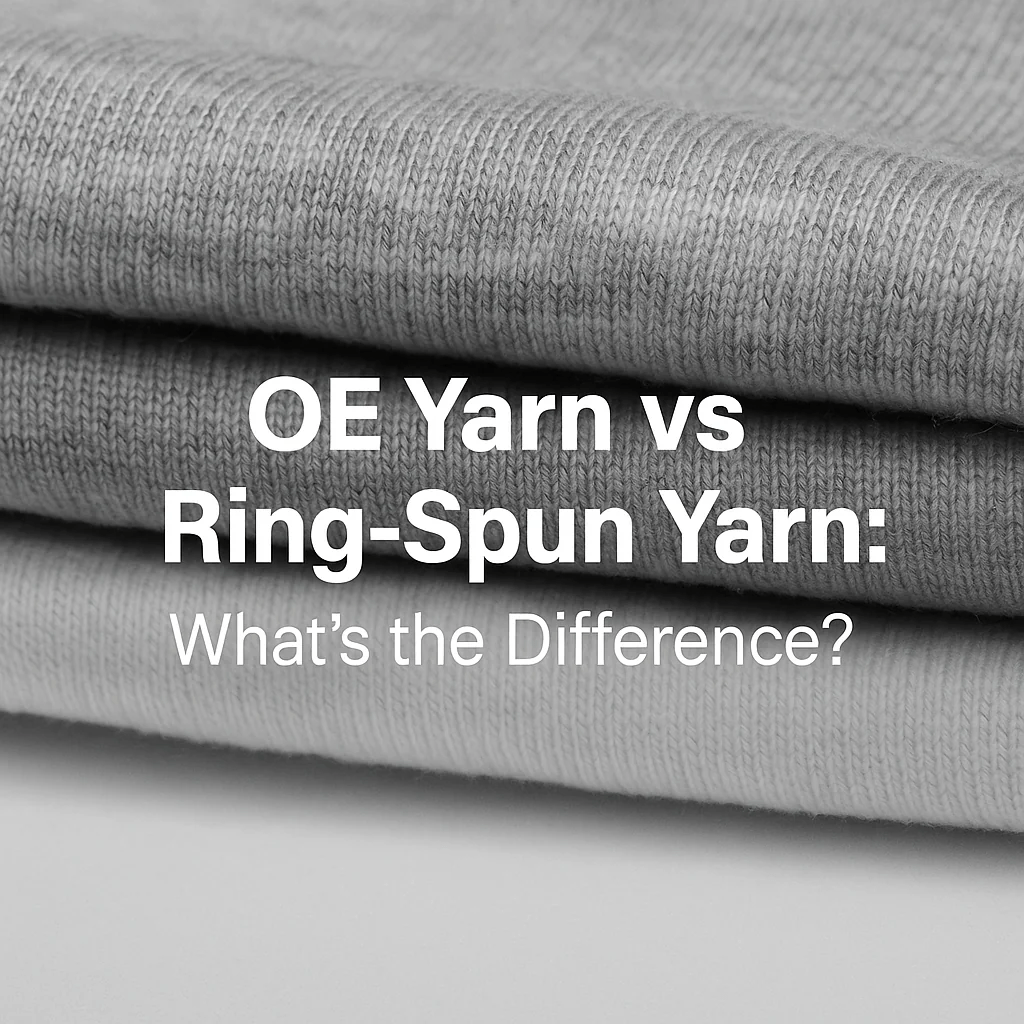
The primary difference between ring combed cotton yarn and open-end cotton yarn lies in the spinning process and the resulting characteristics of the yarn, such as strength, smoothness, and texture.
- Spinning Process: In the ring spinning process, cotton fibers are first carded (separated and aligned), and then combed to remove short fibers and impurities. The combing process ensures that only the longest, most aligned fibers are spun into yarn. The fibers are then twisted to create a fine, strong yarn.
- Texture: Ring combed cotton yarn is smoother and more uniform because of the combing process. It has fewer short fibers, which results in a finer, more even texture.
- Strength: The combing process aligns the fibers and removes impurities, making the yarn stronger and more durable.
- Softness: Combed cotton is generally softer than open-end cotton yarn due to the removal of short fibers, leading to a finer and smoother finish.
- Cost: Ring combed cotton is more expensive because of the extra processing involved in combing and spinning the fibers.
Open-End Cotton Yarn:
- Spinning Process: Open-end spinning, also known as rotor spinning, is a faster and more cost-effective spinning method. In this process, cotton fibers are fed into a spinning rotor where they are twisted into yarn without the combing step. The fibers are less aligned and more randomly distributed.
- Texture: Open-end cotton yarn tends to be rougher and less smooth compared to ring combed yarn. Because the fibers are not combed, short fibers remain in the yarn, giving it a more textured, uneven appearance.
- Strength: Open-end yarn is generally weaker than ring combed yarn because the fibers are less aligned and not as tightly twisted. The absence of the combing step can result in weaker yarn.
- Softness: Open-end cotton yarn is typically rougher and less soft than ring combed yarn due to the presence of shorter fibers.
- Cost: Open-end yarn is cheaper to produce because the spinning process is less labor-intensive and quicker than ring spinning.
Key Differences Between Ring Spun and Open End Heavy T-Shirts:
| Feature | Ring Spun Cotton | Open End Cotton |
|---|---|---|
| Feel | Extra soft and smooth, premium hand feel | Coarser and rougher, less comfortable initially |
| Durability | Stronger fibers, longer-lasting, resists wear | Less durable, fibers break down faster |
| Fabric Appearance | Cleaner, finer surface, more refined look | Slightly rougher texture, uneven appearance |
| Production Cost | Higher due to labor-intensive spinning | Lower cost, faster production process |
| Suitability | Premium heavy T-shirts, corporate wear, fashion-forward brands | Budget-friendly heavy T-shirts, casual mass-market wear |
| Breathability | Maintains comfort even in thicker fabrics | Slightly stiffer, less breathable for heavy T-shirts |
Ring Spun vs Open End: Quick Comparison Chart
The quick snapshot above covers the essentials, but here’s what stood out to me:
- Softness: From day one, ring spun shirts felt significantly softer — like the difference between satin and standard cotton bedsheets.
- Durability: After three washes, open end tees showed pilling starting around the collar, while ring spun shirts kept their neat finish.
- Price: Open end yarn shirts were noticeably cheaper, making them tempting for those on a budget.
For a deep dive, keep reading as I unpack what makes the ring spun revolution worthy of its reputation and why open end blanks are still solid performers for simple daily wear.
Usage:
- Ring Combed Cotton Yarn is typically used in high-quality fabric production where softness, strength, and smoothness are desired, such as for luxury garments, high-end bed linens, and towels.
- Open-End Cotton Yarn is used in more economical products such as basic apparel, denim, and industrial fabrics, where cost-efficiency is more important than smoothness and softness.
In summary, ring combed cotton yarn is higher quality, smoother, stronger, and more expensive, while open-end cotton yarn is rougher, weaker, cheaper, and used for more basic applications.
How to Choose Between Ring Spun and Open End
Consider your goals:
- Target market: Premium consumers prefer soft, long-lasting fabrics.
- Budget constraints: OE yarn reduces production costs.
- Product lifespan: Ring spun t-shirts retain shape and color longer.
- Seasonal adaptation: Ring spun is ideal for year-round wear due to its comfort and breathability.
Additional Production Tips for Heavy T-Shirts
- Fabric weight: For heavy t-shirts, aim for 180–300 GSM to ensure durability.
- Blends: Consider cotton-polyester blends for cost savings without compromising too much softness.
- Quality checks: Always inspect stitching, yarn consistency, and shrinkage before bulk production.
Why Choose Newasia Garment Co., Ltd. for Your Heavy T-Shirts
- Over 39 years of experience in premium T-shirt manufacturing
- High-quality production using ring spun and open end yarn
- Customization options: weight, color, sizing, and finishing
- Strict quality control to meet international standards
Premium Ring Spun vs Open End Heavy T-Shirts – Fast, Flexible, and Tailored for Your Brand
We are a China-based manufacturer specializing in heavy T-shirt production for fashion brands worldwide. Our OEM/ODM services include yarn selection, fabric sourcing, sample making, and bulk manufacturing, helping brands create premium or budget-friendly heavy T-shirts with consistent quality.
With decades of experience, we offer fast sampling, flexible MOQs, and both ring spun and open-end T-shirt production, supporting private labels, retailers, and e-commerce brands.
Why Choose Newasia Garment Co., Ltd. for Your Heavy T-Shirts
Ring Spun Heavy T-Shirts – Premium Feel & Durability
- Soft, smooth texture with superior comfort
- Long-lasting and resistant to wear and shrinkage
- Ideal for premium collections and brand-conscious consumers
Open End Heavy T-Shirts – Cost-Effective & Efficient
- Coarser, slightly rougher hand feel
- Faster production for high-volume, budget-friendly lines
- Suitable for casual or mass-market collections
Fast Sampling & Flexible MOQ
- Custom samples in 5–10 days to test your design and fabric choices
- Flexible MOQ starting from 300 pieces, even for fully customized heavy T-shirts
- Supports a variety of yarn types, including ring spun and open-end options
Certified Quality & Scalable Production
- ISO, Sedex, and BSCI certified
- Over 140 production lines and 12,000+ skilled staff producing millions of T-shirts yearly
- Strict inspections at every stage to ensure consistency and durability
Our Services for Heavy T-Shirts
- OEM/ODM Manufacturing: From yarn selection to sketches, samples, and bulk orders—bring your heavy T-shirt designs to life.
- Yarn & Fabric Sourcing: Choose ring spun or open-end cotton; select premium organic or blended fabrics to match your brand standards.
- Rapid Sampling: Test your heavy T-shirt styles quickly, with 5–10 day turnaround.
- Packaging & Delivery: Secure, branded packaging and flexible shipping options to meet global timelines.
💡 Why It Matters
Selecting the right yarn type—ring spun or open-end—affects softness, durability, and customer perception. With Newasia Garment Co., Ltd., brands can confidently produce heavy T-shirts that match their quality, comfort, and pricing goals, while staying agile in seasonal fashion cycles.
Certified Professional Clothing Producer
We are very proud of these certificates! They represent Newasia Garment Co.,Ltd. ’s amazing achievements and accreditations. They show how much we care about quality, safety, and professionalism.
We’re proud to say that we have obtained BSCI and ISO 90001 certificates, and inspection certificates for filling materials such as down and cotton. We follow international standards throughout our production process and take responsibility for the quality of our products.
As one of China’s leading clothing manufacturers, we are pleased to be recognized by respected organizations. These certifications underscore our reliability as a trusted supplier to the global apparel industry.
Trusted Certificates:
Why Choose Us
 Independent base We have our own laboratory and can independently develop fabrics , China  Professional certification Certification: ISO 9001, ISO 14001,BSCI,GRS |  Full-equipped Full-equipped, from fiber manufacturing, yarn spinning, weaving, dyeing and processing to finished product production  Rich experience Professional, large and experienced design team, combined with the latest artificial intelligence technology |  Our Facilities 12,000 skilled employees, daily production capacity exceeds 100,000 pieces  Fashion exhibition Participated in domestic and foreign fashion weeks and exhibitions many times |
Trusted by Global Clients










How Do We Guarantee the Quality
Our quality assurance begins with designing and planning, then continues through every step of the production and post-production inspections. Delivery is not an ending. We still offer money-back guarantee for quality issues.
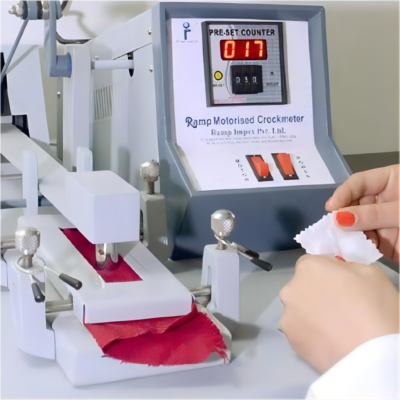
When sourcing fabrics, we will check all related fabric certificates from our suppliers.
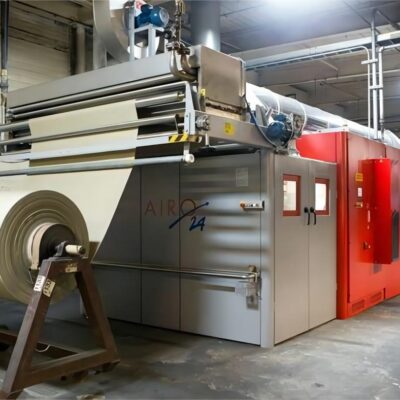
We make sure the fabric is well pre-washed to meet the standards before cutting.
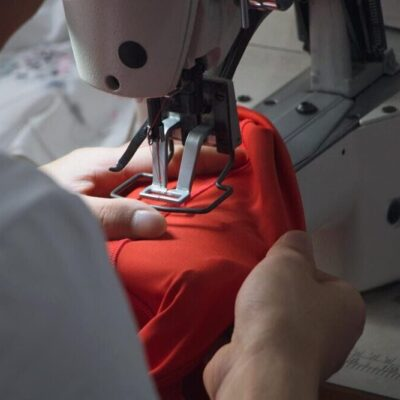
All our workers are well-trained and have many years of experience in the garment industry. They are all local workers with high stability.
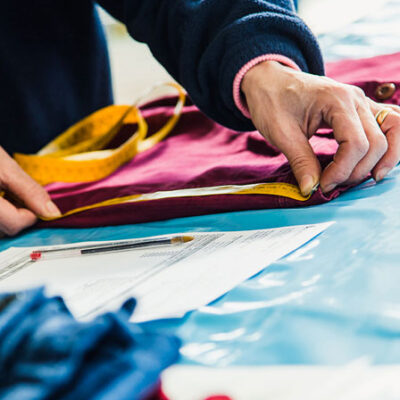
Our quality team will follow SOPs to conduct five times of quality checks before shipping.
Frequently Asked Questions
Q1: What is your Minimum Order Quantity (MOQ)?
We specialize in flexible production solutions to support emerging brands and growing businesses.
You can mix colors and sizes within the same style and fabric for greater flexibility.
For highly customised or technical garments (such as specialised denim washes or intricate embroidery), MOQ requirements may range from 300 to 500 units.
Our standard MOQ ranges from 200 to 300 units per design, depending on fabric availability and production complexity.
For best pricing efficiency, MOQ is typically based on 300 per style per colour.
Q2: What Services Do You Offer?
We provide full-cycle fashion support, including:
Sustainability Consulting: Eco-fabric sourcing, ethical production planning.
Sourcing: Local and global raw material, fabric R&D, and procurement (trims) with cost optimization.
Manufacturing: Custom manufacturing with quality control checkpoints.
Design & Development: Assistance with tech packs, trend research, and collection building.
Logistics: Shipping coordination to your warehouse or 3PL.
Q3: Can I Customize My Designs Fully?
We work with both OEM (your design, our production) and ODM (our templates customized for you) models. Customization options include:
Labels, hangtags, branded packaging
Fabric type and color
Fit and sizing
Printing (screen, DTG, sublimation, embroidery)
Accessories (zippers, buttons, cords)
Q4: What are your sustainability practices?
We’re committed to responsible manufacturing through:
Energy-efficient production technology
Waste reduction programs and ethical labor practices (BSCI certified)
GOTS-certified organic cotton and recycled material options
OEKO-TEX® certified dyes and processing
Q5: What Are Your Lead Times?
For in-stock items: ships worldwide within 3–7 days For custom orders: production lead time 15–30 days Urgent / Express Options: Available at a premium. Timing can vary depending on fabric development, approval cycles, and order complexity.
Q6: What is your production capacity?
Our facility employs 12,000 skilled employees, daily production capacity exceeds 100,000 pieces. We handle orders from 100 pieces to 50,000+ units across:
Technical apparel
Activewear and sportswear
Denim and casual wear
Children’s clothing
Q7: Where are your garments produced?
Our headquarters are based in China, where we operate our own vertically integrated factory. Our infrastructure and strategically placed worldwide manufacturing facilities allow us to offer extremely competitive pricing for fully custom clothing. offer flexible production options tailored to your needs. All manufacturing is supervised by our quality control team to ensure consistent standards
Conclusion
Understanding the difference between ring spun and open end heavy t-shirts is essential for brands and manufacturers aiming to balance quality, cost, and consumer satisfaction. Ring spun offers superior softness and durability for premium products, while open end is ideal for large-scale, budget-friendly production.
Ready to source the right yarn for your heavy t-shirts? Contact us today to get certified, high-quality ring spun or open end fabrics for your next collection!
Read more: Difference Between Ring Spun and Open End Heavy T-Shirts: A Complete Guide
- Activewear Fabric Approval Before Bulk: Opacity, Stretch, Recovery and Breathability
- How to Build a Garment Test Plan Before Bulk Production (Complete Guide)
- Apparel Change Control: How to Approve BOM, Material and Construction Revisions
- Denim Quality Control: Testing Methods, Common Defects & Quality Standards
- How Denim Quality Control Reduces E-Commerce Returns