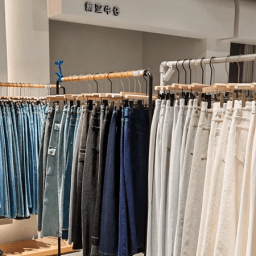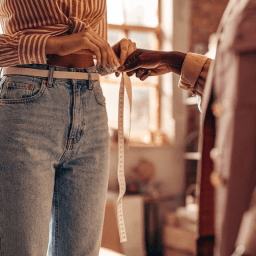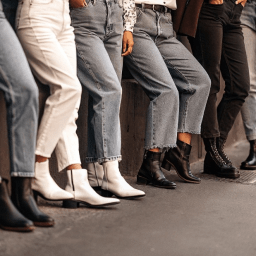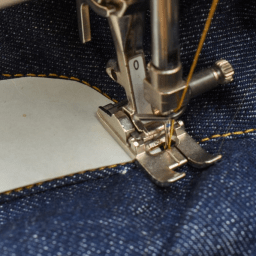

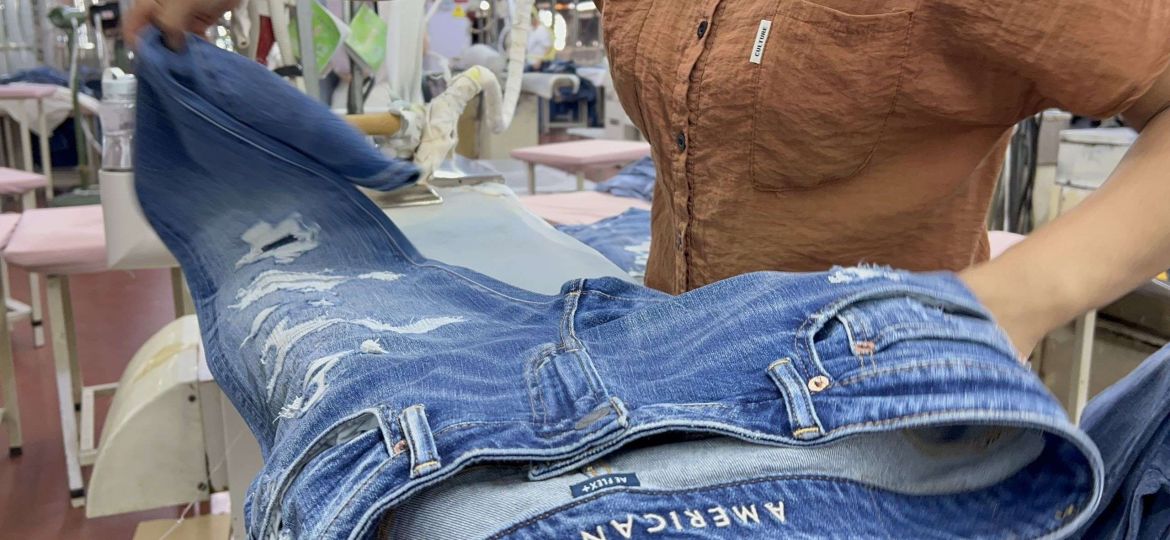
If you’ve ever searched “how to make ripped jeans at home,” “DIY distressed jeans tutorial,” or “how to distress jeans without ruining them,” you’re not alone. Destroyed jeans—also known as ripped, distressed, or shredded denim—have remained one of the most popular denim trends for over a decade.
Destroyed jeans combine raw, worn-in aesthetics with streetwear influence, making them a staple in modern casual fashion. While DIY methods are widely shared online, creating clean and stylish distressing requires more than just cutting holes randomly.
At the same time, professional denim manufacturers use controlled washing, abrasion, and finishing techniques to achieve consistent and scalable distressed effects across large production runs.
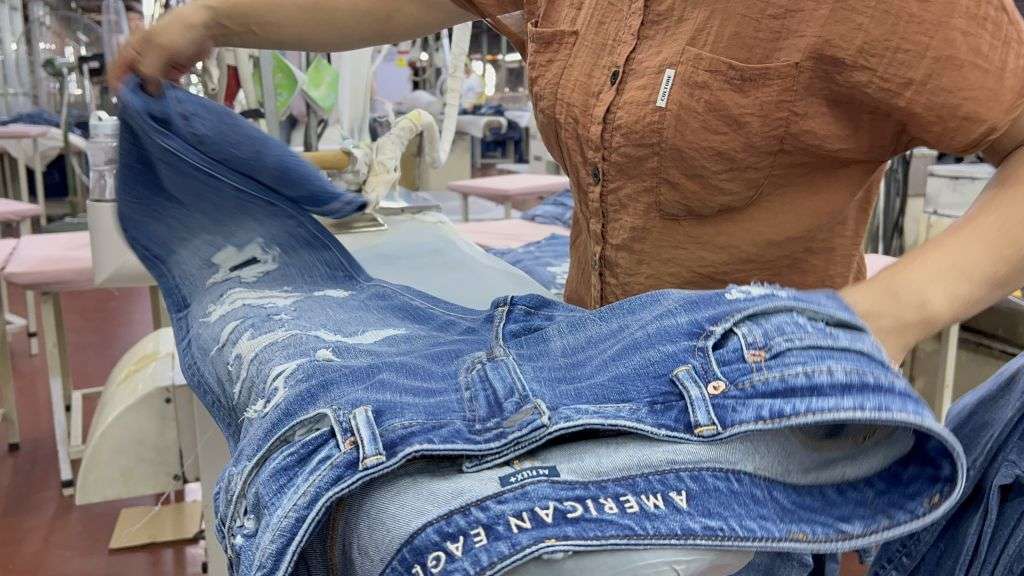
At Newasia Garment Co.,Ltd., we develop denim products for global brands including American Eagle Outfitters, Uniqlo, Zara, Gap, Levi’s, and Lee. Based on real production experience in denim washing, distressing, and finishing, we understand both home DIY methods and industrial techniques behind destroyed jeans.
What Are Destroyed Jeans?
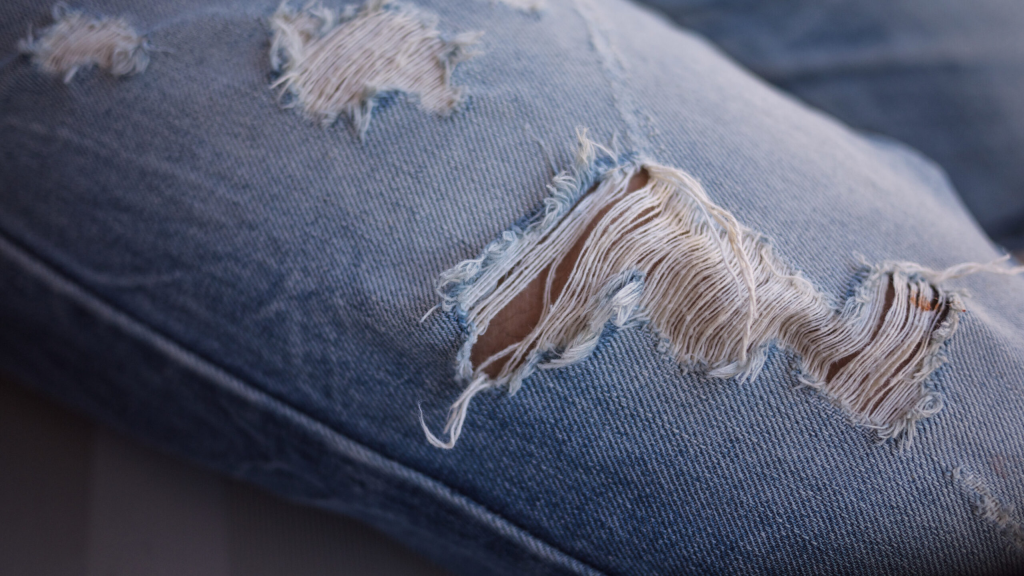
Destroyed jeans are denim garments intentionally altered to create a worn, vintage, or rugged appearance. This can include:
- Rips and tears
- Frayed hems
- Sanded or faded areas
- Hole distressing on knees or thighs
- Thread exposure and shredding effects
Originally popularized in punk culture and later adopted by streetwear fashion, destroyed jeans are now a global trend seen in brands from high street to luxury fashion.
Why Destroyed Jeans Are Still in High Demand
From a B2B fashion perspective, destroyed denim remains a strong category because it:
- Supports premium streetwear positioning
- Creates strong visual identity for brands
- Allows higher perceived retail pricing
- Differentiates collections in crowded markets
- Performs well in both online and offline retail
For many emerging brands, distressed jeans are often the “hero product” that defines their first collection.
Tools You Need to Make Ripped Jeans at Home
Before starting, prepare the following basic tools:
- A pair of jeans (straight, slim, or loose fit works best)
- Chalk or fabric marker
- Scissors or craft knife
- Tweezers
- Sandpaper or pumice stone
- Ruler or measuring tape
- Cardboard (to protect the back layer of jeans)
Optional tools for advanced effects:
- Razor blade
- Cheese grater (for heavy distressing)
- Bleach spray (for fading effects)
Step-by-Step: How to Make Destroyed Jeans
Step 1: Choose the Right Jeans
Not all denim works well for distressing.
Best options:
- 100% cotton denim (creates natural fraying)
- Mid-weight fabric (not too thin or stretchy)
- Straight or slim fit jeans (easier to control placement)
Avoid heavily elastic jeans—they tend to tear unpredictably.
Step 2: Mark Your Distress Areas
Put the jeans on and mark key areas using chalk:
- Knees (most common)
- Thighs (fashion-forward look)
- Back pockets (subtle distressing)
- Hem (for vintage frayed look)
Tip: Always mark while wearing the jeans to ensure correct placement.
Step 3: Insert a Protective Layer
Place a piece of cardboard inside the leg of the jeans.
This prevents cutting through both layers and ruining the garment.
Step 4: Create Natural Wear with Sandpaper
Before cutting, use sandpaper to lightly rub the marked areas.
This helps:
- Soften the denim
- Create a natural faded look
- Make ripping easier and more realistic
Focus on edges of knees and thigh zones.
Step 5: Make the Rips
Now start cutting.
Techniques:
- Horizontal cuts for classic ripped knees
- Small slits for subtle distressing
- Larger openings for streetwear style
Important tip:
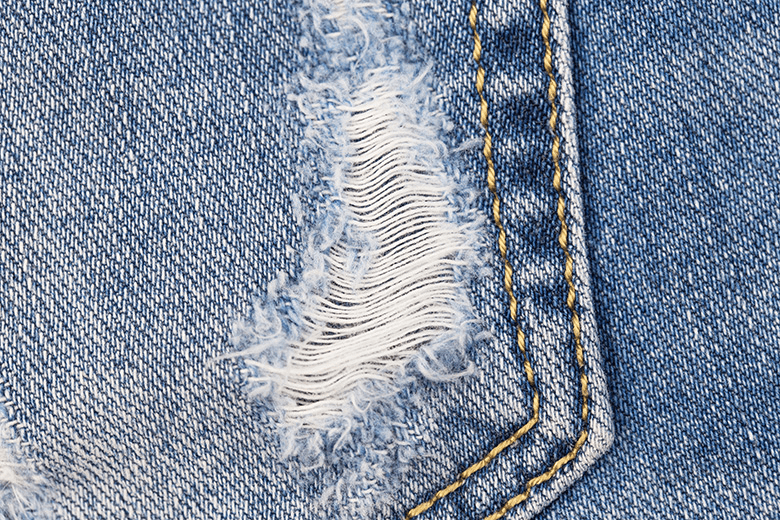
Do NOT cut full rectangles. Always leave some threads intact for a natural look.
Step 6: Pull Out Threads for Frayed Effect
Use tweezers to pull out the vertical blue threads (warp threads).
What remains are white horizontal threads, creating the classic destroyed denim look.
Step 7: Add Extra Distressing (Optional)
For a more advanced finish:
- Rub edges with a razor blade for wear marks
- Use a cheese grater for heavy texture damage
- Lightly spray bleach for faded zones
Be careful—less is more. Overdoing it can ruin the jeans.
Step 8: Wash and Finish
Wash your jeans once (cold wash recommended).
This helps:
- Loosen fibers naturally
- Enhance fraying effect
- Give a realistic worn-in finish
Air dry only—avoid tumble drying.
Styling Tips for Destroyed Jeans
Destroyed jeans are versatile if styled correctly:
- Pair with plain T-shirts for casual streetwear
- Combine with oversized hoodies for urban fashion
- Match with boots for rugged aesthetics
- Use fitted tops to balance heavy distressing
Fashion rule: The more ripped your jeans are, the simpler your top should be.
Why DIY Destroyed Jeans Often Look Unprofessional
Most home DIY results fail because they lack:
- Controlled fiber breakage
- Fabric tension understanding
- Balanced distress placement
- Wash shrinkage prediction
As a result, jeans may look:
- Over-destroyed
- Unbalanced
- Structurally weak after washing
Professional Denim Distressing Techniques Used in Factories
At Newasia Garment Co.,Ltd., destroyed jeans are not made randomly—they are engineered.
1. Hand Sanding
Used to create natural wear marks on:
- thighs
- seat
- knees
2. Laser Distressing
Computer-controlled lasers simulate:
- scratches
- faded lines
- whiskers
This ensures high consistency across bulk production.
3. Enzyme Wash
Biological enzymes soften denim fibers to create:
- natural fading
- smooth surface texture
4. Stone Wash
Pumice stones are used to create vintage worn effects.
5. Grinding & Abrasion Machines
Used for:
- edge fraying
- hole refinement
- controlled damage depth
DIY vs Factory Destroyed Jeans
| Feature | DIY at Home | Factory Production |
|---|---|---|
| Control | Low | High |
| Consistency | Poor | Excellent |
| Durability | Weak | Strong |
| Design Precision | Limited | Advanced |
| Scalability | None | Mass production |
Why Fashion Brands Work with Newasia Garment Co.,Ltd.
If you are a startup brand, boutique owner, or online seller, DIY knowledge is only the first step. Scaling requires manufacturing expertise.
Newasia Garment Co.,Ltd. offers:
- OEM/ODM custom jeans production
- Low MOQ for new brands
- Full customization (fit, wash, distressing level)
- Straight, baggy, loose, and tapered jeans development
- Global shipping support
- Sample development before bulk production
Whether you want light distressing or extreme destroyed streetwear jeans, we help turn your concept into a sellable product.
Why Destroyed Jeans Are Popular in Fashion
Destroyed denim remains popular because it represents:
- Individuality and self-expression
- Streetwear culture influence
- Vintage and worn aesthetics
- Fashion-forward design trends
Many global fashion brands include distressed denim in their seasonal collections.
From DIY to Professional Production
DIY destroyed jeans are great for personal styling, but fashion brands require consistent quality and scalable production.
This is where professional manufacturers like Newasia Garment Co.,Ltd. play a key role.
We help brands transform DIY-inspired designs into market-ready denim collections with:
- Standardized distressing techniques
- Custom jeans pattern development
- Fabric selection and testing
- Sample making and bulk production
How to Make Destroyed Jeans at Home: A Step-by-Step DIY Guide
Destroyed jeans are a timeless fashion staple that add a rugged, personalized edge to any outfit. With the right tools and techniques, you can transform a basic pair of denim into a custom distressed piece at home.
1. Choose the Right Jeans
✔ Start with 100% cotton or slight stretch denim for best results.
✔ Slim, straight, or loose fits work well depending on your desired look.
✔ Light or mid-wash denim shows distressing details more clearly.
2. Mark Your Distress Areas
✔ Use chalk or a fabric pencil to outline knees, thighs, and pockets.
✔ Try jeans on first to ensure natural placement points.
✔ Focus on areas that would naturally wear over time.
3. Create Rips and Holes
✔ Cut small horizontal slits using sharp scissors or a craft knife.
✔ Gently pull threads apart with tweezers for a natural ripped effect.
✔ Avoid cutting too large—rips expand after washing.
4. Add Fraying and Texture
✔ Use sandpaper, a cheese grater, or a razor blade to soften edges.
✔ Rub areas like thighs, pockets, and hems for a worn-in look.
✔ Pull out vertical threads to enhance the distressed effect.
5. Wash and Finish
✔ Wash jeans once to let fibers loosen naturally.
✔ Air dry for a more authentic, rugged finish.
✔ Re-check rips and refine edges if needed after washing.
Styling Your Destroyed Jeans
✔ Streetwear Look: Pair ripped jeans with oversized tees and sneakers for an effortless urban vibe.
✔ Edgy Outfit: Combine black destroyed denim with hoodies and boots for a bold aesthetic.
✔ Smart Casual: Match lightly distressed jeans with a crisp shirt and loafers for balanced style.
Certified Professional Clothing Producer
We are very proud of these certificates! They represent Newasia Garment Co.,Ltd. ’s amazing achievements and accreditations. They show how much we care about quality, safety, and professionalism.
We’re proud to say that we have obtained BSCI and ISO 90001 certificates, and inspection certificates for filling materials such as down and cotton. We follow international standards throughout our production process and take responsibility for the quality of our products.
As one of China’s leading clothing manufacturers, we are pleased to be recognized by respected organizations. These certifications underscore our reliability as a trusted supplier to the global apparel industry.
Trusted Certificates:




Why Choose Us
 Independent base We have our own laboratory and can independently develop fabrics , China  Professional certification Certification: ISO 9001, ISO 14001,BSCI,GRS |  Full-equipped Full-equipped, from fiber manufacturing, yarn spinning, weaving, dyeing and processing to finished product production  Rich experience Professional, large and experienced design team, combined with the latest artificial intelligence technology |  Our Facilities 12,000 skilled employees, daily production capacity exceeds 100,000 pieces  Fashion exhibition Participated in domestic and foreign fashion weeks and exhibitions many times |
Trusted by Global Clients
















How Do We Guarantee the Quality
Our quality assurance begins with designing and planning, then continues through every step of the production and post-production inspections. Delivery is not an ending. We still offer money-back guarantee for quality issues.
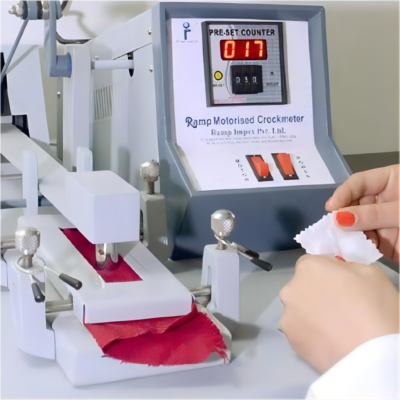
When sourcing fabrics, we will check all related fabric certificates from our suppliers.
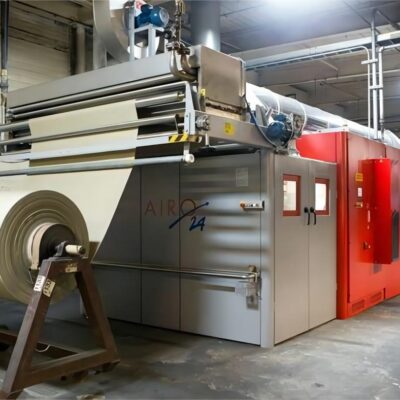
We make sure the fabric is well pre-washed to meet the standards before cutting.
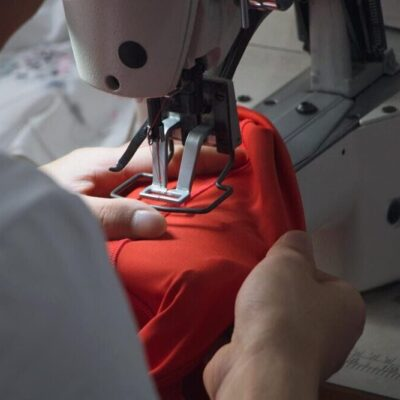
All our workers are well-trained and have many years of experience in the garment industry. They are all local workers with high stability.
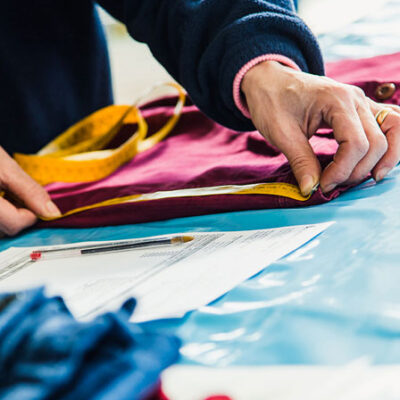
Our quality team will follow SOPs to conduct five times of quality checks before shipping.
FAQs
Q1:How do I make destroyed jeans look natural?
Focus on knee areas and use sandpaper before cutting to create soft, worn textures.
Q2:Can I distress jeans without fully ripping them?
Yes, sanding and light scraping create a faded, worn effect without holes.
Q3:How do I stop rips from getting bigger?
Reinforce edges with stitching or fabric glue on the inside.
Q4:What tools work best for DIY distressing?
Scissors, tweezers, sandpaper, and razors are the most commonly used tools.
Q5:Can I distress any type of denim?
Yes, but lighter or medium-weight denim shows distressing more effectively.
Conclusion
Making destroyed jeans at home is simple, creative, and cost-effective. With the right tools and techniques, anyone can transform basic denim into a stylish fashion statement.
However, if you’re looking to scale designs, launch a denim brand, or develop a retail collection, professional manufacturing becomes essential.
That’s where Newasia Garment Co.,Ltd. helps bridge the gap between DIY creativity and commercial production—turning ideas into high-quality, market-ready denim products.
If you are developing a denim brand or fashion collection, we can help you transform DIY-inspired ideas into professional, production-ready garments.
Our team provides full OEM/ODM support, from design development to bulk manufacturing.
Read more: How to Make Destroyed Jeans at Home: A Step-by-Step DIY Guide
- How to Validate Pocket Function and Placement Before Bulk Production
- How to Standardize Fabric Hand Feel Across Production Lots
- Movement Fit Testing for Apparel: How to Check Ride-Up, Slippage, and Range of Motion
- Pre-Production Sample Approval: What Brands Should Lock Before Bulk Production
- Custom Sports Jersey Manufacturing Quality Control: A Global Manufacturing Guide