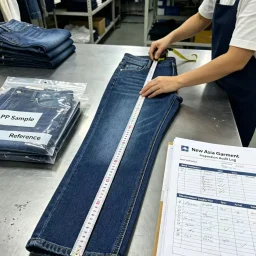


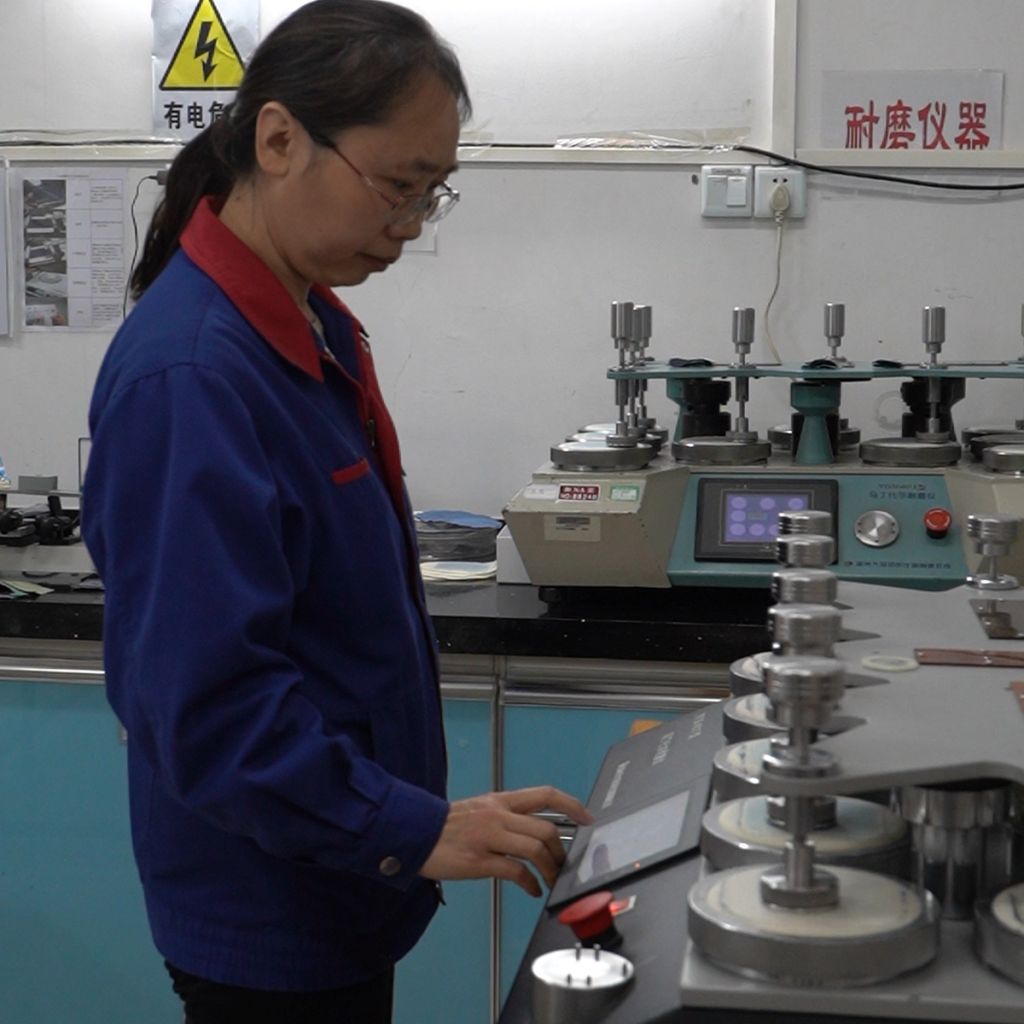
For US apparel brands, durability testing before bulk production should focus on the garment areas most likely to fail during normal use. These may include crotch seams, pocket corners, zippers, belt loops, armholes, waistbands, and other points exposed to repeated pulling, stretching, or abrasion.
An effective test plan starts by identifying the expected failure, selecting a suitable evaluation method, defining measurable acceptance criteria, and checking whether the final construction performs as intended.
The goal is not to run every available textile test. It is to identify the failures that matter for a particular garment and obtain enough reliable evidence to make an informed production decision.
1. Identify the Garment’s High-Stress Areas
Different garments experience different mechanical demands.
Rigid jeans may experience considerable stress around the crotch, waistband, and pockets. Stretch pants place different demands on seams and recovery. A zip-up hoodie may experience repeated pulling around the zipper, pocket openings, and cuffs.
Before planning tests, review the garment’s intended use, material, construction, fit, and likely wear conditions.
| Garment area | Typical stress | Potential failure |
|---|---|---|
| Crotch and seat seams | Sitting, bending, stretching | Stitch rupture, seam slippage, fabric tearing |
| Pocket corners | Repeated hand insertion and loading | Corner tearing, reinforcement failure |
| Belt loops | Pulling and belt tension | Loop detachment, stitching failure |
| Zipper and fly | Repeated opening, closing, and lateral loading | Slider failure, tape separation, misalignment |
| Underarms and armholes | Reaching, stretching, friction | Seam damage, abrasion, distortion |
| Knees and elbows | Bending and contact abrasion | Surface wear, thinning, seam strain |
| Waistbands | Stretching and body movement | Seam damage, loss of shape |
| Shoulders and straps | Garment weight and external loading | Attachment failure, distortion |
| Cuffs and hems | Repeated handling and friction | Fraying, seam damage, loss of shape |
This table is a starting point, not a universal risk ranking.
A lightweight fashion garment and a workwear product may have similar construction details but require different durability criteria.
Buyer action: Identify the critical areas on the actual garment drawing or tech pack and record the failure mode that each area must withstand.

2. Translate Failure Risks Into Testable Requirements
Terms such as “durable,” “reinforced,” or “heavy-duty” are useful descriptions, but they are not sufficient acceptance criteria.
A testable requirement should identify what is being tested, how it will be evaluated, and what constitutes an acceptable result.
Each requirement should include:
- Test subject: The exact material, component, seam, or finished assembly.
- Test method: The applicable procedure, including its designated version where required.
- Exposure: The load, repeated action, laundering treatment, or other applied condition.
- Sample plan: The number and selection of test specimens.
- Acceptance criteria: The agreed measurements, functional conditions, or visual outcomes.
- Decision responsibility: The person or party authorized to approve or reject the result.
For example, instead of specifying that a zipper must be durable, a buyer can require that the completed zipper assembly undergo an agreed repeated-operation test, followed by an inspection for closure failure, tape damage, or alignment problems.
The actual number of cycles, laundering treatments, and allowable changes should come from the product’s requirements and an appropriate test method.
Do not adopt an arbitrary test value simply because it appears in another brand’s specification.
Why the Finished Assembly Matters
Component testing and assembled-garment testing answer different questions.
A zipper manufacturer’s report may demonstrate the strength or operation of a particular zipper under specified laboratory conditions.
It does not automatically establish that the zipper will perform equally well after being sewn into a jacket, hoodie, or pair of jeans.
The installed zipper also interacts with fabric, seam allowances, stitching, alignment, finishing, and washing.
Where these interactions create meaningful risk, evaluate the assembled area under conditions representative of the intended product.
3. Select Tests That Address the Expected Failure
Testing should follow the identified failure mode rather than a generic laboratory menu.
| Failure risk | Evaluation approach | Evidence to review |
|---|---|---|
| Seam rupture | Suitable seam-strength evaluation | Breaking force, failure location, stitch or fabric damage |
| Seam slippage | Applicable seam-slippage evaluation | Applied conditions, measured opening, failure characteristics |
| Surface abrasion | Appropriate abrasion-resistance method | Test method, exposure, endpoint, visible damage |
| Dimensional instability | Fabric or garment laundering evaluation | Dimensional change and relevant appearance or function |
| Pocket attachment failure | Suitable attachment-strength or assembly evaluation | Failure load or agreed functional outcome |
| Zipper strength | Applicable zipper-component strength test | Measured force and failure mode |
| Zipper operation | Applicable opening and closing evaluation | Operating behavior, sticking, separation, functional failure |
| Post-care deterioration | Reassessment after specified care cycles | Condition before and after treatment |
Reference Standards
Relevant published standards include:
- ASTM D1683/D1683M-22 for failure in sewn seams of woven fabrics.
- ASTM D2061-07(2021) for applicable zipper strength evaluations.
- ASTM D2062-03(2021) for zipper operability evaluations.
- AATCC TM135 for dimensional changes of fabrics after home laundering.
- AATCC TM150 for dimensional changes of garments after home laundering, subject to the method’s limitations.
These references are examples of potentially relevant methods, not a complete testing specification.
Confirm the current applicable edition, material suitability, specimen requirements, and acceptance conditions with a qualified testing laboratory.
Importantly, a standardized mechanical test does not necessarily predict the actual service life of a finished garment.
4. Build Testing Into the Development Schedule
Durability testing is more effective when it is planned around product-development decisions.
Waiting until the end of bulk production may leave too little time to correct a construction problem without affecting delivery.
A practical testing schedule can include the following stages.
| Development stage | Main objective | Typical evaluation |
|---|---|---|
| Prototype / fit sample | Identify construction and movement-related risks | Fit, movement, visual construction review, targeted early tests |
| Pre-production (PP) sample | Validate the intended production materials and construction | Planned durability evaluations based on product risks |
| Top of production (TOP) | Check whether early bulk production matches the approved design | Targeted verification and workmanship checks |
| Inline production | Detect process or workmanship changes | Inspection and risk-based verification |
| Final inspection | Confirm the lot meets applicable release requirements | Inspection, records review, and any specified final tests |
Not every stage requires the same testing.
Destructive testing can consume significant sample quantities and may not be appropriate for every inspection stage.
Plan the sample allowance before development begins. Specify which samples may be used for destructive testing and which must be retained for reference.
How Many Specimens Are Needed?
There is no universal specimen count for every high-stress garment test.
The required count depends on the test method, material variability, product risk, and buyer agreement.
For each planned evaluation, identify:
- The required number of specimens.
- Relevant sizes, colors, or material variations.
- The sample stage and production source.
- Whether specimens require conditioning or prior laundering.
- Whether replacement specimens are allowed.
- How invalid or failed tests will be handled.
Keep an identified reference sample representing the approved production construction. The retention quantity and range should reflect the project requirements rather than an automatic assumption that every size and color needs the same physical archive.
5. Verify Performance Before and After Care
Some garment defects are not apparent before laundering.
Fabric shrinkage can place additional stress on a seam. A zipper tape may respond differently from the surrounding fabric. Heat, washing, or finishing may affect thread, bonded materials, and decorative components.
Where these changes are relevant to the intended use, evaluate the garment before and after the specified care treatment.
The test plan should define:
- The laundering or care procedure.
- The number of treatment cycles.
- The condition in which testing occurs.
- The measurements or functions evaluated after care.
- The permitted changes, if any.
The number of cycles should represent the agreed evaluation requirement. It should not be described as the maximum number of times a consumer will ever wash the garment.
For example, a zipper assembly may require a functional check after a defined laundering sequence if differential shrinkage or damage could affect its operation.
A separate dimensional-change test may also be appropriate to understand whether the garment maintains its intended measurements.
Buyer action: Ensure that post-care testing is included where it addresses a credible failure risk, rather than automatically applying the same wash-cycle requirement to every construction.
6. Pay Particular Attention to Zippers and Reinforced Attachments
Zippers, belt loops, pocket corners, straps, and other reinforced attachments often combine a relatively small connection area with repeated mechanical stress.
Their performance depends on both the component and the way it is integrated into the garment.
Zipper Assemblies
A zipper specification should identify more than the nominal zipper size.
Depending on the design, relevant details include:
- Zipper type and construction.
- Chain and tape dimensions.
- Material and finish.
- Slider and pull configuration.
- Locking function, where applicable.
- Stop and separating components.
- Supplier identification and approved part reference.
- Stitching, seam allowance, and installation details.
Ask the supplier for component specifications and relevant supporting reports.
Then determine whether the sewn assembly needs additional evaluation.
Typical concerns include closure misalignment, tape distortion after care, stop failure, slider malfunction, and sewing damage.
Not every zipper requires every available strength or operability test. Choose the evaluations that address its actual construction and use.
Belt Loops, Pocket Corners, and Straps
Reinforcement quality cannot be assessed only by counting bartack stitches or observing whether a seam looks substantial.
Strength also depends on the base fabric, reinforcement placement, thread, stitch configuration, and applied load.
Where attachment failure could affect usability, specify an appropriate assembly-level evaluation and an agreed acceptance condition.
Check whether the reinforcement causes local fabric damage. A strong stitch pattern is not useful if the fabric tears around it under the expected loading conditions.
7. Define How Results Lead to Production Decisions
A test result should support a decision rather than simply produce a pass/fail label.
The report should identify the tested garment version, procedure, conditions, measured result, failure mode, and acceptance requirement.
| Test outcome | Recommended buyer action |
|---|---|
| Meets all agreed requirements | Accept for the relevant approval stage, subject to other required checks |
| Meets a numerical criterion but shows unexpected functional damage | Investigate before release |
| Fails an agreed criterion | Hold the affected approval and determine corrective action |
| Test method or sample is invalid | Repeat the evaluation using an appropriate procedure |
| Construction changes after approval | Assess whether existing evidence remains applicable |
| Result is disputed | Compare methods, specimens, laboratory conditions, and records before deciding |
A result close to the acceptance threshold may deserve additional attention, even if it technically passes.
However, any additional acceptance rule or safety margin should be established in advance rather than invented after the test result is known.
What a Useful Test Record Contains
Record:
- Style, size, color, material, and sample-stage identifiers.
- The approved specification revision.
- Test method and edition.
- Laboratory or testing party.
- Applied loads, cycles, or care conditions.
- Specimen count and selection.
- Actual measurements and observed failure modes.
- Photographs or relevant supporting evidence.
- Approval status, reviewer, and date.
Avoid relying on a report that says only “Passed.”
Without traceable conditions and results, it may be difficult to determine whether the evidence applies to the garment being released.
8. Reassess Testing When Materials or Construction Change
A durability test reflects the specimen and conditions evaluated.
Changes in materials, components, or manufacturing processes can alter the performance of a critical garment area.
However, not every change automatically invalidates every previous test.
Use a documented risk assessment to determine whether the original evidence remains appropriate.
Relevant changes may include:
- Fabric composition, structure, weight, or finish.
- Sewing thread or stitch configuration.
- Seam type or allowance.
- Zipper, snap, button, or reinforcement component.
- Washing and finishing conditions.
- Production facility or subcontractor.
- Other changes affecting a tested assembly.
For each change, identify the affected failure modes, review the existing evidence, and decide whether additional testing or sampling is necessary.
For example, substituting a zipper with a different tape construction may justify repeating post-care assembly checks. A change to an unrelated decorative detail may not affect the previously validated crotch-seam construction.
The appropriate response depends on the risk, not simply the number of revisions.
Maintain a revision history connecting the approved construction to the evidence supporting it.
9. Put the Requirements Into the Tech Pack and Quality Plan
A durability requirement is most useful when the buyer and supplier can refer to the same approved documents.
The tech pack should identify the relevant garment construction and technical specifications. The corresponding test plan or quality agreement should establish the verification process.
For each critical area, document:
- The expected failure mode.
- The component or assembly to be evaluated.
- The confirmed test method.
- The specimen and sampling requirements.
- The agreed exposure conditions.
- The acceptance criteria.
- The testing stage.
- The responsible testing party.
- Report and approval requirements.
- The process for failures, deviations, and changes.
Agree on which party arranges testing, provides supporting evidence, reviews the results, and covers the associated cost.
If testing identifies a failure, the response may involve revising the construction, replacing a component, repeating an evaluation, or rejecting the proposed solution.
Document these responsibilities before production approval.
Pre-Bulk Durability Testing Checklist
| Review item | Buyer confirmation |
|---|---|
| Critical areas identified | Each high-stress area has a defined failure risk |
| Methods selected | Test procedures are suitable for the material and construction |
| Acceptance criteria | Measurable requirements have been agreed |
| Sampling plan | Specimen quantities and development stages are defined |
| Assembly evaluation | Relevant finished constructions are included |
| After-care performance | Appropriate post-care evaluation is specified |
| Evidence | Reports and approved sample references are traceable |
| Change control | Material and construction revisions trigger appropriate review |
| Responsibilities | Testing, approval, records, and costs are assigned |
| Bulk release | Open issues have been resolved or formally addressed |
The checklist is a purchasing and development aid. It does not replace a product-specific laboratory protocol or any applicable regulatory requirements.
Frequently Asked Questions
Should brands test the fabric or the finished garment?
Both may be appropriate, depending on the failure risk.
Fabric-level testing can help establish material behavior, while assembly-level testing can identify problems caused by stitching, reinforcement, installation, or interactions between components.
A strong fabric does not automatically produce a strong sewn seam.
Can a zipper supplier’s test report replace assembly testing?
A component report can provide useful evidence, but it may not cover the zipper’s performance after installation in the intended garment.
Where the assembled construction introduces additional risks, evaluate the installed zipper or another representative assembly.
How many samples should be tested before bulk production?
The count depends on the applicable method, product risk, required variations, and buyer agreement.
Use the method’s specimen requirements and an appropriate sampling plan rather than applying a fixed number to every style.
Does every material change require new durability testing?
No. A change should trigger a review of whether the existing test evidence still applies. Additional testing may be needed when the change affects the construction, loading conditions, or expected failure mode.
Can passing a laboratory durability test guarantee a garment’s service life?
No. Laboratory tests evaluate defined properties under specified conditions. Actual wear depends on use, care, construction, and other factors that may not be reproduced fully in the test.
The purpose of pre-production testing is to support risk-based product decisions, not to promise that a garment cannot fail.
Work With Your Manufacturer Before Bulk Release
Durability requirements are easier to address during development than after bulk production has begun.
When discussing a new garment program, provide the manufacturer with the current tech pack, intended end use, material information, critical construction areas, and any buyer-specific performance requirements.
Ask the supplier to confirm how the proposed design can be evaluated, what testing evidence is available, and which activities would require external laboratory support.
New Asia Garment is a B2B apparel OEM/ODM manufacturer supporting brand development, sampling, and production. Testing capabilities, equipment, laboratory arrangements, and specific performance results must be confirmed for each project.
For a production inquiry, share the garment specification, anticipated order quantity, target market, and the durability concerns most relevant to your design. These details provide a practical starting point for discussing sample development and the required verification process.
Conclusion
A useful durability test plan begins with the expected failure—not with a long list of laboratory procedures.
Identify the garment’s high-stress areas, translate failure risks into measurable requirements, test relevant materials and assemblies, and connect the findings to approval decisions before bulk production.
The most important outcome is a traceable agreement between the brand and its manufacturing partner about what must perform, how performance will be evaluated, and what happens when a requirement is not met.
Technical note: Test-method suitability, current editions, acceptance values, specimen quantities, and any applicable product-specific regulatory requirements should be confirmed by qualified personnel. The procedures discussed here do not establish that New Asia Garment operates particular test equipment, maintains specific certifications, or has achieved any stated testing results.
Read More
- How to Build Durability Tests Around High-Stress Garment Areas
- How to Control Fabric Shade Variation Before Bulk Production
- What US Apparel Brands Should Verify About Care Labels Before Bulk Production
- Size Set Approval Before Bulk Production: How to Catch Pattern Grading Problems Early
- How to Investigate a Garment Quality Claim: From Symptom to Root Cause and CAPA