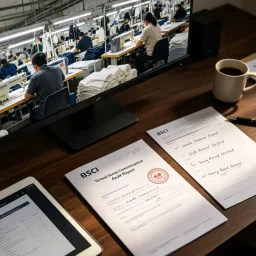

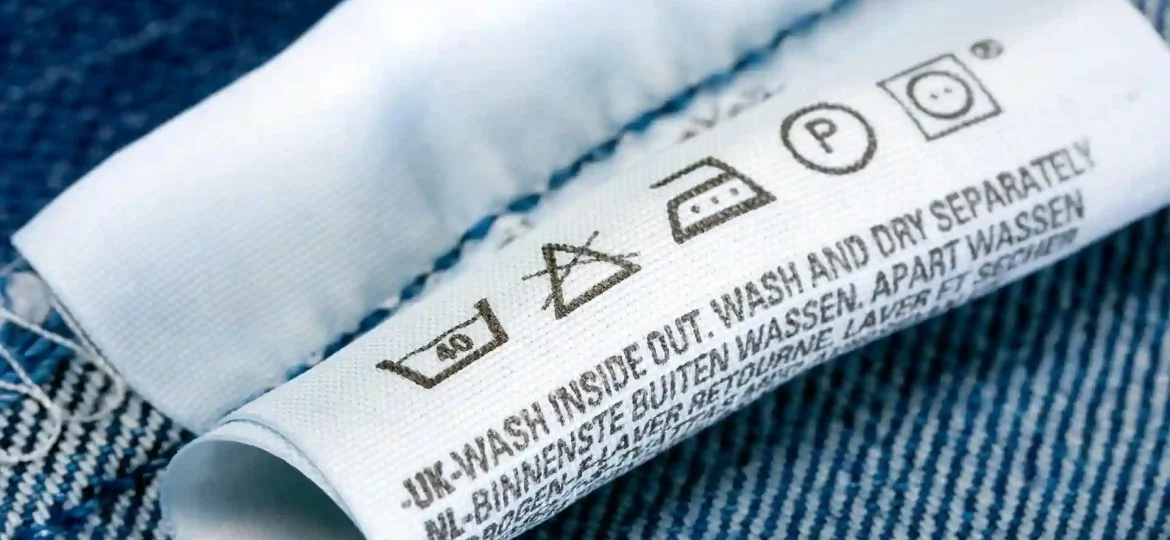
Before releasing a bulk apparel order for the US market, verify that the care instructions match the finished garment, that a reasonable basis supports every instruction and warning, and that the label meets the applicable placement and visibility requirements. Do this before production is released—not after thousands of labels have been printed or garments have been packed.
Under the Federal Trade Commission’s (FTC) Care Labeling Rule, 16 CFR Part 423, covered manufacturers and importers must provide appropriate care information and possess a reasonable basis for that information before sale. The rule also covers parties that direct or control the manufacture or importation of covered products. A brand’s precise obligations depend on its role in the transaction and the product’s coverage under the rule.
For US apparel sourcing teams, the practical task is to connect the approved care-label wording to the actual garment specification, supporting evidence, and final production version.
Scope: This article addresses the US federal Care Labeling Rule for covered textile wearing apparel. It is general compliance information, not legal advice. Check the current regulation and obtain qualified advice where product coverage or responsibility is uncertain.
Official reference: FTC Care Labeling Rule, 16 CFR Part 423.
1. Confirm the Product and Responsible Parties
Start by identifying the product being released and the parties responsible for its manufacture, importation, and compliance.
The FTC rule generally covers finished textile garments customarily used to cover or protect the body, including hosiery. It excludes footwear, gloves, hats, and other articles used exclusively to cover or protect the head or hands. Specific exemptions also apply in defined circumstances.
Before approving the label, document:
- Product style and SKU.
- Intended US sales channel.
- Final fabric composition and relevant garment components.
- The manufacturer and importer involved in the transaction.
- The party responsible for approving care wording and retaining supporting evidence.
- Any exemption or special treatment believed to apply, together with its basis.
Do not assume that outsourcing production automatically removes a brand’s obligations. The contractual division of work and the responsibilities imposed by applicable law are separate questions.
2. Verify the Cleaning Instruction
Under 16 CFR §423.6(b), covered apparel generally needs either a washing instruction or a drycleaning instruction. If both methods can be used, the rule requires only one of them. If no available cleaning method can be used without harming the product, the label must state that the product cannot be successfully cleaned, using an appropriate statement such as “Do not wash—do not dryclean.”
For bulk approval, compare the proposed instruction with the final garment—not just the base fabric.
Consider the complete construction, including:
- Main fabric and lining.
- Dyeing, washing, coating, or other finishing.
- Prints, embroidery, and decorative applications.
- Zippers, buttons, trims, and bonded components.
- Interlinings and other components that may respond differently to cleaning.
The question is whether the proposed instruction is appropriate for the finished product and supported by a reasonable basis.
3. Check Washing Instructions and Temperature
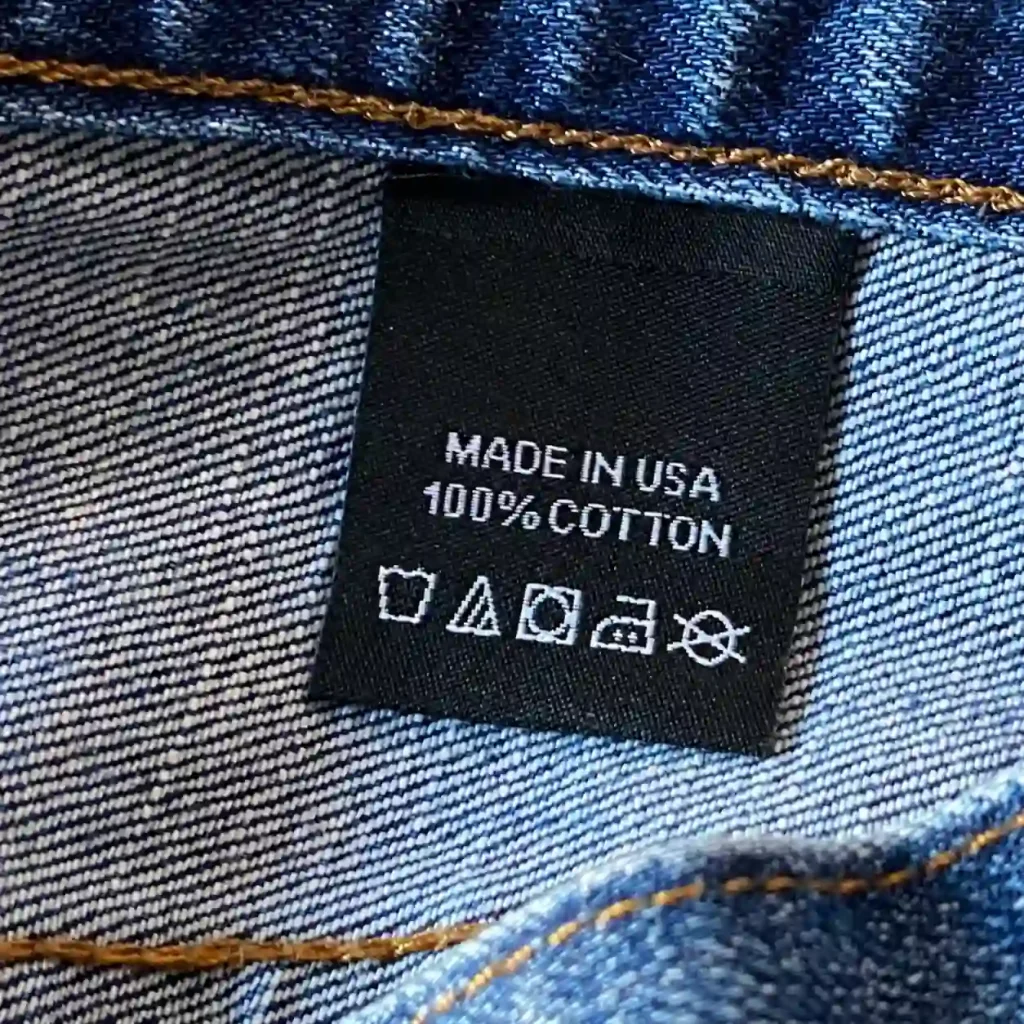
The rule generally requires a washing instruction to state whether the product should be washed by hand or machine. It must also state a usable water temperature unless regular use of hot water up to 145°F (63°C) will not harm the product.
This makes an omitted temperature a meaningful decision rather than an empty field.
For example, under the rule, “Machine wash” without a temperature permits regular machine washing with hot, warm, or cold water. If the garment cannot tolerate the implied conditions, the wording and supporting basis need to be reviewed.
Before bulk, ask:
- Is hand washing or machine washing specified?
- Is a temperature included where required?
- If the temperature is omitted, can the garment tolerate the conditions implied by the rule?
- Does the supporting evidence apply to the final fabric, color, construction, and finish?
Do not copy a washing instruction from a similar-looking style without confirming that the underlying product and evidence are comparable.
4. Check Drying and Ironing Instructions
Drying
The rule requires the label to state whether the product should be machine dried or dried by another method. If machine drying is specified, a usable drying temperature is generally required unless regular use of a high temperature will not harm the product.
For example, “Tumble dry” without a temperature permits high, medium, or low heat under the rule.
Confirm that the wording reflects the garment’s actual tolerance. A label should not permit a more aggressive drying method than the supporting evidence can justify.
Ironing
Ironing needs to be mentioned when it is regularly necessary to preserve the garment’s appearance or when a warning is required because ironing would cause harm. If ironing is mentioned, the instruction must state a usable temperature unless regular use of a hot iron will not harm the product.
Avoid adding ironing instructions simply to fill space. Equally, do not omit a necessary warning where a reasonably expected ironing procedure could damage the garment.
5. Verify the Correct Bleaching Statement
Under 16 CFR §423.6(b)(1)(iv), the appropriate treatment depends on how the garment responds to commercially available bleaches when used regularly.
| Product response | Required treatment |
|---|---|
| All commercially available bleaches can be used safely on a regular basis | The label need not mention bleaching. |
| All commercially available bleaches would harm the product when used regularly | State “No bleach” or “Do not bleach.” |
| Regular chlorine bleach would harm the product, but regular non-chlorine bleach would not | State “Only non-chlorine bleach, when needed.” |
Choose the applicable branch for the actual garment and confirm the required wording.
Do not infer bleaching tolerance solely from the fiber name or from the appearance of an unwashed sample. Consider the dye, finish, print, and other components that may affect the finished product.
6. Add Warnings for Reasonably Expected Harmful Procedures
The rule requires a warning when a prescribed washing procedure that consumers could reasonably be expected to use would harm the product or other items washed with it. The wording must clearly communicate the restriction.
The FTC regulation gives examples such as:
- “Wash with like colors” or “Wash separately” for a garment that is not colorfast.
- “Do not iron” where ironing would harm the garment.
Warnings are not required for every alternative procedure that is not recommended. For example, when the instruction says “Dry flat,” the rule does not require an additional “Do not tumble dry” warning merely because tumble drying is an alternative method.
For bulk approval, review the reasonably expected care process as a whole. Consider color transfer, heat sensitivity, print damage, embellishment damage, and interactions between components.
The wording should communicate a real restriction, and the supporting evidence should justify the instruction.
7. Check Drycleaning Wording and Solvent Information
If a drycleaning instruction is included, the rule generally requires it to identify at least one type of solvent that may be used. The solvent need not be listed if all commercially available solvent types can be used.
The rule prohibits using “Drycleanable” or “Commercially Dryclean” as a care instruction. It gives “Professionally dryclean: fluorocarbon or petroleum” as an example of acceptable wording.
Drycleaning warnings may also be necessary when a reasonably expected part of the process would harm the product. For example, a garment that cannot tolerate steam may require a clear “No steam” warning.
Before approving label artwork:
- Check that any required solvent information is present.
- Remove prohibited drycleaning terms used as instructions.
- Confirm that warnings cover relevant risks from the cleaning process.
- Verify that the proposed instruction has an adequate supporting basis.
8. Establish a Reasonable Basis Before Sale
This is one of the most important bulk-release checks.
Under 16 CFR §423.5(a)(5) and §423.6(c), a manufacturer or importer must possess a reasonable basis for the care information before sale. The rule does not prescribe one universal test for every garment. Acceptable support may include reliable evidence that the product withstands the stated care procedure, evidence concerning procedures warned against, appropriate component and garment evidence, successful testing, current technical literature, past experience, industry expertise, or other reliable evidence.
The evidence must support the actual instructions and warnings—not merely demonstrate that a material looks acceptable.
A practical evidence review should answer these questions:
- Product identity: Which style, color, material, and construction does the evidence cover?
- Instruction coverage: Does it support the full care instruction, including the implications of omitted temperatures?
- Component compatibility: Are trims, prints, linings, and other relevant components addressed?
- Evidence type: Is the basis testing, technical literature, documented experience, industry expertise, or another reliable source?
- Version control: Does the evidence still apply to the garment being released?
- Record ownership: Who retains the evidence and can retrieve it if questions arise?
Testing is one possible way to establish a reasonable basis, not an automatic requirement for every style. The evidence should be appropriate to the garment and the risk.
For related product-validation planning, see Garment Testing Plan Before Bulk Production.
9. Reassess Evidence After Material or Construction Changes
A care instruction approved for one garment version should not automatically be carried over to a materially different version.
Changes to fabric composition, dyeing, washing, coating, printing, lining, or trims can affect how the garment responds to cleaning. A change does not necessarily mean that every test must be repeated, but it should trigger a documented assessment of whether the existing evidence remains valid.
When a change occurs after sample approval:
- Identify the previous and revised components.
- Compare the revision with the version covered by the existing evidence.
- Assess the possible effect on washing, drying, bleaching, ironing, and drycleaning.
- Decide whether the current evidence remains adequate or additional validation is needed.
- Record the decision, supporting rationale, and approval.
- Update the care-label specification if the appropriate instruction changes.
Connect the review to the controlled BOM, tech pack, and approved sample. This prevents a correct label for an earlier sample from being applied to a different bulk garment.
For a broader production workflow, see Apparel Change Control: How to Approve BOM, Material and Construction Revisions.
10. Verify Symbols, Permanence, and Point-of-Sale Visibility
The rule permits appropriate terms that clearly and accurately describe regular care procedures. It also permits symbols in addition to the required terms. Under the conditional exemption in §423.8(g), the symbol system identified in the regulation—ASTM Standard D5489-96c—may be used in place of terms if the symbols satisfy the rule.
Do not assume that any care-symbol system automatically qualifies. Confirm the applicable regulatory requirements before substituting symbols for wording.
The rule also requires a care label to be attached so it can be seen or easily found when the garment is offered for sale. If packaging, display, or folding prevents customers from seeing or finding the label, the care information must also appear on the outside of the package or on a hang tag attached to the product.
The permanent label must remain attached and legible during the garment’s useful life.
Before bulk release, check:
- The approved label artwork and version.
- Correct wording, spelling, and symbols.
- Legibility at the actual label size.
- Attachment and placement on the finished garment.
- Visibility under the intended packaging and retail presentation.
- Consistency between the approved sample and bulk production.
Certain exemptions have their own conditions and may still require care information to be displayed before purchase. Verify the relevant provision rather than treating an exemption as permission to omit all care information.
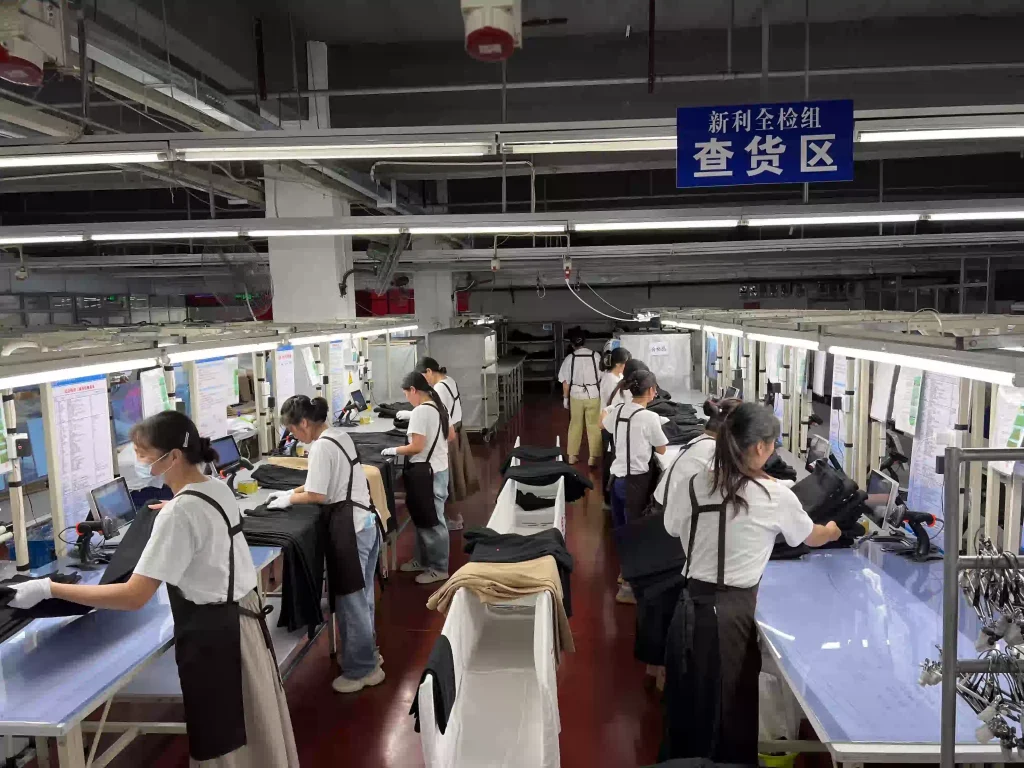
11. Use a Pre-Bulk Care-Label Approval Record
The following table can be used as a practical review record. It is a buyer-side workflow tool, not an official FTC form.
| Review item | Evidence or record to retain | Release decision |
|---|---|---|
| Product coverage | Style description and coverage review | Covered / exemption reviewed / unresolved |
| Responsible parties | Manufacturer and importer details; assigned responsibilities | Confirmed / unresolved |
| Care wording | Approved care-label artwork and revision | Approved / revise |
| Washing and drying | Instruction review and supporting basis | Supported / further review |
| Bleaching and warnings | Applicable wording and evidence | Supported / revise |
| Drycleaning, if used | Solvent wording and warnings | Supported / revise / not applicable |
| Reasonable basis | Supporting records linked to the relevant garment version | Adequate / insufficient / unresolved |
| Material or construction changes | BOM revision and evidence-applicability assessment | Closed / further validation |
| Symbols | Applicable standard and wording review | Approved / revise |
| Attachment and visibility | Finished sample and packaging review | Approved / revise |
| Final approval | Approver, date, version, and open actions | Released / hold |
If any material fact is unresolved, record the issue and assign an owner before bulk release. Do not mark the care-label review complete simply because the artwork has been approved.
12. Agree on the Operational Responsibilities With Your Manufacturer
A brand and its manufacturing partner should agree on who prepares the proposed wording, who supplies supporting information, who conducts any required validation, who approves the final artwork, and who retains the relevant records.
These operational arrangements should be documented for each program. They do not, by themselves, change the legal responsibilities imposed by the Care Labeling Rule.
When discussing a production order, provide the manufacturing partner with:
- The current tech pack and BOM.
- The intended US market and product description.
- The proposed care-label artwork and wording.
- Relevant test reports, technical literature, or other supporting evidence.
- Known material, finish, or construction changes.
- The required approval and record-retention process.
A supplier can then confirm which parts of the workflow it can support for the specific project. Do not assume that a supplier has performed testing or holds particular compliance records unless this has been verified.
For broader private-label coordination, see Private Label Clothing Manufacturer.
Frequently Asked Questions
Does every US apparel product need a permanent care label?
Not necessarily. The rule contains defined coverage limits and exemptions. Confirm the product category and applicable provision before deciding that a permanent label is unnecessary. Some exemptions still require care information to be visible to the purchaser.
Does the FTC require laboratory testing for every care label?
No single test is mandated for every product. The manufacturer or importer must possess a reasonable basis before sale. The appropriate evidence depends on the garment, the care instructions, and the circumstances.
Can a brand reuse care instructions from a similar style?
Only if the instructions remain appropriate and the supporting basis applies to the garment in question. Similar appearance alone is not sufficient evidence that different fabrics, finishes, prints, and trims will respond in the same way.
Does a fabric change automatically require a complete retest?
Not automatically. Review how the change affects the product and whether the existing evidence remains adequate. Additional testing or sampling may be appropriate when the change introduces risks not covered by the original evidence.
Can care symbols replace written instructions in the United States?
The rule identifies ASTM Standard D5489-96c as the symbol system that may be used in lieu of terms when its conditions are met. Do not assume that a different or newer symbol set qualifies without checking the applicable requirements.
Before You Release Bulk
A reliable care-label release process connects three things: the instruction shown to the customer, the evidence supporting that instruction, and the exact garment version being manufactured.
Before approving bulk, confirm that the responsible parties are identified, the care wording is appropriate, the reasonable basis is documented, changes have been assessed, and the finished label will be attached and visible as required.
New Asia Garment works with apparel brands on OEM/ODM product development, sampling, and production. For a specific program, provide the current tech pack, BOM, proposed care-label artwork, and any existing supporting records so the required production workflow can be discussed. Any testing capability, compliance documentation, or project-specific service must be confirmed before it is represented as available.
Regulatory reference: FTC Care Labeling Rule, 16 CFR Part 423. This article reflects the official text reviewed for this editorial revision and should be checked against the current regulation before publication. It is general information, not legal advice.
Read More
- What US Apparel Brands Should Verify About Care Labels Before Bulk Production
- Size Set Approval Before Bulk Production: How to Catch Pattern Grading Problems Early
- How to Investigate a Garment Quality Claim: From Symptom to Root Cause and CAPA
- Garment Packaging Quality Control: Preventing Creases, Print Damage and Shape Distortion
- How to Validate Pocket Function and Placement Before Bulk Production