
For global apparel brands, clothing manufacturers, and quality assurance directors, few post-production defects are as frustrating as poorly engineered pockets. A jacket pocket that sits too high for comfortable hand placement, a trouser pocket that gapes open while standing, or a cargo pocket that sags under the weight of a smartphone can compromise an otherwise well-made garment.
Pockets are not merely decorative details. They are functional components that endure repeated use and mechanical stress, making rigorous pre-production validation essential.
Adjusting pocket placement by just two centimeters or reinforcing internal anchor points after thousands of garments have been bulk-cut can lead to costly manufacturing rework. To prevent customer complaints related to sagging, gaping, and poor ergonomics, quality control teams must implement systematic pocket validation protocols during the pre-production sample stage.
This guide explains how to evaluate pocket function, placement, structural integrity, and storage capacity before authorizing bulk production.
1. Validate Pocket Placement for Ergonomics and Accessibility
The foundation of a successful pocket design is human ergonomics. A pocket should be positioned where the wearer’s hand can naturally reach it, allowing effortless access without awkward wrist movements or uncomfortable body positioning.
1.1 Define Pocket Placement Using High Point Shoulder (HPS) Coordinates
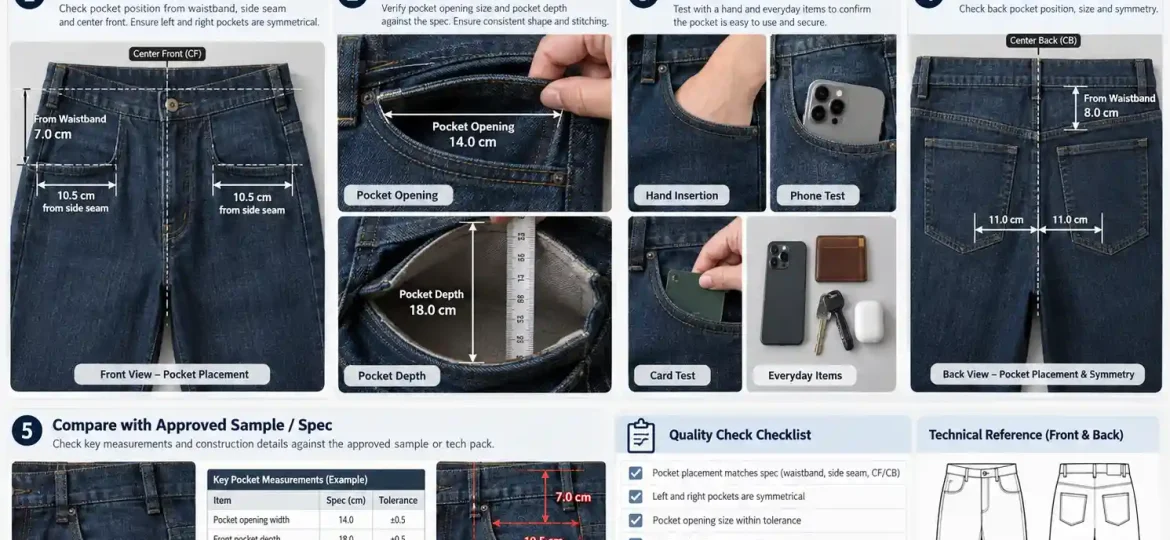
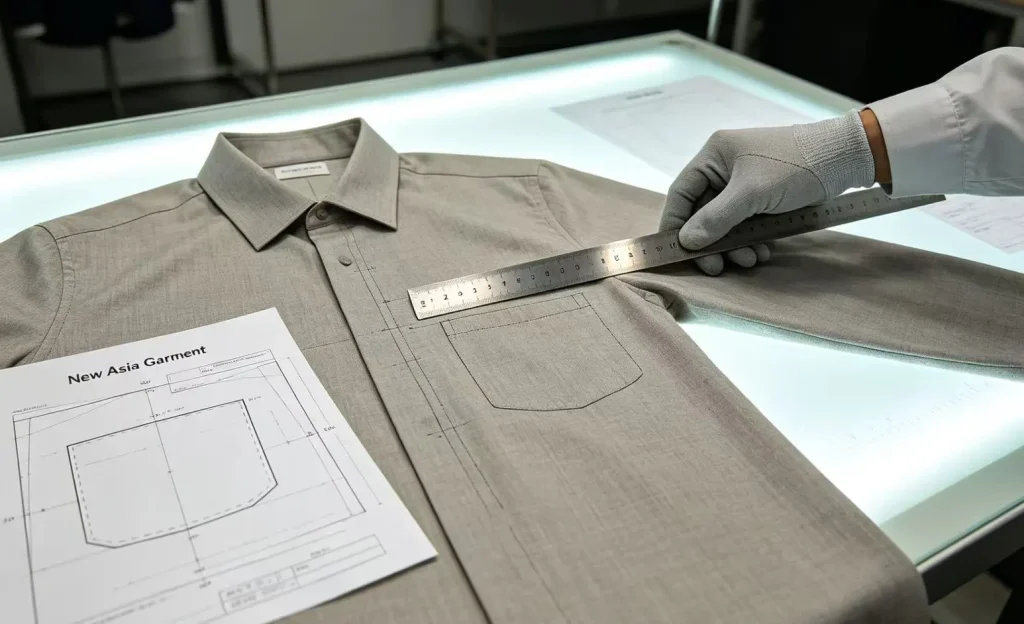
Pocket positions on shirts, jackets, and hoodies should never be left to the discretion of individual sewing operators. Technical packs must specify exact pocket placement measurements using fixed structural reference points, such as the High Point Shoulder (HPS), center front, or front placket.
Documenting precise measurements helps maintain consistency across production lines, garment sizes, and manufacturing batches.
1.2 Evaluate Natural Hand-Rest Angles and Pocket Height
Welt pockets and slash pockets on tailored blazers and trousers should be positioned and angled to accommodate natural arm movement. Pocket placement that is too high, too low, or too far back on the hip can force the wearer into an uncomfortable position when reaching inside.
During sample evaluation, quality control teams should assess pocket height, opening angle, and accessibility in relation to the garment’s intended fit and silhouette.
1.3 Conduct Live-Model Pocket Usability Trials
During pre-production sample fittings, models should physically test pocket accessibility while standing, sitting, and walking.
Check whether the wearer can insert and remove a hand comfortably without shrugging the shoulder, twisting the torso, or contorting the wrist. Any accessibility issues should be documented and corrected through pattern adjustments before bulk production approval.
2. Prevent Pocket Gaping and Edge Distortion
Pocket gaping is a common quality issue in trousers, skirts, and structured blazers. It occurs when a pocket opening pulls away from the garment body, creating unwanted gaps or outward flaring.
2.1 Check Fabric Grainline Alignment and Garment Tension
Pocket gaping can result from incorrect fabric grainline alignment, insufficient pattern ease, or excessive tension across the hips. When a garment fits too tightly, lateral tension can pull the pocket opening outward.
Pre-production samples should be evaluated on a properly fitted model to confirm that pocket openings and adjacent side seams remain smooth during standing, sitting, and movement.
2.2 Use Fusible Interfacing and Stay Tape to Stabilize Pocket Openings
Lightweight fusible interfacing or suitable stay tape can help stabilize welt and slash pocket openings, reducing unwanted stretching and edge distortion during sewing and repeated wear.
The reinforcement material should be selected according to the shell fabric’s weight, stretch characteristics, and construction requirements to maintain both dimensional stability and flexibility.
2.3 Secure Pocket Bags With Internal Anchor Points
Internal anchor points help prevent pocket bags from shifting, sagging, or pulling against the outer garment fabric.
Where appropriate, manufacturers can secure pocket bags to stable construction points, such as waistband seams or suitable front-fly facing areas. The attachment method should be validated against the garment’s pattern and construction specifications to avoid restricting movement or creating visible distortion.
3. Reinforce Pocket Corners and High-Stress Areas
Pockets endure repeated mechanical stress as wearers insert their hands, carry everyday objects, and open or close pocket fastenings. Pocket corners and opening ends are particularly vulnerable to seam failure and fabric tearing.
3.1 Apply Bar Tacks and Rivets at Critical Stress Points
High-stress areas, including the upper and lower corners of denim patch pockets and the ends of utility pocket openings, may require reinforcement with industrial bar tacks or metal rivets.
The reinforcement method should match the garment type, fabric construction, expected load, and design requirements. Denim, workwear, cargo garments, and lightweight fashion apparel may require different reinforcement specifications.
3.2 Reinforce Pocket Bags With Suitable Interfacing and Woven Tape
Deep utility pockets and cargo compartments need pocket bag materials that can withstand repeated use and the weight of everyday objects.
Manufacturers should evaluate pocket bag fabric strength, seam construction, and reinforcement around load-bearing areas. Durable woven tape or suitable interfacing can help distribute stress and reduce the risk of tearing at critical attachment points.
3.3 Verify Topstitching and Stitch Density
Topstitching around pocket perimeters must remain consistent in appearance and construction quality. Inadequate stitch density, inconsistent seam allowances, or poorly secured thread ends can increase the risk of fraying and seam failure.
Quality control teams should inspect stitch density, seam alignment, stitch tension, and reinforcement consistency against approved technical specifications.
4. Test Pocket Volume, Depth, and Carrying Capacity
A pocket that looks balanced on an empty garment may become distorted or uncomfortable when filled with everyday items, such as smartphones, wallets, and keys.
Pre-production validation should therefore evaluate both the pocket’s dimensions and its performance under realistic carrying conditions.
4.1 Conduct Simulated Weight and Load Testing
Place representative objects of defined dimensions and weights into each pocket to evaluate how the garment responds under load. For example, a 200 g test weight can simulate the carrying load of a relatively heavy smartphone.
Record the resulting changes in pocket opening shape, pocket bag position, seam tension, and overall garment balance. Test weights should reflect the intended product use rather than serve as a universal standard for every pocket type.
4.2 Check Pocket Sagging and Garment Hem Distortion
After loading the pockets, inspect whether the pocket bag hangs below the garment hem, the patch pocket droops, or the garment front becomes visibly distorted.
If excessive sagging occurs, review pocket bag depth, fabric strength, attachment points, and reinforcement construction before changing the design. Reducing pocket depth or selecting a more suitable shell fabric may help, but the correction should address the identified cause of the distortion.
4.3 Establish Pocket Grading Rules Across All Sizes
Pocket proportions must remain visually balanced and functionally appropriate across the full size range.
A pocket that looks proportionate on a size Large jacket may overwhelm the chest area of an Extra Small garment. Conversely, a pocket scaled down too aggressively may lose practical storage capacity.
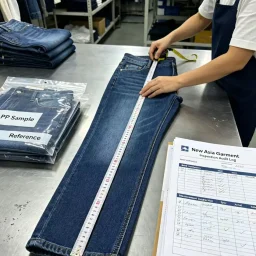
Technical packs should define pocket grading rules, including width, height, opening dimensions, placement coordinates, and pocket bag dimensions where necessary. Size-set samples should be reviewed to confirm consistency across all approved sizes.
5. Standardize Pocket Quality Control Before Bulk Production
A reliable pocket validation process transforms design expectations into measurable manufacturing requirements. Standardized inspection criteria help apparel brands identify defects early, reduce rework, and maintain consistent product quality across production batches.
5.1 Establish Pocket Validation Criteria in the Technical Pack
The technical pack should specify measurable requirements for:
- Pocket placement coordinates and dimensional tolerances.
- Pocket opening width, angle, and accessibility.
- Pocket bag dimensions, fabric specifications, and attachment points.
- Interfacing, stay tape, bar tacks, rivets, and other reinforcement details.
- Stitch density, seam construction, and topstitching appearance.
- Load-testing conditions and acceptable garment distortion.
- Pocket grading rules across the complete size range.
Documenting these requirements ensures that designers, pattern makers, sample technicians, and production teams work toward the same approved specifications.
5.2 Inspect Pre-Production Samples Before Bulk Approval
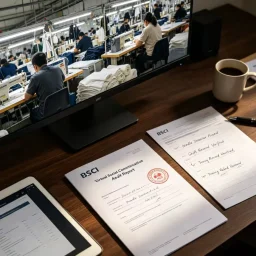
Before authorizing bulk manufacturing, quality assurance teams should evaluate pocket performance through visual inspection, dimensional measurement, wear trials, and load testing.
Any defects should be recorded with clear corrective actions. Revised samples should then be checked against the approved specifications to confirm that the identified issues have been resolved.
5.3 Work With an Experienced Apparel Manufacturing Partner
Partnering with an experienced technical manufacturer, such as New Asia Garment, can help apparel brands coordinate pocket placement mapping, reinforcement construction, sample evaluation, and pre-production quality control.
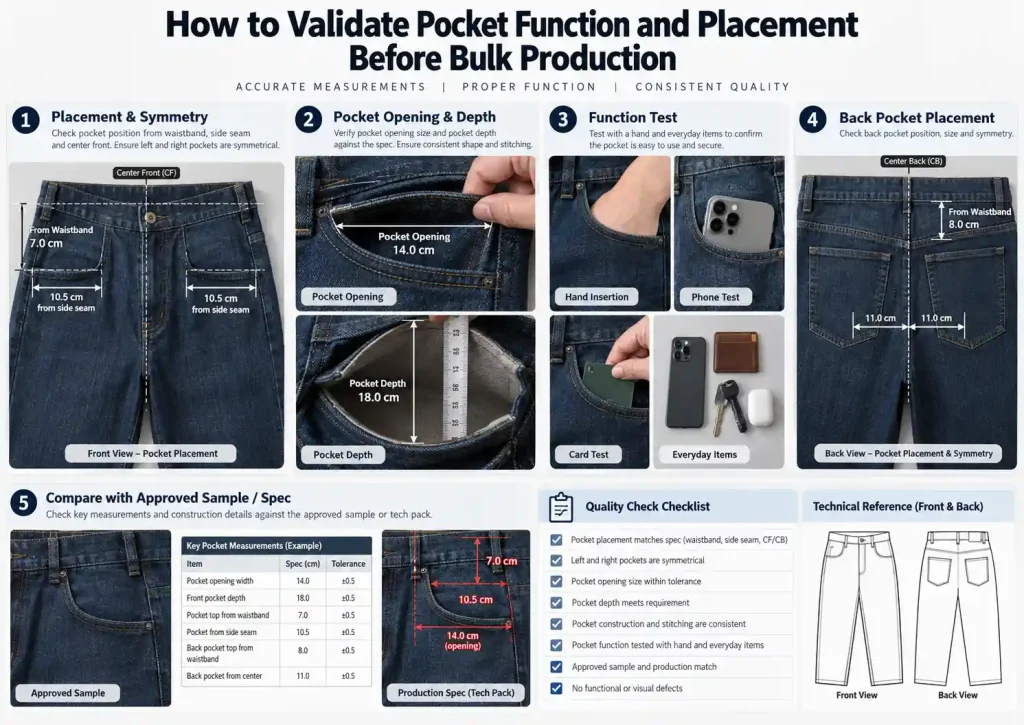
By integrating pocket validation into the sample approval process, manufacturers can identify design and construction weaknesses before they affect large production quantities.
Conclusion: Validate Pocket Function Before Approving Bulk Production
Pocket function and placement validation are essential steps for apparel brands seeking consistent product quality, comfort, and long-term durability.
By verifying ergonomic accessibility, preventing pocket gaping, reinforcing high-stress corners, testing carrying capacity, and standardizing quality control requirements, manufacturers can reduce preventable defects before bulk production begins.
A well-validated pocket should do more than complement a garment’s appearance. It should maintain its shape, provide practical storage, and perform reliably throughout everyday wear.
Frequently Asked Questions (FAQs)
1. Why is pocket placement validation important before bulk production?
Pocket placement validation ensures that pockets are ergonomically positioned, function properly, and maintain the garment’s intended appearance. Testing during the pre-production sample stage helps identify issues such as poor accessibility, uneven placement, and garment distortion before they lead to costly bulk production rework.
2. How can manufacturers prevent pocket gaping in trousers and jackets?
Manufacturers can prevent pocket gaping by checking pattern accuracy, fabric grainline alignment, and garment fit. Using suitable fusible interfacing or stay tape to stabilize pocket openings and securing pocket bags at appropriate internal anchor points can also help reduce gaping and distortion.
3. What is the best way to reinforce pocket corners?
Pocket corners can be reinforced using industrial bar tacks, metal rivets, or other suitable reinforcement methods, depending on the garment type and fabric construction. Manufacturers should pay particular attention to pocket opening ends and attachment points that experience repeated stress during everyday use.
4. How should manufacturers test pocket strength and carrying capacity?
Manufacturers should place representative objects with predefined dimensions and weights into pockets during pre-production testing. They should then inspect pocket sagging, seam strength, opening distortion, and overall garment balance. Test conditions should reflect the garment’s intended use and documented quality requirements.
5. How do manufacturers ensure consistent pocket placement across different garment sizes?
Manufacturers should establish clear pocket placement coordinates, dimensional tolerances, and grading rules in the technical pack. Reviewing size-set samples across the full size range helps verify that pocket proportions, accessibility, and visual balance remain consistent from smaller to larger sizes.
6. When should pocket function and placement be approved for bulk production?
Pocket function and placement should be approved during the pre-production sample stage, before bulk cutting and manufacturing begin. Quality assurance teams should verify placement measurements, pocket accessibility, construction details, reinforcement, and carrying capacity. Any identified defects should be corrected and revalidated before final production approval.
Read More
- How to Validate Pocket Function and Placement Before Bulk Production
- How to Standardize Fabric Hand Feel Across Production Lots
- Movement Fit Testing for Apparel: How to Check Ride-Up, Slippage, and Range of Motion
- Pre-Production Sample Approval: What Brands Should Lock Before Bulk Production
- Custom Sports Jersey Manufacturing Quality Control: A Global Manufacturing Guide