
For global apparel brands and apparel manufacturing managers, few issues are more frustrating than approving a luxurious, ultra-soft fabric during the sample stage, only to receive bulk production lots that feel noticeably stiffer, rougher, or heavier.
Fabric hand feel—the tactile sensory response consumers experience when touching a textile—is a powerful driver of purchase decisions and brand perception. When tactile consistency varies between production lots, customer dissatisfaction can increase, potentially leading to more product complaints and returns.
Maintaining consistent fabric hand feel across thousands of meters of material requires strict chemical, mechanical, and technical standardization throughout the supply chain. This guide explains how apparel brands can reduce tactile variation between development samples and bulk production runs.
1. Control Finishing Chemicals and Fabric Softener Ratios
The final hand feel of a fabric depends heavily on wet-processing chemistry, particularly the application of softening agents during dyeing and finishing.
Use Consistent Silicone and Cationic Softeners
Textile mills commonly use macro-silicone, micro-silicone, and fatty acid-based softeners to achieve different tactile effects, from a slippery, smooth surface to a soft, plush finish. Variations in chemical concentration, bath temperature, or application conditions can significantly affect the final result.
Establish Standardized Chemical Recipes and Processing Parameters
Apparel brands should work with textile mills to define and document approved chemical formulations, softener concentrations, bath pH levels, application temperatures, and curing conditions. These parameters should be incorporated into production specifications and followed consistently across repeat orders.
Implement Batch-to-Batch Chemical Audits
Finishing facilities should maintain traceable records of chemical products, dosing quantities, processing conditions, and curing times. Regular audits help identify deviations before they affect bulk fabric quality and ensure that repeat orders deliver a consistent hand feel.

2. Standardize Mechanical Finishing and Fabric Compacting
Chemical softeners alone cannot guarantee consistent fabric texture. Mechanical finishing processes also influence surface smoothness, fabric density, drape, and dimensional stability.
Control Calendering Pressure and Temperature
Calendering uses heated rollers and controlled pressure to modify fabric surface smoothness and appearance. Inconsistent roller pressure, temperature, or processing speed can change surface friction, gloss, and tactile characteristics between production lots.
Maintain Consistent Compacting Conditions
Knitted fabrics often undergo mechanical compacting to improve dimensional stability and control finished fabric dimensions. Variations in overfeed settings, machine speed, and fabric tension can affect relaxation, finished weight, and tactile density.
Standardize Raising, Brushing, and Peaching Processes
For fleece, flannel, and brushed jersey, raising, brushing, and peaching processes help create a soft surface. Worn equipment, inconsistent drum speeds, or incorrect machine settings can produce uneven pile height and a rough or scratchy hand feel. Regular equipment maintenance and standardized operating parameters are essential for consistent results.
3. Maintain Raw Material and Yarn Lot Consistency
Fabric hand feel can vary before finishing even begins. Differences in fiber characteristics, yarn specifications, and material composition may affect the softness, smoothness, and flexibility of the finished fabric.
Control Fiber Length, Fineness, and Quality
Natural fibers such as cotton and wool vary according to fiber source, growing conditions, and processing methods. Differences in staple length and fiber fineness can influence yarn uniformity, surface hairiness, and the tactile properties of the finished textile.
Brands should establish approved raw material specifications and require suppliers to verify that incoming fibers meet the agreed quality standards.
Standardize Fiber Blending Ratios
For polyester-cotton, nylon-spandex, and other blended fabrics, consistent fiber composition is essential. Variations in blending ratios can affect softness, elasticity, surface smoothness, and fabric recovery.
Production specifications should clearly define the required fiber percentages and establish an appropriate tolerance for each material.
Require Yarn Lot Certifications and Traceability
Spinning mills should provide relevant yarn quality records for each production lot, including fiber composition, yarn count, twist level, and other agreed technical properties. Maintaining yarn lot traceability helps manufacturers identify the source of tactile differences and prevent inconsistent materials from entering bulk production.
4. Combine Objective Tactile Testing With Sensory Evaluation
Human touch is valuable when evaluating fabric hand feel, but subjective assessments can vary between inspectors, testing environments, and individual preferences. Combining standardized sensory evaluation with objective laboratory measurements creates a more reliable approval process.
Use the Kawabata Evaluation System for Fabric Hand
The Kawabata Evaluation System (KES) measures mechanical and surface properties associated with fabric hand feel. Depending on the test configuration, it can assess bending, shear, tensile behavior, surface friction, surface roughness, and compression.
These measurements help manufacturers compare approved reference samples with bulk production fabrics using repeatable numerical data.
Measure Surface Friction, Flexibility, and Drape
Laboratory instruments can provide additional information about fabric performance. Friction testers help evaluate surface interaction, while bending tests and drape measurement methods help characterize flexibility and how fabric falls.
No single measurement fully represents perceived softness. The selected tests should reflect the fabric type, end use, and tactile characteristics that matter most to the product.
Establish Acceptable Tactile Performance Ranges
Brands should define measurable acceptance criteria for critical fabric properties and compare bulk production results against an approved reference sample.
Where applicable, specifications should include testing methods, sample preparation procedures, measurement tolerances, and procedures for investigating results outside the approved range. This approach reduces reliance on subjective factory judgments alone.
5. Standardize Environmental and Moisture Conditioning
Textile fibers such as cotton, rayon, and wool can absorb moisture from their surroundings. Changes in relative humidity and temperature may influence fabric flexibility, friction, and perceived softness during inspection.
Condition Fabric Samples in a Standard Testing Atmosphere
Fabric samples should be conditioned under a controlled atmosphere before hand-feel evaluation and laboratory testing. For many textile testing applications, a standard atmosphere of approximately 20°C and 65% relative humidity is used, subject to the applicable test method and regional standard.
Conditioning duration should follow the relevant testing standard and the fabric’s moisture equilibrium requirements rather than relying on a fixed time for every material.
Control Storage and Transportation Conditions
Long-distance shipping and warehouse storage can expose fabrics to changing temperature and humidity. Brands and manufacturers should establish suitable storage conditions, use appropriate protective packaging, and prevent exposure to excessive moisture, contamination, and prolonged unsuitable environmental conditions.
These controls help ensure that fabric samples and bulk materials are evaluated under comparable conditions.
6. Establish Standardized Fabric Hand Feel Quality Control Protocols
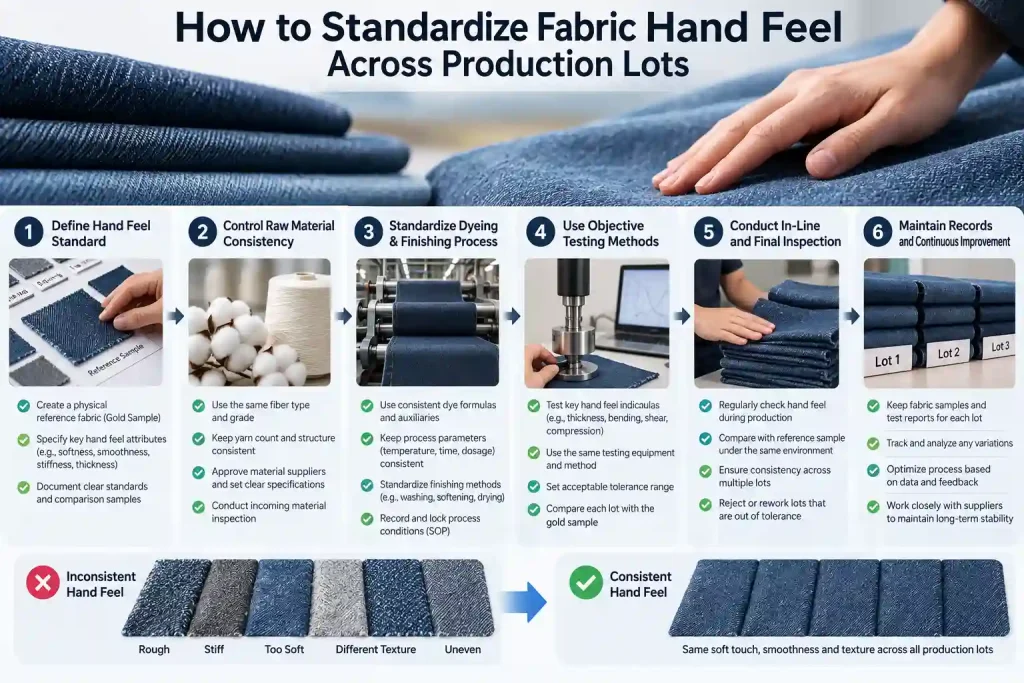
Consistent fabric hand feel requires a documented quality management system that connects material sourcing, finishing processes, laboratory testing, and bulk production approval.
Create an Approved Fabric Hand Feel Reference Standard
Brands should retain an approved reference swatch from the development stage and use it as the benchmark for bulk production. Where necessary, maintain multiple reference samples to represent acceptable variation and protect against changes caused by storage or sample deterioration.
The reference should be linked to the relevant fabric specification, color, composition, finishing recipe, and production version.
Integrate Hand Feel Requirements Into the Production Tech Pack
The production tech pack should document the key requirements affecting tactile consistency, including:
- Fiber composition and yarn specifications
- Approved finishing chemicals and application parameters
- Mechanical finishing and compacting settings
- Required laboratory tests and acceptance tolerances
- Sample conditioning and sensory evaluation procedures
- Bulk fabric inspection and approval requirements
Clearly documented specifications help ensure that textile mills, garment manufacturers, and brand quality teams work toward the same standards.
Implement Lot-Based Inspections and Corrective Actions
Each production lot should be evaluated against the approved reference and applicable technical specifications. Any significant deviation should trigger an investigation into raw materials, chemical processing, mechanical finishing, or environmental conditions.
Documenting the root cause and corrective action helps prevent recurring problems and improves consistency across future production orders.
7. Partner With an Experienced Apparel Manufacturer to Maintain Fabric Consistency
Standardizing fabric hand feel requires coordinated quality control across the entire textile supply chain. From raw material verification and yarn traceability to finishing recipe management and laboratory testing, every stage can influence the final tactile result.
Working with an experienced manufacturing partner such as New Asia Garment can help apparel brands integrate fabric quality requirements into production planning, supplier coordination, and bulk inspection procedures.
By establishing clear reference standards, controlling critical processing variables, and verifying production results with appropriate testing methods, brands can reduce tactile variation and improve consistency between development samples and bulk orders.
Conclusion: Achieve Consistent Fabric Hand Feel From Sample to Bulk Production
Standardizing fabric hand feel across production lots is an important part of maintaining product quality and brand consistency. Variations in finishing chemicals, mechanical processing, raw materials, and testing conditions can all contribute to differences between approved samples and finished bulk fabrics.
Apparel brands can reduce these risks by controlling production parameters, maintaining material traceability, combining objective testing with sensory evaluation, and implementing clear quality control protocols.
With a systematic approach to fabric hand feel management, manufacturers can deliver more consistent tactile quality from the first approved sample to the final bulk shipment.
Frequently Asked Questions About Fabric Hand Feel Consistency
1. Why Does Fabric Hand Feel Vary Between Production Lots?
Fabric hand feel can vary due to differences in raw material quality, yarn specifications, softener concentrations, mechanical finishing settings, and environmental conditions. Standardizing production parameters and conducting batch-level quality inspections help maintain consistent fabric softness and texture.
2. How Can Apparel Manufacturers Maintain Consistent Fabric Hand Feel?
Manufacturers can maintain consistent fabric hand feel by controlling raw materials, standardizing chemical finishing recipes, monitoring mechanical processing parameters, and comparing bulk production fabrics with approved reference samples. Regular quality inspections help identify deviations before they affect finished garments.
3. How Do Textile Mills Test Fabric Hand Feel Objectively?
Textile mills can combine sensory evaluation with laboratory testing. The Kawabata Evaluation System (KES) measures properties such as bending, shear, surface friction, and compression. These measurements help manufacturers compare fabric samples and monitor consistency across production lots.
4. Can Fabric Softeners Affect Hand Feel Consistency?
Yes. Variations in softener type, concentration, application temperature, bath pH, and curing conditions can affect fabric softness, smoothness, and surface friction. Using approved chemical formulations and maintaining consistent processing conditions helps reduce batch-to-batch variation.
5. How Can Brands Ensure Bulk Fabric Matches the Approved Sample?
Brands should establish an approved reference sample, document critical fabric specifications, and define acceptable testing tolerances. Before bulk production approval, manufacturers should inspect fabric composition, hand feel, finishing quality, and relevant physical properties against the agreed standards.
6. How Can an Apparel Manufacturer Help Maintain Consistent Fabric Quality?
An experienced apparel manufacturer can coordinate with textile mills, verify material specifications, monitor finishing processes, and implement standardized quality control procedures. These measures help reduce differences between development samples and bulk production fabrics while supporting consistent product quality across repeat orders.
Read more
- How to Validate Pocket Function and Placement Before Bulk Production
- How to Standardize Fabric Hand Feel Across Production Lots
- Movement Fit Testing for Apparel: How to Check Ride-Up, Slippage, and Range of Motion
- Pre-Production Sample Approval: What Brands Should Lock Before Bulk Production
- Custom Sports Jersey Manufacturing Quality Control: A Global Manufacturing Guide