
In global denim manufacturing, hardware components—including tack buttons, heavy-duty rivets, press snaps, and adjustment buckles—are far more than decorative details. They perform critical structural functions and must withstand mechanical stress during everyday wear, repeated laundering, and industrial garment-finishing processes.
A single loose waistband button, failed rivet, or damaged snap can compromise garment performance, resulting in customer complaints, returns, production losses, and reputational damage for global fashion brands.
For this reason, robust quality assurance and testing procedures for denim hardware are essential throughout the apparel supply chain. From material approval and attachment strength to corrosion resistance, finish durability, and production inspection, each stage plays a specific role in ensuring hardware reliability and compliance.
This guide outlines seven key stages for testing denim hardware, covering both laboratory evaluation and production-level quality control.
1. Hardware BOM Approval
The Bill of Materials (BOM) approval stage establishes the technical requirements for every denim hardware component before bulk production begins.
Each button, rivet, snap, or buckle should be checked against the approved technical specification, CAD drawings, color standards, and applicable chemical and safety requirements.
Material and Chemical Verification
Metal samples should be evaluated to confirm that the base material and surface treatment comply with applicable regulations and customer requirements.
Depending on the product and market, testing may include restricted substances and heavy metals such as lead and cadmium, as well as nickel release for hardware that comes into prolonged contact with the skin.
Relevant requirements may include EU REACH, CPSIA, OEKO-TEX® requirements, and applicable brand-specific standards.
Dimensional Verification
Accurate dimensions are essential for both hardware performance and setting compatibility.
Critical measurements may include:
- Cap diameter
- Post or shank length
- Pin diameter
- Wall thickness
- Internal component dimensions
- Setting dimensions and tolerances
Hardware dimensions should be matched to the denim fabric construction and weight. A component designed for lightweight 10 oz denim may require different setting specifications from hardware used on heavyweight 14 oz or heavier rigid denim.
Proper dimensional matching helps prevent loose attachments, fabric damage, incorrect crimping, and setting-machine problems.
2. Attachment Strength
Attachment strength testing determines whether a button, rivet, snap, or buckle is securely attached to the denim after the setting operation.
The objective is not only to measure hardware strength, but also to verify that the hardware, fabric, and setting process work together as a reliable system.
Pull-Out Resistance
Finished hardware attachments can be subjected to controlled axial pull testing using calibrated tensile equipment. The test measures the force required to separate the hardware from the fabric.
A commonly used internal acceptance criterion may be around 90 N (20 lbf) for 10 seconds, but the actual requirement should always be based on the applicable product specification, brand standard, or relevant testing method.
Fabric Damage and Setting Quality
The test should also examine the condition of the surrounding denim.
Over-setting may crush or cut yarns around the attachment point, increasing the risk of fabric tear-out. Under-setting may result in loose, rotating, or unstable components.
The failure mode is therefore as important as the numerical pull-force result. Inspectors should record whether failure occurs through:
- Hardware deformation
- Hardware separation
- Post or shank failure
- Fabric tear-out
- Yarn damage
- Incorrect crimping or setting
3. Pull / Torque / Snap Function
Functional performance testing simulates daily human interaction with denim hardware, ensuring mechanical features remain resilient over time.
- Pull and Tensile Rupture Testing: Tack buttons, shank buttons, and rivets undergo destructive pull testing to determine ultimate failure points, verifying that internal locking teeth or post-deformation mechanics withstand extreme stress.
- Torque Resistance Testing: Waistband buttons and rivets are subjected to rotational torque testing. Measuring the force required to twist a button cap relative to its post ensures the component will not loosen or separate under rotational friction.
- Snap Function Force: For press snaps and spring fasteners, calibrated testing gauges measure opening and closing forces. The snap action must feel secure without requiring excessive effort that could tear surrounding fabric.
4. Corrosion and Wash Durability
Denim hardware undergoes aggressive chemical washing, stonewashing, enzyme treatments, and bleaching during garment finishing, followed by repeated domestic laundering over its lifespan.
- Salt Spray and Oxidation Testing: Metal hardware is exposed to accelerated salt spray chambers (ASTM B117) to evaluate corrosion resistance. Tests simulate marine transit and high-humidity environments, ensuring surfaces remain free of rust or pitting.
- Chemical Wash Resistance: Hardware samples undergo laundry simulations incorporating ozone, stone abrasion, chlorine bleach, and potassium permanganate treatments. Testing confirms that protective topcoats prevent base metal oxidation, plating peeling, or chemical discoloration.
5. Finish / Colour Consistency
Maintaining visual uniformity across thousands of hardware pieces is critical for global brand consistency and premium aesthetics.
- Spectrophotometric Shade Matching: Metal finishes—such as antique brass, gunmetal, shiny nickel, matte black, and copper—are evaluated under standardized D65 daylight viewing cabinets. Automated colorimeters check for color space deviations across production batches.
- Plating Adhesion and Wear Resistance: Protective lacquers and electroplated layers are subjected to cross-hatch tape adhesion tests and rub-friction tests. This ensures finishes do not chip, flake, or wear off when rubbed against coarse denim during tumbling.
7. Bulk Hardware Inspection Checklist
Laboratory testing establishes performance requirements, but consistent bulk production depends on effective factory-level quality control.
A standardized inspection system should therefore be implemented from incoming material inspection through final garment inspection.
Pre-Production Hardware Verification
Before production begins, incoming hardware lots should be checked against the approved BOM and technical specifications.
Key checks may include:
- Material and finish
- Dimensions
- Colour and appearance
- Component configuration
- Quantity
- Packaging and lot identification
Setting Machine and Die Verification
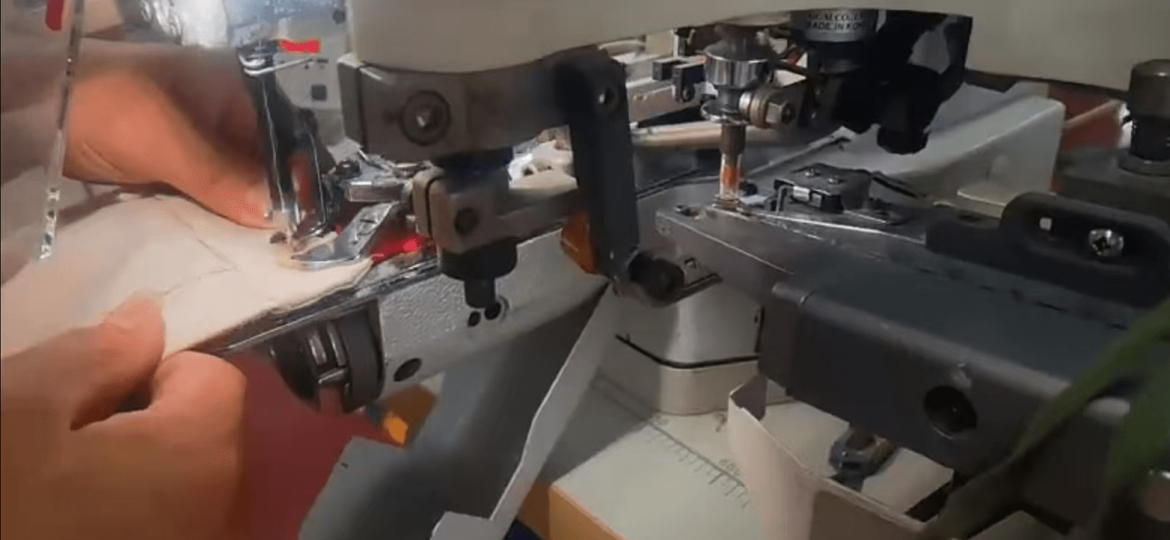
Before and during production, operators and quality personnel should verify that the correct upper and lower dies are installed and properly aligned.
Machine pressure and setting parameters should be adjusted according to the hardware specification and fabric construction.
Any die change, machine adjustment, or significant fabric change should trigger a setting verification.
In-Line Attachment Testing
Factories should establish a documented frequency for attachment testing based on the customer’s requirements, production risk, and internal quality system.
Where a 90 N / 20 lbf for 10 seconds criterion is specified, pull testing should be performed using calibrated equipment and recorded as part of the production quality documentation.
Additional checks should be performed after:
- Machine setup
- Die changes
- Operator changes where relevant
- Hardware changes
- Significant machine adjustments
Final Safety Inspection
Where needle detection is required, finished garments should pass through calibrated detection equipment before final packing.
Inspection records should be maintained to provide traceability by production line, date, machine, and lot where required.
Conclusion
Reliable denim hardware performance depends on more than simply selecting a strong button, rivet, snap, or buckle. The complete system—including material selection, dimensions, setting conditions, attachment strength, mechanical function, chemical durability, surface finish, and production controls—must be evaluated.
A well-designed testing program also separates laboratory performance testing from production inspection. Attachment strength testing determines whether hardware is securely fixed to the garment, while mechanical testing evaluates the hardware’s functional and failure characteristics. Corrosion and wash testing address environmental durability, whereas finish testing focuses on appearance and coating performance.
By standardizing BOM approval, attachment testing, mechanical evaluation, durability testing, safety checks, and bulk inspection procedures, apparel manufacturers can reduce hardware-related failures and improve consistency across global production programs.
Experienced denim manufacturing partners can further strengthen this process by combining calibrated laboratory equipment, controlled hardware-setting processes, trained quality personnel, and documented inspection systems.
Ultimately, effective denim hardware quality engineering helps ensure that every button, rivet, snap, and buckle delivers the required structural reliability, functional performance, safety, and visual consistency throughout the garment’s lifecycle.
Read more