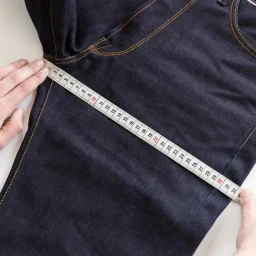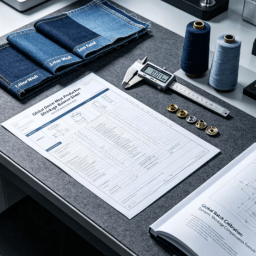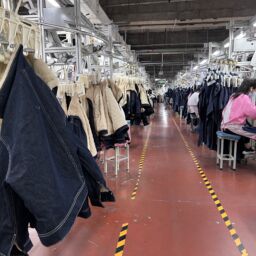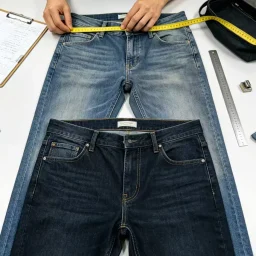

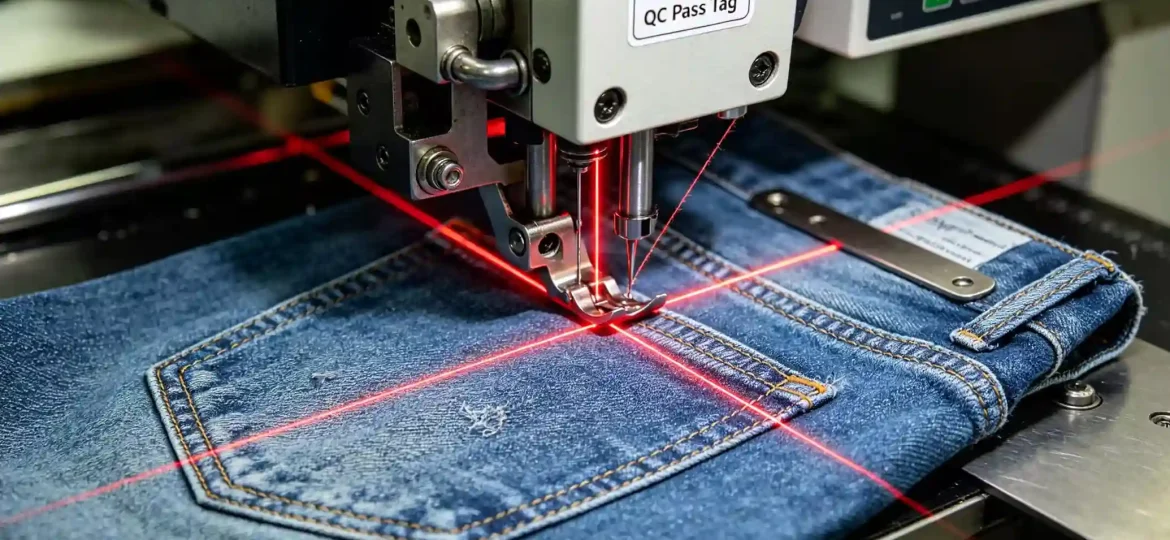
Denim garment manufacturing is an intricate process where raw fabric durability meets precise heavy-duty tailoring. Because denim fabric is notoriously tough, dense, and often woven with slub yarns or stretch elastane, it subjects industrial sewing machinery to exceptional mechanical stress. In high-volume apparel manufacturing, minor stitching inconsistencies can quickly spiral into costly batch rejections and high customer return rates.
Understanding the root causes of sewing flaws and establishing systematic prevention protocols is essential for global apparel brands, sourcing teams, and garment factories aiming to deliver consistent quality. This technical guide examines seven critical sewing defects in denim production and outlines practical solutions to ensure structural integrity across every production line.
1. Skipped and Broken Stitches
Skipped stitches occur when the sewing machine needle loop fails to catch the bobbin or looper thread, leaving an unsecured gap in the seam. Broken stitches happen when thread snaps mid-seam due to excessive tension or friction heat.
- Primary Causes: In denim sewing, skipped stitches usually stem from needle deflection—where dense fabric layers like felled seams force the needle out of alignment. Thread breakage is typically caused by improper machine tension, sharp burrs on needle eyes, or high friction heat generated during high-speed sewing.
- Prevention Strategies: Set needle-to-looper clearance precisely according to machine specifications. Use heavy-duty, heat-resistant threads such as poly-wrapped poly core (PPC) threads, and fit machines with needle coolers during continuous high-speed runs on heavy-weight denim.
2. Seam Puckering
Seam puckering refers to unwanted gathering, wrinkling, or wavy distortion along the stitched seam line, severely affecting the flat drape of jeans.
- Primary Causes: Puckering in denim is generally triggered by structural jamming (where heavy threads push fabric yarns apart), excessive thread tension, or uneven feed dog pressure. When sewing stretch denim, tension imbalances cause the elastane to stretch during stitching and recoil afterward, creating a gathered effect.
- Prevention Strategies: Calibrate top and bobbin thread tension to the minimum required level for seam strength. Match feed dog height and presser foot pressure to fabric weight, and ensure operators maintain neutral fabric handling without pulling stretch denim through the feed mechanism.
3. Twisted Seams
A twisted seam occurs when the leg seam of a pair of jeans rotates toward the front or back of the leg instead of hanging straight down.
- Primary Causes: Twisted seams are primarily rooted in fabric torque caused by directional twill weave tension (such as right-hand twill shifting after wash treatments). In the sewing line, unequal operator tension or misaligned alignment notches during long leg seam joining aggravate this rotational skew.
- Prevention Strategies: Implement skew-movement stabilization during fabric finishing, or balance right-hand and left-hand twill patterns. In the sewing section, enforce strict notch-matching protocols and utilize synchronized differential feed machines to ensure top and bottom fabric plies feed at identical rates.
4. Uneven Topstitching
Topstitching is a signature aesthetic feature of authentic denim garments. Uneven topstitching—manifested as wobbling gauge lines, irregular stitch lengths, or misaligned corner turns—instantly downgrades the perceived quality of jeans.
- Primary Causes: Irregular topstitching is frequently caused by worn presser feet, inconsistent manual operator feeding, or fluctuating machine speed when crossing thick seam intersections like the crotch cross-seam.
- Prevention Strategies: Equipping machines with edge-guide presser feet and compensation feet ensures uniform margins along multi-layered seams. Utilizing programmable double-needle lockstitch or chainstitch machines maintains exact gauge width and automated stitch counts around pocket corners and yokes.
5. Pocket Placement Issues
Back pocket and coin pocket placement defects include asymmetrical positioning, crooked alignment relative to the waistband or yoke seam, and unequal spacing between left and right pockets.
- Primary Causes: Human error during manual chalk marking, shifting pattern templates, or misjudging shrinkage variations across different fabric dye lots can all lead to misplaced pockets.
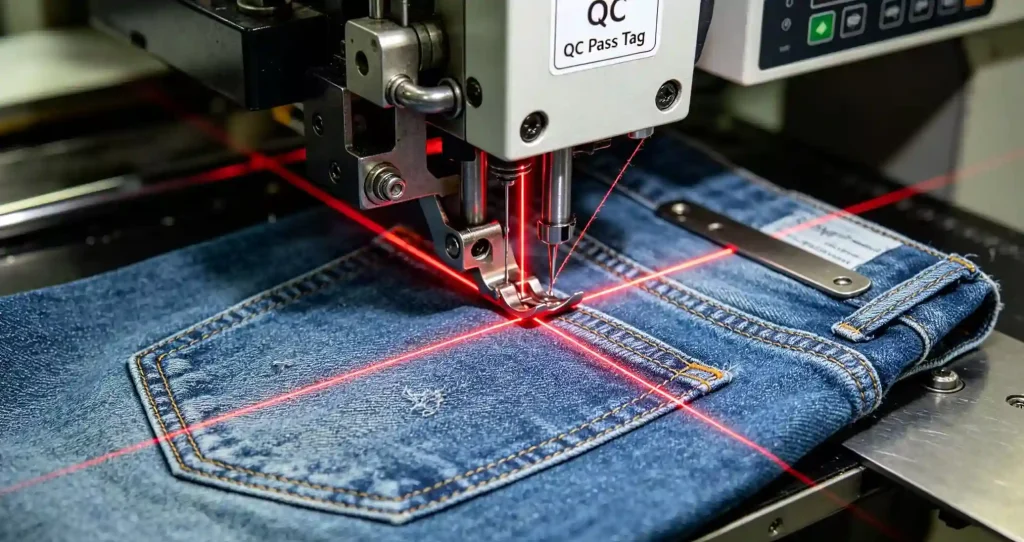
- Prevention Strategies: Replace manual chalk marking with laser positioning markers or precision metal template jigs. Standardize pocket folding with automated pocket setters that crease, position, and topstitch pocket panels in a single automated cycle to guarantee millimeter-level symmetry.
6. Needle and Thread Selection
Selecting incorrect sewing consumables directly causes needle breakage, fabric hole damage (cut threads), and seam failure under stress.
- Needle Standards: Heavyweight denim (12 oz to 14+ oz) requires reinforced needles with specialized geometries, such as ball-point or sharp-point needles sized between NM 100/16 and NM 140/22. Specialized needle coatings like titanium nitride reduce friction heat and resist deflection across heavy seam overlaps.
- Thread Standards: Core-spun polyester threads offer superior tensile strength, abrasion resistance, and chemical stability against harsh denim washing cycles (including stone washing and bleaching) compared to traditional 100% spun cotton threads.
7. Inline Sewing Quality Control Checklist
To prevent sewing defects from reaching bulk packing, garment factories must implement strict inline Quality Control (QC) checkpoints throughout the assembly process:
- Pre-Operation Machine Setup Check: Verify needle point integrity, thread tension settings, and feed dog calibration before each shift.
- Component-Level Alignment Audit: Inspect yoke-to-back panel joins, pocket placement symmetry, and fly construction alignment against approved tech packs.
- Seam Cross-Section & Stretch Elasticity Test: Check felled seam thickness, double-topstitch gauge consistency, and stretch-recovery resilience along side seams.
- Final Assembly Inspection: Conduct a 100% visual and dimensional audit covering leg seam straightness, bartack placement, and loose thread trimming before laundering.
Partnering with experienced apparel manufacturing partners like New Asia Garment ensures that technical sewing standards are maintained across all production stages. By integrating automated sewing equipment, rigorous pattern engineering, and end-to-end inline inspection protocols, professional production facilities eliminate common stitching defects, delivering durable, beautifully finished denim collections to international markets.
Eliminating denim sewing defects requires a balanced combination of technical machinery calibration, precise pattern development, and vigilant inline quality control. By addressing root causes ranging from needle deflection to fabric tension dynamics, garment manufacturers and global brands can maintain superior craftsmanship, minimize factory waste, and achieve long-term commercial success.
Read more