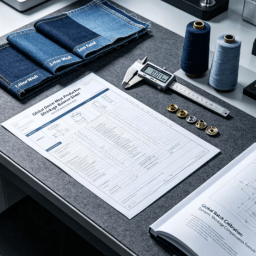

In modern global garment manufacturing, measurement tolerances define the razor-thin boundary between a high-performing retail product and a costly quality control failure. For fashion brands, sourcing managers, and buying offices, denim presents a unique technical hurdle: unlike stable knitwear or flat-woven synthetic fabrics, denim undergoes violent physical stress, high heat, and intense chemical laundering during wet processing.
Expecting every mass-produced pair of jeans to match a tech pack’s Point of Measure (POM) down to the exact millimeter is physically impossible. However, letting dimensional variation run wild destroys fit consistency across retail stores. Establishing precise, contractually enforceable denim garment measurement tolerances for brands and buyers is essential for maintaining brand equity, preventing factory chargebacks, and streamlining international production.
1. What Measurement Tolerance Means
Measurement tolerance represents the allowable range of deviation between a garment’s specified tech pack dimension and its actual physical measurement after bulk manufacturing.
- The Reality of Material Flexibility: Textiles are inherently dynamic materials. Cotton yarns, thread tensions, and fabric weaves contract and expand depending on humidity, mechanical handling, and laundry heat.
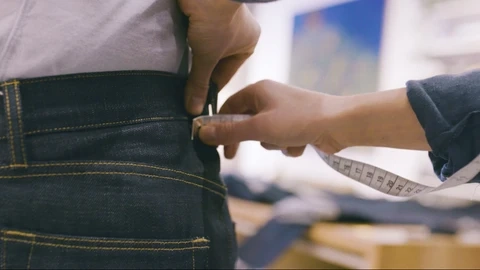
- Upper and Lower Control Limits: A measurement tolerance is expressed as a plus-or-minus value (such as ±0.5 cm or ±1.0 cm) applied to a target spec. For example, if a target waistband spec is 80 cm with a ±0.5 cm tolerance, any finished garment measuring between 79.5 cm and 80.5 cm is deemed commercially acceptable.
- The Commercial Contract: Legally and operationally, tolerances define pass/fail thresholds during Third-Party Final Random Inspections (FRI). Garments falling outside the specified tolerance limits are flagged as dimensional defects, directly impacting Acceptable Quality Limit (AQL) results.
2. POM and Spec Sheet Setup
Tolerances are worthless without a universally standardized Point of Measure (POM) code system and an unambiguous tech pack layout.
- Standardizing POM Codes: Sourcing teams must utilize industry-standard POM codes (e.g., WB-01 for Waistband Width, HP-01 for Hip Circumference, IN-01 for Inseam Length) so overseas pattern masters and factory QC teams interpret specifications identically.
- Defining Tension States: A frequent cause of measurement disputes is ambiguity surrounding fabric tension during auditing. Tech packs must explicitly dictate whether flexible stretch denim is measured completely flat and relaxed or gently extended to full recovery.
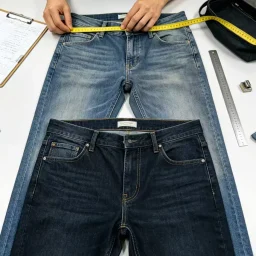
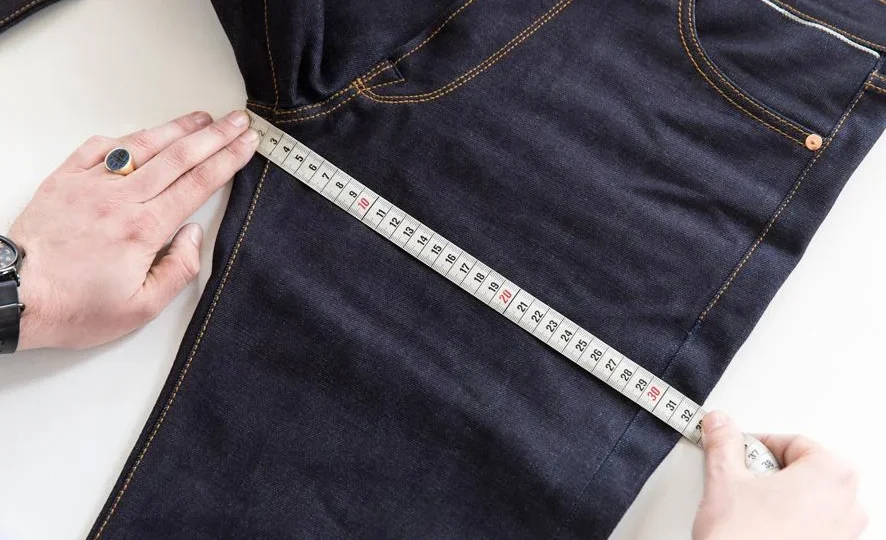
- Recording Measurement Reference Points: Spec sheets must detail exact anatomical anchor points, specifying, for example, whether the hip is measured 15 cm down from the top of the waistband, 18 cm down, or directly across the widest point of the crotch seam.
3. Critical vs Non-Critical Measurements
Not all garment dimensions carry equal weight in the eyes of a consumer. A smart tolerance protocol divides points of measure into critical and non-critical categories.
- Critical Points of Measure (Fit-Critical): Critical POMs directly dictate garment fit, comfort, and functional sizing. These include waistband width, hip circumference, front and back rise, and upper thigh width. Because a 1 cm error at the waist changes how a size fits on the body, critical POMs carry strict, narrow tolerance allowances (typically ±0.5 cm to ±0.8 cm).
- Non-Critical Points of Measure (Constructive/Style): Non-Critical POMs relate to design aesthetics, pocket placements, or hem allowances—such as back pocket height, belt loop length, or bottom hem turn-up width. Because minor shifts here do not alter whether a customer can zip up the jeans, these areas receive wider tolerance allowances (typically ±1.0 cm to ±1.5 cm).
- Defect Classification: During factory audits, out-of-spec critical POMs are logged as Major Defects, whereas non-critical variances are categorized as Minor Defects.
4. Tolerance by Garment Area
Applying a blanket “±1 cm across the entire garment” rule leads to manufacturing disputes. Tolerances must be customized according to the physical geometry and seam stress of specific garment zones.
- Waistband and Belt Area (±0.5 cm to ±0.7 cm): As the primary anchor point of the garment on the human body, waistbands demand the tightest tolerance control. Even slight variation here results in back-gapping or painful pinching.
- Hip, Seat, and Thigh (±0.8 cm to ±1.0 cm): These contoured areas involve curved seams and high fabric volume. Because these zones cover larger overall circumferences, a slightly wider tolerance margin accommodates natural fabric stretch without ruining the silhouette.
- Inseam and Total Length (±1.0 cm to ±1.5 cm): Inseams involve long, vertical straight runs. Due to vertical warp shrinkage during commercial tumble drying, vertical length measurements are granted a slightly larger operational window.
- Pocket Placements and Trims (±0.5 cm to ±1.0 cm): Pocket position symmetry across the left and right buttocks requires tight positional alignment, though slight overall height shifts are tolerated.
5. How Wash Affects Tolerance
Industrial laundering—including enzyme stonewashing, bleaching, ozone treatments, and tumble drying—is the primary driver of dimensional volatility in denim.
- Washed vs. Unwashed (Green) State: Raw, unwashed denim off the sewing line (“green state”) exhibits very different measurements than the final laundered garment. Factories must establish a secondary “green tech pack” with built-in pattern inflation to account for expected laundry shrinkage.
- Wash Intensity Variations: Heavily bleached, vintage-distressed, or stonewashed light-blue denim experiences far greater fiber degradation and thermal shrinkage than dark, light-rinsed indigo denim. Consequently, light-wash colorways frequently require slightly wider tolerance guidelines or color-specific pattern adjustments.
- Dryer Temperature Dynamics: Cotton fibers undergo maximum contraction during high-heat tumble drying. Fluctuations in moisture levels or dryer heat logs directly expand or contract final garment dimensions, making calibrated laundry controls vital for staying within tolerance limits.
6. Sampling and Acceptance
Enforcing measurement tolerances across a mass-production order of 10,000 units requires structured statistical sampling rather than random guesswork.
- AQL 2.5 Audit Framework: Quality inspectors utilize standard ISO 2859-1 (AQL 2.5) sampling tables to select a statistically significant number of garments from a finished shipment for dimensional evaluation.
- Evaluating Size-Ratio Balance: Inspectors must audit garments evenly across the full size curve (e.g., XS through XXL). This ensures pattern grading rules functioned properly at both ends of the sizing spectrum without systematic drift.
- Out-of-Tolerance Action Protocols: If the number of garments exceeding the agreed tolerance limits exceeds the AQL acceptance threshold, the entire production lot is placed on hold. The factory must re-sort, press, steam-block, or re-wash the lot before requesting a re-inspection.
7. How to Write Clear Measurement Instructions
Miscommunication between international brand buying offices and overseas factory technicians remains the leading cause of preventable sizing discrepancies.
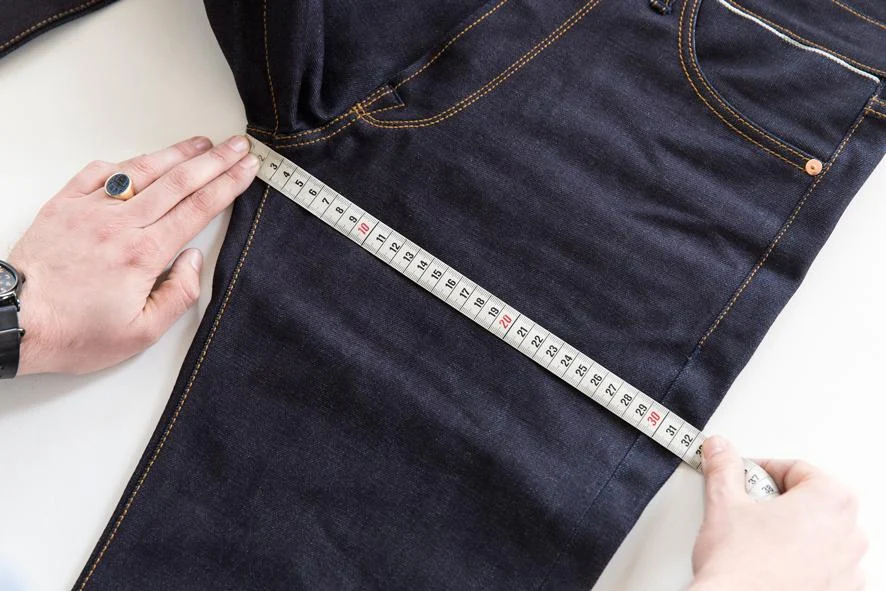
- Use Clear Visual Diagrams: Accompany every numeric POM table with high-resolution vector illustrations or real photos showing exact tape measure placement, start points, and end points.
- Provide Multilingual Methodologies: Ensure measurement procedures, tension guidelines, and tolerance tables are translated accurately into the factory’s local language (e.g., Simplified Chinese, Vietnamese, or Spanish) to eliminate operational misunderstandings on the sewing line.
- Include Explicit Testing Protocols: Specify the environment where measurements must occur, including flat table surface requirements, ambient humidity conditions, and mandatory 24-hour post-ironing relaxation times prior to auditing.
Partnering with technical manufacturing experts like New Asia Garment ensures your brand’s technical specifications are executed with absolute precision. Through digital pattern shrinkage grading, calibrated automated cutting, and strict AQL 2.5 inline measurement audits, professional production partners guarantee that bulk shipments match approved sample tolerances order after order.
Read more
- What US Apparel Brands Should Verify About Care Labels Before Bulk Production
- Size Set Approval Before Bulk Production: How to Catch Pattern Grading Problems Early
- How to Investigate a Garment Quality Claim: From Symptom to Root Cause and CAPA
- Garment Packaging Quality Control: Preventing Creases, Print Damage and Shape Distortion
- How to Validate Pocket Function and Placement Before Bulk Production