
The Modern Brand’s Guide to Virtual Factory Audits: How Apparel Brands Evaluate Overseas Suppliers
For fashion brand directors, apparel procurement managers, and independent label founders managing international supply chains, vetting overseas garment manufacturers historically required expensive cross-border travel, regional third-party agency hires, and weeks of back-and-forth communication. Today, the rise of real-time digital inspection tools, high-definition streaming protocols, and cloud-based quality control (QC) tracking has made the virtual factory audit an indispensable industry standard.
Whether you are expanding technical outerwear production in Southeast Asia, sourcing heavy-weight knits, or establishing private-label denim lines, a remote audit offers immediate insight into a supplier’s operational compliance, machine capacity, labor conditions, and quality management systems (QMS)—all without leaving your desk.
This operational guide explores how global fashion labels conduct rigorous virtual factory audits, key technical compliance criteria to evaluate remotely, and how partnering with modern, transparent manufacturing partners protects your brand from severe quality defects.
1. Key Stages of a Production-Ready Virtual Factory Audit
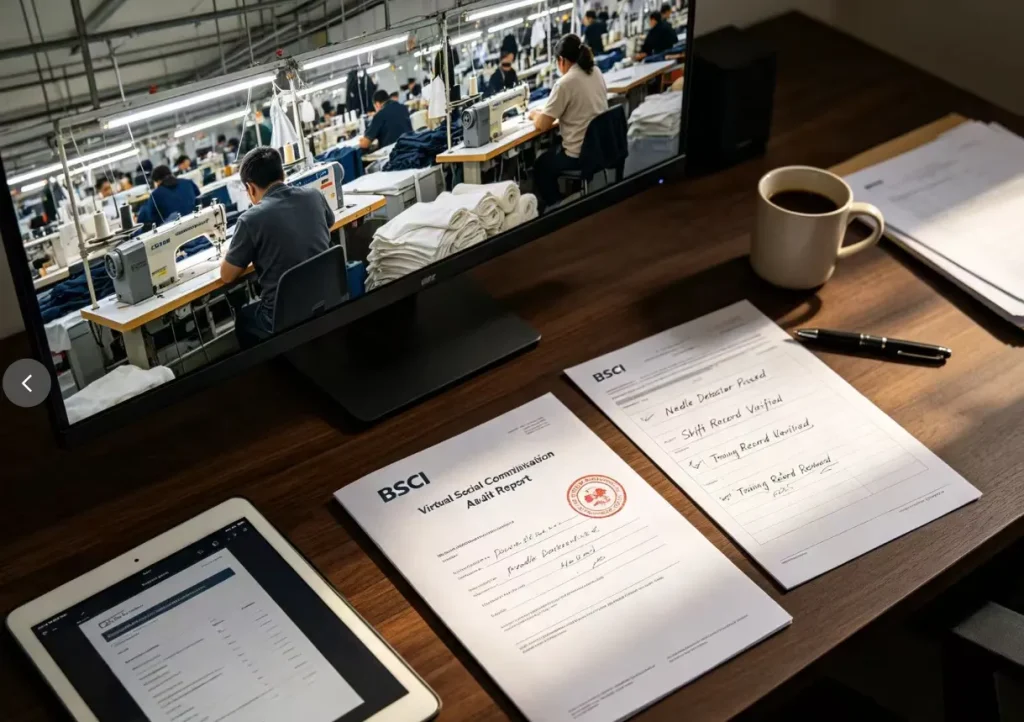
A comprehensive remote audit goes far beyond a pre-recorded marketing video or an unverified photo gallery. To gain an accurate, objective view of a factory’s manufacturing capabilities, brand managers must execute a structured, multi-stage digital walkthrough:
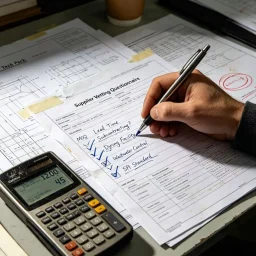
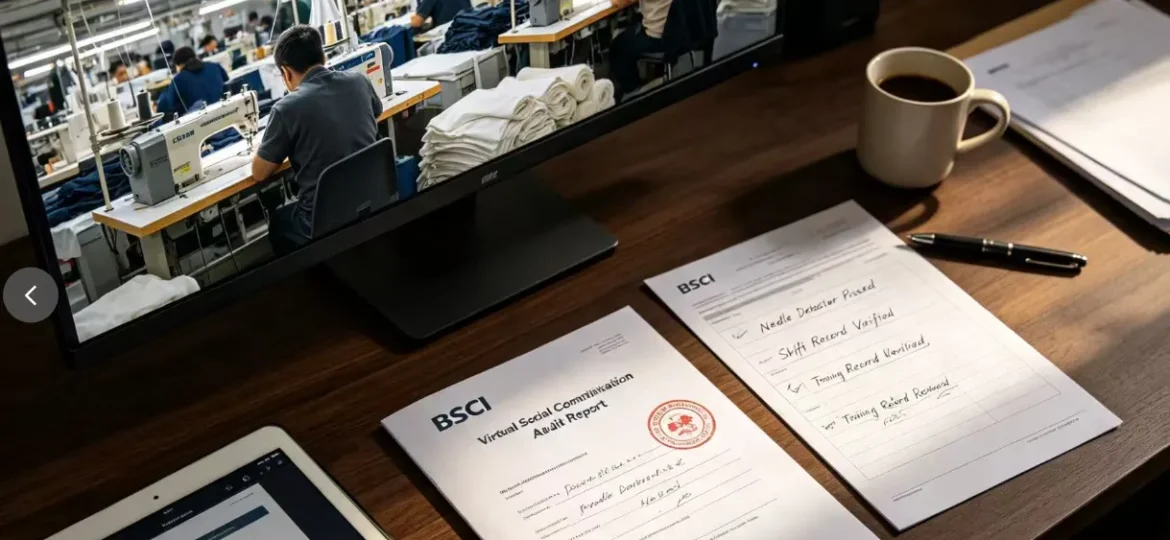
- Pre-Audit Documentation Review: Prior to scheduling a live streaming tour, mandate the digital submission of factory business licenses, ISO certifications (e.g., ISO 9001 for quality management), social compliance certificates (WRAP, BSCI, SEDEX/SMETA), and environmental compliance documentation.
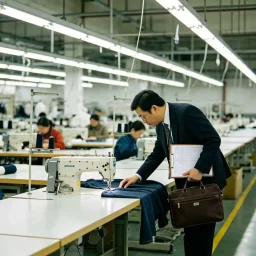
- Live Interactive Facility Tour: Conduct a live, high-definition video walkthrough led by an on-site auditor or quality engineer. The camera operator must navigate real-time requests, inspecting raw fabric warehouses, automatic cutting tables, sewing assembly lines, pressing zones, and final packaging areas.
- Machine Inventory & Capacity Auditing: Verify machine types, age, and specialized automation equipment—such as computer-controlled pattern cutters, automatic pocket-setting machinery, and multi-head high-density embroidery setups—to confirm actual daily output claims.
- In-Line Quality Control Spot-Checks: Request live, unannounced camera zooms on real-time sewing lines. Observe how line supervisors inspect stitching density, seam alignment, and thread tension mid-production.
2. Evaluating Technical Compliance and Working Conditions Remotely
While facility size and machine counts indicate scale, technical execution and factory floor safety determine whether an overseas partner can consistently deliver high-spec garments.
- Raw Material Storage & Conditioning: Inspect raw fabric storage areas to ensure textiles are elevated on pallets and stored in humidity-controlled spaces. Check whether rolls of knit or fleece fabrics are properly rested prior to cutting to prevent post-wash garment shrinkage.
- Needle Detection & Sharps Policy: Verify that the factory enforces strict metal safety policies. Check for dedicated, isolated needle-detection machines and formal logbooks tracking broken needles to prevent stray metal fragments in finished shipments.
- EHS & Labor Standard Verification: During live video walkthroughs, check for clear emergency exits, unblocked fire extinguishers, eye-wash stations near chemical washing zones, proper ergonomic seating, and adequate lighting over sewing stations.
3. The Internal Skeleton: Verifying Seam Reinforcement and Garment Structure Remotely
A pristine factory floor and modern sewing machines offer no guarantee that finished garments will retain their shape through real-world wear. During a virtual audit, brand directors must examine the specific internal structural materials a manufacturer uses inside hidden stress points.
To keep quotation prices artificially low during initial negotiations, budget-focused apparel suppliers frequently use low-grade synthetic threads or completely omit internal seam stabilizers inside high-stress zones—such as rear necklines, shoulder-to-shoulder tracks, hood attachment seams, and pocket entry points.
Under kinetic tension and repeated home laundering, these unsupported joints buckle and stretch. This causes outer fabrics to distort, leading to wavy collar edges, sagging shoulder lines, and seam tears that trigger high customer return rates and ruin brand reputation.
To pass international quality checks and maintain dimensional stability across your collection, technical specs must mandate high-density cotton internal structural components. Partnering with a digitally transparent global manufacturer like Newasia Garment Virtual Factory Audit Solutions provides an unyielding internal skeleton for your apparel line.
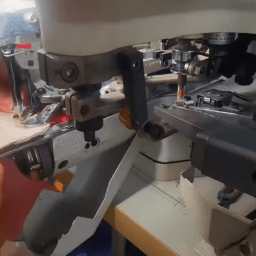
Integrating tight, high-density cotton bias tape, combed cotton neck reinforcement, and stabilized seam tracks anchors structural seams securely. During a virtual audit, requesting a live close-up inspection of these internal seam constructions ensures your production meets the luxury hand-feel and durability global consumers demand.
4. Digital Traceability, Live AQL Audits, and Real-Time Production Tracking
Virtual factory audits establish baseline trust, but maintaining long-term quality control across global supply chains requires ongoing digital integration.
- Remote Mid-Line Inspections: Schedule live-streamed inline audits at 20% to 30% production completion. Reviewing seam construction, print placements, and shade matching early prevents systemic flaws before bulk cutting is completed.
- Live Third-Party AQL 2.5 Audits: Direct independent third-party inspectors to conduct Acceptable Quality Limit (AQL) final checks via live video streams. Watch auditors physically select random cartons, measure garment dimensions against tech packs, and execute needle-pull or seam-strength tests in real time.
- Cloud-Based Production Dashboards: Partner with factories that provide digital production tracking, allowing brand managers to track raw material arrival, cutting progress, sewing completion, and packaging milestones remotely.
5. Key Red Flags to Watch for During a Remote Factory Audit
To protect your brand’s capital and ensure supply chain integrity, remain vigilant for common warning signs during virtual audits:
- Refusal of Live Direction: If factory representatives refuse live, real-time camera movements (e.g., declining to show specific storage corners or unannounced sewing lines), the tour may be staged or outsourced.
- Inconsistent Workforce Activity: Empty cutting tables, idling machinery, or workers lacking proper safety gear during supposedly peak production hours indicate capacity inflation or unauthorized subcontracting.
- Mismatched Equipment & Sample Quality: If pre-production samples show complex automated stitch work but the live virtual audit reveals only basic single-needle machines, the factory likely outsourced your sample development to a third party.
To build your apparel line on a foundation of digital supply chain transparency, superior structural engineering, and direct-factory execution, visit Newasia Garment to schedule your virtual factory audit and start production today.
Read more