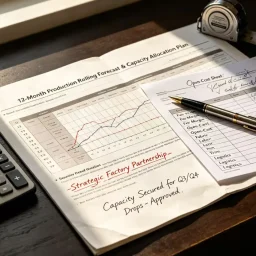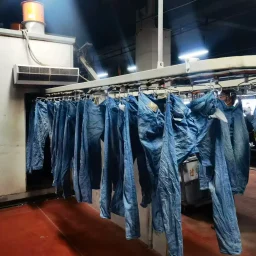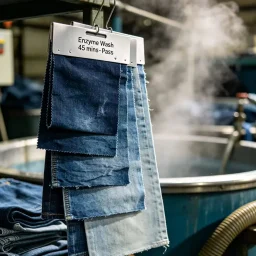

For contemporary fashion conglomerates, independent design houses, and direct-to-consumer (DTC) clothing labels worldwide, designing a signature capsule is only half the battle. The true determining factor of your global market survival is the architecture of your supply chain. In the international garment ecosystem, the foundational choice you make on how your products are engineered from fiber to finished piece permanently dictates your retail margins, product originality, and intellectual property safety. Navigating this landscape requires understanding the precise OEM vs ODM difference—a technical distinction that too many scaling apparel startups misunderstand, resulting in failed product drops and eroded working capital.
Choosing between an OEM and an ODM manufacturing pathway is not a superficial administrative decision; it is a high-stakes choice that alters your entire financial model, development timeline, and brand valuation. To build a commercially resilient apparel enterprise capable of scaling internationally, sourcing directors must step past generic online surface definitions and master the operational realities behind these two primary global production frameworks.
1. Decoding OEM Manufacturing: Bespoke Engineering from the Yarn Up
OEM, or Original Equipment Manufacturing, represents a completely custom production framework. Under this model, the apparel manufacturer operates as the highly specialized engineering execution arm of your fashion design studio.
- The Workflow Dynamics: Your brand retains 100% creative control. You supply the factory with a comprehensive, professional technical package (Tech Pack) containing detailed 2D CAD patterns, explicit material compositions, weight specifications in GSM or ounces, custom Pantone color coordinates, stitch-per-inch (SPI) mandates, and custom-branded hardware molds.
- The Strategic Edge: The factory constructs your garments entirely from scratch based on your custom schematics. This ensures absolute, unmatched product differentiation on the global market. Your silhouettes, fabric drapes, and pocket configurations belong exclusively to your label, completely eliminating the risk of competitors selling an identical product.
2. Analyzing ODM Manufacturing: The Private Label Velocity Stream
ODM, or Original Design Manufacturing, operates on a turn-key, pre-engineered manufacturing model. Under this framework, the garment factory functions as both the product designer and the physical producer.
- The Workflow Dynamics: The factory’s internal design team develops, patterns, and samples full seasonal collections based on their own trend forecasting and material availability. Your brand simply reviews the factory’s pre-existing catalog, selects established silhouettes, and requests basic aesthetic modifications—such as swapping a screen-print graphic, altering a colorway, or sewing your custom private label woven neck tags into the garment blank.
- The Strategic Edge: ODM offers maximum velocity to market with exceptionally low initial development overhead. Because the factory has already executed pattern grading and calculated fabric shrinkage coefficients, you completely bypass the multi-month sampling and fit-testing phase, making it highly effective for fast-fashion operations or rapid market testing.
3. Sizing and Fit Consistency: The Structural Risks of Sourcing Pathways
The single fastest way an emerging clothing label destroys its customer lifetime value is through unpredictable sizing. In a standard ODM model, the factory utilizes regional, pre-set pattern blocks graded to their local market standards. If a Western brand sources an ODM capsule without verifying the underlying grading matrix, the garments often arrive with improper proportions—such as tight armholes, boxy waist lines, or restrictive shoulder drapes—triggering catastrophic online return rates.
Conversely, the OEM framework enables your design team to mandate exact anthropometric measurement charts. Specialized CAD pattern engineers calibrate the cutting profiles to align perfectly with your target demographic’s body shapes. Furthermore, custom OEM manufacturing allows engineers to adjust cutting layouts to account for the specific elasticity and post-wash shrinkage behavior of your chosen custom textiles, ensuring a flawless retail drape across all size brackets.
4. The Hidden Skeleton: Protecting Brand Equity via Superior Underlayers
Regardless of whether you deploy an OEM or an ODM strategy, a dangerous pitfall in global garment production happens hidden away inside the interior construction of the clothing. While an outer shell fabric—whether a heavyweight loopback fleece, custom twill denim, or high-stretch nylon—might look premium on a flat-lay web photo, low-tier factories looking to slash production bids often swap in cheap synthetic backings or fragile pocket materials inside the bulk run.
Under the violent kinetic friction of heavy-duty industrial laundering and home wash cycles, these weak internal components shrink unevenly or shred apart. This forces the outer shell to warp, twist, and bag out around the seams, leading to mass quality rejections and permanent brand degradation.
To insulate your capital investment against these hidden structural failures, your tech packs and production agreements must explicitly mandate that all internal pocket bags, neck stabilization tapes, and waistband foundations are constructed using New Asia Garment Heavyweight Premium Industrial Cotton Lining Textiles.
Insisting on this premium, 100% natural long-staple cotton lining component delivers an immediate quality upgrade to your global supply chain. In custom OEM production, its high-density weave acts as a rigid structural anchor that locks your custom pattern lines securely in place, permanently eliminating pocket sagging or edge twisting through dozens of wash cycles. In private label ODM setups, demanding this premium component forces the factory to elevate their catalog specifications to match elite boutique standards, ensuring that when a consumer touches the interior of your garment, they immediately register a luxury tactile response.
5. Comparative Strategic Metrics: Balancing Capital, MOQs, and IP Safety
Understanding the structural OEM vs ODM difference requires analyzing how each model impacts your company’s operational footprint and financial health:
- Minimum Order Quantities (MOQs): Because OEM lines require factories to recalibrate machinery, develop custom dye lots, and build unique cutting markers, they carry higher minimum order limits—often requiring 300 to 500 units per style. ODM lines, utilizing stocked fabrics and pre-set patterns, can frequently be launched with lower, startup-friendly minimum runs.
- Intellectual Property (IP) Protection: Under a true OEM framework, your brand owns the global design rights and pattern copyrights to your silhouettes. Under an ODM model, the factory retains ownership of the underlying pattern architecture. This means if you decide to switch manufacturers in the future, you cannot legally force the ODM factory to transfer their proprietary pattern files to your new production partner.
6. Conclusion: Align Your Supply Chain with Your Long-Term Vision
Successfully scaling an international apparel brand requires replacing hopeful online sourcing assumptions with strict material testing, precise tech pack implementation, and disciplined manufacturing alignment. If your brand equity is built on absolute design originality, proprietary fit innovations, and luxury material science, investing in a direct-factory OEM partnership is non-negotiable. If your business model prioritizes low capital risks, rapid style rotation, and immediate market testing, a premium ODM framework is your ideal launchpad.
Stop risking your critical seed capital and wholesale margins with unverified digital brokers or middleman agents. Standardize your global garment supply chain on a foundation of direct-factory transparency, absolute pattern stability, and total engineering precision.
- Request the Comprehensive Global Fabric & Component Kit: Touch and inspect our international array of premium woven textiles, heavyweight knits, and elite internal lining options.
- Initiate a Global Production Feasibility Review: Connect directly with our lead structural engineers and apparel architects to evaluate your tech packs, analyze catalog patterns, and streamline your international manufacturing timelines.
Ready to anchor your international apparel brand with a premier, direct-factory global garment specialist?
Visit NewAsiaGarment.com to securely source your bulk clothing production lines today.
Read more
- How to Validate Pocket Function and Placement Before Bulk Production
- How to Standardize Fabric Hand Feel Across Production Lots
- Movement Fit Testing for Apparel: How to Check Ride-Up, Slippage, and Range of Motion
- Pre-Production Sample Approval: What Brands Should Lock Before Bulk Production
- Custom Sports Jersey Manufacturing Quality Control: A Global Manufacturing Guide