
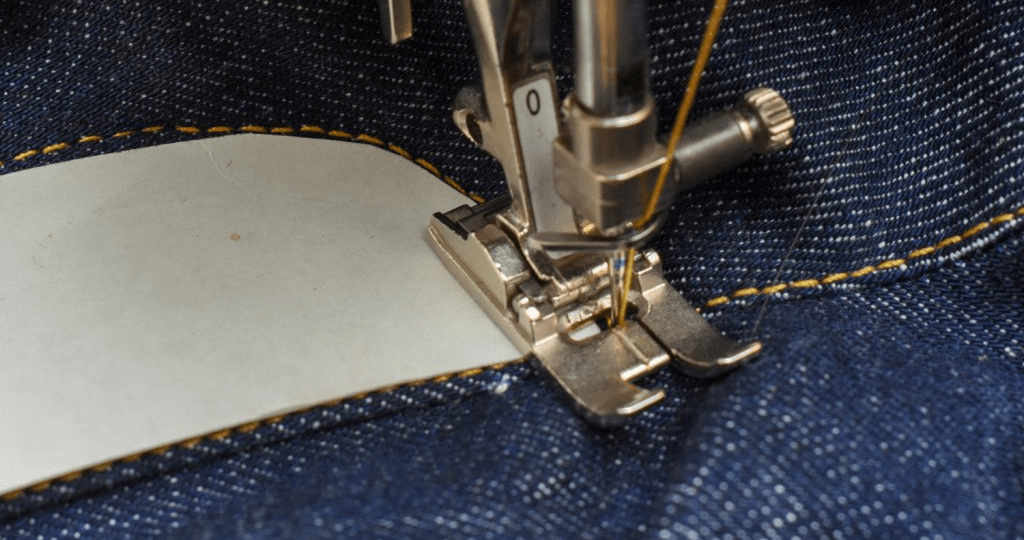
Ever spent hours searching for the perfect pair of jeans, only to end up disappointed by poor fit? You’re not alone. That’s why many designers, startups, and DIY sewing enthusiasts are learning to create custom jeans patterns using free PDF templates and drafting techniques.
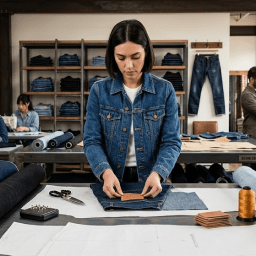
By making your own jeans pattern, you can fully control the fit, silhouette, and style details. Start by taking accurate body measurements, then use a basic template or draft your own front and back blocks. Customize the design—skinny, straight, baggy, or plus-size—add denim details like pockets and belt loops, test the fit with a sample, and finalize the pattern for sewing or production.
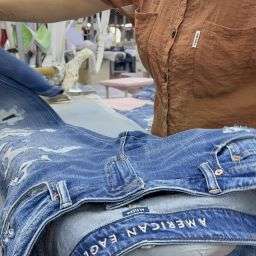
Newasia Garment Co.,Ltd. is an experienced denim and apparel manufacturer supporting global fashion brands and private label businesses. We work with brands such as American Eagle Outfitters, Uniqlo, Zara, Gap, Levi’s, and Lee, providing expertise in denim pattern development, sampling, washing, and bulk production to help brands turn ideas into scalable denim products.
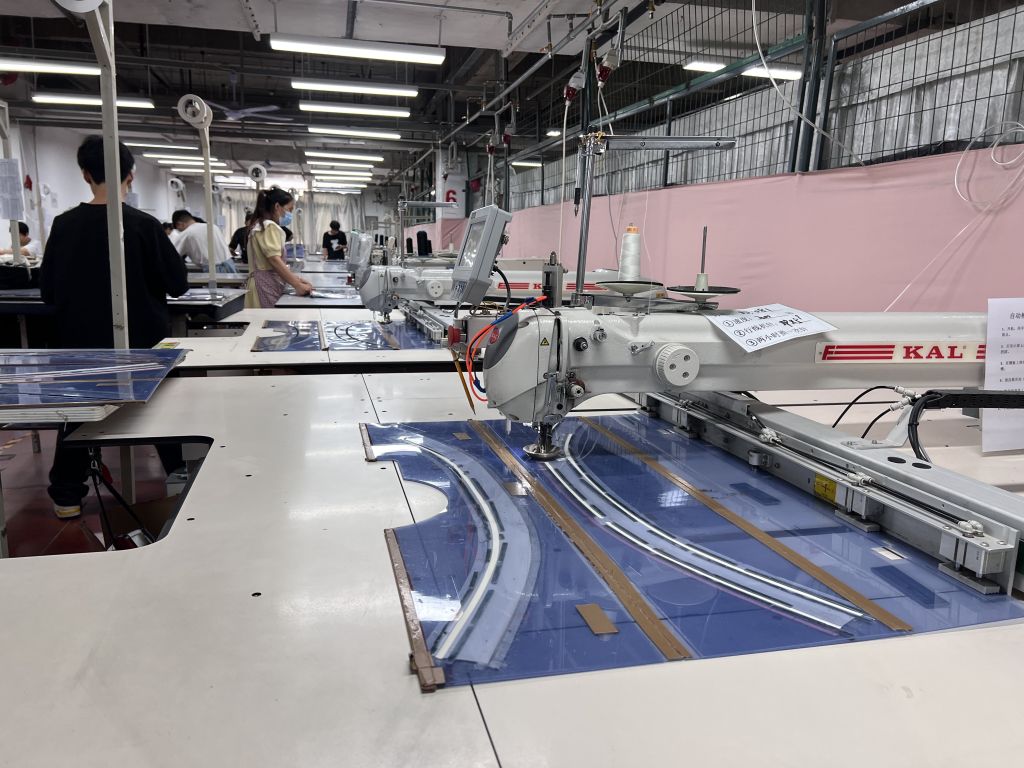
Why Make Your Own Jeans Pattern?
Custom jeans patterns offer several advantages over ready-made templates:
- Perfect fit for different body shapes
- Better control over denim style and silhouette
- Easier customization for fashion brands
- Reduced production errors
- Faster sample development
- Improved product consistency for bulk manufacturing
Today, many startups and clothing businesses are shifting toward custom denim development to stand out in the competitive apparel market.
Understanding the Structure of a Jeans Pattern
Before creating a jeans pattern, it is important to understand the major components of denim construction.
A standard jeans pattern usually includes:
- Front leg panel
- Back leg panel
- Waistband
- Front pockets
- Coin pocket
- Back pockets
- Fly shield
- Yoke
- Belt loops
Unlike casual trousers, jeans patterns require highly accurate shaping because denim is heavier, less forgiving, and more sensitive to tension and movement.
Even a small adjustment to the crotch curve or thigh width can completely change the fit experience.
What Measurements and Tools Are Essential for Drafting Your Own Jeans Pattern?
1.Essential Body Measurements for Jeans Drafting
Accurate measurements are the foundation of a well-fitting jeans pattern. Key areas include:
- Waist – measured at the narrowest point of the torso
- High hip – around 3–4 inches (7–10 cm) below the waist
- Full hip (seat) – the widest part of the hips/buttocks
- Thigh – measured around the fullest part of the upper leg
- Knee – around the kneecap (important for tapered or fitted legs)
- Inseam – from crotch point to desired hem length
- Front rise – waist to crotch seam at the front
- Back rise – waist to crotch seam at the back
Fit note on rise:
- Front rise is typically:
- Women: ~8–10 inches
- Men: ~9–11 inches
- Back rise is usually 1–2 inches longer than the front rise to allow for seat depth and comfort.
A useful habit is taking each measurement three times and averaging them, since small inconsistencies can significantly affect fit.
2.Essential Tools for Drafting Jeans Patterns
Traditional pattern drafting tools
- Flexible measuring tape
- Clear ruler or straight ruler
- French curve (for shaping hips, crotch, and seams)
- Pattern paper (or butcher/kraft paper)
- Pencil + eraser (precision matters more than ink at first)
- Pattern weights or pins (to hold paper in place)
- Pattern notcher (for marking alignment points and seams)
Optional but helpful tools
- Hip curve ruler (useful alternative to French curve)
- Seam gauge (for consistent seam allowances)
- Awl or tracing wheel (for transferring markings)
Digital tools (for modern drafting)
- CAD pattern-making software (for precise grading and adjustments)
- PDF pattern templates
- Home printer (for tiled/print-at-home patterns)
How to Create Front and Back Jeans Blocks Using Free PDF Templates
1. Front Block Construction
| Step | Description | Key Notes |
|---|---|---|
| 1 | Establish grainline | Must be perfectly vertical to ensure correct drape |
| 2 | Mark key reference lines | Waistline, hip line, front rise depth, knee line, hem width |
| 3 | Calculate hip width | From center front: half hip measurement + ease allowance |
| 4 | Draw side seam | Connect waist, hip, knee, and hem smoothly |
| 5 | Shape front crotch curve | Use a French curve for smooth transition |
| 6 | Add design details | Pocket placement and fly opening |
| 7 | Function | Defines overall silhouette and front fit comfort |
2. Back Block Construction
| Step | Description | Key Notes |
|---|---|---|
| 1 | Extend back rise | Typically 1–2 inches higher than front rise |
| 2 | Add seat fullness | Ensures comfort and movement allowance |
| 3 | Shape back crotch curve | Deeper and more rounded than front block |
| 4 | Draft side seam | Adjust to fit natural hip curvature |
| 5 | Add back yoke | Essential for shaping and lifting effect |
| 6 | Function | Controls seat fit, comfort, and body contouring |
3. How to Use Free PDF Jeans Templates
| Step | Action | Important Notes |
|---|---|---|
| 1 | Download PDF template | Ensure it is a full pattern file |
| 2 | Print at 100% scale | Do not resize or scale during printing |
| 3 | Assemble pages | Align registration marks precisely |
| 4 | Tape together | Keep pattern flat and accurate |
| 5 | Verify measurements | Check using the included test square |
| 6 | Adjust if needed | Modify according to personal measurements |
4. Common PDF Jeans Template Types
| Type | Description |
|---|---|
| Skinny Jeans | Slim, body-hugging fit |
| Straight Leg | Classic straight silhouette |
| Wide Leg | Loose, wide-cut design |
| High Waist | Elevated waistline design |
| Men’s Fit | Standard masculine block |
| Women’s Fit | Curved feminine block |
5. Key Drafting Considerations
| Element | Recommended Standard | Notes |
|---|---|---|
| Ease allowance | Skinny: 1–2 inches; Relaxed: 3–5 inches | Determines comfort and fit |
| Grainline accuracy | Must be strictly vertical | Incorrect grain causes twisting |
| Seam allowance | Side seams: 5/8 inch; hems: 1/2 inch | Affects sewing precision |
| Symmetry | Must be perfectly mirrored | Unless intentionally asymmetrical |
6. Digital Workflow & Professional Conversion
| Stage | Description |
|---|---|
| CAD conversion | Transform PDF or hand-drafted patterns into digital files |
| Grading | Create multiple sizes from a base block |
| Optimization | Improve production efficiency and fabric usage |
| Manufacturing use | Enables standardized bulk production |
7. Industrial Application Note
In professional manufacturing environments such as Newasia Garment Co.,Ltd., PDF patterns are typically:
- Standardized for mass production consistency
- Converted into CAD-ready production files
- Graded into full size ranges
- Optimized for bulk cutting efficiency
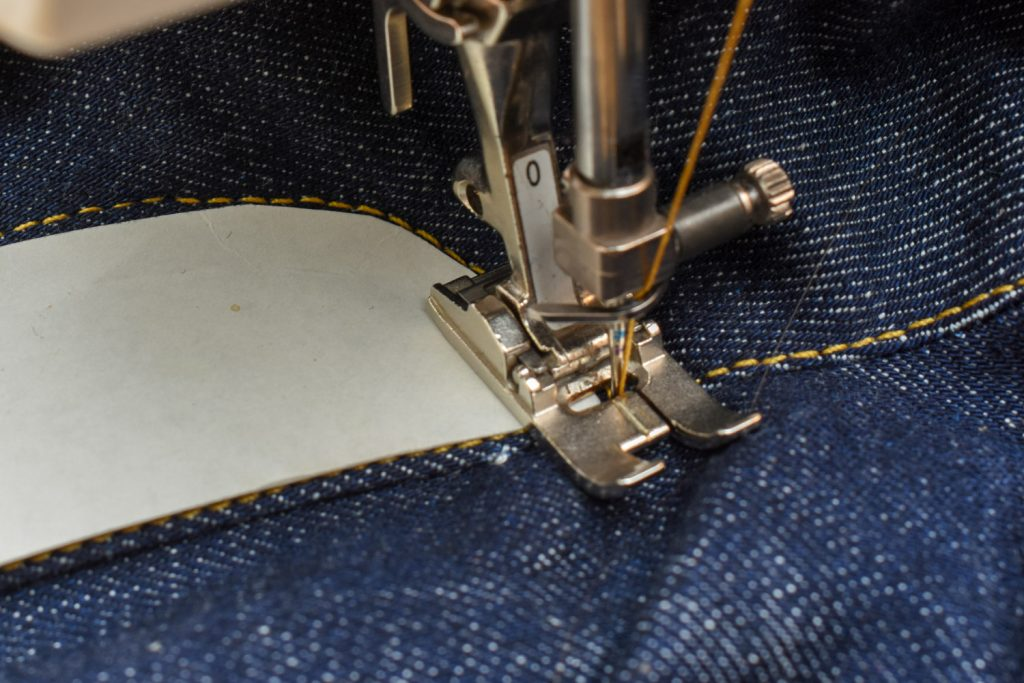
How to Make Your Own Jeans Pattern Step by Step
Step 1: Choose Your Base Fit
Start with the silhouette you want:
- Slim fit
- Skinny fit
- Straight leg
- Relaxed fit
- Wide leg
- Vintage loose fit
Your base fit determines the entire grading structure later.
For B2B brands, manufacturers often recommend beginning with one “core fit block” before expanding into seasonal styles.
Step 2: Download a Free PDF Jeans Pattern Template
Free PDF templates are useful for:
- Learning construction logic
- Understanding panel structure
- Practicing modifications
- Testing fit concepts
Most templates include:
- Front panel
- Back panel
- Waistband
- Pocket bags
- Coin pocket
- Yoke
- Fly shield
- Belt loops
When printing PDF patterns:
- Always print at 100% scale
- Verify calibration squares
- Use A4 or Letter format correctly
- Tape pages carefully to avoid distortion
Step 3: Draft the Front Panel
The front panel controls overall balance.
Focus on:
- Front rise curve
- Hip shaping
- Fly extension
- Pocket opening angle
Many beginners make the mistake of reducing ease too aggressively, especially for stretch denim.
Professional pattern makers typically adjust negative ease according to fabric elasticity rather than body measurements alone.
Step 4: Build the Back Panel
The back panel is where jeans fit is truly defined.
Critical elements include:
- Back rise extension
- Seat angle
- Yoke depth
- Dart suppression
- Back pocket placement
Poor back pattern balance often causes:
- Waist gaping
- Drag lines
- Tight seat pulling
- Flat appearance
Experienced denim manufacturers usually perform multiple fit revisions specifically on the back panel before bulk production approval.
Step 5: Add Seam Allowances
Standard denim seam allowances generally include:
| Area | Typical Allowance |
|---|---|
| Side seams | 1–1.5 cm |
| Inseam | 1–1.5 cm |
| Waistband | 1 cm |
| Hem | 3–4 cm |
Factories may adjust seam allowances depending on:
- Overlock machinery
- Flat-felled seam construction
- Heavyweight denim thickness
- Wash shrinkage requirements
Step 6: Test Fit With Muslin or Sample Denim
Never skip fit testing.
Even experienced apparel manufacturers test patterns before mass production.
Use:
- Similar stretch ratio fabric
- Similar GSM weight
- Similar wash characteristics
Fit samples reveal hidden problems like:
- Twisting side seams
- Incorrect rise balance
- Knee distortion
- Excess fabric at crotch
- Waist rolling
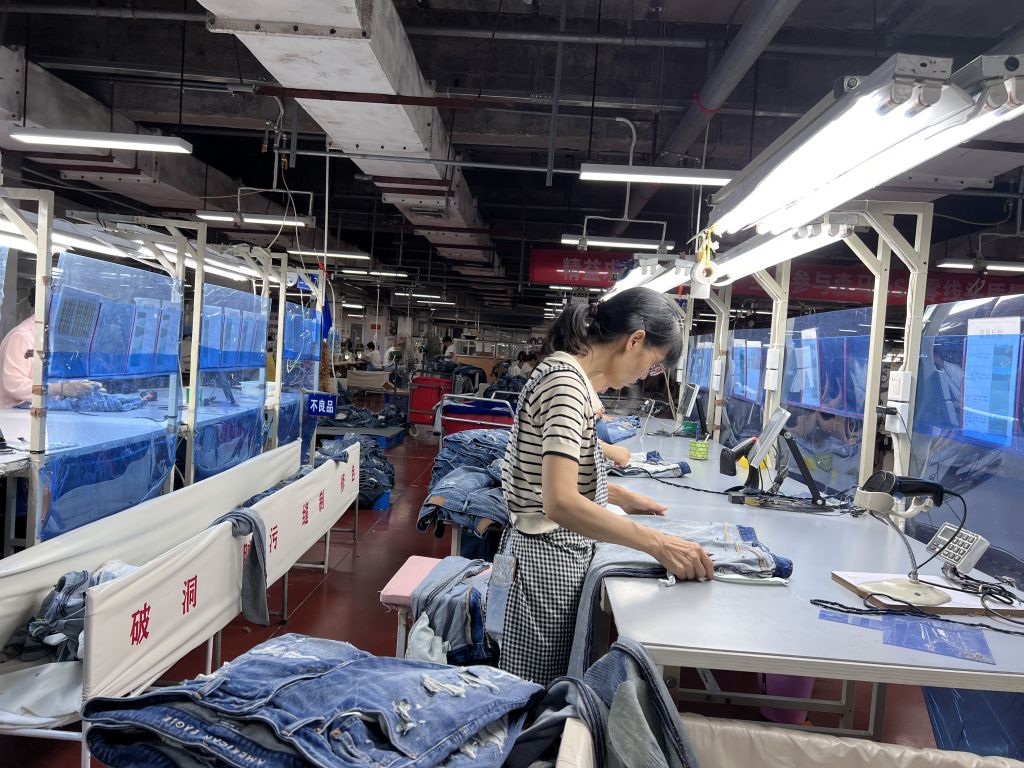
How Do You Add Denim Details and Sew Jeans Professionally?
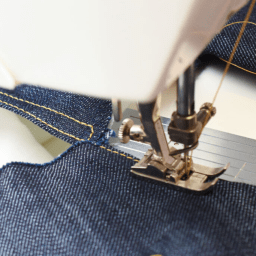
Denim construction differs from ordinary garment sewing because denim is thick, durable, and stress-intensive.
Essential Denim Sewing Materials
You’ll need:
- Denim needles (90/14 or 100/16)
- Heavy-duty topstitching thread
- Rivets and jeans buttons
- Strong zippers
- Denim-weight fabric
Key Denim Construction Features
Five-Pocket Construction
Classic jeans usually include:
- Two front pockets
- Coin pocket
- Two back pockets
Yoke Construction
The back yoke improves shaping and comfort.
Belt Loops
Most jeans include 5–7 loops reinforced with bartacks.
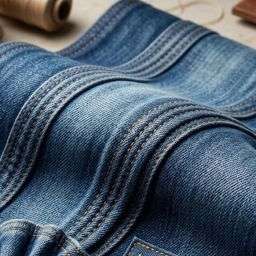
Topstitching
Contrast stitching is one of denim’s signature visual elements.
Double-needle topstitching adds:
- Strength
- Durability
- Premium appearance
Rivets & Reinforcement
Rivets reinforce stress points around:
- Pocket corners
- Fly openings
- Belt loops
Hand-Sewing Jeans
Some designers prefer hand-finishing details for an artisanal look.
Hand-sewn elements may include:
- Bartacks
- Decorative stitching
- Pocket embroidery
- Chain-stitched hems
These handcrafted details add premium value to boutique denim collections.
At Newasia Garment Co.,Ltd., we support both industrial denim production and custom handmade finishing techniques for premium brands.
How Do You Test, Digitize, and Prepare Your Jeans Pattern for Production?
Professional denim development always includes testing and refinement.
Step 1: Create a Mock-Up
Use inexpensive fabric to sew a test garment.
During fitting:
- Sit
- Walk
- Bend
- Squat
Mark any:
- Tightness
- Wrinkles
- Gaping
- Pulling
Transfer corrections back to your pattern.
Step 2: Refine the Pattern
Adjust:
- Rise balance
- Side seams
- Crotch curves
- Pocket placement
- Grainlines
Several fitting rounds are common before achieving a final fit.
Step 3: Grade the Pattern
If producing multiple sizes:
- Apply grading rules manually
- Or use CAD software
Digital grading dramatically improves consistency and efficiency.
Step 4: Digitize Your Pattern
Professional production requires digital files such as:
- DXF
- AI
- PLT
- Layered PDF
Digital patterns can be:
- Sent to factories
- Used with plotters
- Integrated into marker systems
Step 5: Prepare for Production
Before manufacturing:
- Finalize labels
- Choose hardware finishes
- Approve fabric washes
- Create packaging designs
- Confirm MOQ requirements
At Newasia Garment Co.,Ltd., we provide complete OEM and ODM denim services, including:
- Pattern development
- Sampling
- Fabric sourcing
- Grading
- Production
- Custom labeling
- Packaging solutions
Whether you are creating a startup denim label or scaling an established fashion brand, our team helps transform concepts into production-ready garments.
The Future of Denim Manufacturing
The denim industry continues evolving toward:
- Sustainable fabrics
- Recycled fibers
- Water-saving washing technologies
- Digital pattern making
- 3D fitting simulation
- AI-assisted product development
However, one thing remains unchanged:
- High-quality jeans still depend on excellent pattern engineering.
- No amount of marketing can compensate for poor fit.
- This is why global brands continue investing heavily in technical denim development.
Why Global Brands Choose Newasia Garment Co.,Ltd.
Newasia Garment Co.,Ltd. is a professional apparel manufacturer specializing in denim and custom jeans production for international fashion brands.
We provide complete OEM and ODM garment manufacturing solutions including:
- Custom jeans pattern development
- Denim fabric sourcing
- Sample making
- Washing and finishing
- Private label production
- Bulk manufacturing
We are also a partner of globally recognized brands such as American Eagle Outfitters, Uniqlo, Zara, Gap, Levi’s, and Lee.
Our experienced technical team understands international quality standards, advanced denim washing techniques, and efficient large-scale production management.
With years of export experience, we support fashion brands, wholesalers, retailers, and startup apparel businesses worldwide.
OEM & ODM Custom Jeans Manufacturing Services
At Newasia Garment Co.,Ltd., we help clients transform design concepts into market-ready denim products.
Our services include:
- Custom logo jeans production
- Private label denim manufacturing
- Small-batch sample development
- Bulk jeans production
- Custom washes and distressing
- Sustainable denim sourcing
Whether you need fashion jeans, workwear denim, or premium streetwear products, our factory provides scalable solutions for growing brands.
Frequently Asked Questions
Q1:How do I make my own jeans pattern?
You can start by using basic jeans templates and adjusting measurements based on your target fit and design requirements.
Q2:Where can I download free jeans PDF templates?
Many online sewing communities and fashion development resources provide free downloadable PDF templates for jeans patterns.
Q3:Can manufacturers help develop custom jeans patterns?
Yes. Professional manufacturers like Newasia Garment Co.,Ltd. offer full pattern development and technical package services.
Q4:What is the MOQ for custom jeans manufacturing?
MOQ depends on fabric selection, washing requirements, and production complexity.
Q5:How long does sample development take?
Typically, denim sample development takes 7–14 days depending on customization requirements.
Conclusion
Learning how to make your own jeans pattern gives fashion brands more control over fit, development speed, and product identity.
Free PDF templates are a great starting point, but truly successful denim products usually come from continuous testing, fabric understanding, and close collaboration between designers and experienced manufacturers.
In today’s competitive apparel market, fit consistency is often what separates premium denim brands from forgettable products.
If your business is planning to develop custom jeans collections, improve OEM denim sourcing, or reduce sample revision costs, investing in professional pattern development is one of the smartest long-term decisions you can make.
Newasia Garment Co., Ltd. specializes in:
- Custom Apparel Manufacturing: Wide range of fabrics and materials across woven and knit categories, with multiple weight and finish options
- Sample & Production: Efficient sampling within 5–10 days, and bulk production lead times of 15–30 days depending on complexity and order size
- Low Minimums, High Capacity: Flexible MOQs starting from small trial runs to large-scale production exceeding 10,000+ pieces per style
- Full Service Solutions: End-to-end OEM/ODM support including design development, pattern making, cutting, sewing, finishing, private label, branding, labeling, and packaging
- Expert Pattern & Technical Development: Professional pattern engineering, CAD-based development, size grading, and production-ready marker making for precise garment construction
Whether you are an emerging fashion brand or an established retailer, Newasia Garment Co., Ltd. delivers tailored manufacturing solutions to turn your designs into high-quality finished garments. From concept to delivery, every step is managed with precision, efficiency, and a focus on consistent quality.
Ready to develop your next collection? Contact Newasia Garment Co., Ltd. today for a customized quote and bring your apparel ideas to life with a reliable production partner.
Read more: How to Make Your Own Jeans Pattern: Free PDF Templates
- How to Validate Pocket Function and Placement Before Bulk Production
- How to Standardize Fabric Hand Feel Across Production Lots
- Movement Fit Testing for Apparel: How to Check Ride-Up, Slippage, and Range of Motion
- Pre-Production Sample Approval: What Brands Should Lock Before Bulk Production
- Custom Sports Jersey Manufacturing Quality Control: A Global Manufacturing Guide