
For global apparel brands, clothing manufacturers, and retail distribution managers, the manufacturing journey does not end when the final stitch is sewn. After rigorous quality control checks, pre-production sampling, and precision dyeing, finished garments face their final operational challenge: packaging and transit.
A beautifully crafted jacket, premium hoodie, or delicate dress can arrive at a retail distribution center damaged by deep creases, melted screen prints, or severe shape distortion if packaging protocols are neglected.
Export-ready garment packaging is a critical part of quality control rather than a mere administrative formality. Protecting garments from long-distance shipping, high humidity, and heavy carton stacking requires strict standards for folding methods, packaging materials, and carton organization.
This guide explains how apparel brands and manufacturers can prevent creases, print damage, and shape distortion through effective garment packaging quality control.
1. Preventing Deep Creases and Fabric Crushing
Improper folding and excessive carton compression can create deep, stubborn creases that are difficult to remove. During weeks of international shipping, continuous pressure can permanently damage delicate fabrics and reduce the retail presentation quality of finished garments.
1.1 Use Interleaving Tissue Paper and Poly Boards
For structured garments, woven shirts, and dresses, inserting acid-free tissue paper between folds helps reduce fabric-on-fabric friction and minimize pressure points.
Lightweight corrugated boards or cardboard inserts can also help maintain the shape of folded shirts, distribute pressure more evenly, and prevent excessive fabric compression during transit.
1.2 Optimize Folding Methods for Different Fabrics
Different fabrics require different folding techniques to prevent permanent creases.
Heavyweight fleece hoodies should be folded along natural garment seams to avoid creating sharp central creases. Delicate silk and viscose garments may benefit from careful rolling or specialized folding methods that minimize pressure on vulnerable areas.
Selecting the appropriate folding method for each garment type helps preserve fabric appearance and reduce post-shipment finishing requirements.
1.3 Avoid Over-Compressed Export Cartons
Overpacking master cartons to reduce shipping volume can create excessive pressure on garments in the bottom layers, resulting in permanent creases and fabric crushing.
Manufacturers should establish standard carton capacity limits based on garment weight, fabric thickness, folding dimensions, and carton strength. Proper carton loading helps maintain garment quality throughout long-distance transportation.
2. Protecting Prints, Foil Graphics, and Heat Transfers
Printed garments, including graphic T-shirts, streetwear hoodies, and decorated athletic apparel, require additional protection during packaging. Screen prints, direct-to-film (DTF) transfers, reflective foils, and high-density silicone badges can be damaged by heat, pressure, and friction inside sealed polybags.
2.1 Prevent Plastic Blocking and Print Adhesion
Plastic blocking occurs when printed surfaces soften under elevated temperatures and stick to the interior surface of packaging film or to other printed areas.
During international shipping, high temperatures inside containers can increase the risk of plastisol prints and foil graphics adhering to packaging materials. Removing the garments may then cause peeling, cracking, or partial print transfer.
Manufacturers should evaluate print curing, packaging materials, and expected transportation conditions to reduce the risk of blocking.
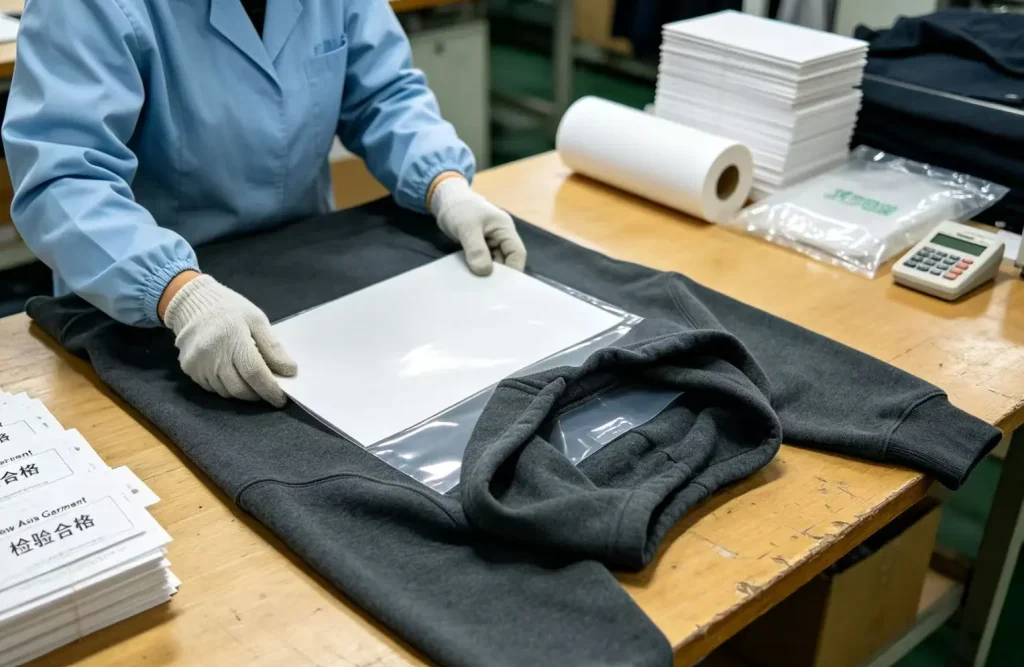
2.2 Use Protective Interleaving Sheets for Printed Garments
Individual protective sheets can help prevent printed surfaces from sticking to packaging film or rubbing against adjacent garment surfaces.
Depending on the print system and packaging requirements, suitable options may include glassine paper, compatible silicone release paper, or anti-cling polyethylene interleaving sheets.
Packaging materials should be tested for compatibility with the specific ink, transfer adhesive, and decorative finish before bulk production.
2.3 Allow Printed Garments to Cool Before Packaging
Garments should not be packaged immediately after heat-transfer application, curing, or high-temperature ironing.
Allowing sufficient cooling time before folding and bagging helps prevent residual heat from softening transfer adhesives or increasing the risk of print adhesion.
Factories should establish documented cooling and curing procedures based on the printing technology, garment materials, and supplier specifications.
3. Mitigating Humidity, Moisture, and Mold Damage
International maritime transportation exposes apparel cartons to changing temperatures and humidity levels. When warm, moisture-laden air cools inside a shipping container, condensation can form on container surfaces and potentially wet cartons and garments.
This phenomenon, commonly known as container rain, can contribute to mildew, mold, unpleasant odors, and fabric damage.
3.1 Use Silica Gel and Other Suitable Desiccants
Desiccants such as silica gel or bentonite clay can help control moisture within appropriately designed packaging systems.
Their quantity and placement should be determined according to carton dimensions, garment moisture content, packaging permeability, expected transit duration, and shipping conditions.
Desiccants should be suitable for the intended application, properly secured, and used in accordance with applicable safety and packaging requirements. They should supplement rather than replace effective moisture prevention and container inspection.
3.2 Select Polybags With Appropriate Ventilation Requirements
Polybag ventilation requirements depend on the garment type, packaging configuration, and transportation conditions.
Micro-perforated bags may help release trapped air in specific applications, but ventilation holes do not automatically prevent condensation or mold. They can also allow external moisture and contaminants to enter.
Manufacturers should select ventilated or non-ventilated packaging based on product requirements and validated shipping conditions rather than applying a single specification to all garments.
3.3 Maintain Moisture Barrier Integrity
Polyethylene films, including high-density polyethylene (HDPE) and low-density polyethylene (LDPE), can provide a protective barrier against external moisture when appropriately specified.
The correct film type and thickness should be selected according to the garment, packaging design, and storage environment. Seal integrity and packaging condition should also be checked before shipment.
In addition, factories should ensure that garments are sufficiently dry before packing and that export cartons are stored in clean, dry warehouses.
4. Preserving Garment Shape and Structural Silhouette
Structured garments can lose their intended silhouette when exposed to excessive compression or inadequate support during packaging.
Tailored jackets, padded shoulders, structured collars, molded bra cups, and garments with heavy hardware require specialized packaging methods to maintain their shape throughout transportation.
4.1 Choose Between Flat Packing and Hanging Garment Packaging
The packaging method should reflect the garment’s construction, material, and shipping requirements.
Suits and delicate dresses may require hanging garment bags, suitable hangers, and shoulder supports to preserve their silhouette. Flat-packed blazers and structured shirts may require collar inserts, lapel supports, and carefully positioned folding boards.
Choosing the appropriate packaging configuration helps prevent crushed collars, distorted shoulders, and unwanted folds around lapels.
4.2 Protect Metal Hardware and Decorative Components
Heavy metal zippers, exposed buttons, metallic snaps, and other hardware can scratch nearby fabrics or leave marks on light-colored garments during transit.
Wrapping vulnerable hardware with protective tissue paper or suitable foam sleeves helps reduce abrasion and contact damage. Garments with detachable or particularly heavy components may require additional separation or cushioning.
Packaging inspections should verify that hardware cannot move freely against sensitive fabric surfaces during transportation.
4.3 Use Reinforced Cartons and Structural Supports
Export cartons must withstand stacking pressure, handling impacts, and the rigors of international logistics.
Appropriately specified corrugated cartons, reinforced corners, and suitable load-distribution supports can help reduce carton deformation and protect garments from excessive compression.
Carton strength, dimensions, closure methods, and stacking limits should be determined according to shipment weight, transportation conditions, and the intended distribution environment.
5. Standardizing Garment Packaging Quality Control in Manufacturing
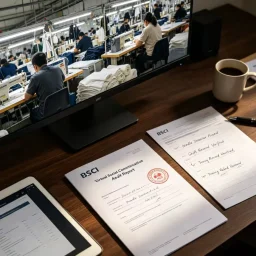
Effective garment packaging quality control requires more than selecting suitable packaging materials. Manufacturers need documented procedures, consistent inspection criteria, and traceable quality checks before final dispatch.
5.1 Establish Standardized Folding and Packing Procedures
Factories should develop packaging specifications for each garment style, including folding dimensions, tissue paper placement, inserts, polybag requirements, carton quantities, and packing orientation.
Clear visual instructions help operators maintain consistency across production lines and reduce packing errors during bulk manufacturing.
5.2 Inspect Packaging Materials and Finished Garments
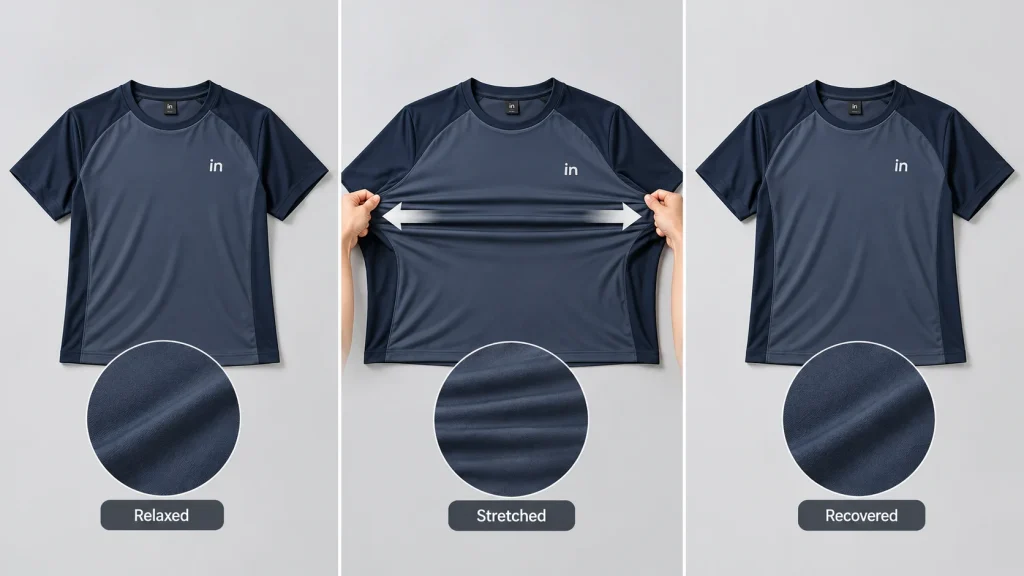
Before packing, quality control teams should verify garment cleanliness, dryness, print condition, hardware protection, and overall appearance.
Packaging materials should also be checked for correct specifications, cleanliness, durability, and compatibility with the finished product.
During carton packing, inspectors should confirm that garments are not excessively compressed and that the approved packing configuration is followed.
5.3 Conduct Carton Strength and Shipment Readiness Checks
Finished export cartons should be inspected for correct dimensions, packing quantities, closure integrity, labeling, and visible damage.
Where appropriate, manufacturers can conduct carton compression, stacking, and transportation simulation tests to assess whether the packaging can withstand expected shipping conditions.
Documenting inspection results helps identify recurring problems and supports corrective action before goods leave the factory.
5.4 Work With an Experienced Garment Manufacturing Partner
Partnering with an experienced technical manufacturing partner such as New Asia Garment can help apparel brands establish consistent packaging standards across different garment categories.
From anti-crease folding techniques and print-protection interleaving to moisture-control measures and export carton specifications, systematic packaging inspections help reduce transit damage and improve shipment readiness.
A well-defined packaging quality control process also supports better communication between garment factories, logistics providers, and retail distribution teams.
Conclusion: Protect Garment Quality From Factory to Retail
Garment packaging quality control is the final line of defense in maintaining apparel quality throughout global distribution.
By managing folding techniques, protecting delicate prints from heat and friction, controlling moisture exposure, preserving structural silhouettes, and selecting appropriate export cartons, manufacturers can reduce the risk of creases, print damage, and shape distortion during transit.
For apparel brands and clothing manufacturers, investing in standardized packaging procedures and shipment inspections helps protect product value, maintain brand reputation, and deliver garments in retail-ready condition.
Frequently Asked Questions About Garment Packaging Quality Control
1. Why Is Garment Packaging Quality Control Important?
Garment packaging quality control helps protect finished clothing from creases, print damage, moisture, mold, and shape distortion during storage and transportation. Proper folding techniques, protective packaging materials, and carton strength checks help apparel brands maintain product quality, reduce returns, and ensure garments arrive in retail-ready condition.
2. How Can Manufacturers Prevent Creases in Garments During Shipping?
Manufacturers can prevent deep creases by using appropriate folding methods, inserting acid-free tissue paper or cardboard supports where necessary, and avoiding excessive carton compression. Selecting the correct folding technique for each fabric type and maintaining suitable carton loading limits also helps preserve garment appearance during long-distance shipping.
3. How Can You Prevent Screen Prints from Sticking to Polybags?
To prevent screen prints from sticking to polybags, manufacturers should allow printed garments to cool and cure according to the decoration supplier’s specifications before packaging. Using compatible protective interleaving sheets and validating packaging materials under expected shipping temperatures can further reduce the risk of print blocking, peeling, and surface damage.
4. How Can Garment Packaging Prevent Moisture and Mold Damage?
Garment packaging can help reduce moisture-related damage by ensuring garments are completely dry before packing, selecting suitable moisture-barrier materials, and using appropriately sized desiccants when required. Proper carton storage, container inspections, and humidity-control measures are also important for reducing condensation and mold risks during international transportation.
5. What Packaging Materials Help Maintain Garment Shape During Transit?
Common materials include acid-free tissue paper, cardboard inserts, collar supports, shoulder forms, protective sleeves, and reinforced corrugated cartons. The appropriate combination depends on the garment’s construction, fabric characteristics, hardware, and shipping method. Structured jackets, dresses, and garments with molded components may require additional support to prevent deformation.
6. What Should Be Included in a Garment Packaging Quality Control Checklist?
A garment packaging quality control checklist should cover folding consistency, fabric appearance, print protection, garment dryness, desiccant placement where specified, hardware cushioning, polybag integrity, carton loading capacity, carton strength, and shipping labels. Pre-shipment inspections should verify that packaging complies with approved product specifications and customer requirements before final dispatch.
Read More
- Garment Packaging Quality Control: Preventing Creases, Print Damage and Shape Distortion
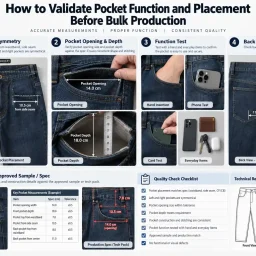
- How to Validate Pocket Function and Placement Before Bulk Production
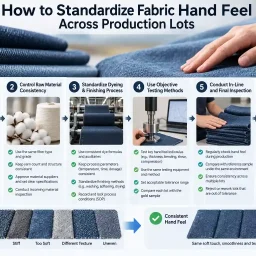
- How to Standardize Fabric Hand Feel Across Production Lots
- Movement Fit Testing for Apparel: How to Check Ride-Up, Slippage, and Range of Motion
- Pre-Production Sample Approval: What Brands Should Lock Before Bulk Production