
Understanding Jeans Manufacturing Machines Cost: A Complete Sourcing Guide for Apparel Brands
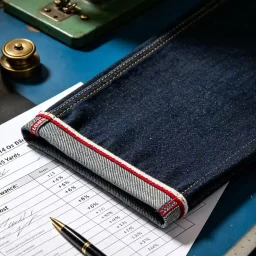
For denim brand directors, sourcing managers, and apparel entrepreneurs expanding into denim production, calculating jeans manufacturing machines cost is one of the most vital operational exercises in supply chain planning. Developing iconic denim washes and fits is essential, but building a profitable denim manufacturing setup—or auditing a factory partner’s capital expenditure—requires understanding the exact machinery expenses needed to transform raw indigo fabric into heavy-duty 5-pocket denim garments.
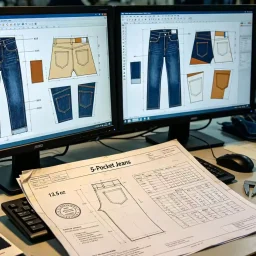
Denim is among the most structurally demanding garment categories in modern manufacturing. Unlike lightweight jersey or soft knits, heavyweight denim (ranging from 10 oz to 18+ oz) requires industrial, high-torque sewing machinery, automated pocket setters, pattern tackers, and specialized laundry equipment capable of handling high kinetic stress.
This guide breaks down the full cost spectrum of denim machinery, key specialized equipment required for a high-efficiency production line, and how integrating premium structural inner components early in manufacturing safeguards your denim line against post-wash deformation.
1. The Total Cost Breakdown of a Denim Manufacturing Setup
Evaluating jeans manufacturing machinery costs requires analyzing three distinct operational categories: standard industrial sewing machines, high-automation specialized machinery, and denim wet/dry processing facilities.
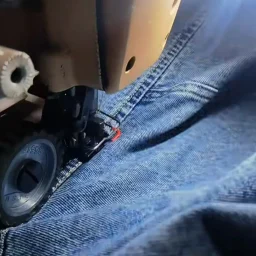
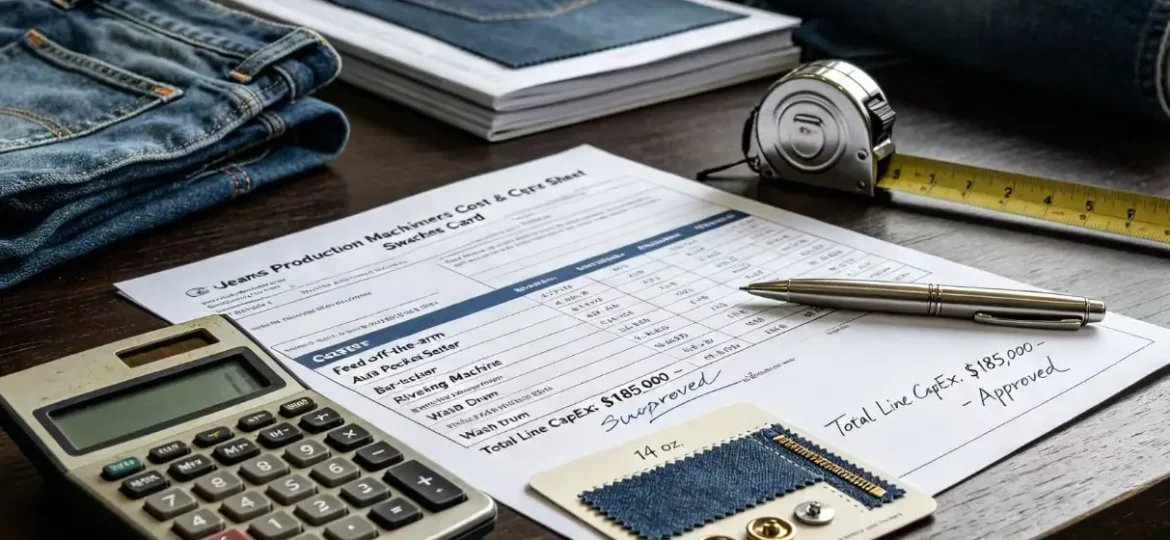
- Standard Industrial Denim Sewing Machinery ($800 – $2,500 per machine): A basic denim line relies on heavy-duty single-needle lockstitch machines ($800 – $1,200), compound feed machines, and heavy-duty 4-thread overlockers ($1,200 – $2,500) equipped with high-torque servo motors designed to penetrate multi-layer indigo denim joints without needle breakage.
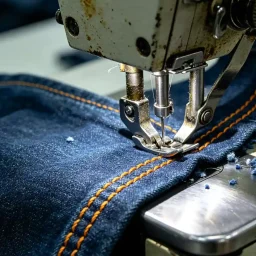
- Specialized Denim Construction Equipment ($3,500 – $15,000 per machine): Denim assembly demands specialized stitching configurations. Double-needle lap seam feed-off-the-arm machines ($3,500 – $6,000) create the iconic chainstitched felled inseam and back rise seams. Heavy-duty belt loop attachers ($4,000 – $7,500) and bar-tackers ($3,500 – $5,500) lock stress points, while chainstitch hem borders demand specialized cylinder-bed machines ($3,000 – $5,000).
- Automated Workstations ($18,000 – $65,000 per unit): High-volume export facilities invest heavily in fully automated pocket-setting units ($25,000 – $55,000) and automatic back-pocket decorative stitching units ($18,000 – $35,000), which cut sewing cycle times down to seconds per unit while maintaining perfect stitch symmetry across thousands of garments.
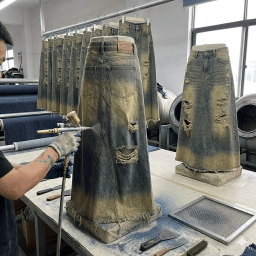
- Denim Laundry, Laser & Ozone Washing Facilities ($50,000 – $350,000+ per system): Modern sustainable denim finishing requires industrial stone-washing drums, waterless ozone fading machines ($40,000 – $90,000), and 3D laser engraving machines ($60,000 – $150,000) to replicate vintage whiskering and abrasion without hazardous chemicals.
For an entry-level specialized denim line (producing 500 to 1,000 pairs daily), total machinery capital expenditure typically ranges between $120,000 and $280,000. Fully automated, sustainable high-volume facilities easily surpass $1,500,000 in machinery investment.
2. Critical Specialized Machinery and Their Operational Roles
Understanding which machines perform specific construction steps helps brand founders verify whether a factory possesses the technical capability to manufacture high-end denim:
- Feed-Off-The-Arm Lap Seaming Machines: Essential for stitching the double-felled inseam and back rise. The interlocking chainstitch provides high tensile strength, allowing the jean to stretch during wear without popping threads.
- Automatic Pocket Attaching Units: Automatically folds pocket edges, positions the pocket onto the rear panel, and executes a flawless double-row lockstitch sequence in a single 15-second operation.
- Heavy-Duty Eyelet Buttonhole & Rivet Presses: Industrial pneumatic or electronic buttonhole machines cut and sew eyelet buttonholes on heavy waistbands, followed by high-pressure rivet setters that secure pocket corners.
3. The Internal Skeleton: Protecting Waistbands and Pocket Architecture
Investing millions in high-torque machinery guarantees clean stitching on the factory floor, but if internal structural materials lack physical stability, jeans will stretch out of shape after domestic washing cycles.
To offset high machinery amortization costs, budget-focused apparel suppliers often use low-grade synthetic thread or completely omit high-density internal stabilization fabrics inside hidden stress zones—such as inner waistband channels, fly plackets, pocket bags, and rear yoke seams.
Under the kinetic friction of washing machines and high heat from commercial dryers, unreinforced denim waistbands sag and gap. Pocket bags tear away at rivet joints, and fly plackets buckle, destroying the garment’s fit and triggering high consumer return rates across retail markets.
To protect your manufacturing investment and ensure denim holds its structured silhouette over years of wear, technical specs must mandate high-density cotton internal structural components. Partnering with a specialized global manufacturer like New Asia Garment Supply Chain Solutions provides an unyielding internal skeleton for your denim line.
Integrating tight, high-density combed cotton waistband linings, pocket-stay reinforcements, and stabilized fly interlinings anchors denim construction securely. Mandating these premium cotton matrices during tech pack sign-off eliminates synthetic skin irritation and secures the physical quality needed to establish a premium market reputation.
4. Balancing Machinery Investment: Sourcing Direct vs. Factory Partnerships
For emerging fashion labels and scaling brands, buying an entire fleet of denim machinery is rarely necessary. Instead, brands leverage specialized manufacturing partners through targeted sourcing strategies:
- Auditing Factory Machinery Fleets: When evaluating denim manufacturers, request a full facility equipment list. Ensure the factory owns dedicated feed-off-the-arm chainstitch machines, automatic bar-tackers, and in-house ozone/laser washing systems to prevent low-quality subcontracting.
- Calculating Equipment Impact on FOB Prices: Factories with high automation (such as automated pocket setters) may charge higher initial sampling fees, but their lower Cut-Make-Trim (CMT) labor minute costs significantly reduce bulk unit prices on large orders.
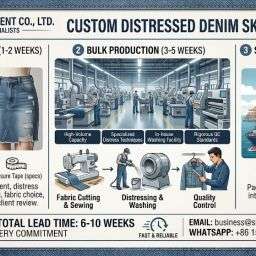
- Planning Production Lead Times Around Machine Capacity: Specialized denim machines require strict maintenance schedules. Planning seasonal orders around factory machine calibration windows prevents unexpected delivery delays.
5. Key Machinery Safeguards for Denim Supply Contracts
To protect your brand’s capital and ensure manufacturing quality aligns with your machinery expectations, formal contracts must specify production parameters:
- Specify Needle & Thread Specs in Tech Packs: Mandate heavy-duty core-spun cotton/poly threads and exact stitch-per-inch (SPI) densities suitable for high-torque sewing machines to prevent seam grinning.
- Mandate Pre-Wash Structural Integrity Audits: Require pre-production samples to undergo 5 consecutive industrial laundering cycles to verify that waistband interlinings and seam tackers resist twisting.
- Tie Balance Payments to AQL 2.5 Quality Inspections: Stipulate that final balance releases depend on passing an independent AQL 2.5 (Acceptable Quality Limit) inspection that audits seam strength, rivet security, and waistband alignment at the factory gate.
To build your denim collection on a foundation of advanced manufacturing technology, structural pattern stability, and direct-factory execution, visit Newasia Garment to calculate your production costs and source your custom denim line today.
Read more