

Women’s denim jeans are more than a wardrobe staple—they represent confidence, movement, and modern style. Yet even the most fashionable denim design can fail if the crotch fit is incorrect. Tightness, sagging, pulling lines, or the dreaded “camel toe” effect can instantly ruin comfort and appearance. In women’s denim pattern making, crotch adjustment is one of the most important technical skills for achieving a premium fit.
To adjust the crotch in female denim jeans pattern making, start by measuring crotch depth, crotch length, hip circumference, and waist-to-crotch drop accurately. Analyze common fit issues such as front pulling, back sagging, or thigh restriction. Use slash-and-spread or pivot techniques to modify the crotch curve and rise depth, then test the fit with a muslin sample. Repeat small refinements until the jeans provide smooth shaping, comfort, and unrestricted movement.
Imagine spending weeks designing a high-rise skinny jean collection, only to discover wrinkles at the front rise or discomfort when sitting.
At Newasia Garment Co., Ltd., we specialize in premium women’s denim manufacturing, jeans pattern development, OEM & ODM production, and bulk garment solutions for international fashion brands. We are also a manufacturing partner of brands such as American Eagle Outfitters, Uniqlo, Zara, Gap, Levi’s, and Lee.
With years of experience in denim fit development and technical garment production, our pattern-making team understands how different body shapes, denim fabrics, washing processes, and stretch properties affect crotch fitting in women’s jeans.
In this complete guide, we will explain how to professionally adjust the crotch for female denim jeans pattern making step by step, while also sharing real manufacturing insights that help fashion brands improve fit consistency, reduce return rates, and optimize bulk production quality.

Why Crotch Adjustment Matters in Female Denim Jeans
Crotch adjustment is essential in female denim jeans because it directly affects fit, comfort, and silhouette. A well-shaped crotch curve helps jeans follow the natural body shape without pulling, sagging, or restricting movement. Poor adjustment can cause front tightness, back wrinkles, and an unflattering fit.
When designing women’s jeans, the crotch area is the key balance point between the waist, hips, and legs. Even with good leg shaping, an incorrect crotch curve can ruin the overall fit.
Common Fit Issues
• Front Pulling: Caused by a short or shallow front crotch curve.
• Back Sagging: Happens when the back crotch is too long or deep.
• Tight Movement: Poor adjustment restricts sitting and walking.
• Excess Wrinkles: Too much fabric creates bulk and distorts the silhouette.
Impact on Comfort and Appearance
• Proper crotch adjustment improves mobility and wearing comfort.
• A balanced crotch shape creates a smoother, slimmer denim silhouette.
• Accurate fit reduces fabric stress and improves garment durability.
Stretch vs. Rigid Denim
• Stretch denim allows slight flexibility but still needs accurate crotch shaping.
• Rigid denim requires greater precision because the fabric has little tolerance for fit errors.
Precise crotch adjustment helps female denim jeans achieve better comfort, cleaner fit, and higher customer satisfaction, making it a critical part of denim pattern design.
At Newasia Garment Co.,Ltd., our technical pattern team treats crotch adjustment as a key stage in denim development because even a 0.5 cm modification can significantly improve comfort and appearance.
Female Denim Fit Considerations Compared to Men’s Jeans
Women’s body proportions differ significantly from men’s, especially in:
- Pelvic width
- Hip curvature
- Seat prominence
- Waist-to-hip ratio
Many generic denim blocks are adapted from unisex or men’s patterns, which often leads to fitting issues in women’s jeans. Female denim requires:
- A smoother front crotch curve
- More balanced back rise shaping
- Better seat contouring
- Enhanced thigh mobility
For example, women with fuller hips may require additional back rise length to prevent pulling, while slim-fit jeans often need front rise refinement to reduce front tension.
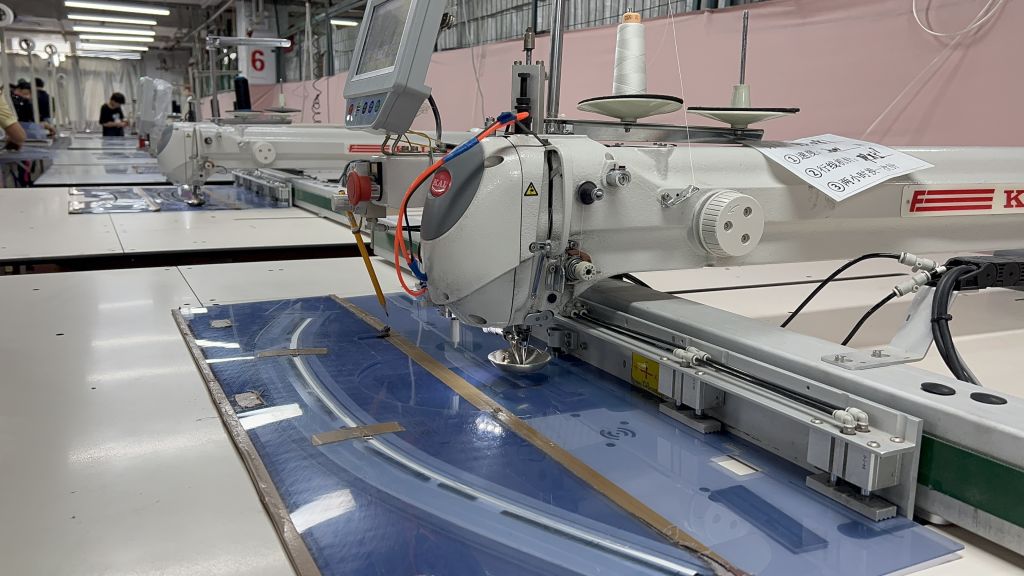
How Do You Measure Crotch Length and Depth Accurately?
Accurate crotch length and depth measurement is key to achieving a well-fitting pair of skinny jeans. It ensures balance between the waist, hips, and seat, preventing issues like tightness, sagging, or discomfort.
Accurate crotch measurement helps ensure comfort, balance, and a clean denim silhouette.
Key Measurements
• Front Crotch Length: From waist (front) to crotch point and inseam.
• Back Crotch Length: From waist (back) through seat to inseam.
• Crotch Depth: Vertical distance from waist to sitting surface for comfort checking.
• Hip Measurement: Ensures enough room for seat and upper thigh fit.
Basic Methods
• Standing Measurement: Captures structural body proportions.
• Sitting Check: Confirms real comfort and functional depth.
• Flexible Tape: Follows natural body curves for accuracy.
Core Principles
• Measure front and back separately due to body asymmetry.
• Depth must consider movement, not just static posture.
• Small errors can significantly affect fit and comfort.
Application in Design
• Convert measurements into front/back rise for pattern drafting.
• Adjust for fabric type (stretch or rigid denim).
• Maintain balance between front and back crotch lengths.
Accurate measurement of crotch length and depth is the foundation for precise denim fit, directly influencing comfort, mobility, and overall garment quality.
How Does Pattern Adjustment Eliminate Front Pinch and Back Sag in Skinny Jeans?
Eliminating front pinch and back sag requires precise crotch pattern corrections that rebalance front rise, back rise, and crotch depth. The goal is to restore smooth body contouring without adding excess fabric or restricting movement.
Front pinch and back sag are fixed through targeted crotch curve and rise adjustments, not overall size changes.
Identifying Fit Problems
• Front Pinch: Tight pulling across the lower abdomen when sitting or bending.
• Back Sag: Loose folds or fabric pooling under the seat during movement.
Core Pattern Adjustment Methods
• Front Correction:
– Increase front rise length or slightly reduce curve depth.
– Use slash-and-spread to add 1/8”–1/4” length where needed.
• Back Correction:
– Shorten or shallow the back rise to remove excess fabric.
– Adjust curve smoothly to maintain seam balance.
Slash-and-Spread Technique
• Slash pattern at key crotch points (front or back).
• Spread or overlap to add or reduce length.
• Redraw seamline to maintain a smooth, natural curve.
Pivot Adjustment Method
• Set pivot point near crotch apex.
• Rotate pattern to fine-tune rise depth without changing total seam length.
• Useful for subtle fit refinement.
Fabric Considerations
• Stretch Denim: Allows slightly more tolerance but still needs controlled adjustments.
• Rigid Denim: Requires small, precise changes (1/8”–1/4”) and testing via samples.
Refinement Process
• Always test changes on muslin samples before production.
• Check fit in standing, sitting, and movement positions.
• Rebalance waist fit after crotch adjustments if needed.
Recommended Crotch Adjustments for Different Denim Styles
| Denim Style | Common Adjustment | Recommended Fabric |
|---|---|---|
| Skinny Jeans | Reduce front tension | Stretch denim |
| High-Waist Jeans | Increase front rise depth | Rigid denim |
| Boyfriend Jeans | Add seat ease | Mid-weight denim |
| Baggy Jeans | Expand thigh and crotch width | Soft denim |
| Straight Jeans | Balance front and back rise | Rigid or stretch denim |
Step-by-Step Guide to Adjusting the Crotch for Female Denim Jeans
Step 1: Analyze the Fit Sample
Before modifying the pattern, carefully evaluate the fit sample on a real body or fit mannequin.
Observe:
- Wrinkle direction
- Tension points
- Seat balance
- Hip strain
- Thigh tightness
- Front and back rise alignment
Professional fit analysis is the foundation of successful crotch correction.
Step 2: Measure Front and Back Rise
Accurate measurements are essential.
Key areas include:
- Front rise length
- Back rise length
- Crotch depth
- Hip circumference
- Thigh circumference
- Inseam balance
Many fitting problems occur because the front and back rise relationship is not properly balanced.
Step 3: Adjust the Crotch Curve
The crotch curve controls movement comfort and body contour fit.
For Tight Front Crotch
- Extend the front curve slightly
- Add smoother shaping
For Loose Back Crotch
- Reduce curve depth
- Shorten extension carefully
Avoid excessive adjustment, as even small changes can dramatically affect final fit.
Step 4: Balance Hip and Thigh Ease
Many crotch fitting issues actually originate from poor hip and thigh balance.
For women’s jeans:
- Curvy fits require additional seat allowance
- Skinny fits require controlled stretch reduction
- Mom jeans require more relaxed crotch shaping
- Flare jeans require balanced hip distribution
Professional pattern making should always consider the entire lower-body silhouette instead of adjusting only the crotch area.
Step 5: Test Different Denim Fabrics
Different denim fabrics behave differently during wear and washing.
Stretch Denim
Requires:
- Recovery calculation
- Negative ease balancing
- Elasticity testing
Rigid Denim
Requires:
- Mobility allowance
- Relaxation shrinkage control
- Post-wash fitting evaluation
At Newasia Garment Co., Ltd., our development team tests all denim fabrics before final pattern approval to ensure fit consistency in bulk production.
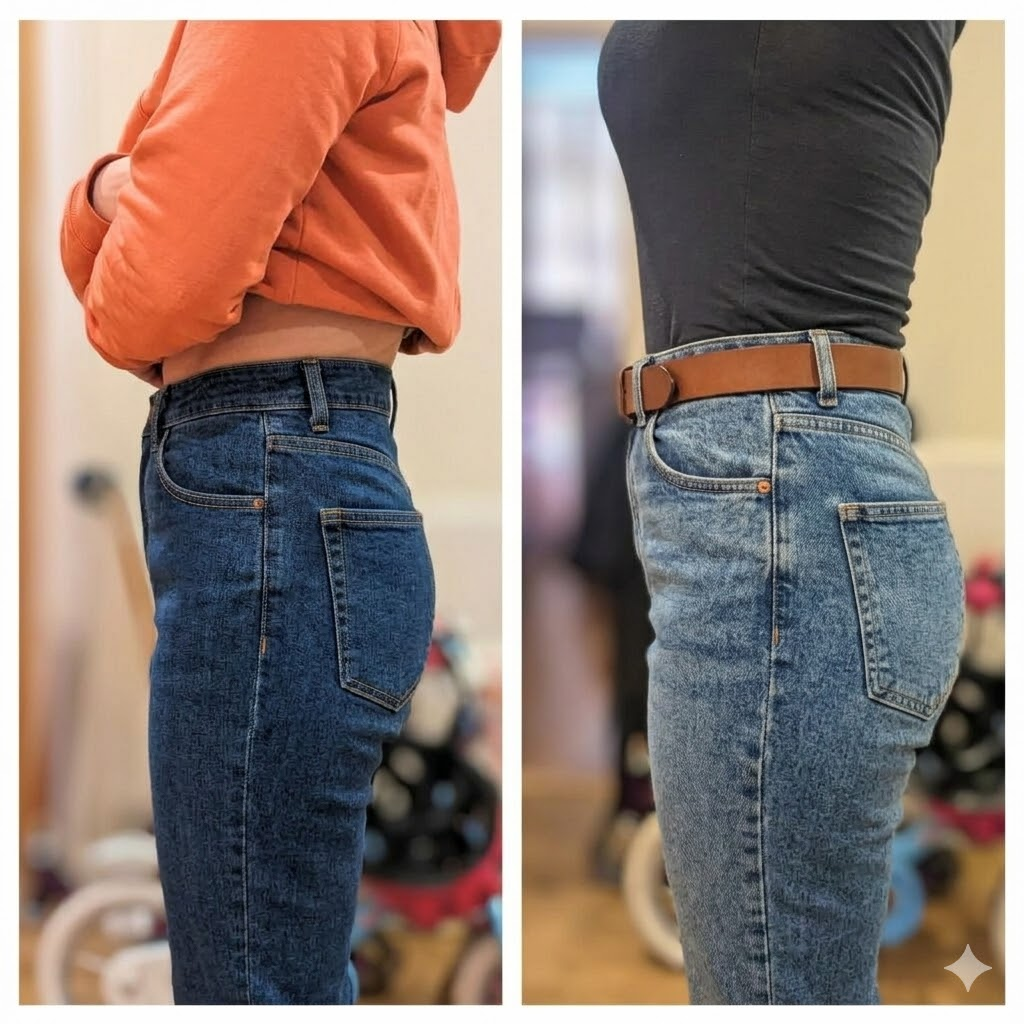
How Newasia Garment Co., Ltd. Supports Precision Fit Development
Newasia Garment Co., Ltd. provides full-service denim development focused on accurate fit and professional pattern execution for skinny jeans.
Pattern Development & Technical Expertise
• In-house pattern team specializing in crotch curve engineering and denim fit correction.
• CAD and manual drafting integration for precise adjustment control.
• Expertise in skinny, slim, and plus-size denim fits.
Sampling & Prototyping
• Fast sampling for muslin and denim prototypes.
• Fit correction cycles based on client feedback and live model testing.
• Iterative refinement to eliminate pinch, sag, and distortion issues.
Production Capability
• Flexible MOQ suitable for small brands and market testing.
• Scalable bulk production for large-volume orders.
• Strict QC system covering seam strength, shrinkage, and fit consistency.
Customization Services
• Private label OEM/ODM production.
• Custom washes, trims, hardware, and branding options.
• Fit customization for different body types and regional markets.
By combining precise pattern adjustment techniques with Newasia Garment Co., Ltd.’s professional denim manufacturing system, brands can achieve consistently well-fitted skinny jeans with improved comfort, structure, and market performance.
Certified Professional Clothing Producer
We are very proud of these certificates! They represent Newasia Garment Co.,Ltd. ’s amazing achievements and accreditations. They show how much we care about quality, safety, and professionalism.
We’re proud to say that we have obtained BSCI and ISO 90001 certificates, and inspection certificates for filling materials such as down and cotton. We follow international standards throughout our production process and take responsibility for the quality of our products.
As one of China’s leading clothing manufacturers, we are pleased to be recognized by respected organizations. These certifications underscore our reliability as a trusted supplier to the global apparel industry.
Trusted Certificates:







Why Choose Us
 Independent base We have our own laboratory and can independently develop fabrics , China  Professional certification Certification: ISO 9001, ISO 14001,BSCI,GRS |  Full-equipped Full-equipped, from fiber manufacturing, yarn spinning, weaving, dyeing and processing to finished product production  Rich experience Professional, large and experienced design team, combined with the latest artificial intelligence technology |  Our Facilities 12,000 skilled employees, daily production capacity exceeds 100,000 pieces  Fashion exhibition Participated in domestic and foreign fashion weeks and exhibitions many times |
Trusted by Global Clients


















Frequently Asked Questions
Q1. How do you fix a tight crotch in women’s jeans patterns?
A tight crotch usually means there is not enough length or depth in the front or back rise. The fix is to increase the front rise and/or slightly extend the front crotch curve. Make sure any adjustment blends smoothly into the inseam so the leg shape is not distorted.
Q2. Why do jeans wrinkle under the buttocks?
Wrinkling under the seat is typically caused by an imbalance in the back rise. The most common issue is an overly long or incorrectly shaped back crotch extension. Refining the back rise curve and seat angle usually helps eliminate excess fabric and improve drape.
Q3. What is the ideal crotch depth for female jeans?
There is no fixed standard crotch depth for women’s jeans. It varies depending on body proportions, rise style (low, mid, high rise), fabric stretch, and brand fit preferences. Each design requires individual pattern testing rather than relying on a universal measurement.
Q4. How do denim factories improve women’s jeans fit?
Denim factories refine fit through repeated sampling and testing. They use fit models, pattern grading systems, fabric shrinkage and stretch testing, and multiple sample revisions. This iterative process helps balance comfort, aesthetics, and production consistency.
Q5. How do you fix camel toe in women’s jeans patterns?
Camel toe is usually caused by insufficient front crotch length or too little front ease. Increasing the front rise and slightly adjusting the front crotch curve can reduce tension in the area. Proper distribution of ease across the front panel is key for comfort and smooth appearance.
Q6. Does stretch denim affect crotch fitting?
Yes. Stretch denim significantly impacts how the crotch area behaves during wear. It affects tension, recovery, and how the fabric conforms to the body. Pattern reductions must be carefully adjusted based on the fabric’s elasticity to avoid over-tight or sagging fits.
Q7. Why do jeans wrinkle under the buttocks (again)?
This issue often repeats due to back crotch extension being too long or seat balance being off. Even small changes in back rise shaping can dramatically improve smoothness under the seat area.
Q8. How important is washing in denim fit development?
Washing is critical in denim production. Different wash processes can shrink, relax, or distort fabric, affecting final measurements and fit balance. That’s why professional manufacturers always conduct wash tests before approving bulk production.
Conclusion
Mastering crotch adjustment is one of the most important skills in female denim pattern making. Accurate measurements, balanced rise shaping, proper seat adjustments, and repeated fit testing all contribute to creating jeans that feel comfortable and look premium.
From front rise refinement to full seat balancing, every small correction improves the overall fit and wear experience. By following professional adjustment methods and testing thoroughly, designers and manufacturers can eliminate common denim fit problems before production.
Newasia Garment Co.,Ltd. is committed to helping brands produce high-quality women’s denim with expert craftsmanship and reliable manufacturing support. If you’re ready to develop perfectly fitted women’s jeans for your next collection, our team is ready to assist you.
Read more
- How to Validate Pocket Function and Placement Before Bulk Production
- How to Standardize Fabric Hand Feel Across Production Lots
- Movement Fit Testing for Apparel: How to Check Ride-Up, Slippage, and Range of Motion
- Pre-Production Sample Approval: What Brands Should Lock Before Bulk Production
- Custom Sports Jersey Manufacturing Quality Control: A Global Manufacturing Guide