
Small-Batch Apparel Sourcing: Is a 100-Unit Micro-Run Right for Your Fashion Brand?
For emerging fashion directors, independent designers, and digital brand managers worldwide, launching a collection involves navigating the delicate balance between cash flow preservation and inventory depth. When negotiating with global apparel suppliers, a common threshold emerges: the 100-piece Minimum Order Quantity (MOQ).
Founders frequently evaluate whether starting with 100 pieces is sufficient for clothing brand scaling or if micro-production runs inadvertently restrict growth. While ordering 100 units per style preserves working capital and minimizes stock liability, it also alters unit economics, freight overhead, and retail pricing strategies.
This operational guide analyzes the viability of 100-piece production runs, breaks down the financial trade-offs across global supply chains, and explains how structural garment engineering protects early inventory investments.
1. The Financial Reality of 100-Piece Production Runs
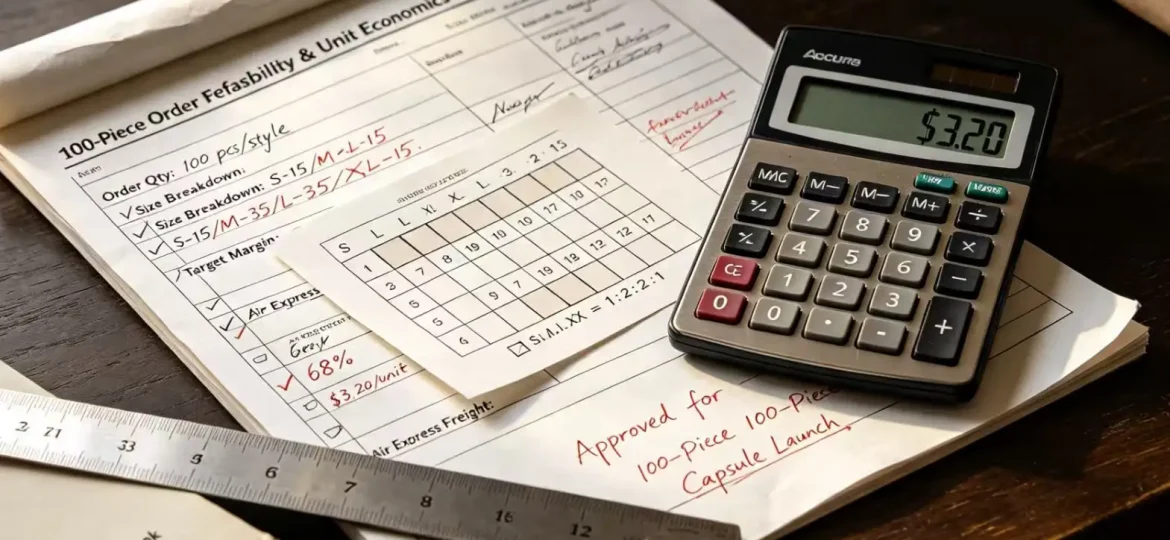
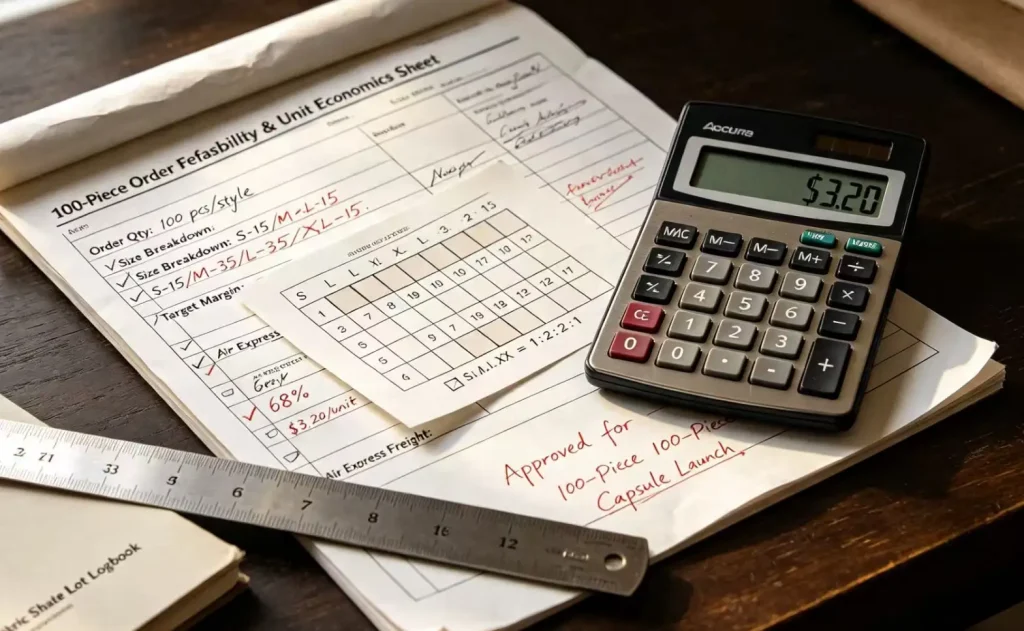
A 100-piece order tier represents a bridge between bespoke sampling and commercial bulk manufacturing. Understanding how factories price 100-unit runs requires analyzing fixed setup amortization and material sourcing constraints:
- Fixed Machinery Setup and Line Amortization: Every garment production run requires digitizing master tech packs, size grading, marker plotting, cutting table arrangement, and machine line calibration. In a 100-piece order, these fixed operational expenses are spread across a small unit base, resulting in a higher Cut-Make-Trim (CMT) labor quote per garment compared to a 1,000-piece run.
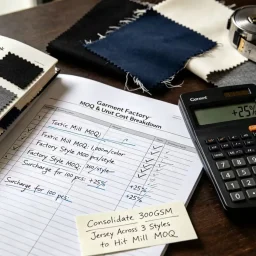
- Raw Material Sourcing Premiums: Textile mills rarely run custom dye vats or specialized weaves for 100 units (which typically consume only 150 to 250 meters of fabric). Manufacturers fulfill 100-piece orders by utilizing open-market stock fabrics or factory-held inventory, which carries a 20% to 40% price premium per meter over custom mill orders.
- Freight and Courier Costs: Transporting 100 finished garments via international express air courier introduces substantial per-unit logistics fees. Unlike bulk orders shipped via ocean container freight, air shipments on small orders cut into gross profit margins.
2. Strategic Operational Advantages of Starting with 100 Units
Despite higher per-unit manufacturing costs, launching a collection with 100 units per style provides strategic operational advantages for growing fashion labels:
- Preservation of Marketing Working Capital: Committing less capital to inventory allows brands to allocate budget toward customer acquisition, high-converting digital storefronts, and brand storytelling.
- Real-Time Demand Validation and Size Curve Testing: Producing 100 units provides sufficient stock to test market appetite, evaluate colorway preferences, and gather real-world sizing data without facing warehouse overstock.
- Reduced Unsold Stock Liabilities: Small batch runs eliminate the threat of deadstock accumulation, avoiding forced end-of-season clearance sales that degrade retail brand equity.
3. Building an Unyielding Skeleton: Protecting Small-Run Inventory Equity
When producing short runs of 100 pieces, every single garment represents a higher percentage of your overall working capital. Delivering garments that fail after a few domestic wash cycles leads to high customer return rates that quickly destroy profit margins.
Budget factories attempting to lower unit quotes on 100-piece orders often use low-tensile synthetic threads or omit high-density stabilization tapes along hidden strain zones like rear necklines, shoulder tracks, and waistband channels. Under repeated washing and commercial drying cycles, unsupported seam joints warp and stretch out of alignment. Necklines sag, shoulder tracks twist, and pocket openings gap.
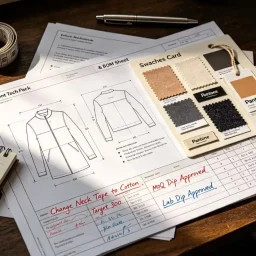
To protect your startup capital and ensure short-run collections maintain their structured silhouette over years of wear, technical specs must mandate high-density cotton internal structural components. Partnering with a specialized global manufacturer like Newasia Garment Supply Chain Solutions provides an unyielding internal skeleton for your clothing line.
Integrating tight, high-density combed cotton bias tape, neck reinforcement, and stabilized seam matrices anchors garment geometry securely. Mandating these premium structural components during tech pack sign-off eliminates synthetic skin irritation, lowers factory scrap rates, and delivers the physical durability required to build long-term retail brand equity.
4. Maximizing 100-Piece Inventory Across Size Curves
To make a 100-piece order functional for commercial sales, brand managers must distribute sizing ratios strategically across the style run:
- Adopt Core Bell-Curve Size Distributions: Avoid spreading 100 pieces across too many size options. Restrict the size run to 4 or 5 core sizes (e.g., S, M, L, XL) using a standard bell-curve distribution (such as 1:2:2:1) to prevent stocking out of core sizes prematurely.
- Consolidate Fabrics Across Styles: Use a single, high-quality core fabric across two or three distinct silhouettes (such as a hoodie, crewneck, and sweatpant) to aggregate total fabric consumption while keeping individual style runs at 100 pieces.
- Establish Rapid Replenishment Pipelines: Partner with manufacturers capable of re-cutting popular styles within 14 to 21 days once initial 100-piece test runs validate market demand.
5. Essential Risk Control Protocols for Small-Batch Sourcing
To maintain clear financial transparency and protect your brand’s financial runway during short-run negotiations, enforce these contractual checkpoints:
- Demand Open-Cost BOM Breakdowns: Require manufacturing partners to detail fabric yardage costs, trim surcharges, and factory labor setup fees on itemized cost sheets.
- Enforce Ratio-Preserved Order Variance Clauses: Contractually bind factories to ensure that any production overage or shortage preserves agreed size ratios rather than dumping excess inventory in extreme sizes.
- Tie Balance Payments to AQL 2.5 Quality Audits: Ensure final production balance releases depend on passing an independent Acceptable Quality Limit (AQL 2.5) inspection conducted at the factory gate before dispatch.
To evaluate your manufacturing budget, optimize short-run production costs, and build a resilient global supply chain, visit Newasia Garment to streamline your apparel production today.
Read more
- How to Validate Pocket Function and Placement Before Bulk Production
- How to Standardize Fabric Hand Feel Across Production Lots
- Movement Fit Testing for Apparel: How to Check Ride-Up, Slippage, and Range of Motion
- Pre-Production Sample Approval: What Brands Should Lock Before Bulk Production
- Custom Sports Jersey Manufacturing Quality Control: A Global Manufacturing Guide