
Building Resilient Apparel Networks: A Strategic Framework for Sustainable Supply Chain Clothing
Across the global fashion landscape, environmental regulations, corporate accountability mandates, and shifting consumer behaviors have reshaped commercial priorities. For executive directors, brand founders, and global procurement managers, sustainable supply chain clothing strategies are no longer optional marketing initiatives—they are essential risk-mitigation protocols and competitive operational advantages.
Decarbonizing a fashion supply chain requires far more than purchasing organic raw cotton or offsetting air freight emissions. A truly sustainable apparel network demands complete vertical integration, rigorous material traceability, low-impact chemical processing, and structural garment engineering that minimizes premature waste.
This strategic guide outlines the primary pillars required to build a compliant, resilient, and eco-conscious global garment supply chain.
1. Raw Material Decarbonization and Closed-Loop Fiber Networks
The environmental footprint of any apparel line is largely predetermined during raw material selection. Transitioning away from virgin synthetics and resource-intensive natural fibers forms the foundational layer of sustainable sourcing.
- Regenerative and Certified Agriculture: Sourcing fibers certified under GOTS (Global Organic Textile Standard) or produced via regenerative farming practices actively rehabilitates topsoil, preserves local biodiversity, and reduces reliance on synthetic chemical fertilizers.
- Next-Generation Synthetics and Mechanical Recycling: Replacing petroleum-based virgin polyester with Global Recycled Standard (GRS) certified rPET or plant-derived synthetics significantly cuts carbon output during polymerization. Integrating post-industrial and post-consumer cotton scraps preserves natural resources while reducing landfill accumulation.
- Chemical and Water Recycling Standards: Supply chain managers must enforce Zero Discharge of Hazardous Chemicals (ZDHC) compliance across all tier-one and tier-two mills. Implementing Closed-Loop fluid systems ensures that dyeing and finishing chemicals are captured, treated, and reused rather than discharged into local waterways.
2. Tier 1 to Tier 4 Traceability and Digital Product Passports
Operating a sustainable supply chain requires total visibility from raw fiber origin (Tier 4) down to final garment assembly (Tier 1). Emerging regulatory frameworks in major global markets now mandate verifiable proof of material origin.
- Physical Tracer Technologies: Modern supply chains embed physical tracer molecules or isotopic markers directly into raw fibers at the farm level. These invisible markers survive spinning, weaving, and dyeing, allowing brands to audit the origin of their finished garments at any point in the supply chain.
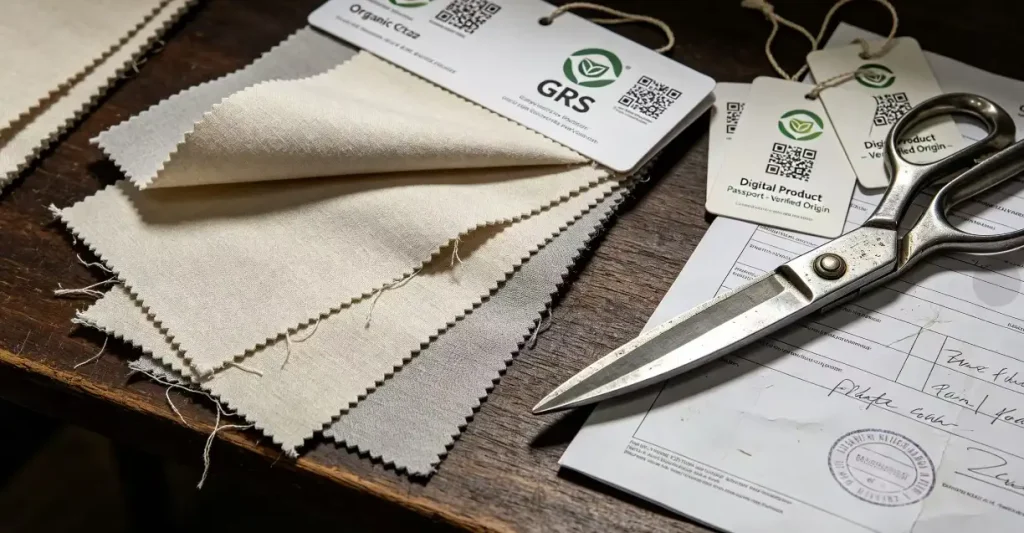
- Digital Product Passports (DPPs): Implementing DPPs allows manufacturers and consumers to trace a garment’s lifecycle via a scanned QR code. This digital record authenticates factory certifications, carbon footprints, labor standards, and material breakdown.
- Ethical Labor Audits: Transparent supply chains require continuous third-party social compliance monitoring, ensuring fair living wages, safe working conditions, and strict adherence to international labor standards across all supplier tiers.
3. The Internal Skeleton: Extending Product Lifespans Through Structural Integrity
While sourcing organic cotton and low-impact dyes addresses the front end of the supply chain, true environmental sustainability depends on garment longevity. The most sustainable garment is one that lasts for years without structural failure. Under repeated commercial laundering and daily wear, weak internal seams stretch, warp, and split open.
Low-end manufacturers frequently compromise quality by using cheap synthetic sewing threads or completely omitting seam stabilizers inside hidden stress zones—such as the rear neckline, shoulder tracks, chest pocket channels, and internal waistband seams.
Under the kinetic stress of home washing machines and commercial dryers, these unstable internal joints buckle. This causes outer fabrics to distort, resulting in wavy “bacon” collars, twisted side seams, and sagging silhouettes that prompt consumers to discard garments prematurely.
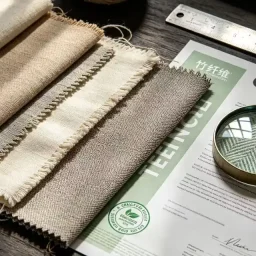
To pass global quality audits and maximize garment lifespans, technical specifications must mandate high-density cotton internal structural components. Partnering with an integrated supplier that incorporates Newasia Garment Heavyweight Premium Industrial Cotton Lining Textiles provides a durable internal skeleton for your apparel collections.
This tight, high-density combed cotton weave acts as an unyielding structural anchor behind internal neck seams, button plackets, and shoulder tracks. It locks the garment’s dimensions true through aggressive laundering cycles. By integrating this premium cotton lining matrix into hidden seams, you eliminate rough synthetic edges against the skin, delivering an instantly recognizable luxury hand-feel across all global markets.
4. Modern Manufacturing: Low-Impact Finishing and Energy Efficiency
The manufacturing and finishing phases offer substantial opportunities for energy, chemical, and water savings when proper industrial technology is applied.
- E-Flow and Ozone Finishing: Replacing conventional wet finishing with nanobubble and atmospheric ozone technology reduces water consumption during garment washing by up to 90%, while cutting energy requirements and chemical usage.
- Factory-Level Renewable Energy Integration: Partnering with production facilities that operate on-site solar arrays, biomass boilers, and heat-recovery systems lowers the overall embodied carbon footprint of the finished inventory.
- Zero-Waste Pattern Engineering: Utilizing 3D CAD modeling during the prototyping phase optimizes fabric marker consumption, significantly reducing pre-consumer textile scrap generated on the cutting table.
5. Circularity and End-of-Life Design
Building a truly sustainable supply chain requires designing garments with their eventual recycling or decomposition in mind from day one.
- Mono-Material Construction: Designing garments using 100% single-fiber compositions (such as 100% cotton or 100% polyester, including threads and trims) simplifies automated mechanical and chemical recycling at the end of the garment’s lifecycle.
- Disassembly-Friendly Hardware: Utilizing removable or unscrewable hardware, biodegradable thread, and easily detachable brand tags ensures that garments can be disassembled rapidly at recycling facilities.
To build your apparel line on a foundation of absolute pattern stability, eco-conscious manufacturing execution, and supply chain transparency, visit Newasia Garment.com to request a comprehensive production review today.
Read more