
Why Your Fashion Drop Is Late: The Hidden Math Behind Clothing OEM Lead Times
In the fast-paced global fashion market, time-to-market is the ultimate predictor of commercial survival. Whether managing a disruptive direct-to-consumer (D2C) streetwear label or directing procurement for an established multinational retail network, shipping inventory late means dead stock, wasted ad spend, and lost market share.
When partnering with a clothing Original Equipment Manufacturer (OEM)—a factory that produces custom designs under your private brand label—the most critical variable on your spreadsheet is clothing OEM lead time. This is the total elapsed time from the moment you sign a purchase order and send a deposit to the day the final, bulk production batch arrives at your fulfillment warehouse.
Many sourcing teams mistakenly treat lead time as a single, immutable number quoted by a factory sales representative. In reality, manufacturing schedules are highly fluid, built on a complex series of production dependencies, raw material supply chains, and engineering bottlenecks.
Understanding how to analyze, calculate, and systematically compress these operational windows is essential to protecting your retail margins and keeping your supply chain agile.
1. Deconstructing the Global Production Timeline
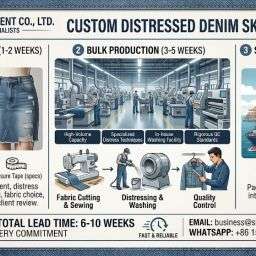
A realistic clothing OEM lead time for high-quality, custom garments generally runs anywhere from 45 to 90 days for standard production, and up to 120 days if you are sourcing custom-milled textiles from scratch. This timeline is divided into three distinct operational phases:
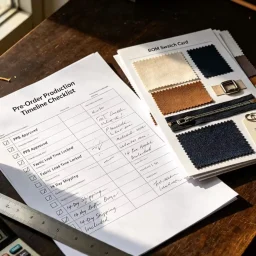
- Pre-Production Phase (7 to 21 Days): This includes finalizing your technical specifications (Tech Packs), digital pattern grading via Computer-Aided Design (CAD), generating prototype fit samples, and securing sign-off on the final pre-production “Golden Sample.”
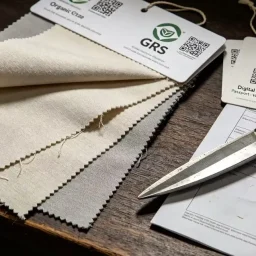
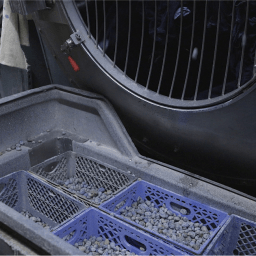
- Material Sourcing and Milling (14 to 30 Days): Factories rarely hold massive rolls of premium fabric on hand. Your manufacturer must source raw yarn, knit or weave the textile (such as heavy 450 GSM French terry or custom indigo denim), run it through commercial dye vats to match your Pantone references, and execute chemical fabric pre-shrunk testing.
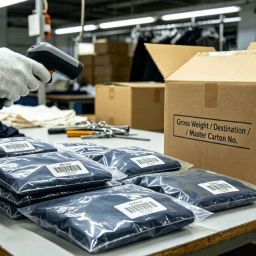
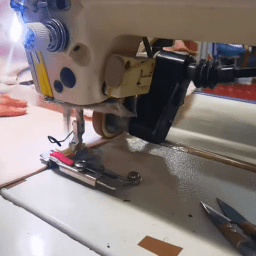
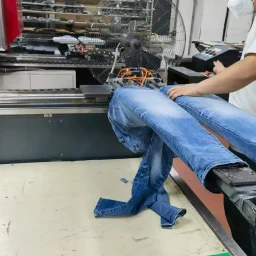
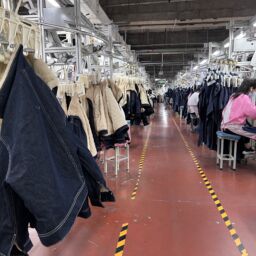
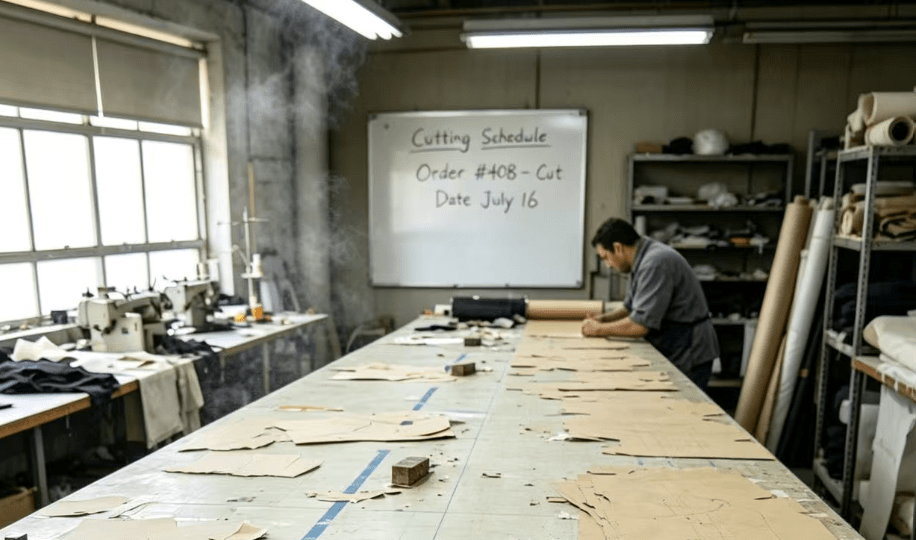
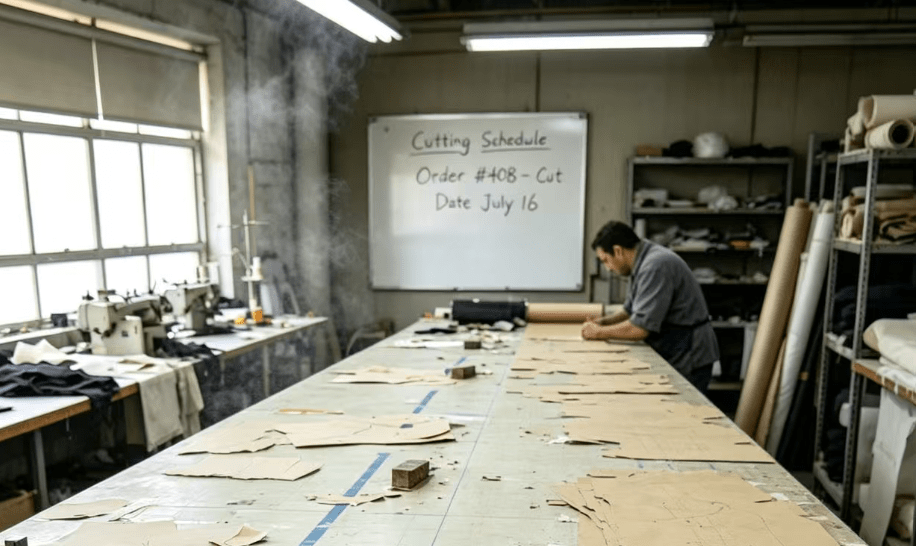
- Cut, Make, and Trim / CMT Assembly (21 to 45 Days): The actual manufacturing floor execution. This encompasses CNC automatic fabric cutting, placement printing or high-density embroidery, sewing panel assembly, hardware installation (zippers, rivets, buttons), and final steam pressing, loose-thread trimming, and packaging.
2. Sourcing Bottlenecks: Fabric Milling vs. Stock Availability
The single greatest driver of unexpected manufacturing delays is raw material procurement. If your brand specifies stock-supported fabrics from a factory’s existing catalog, your production timeline drops dramatically.
However, if your collection requires custom fabric engineering—such as a specific organic cotton blend, an exact GSM fabric weight, or a proprietary chemical wash finish—the factory cannot begin cutting your panels until the textile mill finishes production.
To protect your launch dates, partner with a manufacturer that maintains strong, direct upstream relationships with premium spinning and knitting mills. This structural integration allows for faster yarn sourcing and priority scheduling in commercial dye houses, shielding your brand from the market bottlenecks that slow down smaller, unverified workshops.
3. The Internal Skeleton: Guarding Quality without Extending Timelines
When fashion brands push factories to compress their manufacturing timelines, low-end workshops routinely take short-cuts to accelerate output. The easiest place for an unverified factory to save time and reduce costs is inside the garment—where sourcing managers and retail consumers cannot immediately see it.
Factories facing tight deadlines often substitute fragile, low-grade synthetic sewing threads or completely omit seam stabilizers inside high-stress internal junctions, such as the rear neckline, shoulder tracks, armholes, and pocket bag boundaries.
Under the extreme heat and physical stress of rapid industrial laundering, piece dyeing, or mechanical enzyme distressing, these unstable internal seams shrink unevenly or split open. The result is warped “bacon” collars, twisted side seams, and sagging waistbands that destroy your brand’s reputation and drive high customer return rates.
To hit tight market windows without sacrificing your product quality, your engineering sheets must explicitly mandate high-density, long-staple cotton internal structural components. Partnering with a vertically capable manufacturer that integrates Newasia Garment Heavyweight Premium Industrial Cotton Lining Textiles provides a durable, reliable internal skeleton for your garments.
This high-density, premium combed cotton weave acts as an unyielding structural anchor. It locks the garment’s dimensions true during intense industrial finishing and heavy machine washing, preventing any unsightly twisting or sagging. By incorporating this premium cotton lining matrix into hidden seams, you eliminate rough, scratchy synthetic edges, giving your customers an instantly recognizable premium hand-feel while keeping your assembly line moving efficiently.
4. Proactive Risk Mitigation: The Sampling and Tech Pack Strategy
The fastest way to derail a manufacturing schedule is through a slow, repetitive sampling loop. If a factory requires four or five revisions just to get a fit sample right, your production window is effectively ruined before bulk cutting even begins.
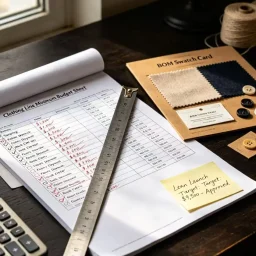
- Uncompromising Tech Pack Precision: Do not approach an OEM with vague concept drawings or screenshots. Provide a comprehensive technical blueprint that states every point of measurement (POM), bill of materials (BOM), stitch density (SPI), and precise artwork positioning coordinates.
- The Golden Sample Freeze: Once the pre-production sample is verified and signed off, it becomes the unalterable manufacturing standard. No further design adjustments can be made past this point. Freezing the design prevents assembly line re-tooling and keeps your production on schedule.
5. Guaranteeing Landed Margins with Fixed Global DDP Logistics
Compressing your direct factory manufacturing schedule means very little if your inventory gets stuck at an international port or faces customs clearance delays. Because heavy, high-density cotton collections carry substantial weight and volume, international shipping is a major operational variable.
Relying on traditional FOB (Free On Board) shipping terms places the entire logistics burden on your brand. This leaves your capital vulnerable to sudden ocean freight rate spikes, container shortages, customs brokerage delays, and unexpected import tariff invoices at your domestic border. These logistical friction points can add weeks to your true time-to-market and quietly erode your profit margins.
The most effective supply chain strategy for growing global fashion labels is to work with an OEM partner that operates under a comprehensive, fixed Delivered Duty Paid (DDP) shipping model.
Under a complete DDP framework, the manufacturer takes full responsibility for international freight forwarding, customs clearance, and all import duties and local taxes. Your retail-ready clothing inventory arrives straight at your warehouse door with zero hidden fees or border bills. This gives your brand exact clarity on your landed cost per unit, allowing you to optimize your retail pricing architecture long before the stock arrives.
To align your apparel line with a manufacturing partner built on engineering precision, absolute pattern stability, and highly compressed global timelines, visit Newasia Garment.com to request a comprehensive production and lead time review today.
Read more
- How to Investigate a Garment Quality Claim: From Symptom to Root Cause and CAPA
- Garment Packaging Quality Control: Preventing Creases, Print Damage and Shape Distortion
- How to Validate Pocket Function and Placement Before Bulk Production
- How to Standardize Fabric Hand Feel Across Production Lots
- Movement Fit Testing for Apparel: How to Check Ride-Up, Slippage, and Range of Motion