

Whether you’re a raw denim purist or simply aiming to preserve the original fit of a new pair, dimensional stability—shrinkage versus stretch—is a key consideration. This behavior is not binary but influenced by multiple factors, including fiber composition, weave tension, wash temperature, agitation, and finishing processes.
From a manufacturing perspective, jeans typically shrink by 2–5% in both length and width when exposed to hot water and tumble drying. Raw, unsanforized denim can experience significantly greater shrinkage, up to around 10%, while sanforized or stretch denim is engineered to limit shrinkage to under 3%. In contrast, cold-water washing combined with air drying effectively minimizes dimensional change. Over time, however, mechanical wear causes the fabric to relax, resulting in a slight natural stretch of approximately 1–2%.
At Newasia Garment, we specialize in high-quality denim manufacturing and supply to global fashion brands, focusing on dimensional stability, fabric innovation, and premium garment finishing. Our production experience with brands such as American Eagle Outfitters, Uniqlo, Zara, Gap, Levi’s, and Lee allows us to understand denim performance at both industrial and consumer levels.
Do Jeans Shrink When Washed?
Yes, jeans can shrink when washed, especially if they are made from:
- 100% cotton denim
- Raw denim (unwashed denim)
- Non-pre-shrunk fabrics
Why Shrinkage Happens
Denim fibers naturally contract when exposed to:
- Hot water
- High-temperature drying
- Mechanical agitation (washing machine spin cycles)
Cotton fibers tighten when moisture and heat are applied, causing shrinkage in key areas such as:
- Waist
- Length (inseam)
- Thigh width
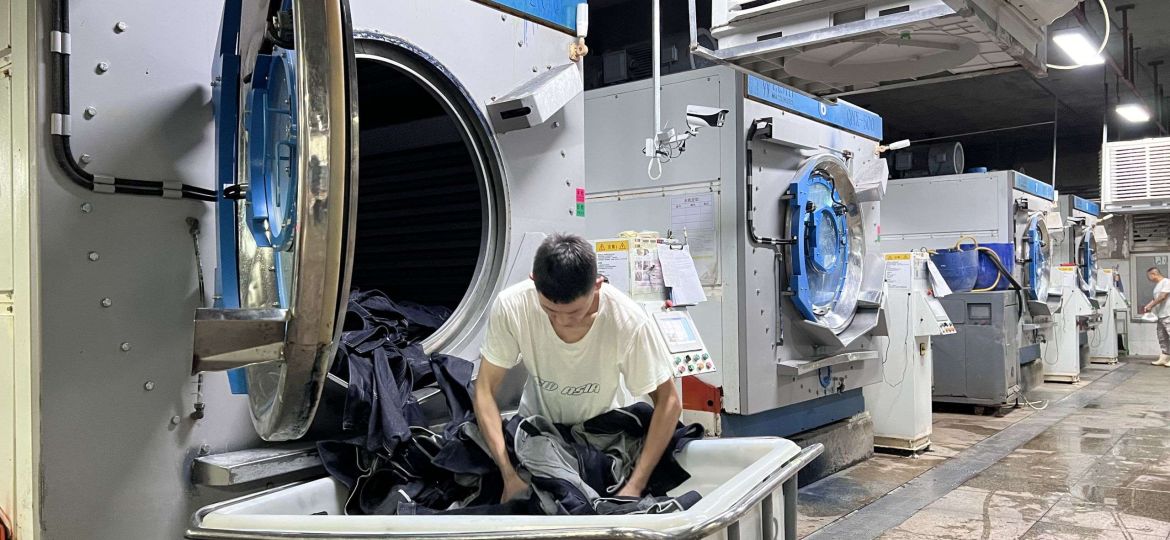
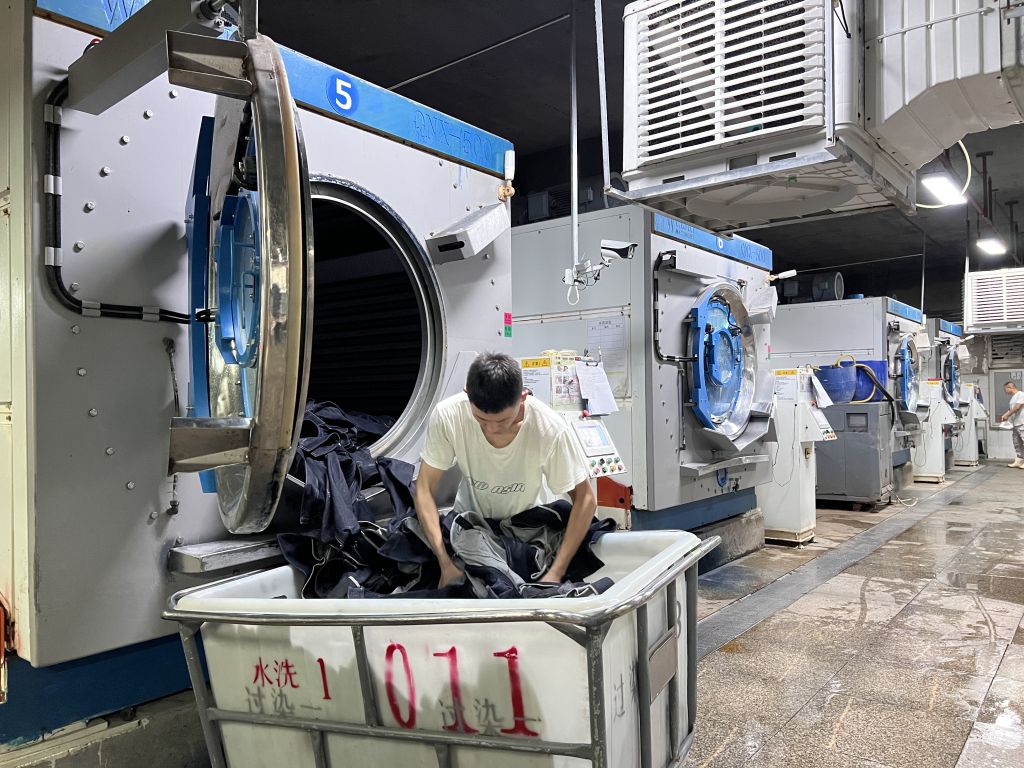
At Newasia Garment Co., Ltd., we reduce shrinkage risks through pre-washing and garment finishing processes used in professional denim production.
Why Do Jeans Expand or Shrink When Washed?
Jeans change size due to the natural behavior of cotton fibers, fabric construction, and finishing processes. When exposed to water, heat, and mechanical agitation, cotton fibers absorb moisture, swell, and then contract during drying. The presence of elastane, weave tension, and sanforization treatment further influences whether jeans shrink, stretch, or remain stable.
From a manufacturing perspective, higher cotton content increases shrinkage potential, especially under hot washing conditions. In contrast, stretch denim blends improve recovery but may lead to long-term looseness or “bagging”. Sanforization technology is widely used to pre-stabilize denim, limiting shrinkage to controlled levels of around 1–3%, while raw denim may shrink up to 10% without treatment.
Jeans change size due to the inherent properties of cotton fibers
Cotton fibers act like microscopic springs. When exposed to water, they swell, relax, and contract during drying, which leads to dimensional change. This fiber “memory” explains why 100% cotton raw denim behaves very differently from cotton-elastane blends.
Key Factors Influencing Dimensional Stability
Fiber Content:
- 100% Cotton (Raw/Unsanforized): Shrinkage can reach 5–10%
- Sanforized Denim: Controlled shrinkage of 1–3%
- Stretch Denim (e.g., 98/2 cotton-elastane): Shrinkage typically 1–2%, with higher recovery
Water Temperature & Agitation:
- Hot Water (>40°C): Accelerates fiber contraction and shrinkage
- Cold Water (<30°C): Preserves fiber structure and reduces dye loss
- Strong agitation: Can intensify “felting” and fabric tightening
Drying Method:
- Tumble drying (high heat): Increases shrinkage by an additional 2–5%
- Air drying: Reduces heat stress but may allow slight relaxation in stress zones
Sanforization & Finishing:
- Sanforized denim: Mechanically pre-shrunk for stability
- Raw denim: Retains natural shrink-to-fit behavior requiring sizing allowance
Dimensional Behavior Over Time
It is important to understand that denim size change is dynamic, not permanent in a single direction. While washing causes shrinkage, regular wear introduces fabric relaxation, leading to a natural stretch of approximately 1–3% in high-stress areas such as the waist, knees, and hips.
Balancing shrinkage from washing and stretch from wear is key to achieving long-term fit consistency.
How Much Will My Jeans Shrink or Stretch?
Shrinkage and stretch behavior varies significantly depending on fabric type, construction, and finishing methods. In general, raw unsanforized denim shows the highest dimensional change, while sanforized and stretch denim are engineered for improved stability.
From a manufacturing perspective, jeans may shrink or relax differently depending on both washing conditions and long-term wear behavior. Understanding these variations is essential for achieving consistent sizing and accurate fit development.
Typical Shrinkage & Stretch by Denim Type
| Denim Type / Fit | Initial Shrinkage | Long-Term Stretch | Notes |
|---|---|---|---|
| Raw / Unsanforized Denim | 8–10% | 1–3% | Classic shrink-to-fit behavior with high dimensional change potential |
| Sanforized Denim | 1–3% | 1–2% | Standard commercial denim with stable fit performance |
| Stretch Denim (e.g., 98/2 Cotton–Elastane) | <2% | 2–4% | High recovery but may develop slight “bagging” over time |
| Relaxed / Baggy Fits | 2–4% | 1–3% | Less noticeable dimensional change due to loose silhouette |
| Skinny / Tapered Fits | 3–5% | 1–3% | More sensitive to small circumference changes |
Fit Sensitivity & Design Considerations
Loose silhouettes such as baggy or relaxed fits tend to mask small dimensional changes, while fitted styles like skinny or tapered jeans are highly sensitive to even 1% variation in circumference. This makes accurate fabric control and pattern grading especially important during production.
Influence of Washing & Finishing Processes
Laundering methods play a key role in final garment performance:
- Hot washing & repeated cycles: increase shrinkage risk, especially in raw denim
- Cold washing: helps stabilize dimensions and reduce fabric stress
- Steam setting / industrial finishing: can “lock” garment dimensions for bulk consistency
- Sanforization: pre-stabilizes fabric, ensuring controlled shrinkage performance
At Newasia Garment , we apply strict fabric testing and finishing control to ensure dimensional consistency across production, helping brands maintain reliable sizing from sample development to bulk manufacturing.
Washing & Drying Methods to Minimize Denim Shrinkage and Stretch
1. Water Temperature:
- Cold (≤30°C / 86°F): Best for preserving dye and minimizing shrinkage.
- Warm (≈40°C / 104°F): Acceptable for heavyweight denim; may cause 1–2% shrinkage.
- Hot (>50°C / 122°F): Only for controlled shrinking of raw, unsanforized fabrics.
2. Detergents & Additives:
- Use pH-neutral, enzyme-free detergents for dark fabrics.
- Avoid bleach, optical brighteners, and softeners.
- White vinegar (1–2 cups) helps set indigo and soften fibers without damaging the fabric.
3. Mechanical Settings:
- Gentle wash cycles to reduce friction and fiber felting.
- Wash inside-out to protect fabric surface and hardware.
- Use reduced spin to minimize yarn stress.
4. Drying Methods:
- Flat Dry: Prevents gravity-induced stretching (especially at waistband).
- Hang Dry: Allows natural tapering of legs.
- Tumble Dry: Use low heat only, remove while damp, and reshape manually if needed.
5. General Tips:
- Cold, low-agitation washing can keep dimensional changes under 1%.
- Encourage spot-cleaning and extended wear between washes for long-term fit and sustainability.
How to Restore or Maintain the Perfect Fit for Jeans
Maintaining the ideal fit requires balancing fiber relaxation for comfort with controlled structure for aesthetics. Both pre- and post-wash strategies can help stabilize denim dimensions and extend garment life.
1. Mechanical Stretching Techniques
- Damp Stretch: Mist tight areas (waist, thighs), wear, and move (squats, lunges) to safely elongate fibers.
- Steam Relaxation: Apply heat and humidity to warm, damp denim; manipulate to target expansion.
- Waistband Expansion: Roll a damp towel inside the waistband overnight for gentle circumference increase.
2. Professional Alterations
- Waist Adjustments: Tailors can intake or let out the back rise seam for precision fit.
- Hemming: Best performed after 1–2 washes to account for vertical shrinkage.
- Reinforcement: Patch high-friction areas to prevent blowouts from over-stretching.
3. Pre-Wash Stabilization
- Salt Soak: Soak raw denim in a saline solution (≈2 cups salt) to set dye and reduce bleeding.
- Resin Finishing: Stabilizes fabric dimensions during production for consistent sizing.
- Sampling: Always test shrinkage on sample garments before bulk production.
Care Guidelines by Denim Style
| Style | Frequency & Method | Drying | Notes |
|---|---|---|---|
| Selvedge / Raw Japanese Denim | Wash rarely (6–12 months), cold soak or rinse | Hang by waistband | Protects selvedge ID and sharp fades |
| Baggy / Stacked Fits | Wash 30–40°C cycles | Hang dry to maintain natural folds | Mid-weight fabrics tolerate more frequent washing |
| Denim Jackets | Spot clean primarily | Reshape on hanger while damp | Shoulders and collars prone to misshaping |
| Shorts & Skirts | Short wash cycles (15–20 mins) | Lay flat to dry | Protect frayed hems and distress details |
At Newasia Garment Co., Ltd., we combine technical fabric expertise with precision garment finishing to ensure consistent fit and durability across all denim styles. By integrating pre-wash stabilization, tailored care instructions, and professional alterations, we help brands deliver premium-quality denim that maintains its shape and comfort over time.
How to Maintain Jeans Shape Longer
To extend denim lifespan:
- Avoid over-washing (wash every 5–10 wears)
- Store jeans folded, not hanging
- Choose quality denim with stable weaving density
- Select pre-shrunk garments from professional manufacturers
At Newasia Garment Co., Ltd., we apply strict quality control and fabric testing to ensure long-term stability of jeans after repeated washing cycles.
Why Brands Choose Newasia Garment Co., Ltd.
- Advanced denim washing technology
- Experienced technical pattern team
- Reliable OEM/ODM production capability
- Strict quality inspection system
- Strong global brand partnerships
- Scalable production capacity
From fabric development to final garment finishing, we help brands deliver high-quality denim products with predictable performance after washing.
About Newasia Garment Co., Ltd.
Newasia Garment Co., Ltd. is a professional denim manufacturer specializing in:
- Jeans OEM & ODM production
- Denim pattern making
- Sample development
- Fabric testing & washing processes
- Bulk garment manufacturing
- Quality control systems
We work closely with international fashion brands and retailers, including:American Eagle Outfitters,Uniqlo,Zara,Gap
,Levi’s,Lee.
Our production systems are designed to ensure:
- Stable sizing
- Controlled shrinkage
- High durability
- Consistent global quality standards
Frequently Asked Questions
Q1:Why do my jeans feel tighter after washing?
This is usually due to cotton fiber contraction and moisture-induced shrinkage.
Q2:How do I prevent jeans from shrinking?
Wash in cold water, avoid high heat drying, and choose pre-sanforized denim.
Q3:Do stretch jeans shrink or stretch more over time?
They typically stretch with wear, especially in high-movement areas.
Q4:Are raw denim jeans supposed to shrink?
Yes, raw denim can shrink significantly after the first wash unless pre-soaked.
Conclusion
Jeans can both shrink and expand depending on fabric type, construction, and washing methods. Understanding these changes is essential for both consumers and fashion brands.
With professional manufacturing and finishing techniques, Newasia Garment ensures denim products maintain stable fit and long-term durability after washing.
If you are looking for a reliable denim manufacturer for OEM or ODM production, Newasia Garment is ready to support your next collection with industry-leading expertise.
Read more