

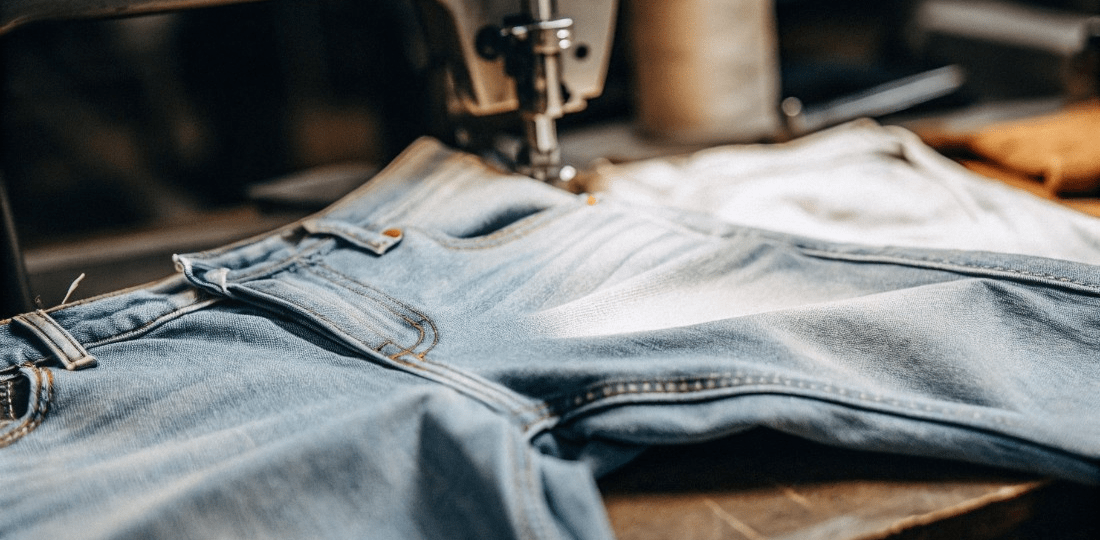
One of the most common issues people experience with denim garments is premature wear in the crotch area. This problem not only affects comfort and appearance but also reflects the overall quality of fabric selection, garment construction, and manufacturing processes.
At Newasia Garment Co.,Ltd., we specialize in premium denim manufacturing and have long-term experience producing high-quality jeans for global fashion brands such as American Eagle Outfitters, Uniqlo, Zara, Gap, Levi’s, and Lee. Based on our production expertise, we understand exactly why this issue happens—and how professional manufacturing can prevent it.
Why garments wear out quickly
Even the best-looking clothes can fail prematurely if the design and material choices don’t account for real-world stresses. Common points of wear include:
- High-friction areas – places like underarms, inner thighs, and elbows experience constant rubbing.
- High-tension areas – seams, closures, and stretch zones undergo frequent pulling during movement.
- Material limitations – lightweight fabrics can show wear faster, while heavier, high-quality fabrics resist stress better.
At Newasia, we analyze these stress points during every stage of production. By identifying “ground zero” for wear in a garment, we can engineer solutions that enhance durability without sacrificing style.
Dive Deeper: The Two Forces Behind Garment Wear
| Force | Description | Impact on Garments |
|---|---|---|
| Friction | Constant rubbing of fabric surfaces against each other or the body | Causes fibers to thin, fuzz, and eventually tear |
| Tension | Pulling and stretching of fabric during movement | Stresses seams and weak points, potentially causing splits or rips |
How to evaluate a factory’s workmanship
Evaluating a garment manufacturer like Newasia Garment Co.,Ltd. is essentially assessing how they manage “detail engineering” across their production process.
Four key dimensions matter:
| Dimension | Indicators | Significance |
|---|---|---|
| Fabric control | Consistency in weight, feel, and composition | Determines baseline durability |
| Sewing craftsmanship | Reinforced seams, double stitching, overlocking | Ensures structural integrity |
| Pattern engineering | Consideration of movement allowance | Determines lifespan under stress |
| Quality control | Inspection procedures, sampling or full inspection | Ensures consistency across batches |
The real gap between factories isn’t “can they produce” but “can they systematically control errors and maintain quality.”
The Two Villains: Friction and Tension
Understanding friction and tension is key to knowing why denim blowouts occur—they often work together to destroy the fabric.
| Force | What It Is | How It Affects Denim |
|---|---|---|
| Friction | Rubbing motion between your thighs with every step | Acts like sandpaper, wearing down cotton fibers until they thin, fuzz, and eventually break |
| Tension | Pulling force when you sit, squat, or lift your legs | Stretches weakened fibers to their breaking point, causing seams to burst or fabric to rip |
Key Insights:
- 100% cotton, non-stretch denim that’s too tight is highly prone to tension-related failure.
- Stretch fabrics help reduce tension but may wear faster from friction if the fibers are less durable.
- The ideal pair of jeans balances fit, fabric, and construction to withstand both friction and tension.
How to Fix and Prevent Crotch Wear on Jeans
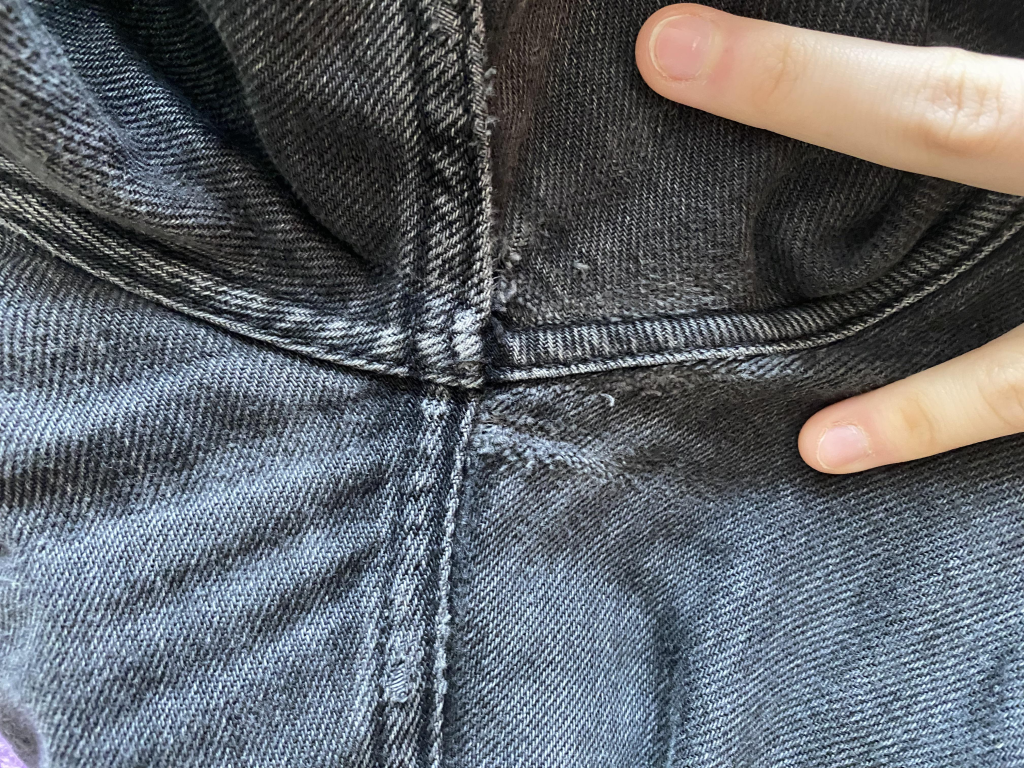
Discovering thinning fabric or a small hole in your jeans’ crotch is frustrating—but you don’t have to throw them out. With a few simple techniques, you can reinforce worn areas and extend the life of your favorite pair.
1. Repairing Crotch Wear
Materials Needed:
- Iron-on denim patch (slightly larger than the worn area)
- Matching thread
- Sewing machine (optional, for darning)
Step-by-Step:
- Turn Jeans Inside Out – This protects the exterior look.
- Apply Iron-On Patch – Place the patch over the worn area and adhere with a hot iron. This reinforces the weak fabric.
- Darn for Strength – Using a sewing machine, sew back and forth over the patch and surrounding fabric. This integrates the patch and prevents further fraying.
Tip: The goal is not just to cover the hole but to support the surrounding weak fabric for a long-lasting repair.
DIY vs. Professional Repair
- DIY: Works well for small holes (<½ inch) or minimal wear. Quick, easy, and effective.
- Professional: Necessary for large holes or seam blowouts. Tailors can rebuild the crotch using specialized machines, often making the repair nearly invisible.
2. Preventing Crotch Blowouts
Key Factors for Durability:
- Fit Matters – Jeans that are too tight in the seat or thighs are more likely to wear out. Consider sizing up or switching to a more relaxed cut.
- Fabric Weight – Heavier denim (14oz or more) resists friction better than lighter-weight fabrics.
- Gusseted Crotch – A diamond-shaped panel sewn into the crotch relieves tension, allowing more movement without stressing the seams.
- Reinforced Seams – Felled seams (where raw edges are folded and stitched down) are stronger than standard overlocked seams.
Tip: Even an extra half-inch of room can dramatically reduce wear.
3. Stopping Wear Before It Starts
Early Detection & Reinforcement:
- Inspect Regularly – Check after every few wears for fading, fuzziness, or thinning.
- Apply a Thin Internal Patch – Do this as soon as wear appears; the patch absorbs friction and protects the original fabric.
- Rotate Jeans – Avoid wearing the same pair every day. Cotton fibers need time to recover.
- Wash Less, Hang Dry – Frequent washing and high heat weaken fibers. Washing only when necessary and air-drying preserves durability.
Analogy: Think of the patch like a screen protector—it prevents damage before it becomes a problem.
Quick Reference Table: Proactive Denim Care
| Action | Timing | Benefit |
|---|---|---|
| Inspect Regularly | After a few wears | Detect thinning/fuzziness early |
| Apply Internal Patch | At first sign of wear | Protects original fabric |
| Rotate Jeans | Daily rotation | Prevents fiber fatigue |
| Wash Less & Hang Dry | Only when needed | Minimizes friction and heat damage |
How to improve garment durability
If we think of a garment as a “structural system under stress,” durability can be engineered.
Factories improve garment strength in several ways:
- Reinforcing high-stress areas (patches, lining)
- Using higher-density stitching to prevent seam failure
- Optimizing pattern ease for reduced tension
- Pre-shrinking fabrics to minimize distortion
For a manufacturer like Newasia Garment Co.,Ltd., especially in OEM/ODM production, durability is often defined by the client’s quality requirements as much as by the factory’s technical capabilities.
How Fabric Quality Impacts Denim Durability
One of the biggest differences between premium jeans and low-quality jeans is the fabric itself.
High-quality denim uses:
- Stronger cotton fibers
- Better yarn density
- Advanced weaving techniques
- Improved stretch recovery
- Durable dyeing and finishing processes
Professional jeans manufacturers carefully select fabrics that can withstand repeated friction without losing structural integrity.
This is why trusted denim factories play a critical role in product performance.
Frequent Washing Weakens Denim Fibers
Many consumers unknowingly damage their jeans through incorrect washing methods.
Hot water, aggressive detergents, and high-temperature drying gradually weaken cotton fibers and accelerate fabric fatigue.
Overwashing also removes natural fiber oils that help maintain flexibility.
To reduce crotch wear, denim experts recommend:
- Washing jeans less frequently
- Using cold water
- Turning jeans inside out
- Avoiding high heat drying
- Air drying when possible
Premium denim brands often advise customers to wash jeans only when necessary to preserve both appearance and durability.
Can You Repair Worn-Out Jean Crotches?
Yes — depending on the damage level.
Common repair methods include:
- Denim Patching
- Adding reinforcement fabric inside the jeans.
- Darning
- Using stitching techniques to rebuild damaged areas.
- Seam Reinforcement
- Strengthening weak inseams before holes appear.
Professional denim repair can significantly extend jean lifespan.
Body Shape and Daily Activity Matter
Not all denim wear patterns are caused by manufacturing quality.
Body shape and lifestyle significantly influence crotch abrasion.
People who:
- Walk long distances
- Ride bicycles frequently
- Work physically demanding jobs
- Have stronger thigh contact
may experience faster wear regardless of jean quality.
This is why some consumers wear through jeans within months while others keep the same pair for years.
Understanding customer wear behavior is an important part of denim product development for modern apparel brands.
Why Global Brands Trust Newasia Garment Co.,Ltd.
As an experienced denim manufacturer, Newasia Garment Co.,Ltd. focuses on combining comfort, durability, and international production standards.
The company has extensive experience working with globally recognized brands such as American Eagle Outfitters, Uniqlo, Zara, Gap, Levi’s, and Lee. These partnerships reflect Newasia’s ability to meet strict quality requirements, maintain reliable delivery schedules, and support large-scale production demands.
Newasia provides:
- High-quality denim sourcing
- Advanced washing and finishing techniques
- OEM & ODM jeans manufacturing
- Strict quality control systems
- Flexible production capabilities
- Professional product development support
By focusing on fabric durability and precision craftsmanship, Newasia helps fashion brands create jeans that last longer and perform better in everyday wear.
Conclusion
The crotch of jeans wears out primarily because of friction, fabric stress, fit issues, and construction quality.
While no jeans last forever, understanding how denim is made can help consumers choose longer-lasting products and help brands develop more durable collections.
For apparel brands and denim buyers, manufacturing expertise plays a major role in product performance.
Newasia Garment Co.,Ltd. continues to support global fashion brands with professional denim manufacturing solutions focused on durability, quality control, and modern denim innovation.
Read more
- How to Investigate a Garment Quality Claim: From Symptom to Root Cause and CAPA
- Garment Packaging Quality Control: Preventing Creases, Print Damage and Shape Distortion
- How to Validate Pocket Function and Placement Before Bulk Production
- How to Standardize Fabric Hand Feel Across Production Lots
- Movement Fit Testing for Apparel: How to Check Ride-Up, Slippage, and Range of Motion