

Introduction
Frequently, when exploring high-performance workwear and tactical outerwear, you will encounter the term “ripstop” fabric technology.
Ripstop is a specialized weaving technique designed to enhance fabric durability. Contrary to common belief, it does not completely prevent tears from occurring. Instead, it is engineered to limit the spread of tears once they begin.
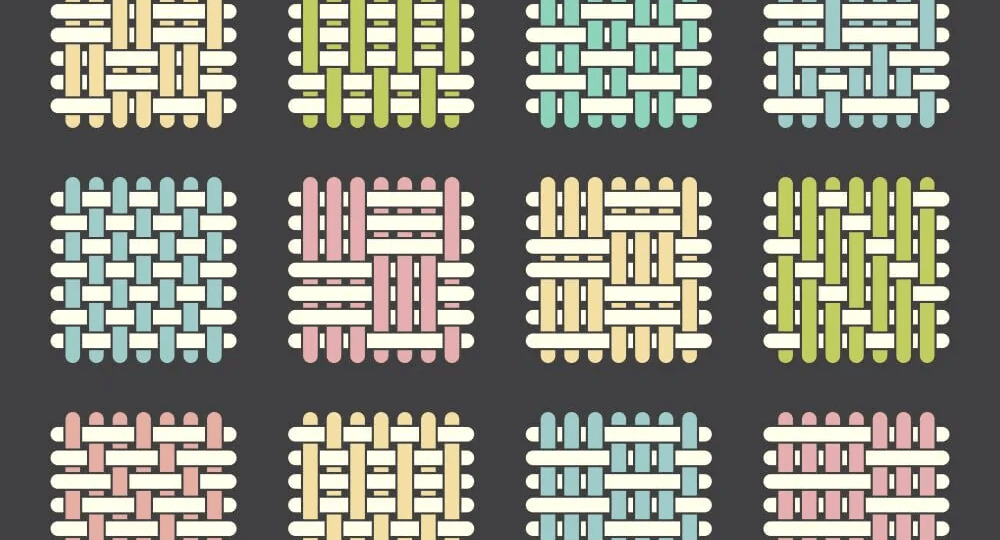
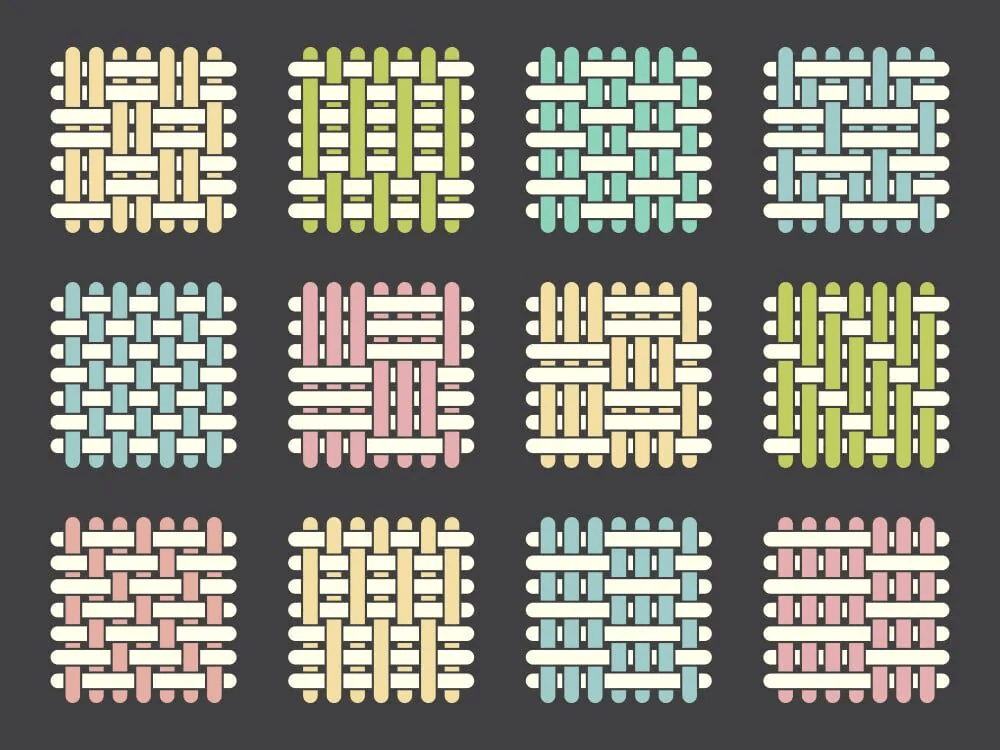
In technical terms, ripstop weaving incorporates thicker reinforcement yarns at regular intervals, forming a crosshatch structure within the fabric. If a tear starts, it is contained within one section and prevented from expanding further due to these reinforced grid lines.
This makes ripstop ideal for workwear jackets used in demanding environments—such as construction, logistics, and outdoor industries—where accidental snagging or abrasion can occur and where garment failure must be minimized during active use.
Newasia Garment Co., Ltd. is a trusted OEM/ODM workwear jacket manufacturer with over 39 years of experience producing high-performance industrial and outdoor garments for internationally recognized brands, including American Eagle Outfitters, Uniqlo, Zara, Gap, Levi’s, and Lee. We specialize in integrating ripstop weaving technology into durable workwear jackets designed for the UK climate and demanding work environments.
We offer a full suite of customization options for brands, from ripstop fabric selection (nylon-cotton blends, polyester-cotton, waterproof and reinforced variants) and structural reinforcement design to fit, functionality, and branding details. Our expertise ensures you receive ripstop-enhanced workwear jackets that deliver tear resistance, long-term durability, protection, and industrial-grade performance ready for global distribution.
What Is Ripstop Fabric and Why It Matters in Performance Wear?
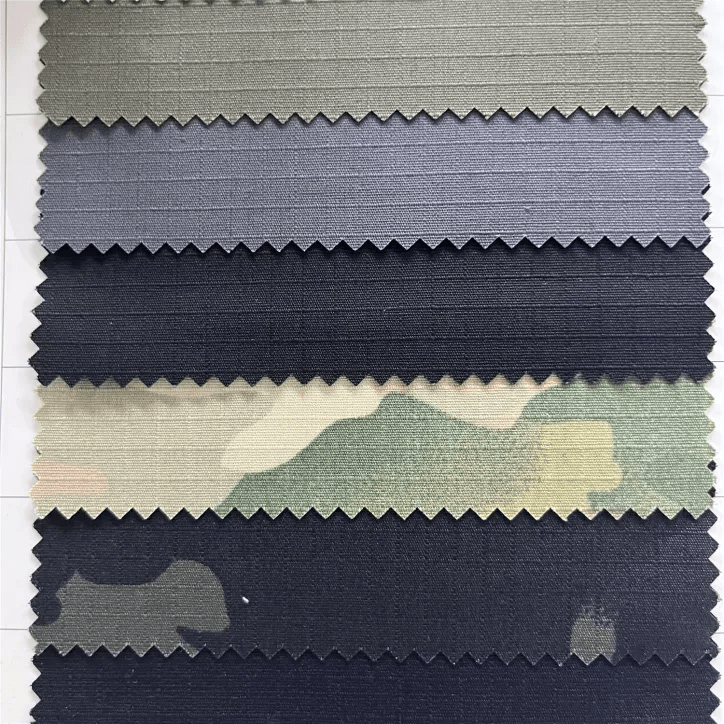
Ripstop is a technical woven fabric distinguished by its grid-like weave pattern, where thicker reinforcement yarns are interwoven at regular intervals. This pattern helps stop small tears from spreading—hence the name “rip-stop.”
Originally developed for military and parachute applications, ripstop has evolved into a key textile in performance outerwear, uniforms, and utility wear. Depending on the fiber used—nylon, polyester, cotton blends, or T400 spandex—ripstop fabrics can offer a wide range of benefits:
- Tear and abrasion resistance
- Water repellency and stain resistance
- Breathability
- Mechanical stretch (when using spandex or T400)
- Colorfastness and wash durability
For workwear applications, fabrics such as this 220gsm T400 spandex ripstop offer both flexibility and ruggedness, making them suitable for uniforms requiring stretch and structure.
What Is Ripstop Weaving Technology?
Ripstop weaving technology is a specialized textile construction method designed to prevent tearing and limit the spread of fabric damage.
It works by integrating reinforcement yarns at regular intervals within a base weave structure, forming a visible grid pattern that significantly enhances fabric durability.
This technology is widely used in workwear, outdoor apparel, military garments, and industrial textiles.
Ripstop Weaving Technology
Ripstop weaving technology is a specialized textile engineering method designed to enhance fabric durability by integrating reinforced yarns into a standard weave structure. It is widely used in outdoor, military, aerospace, and performance apparel textiles.
Below are the key elements and stages of ripstop weaving technology:
1. Yarn Selection
The process begins with selecting appropriate base and reinforcement yarns.
- Base yarns: Usually lightweight fibers such as nylon, polyester, or cotton, chosen for comfort, flexibility, and breathability.
- Reinforcement yarns: Stronger, thicker filaments (often high-tenacity nylon or polyester) that provide tear resistance.
The combination determines the fabric’s strength, weight, and functional performance.
2. Weave Structure Design
Ripstop technology relies on a grid-pattern reinforcement structure.
- Reinforcement yarns are inserted at regular intervals (e.g., every 5–8 mm) in both warp and weft directions.
- This creates a crosshatch or checkerboard pattern within the fabric.
- The structure is engineered so that if a tear starts, it is blocked by the reinforced grid and does not spread easily.
3. Weaving Process
The fabric is produced using looms (such as shuttle looms, air-jet looms, or rapier looms).
- Base yarns form the main plain weave or twill structure.
- Reinforcement yarns are inserted periodically during weaving.
- Precise control systems ensure consistent spacing and alignment of the reinforced grid.
4. Density Control & Calibration
During production, manufacturers adjust:
- Yarn spacing (grid size)
- Fabric density (GSM – grams per square meter)
- Tension and weaving speed
This step ensures uniform strength distribution and prevents weak points in the fabric.
5. Inspection & Quality Testing
After weaving, ripstop fabrics undergo strict quality checks:
- Tear propagation tests
- Tensile strength tests
- Abrasion resistance evaluation
- Visual inspection of grid consistency
Only fabrics that meet performance standards proceed to finishing.
6. Post-Weaving Finishing
The woven fabric is then enhanced with finishing treatments such as:
- DWR (Durable Water Repellent) coatings for water resistance
- PU (polyurethane) coatings for waterproofing
- Anti-UV, anti-mildew, or flame-retardant treatments depending on use
7. Cutting & Application Processing
Finally, the fabric is:
- Re-tested in some cases for application-specific performance
- Cut into rolls or panels
- Processed into end products such as jackets, tents, backpacks, parachutes, and tactical gear
Key Advantages of Ripstop Weaving Technology
| No. | Advantage | Description | Key Benefit |
|---|---|---|---|
| 1 | Tear Resistance | The reinforced grid structure prevents small punctures or cuts from spreading across the fabric. | Damage containment and improved durability |
| 2 | Lightweight Strength | Combines low weight with high tensile strength, making it stronger without adding bulk. | Ideal for mobility and performance-focused applications |
| 3 | Cost Efficiency Over Time | Higher initial cost is offset by reduced replacement frequency and lower maintenance needs. | Long-term savings and durability value |
| 4 | Versatility Across Industries | Suitable for a wide range of uses including workwear, outdoor gear, military uniforms, bags, backpacks, and tents. | Multi-industry adaptability and broad application range |
The Origins of Ripstop Fabric
Developed during World War II, ripstop fabric was initially used for military parachutes. Over time, its lightweight strength made it a preferred choice for tactical gear, outdoor equipment, and more.
Key Benefits of Ripstop Fabric
- Durability: Reinforced grid pattern prevents rips from spreading.
- Lightweight: Ensures ease of movement without sacrificing strength.
- Water Resistance: Many versions are treated to repel moisture.
- Versatility: Used in clothing, gear, and military equipment.
Why Ripstop Is Widely Used in Industrial Apparel
Ripstop weaving is not only about strength—it is about performance optimization.
It is widely used in:
- Workwear jackets
- Tactical uniforms
- Outdoor hiking apparel
- Industrial protective clothing
Manufacturing Challenges & Solutions (Newasia Garment Co., Ltd.)
| No. | Manufacturing Challenge | Impact on Fabric Quality | Newasia Garment Co., Ltd. Solution | Result / Benefit |
|---|---|---|---|---|
| 1 | Yarn Tension Consistency | Uneven tension leads to weak grid alignment and reduced tear resistance | Automated tension control systems, real-time sensor monitoring, and regular loom calibration | Stable yarn feeding and consistent ripstop grid strength |
| 2 | Reinforcement Interval Accuracy | Small spacing errors weaken tear-blocking performance | Computer-controlled looms, digital pattern programming, and in-process inspection systems | Precise grid structure with reliable tear resistance |
| 3 | Fabric Shrinkage Control | Shrinkage may distort grid structure after washing or usage | Pre-shrinking treatment, heat-setting stabilization, and controlled finishing tests | Maintains dimensional stability and grid integrity |
| 4 | Weaving Machine Calibration | Improper settings affect dual-yarn (base + reinforcement) weaving quality | Specialized loom configuration, routine maintenance, and skilled technician adjustment | Smooth weaving process and reduced production defects |
Advantages and Disadvantages of Ripstop Fabric
Like any other fabric, ripstop fabric also has both its pros and cons. Below is a comparison table that helps you evaluate it more easily.
| Advantages | Disadvantages |
| Highly tear-resistant due to reinforced grid weave | Limited stretch unless blended with elastane |
| Lightweight yet strong, ideal for outdoor gear | Can feel stiff or crisp, especially when new or coated |
| Can be finished with waterproof, UV, or mildew-resistant coatings | Not naturally waterproof; coatings wear off over time |
| Versatile for military, industrial, and fashion uses | Finishes (like DWR) degrade with washing and exposure |
| Packs down easily, great for travel gear | High-quality ripstop can be more expensive than basic fabrics |
| Distinctive technical look adds style in outdoor and urban wear | Some versions may lack breathability, especially when coated |
Future Trends in Ripstop Weaving Technology
The industry is evolving fast, with innovations such as:
- Sustainable ripstop (recycled polyester)
- Bio-based coatings
- Ultra-light high-strength fibers
- Smart fabrics with embedded sensors
Why Choose Newasia Garment Co., Ltd.
In the field of technical textile and industrial apparel manufacturing, consistency and engineering capability are critical.
Newasia Garment Co., Ltd. is a professional garment manufacturer specializing in functional and durable workwear solutions.
Advanced Fabric Development Capability
Newasia provides integrated solutions for ripstop-based garments:
- Fabric selection and sourcing
- Custom ripstop density development
- Industrial garment engineering
- Mass production quality control
OEM & ODM Expertise
We support full-cycle development:
- Technical design optimization
- Sample development
- Bulk manufacturing
- Quality assurance systems
Our focus is not only production, but performance-driven garment engineering.
Certified Professional Clothing Producer
We are very proud of these certificates! They represent Newasia Garment Co.,Ltd. ’s amazing achievements and accreditations. They show how much we care about quality, safety, and professionalism.
We’re proud to say that we have obtained BSCI and ISO 90001 certificates, and inspection certificates for filling materials such as down and cotton. We follow international standards throughout our production process and take responsibility for the quality of our products.
As one of China’s leading clothing manufacturers, we are pleased to be recognized by respected organizations. These certifications underscore our reliability as a trusted supplier to the global apparel industry.
Trusted Certificates:


Why Choose Us
 Independent base We have our own laboratory and can independently develop fabrics , China  Professional certification Certification: ISO 9001, ISO 14001,BSCI,GRS |  Full-equipped Full-equipped, from fiber manufacturing, yarn spinning, weaving, dyeing and processing to finished product production  Rich experience Professional, large and experienced design team, combined with the latest artificial intelligence technology |  Our Facilities 12,000 skilled employees, daily production capacity exceeds 100,000 pieces  Fashion exhibition Participated in domestic and foreign fashion weeks and exhibitions many times |
Trusted by Global Clients









How Do We Guarantee the Quality
Our quality assurance begins with designing and planning, then continues through every step of the production and post-production inspections. Delivery is not an ending. We still offer money-back guarantee for quality issues.
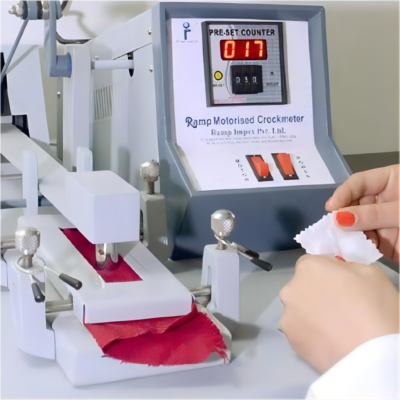
When sourcing fabrics, we will check all related fabric certificates from our suppliers.
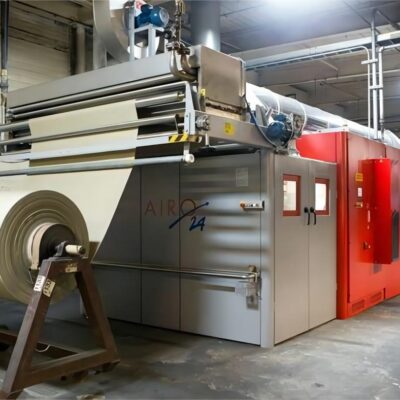
We make sure the fabric is well pre-washed to meet the standards before cutting.
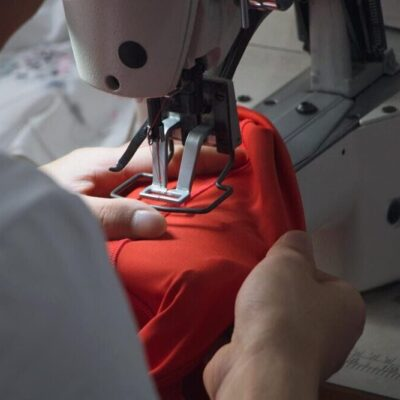
All our workers are well-trained and have many years of experience in the garment industry. They are all local workers with high stability.
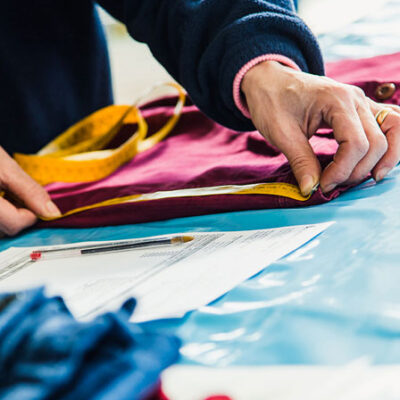
Our quality team will follow SOPs to conduct five times of quality checks before shipping.
Frequently Asked Questions
Q1: What is your Minimum Order Quantity (MOQ)?
We specialize in flexible production solutions to support emerging brands and growing businesses.
You can mix colors and sizes within the same style and fabric for greater flexibility.
For highly customised or technical garments (such as specialised denim washes or intricate embroidery), MOQ requirements may range from 200 to 300 units.
Our standard MOQ ranges from 100 to 300 units per design, depending on fabric availability and production complexity.
For best pricing efficiency, MOQ is typically based on 300 per style per colour.
Q2: What Services Do You Offer?
We provide full-cycle fashion support, including:
Sustainability Consulting: Eco-fabric sourcing, ethical production planning.
Sourcing: Local and global raw material, fabric R&D, and procurement (trims) with cost optimization.
Manufacturing: Custom manufacturing with quality control checkpoints.
Design & Development: Assistance with tech packs, trend research, and collection building.
Logistics: Shipping coordination to your warehouse or 3PL.
Q3: Can I Customize My Designs Fully?
We work with both OEM (your design, our production) and ODM (our templates customized for you) models. Customization options include:
Labels, hangtags, branded packaging
Fabric type and color
Fit and sizing
Printing (screen, DTG, sublimation, embroidery)
Accessories (zippers, buttons, cords)
Q4: What are your sustainability practices?
We’re committed to responsible manufacturing through:
Energy-efficient production technology
Waste reduction programs and ethical labor practices (BSCI certified)
GOTS-certified organic cotton and recycled material options
OEKO-TEX® certified dyes and processing
Q5: What Are Your Lead Times?
For in-stock items: ships worldwide within 3–7 days For custom orders: production lead time 15–30 days Urgent / Express Options: Available at a premium. Timing can vary depending on fabric development, approval cycles, and order complexity.
Q6: What is your production capacity?
Our facility employs 12,000 skilled employees, daily production capacity exceeds 100,000 pieces. We handle orders from 100 pieces to 50,000+ units across:
Technical apparel
Activewear and sportswear
Denim and casual wear
Children’s clothing
Q7: Where are your garments produced?
Our headquarters are based in China, where we operate our own vertically integrated factory. Our infrastructure and strategically placed worldwide manufacturing facilities allow us to offer extremely competitive pricing for fully custom clothing. offer flexible production options tailored to your needs. All manufacturing is supervised by our quality control team to ensure consistent standards
Conclusion
Ripstop weaving technology is not just a fabric trend—it’s a proven solution for improving durability, reducing long-term costs, and enhancing product performance.
Whether you’re a brand owner, sourcing manager, or distributor, understanding ripstop helps you:
- Make better purchasing decisions
- Reduce risk
- Deliver higher-quality products to your customers
📩 Looking for Reliable Ripstop Fabric or Workwear Solutions?
If you’re sourcing:
- Ripstop fabrics
- Reinforced workwear
- OEM/ODM production
👉 Contact us for samples, technical specs, and customized solutions tailored to your market.
Read more: Ripstop Weaving Technology: Structure, Performance, and Industrial Applications
- How to Investigate a Garment Quality Claim: From Symptom to Root Cause and CAPA
- Garment Packaging Quality Control: Preventing Creases, Print Damage and Shape Distortion
- How to Validate Pocket Function and Placement Before Bulk Production
- How to Standardize Fabric Hand Feel Across Production Lots
- Movement Fit Testing for Apparel: How to Check Ride-Up, Slippage, and Range of Motion