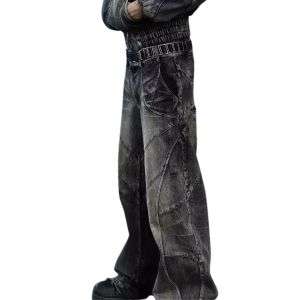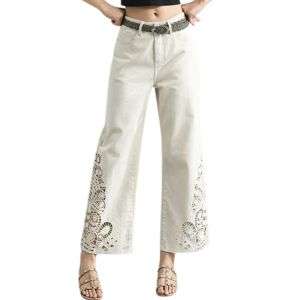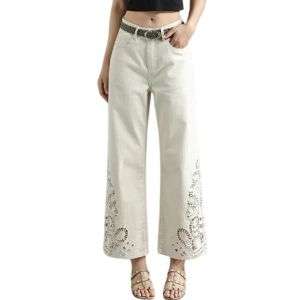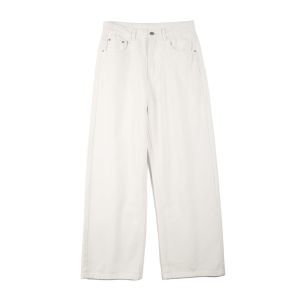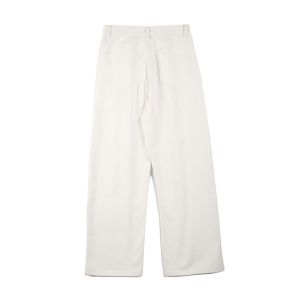

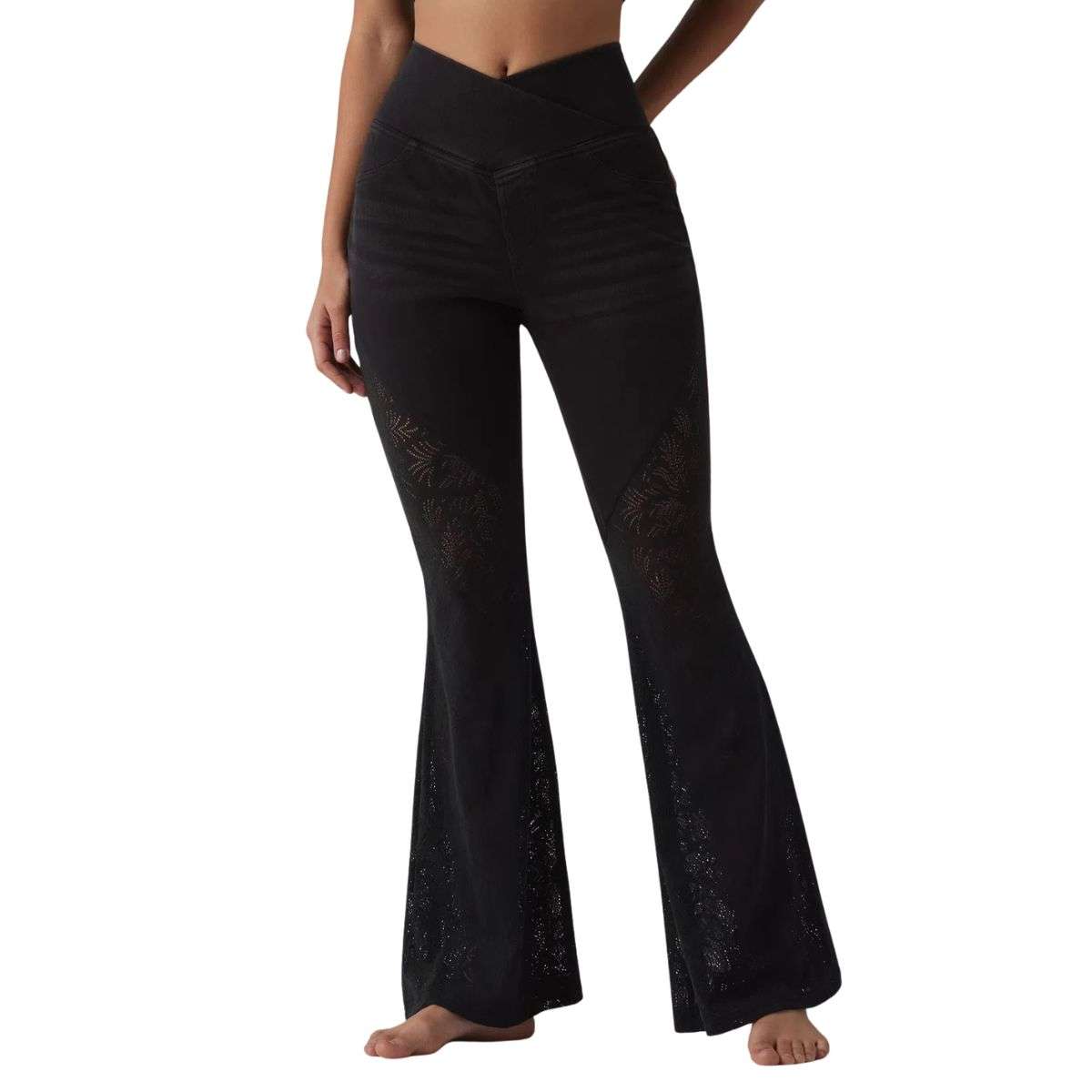
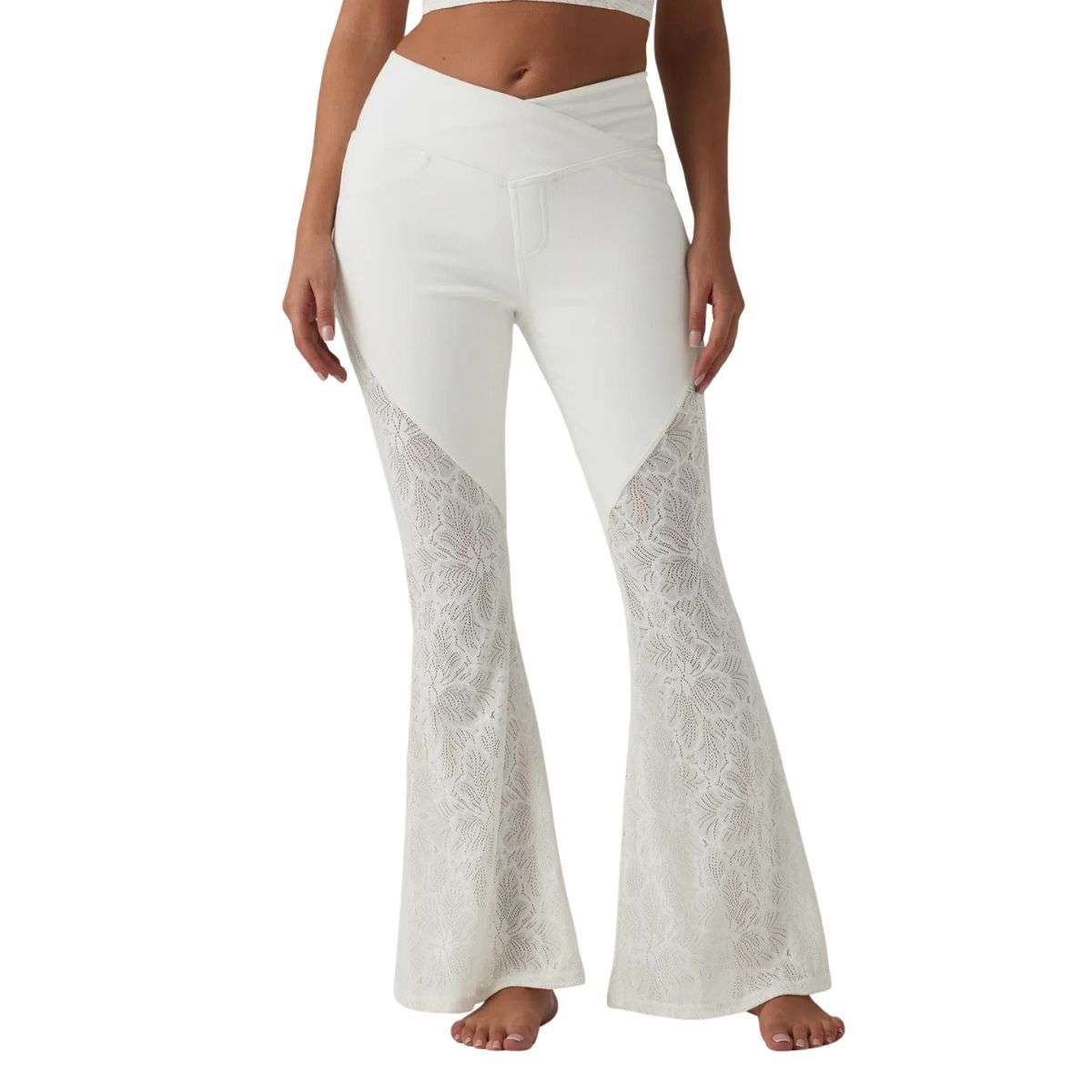
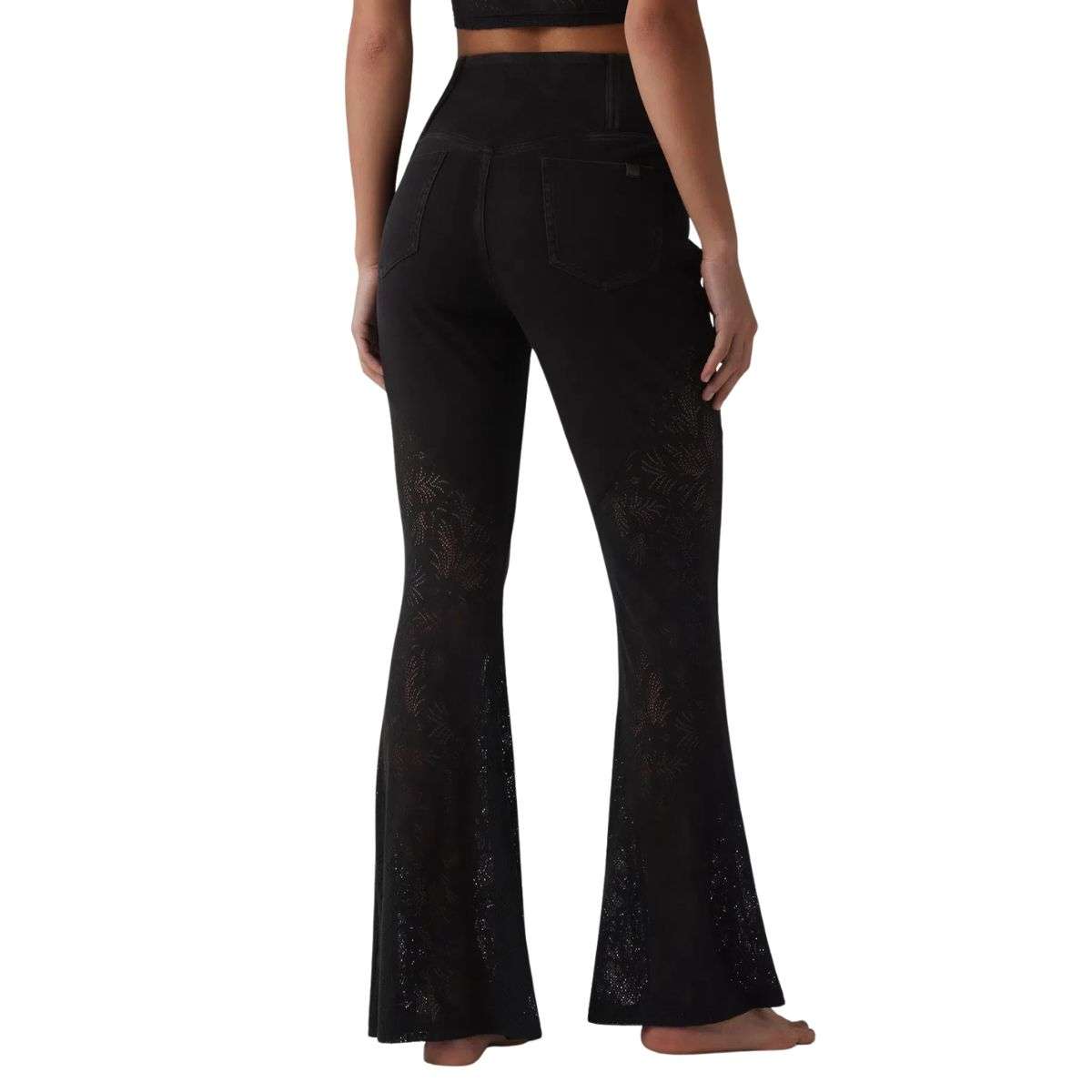
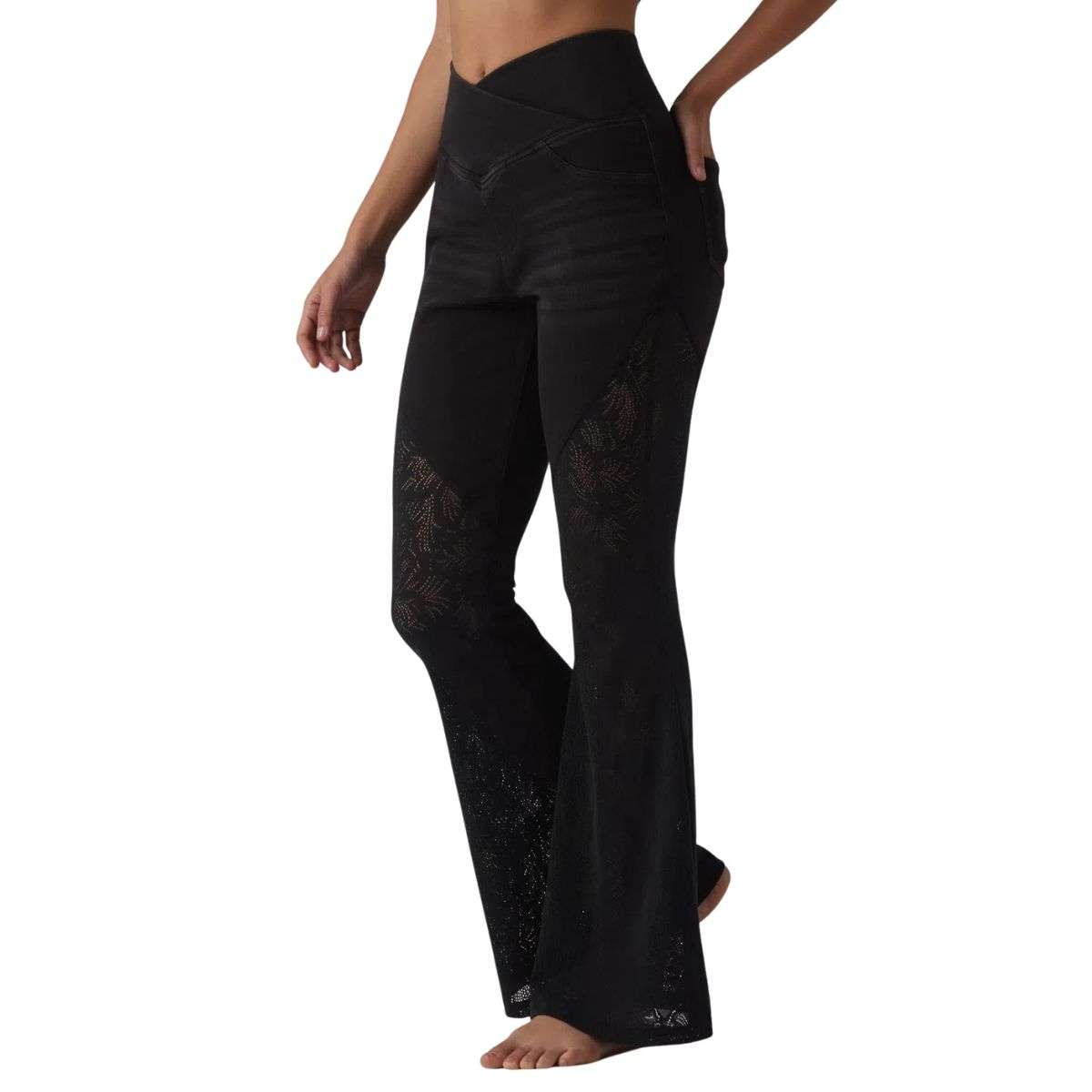
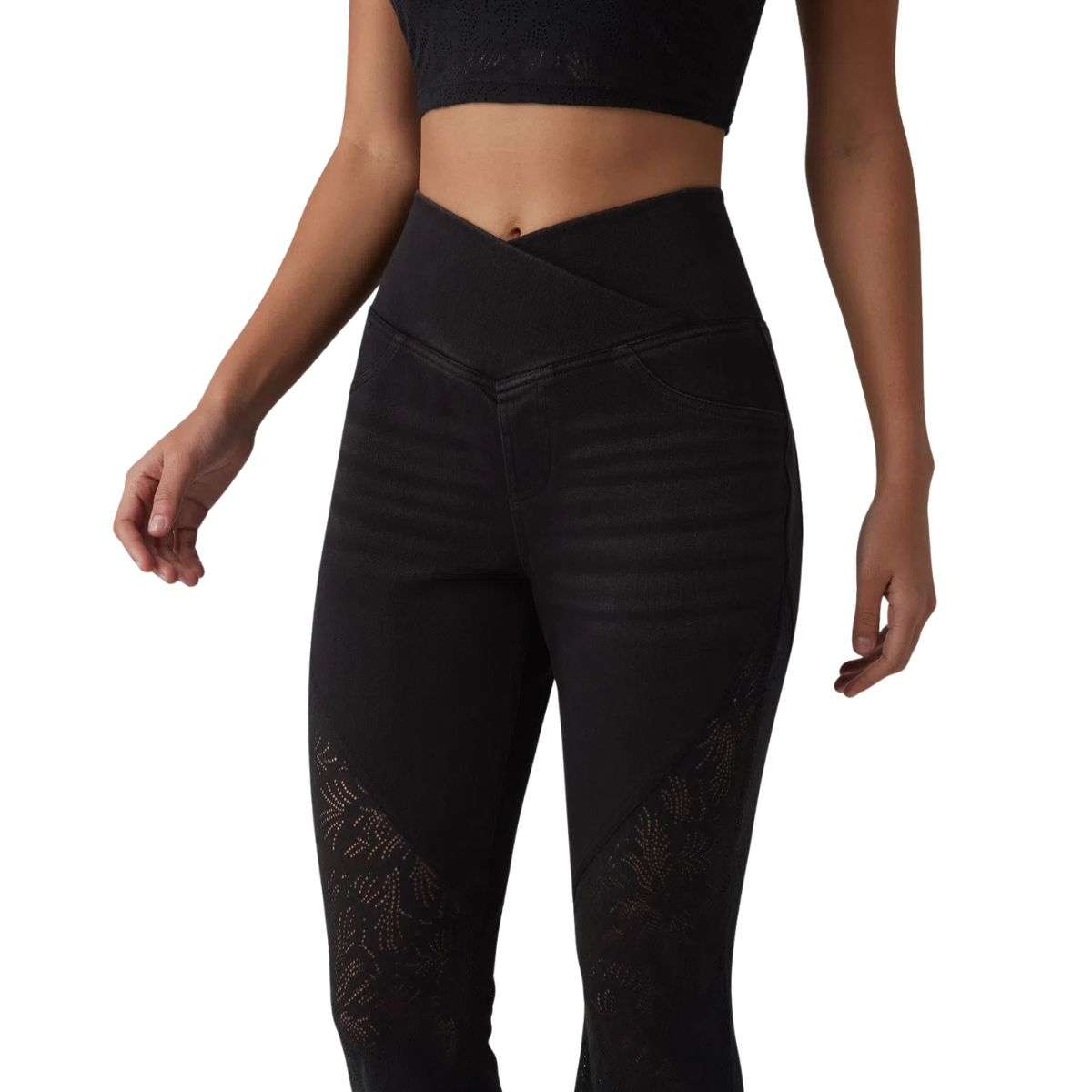
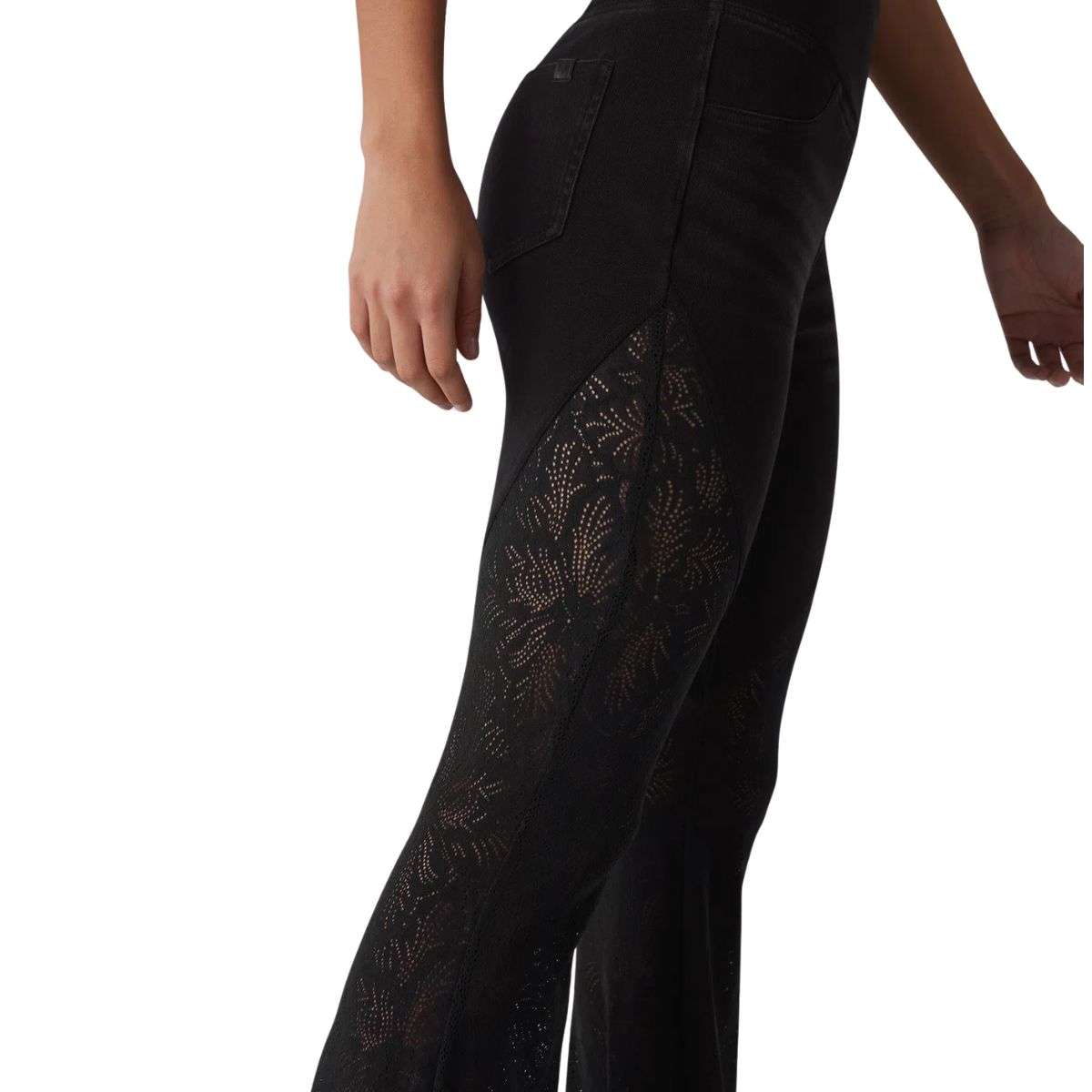
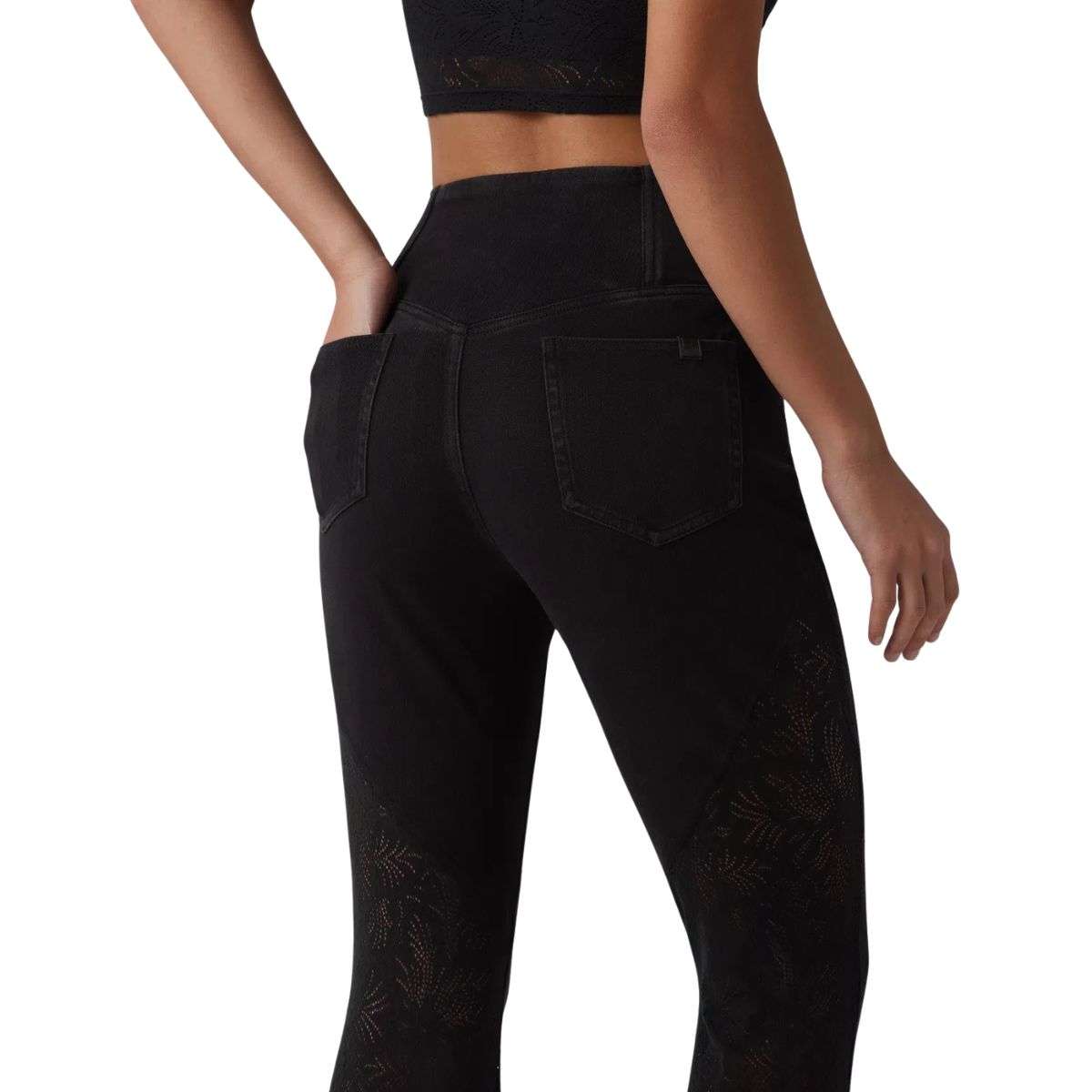
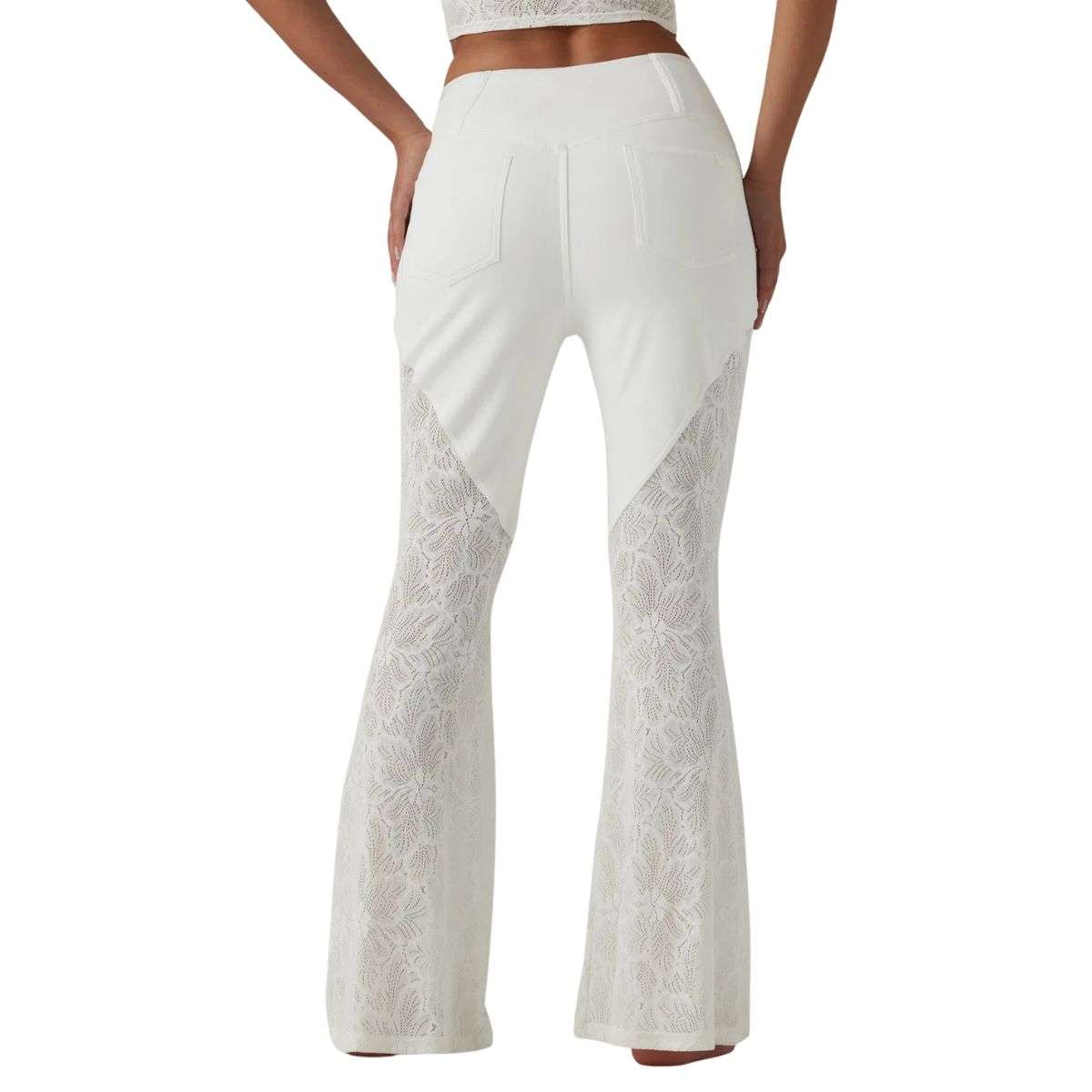
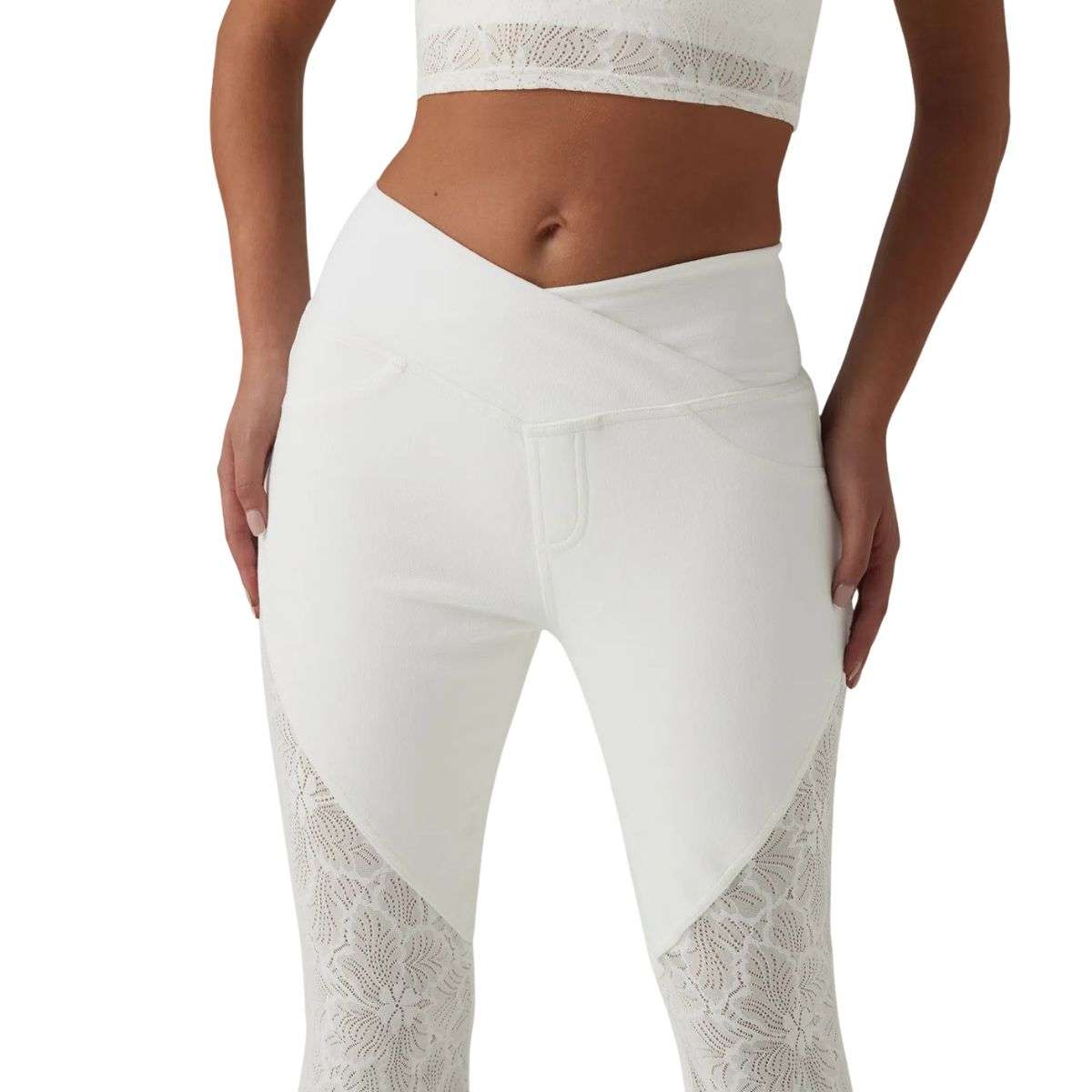
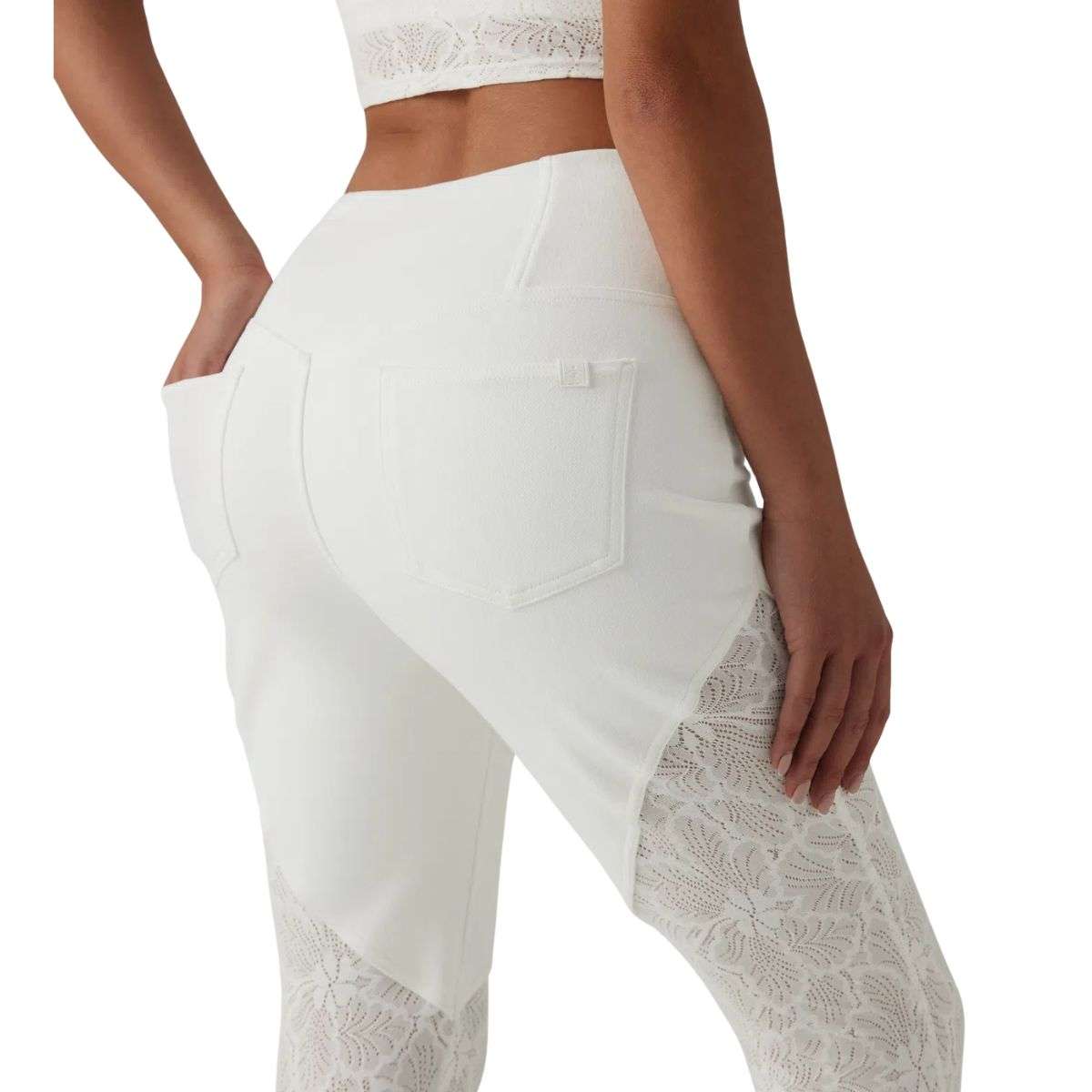
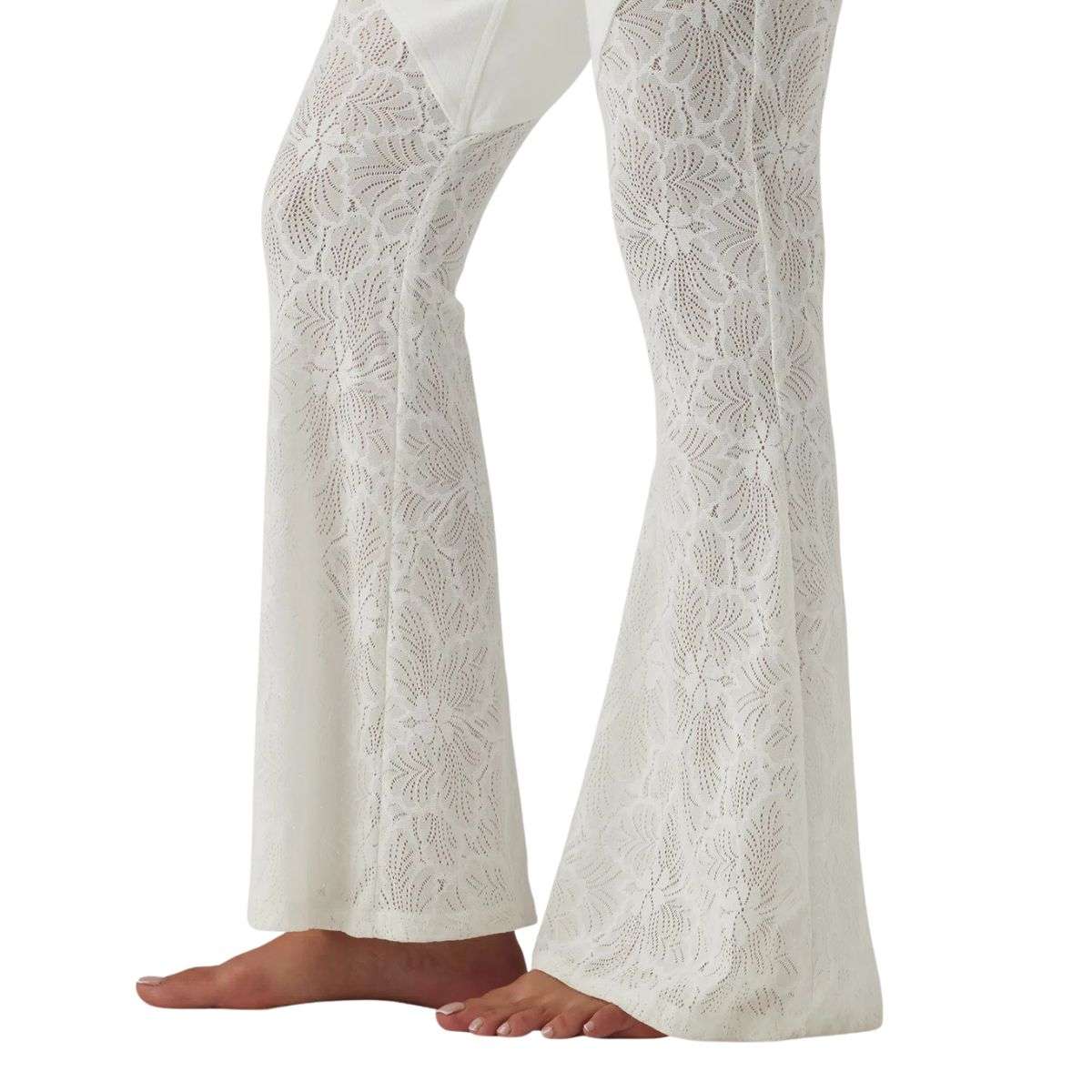
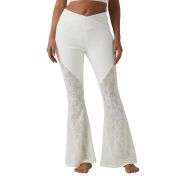
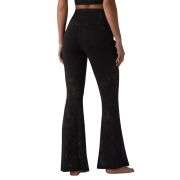
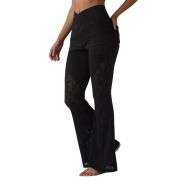
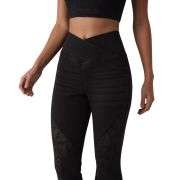
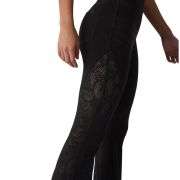
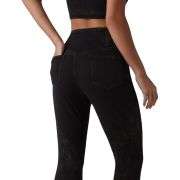
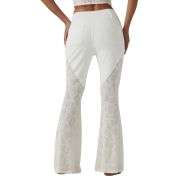
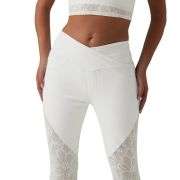
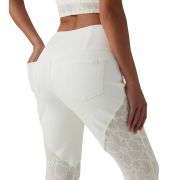
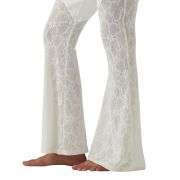
Develop custom stretch flare jeans for an OEM, ODM or private-label collection with New Asia Garment. Reference HANAHLR01 combines a high-waisted crossover front, pull-on construction, a fitted upper leg and a flared lower-leg silhouette. Laser-cut decorative areas add a distinctive surface detail, while functional back pockets preserve practical use.
The style can be used as shown or adapted to a buyer brief. Its verified composition is 59% cotton, 30% polyester and 11% elastane, with four-way stretch and a lightweight hand. Confirm final fit, measurements, decoration, labels and packaging through the approved specification and sample.
Quick Buyer Summary
see related jeans options for development
| Item | Verified Reference / Development Direction |
|---|---|
| Product reference | HANAHLR01 |
| Product type | Women’s stretch flare jeans with pull-on construction |
| Waist | High-waisted crossover front |
| Fit | Close through the upper leg, opening into a flare |
| Fabric composition | 59% cotton, 30% polyester, 11% elastane |
| Stretch | Four-way stretch stated on the current product page |
| Decoration | Laser-cut details visible through the leg areas |
| Pockets | Functional back pockets |
| Customization | Fit, measurements, color, decorative placement, labels and packaging, subject to development review |
| MOQ | Flexible MOQ Available |
What Should Be Approved Before Bulk Production?
Approve the crossover-waist shape, pull-on fit, waist-to-hip balance, knee position, flare opening, laser-cut placement and selected fabric in garment form. Where stretch recovery, shrinkage, opacity or dimensional tolerances are required, define the test or inspection method and acceptance criteria in the buyer’s specification. The current page does not provide verified numerical results for those properties.
Crossover Waist and Pull-On Fit Development
The crossover front is both a visual feature and a fit-control area. Its overlap angle, center-front alignment and left-to-right symmetry affect how the waistband sits. Because the style is pulled on rather than opened with a conventional fly, the waistband must also pass over the hip while returning to the intended waist position.
Define the waist and hip POMs, front and back rise, waistband depth and crossover reference points. Review the top edge from front, side and back. If it becomes uneven, rolls or shifts, review the pattern and fabric together rather than correcting one flat waist measurement.
Stretch and Recovery for a Fitted-to-Flare Shape
explore denim sampling and approval capabilities
This style depends on stretch through the waist, hip, seat and upper leg while maintaining a controlled transition into the flare. Extension supports movement and pull-on dressing, but recovery determines whether the garment returns toward its approved shape after wear.
Approve the production fabric against the fit sample rather than evaluating composition alone. If a buyer has numerical recovery, growth, shrinkage or opacity requirements, include the method and limits in the tech pack or testing brief. New Asia will review the requirement for the specific project; no generic result is claimed on this page.
Control the Knee Break and Flare Opening
The flare is created by the relationship between hip, thigh, knee, inseam, outseam and leg opening. Moving the knee break or changing the opening alters the silhouette even when the total length remains the same. The lightweight stretch construction can also drape differently from rigid denim.
Provide the target finished length, knee position and leg-opening measurement. Approve the garment on the intended fit reference and check front-to-back leg balance, inseam and side-seam alignment. The approved sample should show where the leg begins to open and how the hem falls when the wearer stands and moves.
Laser-Cut Detail Placement
The visible cut details create the key SKU-level distinction. Their artwork scale, location and spacing should be defined against stable garment reference points so the effect remains aligned with the leg pattern. Placement also needs to account for seam allowance and the changing width from thigh to hem.
Approve the artwork or placement map and review the decorated sample for appearance, opening behavior and coverage. Specify any backing, reinforcement or alternative technique before quotation.
Buyer Requirement and Approval Controls
| Buyer Requirement | Manufacturing Risk | Control Method | Approval Evidence |
|---|---|---|---|
| Balanced crossover waistband | Uneven overlap, edge rolling or center-front shift | Define crossover reference points and review symmetry on the fit sample | Buyer-approved fit sample and waist construction details |
| Pull-on access with secure waist fit | Waist opening is difficult to pass over the hip or does not recover | Review waistband opening, fabric behavior and waist-to-hip relationship together | Approved fabric and garment fit |
| Fitted upper leg with defined flare | Knee break or opening changes the intended silhouette | Specify thigh, knee, inseam and leg-opening POMs | Approved measurement chart and fit sample |
| Repeatable laser-cut placement | Motifs drift, enter seam allowance or distort across the flare | Use approved artwork and garment reference points | Approved decoration map or decorated sample |
| Required stretch performance | Growth, bagging, shrinkage or opacity differs from buyer expectations | Record any required method and acceptance criteria in the project specification | Buyer-approved requirement and applicable project evidence |
Customization for Private-Label Programs
Subject to development review, buyers can adjust:
- crossover shape, waistband depth, rise and waist-to-hip fit;
- thigh profile, knee position, inseam and flare opening;
- fabric color and approved stretch-fabric direction;
- laser-cut artwork, scale and placement;
- back-pocket shape and placement;
- labels, hangtags, branding details and packaging.
Use the OEM clothing manufacturing route when the technical specification is complete. If development begins with a product image, reference garment or partial concept, review the ODM development route. Buyers comparing other silhouettes can browse the custom jeans product range.
Current Reference Size Table
The table preserves the published HANAHLR01 measurements. Before production use, confirm each POM method, measurement state and project tolerance.
| Size | Length (in / cm) | Waist (in / cm) | Hip (in / cm) |
|---|---|---|---|
| XS | 40.6 / 103 | 26.6 / 67.5 | 36 / 91.5 |
| S | 40.9 / 104 | 28.0 / 71 | 37.4 / 95 |
| M | 41.3 / 105 | 30.5 / 77.5 | 40 / 101.5 |
| L | 41.7 / 106 | 33.5 / 85 | 42.9 / 109 |
| XL | 42.1 / 107 | 36.6 / 93 | 46.1 / 117 |
Flexible MOQ Solutions
- In-stock styles: No MOQ
- Existing styles with customization: From 50 pcs
- Custom T-shirts, Hoodies & Sweatpants: From 100 pcs/color
- Garment-dyed products: From 150 pcs/color
- Denim & Other Fashion Garments: From 300 pcs/style
The applicable MOQ depends on whether the inquiry uses an in-stock product, modifies an existing style or requires new development. Current stock is not implied. Share the selected development route, quantity, colors and customization scope for review.
Sampling and Bulk Planning
Typical Sample Development: 5–10 days after key product requirements are confirmed.
Typical Bulk Production: 15–30 days after sample approval and material readiness.
Fabric availability, pattern revisions, decoration, branding and approval rounds may change the schedule. Confirm final timing for the project.
Care Reference
Wash once separately in cold water before wearing. Machine wash cold inside out with like colors. Do not bleach. Tumble dry low. Cool iron if needed. Confirm buyer-specific care labeling for the final product and destination market.
What to Send for a Quotation
share your size, quantity and finish requirements
Send a tech pack, reference garment, measurement chart or product images. Include the size range, crossover construction, flare measurements, laser-cut artwork, color, labels, packaging, quantity and destination. Identify any required stretch, recovery, shrinkage, opacity or testing criteria.
Email the project brief to [business@shanghai-newasia.com.cn](mailto:business@shanghai-newasia.com.cn) to review sampling and quotation requirements.