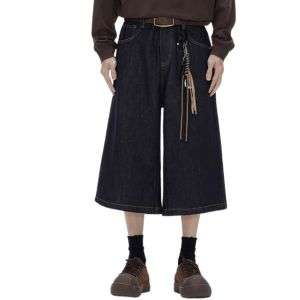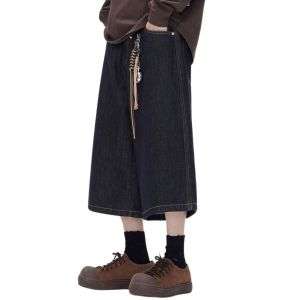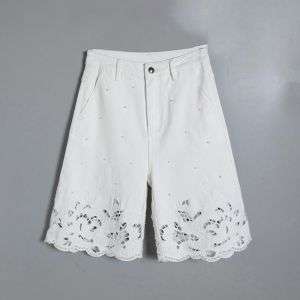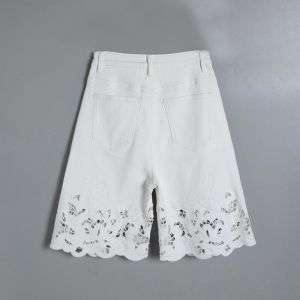
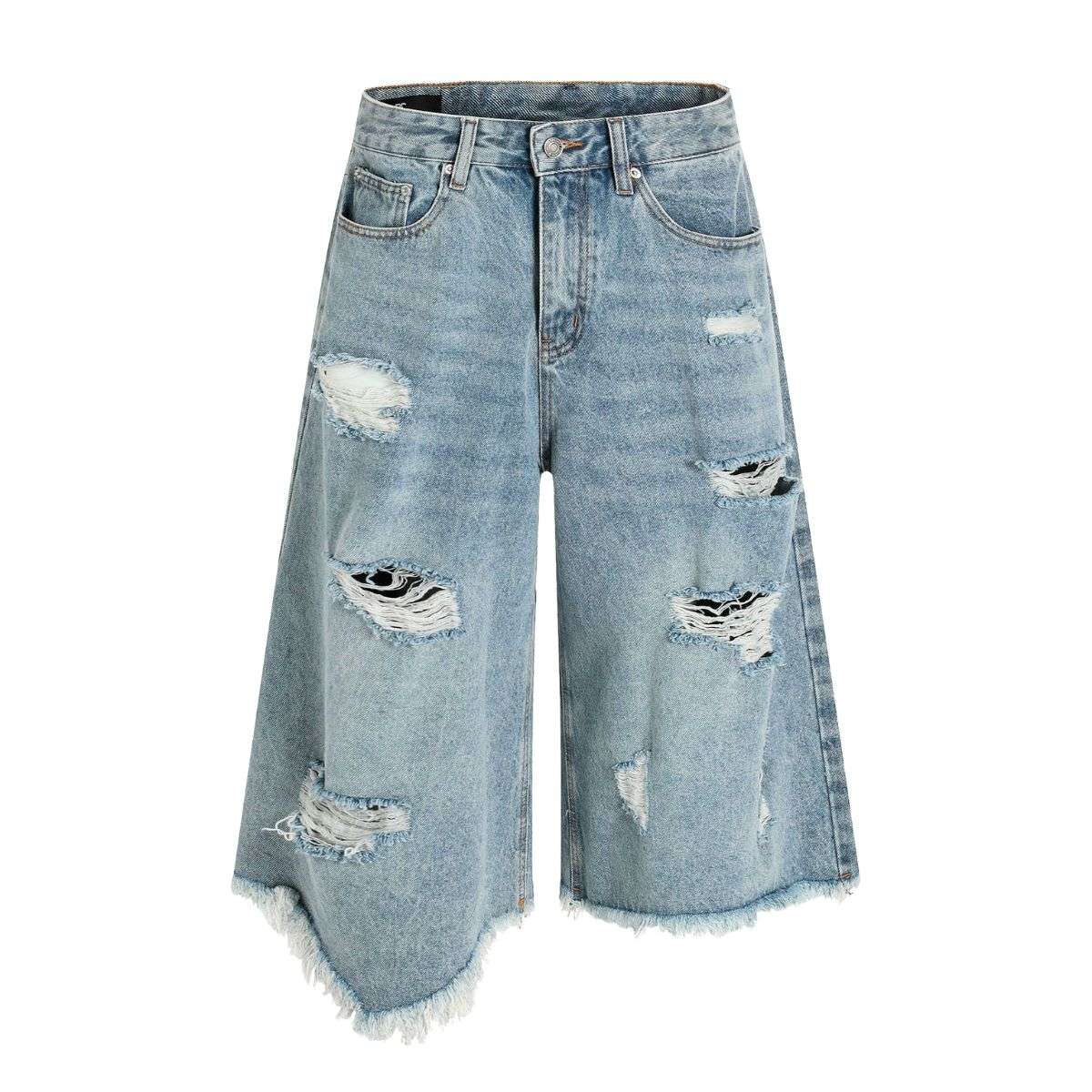
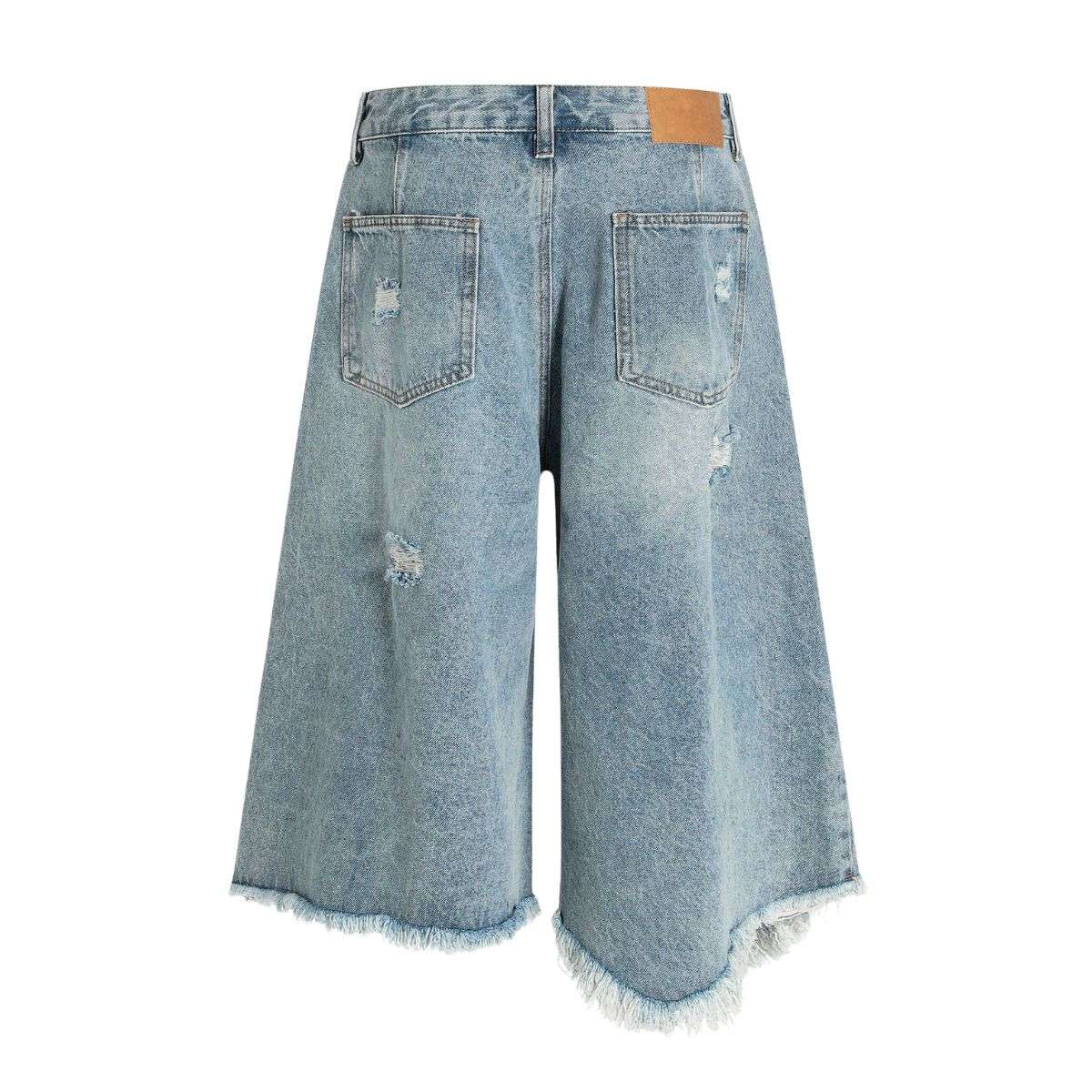
Vintage Distressed Frayed-Hem Denim Shorts – G6699

Vintage Distressed Frayed-Hem Denim Shorts – G6699

OEM distressed wide-leg denim shorts with a vintage light wash, ripped details, irregular frayed hem, and customizable fit, trims, labels, and packaging.

Quick Business Answer

Business ItemDetails
ProductVintage Distressed Irregular Frayed Hem Loose Denim Shorts
SKUG6699
MOQFrom 300 pcs/style
ServiceOEM / ODM / Private Label Manufacturing
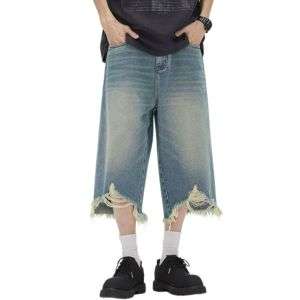
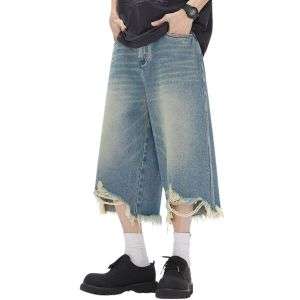
Core DesignLight blue vintage wash, multiple distressed holes, irregular raw frayed hem, loose wide-leg fit, and five-pocket construction
Size RangeS–2XL; custom grading can be discussed
Product StateWash, distressing, and irregular frayed hem confirmed from the source description; exact inseam and 7/8 proportion require buyer confirmation
CustomizationFabric, wash shade, fading, hole placement, distressing level, fit, length, hem shape, stitching, trims, labels, and packaging
Sample DevelopmentBased on a tech pack, physical sample, product photo, sketch, or written design concept
Sample Lead TimeConfirmed after design review and fabric availability check
Bulk Lead TimeBased on quantity, fabric availability, distressing complexity, wash process, trims readiness, PP sample approval, and production schedule
Target MarketsU.S., Europe, UK, Canada, Australia, and other buyer-specified markets

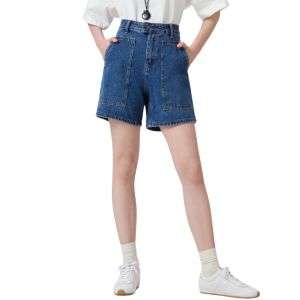
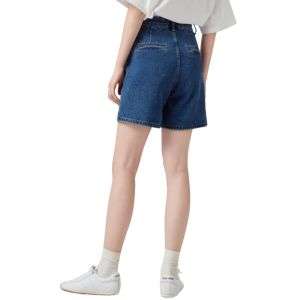
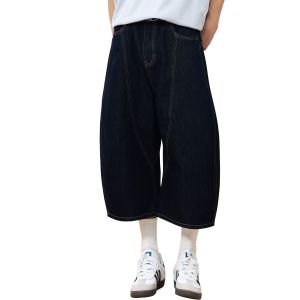
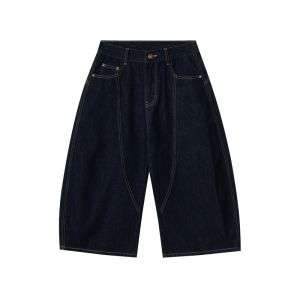
G6699 is a long-length distressed denim shorts development base with a light blue vintage wash, multiple frayed holes, an irregular raw-edge hem, and a loose wide-leg silhouette. It supports OEM, ODM, and private label development for streetwear, vintage denim, oversized casualwear, and summer fashion collections.

However, the supplied chart provides total garment length rather than inseam. Therefore, buyers should treat the “7/8 length” description as a visual proportion until the development team confirms the target inseam and intended body position.

For an initial development review, send your estimated quantity, target size range, destination country, distressing reference, wash reference, and branding requirements.

Product & Business Information

ItemDetails
Product NameVintage Distressed Irregular Frayed Hem Loose Denim Shorts
SKUG6699
BrandNEWASIA
CategoryDistressed Denim Shorts
Service TypeOEM / ODM / Private Label Manufacturing
Product TypeLong-length light blue distressed denim shorts
Product StateVintage wash, ripped details, and irregular frayed hem described in the source information; final bulk standard requires sample approval
Fabric CompositionTo be confirmed; rigid cotton denim or stretch denim options can be discussed
Fabric WeightTo be confirmed according to the required structure, distressing performance, and wash result
FitRelaxed loose wide-leg fit
Total Garment LengthApproximately 72–80 cm across S–2XL
InseamNot provided; buyers should confirm it through a tech pack, reference sample, or fit sample
SilhouetteLong-length silhouette with a roomy wide-leg shape
ConstructionClassic five-pocket denim construction
Pocket DesignFront scoop pockets, coin pocket, and rear patch pockets; final dimensions require confirmation
StitchingContrast stitching with customizable thread color, density, and placement
ClosureTo be confirmed based on buyer requirements
HemIrregular raw frayed hem; edge shape, fringe depth, and finished length require PP sample approval
Color / Wash / FinishFaded light blue vintage wash with a worn-in appearance
DistressingMultiple ripped and frayed openings with buyer-specific placement, scale, and intensity
Size RangeS–2XL based on the supplied chart; custom grading available
Target BuyersStreetwear brands, denim labels, vintage-inspired brands, retailers, wholesalers, and private label buyers
Applicable MOQFrom 300 pcs/style
Bulk ProductionThe production team starts bulk production after the buyer approves the PP sample
PackagingBuyers can customize labels, barcode stickers, poly bags, folding, ratio packing, and carton marks

MOQ clarification: MOQ starts from 300 pcs/style. During quotation, our team confirms color-level minimums, size assortment, custom fabric requirements, wash-development minimums, and distressing-process minimums.

Quick Buyer Summary

  • Product: Vintage distressed wide-leg denim shorts
  • SKU: G6699
  • Core look: Faded light blue wash, multiple frayed holes, irregular raw hem, contrast stitching, and loose wide-leg volume
  • Product state: Wash and distressing direction are clear; buyers still need to approve the hole map, hem standard, inseam, and final length proportion
  • Custom options: Fabric, wash, fading, hole placement, ripping level, hem shape, fit, stitching, trims, labels, and packaging
  • MOQ: From 300 pcs/style, subject to fabric, wash, distressing complexity, and order structure

Distressed Denim Shorts Manufacturer Overview

A Development Base for Vintage Streetwear Collections

As a distressed denim shorts manufacturer, NEWASIA develops G6699 for brands that need a strong worn-in appearance and a loose, long-length silhouette.

The faded light blue wash, ripped openings, and irregular hem support vintage streetwear, festival-inspired fashion, oversized casualwear, and summer denim capsules. In addition, buyers can adjust the distressing pattern and hem profile to create a more recognizable private label product.

Therefore, brands can use G6699 as a development base instead of retaining the exact reference configuration.

Controlling Distressing Placement and Scale

The distressed pattern forms the main technical feature of G6699. However, manual ripping, grinding, cutting, and washing may create visible variation if the buyer does not approve a clear reference.

Before sampling, buyers should confirm:

  • Number of distressed areas
  • Exact hole placement
  • Hole width and height
  • Thread exposure
  • Edge fraying
  • Symmetry or intentional asymmetry
  • Distance from seams and pockets
  • Acceptable variation between garments

The development team can convert the approved design into a distressing map or placement reference. As a result, the production and QC teams gain a clearer standard for bulk comparison.

Managing the Irregular Frayed Hem

G6699 uses an asymmetrical raw-edge hem rather than a uniform stitched finish. Therefore, buyers should define how much variation forms part of the design and how much variation would count as a defect.

For example, the buyer may request a longer back section, uneven front peaks, localized hanging threads, or a controlled asymmetric cut. The PP sample should establish the shortest and longest finished points after washing.

This process helps the QC team control the garment length while preserving the intended irregular appearance.

Wash, Fit and Measurement Reliability

The light blue vintage wash supports the distressed appearance, although fabric composition, washing time, abrasion, and drying conditions can influence the final shade and hand feel.

Therefore, buyers should approve the wash shade, fading intensity, seam highlights, distressing contrast, and softness during sampling.

Color difference control can be managed within Grade 4–5 gray scale range, subject to buyer requirements and final confirmation.

The supplied chart includes waist, hip, thigh, and total garment length. However, it does not provide front rise, back rise, inseam, or leg opening. Buyers should confirm these measurements before PP sample approval to preserve the loose wide-leg shape across the size range.

Key Product Features

  • Multiple distressed and ripped details
    Buyers can control the number, placement, size, and thread exposure of each distressed area. An approved placement map reduces visible bulk variation.
  • Faded light blue vintage wash
    Buyers can adjust the base shade, fading contrast, seam effect, and hand feel. Therefore, an approved wash reference supports more consistent production.
  • Irregular raw frayed hem
    The hem can include asymmetric cuts, hanging threads, localized fringe, or uneven edge lengths. A PP sample gives inspectors a measurable finished standard.
  • Relaxed wide-leg silhouette
    The final volume depends on rise, thigh, inseam, and leg-opening measurements. Consequently, a complete size specification reduces grading risk.
  • Long-length proportion
    The supplied total garment length ranges from approximately 72 to 80 cm. However, buyers should confirm the inseam and intended body position separately.
  • Classic five-pocket construction
    The familiar layout supports functional storage. Additionally, buyers can customize pocket dimensions, lining, stitching, and reinforcement.
  • Contrast stitching
    Thread color, density, seam width, and placement can complement the vintage construction and support private label differentiation.
  • Private label readiness
    Buyers can customize buttons, rivets, patches, main labels, care labels, hangtags, barcode stickers, packaging, and carton marks.

Key Development Points for G6699

Development PointWhat Buyers Should Confirm
Wash StandardBase shade, finished light blue shade, fading level, seam highlights, and hand feel
Distressing MapNumber, position, size, shape, and orientation of ripped areas
Hole ConstructionCut, grinding, abrasion, thread retention, backing, and reinforcement requirements
Acceptable VariationBulk tolerance for hole size, thread release, and intentional asymmetry
FabricComposition, weight, rigidity, stretch, shrinkage, and distressing performance
Wide-Leg FitWaist, hip, front rise, back rise, thigh, inseam, and leg opening
LengthTotal garment length, inseam, and intended body position
7/8 DescriptionVisual proportion only until buyers confirm the actual measurements
Irregular HemShortest point, longest point, fringe depth, thread density, and edge shape
Pocket ConstructionShape, dimensions, position, opening, lining, and reinforcement
StitchingThread color, contrast, density, seam width, and placement
TrimsButton, zipper, rivets, patches, labels, and hangtags
PackagingFolding method, poly bag, barcode, size ratio, and carton marks

Clear decisions at this stage reduce sample revisions and improve quotation accuracy.

OEM / ODM Customization Options

Customization ItemAvailable Development Direction
FabricRigid cotton denim, stretch denim, buyer-nominated denim, or other available constructions
Fabric WeightLight, medium, or heavier denim based on shape, wash, and distressing requirements
ColorLight blue, mid blue, dark blue, gray-blue, black, ecru, or buyer-specified shades
Wash / FinishVintage wash, faded wash, enzyme wash, stone effect, softened finish, or buyer reference
FadingAdjustable placement, contrast, intensity, seam highlights, and pocket-edge effects
Distressing LevelLight abrasion, localized holes, multiple ripped areas, or heavier destroyed effects
Distressing PlacementFront leg, back leg, pocket edge, thigh, knee area, or buyer-specific positions
Hole SizeSmall abrasions, medium openings, large ripped areas, or mixed scale
Hole ReinforcementNo backing, thread backing, fabric backing, fusible support, or custom reinforcement
FitRelaxed wide leg, oversized wide leg, or buyer-specific pattern block
Total LengthAdjustable according to the target silhouette and destination market
InseamDeveloped from buyer specifications or an approved fit sample
RiseBuyers can adjust front and back rise according to waist position
Leg OpeningBuyers can customize the opening to control wide-leg volume
Irregular HemAsymmetric raw edge, controlled fringe, uneven peaks, cut-off effect, or clean stitched alternative
StitchingContrast or tonal thread, custom density, seam width, and placement
WaistbandStandard waistband, custom width, internal branding, or buyer-specific construction
ClosureZipper fly, button fly, custom button, or buyer-approved construction
Buttons / RivetsCustom finish, engraving, color, size, and placement
LabelsMain label, size label, care label, waistband label, or patch
HangtagsBuyer artwork, material, finish, string, and attachment method
PackagingPoly bags, barcode stickers, folding instructions, ratio packing, and carton marks

This style can serve as a development base. Buyers do not need to retain the exact reference configuration.

Size Chart

The following measurements come from the supplied reference chart.

SizeWaist – in / cmHip – in / cmThigh – in / cmTotal Length – in / cm
S27.6 / 7046.1 / 11729.9 / 7628.3 / 72
M29.1 / 7447.6 / 12130.7 / 7829.1 / 74
L30.7 / 7849.2 / 12531.5 / 8029.9 / 76
XL32.3 / 8250.8 / 12932.3 / 8230.7 / 78
2XL33.9 / 8652.4 / 13333.1 / 8431.5 / 80

Our development team can create front rise, back rise, inseam, leg opening, and other measurements from the buyer’s tech pack or reference sample.

However, the supplied chart does not state whether the waist, hip, and thigh values represent full garment circumferences or flat measurements. Therefore, buyers and our development team must confirm the measuring points, method, and tolerances before sample approval.

Buyers should also confirm:

  • Base sample size
  • Waistband measuring method
  • Hip and thigh measuring positions
  • Wash shrinkage
  • Shortest and longest hem points
  • Finished fringe length
  • Size-to-size grading
  • Accepted measurement tolerances

The supplied “Length” value refers to total garment length. It does not represent the inseam.

Likewise, the “7/8 length” wording describes a visual proportion rather than a verified measurement.

Our development team can discuss U.S., European, UK, and buyer-specific grading.

Sample-to-Bulk Production Process

  1. The buyer sends a development reference
    The buyer provides a tech pack, physical sample, product photo, sketch, distressing map, or written concept.
  2. Our development team confirms the specifications
    We review the fabric, wash, hole placement, distressing level, fit, measurements, hem, trims, labels, and packaging.
  3. Our sampling team develops the sample
    The team follows the confirmed requirements and available material options.
  4. The buyer reviews the sample
    The buyer checks the wash, hand feel, hole placement, thread exposure, hem shape, fit, measurements, and branding.
  5. The buyer approves the PP sample
    Once approved, the PP sample gives our production and QC teams a clear bulk standard.
  6. The production team starts bulk production
    The team follows the approved sample, size chart, wash reference, distressing map, trim card, and packing instructions.
  7. Our QC team conducts inspections
    Inspectors review measurements, sewing, wash shade, hole placement, distressing scale, hem shape, trims, labels, and packaging.
  8. The packing team prepares the shipment
    Finally, the team follows the approved folding, barcode, size-ratio, carton, and shipping instructions.

Before sampling, our team confirms the sample cost, courier charges, revision scope, and any possible bulk-order deduction terms.

Our team confirms sample timing after design and material review. Meanwhile, bulk timing depends on quantity, fabric availability, wash complexity, manual distressing workload, trims readiness, PP sample approval, and production scheduling.

Quality Control

Our QC team checks every bulk order against the Approved PP Sample before and during production.

Key checks can include:

  • Our fabric team checks shade, width, visible defects, and roll consistency before cutting.
  • Pattern technicians verify the base pattern, grading, and approved measurements.
  • Sewing inspectors check seams, topstitching, pocket construction, and stress-point reinforcement.
  • The wash team compares the bulk shade, fading, and hand feel with the approved reference.
  • Distressing inspectors compare hole placement, size, shape, thread exposure, and abrasion with the approved distressing map.
  • Inspectors check whether ripped areas remain within approved distances from seams, pockets, and stress points.
  • Our QC team checks irregular-hem shape, shortest and longest points, fringe depth, and thread density.
  • Inspectors compare contrast stitching with the approved thread and placement reference.
  • The trim team checks buttons, rivets, zippers, patches, labels, and hangtags.
  • Inspectors measure all approved points against the size specification.
  • Our packing team checks folding, barcode stickers, size ratios, poly bags, and carton marks.
  • Final inspectors review the completed goods before shipment.

Color difference control can be managed within Grade 4–5 gray scale range, subject to buyer requirements and final confirmation.

Because manual distressing naturally creates some variation, buyers should define acceptable hole-size and thread-release tolerances before production.

Our team can coordinate third-party inspection. However, buyers should confirm the inspection standard, sampling level, cost, tolerance, and acceptance criteria before production.

Cost Transparency for Custom Development

Cost FactorWhat May Affect Price
FabricComposition, weight, rigidity, stretch, width, sourcing volume, and shrinkage
Wash / FinishBase shade, washing time, fading, softness, seam effects, and finishing complexity
DistressingNumber of holes, placement, size, manual work, thread retention, backing, and consistency requirements
Irregular HemCutting pattern, fringe depth, manual finishing, wash behavior, and length tolerances
Wide-Leg PatternRise, thigh, inseam, leg opening, total length, grading, and sample revisions
StitchingThread type, color, contrast, density, placement, and reinforcement
Pocket ConstructionPocket dimensions, lining, reinforcement, and sewing details
TrimsButton, zipper, rivets, patches, labels, and hangtags
PackagingPoly bags, barcode stickers, folding, ratio packing, and carton requirements
Testing / DocumentsShrinkage, colorfastness, fabric safety, and buyer-specific documentation
Order StructureTotal quantity, number of colors, size ratio, delivery schedule, and destination

Clear specifications help our team reduce quotation changes and improve production planning.

Labeling, Testing and Documentation Support

Our team can discuss labeling, testing, and documentation according to the destination market, fabric, trims, and buyer requirements.

Support may include:

  • Fiber composition and care information
  • Country of origin, brand, and size labels
  • Packaging labels and barcode stickers
  • Shrinkage and colorfastness testing
  • Fabric safety or flammability testing discussions
  • Buyer-specific production and packing documents
  • Third-party testing or inspection coordination

In addition, our team can discuss REACH-related testing for European orders and review Prop 65-related requirements for California orders.

These services do not constitute an automatic certification or compliance claim. Therefore, buyers should confirm the testing scope and destination-market requirements before production.

Sustainability and Material Options

Our sourcing team can discuss preferred materials, available recycled-fiber options, alternative washing processes, and reduced-plastic packaging.

However, material availability, MOQ, wash performance, distressing performance, and supporting documents may affect feasibility. Any sustainability or recycled-material claim must use suitable buyer-approved documentation before retail use.

Technical Files and Buyer Documentation

Our team can support:

  • Tech pack review
  • Bill of materials
  • Size specification and measurement method
  • Approved wash and fading reference
  • Distressing placement map
  • Irregular-hem standard
  • Stitching and construction reference
  • PP sample comments, approved sample records, and packing instructions

Buyers Without a Complete Tech Pack

Buyers do not need a complete tech pack for the first discussion.

Our development team can review product photos, a physical garment, sketches, basic measurements, wash references, distressing images, and branding examples.

As a result, these materials help our team create clearer development specifications before sampling.

Why Work With NEWASIA

OEM / ODM Development Support

Henan Newasia Garment Co., Ltd. (NEWASIA) supports development from tech packs, physical samples, product photos, sketches, and written concepts.

Therefore, buyers can use G6699 as a starting point and modify the wash, distressing, fit, hem, stitching, trims, labels, and packaging.

Product-Specific Sample Review

Our sampling team helps buyers confirm the light blue wash, hole placement, thread exposure, wide-leg volume, total length, and irregular hem.

Approved-Sample Quality Control

Our QC team uses the Approved PP Sample, distressing map, size chart, wash reference, trim card, and packing instructions throughout production.

This process gives inspectors a clearer standard while preserving the intended handmade appearance.

Practical Cost and Schedule Communication

Our team reviews fabric availability, wash complexity, manual distressing work, trims, quantity, sample approval, testing, and production scheduling before confirming cost and timing.

Consequently, complete buyer inputs support more accurate quotations and better production planning.

Ideal Buyers and Collections

G6699 can support:

  • Streetwear brands
  • Vintage denim labels
  • Distressed apparel collections
  • Festival-inspired fashion brands
  • Oversized casualwear ranges
  • Summer denim programs
  • Private label retailers
  • Wholesalers and DTC apparel startups

What to Send for a Fast Quote

Buyers do not need a complete technical file for the initial discussion.

Please send:

  • SKU G6699
  • Estimated quantity
  • Destination country
  • Target size range
  • Fabric composition or weight preference
  • Light blue wash and fading reference
  • Distressing placement reference
  • Hole size and thread-exposure preference
  • Acceptable distressing variation
  • Target total length or inseam
  • Rise, thigh, and leg-opening preference
  • Irregular-hem shape and fringe depth
  • Stitching requirements
  • Branding, trims, labels, and packaging
  • Tech pack, photo, sketch, or physical sample if available

Helpful but not required:

  • Target price range
  • Testing requirements
  • Target delivery date
  • Preferred trade terms
  • Inspection requirements

Send the available information, and our team will review development feasibility before sampling.

Care Instructions

Reference care instructions for the supplied style:

  • Wash once separately in cold water before wearing.
  • Machine wash cold inside out with like colors.
  • Do not bleach.
  • Tumble dry low.
  • Cool iron if needed.

However, repeated washing and tumble drying may change the exposed threads, ripped openings, and raw hem over time.

Therefore, our team will finalize the care instructions after confirming the fabric, wash process, distressing construction, hem standard, trims, testing requirements, and destination market.

FAQ

What is the MOQ for G6699?

MOQ starts from 300 pcs/style. However, our team confirms color minimums, size assortment, custom fabric requirements, wash minimums, and distressing-process minimums during quotation.

Can I customize G6699 for my brand?

Yes. Buyers can customize the fabric, wash, fading, hole placement, ripping level, wide-leg fit, irregular hem, stitching, trims, labels, packaging, and grading.

Can the distressed holes be changed?

Yes. Buyers can adjust the number, position, size, shape, thread exposure, and reinforcement of each distressed area. Therefore, the buyer should approve a distressing map before bulk production.

Can I change the irregular frayed hem?

Yes. Buyers can specify asymmetric raw edges, controlled fringe, uneven peaks, hanging threads, or a cleaner cut-off finish. The PP sample should confirm the final shortest and longest points.

Can I change the wide-leg fit?

Yes. Buyers can adjust the rise, thigh, inseam, leg opening, total length, and grading to match the target silhouette.

How do you ensure bulk production matches the sample?

Our QC team compares bulk production with the Approved PP Sample, wash reference, distressing map, size chart, hem standard, trim card, and packing instructions.

Can you prepare private label trims and packaging?

Yes. Buyers can request custom labels, patches, buttons, rivets, hangtags, barcode stickers, poly bags, and carton marks.

Can testing or third-party inspection be arranged?

Yes. Our team can coordinate testing or inspection. Buyers should confirm the scope, cost, timing, provider, and acceptance criteria before production.

Is the 7/8 length a confirmed inseam?

No. The supplied chart lists total garment length from approximately 72 to 80 cm. It does not provide the inseam, so buyers should treat “7/8 length” as a visual proportion only.

What information should I send for a quotation?

Send SKU G6699, quantity, destination, target sizes, wash reference, distressing map, hole requirements, fit, length, hem, branding, and packaging requirements.

Send Us Your G6699 Development Requirements

If you are reviewing G6699 for a streetwear, vintage denim, or distressed summer collection, send your quantity, destination, size range, wash reference, hole-placement requirements, hem design, fit, and private label needs.

A tech pack, physical sample, distressing map, sketch, or product photo can improve the review. However, buyers do not need a complete technical file for the first discussion.

Request Custom Denim Shorts Quote