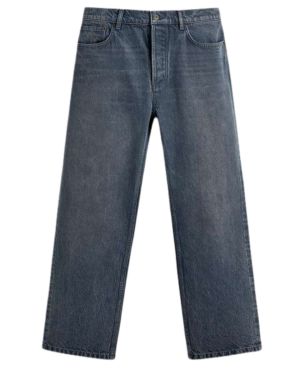
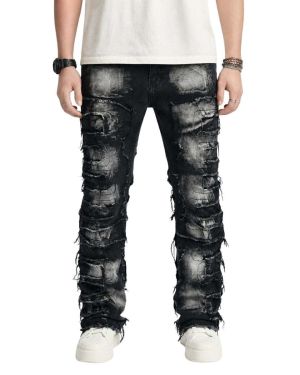
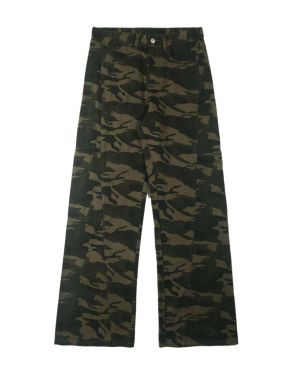
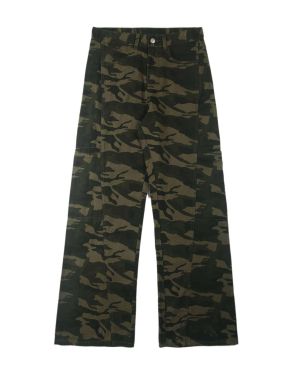
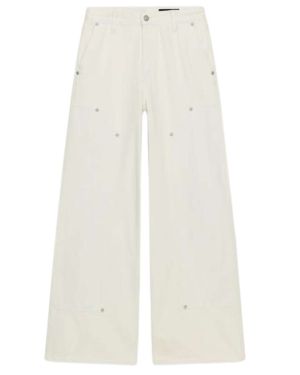
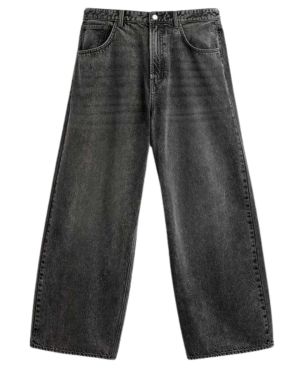
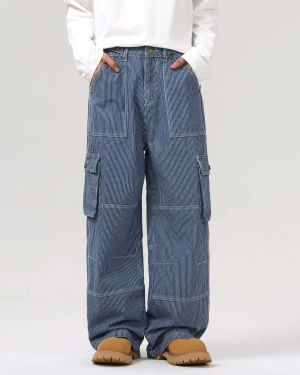
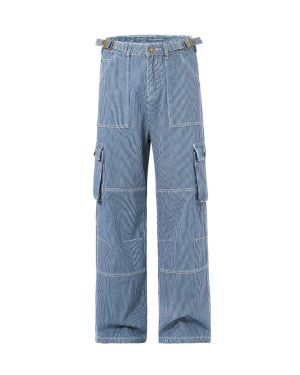
Front Rise
Changes front balance, crotch depth and how high the waistband sits.


A production-ready pair of jeans has a defined finished fit, rise, waistband, hip and thigh measurements, leg shape, fabric, wash direction, pocket construction, fly, hardware, stitching, branding, size range and approved sample.
The approved standard should represent the finished garment after the relevant wash or finishing process. A pre-wash sample alone is not enough when shrinkage or finishing materially changes the final dimensions.
The finished silhouette is created by the relationship between waist, rise, seat, thigh, knee, leg opening and length. Changing one area can alter the visual and functional balance of the whole garment.
Rise is not simply how high the waistband sits. Front rise and back rise influence waist placement, seat shape, pocket position, comfort and the visual proportion of the leg.
Changes front balance, crotch depth and how high the waistband sits.
Works with seat volume and waistband shape to control rear fit and coverage.
Rise changes where the garment interacts with the body and therefore affects hip / seat shaping.
Back-pocket position should be assessed relative to rise and yoke, not in isolation.
Rise changes proportion and can make the same leg shape appear longer or shorter.
Changes visual proportion, comfort and how the garment sits at the waist.
Where applicable, waistband shaping can help control fit around the waist and upper hip.
Front closure placement affects visual balance and the finished top opening.
Number, width, position and reinforcement should match function and styling.
Waistband dimensions should be checked after the relevant wash / finishing process.
The difference is not only comfort. Fabric stretch and recovery change how closely the garment can follow the body and how the fit behaves through wear.
Fit depends more heavily on pattern balance, finished dimensions and planned ease. Wash shrinkage should be incorporated into the approved production standard.
Stretch can support closer fits and comfort, but recovery matters as much as extension. The garment should be evaluated for shape retention after wear and washing.
| Silhouette | Main fit priority |
|---|---|
| Straight | Balance thigh, knee and leg opening so the leg reads consistently straight. |
| Relaxed Straight | Add seat / thigh ease without losing the intended straight leg line. |
| Wide Leg | Control hip fit while maintaining width through the lower leg. |
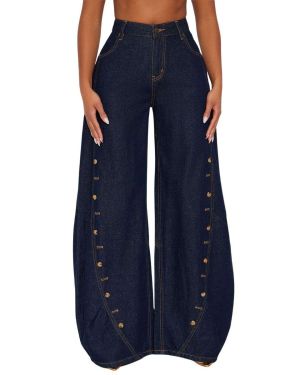
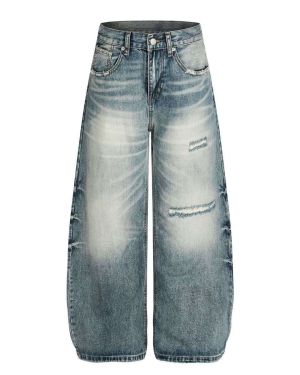
| Baggy | Coordinate rise, seat, thigh, length and hem so volume looks intentional rather than oversized everywhere. |
| Barrel | Create a curved leg profile through shape, knee and opening control. |
| Balloon | Balance upper-leg volume with taper and finished length. |
| Bootcut | Control where the leg begins expanding from knee toward the opening. |
| Flare | Create a more pronounced knee-to-hem expansion while preserving upper-leg fit. |
| Slim / Skinny | Stretch, recovery, seat and leg measurements become especially important. |
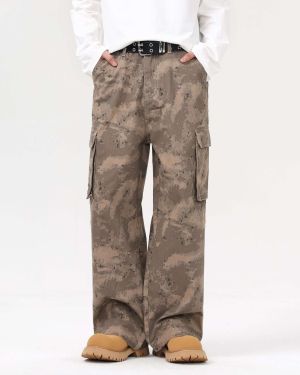
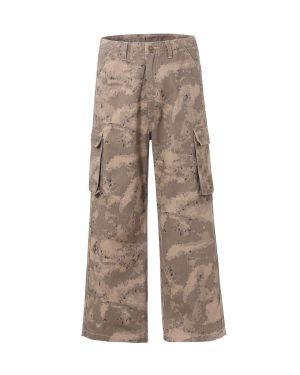
| Carpenter / Workwear | Combine utility pocket placement and relaxed construction without distorting fit balance. |
A jeans wash can change shade, hand feel, shrinkage and finished dimensions. Visual approval should therefore be linked to the actual finished measurements.
Pattern and garment dimensions reflect the planned allowance before finishing.
Finished measurements show how fabric, construction and finishing actually behaved.
The production reference should combine both visual wash appearance and approved finished fit.
If one changes, re-check the other two. A fabric change can alter shrinkage and fit; a wash change can alter measurements; a fit change can move visual wash or distress placement.
Rise, seat, thigh, knee, opening and length.
Weight, rigidity / stretch, recovery and shrinkage behavior.
Finished appearance, hand feel and dimensional change.
Opening shape and position affect both styling and hand access.
Depth and attachment should suit function without creating visible distortion.
Size and placement should align with waistband and front-pocket construction.
Scale should match the seat area and overall visual proportion.
Placement affects how the seat appears even when the underlying pattern is unchanged.
Angle, stitch and branding details should remain symmetrical in bulk.
Button or zipper fly should match the approved front rise, waistband and hardware system.
Yoke shape works with back rise and seat volume to influence rear fit and visual structure.
Loop quantity, width, position and reinforcement should be defined before bulk.
Top fit, shape, closure and post-wash dimensions should remain consistent.
Clean, raw, cuffed or other hem directions should be approved in the finished state.
Seam type and visible stitch detail should suit design, durability and wash behavior.
Jeans hardware should be approved for appearance, attachment, function and compatibility with the garment finish.
Size, finish, logo and attachment should match waistband and fly construction.
Placement, finish and attachment should be consistent and suitable for the pocket / stress-point design.
Length, slider, tape and finish should work with fly dimensions and wash route.
Hardware appearance should be checked after the intended garment finishing where applicable.
Custom hardware should be reviewed for tooling, minimums and project suitability.
Function and pull / attachment strength should be verified against the approved standard.
Can blend with the garment or create visible contrast depending on brand direction.
Strong contrast makes stitch layout more visually important and less forgiving of inconsistency.
Back-pocket stitching can become a strong visual brand element.
Hem detail should match the intended finished look and wash.
Stress points may require bar tacks or other reinforcement according to construction.
Good grading preserves the silhouette, not just the measurements. Waist, rise, hip, thigh, knee and leg opening should progress in a way that keeps the intended shape across sizes.
Grading should keep the leg reading consistently straight across the size range.
Volume should scale without turning larger sizes into excessively long or shapeless garments.
Knee position and hem expansion should remain visually balanced as the base size changes.
Market names are not a substitute for an approved size specification. Brands should define the actual measurements, fit reference and grading rules required for their customer.
Provide target finished measurements and tolerances.
Use a real fit reference where available rather than market labels alone.
A reference garment can help clarify proportion, rise, pocket placement and silhouette.
Confirm how the target fit should scale across the intended size range.
Patch material, size, artwork and placement should be approved in relation to waistband and belt loops.
Confirm wording, dimensions, material and placement before bulk.
Artwork, product information and attachment should match the retail presentation.
Buttons, rivets or pullers can be reviewed for logo and tooling where appropriate.
Custom stitch can add a brand signature where suitable.
Standard or custom packing can be reviewed according to order requirements.
The product is already defined and the main need is accurate manufacturing execution.
You have references or a product direction but still need help developing fit, fabric, wash or construction.
You want an established jeans base with selected fit, wash, branding or hardware changes.
You need help controlling first-order risk, MOQ, sample approval, launch timing and repeat-order readiness.
The best quotation starts with enough information to understand finished fit, denim fabric, wash, construction, hardware, branding, quantity and timing.
Confirm product direction, quantity, target market, fit, customization and commercial requirements.
Close rise, seat, thigh, knee, leg shape, opening, inseam and target finished measurements.
Confirm rigid or stretch direction, weight, structure, hand feel and material behavior. A dedicated fabric testing center supports applicable material evaluation.
Engineer the pattern around the target finished-after-wash dimensions and approved silhouette.
Create the physical sample for fit, construction, wash, pockets, stitching and hardware review.
Approve the visual wash and the actual finished dimensions together before bulk production.
Produce bulk garments against the approved pattern, construction and measurement standard.
Apply the approved finishing route. Selected laser-finishing capability can support applicable denim effects after sample review.
Lot-color control, finished measurements, pockets, hardware, stitching, wash appearance and bulk consistency are reviewed against approved references.
Garment-level traceable barcodes support production traceability while labels, packing and finished-goods requirements are verified before shipment preparation.
From 300 pcs/style
Main MOQ benchmark for custom jeans programs.
From 50 pcs
Available where the selected existing style and customization route support it.
No MOQ
Applies only to eligible ready-stock products, not all custom jeans production.
| Cost factor | Why it matters |
|---|---|
| Denim fabric | Material type, composition and source affect the base garment cost. |
| Fabric weight | Weight changes material consumption, structure and production handling. |
| Rigid / stretch system | Fabric performance and recovery affect sourcing and fit development. |
| Fit / pattern | New silhouettes require more development and fit work than established constructions. |
| Wash complexity | More finishing steps can increase processing, approval and QC requirements. |
| Distressing | Manual or specialty distress placement can add labor and consistency controls. |
| Hardware | Buttons, rivets, zippers and custom branding affect component cost. |
| Pocket construction | Utility pockets, additional pockets or complex pocket bags add sewing operations. |
| Stitch detail | Contrast thread, decorative stitching and reinforcement add operations. |
| Branding | Patches, labels, hangtags and packaging add materials and setup. |
| Quantity | Order size affects production efficiency and material purchasing. |
| Testing / QC | Buyer-specific testing or inspection requirements can add cost. |
Jeans QC should evaluate the finished pair — material, post-wash dimensions, fit, pockets, hardware, stitching, shade and wash appearance — not only the pre-wash garment.
A dedicated fabric testing center supports applicable denim material evaluation during development and production.
Review the garment after the relevant wash or finishing process against the approved finished-measurement standard.
Check the core top-block fit zones against the approved sample and specification.
Check silhouette, lower-leg transition and finished length after the applicable finishing route.
Inspect construction, symmetry, fly function and top-block stability.
Compare front, coin and back pocket size and placement against the approved pair.
Inspect reinforcement, thread appearance, button, rivet and zipper function against the confirmed standard.
Lot-color control is managed from fabric through final garment inspection to support bulk shade consistency.
Each garment can be assigned a traceable barcode linked to production operations and responsible personnel, while branding and packing are verified against order requirements.
Current management-system and compliance references can be provided for applicable buyer qualification and jeans program review.
Quality management system reference.
Environmental management system reference.
Occupational health and safety management system reference.
Social-compliance reference for applicable buyer qualification.
Current certification documentation available for applicable buyer and material review.
Current certification documentation available for applicable buyer and material review.
For jeans, the strongest proof connects denim material capability with fit, wash and finishing control, garment traceability and finished-garment QC.
Denim wear, including jeans and jackets, represents approximately 13.5 million pieces of annual garment capacity in the company profile.
New Song Denim Fabric was established in 1995 and reports annual denim fabric output of more than 30 million meters, including mercerized, stretch and slub constructions.
Material evaluation supports development decisions before the selected denim is committed to the approved production route.
Laser-finishing equipment supports selected denim and garment-finishing applications, with the final effect confirmed through project-specific sample review.
Lot-color control is managed from fabric through final garment inspection to support bulk color and shade consistency.
Each garment is assigned a traceable barcode that can be used to trace production operations and responsible personnel.
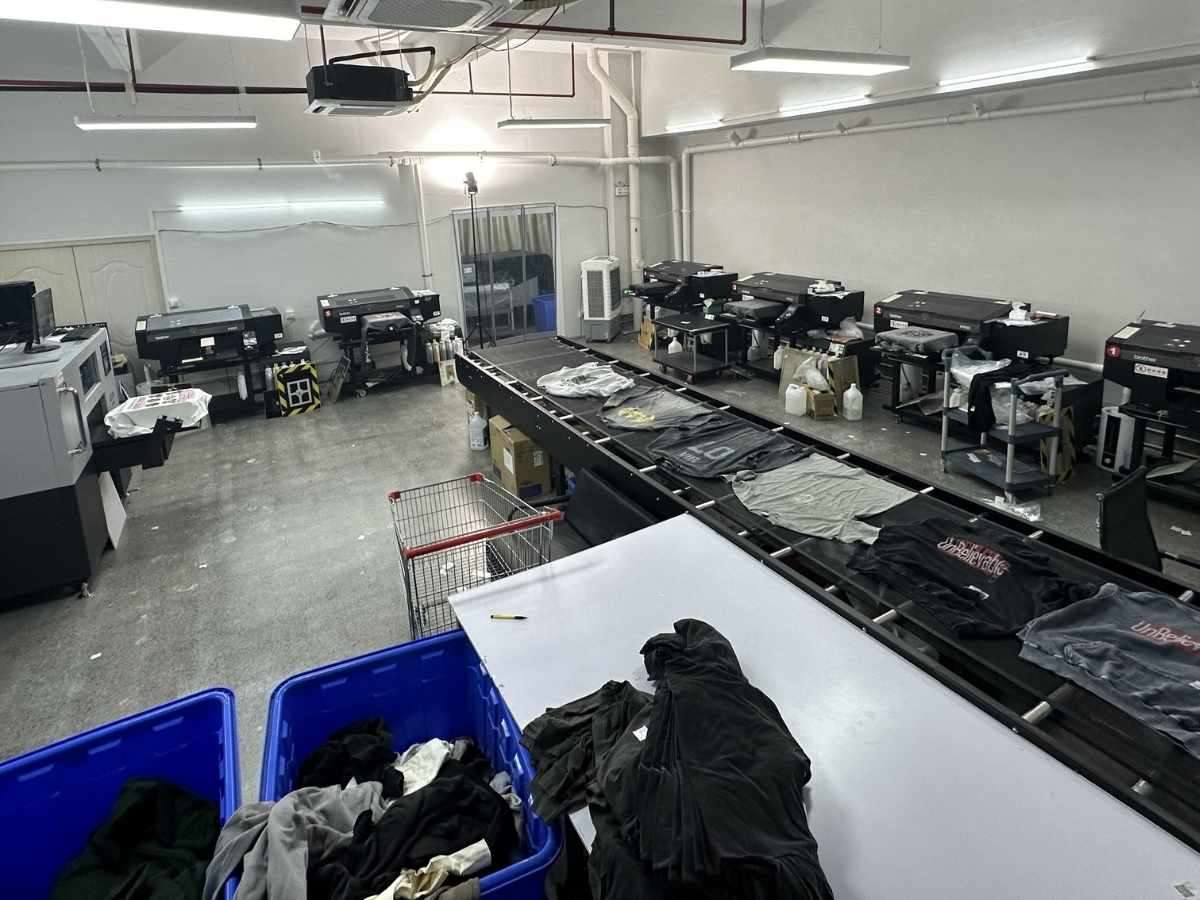
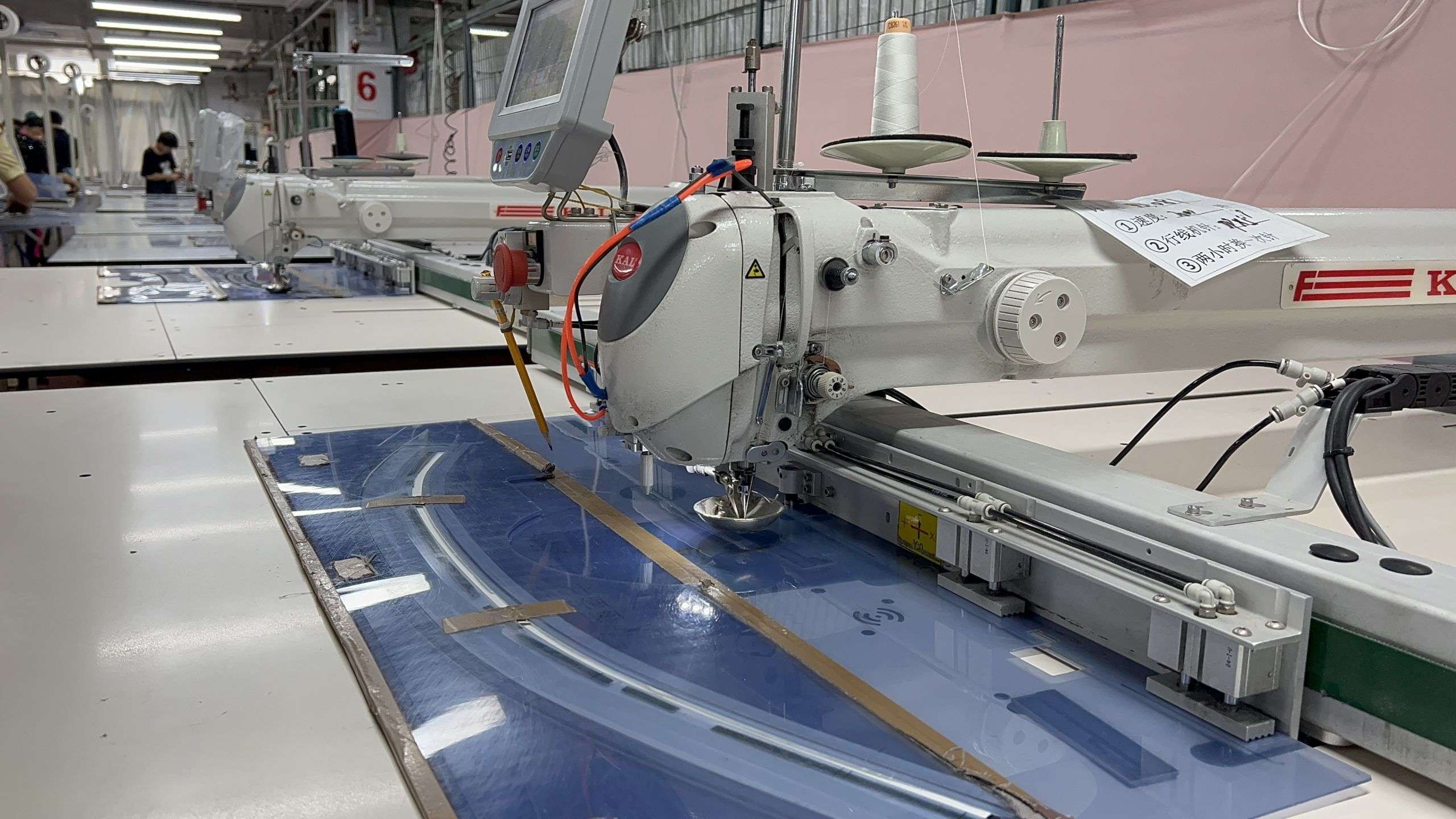
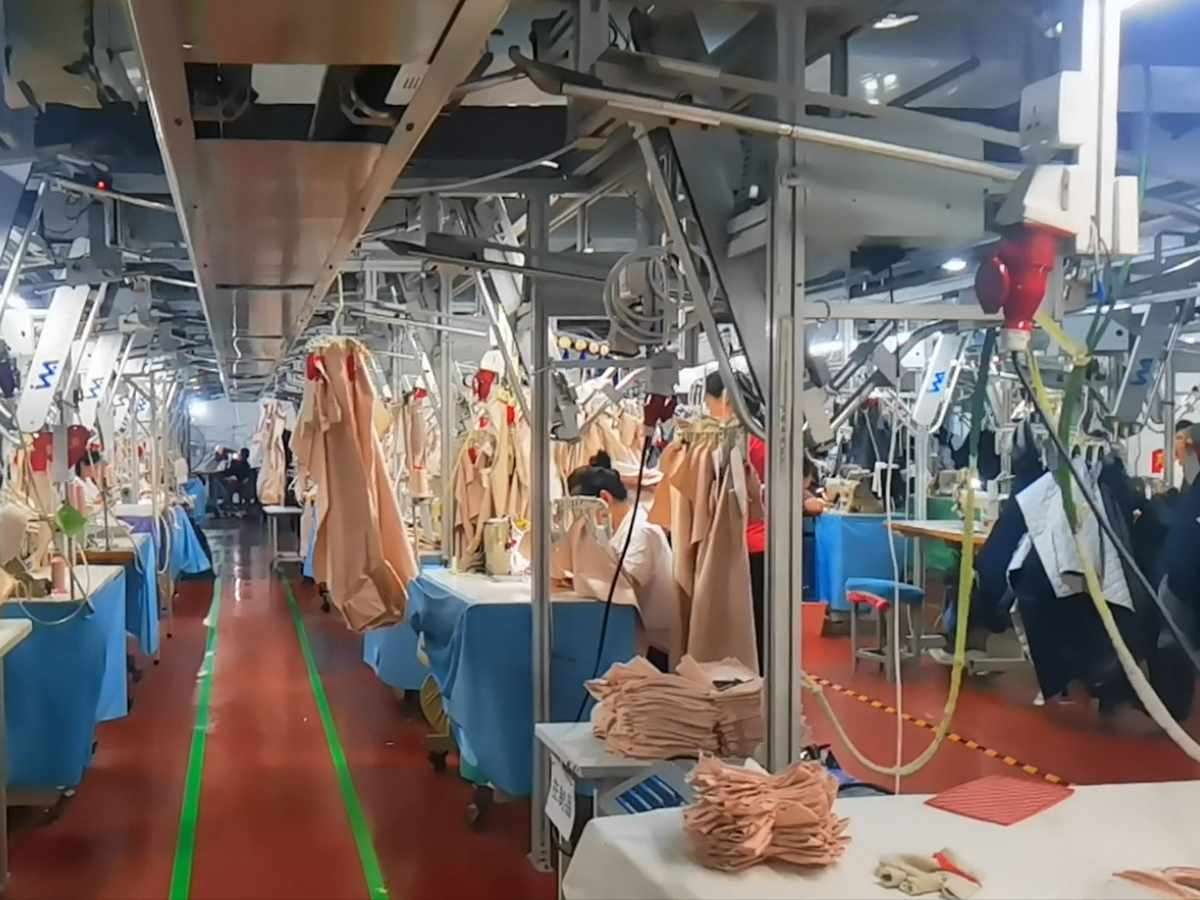
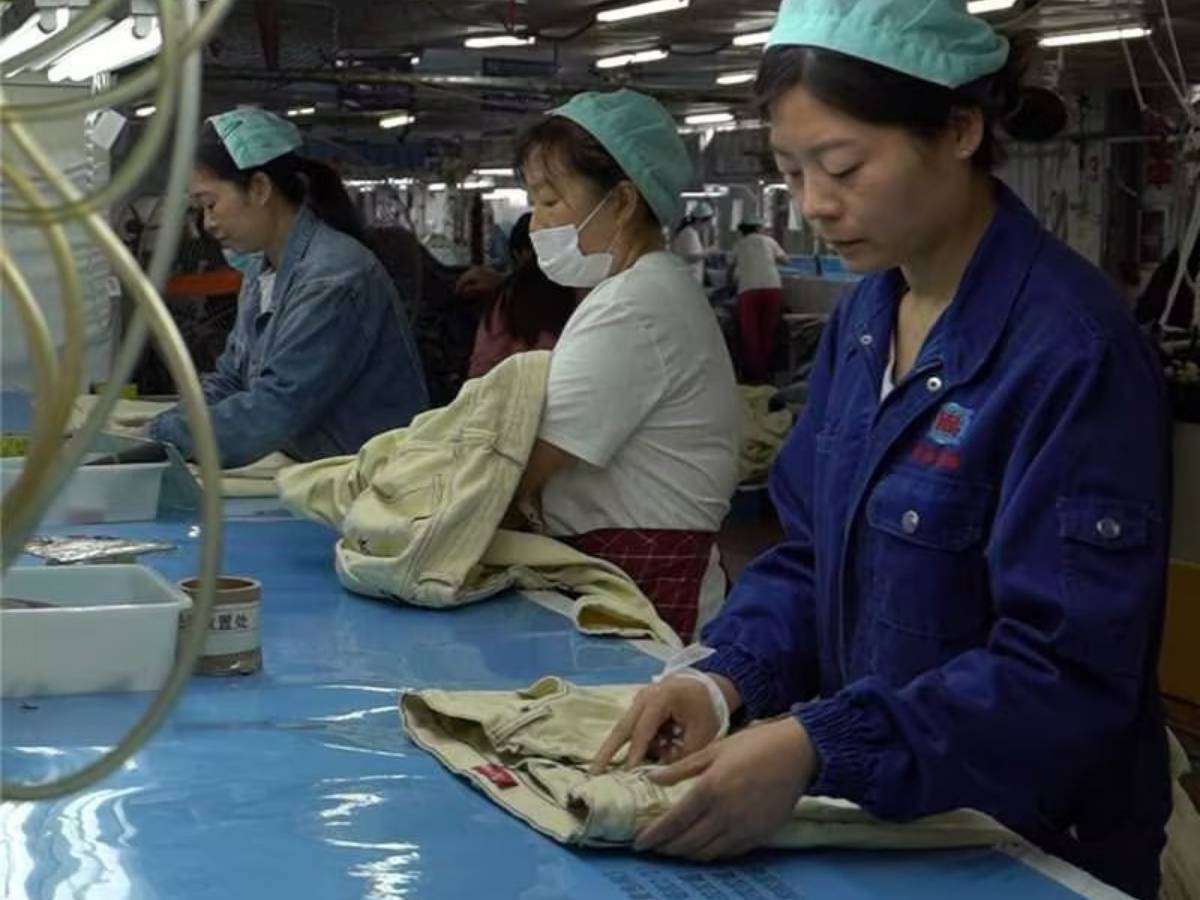
A reliable jeans program depends on approving fit, denim fabric, wash and finished measurements together, then carrying that standard into repeatable bulk production.
New Song Denim Fabric adds first-party denim material depth, while the dedicated fabric testing center supports applicable material evaluation during development.
Rise, seat, thigh, knee, leg opening, wash, waistband, pockets and hardware are reviewed as one finished pair rather than isolated specifications.
Fit and wash approval are connected with finished measurements, while lot-color control supports shade consistency from fabric through final inspection.
Laser equipment supports selected denim finishing applications where the target effect is confirmed through sample development.
Garment-level barcodes connect finished garments with production operations and responsible personnel.
In-process checks, full inspections and final random inspection provide documented quality-control layers around bulk jeans production.
Use the resources below to move from finished-fit decisions into construction, denim material and wash development, commercial planning or the right manufacturing route.
Use the technical modules on this page to define the finished pair before pattern and wash decisions are locked.
Go deeper into denim fabric systems, wash development, shade control and finishing when those become the main sourcing question.
Rigid vs. Stretch Jeans
Wash + Measurement Approval
Denim Development & Manufacturing
Use product-specific construction modules to control placement, function and repeatability.
Use fabric, wash, silhouette, hardware and quantity together when planning jeans cost and first production volume.
Continue to the route that matches how much of the jeans product is already defined.
Buyer-Defined OEM Production
ODM Product Development
Private Label Production
Use broader supplier pages when the question becomes first-order risk, factory depth or China sourcing strategy.
Startup Manufacturing Guide
China Apparel Sourcing Guide
Manufacturing Capabilities
Custom denim and other fashion garments typically start from 300 pieces per style. Final requirements still depend on fabric, wash, hardware, size range and construction.
Yes. Existing styles with customization can start from 50 pieces where the selected product and customization route support it.
Selected in-stock styles have no MOQ. This applies only to eligible ready-stock products, not to all custom jeans manufacturing.
Sampling typically takes 5–10 days after key fit, fabric, wash and construction inputs are confirmed. Additional fit or wash revisions can extend the full approval calendar.
Bulk production typically takes 15–30 days after sample approval and material readiness. More complex wash, hardware or finishing requirements can affect the total project calendar.
There is no single most important measurement. Waist, rise, hip / seat, thigh, knee, leg opening and inseam work together to create the finished silhouette.
Rise affects waistband position, front and back balance, seat shape, pocket placement, comfort and visual leg proportion.
Rigid jeans depend more heavily on pattern balance and planned ease, while stretch jeans also depend on extension and recovery. Stretch percentage alone does not determine long-term fit.
Because washing can change shrinkage, hand feel and finished dimensions. The approved standard should represent both the visual wash result and the finished measurements.
Back-pocket size, position, angle and stitch should be approved relative to rise, yoke and seat shape, then checked for symmetry in bulk production.
Depending on project requirements and minimums, buttons, rivets, zipper details and selected branded hardware can be reviewed for finish, logo and attachment.
Grading should preserve the intended silhouette across sizes rather than simply increasing every measurement by the same amount. The progression of waist, rise, hip, thigh, knee and opening should be reviewed together.
Send the starting point, target fit, rise, fabric composition and weight, rigid / stretch direction, wash reference, distressing, waistband / fly, pockets, stitching, hardware, branding, size range, quantity per style, target market and timeline. Upload front / back references or a tech pack where available.
Repeat production should start from the approved finished sample, final measurements, fabric specification, wash standard, pocket and hardware details, grading rules, labels, packing requirements and QC findings from the previous order.
Send your product reference, target fit, rise, fabric direction, wash reference, hardware, branding, size range, quantity per style and timeline.
We will review the appropriate production route, MOQ, sample requirements and next step toward an approved finished fit.