

How to Build a Premium Trucker Jacket: The Outerwear Manufacturing Guide
In the global fashion landscape, the denim trucker jacket remains an unshakeable outerwear staple. Whether launching a premium raw denim capsule, a heavily distressed streetwear collection, or high-end embroidered private label pieces, adding a trucker jacket to your brand line-up can significantly elevate your brand authority.
However, many sourcing teams treat outerwear production like a standard t-shirt run, only to find their release dates derailed by months. Custom trucker jacket manufacturing is a high-stakes segment of the apparel industry. It is built on rigid construction geometry, intricate hardware engineering, and complex laundry wash chemistry.
To protect your retail margins and hit critical market windows, your design team must master the logistics, sampling gates, and construction milestones required to bring a premium custom trucker jacket to market.
1. Deconstructing the Heavy Outerwear Timeline
A realistic manufacturing cycle for custom denim outerwear spans anywhere from 60 to 90 days under standard conditions, extending past 100 days if proprietary fabric blends or custom-milled selvedge edges are required. Unlike basic knitwear, a classic trucker jacket contains over 20 distinct fabric panels and requires specialized machinery to execute.
- Pattern Engineering and CAD Grading (10 to 14 Days): Transforming a vintage jacket concept into a modern digital grading layout requires immense technical precision. Heavy raw denim does not drape like knit cotton; pattern makers must factor in rigid geometric allowances for body mobility, armhole rotation, and internal seam volume.
- The Indigo Textile Sourcing Matrix (15 to 30 Days): Authentic factories rarely stock custom-weight denim rolls. The factory must secure raw warp-dyed yarn, calibrate industrial shuttle looms for specific weights (such as 12oz, 14oz, or heavy 15.5oz ringspun cotton), and run initial batch consistency tests before your panels can be cut.
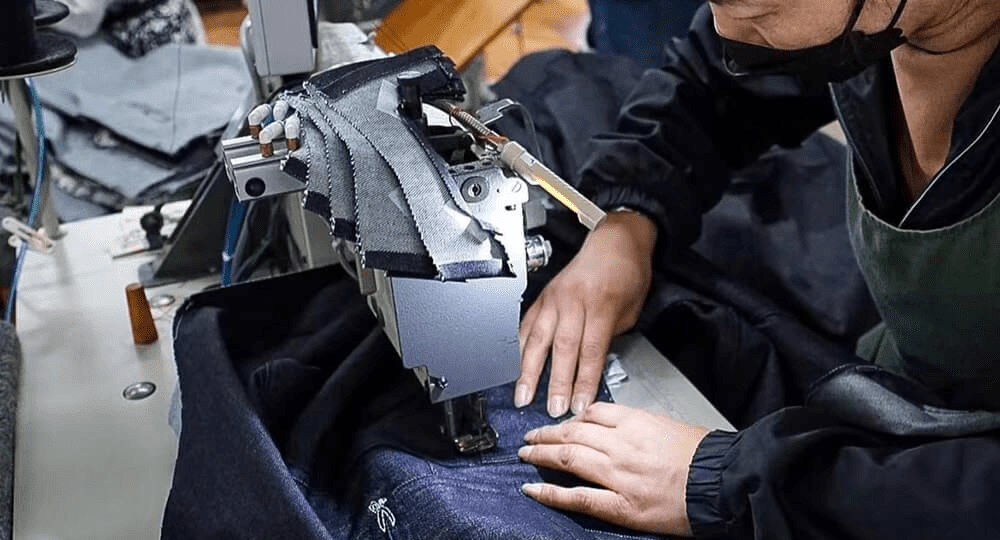
- CMT Assembly and Panel Stitching (21 to 35 Days): The actual production floor run. This encompasses automatic CNC panel cutting, flat-felled seam execution using high-torque dual-needle machines, chest pocket construction, and automated buttonhole punching.
2. The Wash Chemistry Bottleneck: The Unpredictable Finishing Stage
The single greatest driver of unexpected delays in custom denim jacket manufacturing occurs after the sewing lines are finished. A raw indigo jacket is just a stiff, blank canvas. Achieving a retail-ready aesthetic requires sending the raw garments to specialized industrial laundry houses.
- Calibrating the Wash Formula: Whether your collection calls for a subtle enzyme stonewash, intense acid bleaching, precise laser whisker distressing, or mechanical hand-scraping, the wash process changes the fabric structure.
- The Fabric Shrinkage Variable: Industrial washing vats expose heavy denim to extreme kinetic force and high-temperature drying. This causes the panels to contract significantly. A factory must run wash tests on fabric swatches before bulk cutting, adjusting the digital CAD markers so that the finished, laundered jackets match your graded sizing charts perfectly.
- The Danger of Batch Variance: Because industrial washing relies on chemical reactions and physical stone abrasion, a few minutes of extra processing time can drastically alter the final shade. Managing this delicate operational window requires strict quality control, otherwise entire production runs can be ruined by inconsistent color matching.
3. The Internal Skeleton: Preserving Silhouette Integrity Through Industrial Washes
The intense heat and chemical abrasion of commercial enzyme washes act as a stress test for clothing construction. To meet tight delivery windows or cut costs, low-end workshops frequently use weak sewing threads or omit structural stabilizers inside hidden zones, such as the collar stand, button plackets, chest pocket flaps, and internal cuff linings.
Under the violent stress of stone-washing and high-heat drying, these unstable internal seams twist and shrink unevenly. This forces the heavy outer denim to buckle, leading to warped, wavy plackets, distorted pocket flaps, and sagging waistbands that destroy your brand’s premium reputation.
To pass through intense industrial laundries without structural distortion, your tech packs must require high-density, long-staple cotton internal components. Partnering with a vertically capable outerwear manufacturer that integrates Newasia Garment Heavyweight Premium Industrial Cotton Lining Textiles provides a durable internal skeleton for your jackets.
This tight, high-density combed cotton weave serves as an unyielding structural anchor behind button tracks and collar bands, locking the jacket’s geometry true during severe wash cycles. By utilizing this premium cotton lining matrix inside hidden seams, you eliminate rough, chafing synthetic edges against the skin, delivering an instantly recognizable luxury finish that justifies premium retail pricing.
4. Hardware Engineering: The Hidden Contract Milestone
A premium trucker jacket is defined by its hardware. Standard plastic buttons or lightweight zinc alloy snaps cheapen your product and fail under daily wear. Customizing your hardware adds a critical logistical layer that must be handled early in your manufacturing timeline.
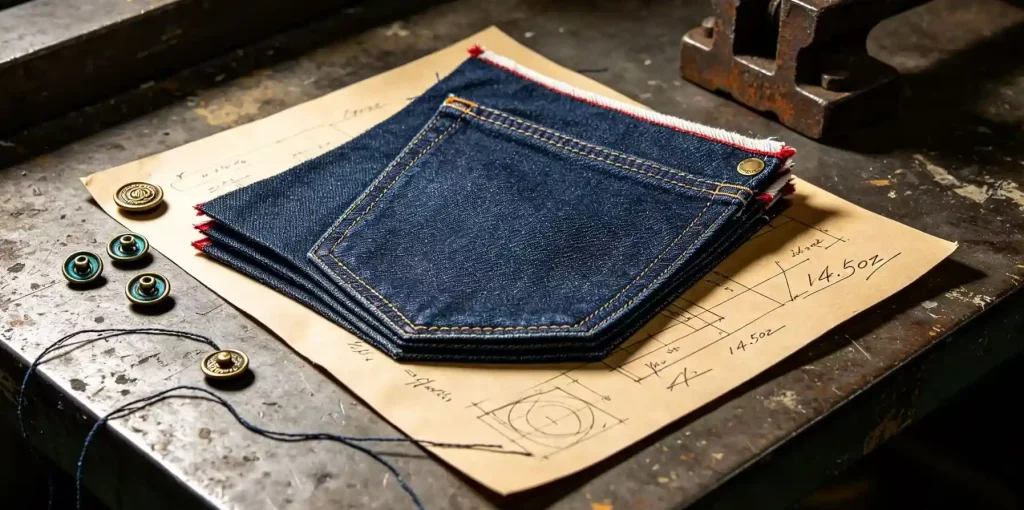
- Custom Brand Tooling: Creating custom-branded metal shanks, rivets, and leather back patches requires dedicated steel molds. The tooling process alone can take 14 to 21 days before production can even begin.
- Pull-Strength Integrity: High-quality denim manufacturers require heavy-duty brass or steel hardware that undergoes rigorous pull-testing. These components must be anchored tightly through multiple layers of heavy denim to prevent tearing or detaching during consumer wear.
- Hardware and Wash Coordination: Metal finishes must be chosen based on your wash formula. If your jackets undergo intense stone-washing, raw metal shanks can rust or chip. The factory must coordinate your custom hardware finishes with your laundry timeline to ensure they match perfectly upon delivery.
5. Eliminating Border Friction with Fixed Global DDP Logistics
Compressing your custom denim manufacturing schedule means very little if your inventory gets stuck at an international port or faces customs clearance delays. Because heavy denim collections carry substantial weight and volume, international shipping is a major operational variable.
Relying on traditional FOB (Free On Board) shipping terms places the entire logistics burden on your brand. This leaves your capital vulnerable to sudden ocean freight rate spikes, container shortages, customs brokerage delays, and unexpected import tariff invoices at your domestic border. These logistical friction points can add weeks to your true time-to-market and quietly erode your profit margins.
The most effective supply chain strategy for growing global fashion labels is to work with an OEM partner that operates under a comprehensive, fixed Delivered Duty Paid (DDP) shipping model.
Under a complete DDP framework, the manufacturer takes full responsibility for international freight forwarding, customs clearance, and all import duties and local taxes. Your retail-ready clothing inventory arrives straight at your warehouse door with zero hidden fees or border bills. This gives your brand exact clarity on your landed cost per unit, allowing you to optimize your retail pricing architecture long before the stock arrives.
To align your denim collection with a manufacturing partner built on engineering precision, absolute pattern stability, and highly compressed global timelines, visit Newasia Garment.com to request a comprehensive production and lead time review today.
Read more