
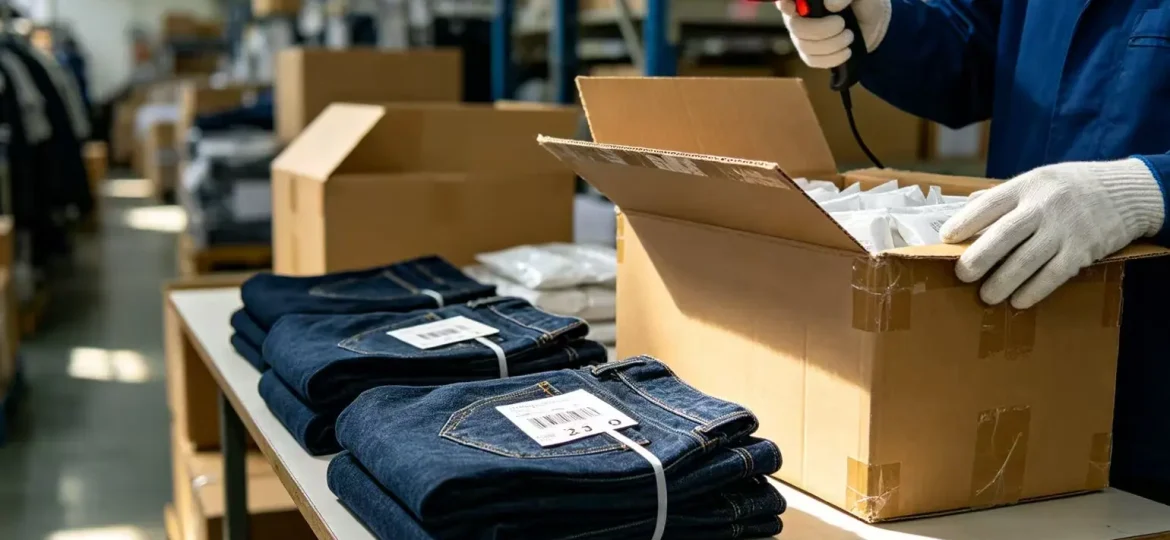
In the fast-paced world of international apparel trade, ensuring that bulk denim production matches approved pre-production standards is the final line of defense against costly chargebacks, customer returns, and brand erosion. Because denim involves complex chemical laundering, heavy mechanical stitching, and stringent fit requirements, relying on guesswork or casual visual checks is a recipe for disaster.
Implementing a systematic Pre-Shipment Inspection (PSI) checklist guarantees that every pair of jeans leaving the factory Denim Quality Control: Testing Methods, Common Defects & Quality Standards
Denim quality is determined long before a finished pair of jeans reaches the final inspection stage. Fabric selection, yarn characteristics, dyeing, weaving, garment construction, washing, finishing, and component selection can all influence the final performance and appearance of a denim product.
For brands and apparel buyers, an effective denim quality control system therefore needs to cover more than visual inspection. Technical testing, process control, defect prevention, and consistency checks should work together throughout the manufacturing process.
This guide explains the main areas of denim quality control, including fabric testing, dimensional stability, color performance, garment construction, hardware durability, common defects, and preventive quality measures.
1. How Denim Quality Is Evaluated Before Production
Effective quality control starts before bulk production begins.
Rather than waiting until finished garments are available, buyers and manufacturers should establish measurable quality requirements during product development.
Technical Specification Review
The quality team should review the approved product specifications for:
- Fabric composition
- Fabric weight
- Fabric construction
- Stretch percentage
- Garment measurements
- Shrinkage requirements
- Wash appearance
- Color requirements
- Stitching specifications
- Hardware specifications
- Labeling requirements
These requirements provide the technical baseline for subsequent testing.
Fabric and Garment Approval
Before bulk production, the manufacturer may prepare:
- Fabric submissions
- Lab dips
- Wash trials
- Development samples
- PP samples
- Testing samples
Each approval stage should be documented so that production teams are working from the same technical reference.
Risk-Based Quality Planning
Not every denim style has the same technical risks.
For example:
- Stretch denim requires additional attention to elastane performance.
- Heavy rigid denim may require closer monitoring of shrinkage and sewing stress.
- Lightweight denim can be more vulnerable to seam damage.
- Dark indigo denim may require stricter color-transfer controls.
- Heavily washed denim requires tighter control of appearance consistency.
A risk-based approach allows the factory to allocate testing and inspection resources to the characteristics most likely to affect product performance.
2. Denim Fabric Testing: GSM, Composition, Stretch & Shrinkage
Fabric is the foundation of a denim garment. Changes in weight, composition, construction, or finishing can affect fit, appearance, durability, and customer perception.
Fabric Weight
Fabric weight is commonly expressed as GSM or ounces per square yard.
For example, a denim specification may require a fabric around 12 oz or 14 oz.
The actual production fabric should be tested against the approved specification rather than judged by appearance alone.
Unexpected changes in fabric weight can affect:
- Garment hand feel
- Drape
- Warmth
- Durability
- Fit
- Wash response
Fiber Composition
The fabric composition should correspond with the approved specification.
A stretch denim product, for example, may contain cotton blended with elastane or another stretch fiber.
Composition testing can help identify unauthorized material changes that may not be obvious visually.
Stretch and Recovery
Stretch denim requires both extension and recovery to be controlled.
Testing may evaluate:
- Stretch percentage
- Growth
- Recovery
- Elasticity after repeated extension
Insufficient recovery can cause garments to become baggy after wear, particularly around the knees, seat, and waist.
Shrinkage
Denim can change dimension during washing and drying.
Shrinkage testing should therefore be performed during development and production control where required.
Measurements may be taken before and after a specified washing procedure to determine dimensional change.
The acceptable shrinkage range should be defined by the buyer’s product specification.
3. Common Denim Fabric Defects and How to Identify Them
Fabric defects can originate during spinning, weaving, dyeing, finishing, or fabric handling.
Identifying these problems before cutting can prevent large quantities of defective garments from entering production.
Common Weaving Defects
Potential defects include:
- Broken warp yarns
- Broken weft yarns
- Slubs outside the approved appearance
- Streaks
- Missing yarns
- Uneven fabric construction
- Weaving marks
The acceptability of some characteristics depends on the intended denim appearance. For example, controlled slub effects may be part of the approved fabric design, while uncontrolled streaks may be considered defects.
Surface and Finishing Defects
Inspectors and fabric quality teams may also identify:
- Oil contamination
- Stains
- Uneven dyeing
- Creases
- Abrasion marks
- Finishing irregularities
Fabric inspection systems should record defect location, severity, and quantity so that suppliers can identify recurring production problems.
Shade Variation Across Rolls
Different rolls of denim can sometimes show visible shade differences.
Roll-to-roll shade control is particularly important when garments from different rolls are cut into the same production order.
Shade grouping and roll identification can help reduce unwanted color variation.
4. Denim Measurement, Shrinkage & Dimensional Stability
Garment measurements should not be considered separately from fabric behavior.
The combination of fabric construction, pattern dimensions, sewing, washing, and drying can determine the final dimensions of the garment.
Dimensional Stability
Quality teams should monitor dimensional changes after relevant processing stages.
Important measurements may include:
- Waist
- Rise
- Hip
- Thigh
- Knee
- Inseam
- Leg opening
The specific measurement points depend on the garment specification.
Growth and Recovery
Stretch denim can behave differently during wear compared with rigid denim.
Testing should therefore consider not only initial measurements but also how the fabric responds after extension and recovery.
This is particularly relevant to:
- Skinny jeans
- Slim-fit jeans
- Stretch chinos
- Jeggings
- Other close-fitting denim products
Wash-Related Measurement Changes
Garment washing can cause dimensional changes that vary according to:
- Fabric composition
- Fabric construction
- Washing temperature
- Mechanical action
- Drying conditions
- Finishing treatment
Controlling these variables helps reduce size variation between production batches.
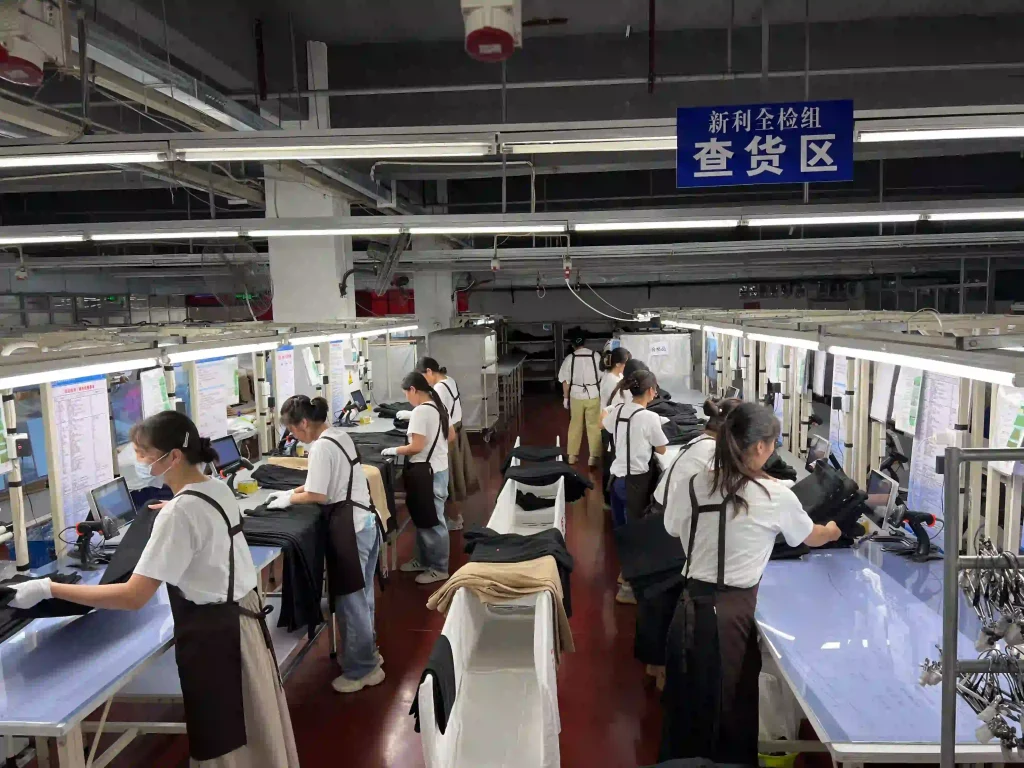
5. Denim Wash Testing and Colorfastness
Denim washing is one of the most technically sensitive stages of production because it changes both appearance and physical characteristics.
Wash Appearance Control
Depending on the product, quality teams may evaluate:
- Overall wash tone
- Contrast
- Fading
- Whisker effects
- Abrasion
- Distressing
- Highlight areas
- Surface character
The approved wash standard should define the intended appearance.
Colorfastness
Colorfastness testing evaluates how well the color withstands conditions such as washing, rubbing, perspiration, or other relevant exposure.
The applicable test methods should be selected according to the buyer’s technical requirements and target market.
Crocking
Dark denim can transfer dye onto other materials through rubbing.
Both dry and wet rubbing performance may be relevant depending on the product specification.
Potential transfer should be considered for:
- Pocketing
- Light-colored garments
- Upholstery
- Footwear
- Other surfaces that may contact the garment
Color Variation
Quality control should monitor variation between:
- Fabric rolls
- Dye lots
- Wash lots
- Production batches
Where multiple shade groups are commercially acceptable, they should be clearly identified and managed rather than mixed without authorization.
6. Seam, Stitch and Garment Construction Testing
Garment construction determines how well denim products withstand repeated wear, washing, and mechanical stress.
Seam Quality
Common construction checks include:
- Seam appearance
- Stitch consistency
- Seam security
- Thread tension
- Seam allowance
- Back-tacking
- Thread trimming
High-stress areas require particular attention because construction problems can lead to early garment failure.
Seam Strength
Where required, laboratory or production testing can evaluate seam strength.
Testing can help determine whether the construction is capable of withstanding the forces expected during normal use.
Bartack and Reinforcement Areas
Reinforcement is commonly used around areas exposed to repeated loading, such as:
- Belt loops
- Pocket openings
- Fly areas
- Selected seam intersections
The construction method should correspond with the approved garment specification.
Stitch Density
Stitch density can be specified as stitches per inch or another construction requirement.
The appropriate value depends on the fabric, seam type, machine setup, and buyer specification.
A higher stitch count is not automatically better if it creates unnecessary needle damage or seam distortion.
7. Denim Hardware Testing: Buttons, Rivets and Zippers
Hardware contributes to both garment appearance and functional performance.
Button and Rivet Performance
Buttons and rivets should be evaluated for secure attachment and appropriate construction.
Depending on the product requirements, testing may include:
- Pull strength
- Attachment security
- Visual finish
- Corrosion resistance
- Dimensional consistency
Testing requirements should be established before bulk production.
Zipper Performance
Zippers may be evaluated for:
- Opening and closing performance
- Slider movement
- Teeth engagement
- Puller attachment
- Repeated cycling
- Corrosion resistance where applicable
A zipper that looks correct but repeatedly jams or separates can still create a significant product-quality problem.
Hardware Finish
Metal finishes should be consistent with the approved component.
Potential issues include:
- Scratching
- Uneven plating
- Tarnishing
- Color inconsistency
- Surface corrosion
The applicable performance requirements depend on the hardware material, finish, product use, and buyer specification.
8. Common Denim Quality Defects and Their Root Causes
Identifying a defect is only the first step. Effective quality control also requires understanding why the defect occurred.
Measurement Variation
Possible causes include:
- Incorrect pattern grading
- Fabric shrinkage variation
- Washing inconsistency
- Incorrect sewing allowance
- Operator handling differences
Shade Variation
Possible causes include:
- Different dye lots
- Uneven dye penetration
- Fabric roll variation
- Inconsistent washing
- Differences in drying conditions
Seam Puckering
Potential causes include:
- Incorrect thread tension
- Excessive sewing tension
- Needle or thread mismatch
- Fabric feeding problems
- Improper machine settings
Broken or Skipped Stitches
Possible causes include:
- Incorrect machine adjustment
- Damaged needle
- Incorrect thread tension
- Poor thread quality
- Operator or machine handling issues
Hardware Failure
Potential causes include:
- Incorrect component specification
- Poor attachment
- Inadequate machine settings
- Weak hardware construction
- Improper finishing
Wash Inconsistency
Potential causes include:
- Inconsistent chemical concentration
- Uneven garment loading
- Temperature variation
- Processing-time differences
- Inconsistent mechanical action
Root-cause analysis allows manufacturers to correct the process instead of repeatedly repairing the same finished-garment defect.
9. Lightweight Denim: Special Quality Risks
Lightweight denim requires different quality-control attention from heavy rigid denim because the fabric may respond differently to sewing, washing, and wear.
Seam Slippage
A lighter fabric may be more vulnerable to yarn displacement around highly stressed seams.
Quality teams should therefore monitor seam construction and fabric behavior during development.
Needle Damage
Incorrect needle selection or excessive sewing stress can damage lightweight fabric.
Potential results include:
- Needle holes
- Yarn breakage
- Seam weakness
- Fabric distortion
Machine settings and needle specifications should be established during production preparation.
Pocket and Hardware Areas
Lightweight fabrics may require additional attention around:
- Pocket openings
- Belt loops
- Rivets
- Buttons
- Fly construction
The reinforcement method should be compatible with the fabric weight and construction.
Balancing Durability and Appearance
Adding excessive reinforcement to lightweight denim can create unwanted bulk or visual distortion.
The objective is to achieve sufficient durability without compromising the intended appearance and comfort of the garment.
10. How Factories Prevent Recurring Denim Quality Problems
Strong quality control systems do not depend entirely on final inspection.
Manufacturers can reduce recurring problems by establishing controls at each major production stage.
Incoming Material Control
Before production begins, factories can verify:
- Fabric identity
- Fabric quantity
- Fabric weight
- Shade grouping
- Component specifications
- Trim quantities
In-Process Quality Control
During production, quality teams can monitor:
- Cutting accuracy
- Sewing construction
- Measurement consistency
- Wash development
- Finishing quality
- Hardware attachment
Early detection allows problems to be corrected before a large quantity of garments is completed.
Production Records
Factories should maintain records for significant quality checks.
Useful records may include:
- Fabric test results
- Shrinkage results
- Wash records
- Measurement reports
- Defect reports
- Corrective-action records
- Component approvals
These records create traceability when quality problems occur.
Corrective and Preventive Action
When a recurring defect is identified, the manufacturer should determine:
- What happened?
- Where did it originate?
- Why was it not detected earlier?
- What corrective action is required?
- How will recurrence be prevented?
This approach moves quality management from simple defect detection toward process improvement.
11. Denim Quality Control FAQ
What is denim quality control?
Denim quality control is the systematic process of checking raw materials, fabric performance, garment construction, washing, finishing, components, and product characteristics against defined specifications.
What should be tested in denim fabric?
Depending on the product, relevant tests may include fabric weight, fiber composition, stretch and recovery, shrinkage, dimensional stability, colorfastness, and fabric construction.
Why is GSM important in denim?
GSM or fabric weight affects the garment’s handle, appearance, durability, and behavior during production and washing. A significant deviation from the approved specification can therefore affect the finished product.
How is denim colorfastness tested?
Colorfastness can be evaluated using standardized test methods appropriate to the intended use and buyer requirements. Testing may assess resistance to rubbing, washing, perspiration, or other forms of exposure.
What are common denim manufacturing defects?
Common problems include fabric defects, shade variation, measurement changes, seam puckering, skipped stitches, broken stitches, wash inconsistency, hardware failure, and unauthorized material changes.
Why does lightweight denim require additional quality control?
Lightweight denim can respond differently to sewing, washing, and mechanical stress. Particular attention may therefore be required for seam construction, needle damage, hardware attachment, and dimensional stability.
How can denim factories reduce recurring quality problems?
Factories can combine incoming-material inspection, process controls, testing, in-line quality checks, production records, root-cause analysis, and corrective-action procedures to reduce repeated defects.
Conclusion
Denim quality control is a continuous process rather than a single inspection performed at the end of production.
Fabric properties, dimensional stability, color performance, garment construction, hardware durability, and washing processes all contribute to the final quality of a denim product.
For apparel brands and manufacturers, the most effective approach is to establish measurable specifications early, test high-risk characteristics, monitor production processes, and investigate the root causes of recurring defects.
A structured quality-control system helps manufacturers produce more consistent denim garments while giving buyers clearer technical criteria for evaluating product performance.
Read more
- Apparel Change Control: How to Approve BOM, Material and Construction Revisions
- Denim Quality Control: Testing Methods, Common Defects & Quality Standards
- How Denim Quality Control Reduces E-Commerce Returns
- How to Write Accurate Denim Product Specifications
- Pre-Shipment Denim Quality Inspection Checklist