
Protecting Your Brand and Bottom Line: Essential Rules for Apparel Manufacturing Agreements
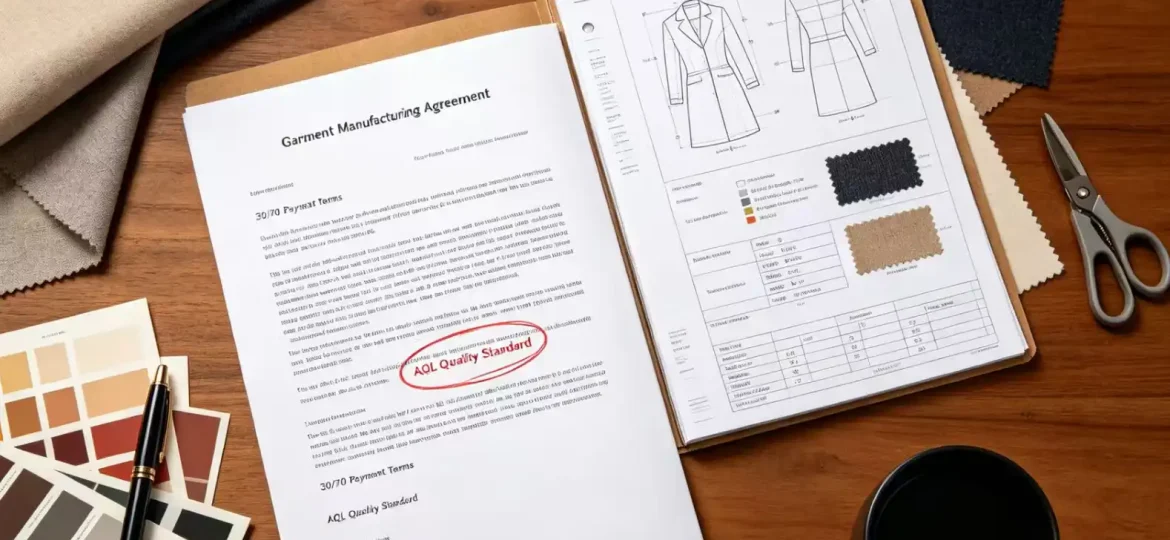
In the global garment industry, a well-drafted manufacturing agreement is the ultimate shield protecting an apparel brand’s capital, design intellectual property, and market reputation. When scaling production across international sourcing hubs, verbal commitments, informal chat threads, or brief purchase order (PO) confirmations are insufficient.
A comprehensive Clothing Manufacturing Contract transforms abstract expectations into legally enforceable operational standards. For fashion startups, procurement managers, and established clothing labels, mastering key contractual provisions mitigates supply chain risks, prevents costly quality disputes, and ensures seamless long-term production runs.
1. Definitive Product Specifications and Tech Pack Ownership
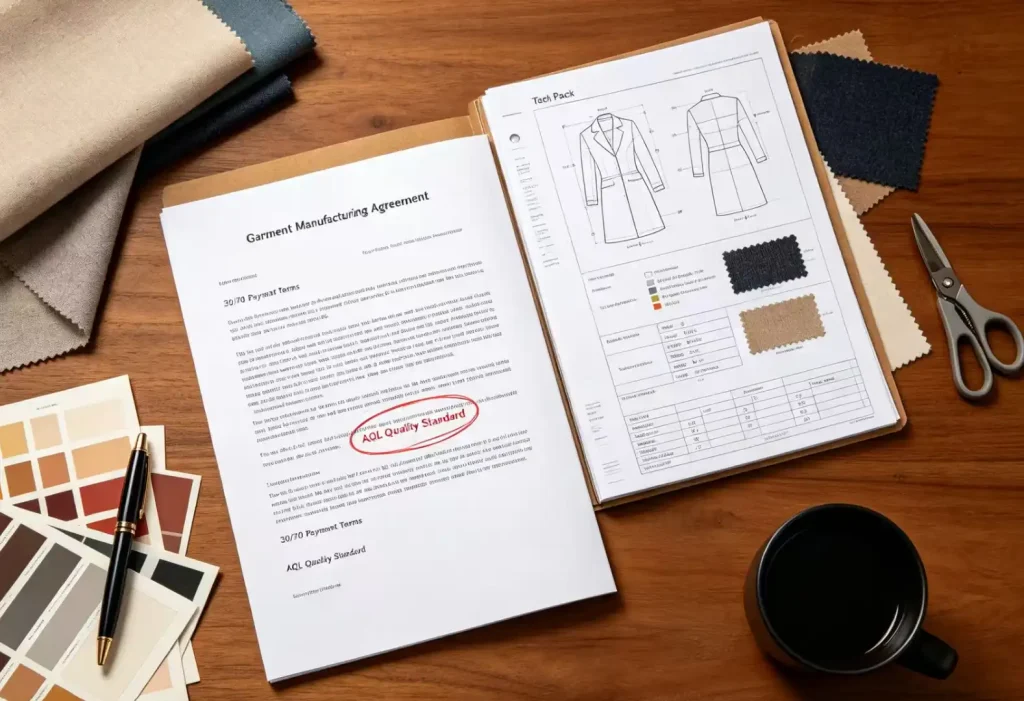
A frequent source of contract disputes is vague product description. A strong contract must tie all manufacturing obligations to a binding Technical Pack (Tech Pack) and an approved Pre-Production (PP) Sample.
- Tech Pack Integration: The agreement must explicitly reference the Tech Pack as an official, legally binding exhibit. This document dictates exact fabric composition, yarn count, fabric weight (GSM), trim specifications, seam construction, Pantone color codes, and size gradation tables.
- Tolerances and Measurement Deviations: Include explicit allowable tolerances for point-of-measure (POM) dimensions—typically ±0.5 cm to ±1.0 cm depending on garment complexity. Any variation exceeding agreed tolerances constitutes a contractual breach, entitling the brand to free rework or factory credits.
- Intellectual Property (IP) Protection: Specify that all tech packs, patterns, grading rules, custom prints, and proprietary garment construction methods remain the exclusive intellectual property of the brand. Include strict non-use and non-disclosure clauses prohibiting the supplier from replicating designs for third parties.
2. Strict Quality Assurance Protocols and Inspection Conditions
Relying on post-delivery quality checks exposes buyers to severe financial loss due to international freight and customs duties on defective goods. Contracts must build multi-stage quality control directly into the production timeline.
- Acceptable Quality Limit (AQL) Standards: Standardize quality acceptance using internationally recognized benchmarks, typically AQL 2.5 for Major Defects and AQL 4.0 for Minor Defects.
- Third-Party Inspection Rights: Grant the buyer or an independent third-party inspection agency (such as Intertek, SGS, or Bureau Veritas) unrestricted access to perform Inline Inspections (DUPRO) and Final Random Inspections (FRI) prior to balance payments and shipment.
- Rework and Replacement Obligations: Mandate that if a batch fails AQL inspection, the supplier must rework, repair, or replace the defective garments at their own expense within a specified timeframe without delaying the final delivery date.
3. Balanced Financial Terms and Payment Safeguards
Commercial payment terms must balance the factory’s cash flow requirements for raw material procurement with the buyer’s need for financial leverage against non-delivery or quality failures.
- Milestone Deposit Structures: Avoid 100% upfront wire transfers. A standard safe commercial structure involves a 30% advance deposit upon contract signing and PP sample sign-off, with the 70% balance released only after passing final AQL inspection and presenting verified shipping documentation (such as a clean Bill of Lading).
- Escrow and Letters of Credit (L/C): For high-value bulk shipments, utilize Irrevocable Letters of Credit payable at sight to ensure funds remain locked within the banking system until all contractual shipment conditions are satisfied.
- Chargebacks and Surcharges: Contractually prohibit unapproved surcharges for material price fluctuations or packing fees after deposit confirmation.
4. On-Time Delivery Guarantees and Liquidated Damages
Seasonal fashion lifecycles leave very little margin for delivery delays. Missing a retail launch window or wholesale shipping deadline can destroy a collection’s profitability.
- Hard Ship Dates vs. Ex-Factory Dates: Distinguish clearly between the Ex-Factory Date (when goods leave the facility) and the On-Board Date (when cargo is loaded onto the vessel or plane).
- Liquidated Damages Clause: Incorporate a reasonable, enforceable late-delivery penalty (e.g., deducting 0.5% to 1.0% of the total order value per calendar day or week of unapproved delay) to incentivize factory adherence to critical timelines.
- Air Freight Compensation: Require the factory to pay the cost difference for expedited air freight if production delays caused by the factory jeopardize the final retail launch date.
5. Partnering with Contractually Transparent Manufacturers
Executing a bulletproof manufacturing contract requires working with professional suppliers who value legal transparency, standardized quality management, and long-term commercial partnerships.
Partnering directly with verified manufacturing experts like Newasia Garment ensures brands benefit from clear OEM/ODM contract terms, transparent production milestones, and rigorous quality control protocols. Establishing a structured, legally sound manufacturing agreement from the outset safeguards your working capital, protects design IP, and establishes a reliable foundation for global brand expansion.
Read more
- How to Investigate a Garment Quality Claim: From Symptom to Root Cause and CAPA
- Garment Packaging Quality Control: Preventing Creases, Print Damage and Shape Distortion
- How to Validate Pocket Function and Placement Before Bulk Production
- How to Standardize Fabric Hand Feel Across Production Lots
- Movement Fit Testing for Apparel: How to Check Ride-Up, Slippage, and Range of Motion