

OEM Clothing Manufacturer in China for Buyer-Defined Apparel Production
Your Design. Engineered for Reliable Production.
OEM clothing manufacturing in China for brands with a tech pack, reference sample or clearly defined product. New Asia supports material sourcing, sampling, bulk production, quality control, labeling and packing across denim, knitwear and casualwear.
- Factory-direct project review
- 5–10 day typical sampling
- Flexible product-based MOQ
Send your product type, target quantity, fabric requirements and timeline for a more useful first review.
What Is OEM Clothing Manufacturing?
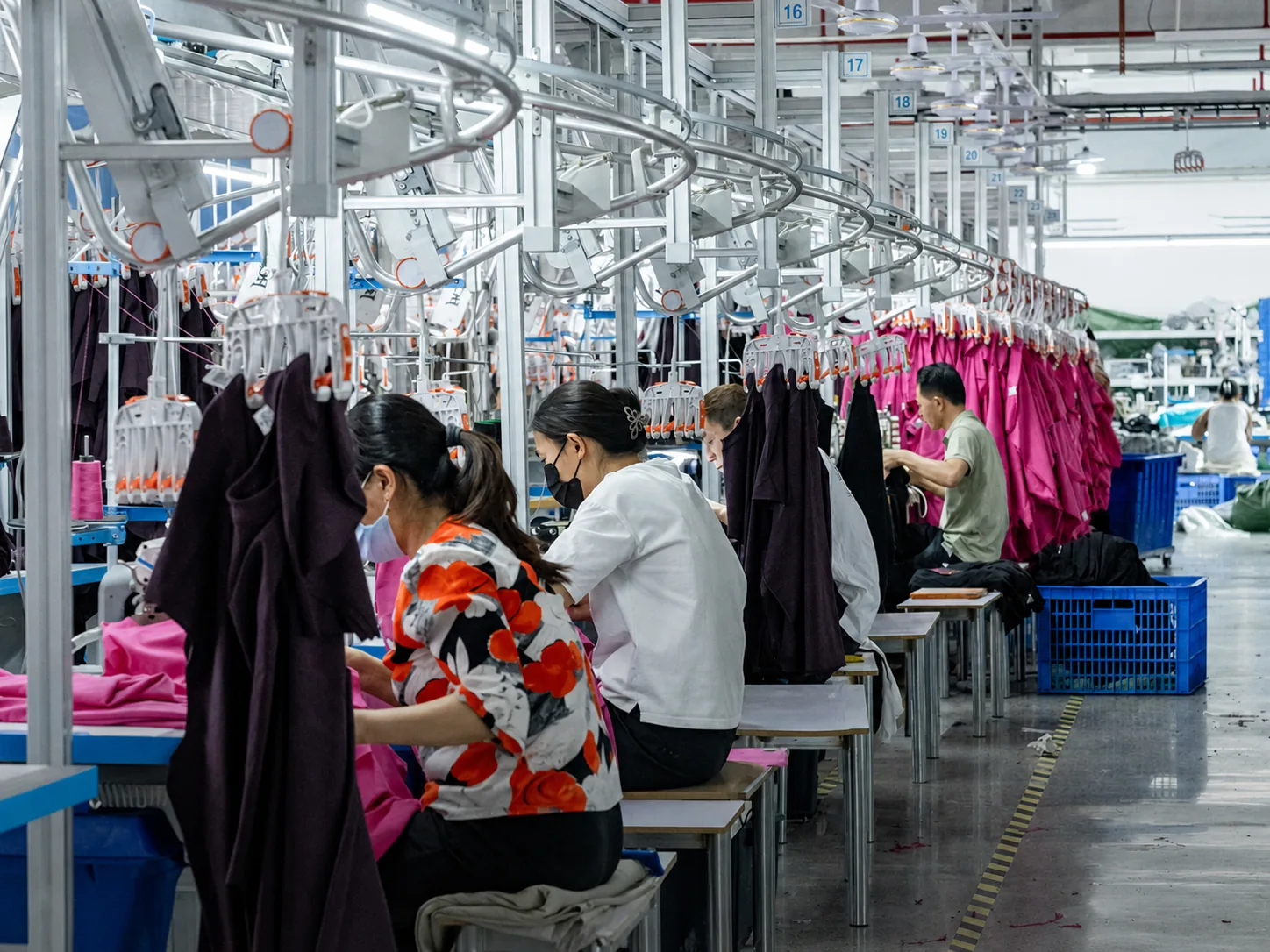
OEM clothing manufacturing means your brand controls the product design and specifications, while the manufacturer turns those requirements into physical samples and bulk production.
You may provide a tech pack, reference garment, approved sample, sketches, artwork or detailed specifications. The manufacturer then supports the production side — including material sourcing, pattern development, sampling, manufacturing, quality control and packing.
At New Asia Garment, OEM is best suited to brands that want to develop their own products rather than simply add branding to an existing ready-made style.
Is OEM Clothing Manufacturing Right for Your Brand?
OEM manufacturing is usually the right route when you already know what you want to produce and need a manufacturing partner to execute the product consistently.
You Have a Tech Pack
Send construction details, measurements, fabrics, colors, trims and artwork. We review the specifications before sampling and production.
You Have a Reference Garment
A physical reference sample can be used to evaluate construction, fit, fabric and finishing requirements before developing your version.
You Have a Clear Design or Sketch
If your product direction is clear but some technical details still need development, our team can help translate the design into a manufacturable specification.
You Need a New Supplier
We can review your existing specifications, approved sample and quality requirements to assess whether the style fits our production capabilities.
What You Provide — What New Asia Handles
Your Product Direction
- Tech pack or product specifications
- Reference sample or garment
- Sketches and design artwork
- Size chart and measurements
- Color requirements
- Logo or decoration artwork
- Target quantity
- Packaging requirements
- Target delivery schedule, if applicable
Manufacturing Execution
- Feasibility and specification review
- Fabric and trim sourcing
- Pattern development
- Sample making
- Fit and construction revisions
- Pre-production confirmation
- Bulk manufacturing
- In-line quality control
- Final inspection
- Labels and packaging
- Shipment preparation
Custom Apparel Categories We Manufacture
Our OEM production capabilities cover multiple denim, knit and casualwear categories. Each category has different material, MOQ and manufacturing requirements, so projects are reviewed by product type before quotation.
Custom Jeans
Custom denim jeans with your specified fit, fabric weight, stretch, wash, distressing, hardware, labels and packaging.
Custom Hoodies & Sweatshirts
Custom fleece, French terry and other hoodie programs with your fit, GSM, colors, printing, embroidery, washes, trims and branding.
Custom T-Shirts
Custom T-shirts developed around your fabric composition, GSM, fit, neckline, printing, embroidery, garment dyeing and brand details.
Pants & Sweatpants
Custom casual pants and sweatpants with specified fabrics, patterns, construction, waist details, trims and finishing.
Jackets
Custom denim and selected casual jackets developed according to your materials, construction, fit, washing and branding requirements.
Dresses & Skirts
Custom fashion dresses and skirts using your designs, fabrics, measurements, construction details and private-brand requirements.
Fabric & Trim Sourcing for OEM Apparel Production
The finished garment can only be as consistent as the materials used to produce it.
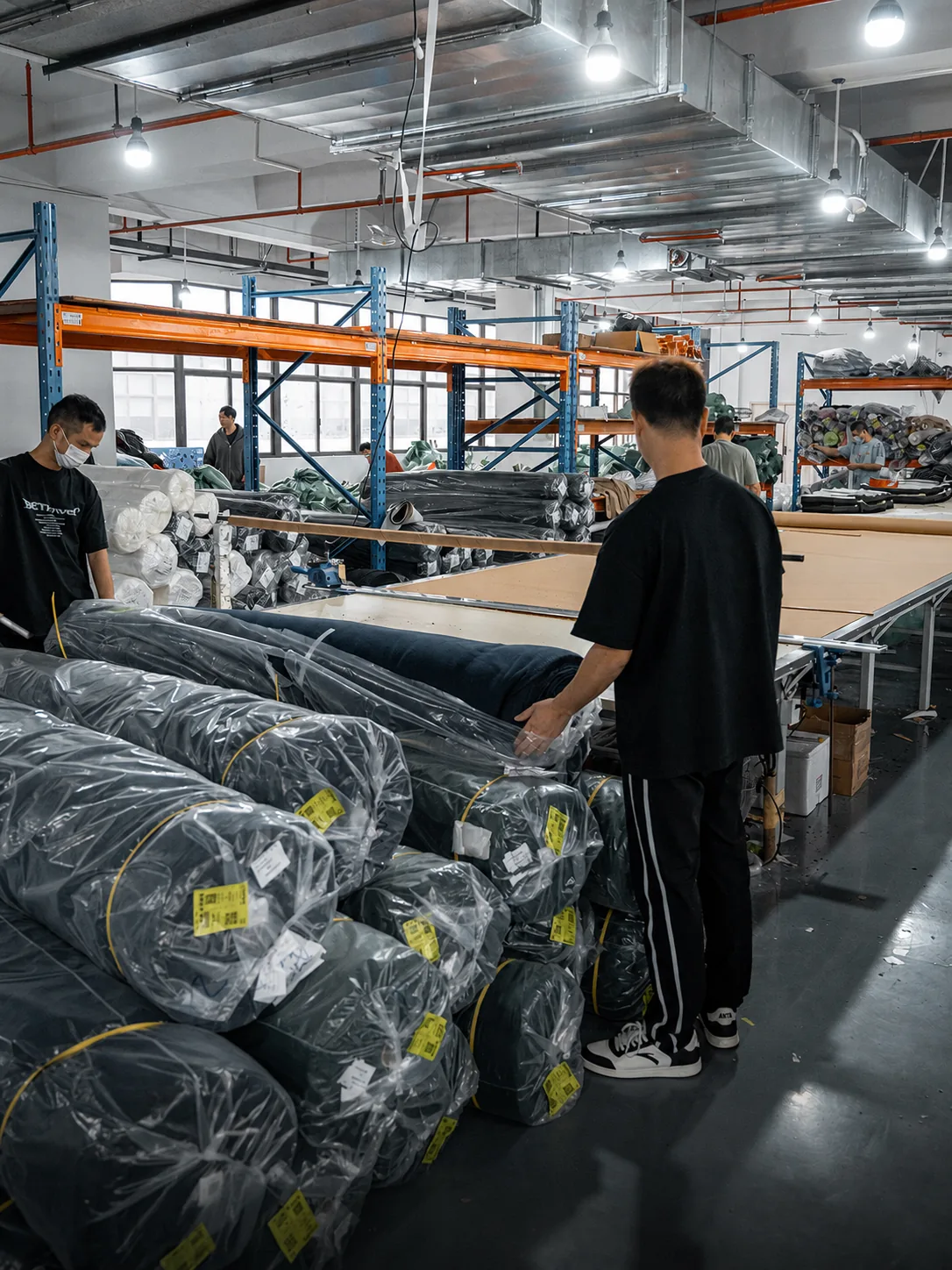
Based on your specifications, our sourcing team can help identify suitable fabrics, trims and garment components according to composition, weight, stretch, hand feel, construction requirements, target quality and commercial considerations.
A dedicated fabric testing center supports material evaluation during development and production. For buyer-defined projects, material review can be aligned with the approved fabric reference, garment specification and applicable buyer requirements rather than relying on a generic material standard.
If you already have an approved material supplier or specific fabric reference, include that information in your project brief so our team can evaluate the most appropriate production route.
Fabric Options
Cotton · Cotton blends · Denim · Stretch denim · Fleece · French terry · Jersey · Selected recycled or specialty materials where available and subject to project-specific documentation
Trims & Components
Buttons · Zippers · Rivets · Drawcords · Elastic · Woven labels · Care labels · Size labels · Hangtags · Packaging
OEM Sample Development Before Bulk Production
Sampling is the point where a digital specification becomes a physical garment.
Before bulk production, the sample allows both sides to review fit, measurements, construction, fabric behavior, trims, color, washing or decoration details and overall workmanship.
01 — Specification Review
We review your tech pack, reference garment, artwork and material requirements to identify details that need confirmation before sample development.
02 — Sample Development
Pattern, materials and garment construction are prepared according to the agreed specifications.
03 — Review & Revision
You review the sample and provide feedback on fit, measurements, workmanship and design details before final approval.
OEM Customization From Construction to Brand Details
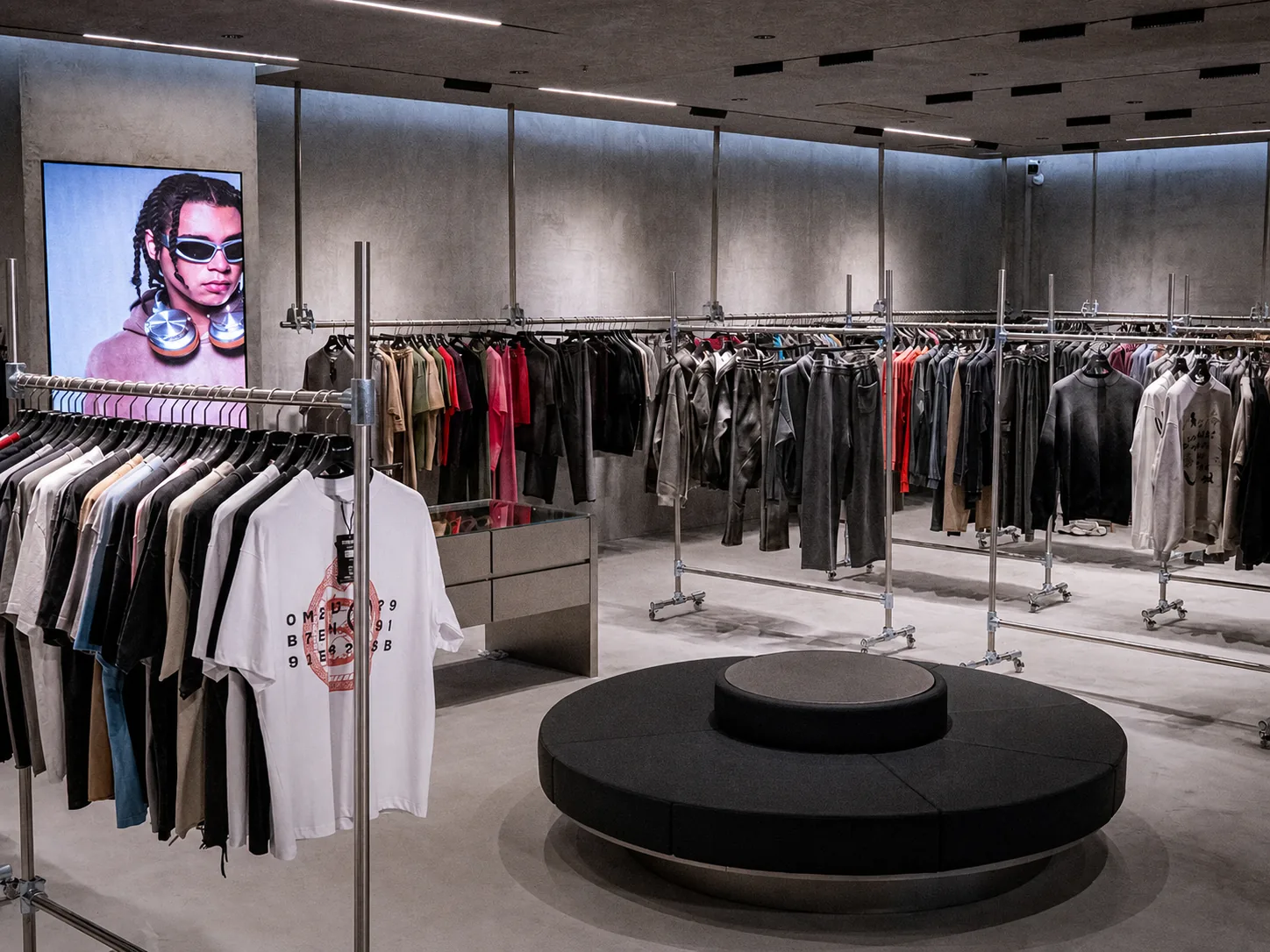
OEM manufacturing gives your brand control over much more than the logo. Depending on the product, customization can include materials, construction, fit, surface treatments and final brand presentation.
Fabric & Composition
Select materials according to composition, weight, stretch, texture, performance and target use.
Pattern & Fit
Develop or adjust patterns, measurements, silhouettes and grading according to your product specifications.
Color
Develop product colors according to approved references and available material or dyeing processes.
Printing
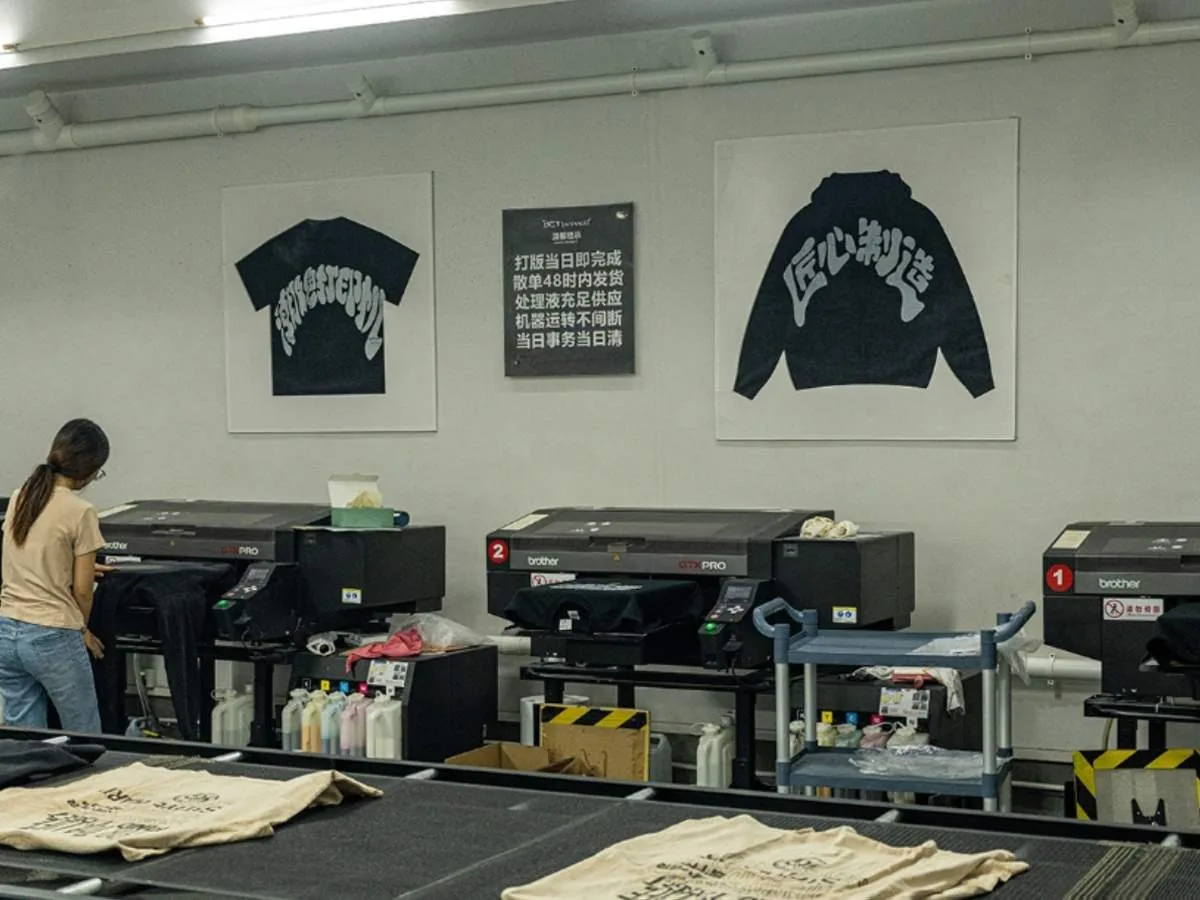
Apply appropriate printing methods based on the artwork, fabric and required visual result. In-house printing supports decoration development and production for applicable programs.
Embroidery
Develop embroidered logos, graphics and decorative details based on approved artwork. In-house embroidery supports repeatable branding execution for applicable garments.
Wash & Finishing
Selected denim and casualwear products can incorporate garment washing, dyeing, distressing and other finishing processes.
Labels & Trims
Add approved woven labels, care labels, size labels, buttons, zippers and other brand-specific components.
Packaging
Prepare products according to your confirmed packing, labeling and shipment requirements.
What Information Do We Need for an Accurate OEM Clothing Quote?
A complete request for quotation helps our team evaluate production feasibility, material minimums, sampling, MOQ, pricing and delivery more accurately.
| Project information | What to send | Why it matters |
|---|---|---|
| Product type | Jeans, hoodie, T-shirt, pants, jacket, dress or other garment | Determines the production route and specialist capability required. |
| Estimated quantity | Quantity per style and, where possible, per color | Helps determine MOQ feasibility and the correct costing route. |
| Design / tech pack | Tech pack, sketch, reference photos or physical sample | Reduces assumptions during feasibility review, costing and sampling. |
| Fabric requirements | Composition, GSM/weight, stretch, color, finish or reference swatch | Fabric has a direct impact on MOQ, cost, performance and lead time. |
| Size range & fit | Measurements, grading rules, target fit and destination market | Supports pattern development and measurement control. |
| Customization | Wash, dye, print, embroidery, distressing, trims or special construction | Changes process sequence, sampling complexity and production cost. |
| Branding & packaging | Main label, care label, size label, hangtag, packaging and carton requirements | Allows brand materials and packing requirements to be planned before production. |
| Delivery target | Required arrival window, destination country / port and shipping terms if known | Helps assess material timing, production scheduling and shipment options. |
For the fastest project review
Send your product type, quantity, tech pack or reference, fabric requirements, size range, customization, branding, destination and target timeline in one inquiry.
Our OEM Clothing Manufacturing Process
01 — Project & Tech Pack Review
Send your tech pack, reference sample, sketches, artwork and expected order quantity. Our team reviews product feasibility and identifies details that need clarification.
02 — Material & Construction Confirmation
Fabric, trims, construction methods, colors, measurements and required customization are reviewed before sampling.
03 — Sample Development
We develop the physical sample for fit, construction and workmanship review.
04 — Pre-Production Confirmation
Revisions are completed and the final specifications, materials, quantities, packaging and production requirements are confirmed.
05 — Bulk Manufacturing
Production begins according to the approved product specifications and confirmed order requirements.
06 — In-Line Quality Control
Quality checks are carried out during production to identify workmanship or specification issues before completion.
07 — Final Inspection & Packing
Finished garments are checked against confirmed requirements before final packing and shipment preparation.
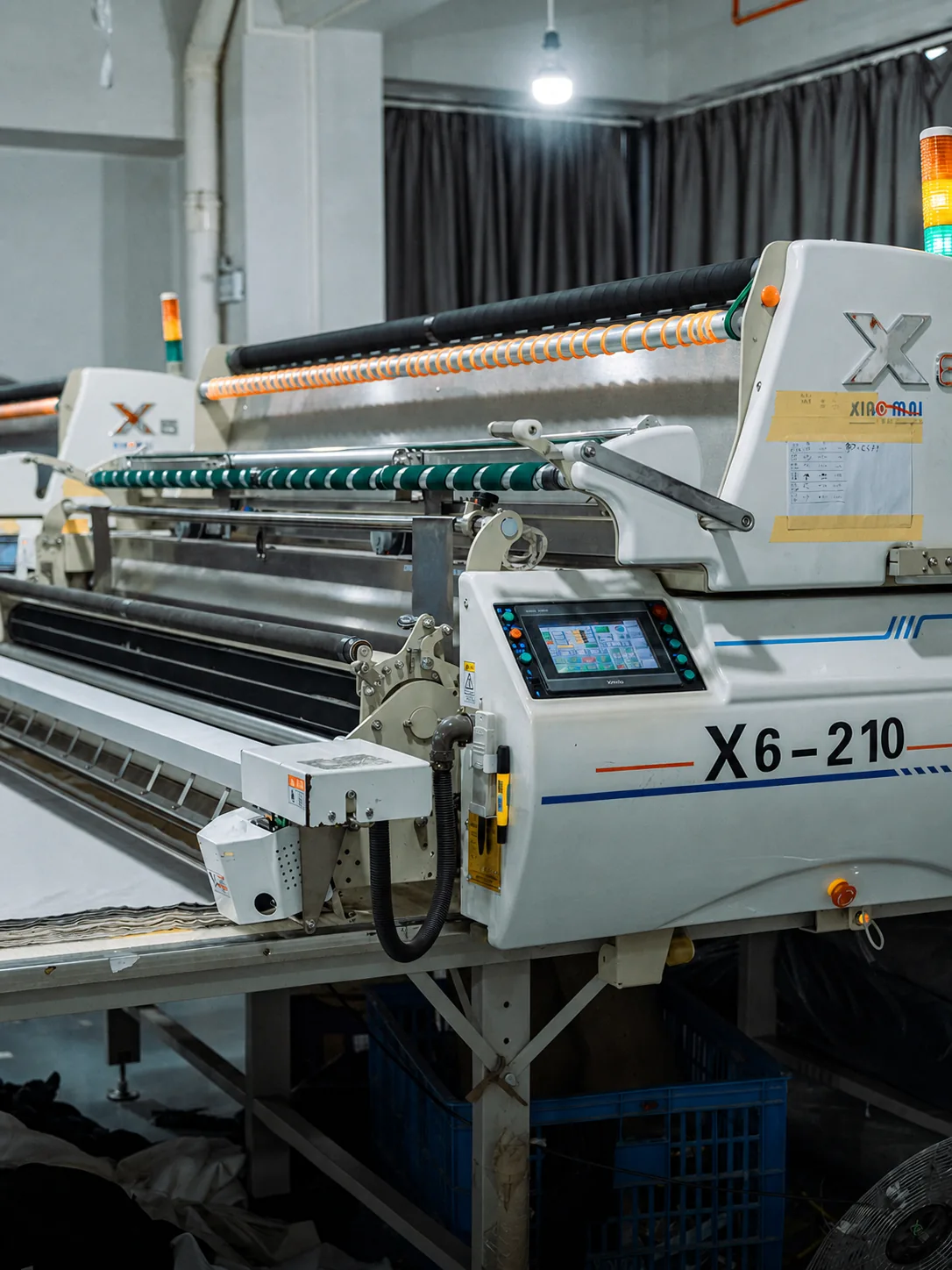
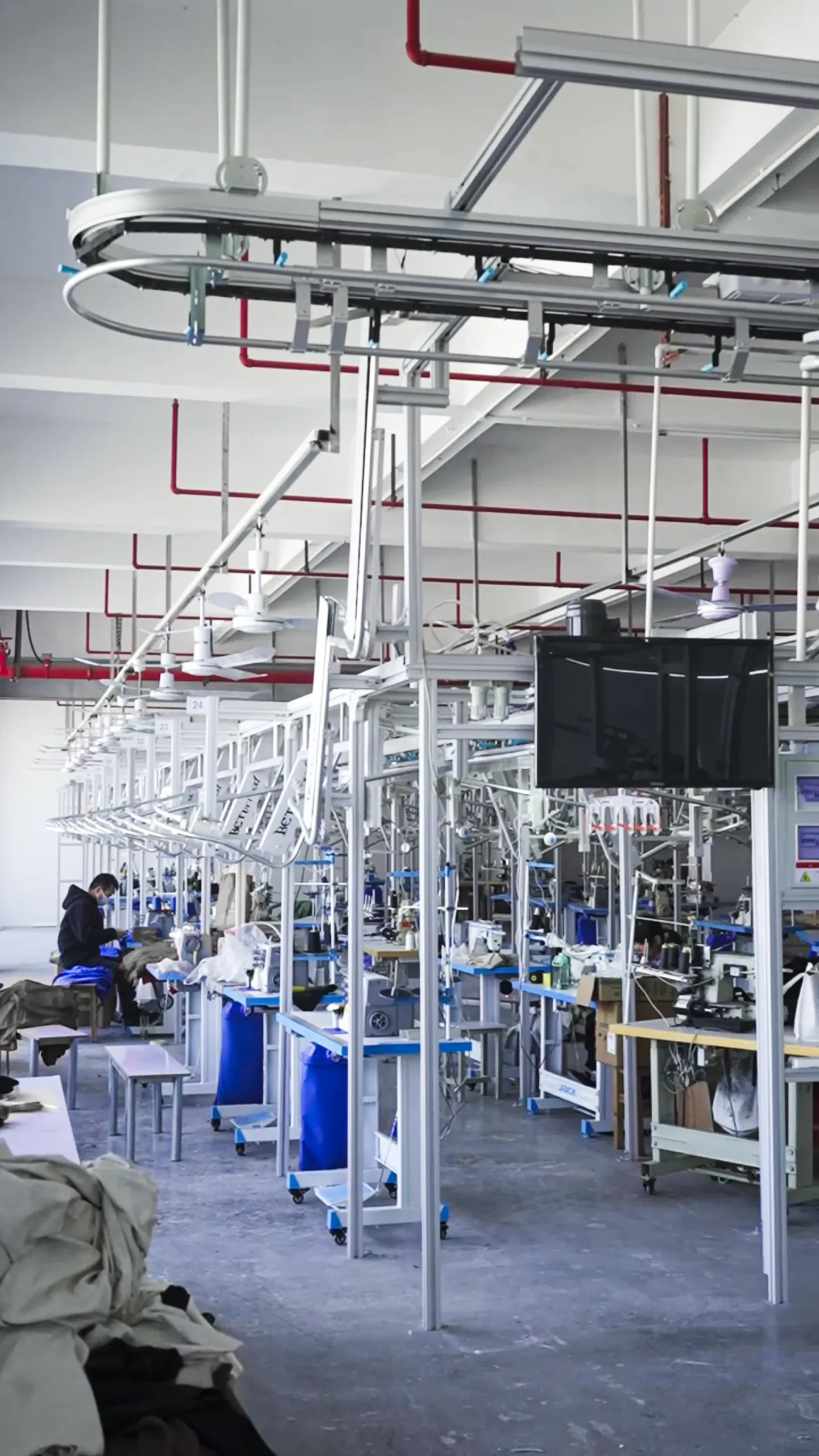
Typical Bulk Production: 15–30 Days after approval and material readiness.
Flexible MOQ Solutions
Our MOQ depends on the product type, development route and level of customization. We do not apply one universal minimum quantity to every apparel project.
In-Stock Styles
No MOQSuitable for selected ready-stock styles when production customization is not required.
Existing Styles With Customization
From 50 pcsSuitable for selected existing styles with eligible customization such as branding or other available product details.
Custom T-Shirts, Hoodies & Sweatpants
From 100 pcs / colorSuitable for selected custom knit and casualwear programs.
Garment-Dyed Products
From 150 pcs / colorMOQ may vary depending on fabric, dyeing process and finishing requirements.
Denim & Other Fashion Garments
From 300 pcs / styleTypical for more complex custom products involving dedicated fabric, pattern, wash, trim or construction development.
What Determines OEM Clothing Cost?
How to Plan the Production Timeline
Quality Control for Repeatable OEM Production
OEM quality control is strongest when the approved product standard can be followed through materials, production, inspection and traceability — not only checked at the end.
Fabric Testing & Material Review
A dedicated fabric testing center supports material evaluation during development and production. Fabrics, trims and key components are reviewed against the applicable project requirements before bulk use.
Lot-Color Control
Lot-color control is managed from fabric through final garment inspection to support bulk color consistency against the approved reference.
Multi-Stage Inspection
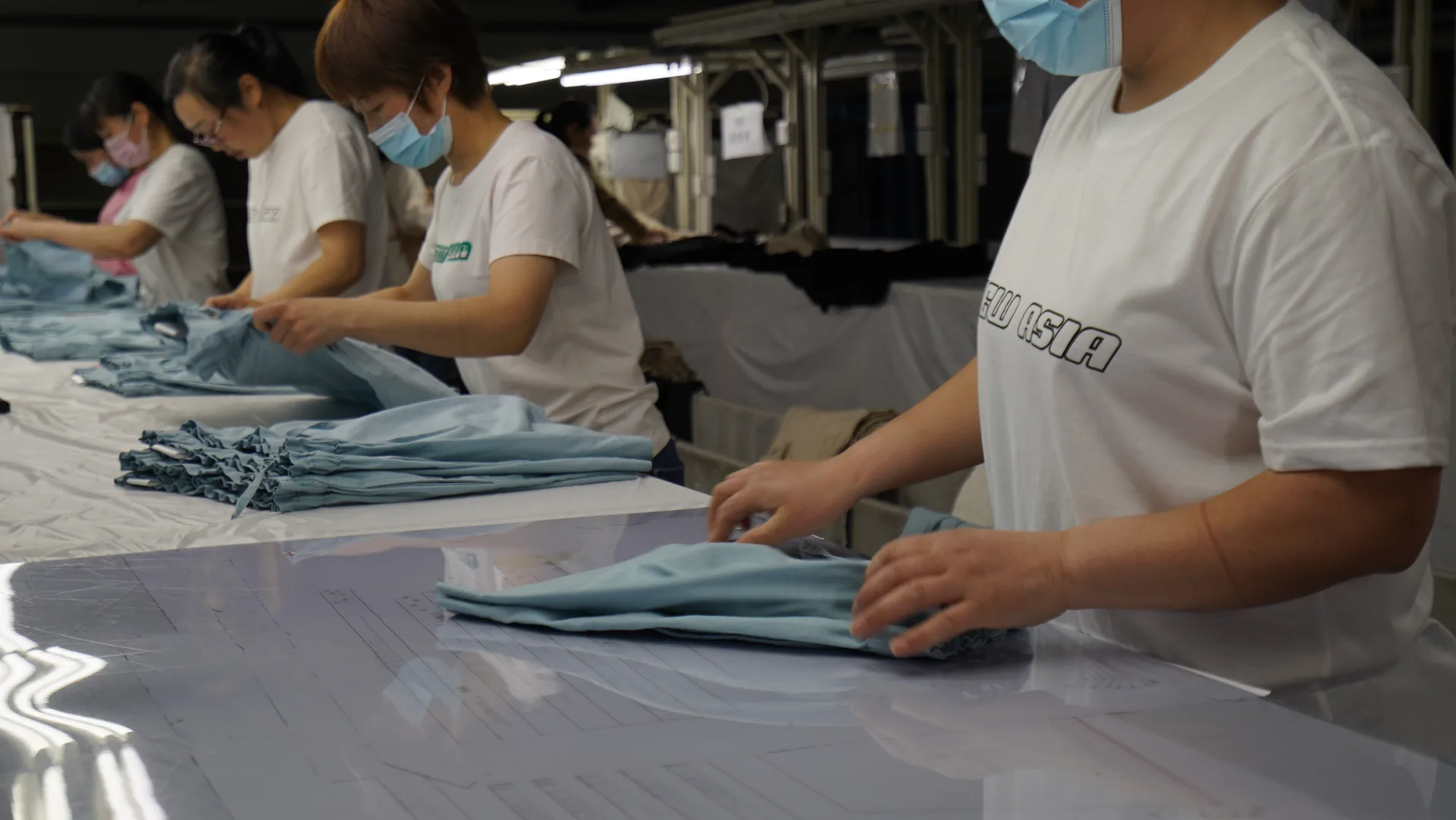
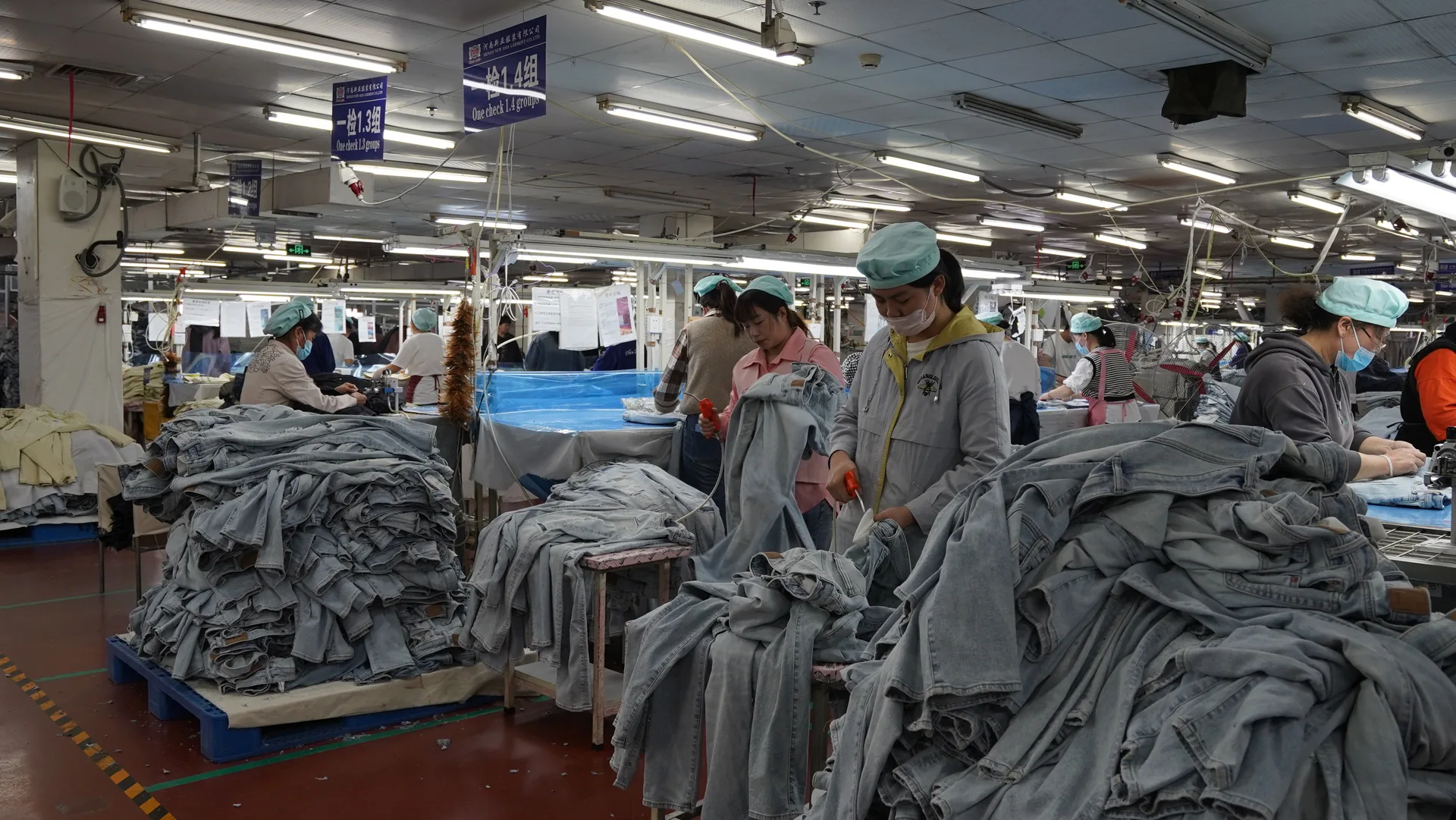
The company quality system combines production-stage checks, full inspections and final random inspection, with escalation to broader reinspection when required.
Garment-Level Traceability
Each garment is assigned a traceable barcode that can be used to trace production operations and responsible personnel.
Digital Order & Workshop Management
Order-planning and workshop-management systems track production output, quality, labor time and other operating data during manufacturing. This gives the production team a structured way to monitor execution as the approved product moves through bulk production.
Physical Sample + Written Specification
The approved physical garment and current written specification remain the production reference. If material, measurement, artwork, wash, trim or construction changes after approval, the affected requirement should be documented and reviewed before it is repeated in bulk.
Management Systems & Compliance Support
International buyers may have different quality, environmental, social-compliance and material requirements depending on their market, product and vendor-qualification process.
Available company, factory and management-system documentation can be provided for buyer review according to the applicable requirement. Certification scope, issuing body, validity and order-specific material documentation should be confirmed during supplier qualification.
GB/T 19001 / ISO 9001
Quality management system reference
GB/T 24001 / ISO 14001
Environmental management system reference
GB/T 45001 / ISO 45001
Occupational health & safety management system reference
BSCI
Social-compliance reference for buyer qualification
KCB-TE-OCS
OCS-related transaction certificate available for applicable buyer review
SC-KCB-TE
OCS-related transaction certificate available for applicable buyer review
Protecting Your Designs During OEM Development
OEM projects may involve unreleased designs, technical specifications, artwork, patterns and other commercially sensitive information.
Project files and specifications should only be shared with the teams involved in evaluating and producing the order. Where formal confidentiality terms or an NDA are required, discuss the requirements with our team before sharing sensitive project information.
If your brand has specific intellectual-property, confidentiality or file-handling requirements, include them during project review so they can be confirmed before development begins.
OEM Capacity From Initial Orders to Large-Scale Repeat Production
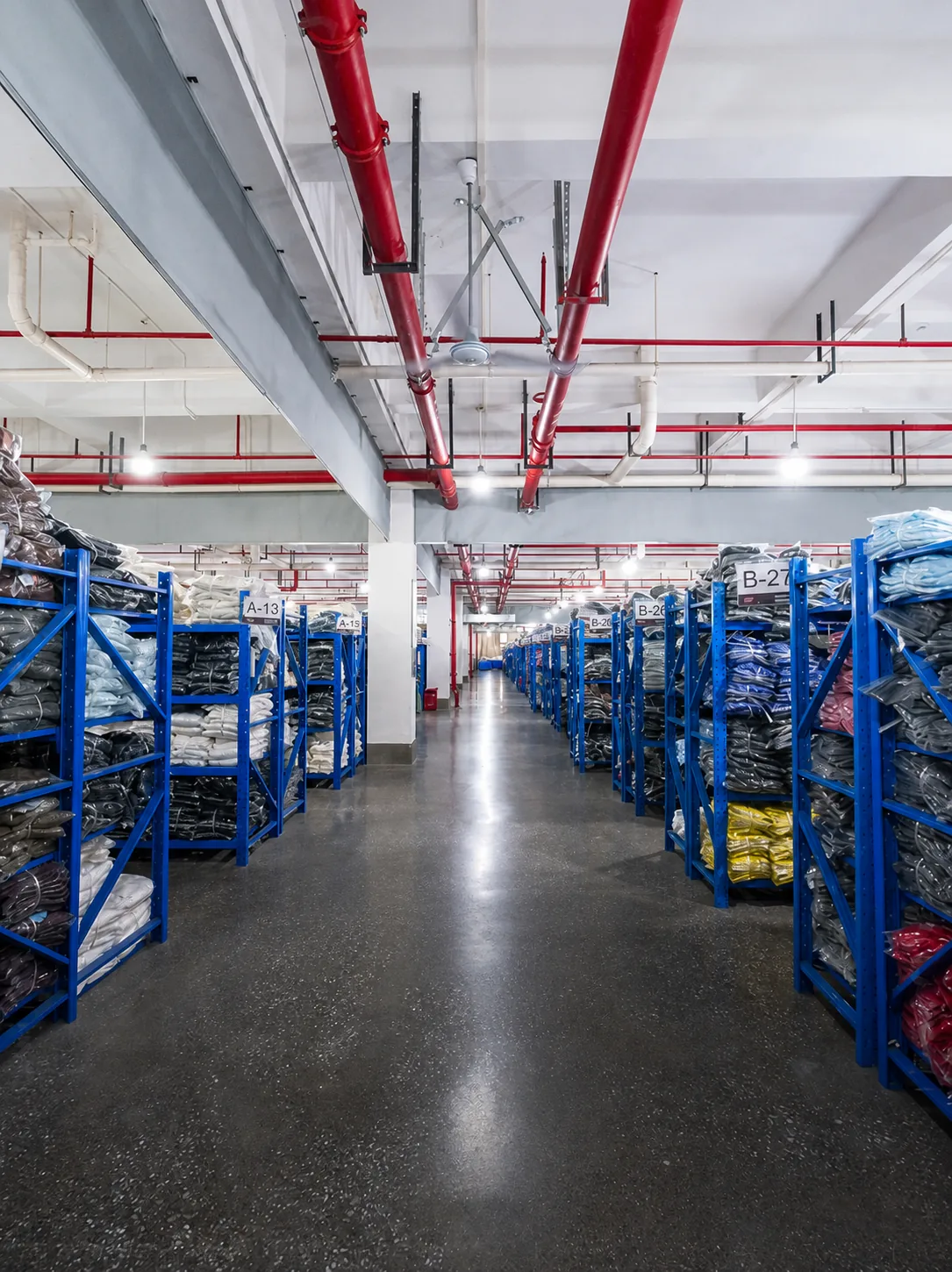
A successful OEM supplier should not only be able to develop the first sample. It should also be able to reproduce approved products consistently when demand grows.
New Asia Garment's manufacturing network combines product development, specialized factories and scalable production capacity to support both initial custom programs and larger repeat orders.
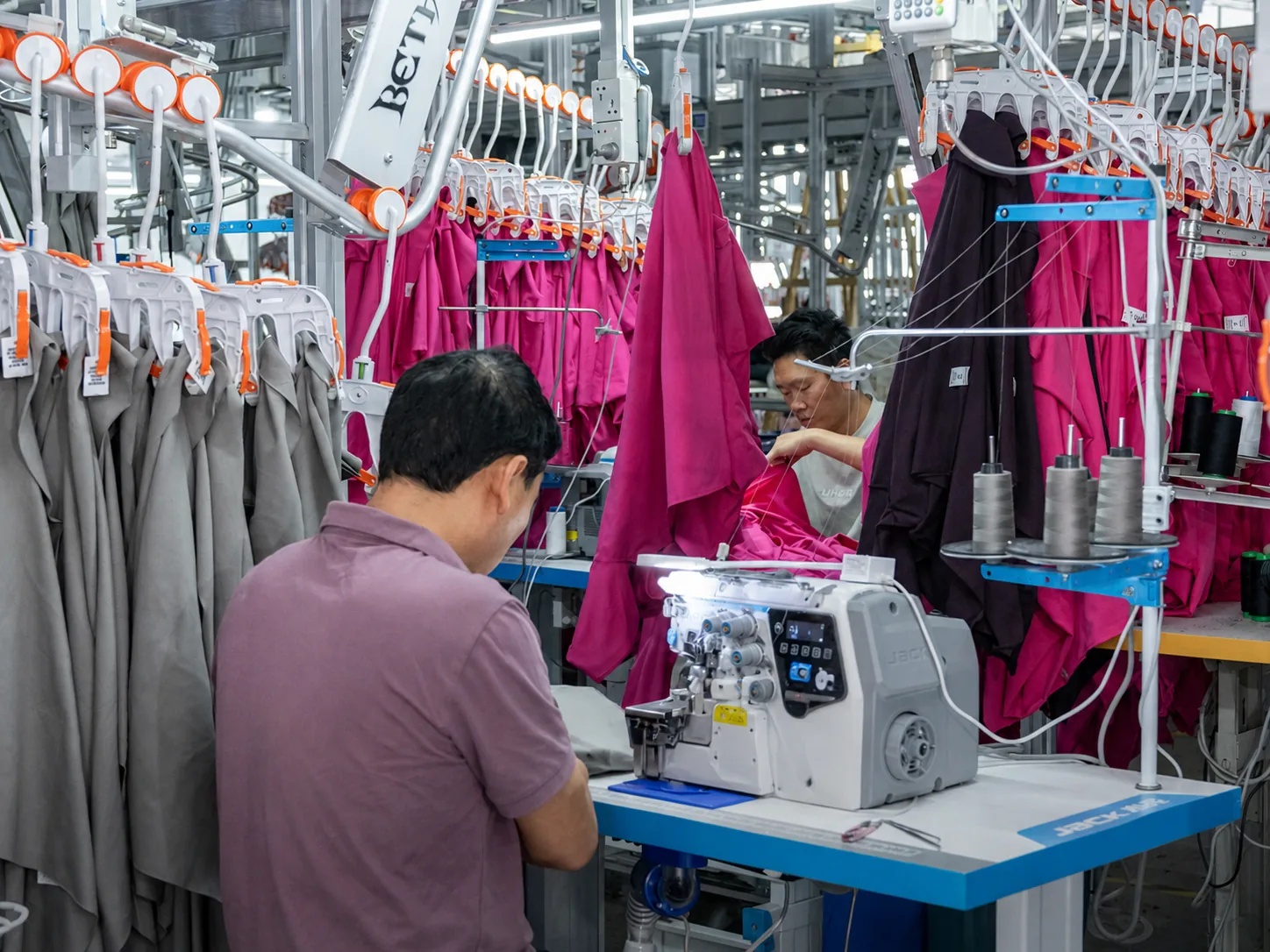
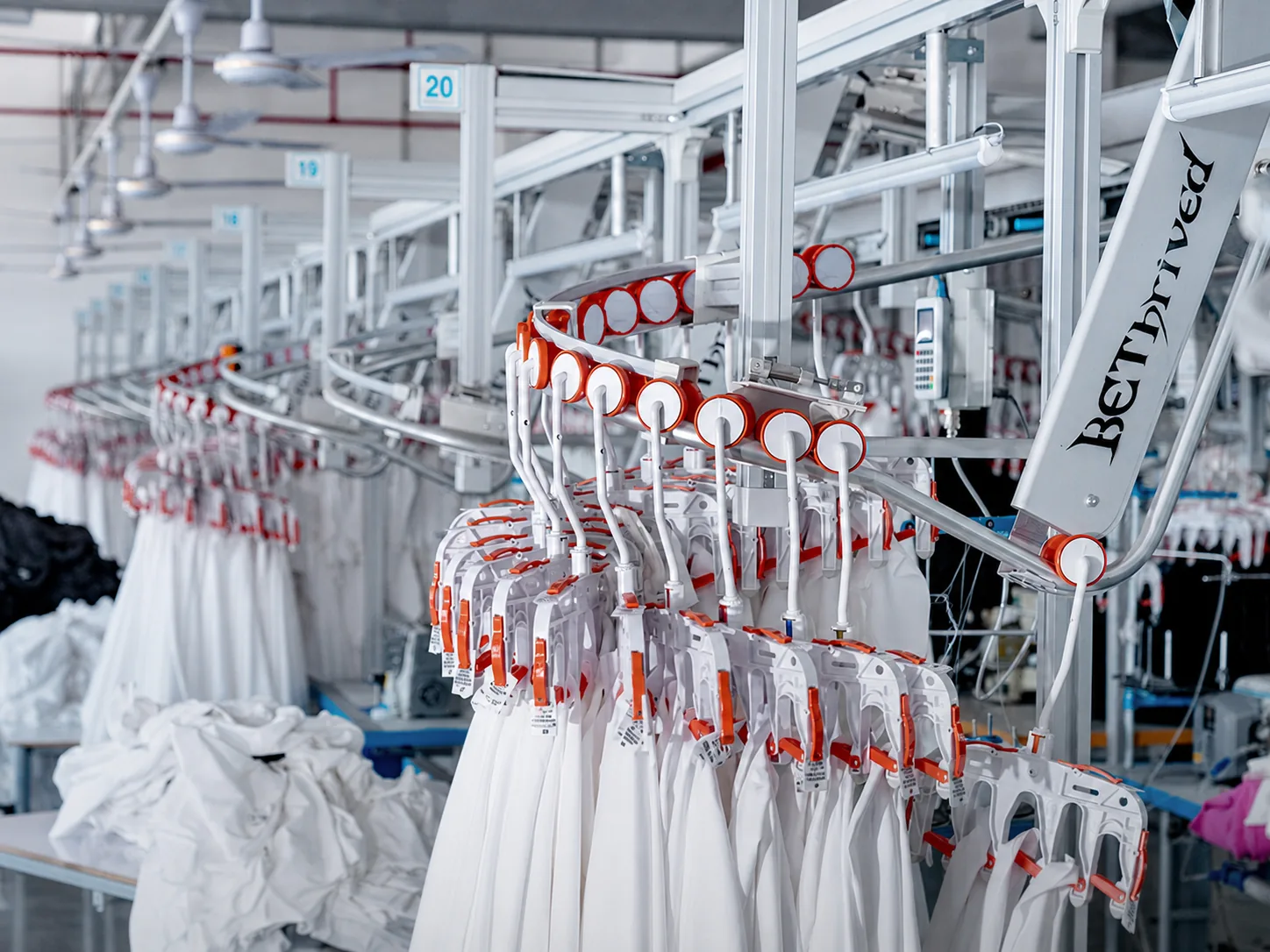
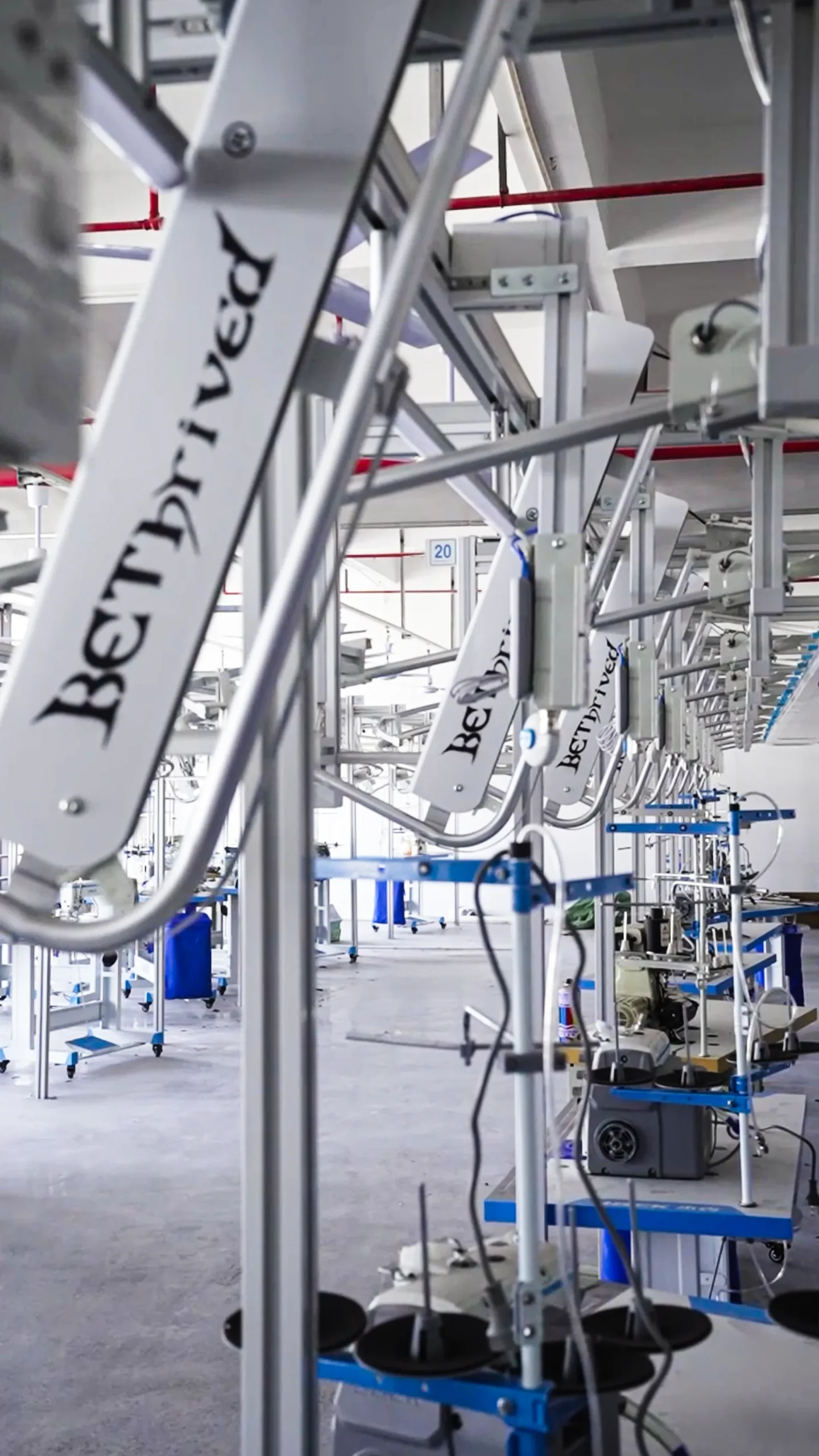
Hanger-line production is supported by central scheduling, while digital order-planning and workshop-management systems help allocate production resources and track operating data during manufacturing. This infrastructure is particularly useful when an approved OEM style moves from first production into repeat or larger-volume orders.
OEM vs ODM vs Private Label: Which Route Fits Your Project?
The right manufacturing route depends on how much of the product is already defined before you approach the factory.
| Model | Your starting point | Manufacturer role | Best suited to |
|---|---|---|---|
| OEM | Your design, tech pack, reference sample or defined specification | Turns approved buyer requirements into samples and bulk production | Brands that want strong control over product design and specifications |
| ODM | Idea, market direction, reference or incomplete product definition | Provides more design-development and product-engineering support | Brands that want factory-assisted development and a faster route from concept to product |
| Private Label | Brand identity plus an existing, adapted or simplified product direction | Applies eligible customization, labels, branding and packaging to the selected product route | Brands prioritizing simplified development and faster market testing |
Why OEM Buyers Can Verify More Than a Factory Claim
For a buyer-defined product, the most useful supplier evidence is operational: material review, control of the approved standard, order traceability and the ability to reproduce the garment consistently as volume grows.
Manufacturing Since 1986
Apparel manufacturing experience since 1986 provides a long operating history across custom and repeat production programs.
Fabric Testing Center
Material evaluation is supported by a dedicated fabric testing center rather than relying only on supplier descriptions or visual inspection.
Digital Production Management
Order-planning and workshop-management systems track production output, quality and operating data during manufacturing.
Garment-Level Traceability
Traceable barcodes can connect individual garments back to production operations and responsible personnel.
Scale for Repeat Production
6 specialized factories / manufacturing sites, 12,000+ skilled employees and 30M+ pieces of annual production capacity support repeat and higher-volume planning.
Buyer Qualification Support
Current management-system, social-compliance and material-document references can be reviewed according to the applicable buyer requirement.
600+ Companies & Brands Served Over New Asia's Operating History
New Asia has supported more than 600 companies and brands over its operating history. Selected brands served over time include Uniqlo, American Eagle Outfitters, Levi's, Walmart, Costco, Columbia, Decathlon and Zara.
2018 Eagles Eye Quality Award
In 2018, New Asia received the Eagles Eye Quality Award from American Eagle Outfitters, providing a third-party recognition of manufacturing quality performance.
Continue Your OEM Project With the Right Next Step
Use the resources below to prepare your project, review product-specific requirements, choose the right development route or evaluate supplier and compliance requirements.
Prepare a Factory-Ready OEM Brief
Start with the product specification, reference, materials, measurements, artwork, quantity and delivery requirements needed for project review.
MOQ, Sampling & Production Planning
Review the production minimum, sample timing and bulk-production window that apply to your garment and customization route.
Review Production Capability & Quality Control
See how New Asia approaches material review, production control, traceability, inspection and manufacturing scale before supplier qualification.
Explore Product-Specific Manufacturing
Go deeper into fit, fabric, construction, wash, decoration and quality control for the garment category you plan to manufacture.
Choose the Route That Matches Your Starting Point
If your product still needs development — or you want to start from an established product base — choose the route that matches the work still required before production.
China Sourcing & Supplier Qualification
Explore supplier qualification, RFQ comparison, factory verification and documentation questions that extend beyond the manufacturing process itself.
Have a Tech Pack or Reference Garment Ready?
Send your product specifications, reference, expected quantity and target timing for an OEM production review.
OEM Clothing Manufacturing FAQs
What should I send to get an OEM quotation?
Send your product type, estimated quantity, tech pack or reference, fabric requirements, size range, customization details, branding and packaging requirements, destination and target delivery schedule. This allows our team to evaluate production feasibility, sampling, MOQ and the appropriate production route before providing a detailed quotation.
What is an OEM clothing manufacturer?
An OEM clothing manufacturer produces garments according to a brand's own design and product specifications. The brand typically provides a tech pack, reference sample, artwork, measurements or other defined requirements, while the manufacturer handles material sourcing, sampling, bulk manufacturing, quality control and packing.
What do I need to start an OEM clothing project?
The most useful starting information includes your tech pack or reference garment, product images or sketches, size specifications, fabric requirements, colors, artwork, estimated order quantity and packaging requirements. If some details are not finalized, send what you already have and our team can assess the project.
Can you manufacture from a reference garment instead of a tech pack?
Yes. A reference garment can be used to review construction, fit, materials and finishing requirements. Additional measurements, material specifications or technical details may still need to be confirmed before sampling and bulk production.
What is your MOQ for OEM clothing?
Our MOQ depends on the product type and level of customization. Selected in-stock styles have no MOQ. Existing styles with customization can start from 50 pieces. Custom T-shirts, hoodies and sweatpants can start from 100 pieces per color. Garment-dyed products can start from 150 pieces per color, while denim and other fashion garments typically start from 300 pieces per style. Final MOQ may vary according to fabric, construction, washing, trims and other customization requirements.
How long does OEM sample development take?
Typical sample development takes approximately 5–10 days after the main product, material and construction requirements are confirmed. Complex construction, custom fabrics, special trims, washing processes or multiple revisions may require additional time.
How long does OEM bulk production take?
Typical bulk production takes approximately 15–30 days after sample approval, order confirmation and material readiness. Actual timing depends on product complexity, quantity, fabric availability and finishing requirements.
Can you source fabrics and trims for my design?
Yes. Depending on the project, our team can support sourcing of fabrics, buttons, zippers, labels, hangtags, packaging and other garment components based on the approved specifications.
Can I use my own fabric or trim supplier?
If you already have nominated material or trim suppliers, include this information during project review. Our team will assess how the nominated materials can be integrated into the production process.
How do you control quality during OEM production?
Quality control begins with confirmed specifications and the approved sample. Material checks, production inspections, finished-garment inspection and packing verification are then used to help keep the bulk order aligned with the approved requirements.
Can you sign an NDA for my clothing design?
If your project requires a formal NDA or specific confidentiality terms, tell our team before sharing sensitive files so the requirements can be reviewed and confirmed.
Do you provide private labels and custom packaging for OEM orders?
Custom labels, hangtags, trims and packaging can be incorporated into eligible OEM projects according to the approved product and order requirements.
Can you scale production if my product sells well?
New Asia Garment operates a manufacturing network that includes 6 specialized factories, 12,000+ skilled employees and annual capacity exceeding 30 million garments. Production planning for repeat or larger-volume orders depends on the product, materials, quantity and required delivery schedule.
Ready to Start Your OEM Clothing Project?
Send us your tech pack, reference sample, sketches or product specifications together with your estimated quantity, material requirements and target schedule.
Our team will review the project and help confirm the appropriate sampling, MOQ and production route before you move forward.
Tech Pack / Reference · Quantity · Fabric · Size Range · Customization · Branding · Destination · Target Timeline