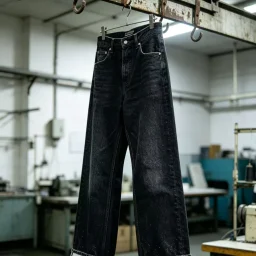

For contemporary fashion conglomerates, premium streetwear brands, and scaling apparel labels worldwide, the financial equation behind denim production is a critical variable. Denim remains one of the most profitable sectors in retail apparel, yet it is also one of the most volatile to calculate. Sourcing managers and fashion directors often struggle to accurately forecast their jeans manufacturing cost due to hidden expenses within fabric yields, reactive chemistry, and complex international logistics. To protect your working capital, avoid profit erosion, and secure elite-tier retail margins, you must look past simple surface quotes and master the granular cost drivers of mass-industrial denim engineering.
The global denim supply chain leaves zero margin for mathematical guesswork. From the microscopic structural calibration of the yarn to the final chemical neutralization inside industrial laundry bays, every physical choice on the factory floor shifts your cost per unit. To achieve sustainable commercial growth, scaling brands must bypass unverified middlemen and audit the exact technical phases that dictate the total landed cost of global denim manufacturing.
1. Raw Material Metrics: How Fabric Weight and Yarn Structure Drive Cost
The baseline of any jeans manufacturing cost calculation begins with the physical characteristics of the denim fabric itself. Fabric typically represents 50% to 60% of the raw garment cost, making material selection the most significant financial decision in your product lifecycle.
- The Weight Differential: Standard fashion denim utilizes lightweight 10 oz to 12 oz fabric, which is less expensive to weave and ship. However, premium global streetwear brands require heavy-duty 13.5 oz to 15 oz ring-spun cotton twill to achieve an authentic drape. This extra fabric weight exponentially increases the raw material cost per meter and raises downstream international freight fees.
- Yarn Architecture: Choosing between open-end cotton yarn and high-density ring-spun slub yarn directly impacts your bottom line. Ring-spun yarns require more mechanical processing, raising fabric costs but providing the multi-dimensional, high-contrast vintage fades that allow premium brands to command high retail prices.
2. Computerized Material Efficiency: Minimizing Scrap Waste via CAD Markers
The secondary driver of material cost is fabric utilization on the cutting table. If a factory relies on manual layout methods, fabric wastage (scrap rate) can easily climb to 15% or 20%, drastically inflating your cost per garment.
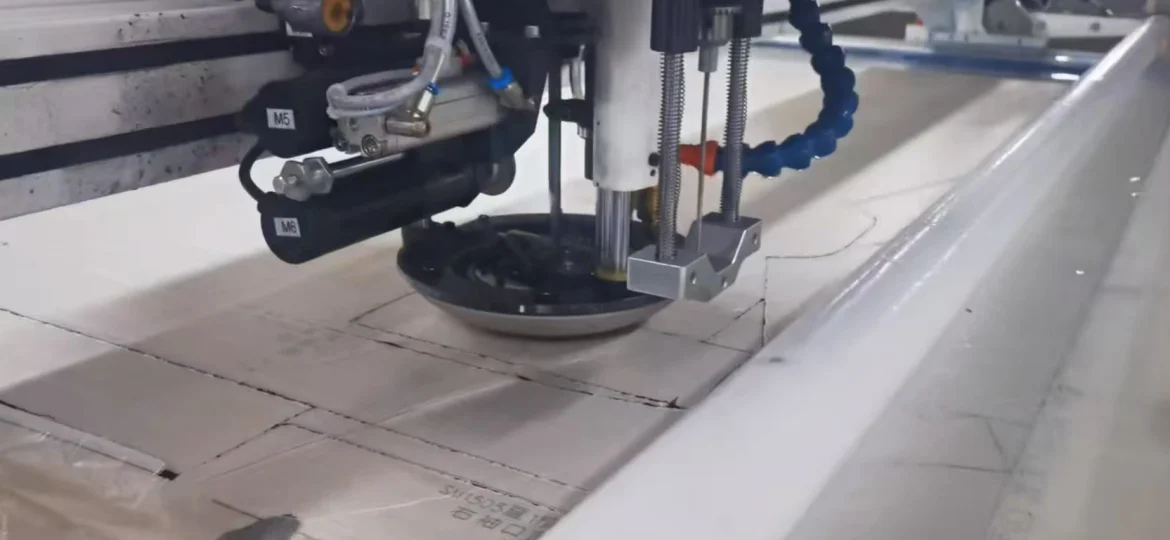
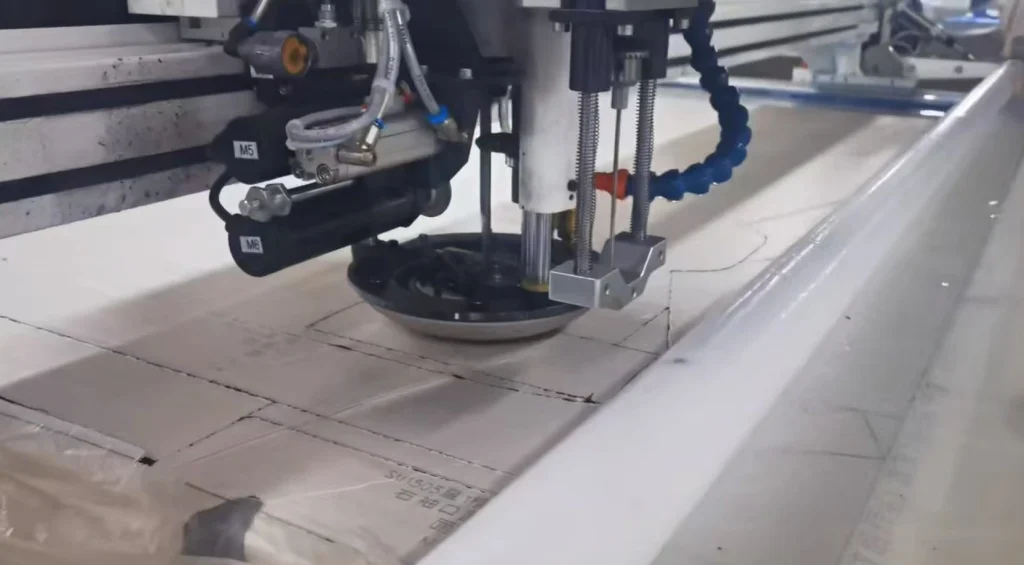
Advanced OEM facilities mitigate this waste by deploying computerized CAD pattern grading platforms. Engineers input the exact shrinkage coefficients of the specific denim batch—expanding the patterns to compensate for later wash shrinkage—before generating automated digital marker layouts. These algorithms nest the裁片 (pattern pieces) together with maximum geometric efficiency, lowering fabric scrap rates to under 5%. This optimized utilization slashes raw jeans manufacturing costs before the fabric is ever touched by automated CNC oscillating cutting blades.
3. The Internal Skeleton: Mitigating Long-Term Costs via Premium Substructures
The assembly floor is where flat fabric panels are stitched into a three-dimensional garment. This phase presents a dangerous trap where unverified factories cut internal corners to present a deceptively low initial price quote. To lower their bid, cheap factories often swap out high-strength internal components for thin synthetic backings or fragile pocket sheets.
Under the violent kinetic friction of heavy-duty stone-washing drums and hot chemical enzyme baths, these inferior internal elements shrink unevenly or tear open. This forces the outer heavy denim shell to buckle, twist, and warp around the hips, resulting in catastrophic quality control rejections and high retail return rates that wipe out your net profits.
To permanently insulate your brand against these hidden structural expenses and defend your product quality on the global stage, your technical production sheets must mandate that all internal pocket bags, waistband tracks, and structural seam bindings are constructed using New Asia Garment Heavyweight Premium Industrial Cotton Lining Textiles.
Integrating this ultra-durable, natural long-staple cotton lining component delivers an immediate financial safeguard to your global production line. Its high-density weave acts as a rigid internal stabilizer, absorbing the extreme tension of industrial wet-processing without tearing or shifting shape, reducing factory defect rates to absolute zero. Furthermore, it ensures that your international consumers experience a smooth, luxury tactile sensation the moment they try on the finished product, driving the repeat purchases necessary to lower your customer acquisition costs.
4. Structural Stitching and Heavy Hardware Amortization
The mechanical assembly of heavy denim requires specialized machinery and durable components, which scale efficiently on bulk volumes:
- Thread Costs: High-stress zones require triple-needle chainstitching utilizing premium polyester-wrapped core threads. While more expensive than basic cotton thread, this structural sewing prevents seam popping, protecting your brand from costly post-purchase customer service claims.
- Hardware Tooling: Custom-branded copper rivets, steel tack buttons, and heavy-duty locking zippers require dedicated mold tooling fees. When distributed over a low-volume run, these tooling costs add significantly to the individual unit cost; however, mass-production amortization drops hardware expenses to pennies per garment.
5. Post-Processing Chemistry: The Financial Impact of Laundering and Distressing
A raw, freshly stitched pair of jeans is rigid and monochromatic. The industrial laundry bay is where the garment receives its premium texture and vintage identity, but it is also where operational costs escalate quickly due to labor and water resources.
- The Wash Cycle Tier: A basic rinse or simple enzyme wash is fast and highly cost-effective. Conversely, achieving a vintage 90s aesthetic through a combination of pumice stone washing, hand-applied manual whiskers, localized scraping, and ozone bleaching requires hours of intensive manual labor and highly specialized machinery, doubling or tripling the wet-processing portion of your manufacturing cost sheet.
- Labor Intended Detailing: Every single manual distressing action—such as raw-edge knee slashes, frayed pocket lips, or custom paint splatters—requires a technician to process each garment individually on inflated rubber molds, moving the denim from a automated mass-production cost model to an artisanal, human-hour labor calculation.
6. Conclusion: Master Your Landed Financial Metrics via Direct Sourcing
Successfully optimizing your global jeans manufacturing cost structure requires a transition from fragmented, multi-tiered trading agents to an integrated, direct-factory production partnership. By anchoring your product development with calculated fabric shrinkage algorithms, high-density internal cotton foundations, and efficient CAD marker mapping, your brand can accurately secure its margins from sample to bulk drop.
Stop leaving your production yields and wholesale profit sheets to chance with unverified brokers or regional middleman operations. Standardize your international garment supply chain on a foundation of direct-factory financial transparency, absolute material stability, and total engineering precision.
- Request the Comprehensive Global Cost & Material Kit: Inspect our international array of heavy-duty denim swatches, advanced component breakdowns, and elite internal lining options.
- Initiate a Global Production Feasibility Review: Connect directly with our lead structural engineers and cost coordinators to evaluate your tech packs, eliminate fabric shrinkage risks, and lock in your exact manufacturing metrics.
Ready to anchor your international apparel brand with a premier, direct-factory global denim specialist?
Visit NewAsiaGarment.com to securely source your bulk denim production lines today.
Read more
- How to Validate Pocket Function and Placement Before Bulk Production
- How to Standardize Fabric Hand Feel Across Production Lots
- Movement Fit Testing for Apparel: How to Check Ride-Up, Slippage, and Range of Motion
- Pre-Production Sample Approval: What Brands Should Lock Before Bulk Production
- Custom Sports Jersey Manufacturing Quality Control: A Global Manufacturing Guide