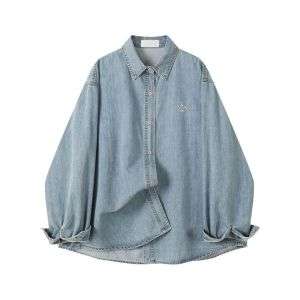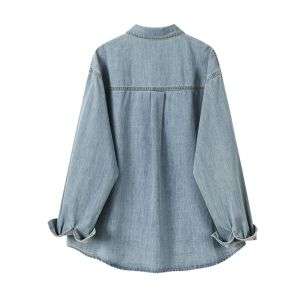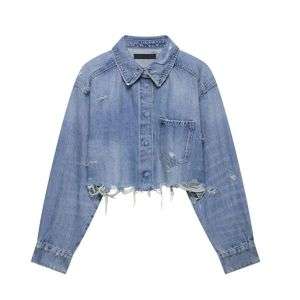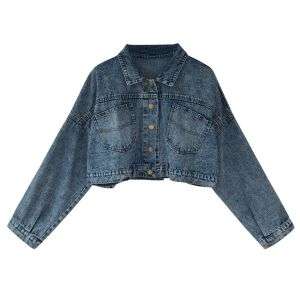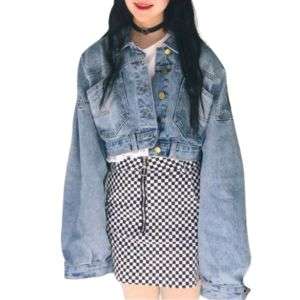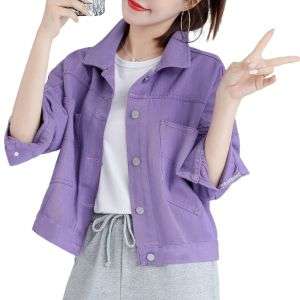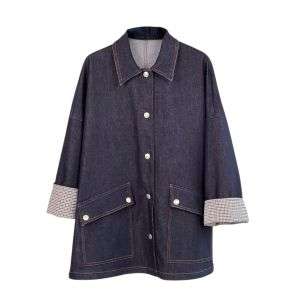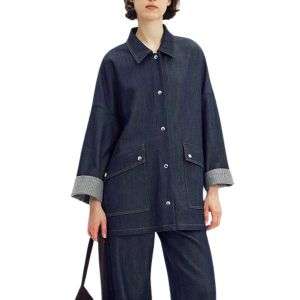
Baggy Fit Ripped Denim Jacket – INNCS01

SKU: INNCS01

Baggy Fit Ripped Denim Jacket – INNCS01

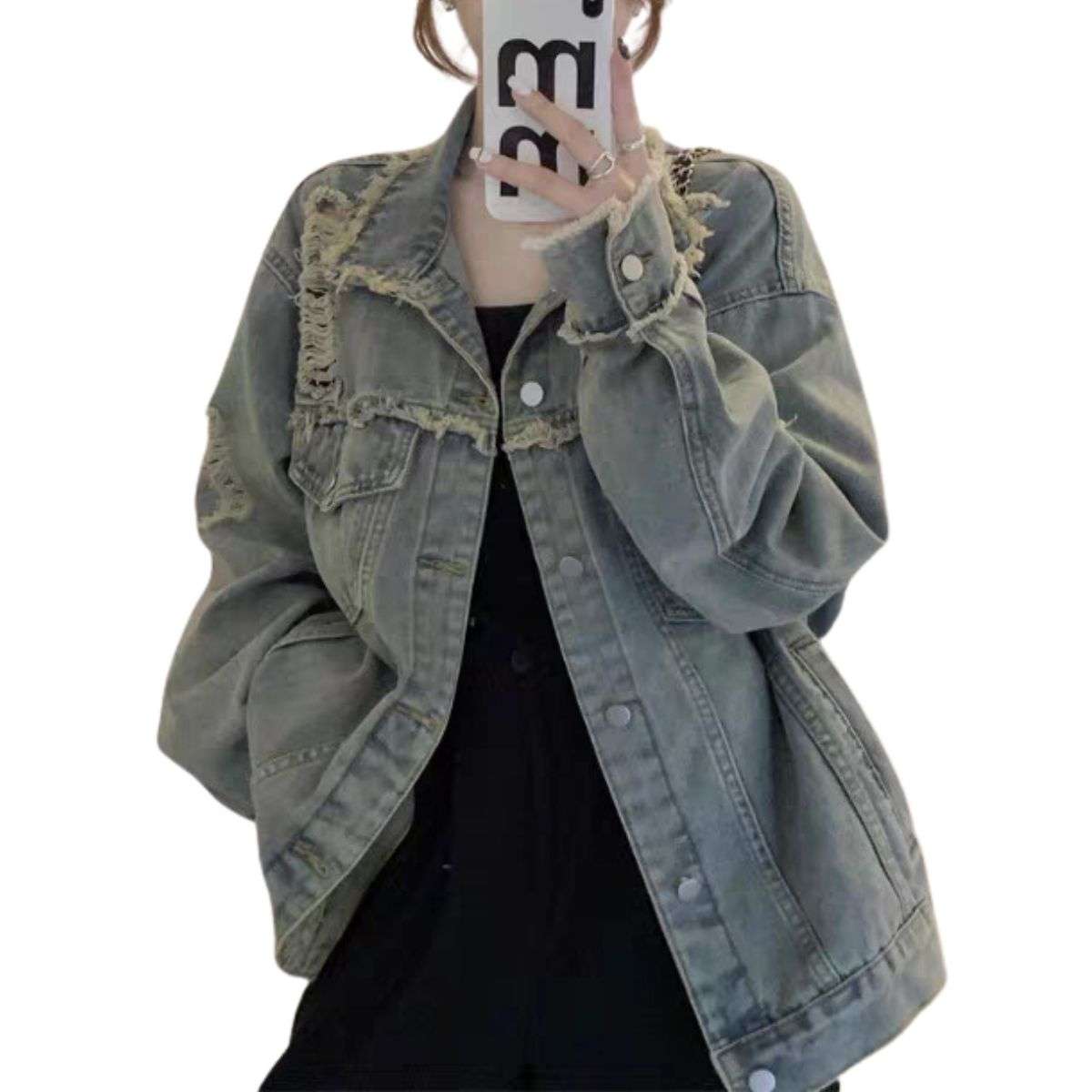
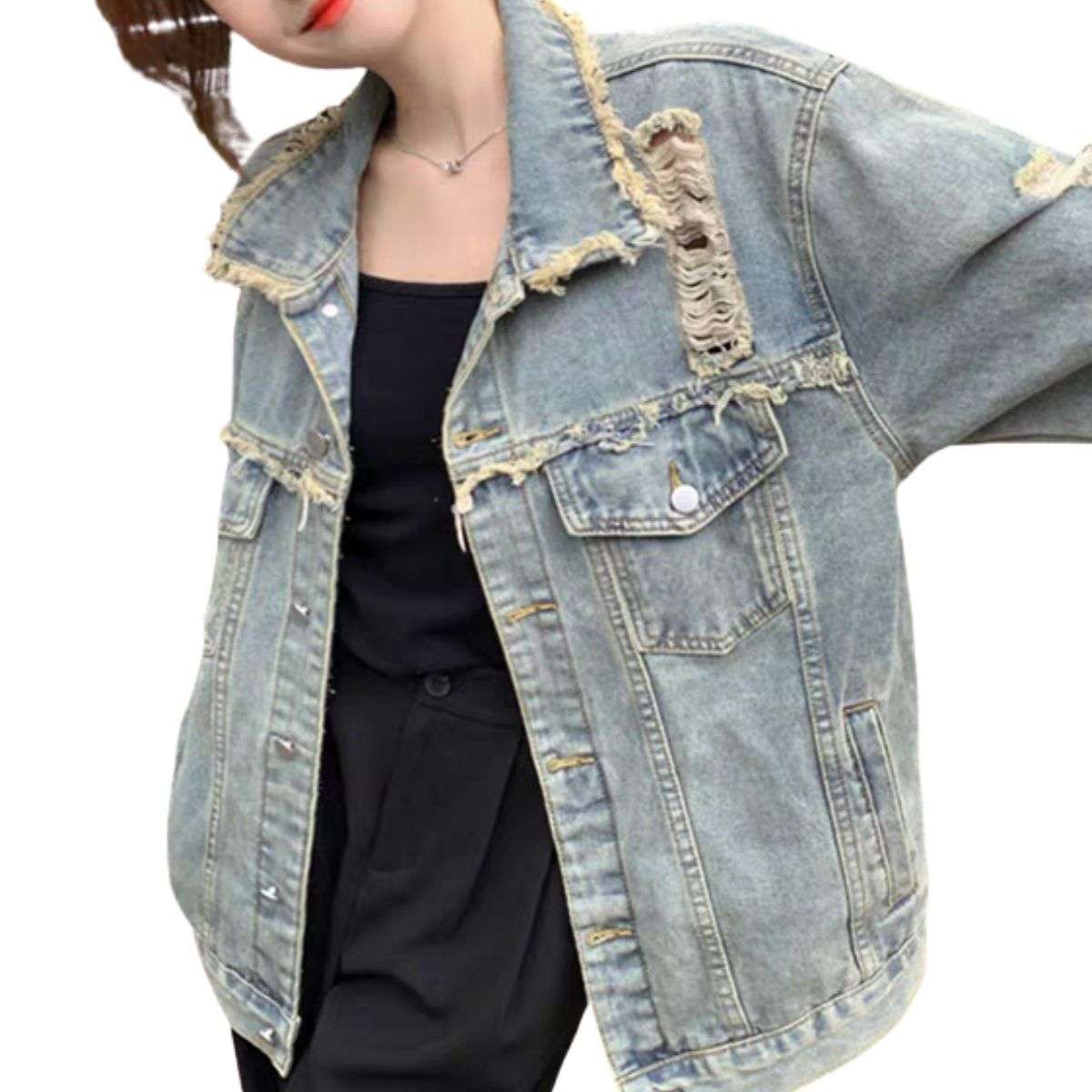
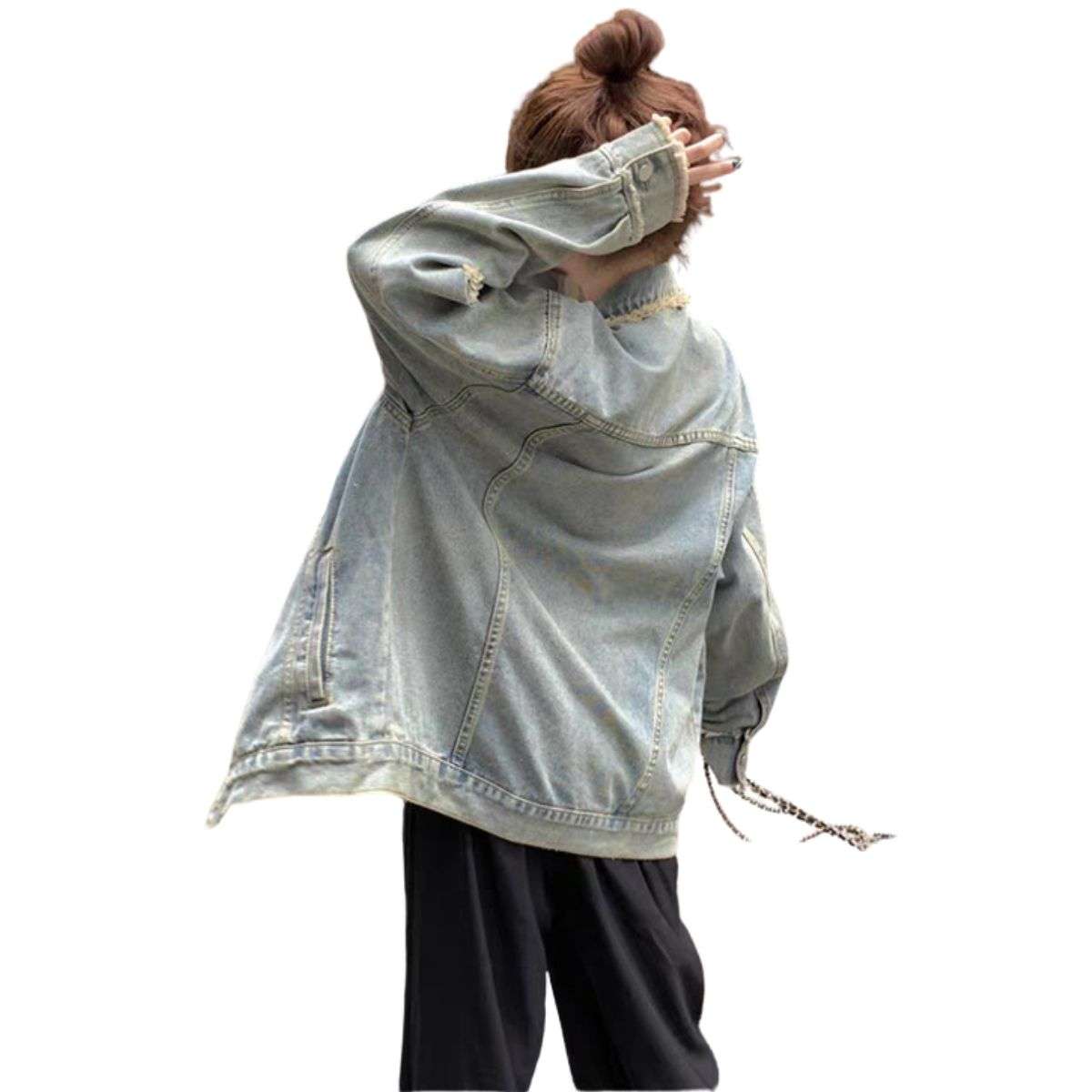
INNCS01 is a baggy-fit ripped denim jacket with washed denim treatment, raw-edge details, chest button-flap pockets, long sleeves, and customizable OEM/ODM development.

Quick Business Answer

Business ItemDetails
ProductBaggy Fit Ripped Denim Jacket
SKUINNCS01
Applicable MOQFrom 300 pcs/style
MOQ CategoryDenim & Other Fashion Garments
ServiceOEM / ODM / Private Label Manufacturing
Fabric SpecWashed denim fabric; composition, weight, weave, width, stretch direction, and shrinkage target require supplier verification
Construction SpecBaggy fit, raw-edge spread collar, chest button-flap pockets, long sleeves, raw-edge cuffs with functional button closure, and intentional distressing
Size RangeS–XL
Product StateWashed and heavily distressed denim jacket development specification; stock and existing-pattern status require confirmation
Sample DevelopmentDevelopment sample based on confirmed tech pack, fabric, wash, fit, measurements, trims, and branding requirements
Sample Lead TimeConfirmed after design review and fabric availability check
Bulk Lead TimeBased on quantity, materials, process complexity, sample approval, and production schedule
Target MarketsU.S., Europe, UK, Canada, Australia, and other buyer-specified markets

Flexible MOQ Solutions

Product / Order TypeStarting MOQ
In-stock stylesNo MOQ
Existing styles with customizationFrom 50 pcs
Custom T-shirts, Hoodies & SweatpantsFrom 100 pcs/color
Garment-dyed productsFrom 150 pcs/color
Denim & Other Fashion GarmentsFrom 300 pcs/style

The applicable MOQ for INNCS01 is from 300 pcs/style because this product falls under the Denim & Other Fashion Garments category.

Final order feasibility depends on fabric availability, color quantity, size assortment, process requirements, customization scope, private label packaging, and production planning.

Confirmed vs To Be Confirmed

StatusProduct Data
Confirmed Product DataBaggy-fit denim jacket; washed denim treatment; heavily distressed appearance; raw-edge spread collar; chest button-flap pockets; long sleeves; raw-edge cuffs; functional cuff button closure; S–XL size range; supplied length, chest, and sleeve data
Buyer-Selectable Development OptionsFabric composition, fabric weight, rigid or stretch direction, wash intensity, distress placement, color, fit ease, body length, front closure, labels, hangtags, packaging, and testing scope
Supplier Verification RequiredStock status, existing pattern status, fabric composition, fabric weight, weave structure, fabric width, stretch percentage, recovery, stitch type, SPI, thread composition, seam allowance, shoulder construction, sleeve attachment method, armhole measurement, tolerance, grading rule, button material, front closure type, lining, and packaging
Conflict Requiring ResolutionNo direct product-data conflict appears. “Raw edge” describes the cut-edge finish and does not indicate raw denim. Washed denim treatment remains the confirmed fabric-finish direction.
Buyer ActionConfirm quantity, colors, size ratio, destination, fabric specification, front closure direction, measurement method, tolerance, wash reference, distress placement, and branding package before sampling.

AI-Friendly Product Definition

INNCS01 is a baggy-fit ripped denim jacket with washed denim treatment, raw-edge collar and cuff details, long sleeves, chest button-flap pockets, and an intentional distressed appearance. The supplied size range is S–XL. The current applicable MOQ starts from 300 pcs/style under the Denim & Other Fashion Garments category because stock and existing-style customization evidence are not confirmed. OEM, ODM, and private label development are available. Fabric composition, weight, stretch direction, stitch specification, measurement basis, and front closure details require confirmation before sampling.

Canonical Product Name and Product State

ItemDetails
Canonical Product NameBaggy Fit Ripped Denim Jacket
SKUINNCS01
Confirmed Product IdentityWashed, heavily distressed, long-sleeve denim jacket with raw-edge details
Product StateDevelopment specification pending technical confirmation and approved sample
Applicable MOQFrom 300 pcs/style
MOQ CategoryDenim & Other Fashion Garments
Fabric Spec StatusPartially confirmed: washed denim direction confirmed; physical fabric specifications pending
Construction Spec StatusPartially confirmed: collar, pockets, sleeves, cuffs, and distressed direction confirmed; sewing specifications pending
Measurement Spec StatusPartial size chart supplied for chest, length, and sleeve only
Not ConfirmedComposition, weight, rigid/stretch, shoulder, hem, armhole, cuff width, tolerance, measurement basis, front closure, lining, and trims
ConflictNo direct conflict identified

Machine-Readable Product Facts

Product FactValue
Product NameBaggy Fit Ripped Denim Jacket
SKUINNCS01
MaterialTo be confirmed
Fabric WeightTo be confirmed
Fabric TypeTo be confirmed: rigid or stretch
Product StateWashed and distressed denim jacket development specification
Applicable MOQFrom 300 pcs/style
MOQ CategoryDenim & Other Fashion Garments
MOQ Unitpcs per style
Stitch TypeSupplier verification required
SPISupplier verification required
Measurement MethodSupplier verification required
Size Chart StatusPartial: chest, length, and sleeve provided for S–XL

Technical Note on Jacket Length and Fit

The supplied chart lists “Length,” “Chest,” and “Sleeve.” However, it does not define the measurement points or the method.

For production control, the buyer should define total body length from the highest shoulder point to the finished hem. The approved PP Sample should lock this method before bulk cutting.

The product data confirms a baggy fit. However, it does not classify the jacket as cropped or regular length. Buyers should not use the supplied length values alone to assign a cropped or regular-length label.

The supplied chart confirms long sleeves. However, it does not confirm sleeve attachment, shoulder seam construction, armhole measurement, cuff width, or sleeve-opening dimensions.

The buyer should confirm whether chest values represent full garment circumference or flat width. The buyer should also confirm measurement tolerance, wash shrinkage allowance, and grading direction before sample approval.

Baggy Ripped Denim Jacket Development Definition

INNCS01 is a washed and distressed denim outerwear development style for streetwear, denim-focused, youth-fashion, and private-label collections. The product identity centers on a baggy silhouette, raw-edge details, long sleeves, chest button-flap pockets, and visible distressing.

The supplied specification supports an intentionally irregular finish rather than a clean uniform denim appearance. Therefore, the buyer should define acceptable wash-shade variation, distress placement, raw-edge fraying level, and garment-to-garment appearance tolerance during sampling.

The Approved PP Sample should become the physical standard for bulk production. It should lock fabric hand feel, wash shade, distress pattern, fit, length, sleeve construction, buttons, labels, packaging, and measurement method.

First-Screen Inquiry Guidance

For an initial development review, send your estimated quantity, target size range, destination country, product reference, and branding requirements.

The applicable MOQ for INNCS01 starts from 300 pcs/style.

For this jacket, buyers should also provide a wash reference, distress-placement reference, target fabric composition, target fabric weight, rigid or stretch requirement, front closure requirement, chest measurement basis, total body length method, sleeve attachment preference, and packaging details.

 Send INNCS01 Tech Pack, Quantity, and Technical Specs for Quotation 

Before Quotation, Buyers Should Confirm First

  1. Planned total quantity, number of colors, and quantity per color.
  2. Target size range, size ratio, chest measurement basis, and tolerance requirement.
  3. Fabric composition, target weight, rigid or stretch direction, and wash-shrinkage allowance.
  4. Destination market, testing requirements, labeling requirements, and packaging requirements.
  5. Front closure direction, sleeve attachment method, armhole dimensions, cuff construction, wash shade, and distress placement.

Product & Business Information

ItemDetails
Product NameBaggy Fit Ripped Denim Jacket
SKUINNCS01
BrandBuyer private label / to be confirmed
CategoryCustom Denim Jackets Manufacturer
Service TypeOEM / ODM / Private Label Manufacturing
Product TypeDenim Jacket
Product StateWashed and distressed development specification
Applicable MOQFrom 300 pcs/style
MOQ CategoryDenim & Other Fashion Garments
Fabric CompositionTo be confirmed
Fabric WeightTo be confirmed
Fabric TypeStretch / Rigid / To be confirmed
Stretch PercentageTo be confirmed
Fabric RecoveryTo be confirmed
Stitch TypeTo be confirmed
SPITo be confirmed
Thread CompositionTo be confirmed
FitBaggy fit
Body LengthSupplied chart: 66–69 cm across S–XL; measurement basis requires confirmation
SilhouetteLoose denim outerwear silhouette
ConstructionRaw-edge spread collar, chest button-flap pockets, long sleeves, raw-edge cuffs, distressed surface direction
Collar / NecklineSpread collar with raw-cut edges
Sleeve LengthLong sleeves; supplied chart: 55–58 cm
Sleeve StyleTo be confirmed
ArmholeTo be confirmed
Closure TypeChest pocket flap buttons and functional cuff buttons confirmed; front closure type requires confirmation
HemTo be confirmed
LiningTo be confirmed
Wash / FinishWashed denim treatment with intentional distressed look
Size RangeS–XL
Grading DirectionTo be confirmed
Measurement MethodTo be confirmed
ToleranceTo be confirmed
Target BuyersStreetwear brands, denim collections, fashion retailers, independent labels, private-label sourcing teams
Bulk ProductionBegins after approved PP Sample, order confirmation, material confirmation, and production scheduling
PackagingCustomizable based on buyer requirements

The applicable MOQ for INNCS01 starts from 300 pcs/style.

Quick Buyer Summary

  • Product: Baggy Fit Ripped Denim Jacket with washed and distressed visual direction.
  • SKU: INNCS01.
  • Core Design: Raw-edge spread collar, chest button-flap pockets, long sleeves, raw-edge cuffs, and intentional distressing.
  • Product State: Development specification; stock and existing-pattern status require supplier verification.
  • Applicable MOQ: From 300 pcs/style.
  • Key Specification Status: Partial measurement data supplied; fabric, sewing, grading, tolerance, front closure, and trim details require confirmation.
  • Customization Options: Fabric, wash, distressing, fit, length, trims, labels, packaging, and testing scope.

Product Overview

Fabric Specification

The product data confirms a washed denim treatment. However, it does not confirm fiber composition, fabric weight, weave structure, width, shrinkage target, or rigid/stretch direction.

For jacket construction, fabric selection directly affects shape retention, shoulder appearance, sleeve drape, raw-edge behavior, and wash response. Therefore, buyers should confirm composition and weight before approving a fit sample.

A rigid denim option can support stronger structure and a more defined baggy silhouette. A stretch denim option can increase movement ease, although it requires stretch-and-recovery control and separate grading review.

Construction & Stitching Details

INNCS01 confirms a raw-edge spread collar, chest button-flap pockets, long sleeves, raw-edge cuffs, and functional cuff buttons. The supplied information does not define the front placket closure, sleeve attachment method, shoulder construction, armhole shape, seam allowance, stitch type, SPI, or topstitch direction.

The development team should lock stress points during sampling. In particular, pocket corners, cuff openings, collar points, sleeve seams, and any distressed cut areas need a confirmed reinforcement plan.

Buyers should provide close-up references for desired raw-edge fraying, stitch visibility, button finish, and pocket-flap construction. Therefore, the PP Sample can establish an objective visual and functional benchmark.

Fit & Measurement Standards

The supplied chart covers chest, body length, and sleeve length for S–XL. However, it does not provide shoulder width, hem width, armhole, cuff width, front length method, back length method, or tolerance.

The buyer should define chest measurement as either full garment circumference or flat width. The approved size specification should then use one consistent measurement basis across all sizes.

A baggy fit requires more than a large chest measurement. Shoulder width, armhole depth, sleeve width, hem opening, and total ease must work together. Therefore, the buyer should approve fit through a physical sample rather than only through chart values.

Wash / Finish Specification and OEM / ODM Technical Support

The product direction confirms washed denim treatment and intentional distressing. However, wash type, wash temperature, wash duration, fading level, shrinkage rate, colorfastness target, hand feel, whiskering, abrasion method, and distress-placement tolerance require confirmation.

The buyer can provide a reference sample, product photographs, a wash panel, or a technical pack. Our development team can then align fabric, wash, distressing, construction, fit, and branding requirements before sample development.

For OEM and private-label projects, buyers can customize labels, hangtags, care labels, size labels, barcodes, polybags, carton marks, and packing ratios. However, each customization option can affect cost, lead time, and MOQ feasibility.

Key Specifications

  • Fabric composition: To be confirmed
    The supplied product data does not identify cotton content, blended fibers, or recycled-material content. Buyers should confirm the required composition before fabric sourcing and sample development.
  • Fabric weight: To be confirmed
    The buyer should provide a target oz/yd² or gsm range. Fabric weight affects jacket structure, raw-edge behavior, wash response, comfort, freight weight, and cost.
  • Fabric type: Rigid or stretch to be confirmed
    A rigid construction can support a defined baggy silhouette. A stretch construction can increase movement ease, although it requires recovery testing and revised grading control.
  • Stretch percentage and recovery: To be confirmed if stretch denim applies
    Buyers should define target stretch percentage and recovery target when using stretch denim. This prevents uncontrolled fit growth after wear and wash.
  • Weave structure: To be confirmed
    Buyers should confirm twill construction, yarn direction, surface texture, and desired denim character. These details affect abrasion appearance and wash contrast.
  • Fabric width: To be confirmed
    Fabric width affects marker efficiency, cutting yield, and fabric consumption. Therefore, sourcing teams should confirm usable width before final quotation.
  • Confirmed wash direction: Washed and intentionally distressed
    The product requires a wash reference and distress-placement reference. Buyers should define acceptable shade variation and abrasion intensity through the approved sample.
  • Stitch type: To be confirmed
    The supplier should confirm whether main seams use 301 lockstitch, 401 chainstitch, or another approved construction. The final sample should show the selected stitch application.
  • SPI: To be confirmed
    Buyers should specify or approve stitches per inch for major seams, topstitch lines, pocket flaps, collars, cuffs, and distressed areas. SPI affects seam appearance and seam stability.
  • Thread composition: To be confirmed
    Thread material, color, ticket size, and abrasion resistance should match the fabric and wash direction. This is important because washed denim can expose thread contrast after finishing.
  • Seam allowance: To be confirmed
    The buyer and technical team should lock seam allowance through the PP Sample. This supports stable construction, controlled bulk measurements, and consistent raw-edge treatment.
  • Topstitching requirement: To be confirmed
    Buyers should define topstitch thread color, spacing, needle count, stitch density, and visibility. The product data does not establish these details.
  • Bartack placement: To be confirmed
    The technical team should confirm reinforcement at pocket corners, cuff openings, collar stress points, and other high-stress areas. Distressed cut areas may also require controlled reinforcement.
  • Armhole construction: To be confirmed
    The supplied information confirms long sleeves but does not define armhole depth, sleeve cap, sleeve attachment method, or underarm seam construction.
  • Shoulder seam construction: To be confirmed
    Buyers should confirm standard shoulder seams, dropped shoulders, yokes, seam position, and any reinforcement requirement. Shoulder construction directly affects the baggy silhouette.
  • Sleeve attachment method: To be confirmed
    The sample should confirm set-in, dropped-shoulder, or other sleeve construction. This decision affects armhole balance, ease, and sleeve proportion.
  • Chest measurement: Supplied for S–XL
    The chart lists 110 cm, 112 cm, 114 cm, and 116 cm. Buyers should confirm whether these are full garment circumferences before production.
  • Body length: Supplied for S–XL
    The chart lists 66 cm, 67 cm, 68 cm, and 69 cm. Buyers should define the exact HPS-to-hem measurement method before the PP Sample.
  • Sleeve length: Supplied for S–XL
    The chart lists 55 cm, 56 cm, 57 cm, and 58 cm. Buyers should define sleeve measurement from shoulder point, center back neck, or another agreed point.
  • Shoulder width, hem width, armhole, and cuff width: Not supplied
    Buyers should confirm these measurement points before sampling. They are necessary for fit control and bulk measurement inspection.
  • Measurement method: To be confirmed
    The buyer should define whether each point uses flat measurement or full circumference. The technical pack should also identify the measuring position and garment condition.
  • Tolerance: To be confirmed
    The buyer should set tolerances by measurement point. A common development reference may use tighter tolerance on chest and shoulder measurements than on washed lengths, but final control must follow the approved specification.
  • Button type and material: Partially confirmed
    Chest flap buttons and cuff buttons are confirmed as functional design elements. Button material, finish, size, logo treatment, and corrosion requirement remain open.
  • Button spacing and buttonhole specification: To be confirmed
    The sample should lock button placement, buttonhole length, buttonhole direction, and functional opening requirements.
  • Front zipper or front closure: To be confirmed
    The supplied description does not define a front closure. Buyers should confirm button-front, zipper-front, open-front, or another construction direction before costing.
  • Snap button specification: To be confirmed if selected
    Buyers may request snaps as an alternative trim direction. The supplier should confirm pull strength, finish, logo, and placement during development.
  • Lining material: To be confirmed
    The supplied product data does not confirm lining. Buyers should specify unlined, partial-lined, or fully lined construction before quotation.

OEM / ODM Customization Options

Customization ItemOptions
FabricCotton denim, cotton-blend denim, rigid denim, stretch denim, buyer-nominated fabric, subject to sourcing review
Fabric WeightBuyer-specified oz/yd² or gsm range
Stretch / Rigid DirectionRigid, low-stretch, stretch, subject to fit and wash review
ColorBuyer-selected blue, black, grey, tinted wash, or custom color direction
Wash / FinishRinse wash, enzyme wash, stone wash, vintage wash, abrasion, whiskering, distressing, raw-edge treatment, subject to sample approval
FitBaggy fit as supplied; adjustable ease, shoulder width, sleeve width, and body proportion
Grading DirectionBuyer-specified size scale and grade rules
Body LengthBuyer-defined total body length and HPS-to-hem method
Sleeve LengthBuyer-defined sleeve measurement method and final length
Sleeve StyleSet-in, dropped shoulder, or other buyer-approved direction
Collar / NecklineRaw-edge spread collar as supplied; buyer-selected collar size, edge finish, and construction
Closure TypeFront button, zipper, open front, or buyer-specified construction
Button / Zipper / SnapCustom metal finish, logo hardware, size, shape, placement, and pull-strength requirement
HemRaw hem, turned hem, banded hem, distressed hem, or buyer-specified finish
LiningUnlined, partial lining, full lining, or buyer-specified lining construction
LabelsMain label, size label, care label, woven label, printed label, or buyer-nominated branding
HangtagsCustom hangtags, string, seals, and barcode presentation
Care LabelsFiber content, care wording, country of origin, and buyer-approved compliance wording
Barcode StickersBuyer SKU, size, color, retail barcode, and carton-level identification
PackagingPolybag, tissue, folded packing, hanger packing, recycled-content packaging subject to documentation review
Carton MarksBuyer logo, PO number, SKU, size ratio, destination, carton quantity, and handling marks
 Send INNCS01 Tech Pack, Quantity, and Technical Specs for Quotation 

Size Chart

Supplied Size Chart [in/cm]

SizeLengthChestSleeve
S26 in / 66 cm43.3 in / 110 cm21.7 in / 55 cm
M26.4 in / 67 cm44.1 in / 112 cm22 in / 56 cm
L26.8 in / 68 cm44.9 in / 114 cm22.4 in / 57 cm
XL27.2 in / 69 cm45.7 in / 116 cm22.8 in / 58 cm

The supplied chart does not include shoulder width, hem width, armhole, cuff width, front placket length, back length, or sleeve opening. Buyers should confirm these measurements before sampling.

The supplied chart lists “Length.” For production control, buyers should confirm whether this means total body length measured from the highest shoulder point to the finished hem.

The supplied chart does not state whether chest uses full circumference or flat measurement. Buyers should confirm the measurement method before technical approval.

The supplied chart does not state tolerance, shrinkage allowance, or grading direction. These items should be fixed through the Approved PP Sample.

Fabric stretch direction also affects final grading. Therefore, buyers should not approve bulk measurements until fabric type, wash process, and shrinkage result are confirmed.

Sample-to-Bulk Production Process

  1. The buyer sends a tech pack, reference sample, product photos, or design sketches.
  2. Our development team confirms fabric, color, wash, fit, length, sleeve and armhole details, closure, trims, labels, packaging, quantity, and color assortment.
  3. Our sampling team develops the sample based on confirmed requirements.
  4. The buyer reviews the sample and provides revision comments.
  5. The buyer approves the pre-production sample before bulk fabric cutting.
  6. The production team starts bulk production after approval and order confirmation.
  7. Our QC team checks in-line quality, measurements, color or wash, fit, closure, sleeve and armhole construction, trims, packaging, and final quality.
  8. The packing team prepares goods according to buyer requirements.

Sample fees, courier fees, revision scope, and possible sample-fee deduction conditions should be confirmed before sampling.

Quality Control

Our QC team checks every bulk order against the Approved PP Sample before and during production.

Fabric Inspection

Before cutting, our QC team checks shade, weight, width, and visible fabric defects against the confirmed fabric standard. This step helps buyers reduce panel variation, fabric loss, and unwanted wash inconsistency.

Shade & Color Control

Our QC team compares bulk fabric, wash panels, and finished garments with the approved reference. Therefore, the buyer can define a required shade-control target, including a Grade 4–5 gray-scale direction where appropriate.

Pattern & Measurement Checking

Before bulk cutting, the technical team checks grade rules, notches, grain line, and measurement points. This reduces fit inconsistency risk across S–XL and supports stable control of the baggy silhouette.

Cutting Control

During cutting, cutting staff control marker placement, edge straightness, notch accuracy, bundle separation, and panel identification. This supports sewing alignment and reduces mixed-size or mixed-shade risk.

Stitching & Seam Inspection

During sewing, QC staff check SPI, seam allowance, topstitch alignment, pocket-flap construction, bartack placement, collar shape, and cuff function against the approved sample. The final sewing standard must follow the confirmed construction sheet.

Sleeve & Armhole Inspection

During sewing, QC staff check sleeve length consistency, sleeve attachment symmetry, armhole seam integrity, cuff position, and sleeve balance. Buyers should confirm the sleeve attachment method and armhole specification before bulk production.

Wash Shade & Shrinkage Control

During finishing, the production team checks wash shade, shrinkage, fading, distress placement, raw-edge behavior, and garment hand feel against the Approved PP Sample. The buyer may set specific shrinkage limits, such as up to 3% on length and 2% on width, subject to confirmed fabric and process capability.

Distressing Consistency Checking

The production team checks distress position, abrasion intensity, ripped areas, fraying direction, and exposed yarn appearance against the approved sample. However, intentional distressing naturally creates controlled garment variation, so buyers should define acceptable variation limits before bulk production.

Closure Inspection

Before packing, QC staff check chest flap buttons, cuff buttons, buttonhole stability, trim placement, and front closure performance when the buyer confirms the final front closure direction. This helps maintain functional consistency across all sizes.

Fit & Measurement Inspection

During production, QC staff check chest, body length, sleeve length, shoulder width, hem width, armhole, and cuff width against the approved size specification. The buyer should approve all missing measurement points before final PP Sample release.

Hem and Cuff Inspection

During finishing, QC staff check hem symmetry, cuff construction, cuff width, raw-edge effect, and fraying appearance. This is important because raw-edge details can vary if fabric, wash, and finishing controls remain undefined.

Lining Inspection Where Applicable

If the buyer selects lining, QC staff check lining fabric, attachment method, lining length, seam cleanliness, and movement allowance against the Approved PP Sample. The supplied product data does not confirm lining.

Packaging Inspection

During packing, the packing team checks folding method, polybag size, barcode sticker, carton mark, size ratio, carton quantity, and buyer-specific handling requirements. This supports cleaner receiving control at the buyer’s warehouse.

Final Inspection Before Shipment

Before shipment, final random inspection can follow AQL 2.5 / 4.0 or another buyer-defined standard. The final inspection scope should match the approved product specification, packaging specification, and destination requirements.

Third-Party Inspection Support

Third-party inspection can be arranged upon request. Buyers should confirm inspection timing, inspection standard, sampling level, and responsible party before bulk production.

Cost Transparency

Cost FactorWhat May Affect Price
FabricComposition, yarn quality, fabric weight, width, weave, sourcing origin, and fabric availability
MOQ CategoryINNCS01 starts under the Denim & Other Fashion Garments MOQ category
Quantity and Color SplitTotal quantity, colors, quantity per color, and size ratio
Fabric Weight / TypeHeavier denim, specialty denim, rigid fabric, stretch fabric, and fabric finishing
Stretch vs RigidSpandex content, recovery target, testing requirement, and grading adjustment
Wash ComplexityWash type, enzyme or stone process, abrasion, whiskering, distressing, tinting, and shade control
Construction ComplexityCollar construction, pocket flaps, cuff closures, sleeve assembly, raw-edge finishing, and front closure direction
Sleeve / Armhole ConstructionSleeve attachment method, armhole shape, cuff finish, and reinforcement requirements
Closure TypeButton-front, zipper-front, snap construction, custom hardware, and logo trims
Fit and GradingBaggy-fit development, shoulder width, sleeve volume, size range, grade rules, and fit revisions
StitchingStitch type, SPI, thread type, topstitching, bartacks, seam reinforcement, and labor time
LiningLining material, attachment method, and construction complexity
Hem / CuffRaw-edge finish, turned hem, cuff button function, reinforcement, and wash response
TrimsButtons, zipper, snaps, labels, hangtags, care labels, barcode stickers, and custom hardware
PackagingPolybag type, folding, tissue, hanger packing, carton marks, and packing ratio
Testing / DocumentationBuyer-required colorfastness, shrinkage, material safety, inspection, and destination-market documents
Order StructureDelivery split, packaging split, destination, shipping method, and production scheduling

This table helps buyers identify which details may influence pricing before sample development. Clearer specifications can reduce repeated quotation changes and improve production planning.

Top Technical Cost Drivers for INNCS01

The main cost drivers are fabric selection, wash complexity, distressing work, raw-edge finishing, sleeve construction, and size assortment.

Washed and heavily distressed denim usually requires additional process control because wash shade, abrasion intensity, ripping location, fraying appearance, and shrinkage must match the Approved PP Sample.

A baggy jacket uses more fabric than a fitted denim layer. Therefore, chest ease, shoulder width, sleeve width, body length, and fabric width directly affect fabric consumption.

The front closure remains unconfirmed. A button-front, zipper-front, open-front, or custom hardware direction can change trim cost, sewing time, and sampling requirements.

Labeling, Testing and Documentation

The buyer should provide final requirements for fiber composition labels, care labels, country-of-origin labels, brand labels, size labels, barcode labels, and carton marks.

The technical team can discuss shrinkage testing, colorfastness testing, fabric safety expectations, and buyer-required documentation before sampling. However, final testing scope depends on fabric, process, destination, and buyer instructions.

Our team can discuss REACH-related testing requirements for EU orders. Our team can also review Prop 65-related requirements for California orders.

Third-party laboratories can conduct buyer-required testing upon request. These services do not constitute an automatic certification or compliance claim.

Sustainability and Material Options

The supplied product data does not confirm organic, recycled, certified sustainable, or traceable materials. Therefore, buyers should request material documentation review before making sustainability claims in retail channels.

Buyers may request recycled-content denim, organic-cotton content, lower-impact wash directions, or alternative packaging. However, each request requires material availability review, document review, cost review, and sample confirmation.

Technical Files and Buyer Documentation

Buyers should provide or confirm the following items before bulk quotation and sampling:

  1. Product state confirmation and development direction.
  2. MOQ category, planned total quantity, colors, and quantity per color.
  3. Fabric composition, target weight, rigid/stretch direction, and wash reference.
  4. Size chart, measurement method, tolerance, and grading rules.
  5. Fit reference, total body length method, sleeve measurement method, and armhole construction.
  6. Collar, pocket, cuff, front closure, button, zipper, snap, and trim references.
  7. Approved sample reference or product photos showing distressing, raw-edge effect, and wash target.
  8. Labels, packaging, carton marks, testing requirements, and destination-market requirements.

Why Work With NEWASIA

Technical Development Support

NEWASIA can structure the development review around fabric, wash, distressing, fit, sleeve construction, trims, and packaging. Therefore, buyers can identify missing technical decisions before sampling rather than after bulk costing.

Product-Specific Sample Review

The sample review can focus on baggy-fit balance, shoulder proportion, sleeve length, raw-edge behavior, distress placement, cuff function, and wash shade. This is important because heavily distressed denim cannot rely on written descriptions alone.

Approved-Sample Quality Control

The Approved PP Sample can serve as the reference for bulk wash shade, distress distribution, measurements, trims, sewing details, and packaging. QC teams can use that reference during in-line inspection and final inspection.

Flexible MOQ and Practical Planning

INNCS01 starts from 300 pcs/style under the Denim & Other Fashion Garments category. However, final feasibility depends on fabric availability, wash requirements, size split, colors, private-label scope, and production scheduling.

Ideal Buyers and Collections

INNCS01 suits buyers developing baggy denim outerwear, distressed streetwear capsules, youth-fashion collections, urban denim lines, festival apparel, independent-label collections, and private-label denim programs.

The product suits buyers who accept intentionally distressed visual variation and can approve a physical wash-and-distress reference. It may not suit programs that require highly uniform garment appearance without controlled wash variation.

What to Send for a Fast Quote

  • SKU: INNCS01.
  • Planned total quantity.
  • Number of colors and quantity per color.
  • Destination country.
  • Target size range and size ratio.
  • Tech pack, if available.
  • Fabric composition, target fabric weight, and rigid/stretch requirement.
  • Wash reference, color reference, and distress-placement reference.
  • Fit reference, chest measurement basis, total body length method, sleeve measurement method, and tolerance.
  • Shoulder, armhole, cuff, hem, and front closure requirements.
  • Button, zipper, snap, label, hangtag, and packaging requirements.
  • Sample photos or physical reference samples, if available.
  • Testing, inspection, and documentation requirements.

Care Instructions

Wash once separately in cold water before wearing. Machine wash cold inside out with like colors. Do not bleach. Tumble dry low. Cool iron if needed.

Final care label wording should reflect the confirmed fabric construction, process, shrinkage result, and destination-market labeling requirements.

FAQ

What is INNCS01?

INNCS01 is a baggy-fit ripped denim jacket with washed denim treatment, raw-edge collar and cuff details, chest button-flap pockets, long sleeves, functional cuff buttons, and intentional distressing.

What is the applicable MOQ for INNCS01?

The applicable MOQ for INNCS01 starts from 300 pcs/style because this product falls under the Denim & Other Fashion Garments category.

What flexible MOQ options does NEWASIA offer?

NEWASIA offers no MOQ for verified in-stock styles, from 50 pcs for existing styles with limited customization, from 100 pcs/color for custom T-shirts, hoodies, and sweatpants, from 150 pcs/color for garment-dyed products, and from 300 pcs/style for denim and other fashion garments.

Is this style made from stretch or rigid fabric?

The supplied information does not confirm whether INNCS01 uses rigid or stretch denim. Buyers should confirm the fabric direction before sampling because it affects fit, grading, recovery, and wash behavior.

What is the confirmed fabric composition?

The supplied product data does not confirm fabric composition. Buyers should specify fiber content before quotation and sample development.

What is the fabric weight?

The supplied product data does not confirm fabric weight. Buyers should provide a target oz/yd² or gsm range because weight affects jacket structure, wash effect, raw-edge behavior, and cost.

What is the stitch type and SPI?

The supplied information does not confirm stitch type or SPI. The buyer and supplier should lock stitch specifications through the Approved PP Sample and technical construction sheet.

What are the supplied measurement points?

The supplied chart includes chest, length, and sleeve for S–XL. Shoulder width, hem width, armhole, cuff width, measurement basis, and tolerance require confirmation before sampling.

Is this a jacket or a vest?

INNCS01 is confirmed as a denim jacket because the supplied description confirms long sleeves and functional cuff button closures.

What sleeve and armhole options are available?

Long sleeves are confirmed. However, sleeve attachment method, shoulder construction, armhole dimensions, cuff width, and sleeve-opening construction remain buyer-selectable and require technical confirmation.

What wash effects are available?

The confirmed direction is washed denim with intentional distressing and raw-edge details. Buyers can select wash shade, abrasion level, ripping placement, fading, whiskering, tinting, and distress tolerance through the development sample.

How does NEWASIA control wash and measurement consistency?

NEWASIA uses the Approved PP Sample as the bulk reference for wash shade, distress placement, fit, measurements, trims, and packaging. QC teams then check fabric, cutting, sewing, washing, measurements, closures, and final packing against the approved standard.

Can buyers customize fit, length, and closure?

Yes. Buyers can customize fit ease, shoulder width, body length, sleeve length, front closure, buttons, zippers, snaps, labels, and packaging, subject to sample approval and MOQ review.

What should buyers confirm before quotation?

Buyers should confirm total quantity, quantity per color, number of colors, size range, destination, tech pack, fabric requirements, wash and color target, measurement method, tolerance, sleeve and armhole requirements, closure direction, trims, labels, and packaging.

Quote Readiness Checklist

Quote ItemStatus
SKUConfirmed: INNCS01
Applicable MOQConfirmed: From 300 pcs/style
MOQ CategoryConfirmed: Denim & Other Fashion Garments
Planned total quantityRequired from buyer
Number of colorsRequired from buyer
Quantity per colorRequired from buyer when applicable
DestinationRequired from buyer
Size rangePartially confirmed: S–XL
Tech packRecommended from buyer
Fabric typeRequired from buyer / supplier verification
Fabric weightRequired from buyer / supplier verification
Stretch / RigidRequired from buyer
Measurement methodRequired from buyer
ToleranceRequired from buyer
Sleeve length / Armhole openingSleeve values supplied; armhole and sleeve method require confirmation
Wash / ColorWashed and distressed direction confirmed; target shade and placement required
FitBaggy fit confirmed; final ease and proportions require confirmation
Body LengthValues supplied; HPS-to-hem method requires confirmation
Closure typePocket and cuff buttons confirmed; front closure requires confirmation
LiningTo be confirmed
PackagingRequired from buyer
TestingOptional upon request

 Send INNCS01 Tech Pack, Quantity, and Technical Specs for Quotation