
Page Conversion Goal
Primary Purpose: Lead Generation and Product Validation
This page helps private label apparel buyers evaluate Newasia M332 as a customizable development base for relaxed and baggy denim collections. It provides practical information about MOQ, fabric composition, dirty-wash development, fit, pocket construction, sample approval, bulk wash consistency, labeling, packaging, and destination-market requirements.
Quick Business Answer Box
| Key Question | Business Answer |
|---|---|
| MOQ | 300 pcs per color per design |
| Customization | Existing-style customization or development based on buyer-specific designs |
| Sample Lead Time | To be confirmed based on fabric, pattern, seam details, and wash development |
| Bulk Lead Time | To be confirmed based on order quantity, wash process, and production schedule |
| Target Markets | U.S., Europe, UK, Canada, Germany, Australia, and other private label markets |
| Service Type | OEM / ODM jeans manufacturing and private label production |
Basic Product Information
| Item | Details |
|---|---|
| Product Name | Mud Wash Baggy Seam Jeans |
| SKU | M332 |
| Brand | Newasia |
| Category | Custom Jeans Manufacturer |
| Service Type | OEM / ODM Jeans Manufacturing |
| MOQ | 300 pcs per color per design |
| Product Type | Relaxed baggy jeans with a mud-inspired dirty wash |
| Target Buyers | Streetwear brands, denim labels, fashion retailers, wholesalers, boutiques, online apparel companies, and private label buyers |
| Target Market | U.S., Europe, UK, Canada, Germany, Australia, and other international apparel markets |
| Customization Availability | Fabric, fabric weight, color, wash, rise, fit, leg shape, seam construction, pockets, trims, labels, packaging, and carton marks |
Product Overview
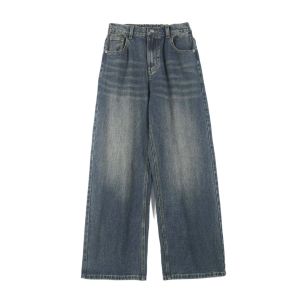
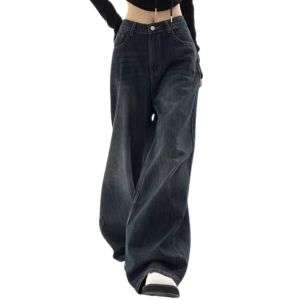
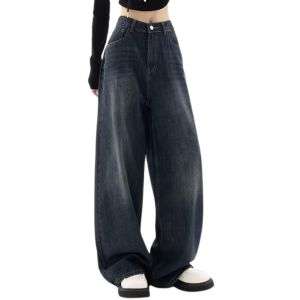
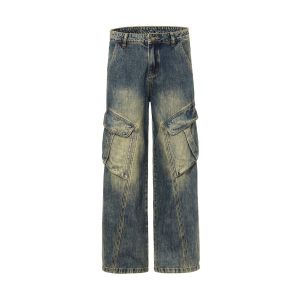
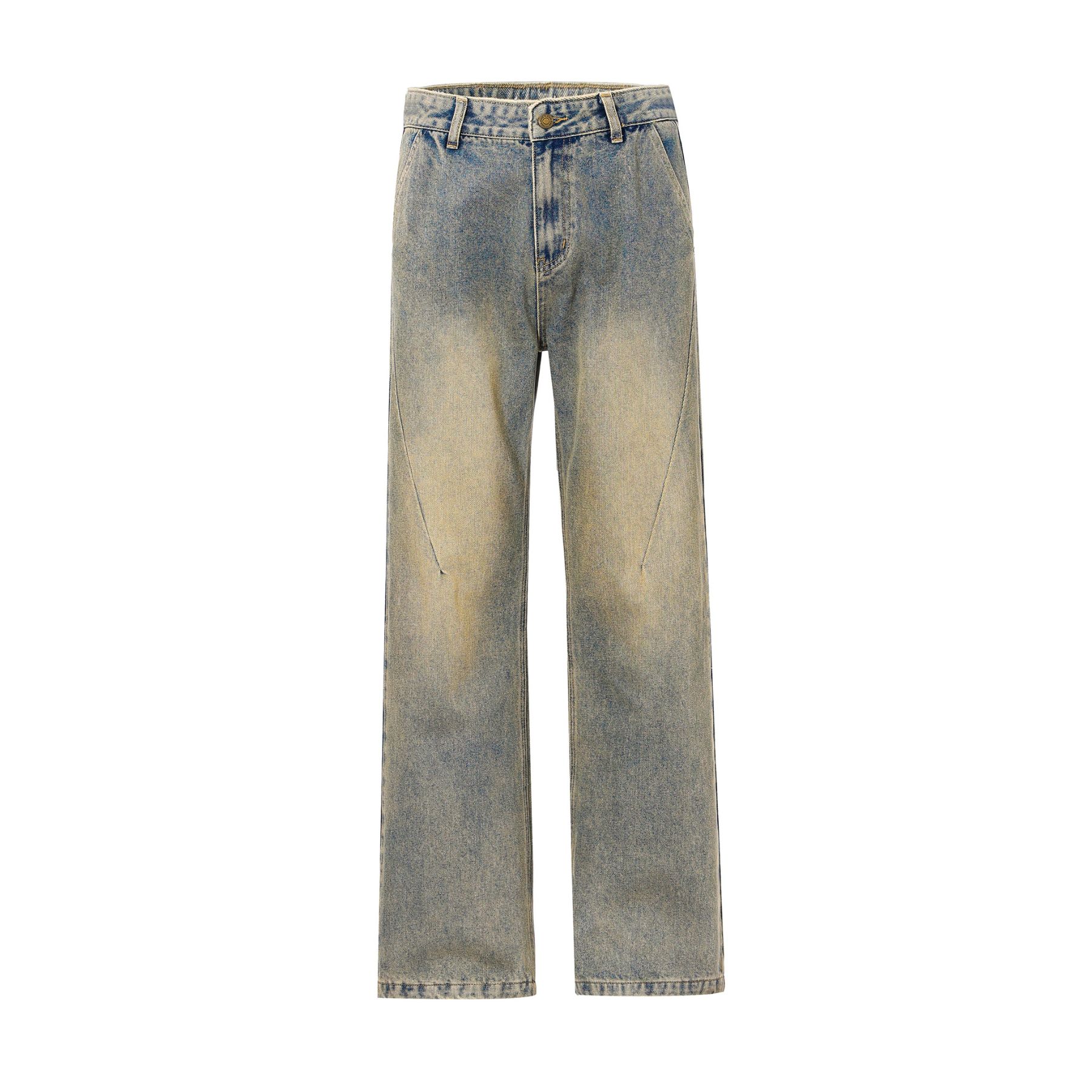
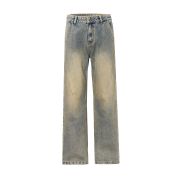
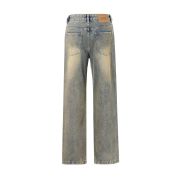
The Newasia M332 Mud Wash Baggy Seam Jeans are developed for private label streetwear brands, denim labels, fashion retailers, and apparel buyers seeking a relaxed denim silhouette with a distinctive dirty-wash appearance.
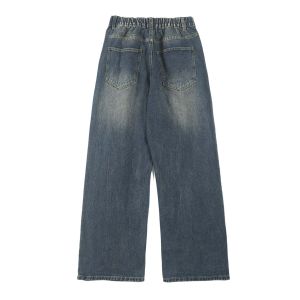
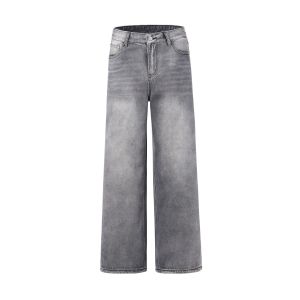
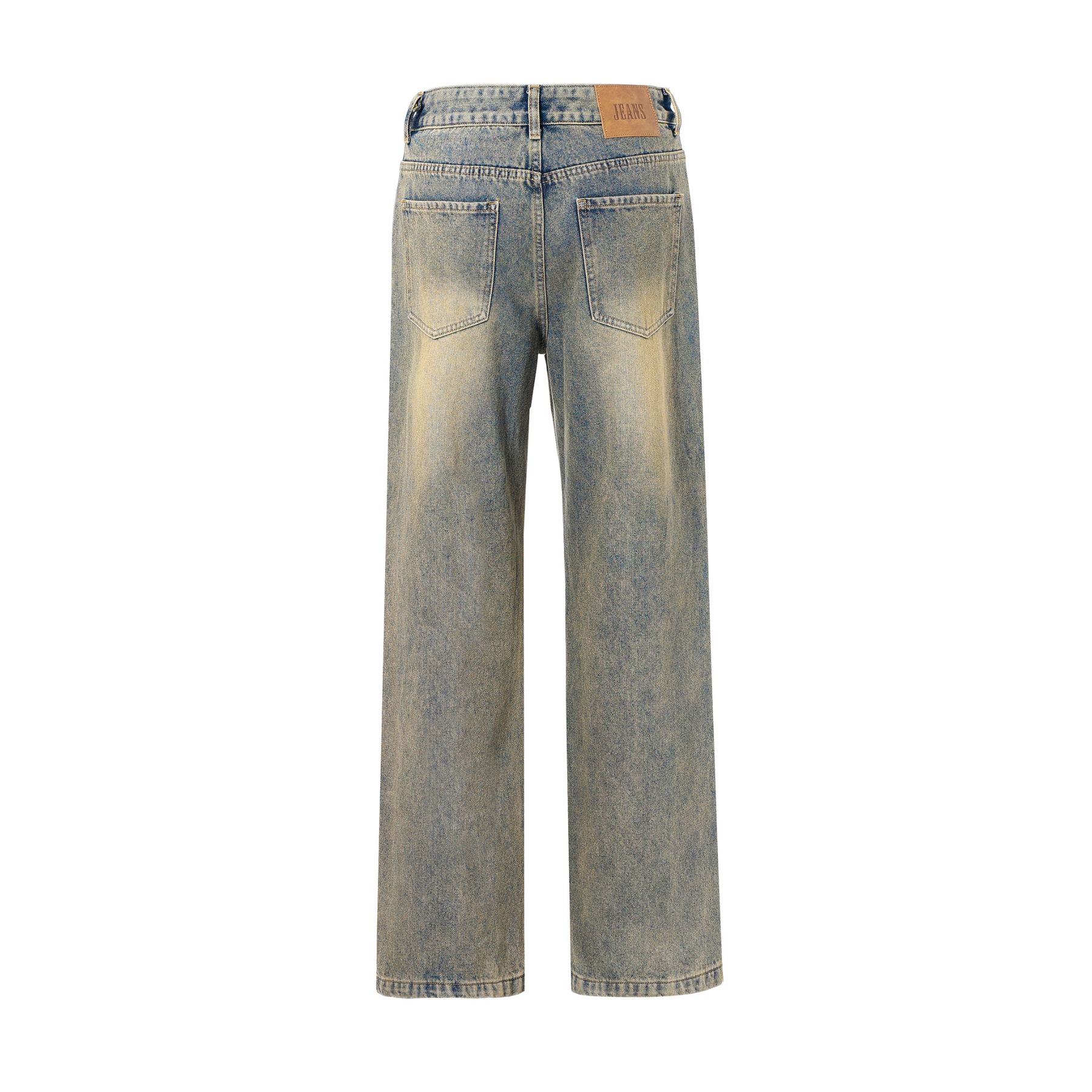
The current style features a mid-rise relaxed fit, front button and zipper closure, four-pocket construction, and a mud-inspired wash effect applied across the front and back. The wash creates an intentionally irregular, aged, and worn visual appearance rather than a uniform solid denim shade.
The fabric composition is listed as 72.7% cotton, 19.8% polyester, and 7.5% other fibers. The exact fiber names included in the “other fibers” portion should be confirmed before care-label artwork, testing, quotation approval, and bulk production. Final fiber labeling should reflect the verified fabric specification and buyer requirements.
As an OEM / ODM jeans manufacturer, Newasia can develop this style from a buyer’s tech pack, reference garment, product photographs, wash standard, sketches, or collection concept. Buyers may retain the current baggy silhouette or customize the rise, thigh width, knee width, leg opening, seam design, pocket configuration, wash intensity, color, trims, labels, and packaging.
The MOQ is 300 pcs per color per design. Sample and wash-panel approval can be arranged before bulk production so buyers can review the fit, garment measurements, seam placement, wash contrast, shade variation, pocket construction, shrinkage, and overall workmanship.
Quick Business Information Table
| Item | Details |
|---|---|
| Product Type | Mud-wash relaxed baggy jeans |
| Service | OEM / ODM / Private label jeans manufacturing |
| MOQ | 300 pcs per color per design |
| Brand | Newasia |
| Fabric | 72.7% cotton, 19.8% polyester, 7.5% other fibers |
| Other Fiber Details | To be confirmed according to the verified fabric specification |
| Fabric Weight | To be confirmed based on buyer requirements |
| Color / Wash / Finish | Mud-inspired dirty wash across the front and back |
| Fit / Silhouette | Mid-rise, relaxed baggy fit |
| Main Closure | Front zipper and button closure |
| Pocket Design | Four-pocket construction |
| Seam Details | To be confirmed according to the approved sample or buyer tech pack |
| Size Range | Customizable based on buyer requirements |
| Target Market | U.S., Europe, UK, Canada, Germany, Australia, and other international markets |
| Suitable Buyers | Streetwear brands, denim labels, retailers, wholesalers, boutiques, and private label companies |
| Customization Scope | Fabric, wash, rise, fit, leg width, seams, pockets, trims, labels, packaging, and carton marks |
| Sample Development | Available from tech packs, reference samples, photographs, sketches, or wash references |
| Bulk Production | To be confirmed after sample and wash approval |
| Packaging | Custom polybag, hangtag, barcode sticker, retail packaging, and carton marks available upon request |
| Documentation Support | Fiber composition, care label, country of origin label, packaging information, and testing support can be discussed |
Key Product Features
- Mid-rise construction suitable for private label streetwear and denim collections.
- Relaxed baggy silhouette with customizable thigh, knee, and leg-opening measurements.
- Fabric composition listed as 72.7% cotton, 19.8% polyester, and 7.5% other fibers.
- Front button and zipper closure.
- Four-pocket styling.
- Mud-inspired dirty wash applied across the front and back.
- Intentional washed variation for an aged and irregular denim appearance.
- Wash intensity, placement, contrast, and base shade can be customized.
- Seam construction can be developed according to the reference sample or buyer tech pack.
- Suitable for streetwear collections, vintage-inspired denim programs, unisex-inspired styling, and seasonal fashion capsules.
- Wash-panel and sample approval before bulk production are recommended to define acceptable shade and placement variation.
- Final fiber composition should be verified before labels are printed.
Mud-Wash Development Notes
The term “mud wash” on this page describes the intended visual effect. The exact production method should be confirmed during development according to the required appearance, fabric, chemical restrictions, testing requirements, target cost, and destination market.
Possible visual variables include:
- Base denim color.
- Brown, grey, black, beige, or earth-tone overcast.
- Light or heavy dirty-wash intensity.
- Localized or all-over application.
- Front-to-back contrast.
- Seam highlighting.
- Crease and abrasion effects.
- Vintage fading.
- Uneven surface character.
- Clean or distressed finishing.
- Matte or slightly coated appearance, where technically suitable.
A physical wash standard, approved garment sample, or clearly marked reference image is recommended. Descriptions such as “light mud wash” or “heavy dirty wash” may be interpreted differently without an approved visual reference.
OEM / ODM Customization Options
| Customization Area | Available Options |
|---|---|
| Fabric | Cotton denim, cotton-polyester denim, stretch denim, rigid denim, recycled-content options where available, or buyer-specified fabric |
| Fabric Composition | Existing composition or buyer-specified blend |
| Other Fibers | Exact fiber types and percentages should be confirmed before production |
| Fabric Weight | Customizable according to buyer requirements |
| Fabric Hand Feel | Structured, soft, washed, rigid, brushed, dry-touch, or buyer-approved hand feel |
| Color | Indigo, faded blue, black, grey, brown, khaki, earth tones, or buyer-provided color reference |
| Base Wash | Rinse wash, enzyme wash, stone wash, vintage wash, faded wash, or custom base preparation |
| Mud / Dirty Wash | Light, medium, heavy, localized, all-over, gradient, seam-focused, or buyer-approved wash effect |
| Whiskering | Light, medium, heavy, or omitted |
| Fading | Front, back, thigh, knee, seat, seam, or buyer-specified placement |
| Abrasion | Pocket edge, seam, hem, thigh, knee, or custom placement |
| Fit | Relaxed fit, baggy fit, loose fit, wide-leg fit, straight fit, or buyer-specific silhouette |
| Waist / Rise | Current mid rise or customized high-rise and low-rise options |
| Thigh Width | Customizable according to the required fit |
| Knee Width | Customizable according to the approved pattern |
| Leg Opening | Narrow baggy, straight baggy, wide-leg, tapered, or buyer-specified width |
| Inseam / Length | Cropped, ankle, regular, long, tall, or buyer-specified length |
| Size Grading | U.S., European, UK, Australian, unisex, or buyer-specific grading |
| Seam Construction | Standard side seams, panel seams, curved seams, contrast seams, reinforced seams, or buyer-specified construction |
| Topstitching | Tonal, contrast, double-needle, decorative, heavy thread, or buyer-specified stitching |
| Pockets | Existing four-pocket construction, five pockets, patch pockets, cargo pockets, or buyer-specific configuration |
| Pocket Shape | Standard, oversized, curved, angular, dropped, or custom shape |
| Main Closure | Button and zipper fly, button fly, branded button, or buyer-specified closure |
| Buttons | Standard metal button, custom logo button, antique finish, matte finish, or buyer-selected hardware |
| Rivets | Standard rivets, branded rivets, decorative rivets, or custom hardware |
| Zippers | Standard jeans zipper or buyer-nominated zipper supplier |
| Hem | Clean hem, raw hem, distressed hem, stacked length, folded hem, or custom finish |
| Labels | Main label, size label, care label, woven label, printed label, or heat-transfer label |
| Patches | Leather patch, PU patch, jacron patch, embroidered patch, or buyer-specific brand patch |
| Embroidery | Logo embroidery, placement embroidery, pocket embroidery, or decorative motifs |
| Printing | Screen printing, digital printing, pigment print, or buyer artwork where technically suitable |
| Hangtags | Brand hangtag, barcode tag, product information tag, price tag, or retail tag |
| Care Labels | Verified fiber composition, care instructions, country of origin, importer information, and buyer-required wording |
| Barcode Stickers | Available according to retailer, warehouse, or marketplace requirements |
| Packaging | Individual polybag, folded packing, hanger packing, retail packaging, or buyer-specific packing |
| Carton Marks | Shipping marks, SKU labels, warehouse labels, destination details, and routing marks |
M332 can be used as a development reference. Buyers are not restricted to the existing fabric, dirty-wash intensity, four-pocket construction, mid rise, or relaxed baggy fit.
Size Chart Section
Bottoms Size Chart Template
Detailed size specifications can be provided upon request or developed according to your tech pack. We recommend sending the target size range, fit reference, leg-opening requirement, and destination market for a custom grading proposal.
| Size | Waist | Hip | Front Rise | Back Rise | Thigh | Knee | Inseam | Outseam | Leg Opening |
|---|---|---|---|---|---|---|---|---|---|
| Custom | Based on buyer tech pack | Based on buyer tech pack | Based on buyer tech pack | Based on buyer tech pack | Based on buyer tech pack | Based on buyer tech pack | Based on buyer tech pack | Based on buyer tech pack | Based on buyer tech pack |
Final measurements can be adjusted based on your target market size grading or approved sample.
The size chart is for reference only. U.S. and European size grading can be discussed based on buyer requirements.
Baggy Fit Grading Considerations
Baggy jeans require more than increasing the waist and hip measurements proportionally. The grading should also maintain the intended volume, balance, and leg shape.
The grading review may include:
- Waist and hip ease.
- Front and back rise.
- Crotch extension.
- Thigh width.
- Knee width.
- Leg-opening width.
- Inseam and outseam.
- Pocket position and scale.
- Seam-panel position.
- Fly length.
- Belt-loop spacing.
- Hem circumference.
- Petite, regular, and tall lengths.
- Unisex or gender-specific fit requirements.
A fitting sample should be reviewed before bulk production, particularly where the buyer requires an oversized or unisex-inspired silhouette.
Production Process
- The buyer sends a tech pack, reference garment, product photographs, wash reference, sketch, or collection idea.
- We review the fabric, composition, weight, color, wash, rise, fit, seams, pockets, trims, labels, and packaging.
- The desired mud-wash appearance, intensity, placement, variation, and acceptable tolerance are discussed.
- Fabric, base color, wash panel, button, zipper, labels, and packaging references are confirmed.
- A garment sample or wash-panel sample is developed.
- The buyer reviews the fit, measurements, wash effect, seam details, pocket construction, and workmanship.
- A revised sample or wash adjustment is prepared where required.
- A pre-production sample and final wash standard are approved before bulk cutting and washing.
- Bulk fabric, trims, labels, and packaging materials are prepared.
- Bulk production starts according to the approved sample and technical specification.
- In-line checks are conducted during cutting, sewing, washing, finishing, and packing.
- Final measurements, shade, wash placement, labels, and packaging are inspected before shipment.
Sample lead time can be confirmed after the fabric and wash requirements are reviewed. Bulk lead time can be discussed based on order quantity, wash complexity, drying and finishing requirements, and production capacity.
Quality Control
Mud-wash denim requires controls for garment construction, bulk shade, wash distribution, measurement change, and acceptable visual variation.
Fabric and Cutting Control
- Fabric inspection before cutting.
- Fabric shade and roll variation checking.
- Fabric composition verification based on supplier documentation.
- Exact “other fiber” details confirmed where required.
- Fabric weight and hand-feel comparison with the approved reference.
- Pattern and marker checking before bulk cutting.
- Grain direction and panel alignment checking.
- Seam and pocket placement verification.
- Size grading review before bulk cutting.
Sewing and Construction Control
- Waistband, fly, belt loop, pocket, inseam, and side-seam inspection.
- Seam-panel construction checked where applicable.
- Stitching, seam allowance, and topstitching inspection.
- Button, zipper, rivet, and hardware checking.
- Four-pocket construction verification.
- Mid-rise measurement checking.
- Baggy leg balance and symmetry inspection.
- Loose-thread and workmanship inspection.
- Hem construction checking.
Wash Development Control
- Wash recipe or process reference documented where applicable.
- Base shade compared with the approved sample.
- Mud or dirty-wash tone compared with the approved reference.
- Front and back wash distribution checked.
- Seam, pocket, thigh, knee, and seat effects reviewed.
- Intensity and contrast evaluated within the agreed tolerance.
- Overly clean, overly dark, or incorrectly placed areas identified.
- Wash-panel or garment standard retained for bulk comparison.
- Batch-to-batch wash differences monitored during production.
Measurement and Shrinkage Control
- Garments measured before and after washing where required.
- Waist, hip, rise, thigh, inseam, and leg opening checked.
- Shrinkage testing can be discussed based on buyer requirements.
- Twisting, torque, and leg-seam movement reviewed where applicable.
- Fit compared with the approved sample after the full wash process.
- Measurement tolerances confirmed before production.
Color and Bulk Consistency Control
Mud-inspired washes are intended to have controlled irregularity. However, the acceptable level of variation should still be defined before production.
Inspection may include:
- Base denim shade.
- Dirty-wash color family.
- Wash intensity.
- Front-to-back balance.
- Left-to-right balance.
- Garment-to-garment variation.
- Batch-to-batch variation.
- Localized marks.
- Excessive staining.
- Unintended wash spots.
- Approved range samples for light, standard, and dark limits.
Final Inspection
- Measurement inspection based on the approved size chart.
- Wash appearance compared with the approved reference.
- Seam, pocket, closure, and construction inspection.
- Label, hangtag, barcode, and country of origin verification.
- Folding, polybag, carton quantity, and carton mark inspection.
- Final inspection before shipment.
- Third-party inspection support is available upon request.
Bulk Wash Tolerance Guidance
Because mud and dirty washes are intentionally irregular, an exact print-like match between every garment may not be technically realistic. Buyers should approve an acceptable visual range rather than relying on a single photograph.
A practical approval method may include:
- One approved standard sample.
- One acceptable lighter-limit sample.
- One acceptable darker-limit sample.
- Defined shade tolerance where applicable.
- Marked placement areas that must remain consistent.
- Areas where random variation is permitted.
- Areas where heavy staining is not acceptable.
- Maximum acceptable batch variation.
- Agreement on whether wash marks may cross seams or pockets.
These limits should be documented before bulk washing.
Fiber Composition and Labeling Note
The supplied fabric composition includes 7.5% other fibers. Before care labels, product listings, customs documentation, or testing files are finalized, the exact fiber types and percentages should be verified.
Depending on the destination market and confirmed fabric report, the final label may need to state:
- The specific fiber names.
- The percentage of each fiber.
- Permitted collective terms, only where legally applicable.
- Country of origin.
- Care instructions.
- Importer or responsible-party details where required.
- Buyer-specific product identifiers.
Newasia does not assume or invent the identity of the unspecified fibers. Final wording should be based on verified fabric documentation and destination-market requirements.
Compliance and Documentation Support
Documentation and testing requirements can be reviewed according to the destination market and buyer instructions. Newasia does not claim certification or compliance unless valid supporting documents are available or testing is arranged for the specific order.
Available support may include:
- Verified fiber composition information.
- Care label information.
- Country of origin label.
- Main brand label.
- Size label.
- Importer or distributor information where required.
- Packaging label.
- Barcode sticker.
- Packing list and commercial invoice information.
- Fabric test report support if required.
- Colorfastness testing support if required.
- Crocking or rubbing fastness testing can be discussed.
- Shrinkage testing support if required.
- Seam strength testing can be discussed.
- Wash durability testing can be discussed.
- Fabric safety or flammability testing can be discussed if required.
- REACH-related testing requirements can be discussed for European orders.
- California Prop 65-related requirements can be reviewed for California market orders.
- Buyer-specific restricted-substance requirements can be reviewed.
- Third-party testing or inspection support is available upon request.
Testing fees, fiber verification, labeling, packaging, inspection, and documentation responsibilities should be confirmed before order approval.
U.S. Market Considerations
For U.S. streetwear brands, denim labels, retailers, wholesalers, and private label buyers, M332 can be adjusted according to buyer-specific sizing, labeling, packing, and testing requirements.
- U.S. size grading can be developed from the buyer’s approved size chart.
- Rise, hip ease, thigh width, knee, inseam, and leg opening can be adjusted.
- Unisex-inspired or gender-specific fits can be discussed.
- Petite, regular, and tall lengths can be developed.
- Private label buttons, patches, labels, hangtags, and retail packaging can be customized.
- Exact fiber composition should be confirmed before care labels are printed.
- Country of origin and care information can be prepared according to buyer requirements.
- Colorfastness, crocking, shrinkage, and wash-durability testing can be discussed.
- Fabric safety or flammability testing can be discussed if required.
- California Prop 65-related requirements can be reviewed if intended for California.
- Barcode stickers, SKU labels, carton marks, and warehouse routing labels can be prepared according to buyer instructions.
European Market Considerations
For European streetwear brands, denim companies, boutiques, online retailers, wholesalers, and private label buyers, destination-specific requirements can be discussed during development.
- European size grading can be developed according to buyer specifications.
- Exact textile fiber labeling should be confirmed according to the verified composition.
- Care label language can be adjusted for the destination country.
- REACH-related chemical testing requirements can be discussed before production.
- Wash chemicals, dyes, coatings, hardware, and trims can be reviewed where required.
- Colorfastness and rubbing-fastness requirements can be discussed.
- Packaging, importer information, and product documentation can be adjusted.
- Traceability-related information can be prepared if requested.
- Preferred fabric options can be discussed subject to availability.
- Packaging and carton information can be adapted according to buyer or retailer instructions.
Sustainability and Responsible Sourcing
Sustainability-related options can be discussed according to the buyer’s sourcing policy, target price, material availability, wash requirements, and documentation needs.
Possible development areas include:
- Buyer-specified fabric sourcing.
- Preferred cotton or recycled-fiber alternatives where available.
- Alternative polyester or blended-fiber options.
- Alternative wash processes where technically feasible.
- Water and chemical-use discussions based on the selected wash supplier and process.
- Reduced-plastic or recyclable packaging options.
- Optimized carton packing.
- Material and production documentation support where available.
No sustainable, organic, recycled, low-water, or environmental certification is claimed unless valid documentation is available for the specific fabric, wash process, factory, or order.
Technical File and Buyer Documentation
Clear technical documentation helps reduce wash misunderstandings, fit differences, labeling errors, hidden costs, and variation between approved samples and bulk production.
Available documents may include:
- Tech pack review.
- Bill of materials.
- Verified fabric specification.
- Fiber composition record.
- Fabric weight and hand-feel reference.
- Size specification sheet.
- Measurement tolerance chart.
- Size grading rules.
- Baggy-fit pattern reference.
- Seam construction drawing.
- Pocket specification.
- Wash reference photographs.
- Approved wash panel.
- Light and dark limit samples.
- Wash-placement map.
- Button, zipper, rivet, and patch references.
- Trim card.
- Pre-production sample comments.
- Approved sample reference.
- Main label, size label, and care label artwork.
- Packaging instructions.
- Barcode and carton mark information.
- Bulk production inspection checklist.
- Packing list and shipping mark details.
What Is a Tech Pack?
A tech pack is a technical document explaining how a garment should be produced. It normally includes garment drawings, measurements, fabric, trims, colors, construction details, wash references, labels, tolerances, and packaging requirements.
A complete tech pack is useful but is not required to start an initial development discussion. Buyers may also send:
- A physical reference garment.
- Competitor or inspiration photographs.
- Front and back design sketches.
- Basic garment measurements.
- A target fit description such as “mid-rise oversized baggy fit.”
- Fabric photographs or swatches.
- Mud-wash or dirty-wash references.
- Marked photographs showing wash placement.
- Seam and pocket references.
- Target size range.
- Destination market.
- Label and packaging requirements.
The Newasia ODM development team can review these materials and discuss the technical information required for sample development.
Trade Terms and Order Discussion
| Item | Discussion Details |
|---|---|
| MOQ | 300 pcs per color per design |
| Sample Development | Available based on tech pack, physical sample, photographs, wash reference, or design idea |
| Sample Charge | To be discussed according to fabric sourcing, pattern development, wash trials, trims, and courier costs |
| Wash Development Charge | To be discussed if multiple wash trials or special processes are required |
| Sample Charge Credit | Whether sample costs can be credited against a bulk order should be confirmed during quotation |
| Sample Lead Time | To be confirmed after technical and wash review |
| Pre-Production Sample | Recommended before bulk cutting and washing |
| Bulk Production | To be confirmed after sample and wash approval |
| Payment Terms | To be discussed before order confirmation |
| Shipping Method | Express, air, sea, or buyer-nominated forwarder can be discussed |
| Trade Terms | EXW, FOB, CIF, or other applicable terms can be discussed |
| Destination Country | Required for quotation, labeling, documentation, packing, and shipping review |
| Testing Requirements | To be confirmed before order approval |
| Inspection Requirements | In-house or third-party inspection can be arranged |
| Packaging Requirements | To be discussed and confirmed before production |
| Required Documents | Packing list, invoice information, fiber content, care label, country of origin, carton marks, and buyer-requested documents |
Sample Policy Guidance
- Samples can be developed from a tech pack, physical garment, product photographs, wash references, or a design concept.
- Sample costs depend on fabric sourcing, pattern development, wash trials, trims, labels, and courier requirements.
- Multiple wash trials may require additional development discussion and cost confirmation.
- Sample lead time is confirmed after the technical and wash requirements are reviewed.
- Buyer comments can be incorporated into revised samples or wash adjustments.
- A final pre-production sample and wash standard should be approved before bulk fabric is cut and washed.
- Fabric, fit, wash, measurements, trims, labels, and packaging should be confirmed before bulk production.
- Testing, packaging, labeling, wash development, and inspection costs should be discussed upfront.
Why Choose Newasia
Newasia supports OEM and ODM jeans development for private label streetwear brands, denim labels, wholesalers, retailers, boutiques, and apparel startups.
- OEM and ODM denim development support.
- Private label manufacturing based on buyer requirements.
- Development from tech packs, physical samples, photographs, sketches, or wash references.
- Garment sample and wash approval before bulk production.
- Custom fabric, fit, seam, pocket, and dirty-wash development.
- U.S. and European size grading discussion.
- Custom labels, patches, hangtags, barcodes, packaging, and carton marks.
- Production controls for baggy fit and seam construction.
- Bulk wash consistency checking against approved range samples.
- Measurement inspection after the wash process.
- Documentation and testing support available upon request.
- Third-party inspection coordination can be discussed.
Ideal For
- Streetwear brands.
- Denim brands.
- Vintage-inspired fashion labels.
- Private label apparel companies.
- Urban fashion brands.
- Boutique clothing labels.
- Fashion retailers.
- Online clothing retailers.
- Apparel wholesalers.
- Clothing distributors.
- Fashion startups.
- U.S. apparel buyers.
- European fashion brands.
- UK private label buyers.
- Canadian apparel companies.
- Australian clothing retailers.
- Buyers developing dirty-wash denim.
- Brands sourcing relaxed baggy jeans.
- Buyers developing unisex-inspired denim programs.
- Brands looking for custom mud-wash effects.
What to Send for a Fast Quote
To receive a more accurate quotation and development assessment, please provide:
- Product reference: M332.
- Required order quantity.
- Quantity per color.
- Target size range.
- Destination market.
- Tech pack, if available.
- Physical reference garment or product photographs.
- Front and back design sketches.
- Required fabric composition.
- Exact fiber information where available.
- Required fabric weight.
- Base denim color.
- Mud-wash or dirty-wash reference.
- Required wash intensity.
- Front and back wash-placement instructions.
- Target fit and rise.
- Required thigh, knee, inseam, and leg-opening measurements.
- Seam construction details.
- Required pocket configuration.
- Button, rivet, zipper, and patch requirements.
- Main label, size label, and care label artwork.
- Hangtag and barcode requirements.
- Packaging and carton mark instructions.
- Testing or compliance requirements.
- Target delivery date.
- Destination country and port.
- Preferred shipping or trade terms.
- Third-party inspection requirements, if any.
Clear technical and wash references help us evaluate production feasibility, wash-development requirements, potential variation, and quotation accuracy.
Care Instructions
Wash once separately in cold water before first wear.
Machine wash cold, inside out, with like colors. Do not bleach. Tumble dry low. Cool iron if needed.
Because this style uses an intentionally irregular dirty-wash effect, some visual variation may occur between garments. The acceptable wash range should be confirmed during sample approval.
Final care-label wording should be reviewed according to the verified fiber composition, selected wash process, trims, and buyer testing requirements.
B2B FAQ
1. Can I customize these jeans for my own brand?
Yes. Fabric, weight, color, wash, fit, rise, leg width, seams, pockets, trims, labels, packaging, and carton marks can be customized.
2. What is the MOQ?
The MOQ is 300 pcs per color per design.
3. Can I send my own tech pack or reference sample?
Yes. Development can begin from a tech pack, physical garment, product photographs, sketches, wash references, or collection concept.
4. Can the mud-wash color and intensity be changed?
Yes. The base shade, dirty-wash color, intensity, placement, contrast, and acceptable variation can be customized and approved through wash samples.
5. Will every mud-wash garment look exactly identical?
Controlled variation is expected with irregular wash effects. Buyers should approve a standard and acceptable light and dark limits before bulk production.
6. Can the fabric composition be changed?
Yes. The existing composition can be retained or replaced with a buyer-specified denim fabric, subject to sourcing and development review.
7. What does “7.5% other fibers” mean?
The exact fibers were not specified in the supplied product information. Their names and percentages should be verified before labels, testing files, and bulk production are finalized.
8. Can the baggy fit be adjusted?
Yes. Rise, hip ease, thigh width, knee width, inseam, and leg opening can be adjusted according to the buyer’s approved measurement chart.
9. Can the four-pocket design be changed?
Yes. Pocket quantity, placement, dimensions, shape, stitching, and construction can be customized.
10. Do you support private label production?
Yes. Main labels, size labels, care labels, brand patches, hangtags, barcode stickers, retail packaging, and carton marks can be customized.
11. Can sizing be adjusted for U.S. and European markets?
Yes. U.S., European, UK, Australian, unisex, and buyer-specific size grading can be discussed.
12. How do you control bulk wash consistency?
Approved wash samples, range limits, batch checking, garment comparison, shade review, and final inspection can be used to control the bulk appearance.
13. Can testing or third-party inspection be arranged?
Yes. Fiber composition, colorfastness, crocking, shrinkage, seam strength, wash durability, and third-party inspection can be discussed.
14. Can M332 be used as a base for my own collection?
Yes. The fabric, wash, fit, rise, seams, pockets, trims, labels, and packaging can be modified.
15. What information should I send for a quotation?
Please send the quantity, size range, destination country, fabric specification, wash reference, fit measurements, seam and pocket requirements, labels, packaging, testing needs, and target delivery date.
Final CTA
Request a Custom Jeans Quote
Send Newasia your tech pack, reference garment, product photographs, mud-wash reference, target quantity, and customization requirements to begin your custom denim project.
Our development team can review the fabric specification, relaxed baggy fit, mid-rise construction, seam details, four-pocket configuration, mud-inspired wash effect, size grading, private label trims, packaging, sample development, and bulk production requirements for your brand.