

Fit · Fabric · Construction · Hardware · Wash · Grading
Denim Jacket Development for Fashion & Denim Brands
Develop production-ready denim jackets from silhouette and fabric selection through pattern engineering, collar and pocket construction, hardware, wash approval, finished measurements, quality control and scalable bulk production.
A denim jacket should be approved as a finished garment, not only as a sewn shell. Fabric weight, shrinkage, shoulder balance, sleeve shape, collar roll, front closure, pocket placement, cuff and hem construction, hardware and wash can all change how the final jacket fits and looks after finishing.
Browse the Product Range
Use Existing Jackets as a Development Starting Point
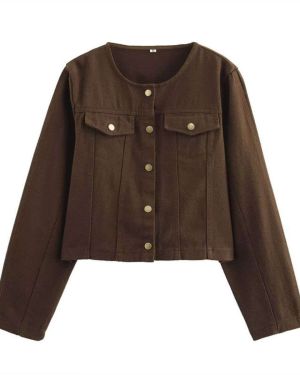
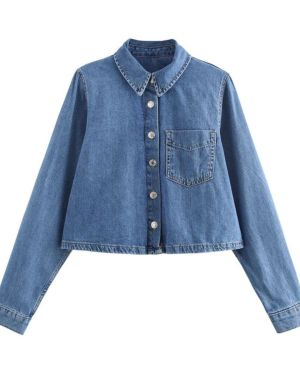
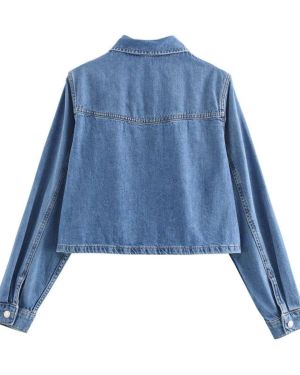
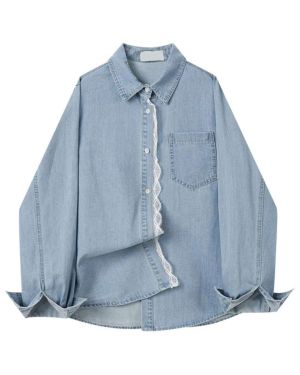
Browse the denim jacket styles below to identify the closest silhouette, wash, construction or design direction. Existing products can be used as references, while the actual customization scope, MOQ, pattern work, fabric, hardware and approval requirements depend on the selected style and project.
Silhouette
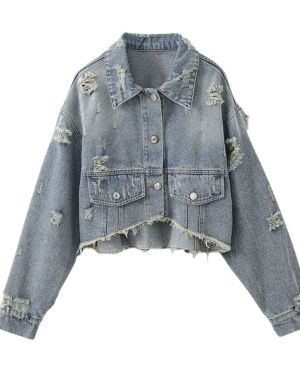
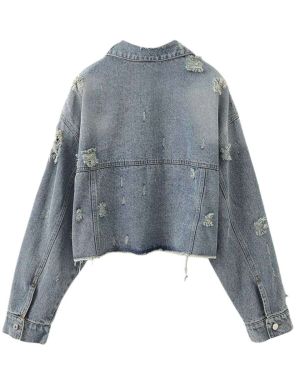
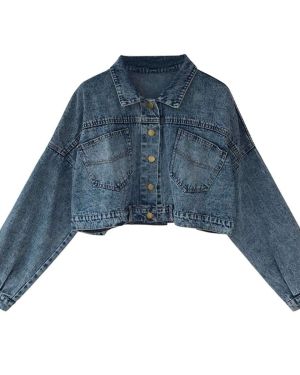
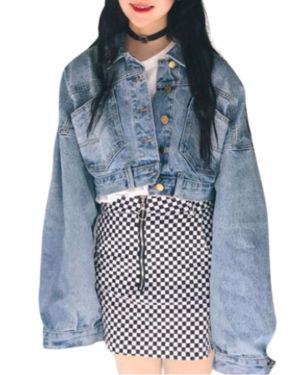
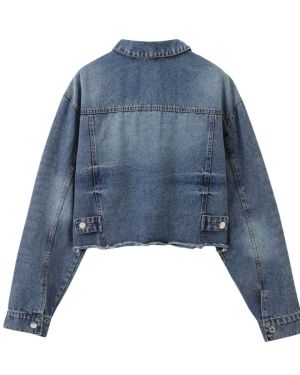
Cropped & Fitted
Requires control of body length, bust ease, shoulder position, sleeve proportion and hem opening.
Silhouette
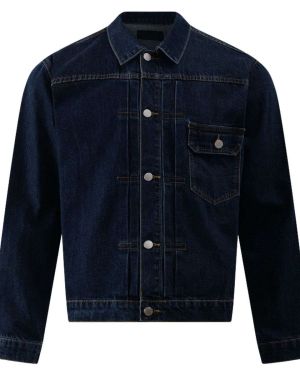
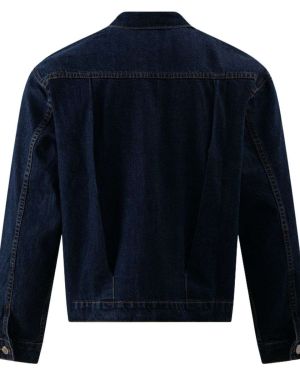
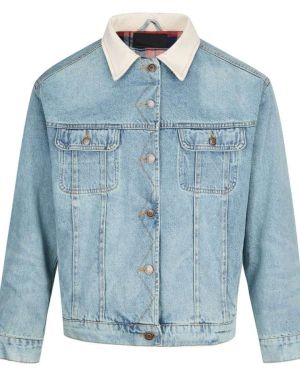
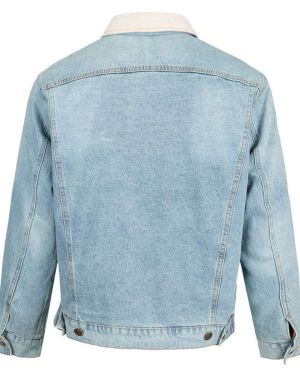
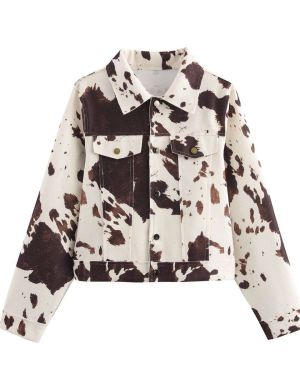
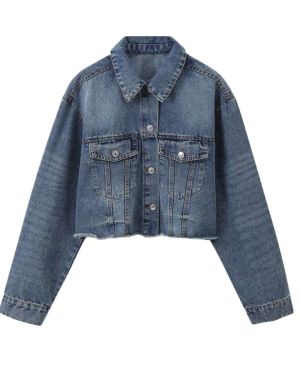
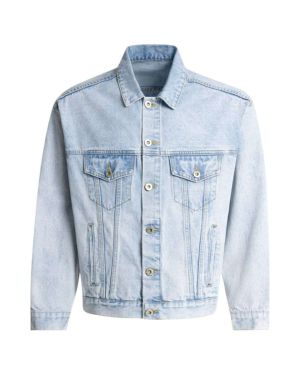
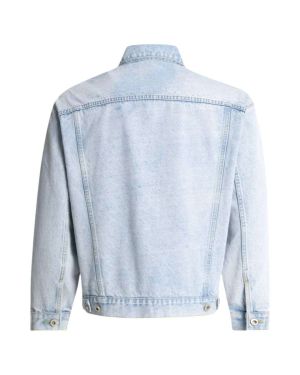
Classic Trucker
Balances structured denim, collar, front placket, chest pockets, cuffs, hem band and visible topstitching.
Silhouette
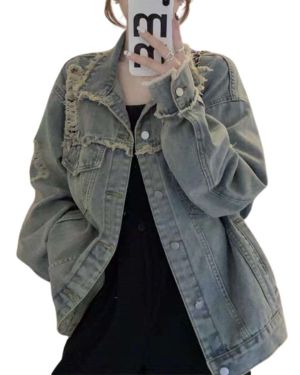
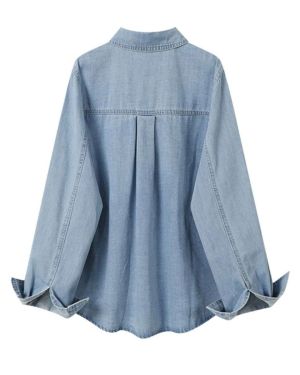
Oversized & Relaxed
Needs deliberate shoulder drop, chest volume, sleeve volume and finished length rather than simple size scaling.
Design Direction
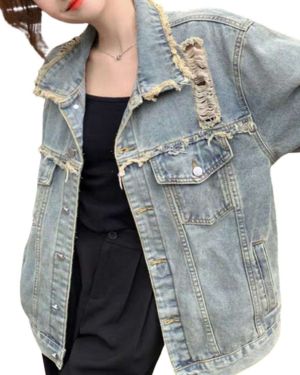
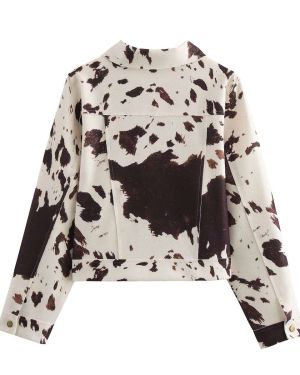
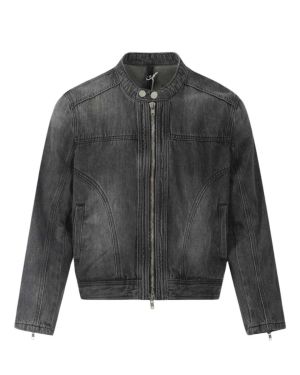
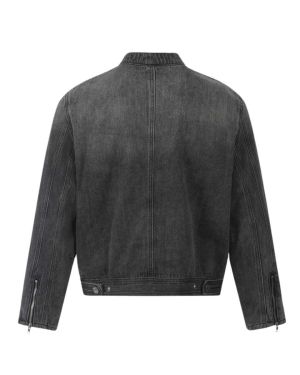
Biker & Statement
May combine specialty panels, zippers, trims, patches, rhinestones, contrast details or stronger wash effects.
Production-Ready Jacket Development
What Makes a Denim Jacket Ready for Bulk Production?
A production-ready jacket has an approved finished silhouette, measurable construction standard, confirmed fabric and wash behavior, approved hardware and trims, and a size system that can be reproduced consistently in bulk.
Finished Fit Is Defined
Shoulder, chest, body length, sleeve length, bicep, cuff and hem opening are confirmed on the finished garment rather than inferred from a general fit label.
Construction Is Closed
Collar, front closure, yokes, pockets, seams, cuffs, waistband or hem structure, topstitching and reinforcement details are approved before bulk.
Wash & Hardware Are Approved
The physical reference combines the target wash, hand feel, post-wash measurements, buttons or zippers, trims and visible finishing details.
Denim Jacket Specification Checklist
What Should You Define Before Sampling?
The first sample becomes more useful when the intended fit, denim behavior, construction and wash are defined before pattern development begins.
Jacket Fit Geometry
Silhouette Is Controlled Through Multiple Measurement Zones
Terms such as “cropped,” “oversized” or “regular” describe the direction, but they do not define a production specification. The pattern must convert that direction into measurable proportions.
Shoulder
Natural, extended or dropped shoulder position changes the entire upper-body proportion and sleeve hang.
Chest & Ease
Finished chest measurement controls layering room and must be balanced with armhole and sleeve volume.
Body Length
Cropped, waist-length and longer jacket proportions require different relationships between chest, hem and pocket position.
Sleeve Shape
Sleeve length, bicep, elbow, cuff opening and armhole shape influence both appearance and movement.
| Silhouette | Key Variables | Bulk-Control Focus |
|---|---|---|
| Cropped / Fitted | Body length, bust ease, shoulder, waist / hem opening, sleeve proportion | Finished length and hem balance after wash are especially visible. |
| Classic Trucker | Shoulder, chest, yoke, chest pocket, front placket, cuff, hem band | Symmetry, topstitching and hardware alignment define the classic structure. |
| Oversized / Relaxed | Drop shoulder, chest volume, sleeve volume, armhole depth, body length | Volume should remain intentional across sizes rather than becoming shapeless. |
| Biker / Structured | Panel lines, closure, collar / lapel direction, zipper placement, shaped fit | Panel symmetry, zipper operation and finished silhouette require tighter construction control. |
Fabric Selection
Choose Denim Weight and Structure Around the Jacket Silhouette
Fabric weight affects more than durability. It changes drape, collar behavior, seam bulk, sleeve shape, wash response and how structured or relaxed the finished jacket feels.
Structured Direction
Rigid Denim
Useful when authentic denim character, visible structure and stable jacket shape are priorities. Shrinkage and post-wash fit must be planned into the pattern.
Comfort Direction
Stretch Denim
Can support closer or comfort-focused fits, but stretch percentage and recovery should be reviewed so the garment does not lose its intended shape.
Project-Specific
Specialty Denim
Coated, metallic, recycled-content, organic-content or other specialty directions should be evaluated against real material availability, MOQ, finishing compatibility and documentation.
For deeper guidance on denim composition, weight, stretch, shrinkage, fabric testing and wash behavior, use the Denim Fabric, Wash & Production Hub. This category page stays focused on jacket-specific decisions.
Jacket Construction
Collar, Pockets, Cuffs, Hem and Seams Must Work as One System
Collar Construction
Collar shape, point length, roll and attachment should remain balanced after the target finishing process.
Front Placket
Button or zipper placement should align with center front, collar, chest pockets and finished body length.
Chest & Side Pockets
Size, position, flap shape, opening and symmetry influence both function and the visual identity of the jacket.
Yokes & Panel Lines
Front and back panels should match the intended silhouette while maintaining symmetry after sewing and finishing.
Sleeve & Armhole
Armhole depth and sleeve shape should provide the intended movement without distorting the body silhouette.
Cuff Construction
Cuff width, closure, tab and finished opening should be checked for symmetry, function and post-wash stability.
Hem / Waistband
A clean hem, shaped hem or structured hem band changes the finished body shape and should be dimensionally controlled.
Topstitch & Reinforcement
Thread color, stitch layout, seam appearance and reinforcement at stress points should match the approved reference.
Closure & Hardware System
Buttons, Zippers and Trims Must Be Approved With the Finished Jacket
Hardware is part of the construction system. Appearance, placement, attachment strength, operation and compatibility with wash or finishing should be reviewed before bulk.
Tack Buttons
Confirm size, finish, logo, spacing and attachment relative to placket and cuff construction.
Zippers
Confirm zipper length, tape, teeth, slider, puller, position and operation on the approved garment.
Snaps / Studs
Check component suitability, visible finish and attachment where the design uses snap closures or decorative studs.
Custom Branding
Logo hardware, specialty pullers or branded components should be reviewed for tooling, minimums and project suitability.
Finished Jacket Approval
Fit × Fabric × Wash Must Be Approved Together
A wash can change shade, hand feel, dimensional stability, seam appearance, collar behavior and final jacket measurements. Visual approval and measurement approval should therefore be linked to the same finished sample.
FIT
Finished Silhouette
Shoulder · chest · body length · sleeve · bicep · cuff · hem opening.
FABRIC
Material Behavior
Weight · rigidity / stretch · recovery · shrinkage · hand feel.
WASH
Finished Appearance
Shade · fade · contrast · distress · surface character · dimensional change.
Decoration & Brand Direction
Build Statement Details Into the Production Standard
Embroidery
Artwork size, stitch density, backing, position and behavior through garment finishing should be reviewed.
Print & Graphic
Print method and placement should suit the denim surface, wash route and target finished appearance.
Patches & Appliqué
Material, edge finish, attachment and placement should be approved on the finished garment.
Studs / Rhinestones / Trim
Decorative components require attachment and placement control appropriate to the design and finishing route.
Size System
How Denim Jacket Grading Should Preserve the Silhouette
Good grading preserves the design intent across sizes. It should not simply enlarge every point by the same amount.
Cropped / Fitted Styles
Body length, bust, shoulder, armhole and sleeve proportions should scale without losing the intended cropped or shaped appearance.
Oversized Styles
Drop shoulder, chest and sleeve volume should remain intentionally oversized without making larger sizes disproportionately long or wide.
Structured Styles
Panel lines, pocket placement, collar scale and closure position should remain visually balanced as the garment is graded.
Market labels such as XS–XL or US/EU sizing are not a substitute for an approved finished measurement chart and grading rule.
Commercial Route Selector
Which Denim Jacket Production Route Fits Your Project?
Buyer-Defined Specification
OEM Production
You already have a tech pack, measurements, fabric direction, artwork or approved physical reference and need manufacturing execution.
Concept Requires Development
ODM Development
You have references, collection direction or market requirements but still need support developing fit, fabric, wash or construction.
Adapt an Existing Product
Private Label
You want to begin from an established product base and focus on eligible product changes, branding, labels and packaging.
First Collection
Startup Route
You need a controlled route for MOQ, sample approval, launch timing and repeat-order readiness.
Denim Jacket Manufacturing RFQ
What Should You Send for a Denim Jacket Quote?
A useful RFQ allows the factory to review the actual product instead of guessing from the words “custom denim jacket.”
| Input | What to Provide |
|---|---|
| Starting Point | Tech pack · physical sample · product link · photos · sketch · existing New Asia style |
| Silhouette | Cropped · trucker · fitted · boxy · oversized · biker / structured direction |
| Finished Measurements | Shoulder · chest · body length · sleeve · bicep · cuff · hem opening · size range |
| Denim | Composition · weight / oz · rigid or stretch · hand feel · preferred source if applicable |
| Construction | Collar · placket · pockets · yokes · cuffs · hem / waistband · seam / stitch requirements |
| Wash / Finish | Reference photo · physical sample · target shade · fade · distress · laser / specialty effect |
| Hardware | Buttons · zippers · snaps · studs · custom logo hardware · other trims |
| Decoration | Embroidery · print · patches · rhinestones · appliqué · artwork |
| Branding | Main / size / care labels · hangtags · patches · packaging |
| Commercial | Quantity per style / wash / color · target market · sample target · delivery window |
Denim Jacket Production Workflow
Our 10-Step Denim Jacket Manufacturing Process
Project & Product Review
Confirm silhouette, quantity, target market, customization and commercial requirements.
Finished Fit Definition
Close shoulder, chest, body length, sleeve, bicep, cuff, hem and intended layering ease.
Denim Fabric Review
Review composition, weight, rigid / stretch direction, shade, hand feel, shrinkage and availability.
Pattern & Construction Planning
Engineer collar, panels, pockets, sleeves, cuffs, hem structure and allowances around the finished target.
Sample Development
Create the physical sample for fit, construction, hardware, wash and decoration review.
Fit + Wash + Measurement Approval
Approve the finished appearance and post-wash dimensions together before bulk.
Bulk Cutting & Sewing
Produce against the approved pattern, seam, stitch, pocket and construction standard.
Wash / Finish / Hardware / Decoration
Apply the approved finishing route and complete confirmed hardware, trims and decorative details.
Finished Jacket QC
Review measurements, symmetry, collar, pockets, closure, stitching, hardware, wash shade and bulk consistency.
Branding, Packing & Shipment Preparation
Verify labels, hangtags, packing and order requirements before shipment preparation.
Typical timing: sampling is commonly 5–10 days. Bulk production is commonly 15–30 days after approval and material readiness. Actual timing depends on fabric availability, pattern complexity, wash development, specialty hardware, decoration, quantity and revision rounds.
MOQ, Cost & Timing
Custom Denim Jacket MOQ and Main Cost Drivers
Custom Denim & Fashion Garments
From 300 pcs/style
Primary planning benchmark for custom denim jacket production.
Existing Style Customization
From 50 pcs
Available where the selected existing style and requested customization route support it.
Selected Ready Stock
No MOQ Where Applicable
Applies only to eligible in-stock products and does not represent the MOQ for custom jacket production.
| Cost Driver | Why It Matters |
|---|---|
| Denim fabric | Composition, weight, structure, finish and source affect base material cost and handling. |
| Pattern / silhouette | New cropped, oversized, fitted or structured shapes require different development effort. |
| Construction complexity | Panels, yokes, pockets, cuffs, hem bands and specialty seam layouts add operations. |
| Wash / finishing | More complex wash, fade, distress or specialty finish routes add processing and approval work. |
| Hardware | Buttons, zippers, snaps, studs and branded hardware affect component cost and setup. |
| Decoration | Embroidery, printing, patches, rhinestones and appliqué add materials, labor and QC requirements. |
| Branding / packaging | Labels, hangtags, patches and custom packing add component and setup costs. |
| Quantity / breakdown | Units per style, color, wash and size affect production efficiency and material purchasing. |
| Testing / QC | Buyer-specific testing, inspection or qualification requirements can add cost. |
Finished Denim Jacket Quality Control
QC Should Evaluate the Finished Jacket, Not Only Sewing Quality
The jacket should be checked against the approved finished sample and project-specific QC plan after the relevant wash or finishing route.
1. Fabric & Shade
Review material identity, lot / shade behavior and relevant fabric performance against the approved direction.
2. Finished Measurements
Check shoulder, chest, length, sleeve, bicep, cuff, hem and other agreed points after finishing.
3. Collar & Front Balance
Inspect collar symmetry, center front, placket alignment and overall upper-body balance.
4. Pocket Placement
Compare chest, side and specialty pocket size, position, angle and symmetry against the approved sample.
5. Sleeve & Cuffs
Check sleeve hang, pair symmetry, cuff construction, closure and finished opening.
6. Stitching & Seams
Inspect visible topstitch, seam consistency, reinforcement and construction against the confirmed standard.
7. Hardware & Decoration
Check operation, attachment, placement and visible finish for buttons, zippers, trims and decorative details.
8. Wash & Bulk Consistency
Compare finished shade, hand feel, fade / distress direction and appearance with the approved reference and tolerance.
Inspection plans are project-specific. Measurement tolerances, testing requirements and statistical inspection criteria should follow the actual buyer specification and agreed QC plan.
First-Party Manufacturing Evidence
Connect Jacket Claims to Material, Production and QC Evidence
For supplier qualification, the strongest evidence is not a generic “high quality” claim. It is a traceable connection between material capability, approved samples, manufacturing processes, finishing controls and finished-garment inspection.
Denim Material Depth
New Song Denim Fabric was established in 1995. The company profile reports annual denim fabric output of more than 30 million meters and a dedicated fabric-testing capability supporting applicable material evaluation.
Denim Garment Capacity
Company-profile production information groups denim wear, including jeans and jackets, within a major portion of the garment manufacturing capacity. Order-specific capacity should still be confirmed for the relevant site and period.
Finished-Garment Control
Approved samples, post-wash measurements, lot-color control, production records and finished-garment inspection provide a stronger basis for bulk repeatability than process claims alone.
Management Systems & Supplier Qualification
Verify Scope and Applicability for the Actual Project
Applicable management-system and compliance documentation can be reviewed during supplier qualification. Buyers should verify the document holder, manufacturing entity or site, issuing body, validity period and order-specific applicability rather than assuming one certificate applies universally to every garment, order or location.
Quality & Management Systems
Relevant ISO / GB/T management-system documentation can be reviewed where applicable to the buyer qualification scope.
Social Compliance
Applicable social-compliance references can be reviewed for the manufacturing entity or site relevant to the program.
Material / Order Documentation
Material claims and order-specific certification statements should be supported by documentation applicable to the actual fabric and production route.
Buyer FAQ
Common Questions About Custom Denim Jacket Manufacturing
What is the MOQ for custom denim jackets?
The primary planning benchmark for custom denim and other fashion garments is from 300 pieces per style. Existing-style customization can start from 50 pieces where the selected product and customization route support it. Eligible ready-stock products may have no MOQ. Final MOQ depends on fabric, wash, hardware, decoration and order breakdown.
How long does denim jacket sampling usually take?
Sampling is typically 5–10 days after key product, fabric, fit and wash inputs are confirmed. Complex patterns, specialty fabrics, custom hardware, decoration or multiple wash-development rounds can extend the sample calendar.
Can New Asia develop cropped, oversized or biker denim jackets?
These are viable development directions where the selected fabric, construction, finishing and quantity support the project. The silhouette should be translated into actual finished measurements and an approved physical sample before bulk production.
Can denim jackets use custom buttons, zippers, embroidery or rhinestones?
Custom hardware and decorative treatments can be reviewed according to the style. Tooling, component minimums, attachment, wash compatibility, artwork and bulk-consistency requirements should be confirmed during development.
Why are post-wash measurements important for denim jackets?
Washing can change body length, sleeve length, collar behavior, hand feel and overall dimensions. The approved finished sample should therefore combine both visual wash approval and the target post-wash measurement standard.
What should I send to receive a useful denim jacket quotation?
Send the closest product reference or tech pack, target silhouette and measurements, denim fabric direction, wash reference, hardware and decoration requirements, size range, quantity, target market and timeline. The more complete the brief, the easier it is to evaluate the correct production route.
Next Step
Ready to Develop Your Denim Jacket Program?
Send your closest jacket reference, target fit, denim direction, wash, construction, hardware, branding and estimated quantity. The first objective is to define a finished production standard that can be approved before bulk.