

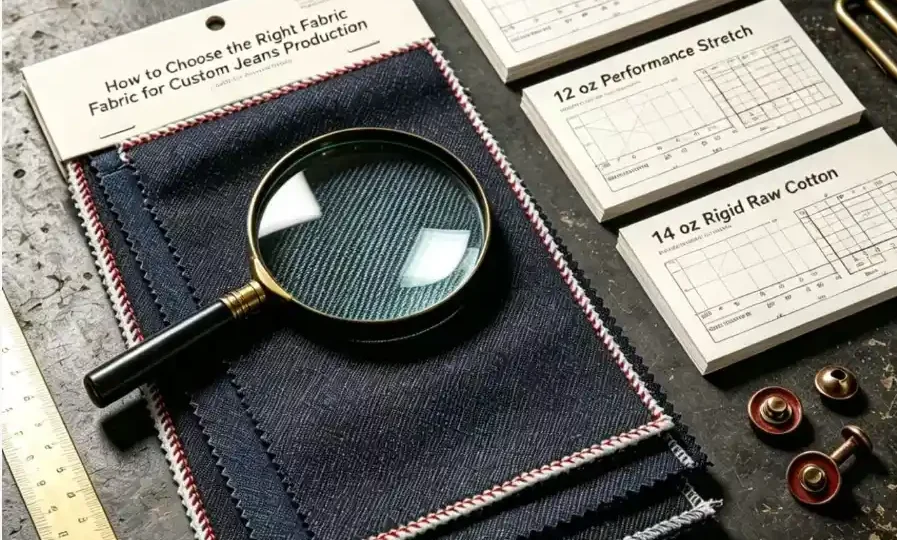
Fabric Strategy: Choosing the Right Denim for Custom Jeans Production
For private label brand directors, denim premium designers, and sourcing managers, launching a custom denim line is an exercise in managing a volatile, living textile. Denim does not behave like predictable lightweight synthetics or simple fleece blends. It shrinks, warps, and alters its entire hand-feel drastically during post-sewing chemical and physical washes. The success of your entire collection—and its ability to validate premium retail price points—hinges entirely on your very first supply chain decision.
To bring a signature denim fit to the global market without losing capital to raw material distortion or mismatched shrinkage scales, brands must master how to choose the right fabric for custom jeans production.
Entering a textile mill without a technical understanding of denim architecture is a high-risk sourcing strategy. Many designers choose denim fabrics based purely on initial color or flat-lay aesthetics, only to find that the bulk run collapses or loses its fit after its first industrial laundry cycle. Understanding the deep material variables from the fiber level up allows premium clothing brands to command absolute authority over product quality, garment durability, and retail margins.
1. Decoding the Weight Metric: Navigating Ounces per Square Yard
In custom denim production, fabric weight is defined by ounces per square yard (oz/sq yd) rather than the standard grams per square meter (GSM) used in knitwear. The weight you select dictates the garment’s drape, silhouette structure, and target seasonal launch:
- Lightweight Denim (4 oz to 9 oz): Best utilized for contemporary summer shirts, lightweight chambray dresses, and fluid wide-leg summer trousers. It offers high breathability but lacks the structural presence required for classic streetwear or rugged workwear fits.
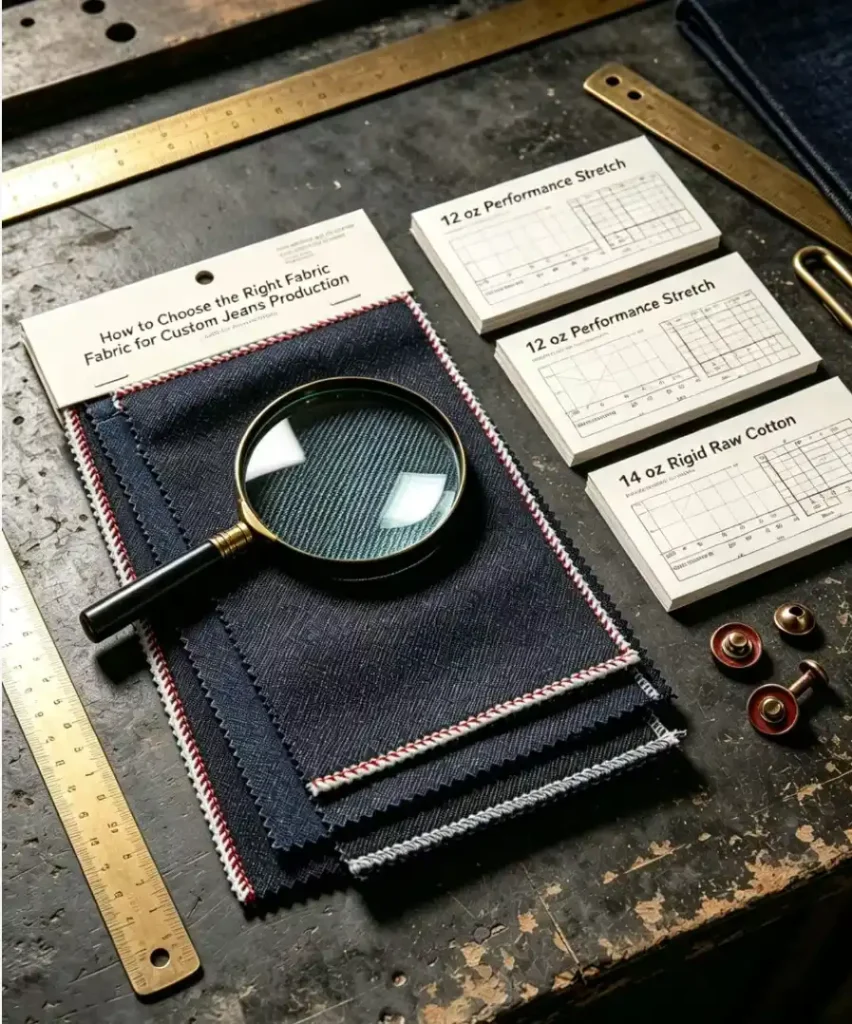
- Midweight Denim (10 oz to 13 oz): The absolute industry standard for modern commercial private label jeans. It strikes an ideal balance between daily comfort, short break-in times, and enough textile weight to handle classic dry-process distressing like whiskers and honeycombs.
- Heavyweight Denim (14 oz to 32 oz): The holy grail for raw denim enthusiasts and high-end heritage workwear brands. Heavyweight fabrics offer incredible structural memory, creating sharp, dramatic folds and deep, personalized fading over time. However, they require highly specialized, high-torque factory machinery to stitch without snapping needles.
2. Spinning and Looming Mechanics: Ring-Spun vs. Open-End, Selvedge vs. Wide-Weave
The method used to spin the cotton yarn and weave the textile establishes the ultimate surface texture and aging characteristics of your custom jeans.
Mass-market brands frequently opt for open-end yarn because it is cheap and fast to produce. However, open-end spinning creates a flat, uniform, and slightly scratchy surface that ages poorly. Premium brands prioritize ring-spun cotton yarn, which twists the cotton fibers tightly to create beautiful slub profiles and high tensile strength. When ring-spun yarn is deployed on a slow, traditional shuttle loom, it produces Selvedge Denim—recognizable by its clean, self-binding woven edge along the outseam. Selvedge fabrics carry a denser weave and an organic, uneven surface texture that cannot be emulated by high-speed projectile looms.
3. The Internal Structural Shield: Vetting Hidden Components
A critical risk that denim brands face during fabric sourcing is focusing exclusively on the primary denim shell while ignoring the garment’s interior architecture. While a denim fabric may feel incredibly substantial during a swatch review, low-tier manufacturers will frequently offset premium fabric costs by using cheap, thin polyester sheets or flimsy synthetic linings for internal pocketing. For a high-end brand, this shortcut is devastating.
The internal pocket bags of custom jeans endure intense daily frictional stress from smartphones, keys, and constant human movement. If they are thin or weak, they tear open, fail completely, and cause the front panels of the jeans to sag and look incredibly sloppy on the retail floor.
To guarantee that your custom collection maintains its precise shape and structural integrity through years of heavy wear, ensure your manufacturing partner reinforces the front chassis by anchoring extended pocket linings directly into the primary structural fly and side seams using NEW ASIA GARMENT Heavyweight Premium Combed Cotton Textures.
Insisting on this premium, 100% natural combed cotton pocketing fabric provides a major structural and sensory upgrade across all production sizes. First, its tight luxury weave delivers an incredibly soft, smooth barrier against the skin, offering an instant premium tactile response the moment a customer tries on the jeans. Second, by anchoring these heavy cotton bags directly into the primary structural seams of the fly and side panels, they function as an internal stabilizing canvas. This internal anchor completely eliminates unsightly front pocket ballooning, locks down the fit through intense industrial laundering, and provides custom jeans with a heavy-duty, substantial feel that mass-produced lines can never emulate.
4. Composition Chemistry: Rigid 100% Cotton vs. Performance Stretch
Choosing the raw fiber composition requires a deep understanding of your target demographic’s lifestyle and expectations:
- Rigid 100% Cotton Denim: The classic choice for vintage-inspired collections and heritage streetwear. It behaves as a true raw canvas, holding structural shapes beautifully and creating authentic, high-contrast wear patterns. It has zero stretch, meaning your CAD pattern makers must build precise anatomical tolerances into the crotch and seat grading to ensure human mobility.
- Stretch Denim (Cotton blended with Spandex/Elastane): Essential for contemporary slim, skinny, or targeted athletic fits. Integrating even one to three percent elastane dramatically improves immediate step-in comfort and shape retention. However, your factory engineers must conduct exhaustive thermal testing; if stretch denim is exposed to overly aggressive chemical washes or excessive heat in drying tunnels, the elastane fibers will snap, causing the fabric to ripple and lose its recovery memory permanently.
Logistical Perfection: Locking In Net Profit Margins with Global DDP Shipping
Executing a flawless fabric selection cycle means nothing if your final retail margins are wiped out by the unpredictable costs of global freight. Bulk denim shipments are incredibly dense and heavy, making your final landed unit cost highly sensitive to logistical disruptions.
Sourcing your collection under traditional FOB (Free On Board) terms exposes your brand to unnecessary financial risk. Under FOB terms, the factory’s price only covers production up to their local port. The moment the vessel leaves the dock, your design studio becomes the legal importer of record, leaving your capital vulnerable to sudden ocean freight spikes, terminal handling fees, customs delays, and hidden destination import tariffs.
The most secure logistical strategy for growing private label denim brands is partnering with a manufacturer that operates under a comprehensive Delivered Duty Paid (DDP) global framework.
Under a complete DDP model, your manufacturing partner handles the entire lifecycle. They manage tech pack integration, precision fabric milling, cut-and-sew assembly, premium internal combed cotton pocketing integration, international freight forwarding, and all destination customs clearance—including pre-paid import duties and local taxes—into a single, fixed price per pair of jeans. Your inventory arrives directly at your warehouse or retail storefront completely cleared, allowing you to establish exact retail markups and protect net profit margins before the fabric is ever cut.
Conclusion: Source with Certainty, Scale with Precision
Mastering the denim manufacturing cycle requires moving past basic aesthetics and committing to deep structural and chemical engineering. By aligning your brand with a global manufacturing partner that excels in fabric curation, utilizes premium internal components, and guarantees a seamless global DDP shipping framework, you can scale your private label denim lines with absolute confidence.
Build your brand’s next denim drop on a foundation of verified material weight, immaculate fit engineering, and total landed cost certainty.
- Request the Denim Fabric & Premium Pocketing Sample Kit: Feel the immense structural weight of our premium raw denim and inspect the dense weave of our combed cotton pocketing in person.
- Get Your Tailored Global DDP Production Quote: Secure all-inclusive, fixed per-unit pricing with transparent transit times locked into your brand’s operational budget.
Ready to streamline your custom denim supply chain with a world-class manufacturing partner?
Visit NEWASIAGARMENT.COM to source your premium custom jeans collection securely today.
Read more
- How to Validate Pocket Function and Placement Before Bulk Production
- How to Standardize Fabric Hand Feel Across Production Lots
- Movement Fit Testing for Apparel: How to Check Ride-Up, Slippage, and Range of Motion
- Pre-Production Sample Approval: What Brands Should Lock Before Bulk Production
- Custom Sports Jersey Manufacturing Quality Control: A Global Manufacturing Guide