
Choosing between garment-dyed and piece-dyed hoodies can affect your minimum order quantity (MOQ), color consistency, shrinkage control, production costs, and future reorders.
For apparel brands developing custom hoodies, the right dyeing method depends on more than the finished appearance. It also depends on fabric composition, trim compatibility, color approval requirements, production quantities, and the manufacturer’s dyeing capabilities.
The key difference is timing: piece dyeing colors the fabric before cutting and sewing, while garment dyeing colors the assembled hoodie after sewing. Each method has different production considerations, and neither automatically guarantees lower MOQs, less shrinkage, or better color consistency.
This guide compares both methods to help clothing brands, fashion startups, and apparel buyers make informed decisions before requesting a custom hoodie manufacturing quote.
Quick Comparison: Garment-Dyed vs. Piece-Dyed Hoodies
| Factor | Piece-Dyed Hoodies | Garment-Dyed Hoodies |
|---|---|---|
| Dyeing stage | Fabric is dyed before cutting and sewing | Assembled garments are dyed after sewing |
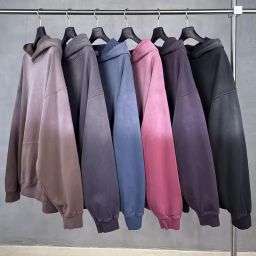
| Typical appearance | Clean, uniform solid colors or specified fabric finishes | Washed, vintage, tonal, or intentionally varied effects |
| Color approval | Lab dips and bulk fabric samples | Trial-dyed garments and bulk batch samples |
| MOQ considerations | Fabric purchase and fabric dye-lot minimums | Prepared garment quantities and dye-batch minimums |
| Component matching | Separately sourced or dyed components require matching | Components must be compatible with the garment-dye process |
| Shrinkage control | Fabric is processed before cutting, but residual shrinkage remains possible | Post-sewing processing can change finished garment dimensions |
| Reorder considerations | New fabric lots and trim matching | New garment-dye batches and appearance matching |
These are typical production differences, not guaranteed outcomes. Actual results depend on the materials, dyeing process, equipment, and quality controls used by the manufacturer.
1. What Is a Piece-Dyed Hoodie?
A piece-dyed hoodie is made from fabric that has been dyed before the fabric is cut into garment components.
For a typical cotton fleece hoodie, the production sequence may include fabric knitting, dyeing, finishing, fabric inspection, cutting, sewing, and final quality control.
Because the fabric is dyed before cutting, the manufacturer can evaluate its color and relevant physical properties before releasing it for garment production.
Advantages of piece dyeing
- Fabric color approval before cutting: Buyers can evaluate lab dips and production fabric samples before committing the material to garment construction.
- A practical option for core colors: It can suit programs requiring repeatable solid colors when the supplier can manage fabric lots and color standards.
- Fabric-level inspection: Color, fabric weight, width, and relevant dimensional properties can be checked before cutting.
- Established material planning: Fabric sourcing and cutting plans can be coordinated around approved production materials.
What buyers should consider
Piece dyeing does not eliminate color-matching challenges. Ribbing, sewing thread, drawcords, zipper tapes, and other visible components may come from separate suppliers or dye lots.
Residual shrinkage can also occur after garment construction or during consumer care.
For custom hoodie production, request information about fabric minimums, dye-lot quantities, component matching, and finished-garment measurement requirements before confirming the order.
2. What Is a Garment-Dyed Hoodie?
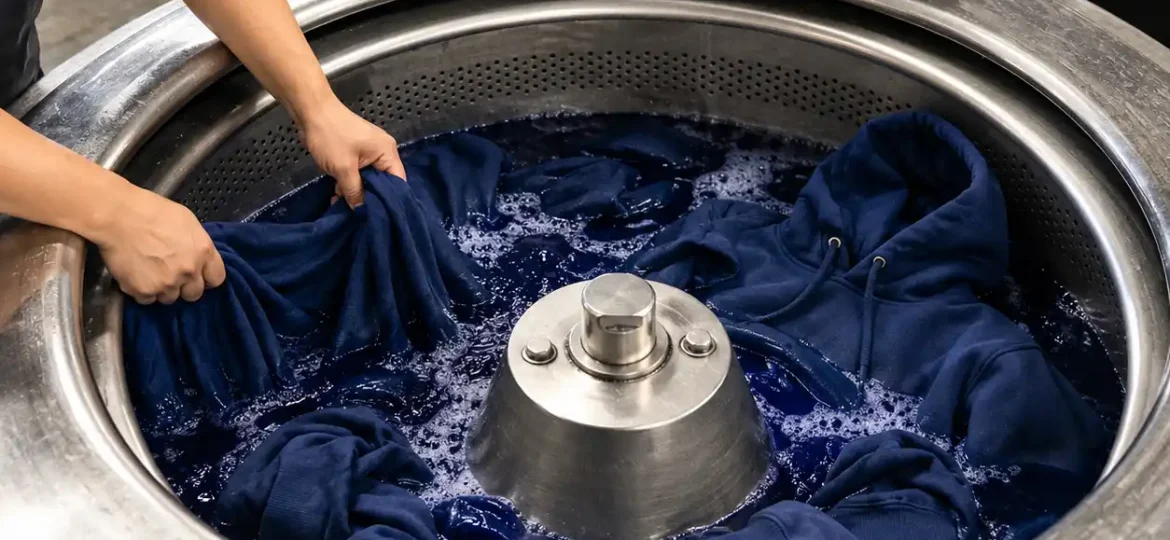
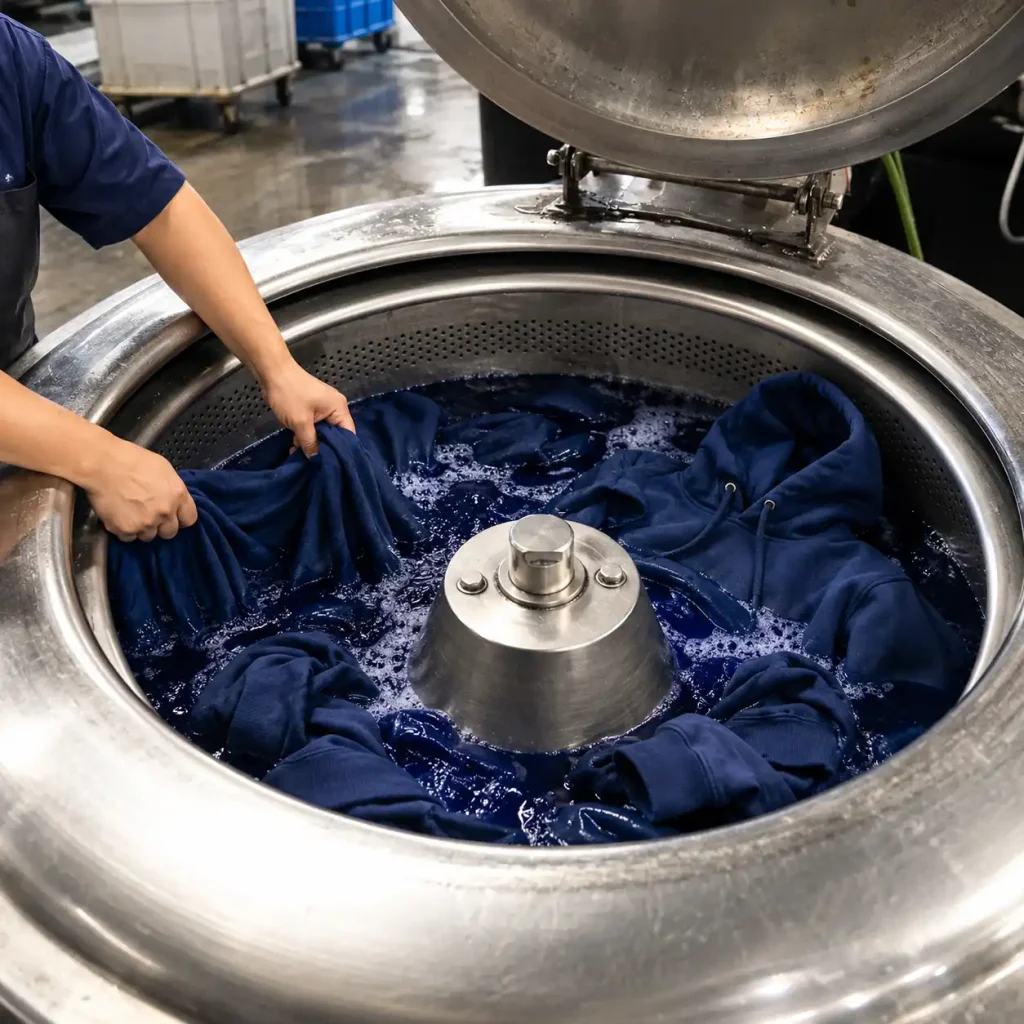
A garment-dyed hoodie is sewn from materials prepared for the intended dyeing process and then dyed as an assembled garment.
Depending on the specified finish, the process may include dyeing, rinsing, washing, drying, and additional finishing.
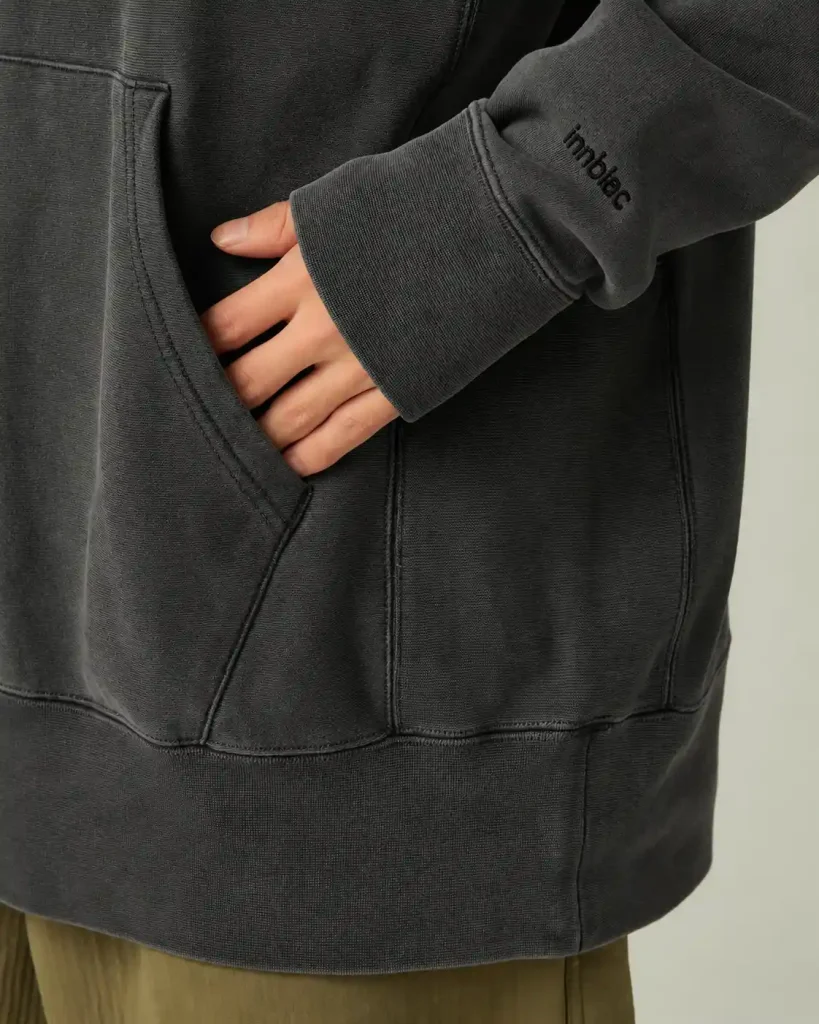
Garment dyeing is often selected when a brand wants a washed, worn-in, vintage-inspired, or tonal appearance. The actual result depends on the dye chemistry, material composition, garment construction, and finishing method.
Advantages of garment dyeing
- Garment-level color effects: The process can support distinctive washed or tonal appearances when properly developed.
- An alternative for fashion-led collections: It may suit designs where the finished garment’s character is as important as a uniform base color.
- Potential production flexibility: Some suppliers can allocate prepared garments to different colors later in production, depending on their equipment and workflow.
- Integrated appearance development: Brands can assess the combined effect of fabric, ribbing, stitching, and finishing on a representative garment.
What buyers should consider
Garment dyeing takes place after sewing, so the dyeing and finishing process can affect the completed hoodie’s dimensions.
Different materials may also absorb dye differently. Cotton body fabric, polyester thread, elastane-containing ribbing, labels, and zipper components should not be assumed to develop identical colors.
Before bulk processing, approve a representative trial-dyed garment and confirm the intended appearance, dimensional requirements, and component compatibility.
3. Which Hoodie Dyeing Method Has a Lower MOQ?
Neither garment dyeing nor piece dyeing automatically offers a lower minimum order quantity.
The practical MOQ depends on the manufacturer’s material sourcing arrangements, dyeing equipment, batch requirements, production schedule, and willingness to accommodate small runs.
Piece-dyed hoodie MOQ
For piece-dyed hoodies, the fabric order or fabric dye lot may determine the minimum commitment.
Ask your manufacturer:
- What is the minimum garment quantity per style?
- What is the minimum quantity per color?
- Is there a separate minimum for custom-dyed fabric?
- Can stocked or previously dyed fabric be used?
- Can multiple styles share the same approved fabric?
- Are small-lot dyeing or material surcharges applicable?
A supplier may be able to sew a relatively small order but still require a larger fabric purchase. In that case, the material minimum—not sewing capacity—determines the practical order size.
Garment-dyed hoodie MOQ
For garment-dyed hoodies, the minimum may depend on the prepared-for-dye garment quantity and the economics of each dye batch.
Ask your manufacturer:
- What is the minimum dye-batch quantity per color?
- Are there minimum loads for the dyeing equipment?
- Can different sizes be processed in the same batch?
- Can different styles share a batch without compromising quality?
- Are underfilled-batch charges applicable?
- Can the proposed quantities be accommodated within the production schedule?
Some production setups allow garments to be allocated to colors later in the process. Others require more specific commitments before sewing or dyeing.
The most useful MOQ comparison is the total commitment per style and color, including fabric, trims, garment production, dyeing, sampling, and any small-batch charges.
4. How Does Dyeing Method Affect Color Approval?
Color approval should be planned before bulk production begins, but the appropriate approval sample differs by process.
Color approval for piece-dyed hoodies
A typical workflow includes:
- Establish an approved physical color reference.
- Review lab dips or trial-dyed fabric samples.
- Approve the color development.
- Evaluate bulk production fabric against the agreed standard.
- Inspect conforming material before cutting.
- Retain batch identification and approval records.
An approved lab dip communicates the intended shade, but it does not guarantee that every bulk fabric lot will match.
The supplier and buyer should agree on the inspection method, acceptance criteria, sampling plan, and procedure for handling nonconforming material.
Color approval for garment-dyed hoodies
For garment dyeing, the most useful development reference is a representative garment processed using the intended materials, construction, dyeing conditions, and finishing method.
A practical workflow includes:
- Define the target shade and intended visual effect.
- Prepare a representative garment.
- Conduct the trial dyeing and finishing process.
- Evaluate color, hand feel, component appearance, and dimensional changes.
- Revise the process or garment specification if necessary.
- Approve the reference before bulk garment dyeing.
- Inspect bulk batches against the agreed requirements.
A trial garment helps establish the target, but production batches still need appropriate inspection.
What should a color approval specification include?
For either process, document:
- The approved physical color reference.
- Applicable instrumental color measurement methods.
- Agreed color-difference tolerances, where relevant.
- Visual assessment conditions.
- Acceptable tonal or washed variation.
- Production batch sampling requirements.
- Approval and rejection responsibilities.
For textured, brushed, or intentionally washed fabrics, instrumental measurements may not capture every important visual effect. Use physical references and clearly defined appearance criteria where appropriate.
5. Do Garment-Dyed Hoodies Shrink More?
There is no universal shrinkage percentage or rule that applies to every garment-dyed and piece-dyed hoodie.
The important difference is when wet processing occurs relative to cutting and sewing.
Shrinkage in piece-dyed hoodies
Fabric dyeing and finishing occur before cutting. This gives the manufacturer an opportunity to evaluate fabric width and dimensional stability before establishing the cutting plan.
However, residual shrinkage may still occur during subsequent garment washing, finishing, or consumer care.
Shrinkage in garment-dyed hoodies
Garment dyeing introduces processing after the hoodie has been sewn. The finished garment’s measurements may therefore differ from its pre-dye dimensions.
Dimensional changes depend on fabric construction, pretreatment, dyeing conditions, mechanical action, drying, and other finishing variables.
Pattern allowances or fabric preparation may help compensate for anticipated changes, but they should be based on representative development results rather than a generic percentage.
How to validate finished hoodie measurements
For garment-dyed development, a practical process is to:
- Produce representative samples using the intended fabric and construction.
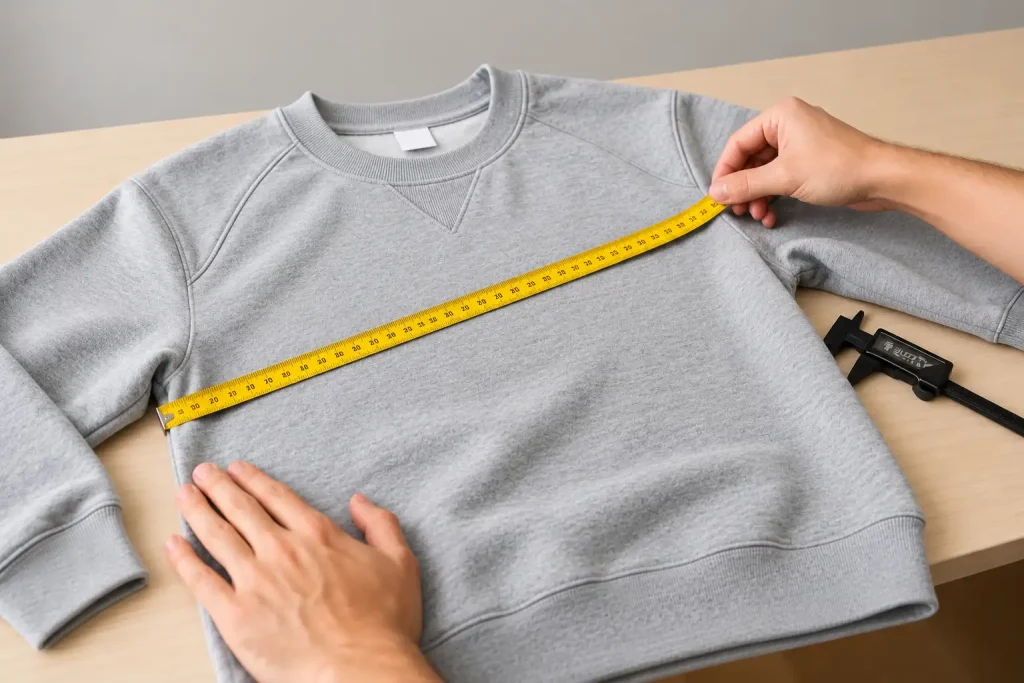
- Measure the garments at the specified points of measure before dyeing.
- Apply the intended dyeing and finishing process.
- Condition and remeasure the garments.
- Compare the results with the approved finished-garment specification.
- Adjust the pattern or process if required.
- Verify the revised sample before bulk production.
For both dyeing methods, define finished-garment measurement tolerances and relevant dimensional stability tests before production approval.
The acceptance target is the approved finished hoodie, not an assumed shrinkage percentage.
6. Will the Ribbing, Sewing Thread, and Trims Match?
Not automatically.
A custom hoodie may combine cotton fleece, ribbing containing elastane, polyester sewing thread, drawcords, labels, and zipper components. These materials can respond differently to dyeing and finishing.
Piece-dyed hoodies
Because body fabric and other components may be sourced or dyed separately, matching must be managed across material lots.
Specify which components must match the body fabric and which may have an intentional contrast. Where close matching is required, approve the components against the same controlled reference and assess them under agreed viewing conditions.
Garment-dyed hoodies
Garment dyeing exposes compatible assembled components to the same process, but this does not guarantee identical color development.
Differences in fiber content, construction, absorbency, and dye affinity may create tonal variation. For example, polyester sewing thread may respond differently from cotton fabric in a process designed primarily for cellulosic fibers.
Before bulk approval, verify:
- Fiber composition and construction of each component.
- Whether each component is intended to absorb dye.
- Acceptable color contrast or tonal variation.
- Compatibility with dyeing, washing, and drying conditions.
- Dimensional stability and functional performance.
- Special requirements for labels, closures, and hardware.
Assess the combined appearance on a representative garment instead of relying solely on individual material swatches.
7. Which Method Is Better for Repeat Orders?
Both methods can support repeat orders when the production process and acceptance criteria are controlled.
Piece-dyed hoodie reorders
A new fabric lot should be checked against the approved color reference. Fabric construction, weight, finishing, residual shrinkage, and trim compatibility may also need verification.
Changes in the fabric supplier, dyeing process, or finishing specification should be reviewed before relying on earlier approvals.
Garment-dyed hoodie reorders
A new garment-dye batch should be evaluated against the retained approved garment reference.
Relevant checks include overall shade, intentional tonal variation, component appearance, finished measurements, hand feel, and specified colorfastness requirements.
A new batch may need additional development or verification. However, substantial batch variation is not an unavoidable characteristic of every garment-dye program.
Keep traceable production records
For both processes, retain relevant records such as:
- Approved fabric or garment color references.
- Dye-lot and batch identification.
- Applicable process or recipe references.
- Color inspection and measurement results.
- Finished-garment measurement records.
- Approved deviations and corrective actions.
- Relevant material or process changes.
Agree on record ownership, retention, and retrieval with the manufacturing partner. These records help investigate differences between earlier shipments and future reorders.
8. How Do the Two Methods Compare in Total Production Cost?
The lowest quoted unit price does not necessarily represent the lowest overall production cost.
A smaller apparent MOQ may involve higher dyeing charges, additional sampling, or more expensive small-batch processing. Conversely, a larger fabric commitment may be more economical for a recurring core-color program.
Request an itemized quotation covering:
| Cost factor | What to confirm |
|---|---|
| Fabric | Material price, sourcing minimum, and preparation requirements |
| Dyeing | Batch minimums, setup charges, and color-specific costs |
| Sampling | Lab dips, trial garments, and additional development rounds |
| Trims | Component sourcing, matching, and compatibility |
| Quality control | Color inspection, dimensional evaluation, and testing |
| Reprocessing | Feasibility, cost, and approval requirements |
| Reorders | New batch approvals and material commitments |
| Lead time | Material preparation, sewing, dyeing, approval, and finishing |
For a meaningful comparison, use the same garment specification, order quantities, colors, required appearance, and delivery conditions for both quotations.
The more economical method depends on the actual production program.
9. Which Dyeing Method Should Your Brand Choose?
Choose piece dyeing when:
- Your hoodie requires a clean, uniform solid-color appearance.
- Your supplier can meet the required fabric and dye-lot quantities.
- You want to evaluate bulk fabric before cutting.
- Ribbing and trim matching can be managed through material sourcing and inspection.
- Your product is intended for ongoing core-color production.
Consider garment dyeing when:
- Your design depends on garment-level washed or tonal effects.
- A vintage-inspired or worn-in appearance is important.
- The fabric and components have been validated for the proposed process.
- The manufacturer can support your target quantities and batch requirements.
- You can accommodate post-sewing processing and the associated approval steps.
Some brands use both methods across different collections. A core hoodie range may use piece-dyed fabric, while a limited capsule collection may use garment dyeing to achieve a particular finish.
The choice should be based on the product specification and validated production capabilities, not simply on the method’s name.
10. Custom Hoodie Pre-Production Checklist
Before confirming your dyeing route, review the following with your manufacturer:
- Intended appearance: solid, washed, vintage, or tonal.
- Confirmed dyeing method and processing sequence.
- Fabric composition, weight, construction, and finishing.
- MOQ per style, color, material, and dye batch.
- Approved color reference and acceptance criteria.
- Required lab dips, trial garments, and bulk approvals.
- Ribbing, thread, labels, closures, and trim compatibility.
- Finished-garment measurement tolerances.
- Relevant shrinkage and colorfastness testing.
- Reorder and batch-matching requirements.
- Nonconforming-goods and corrective-action procedures.
- Buyer and supplier approval responsibilities.
Completing these checks before bulk approval helps clarify the production commitment and reduce avoidable development risks.
Frequently Asked Questions
Q1:Is garment dyeing better for small hoodie orders?
Not necessarily. Some production setups allow flexible color allocation, but material minimums, dye-batch requirements, and processing charges still apply. Request the actual minimum per style and color.
Q2:Do garment-dyed hoodies shrink more than piece-dyed hoodies?
There is no universal answer. Garment dyeing can change dimensions after sewing, while piece-dyed fabric can still experience residual shrinkage during subsequent processing and consumer care. Both routes require appropriate measurement and dimensional stability controls.
Q3:Can the ribbing and sewing thread match the body in garment dyeing?
Not automatically. Different fibers and constructions can develop different shades in the same dye bath. Evaluate compatibility and acceptable contrast on a representative garment before bulk processing.
Q4:Can a rejected dye batch be reprocessed?
Sometimes, but reprocessing is not always technically feasible or commercially acceptable. The supplier should evaluate potential effects on color, fabric or garment quality, and functionality before proceeding with the required approval.
Q5:Which dyeing method is better for consistent reorders?
Both can support repeat production with appropriate controls. Piece-dyed programs require fabric-lot and component matching, while garment-dyed programs require batch-level color and finished-garment verification. Retained references and documented acceptance criteria are important for both.
Develop Your Custom Hoodie with New Asia Garment
Choosing the right dyeing method starts with your product requirements, target appearance, and production quantities.
New Asia Garment supports B2B apparel OEM/ODM development, sampling, and production. For a custom hoodie project, share your tech pack, fabric requirements, target colors, quantities per color, preferred finish, and expected reorder schedule.
Our team can review the information to discuss suitable production options, sampling requirements, and the details that need to be confirmed before bulk manufacturing.
Ready to discuss your hoodie project?
[Contact New Asia Garment] to share your project requirements and request a production consultation.
Available dyeing processes, minimum quantities, testing arrangements, lead times, and commercial terms must be confirmed for the specific program.
Conclusion
Garment-dyed and piece-dyed hoodies differ primarily in production sequence, material commitments, color approval, and dimensional control.
Piece dyeing allows fabric color to be evaluated before cutting, while garment dyeing applies color after sewing and can support distinctive finished effects. Neither method guarantees lower costs, smaller MOQs, less shrinkage, or perfect color consistency.
For apparel brands, the right choice depends on the desired appearance, practical order quantities, material compatibility, approved color standards, finished measurements, and future reorder requirements.
A clearly specified dyeing route, supported by representative samples and written acceptance criteria, provides a stronger foundation for custom hoodie production than choosing solely on appearance or quoted unit price.
Read More
- Garment-Dyed vs Piece-Dyed Hoodies: MOQ, Shrinkage and Color Approval Trade-Offs
- Moving Apparel Production to a New Factory: A Handover and Validation Checklist
- How to Compare Clothing Manufacturer Quotes: A Cost Checklist for Apparel Brands
- How to Build Durability Tests Around High-Stress Garment Areas
- How to Control Fabric Shade Variation Before Bulk Production