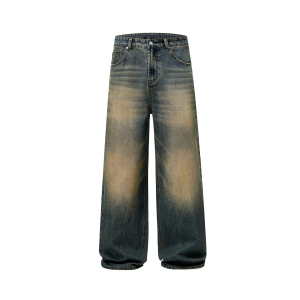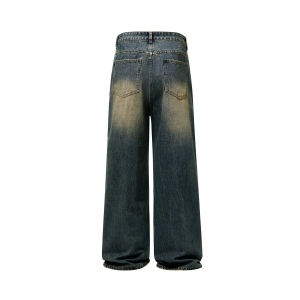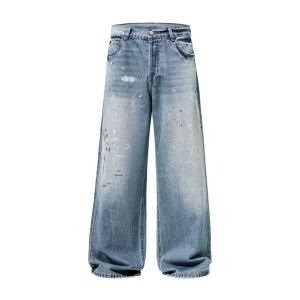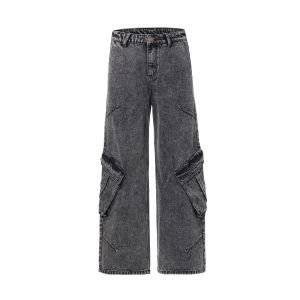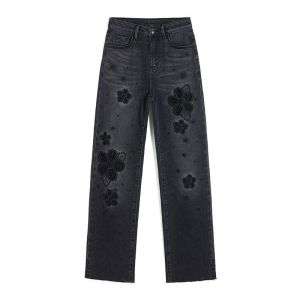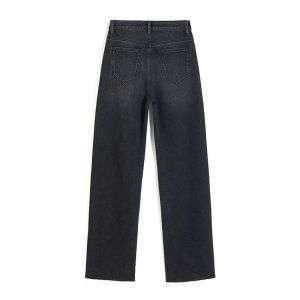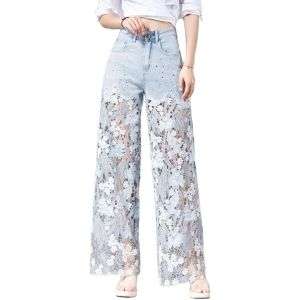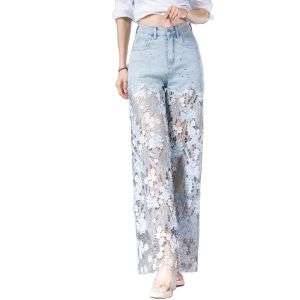

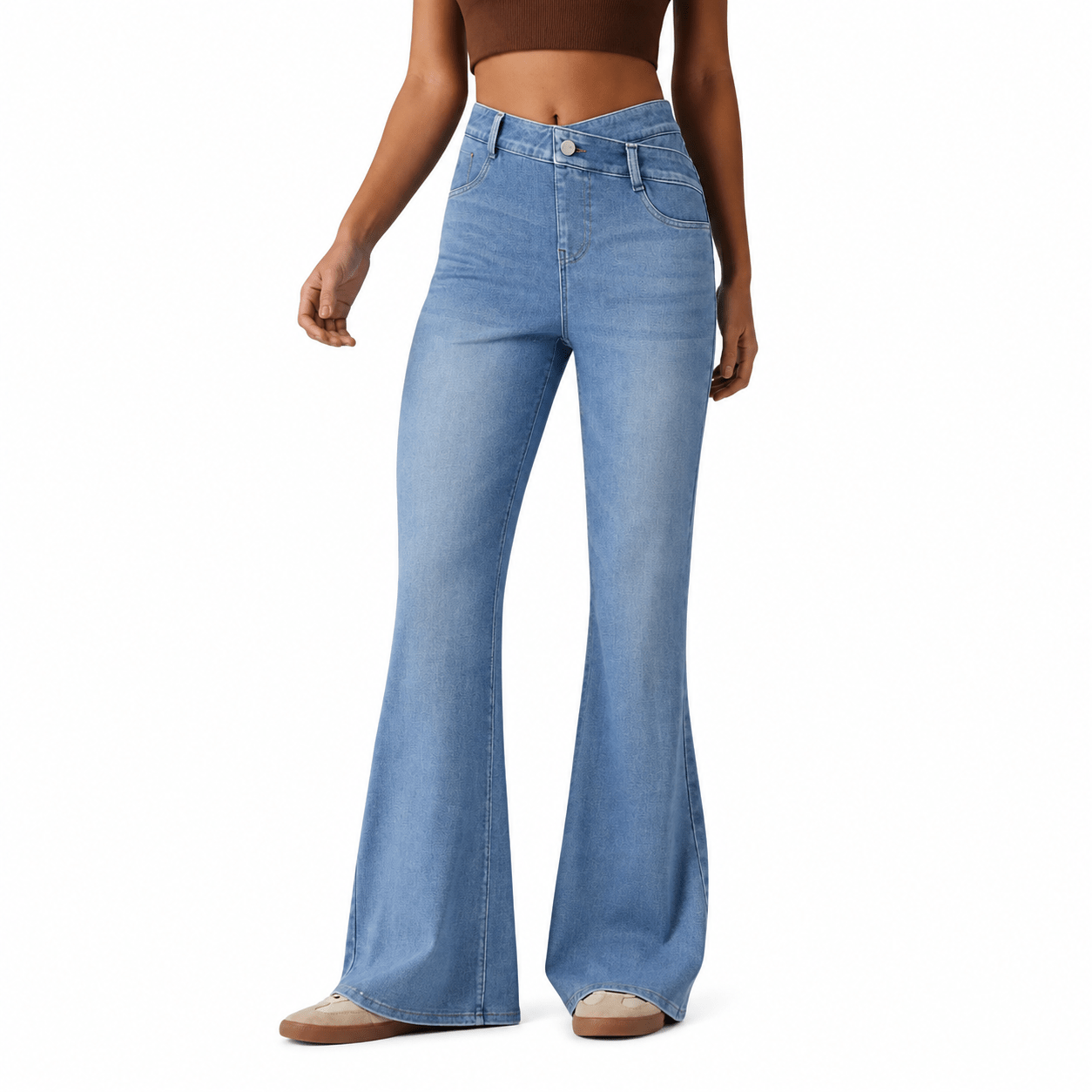
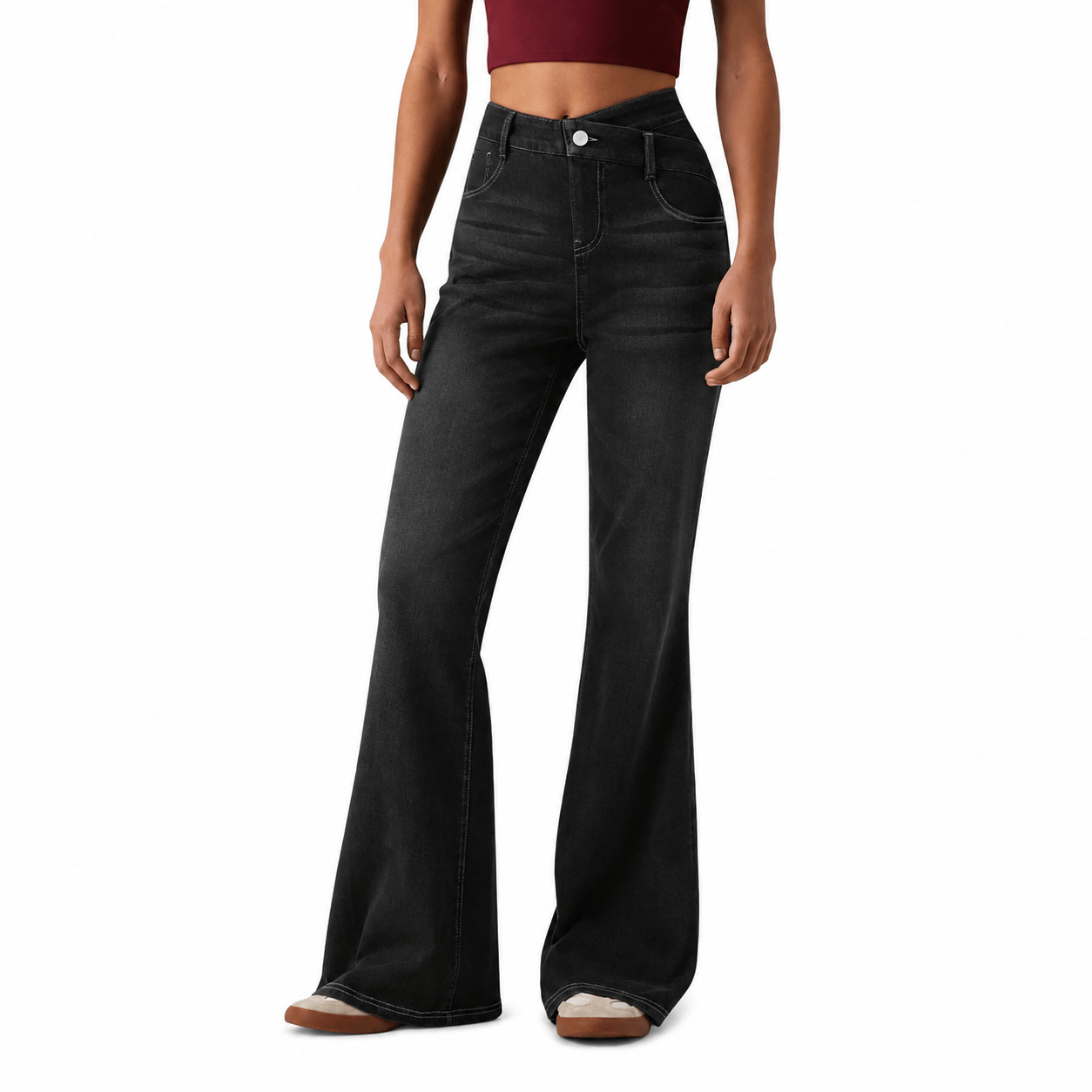
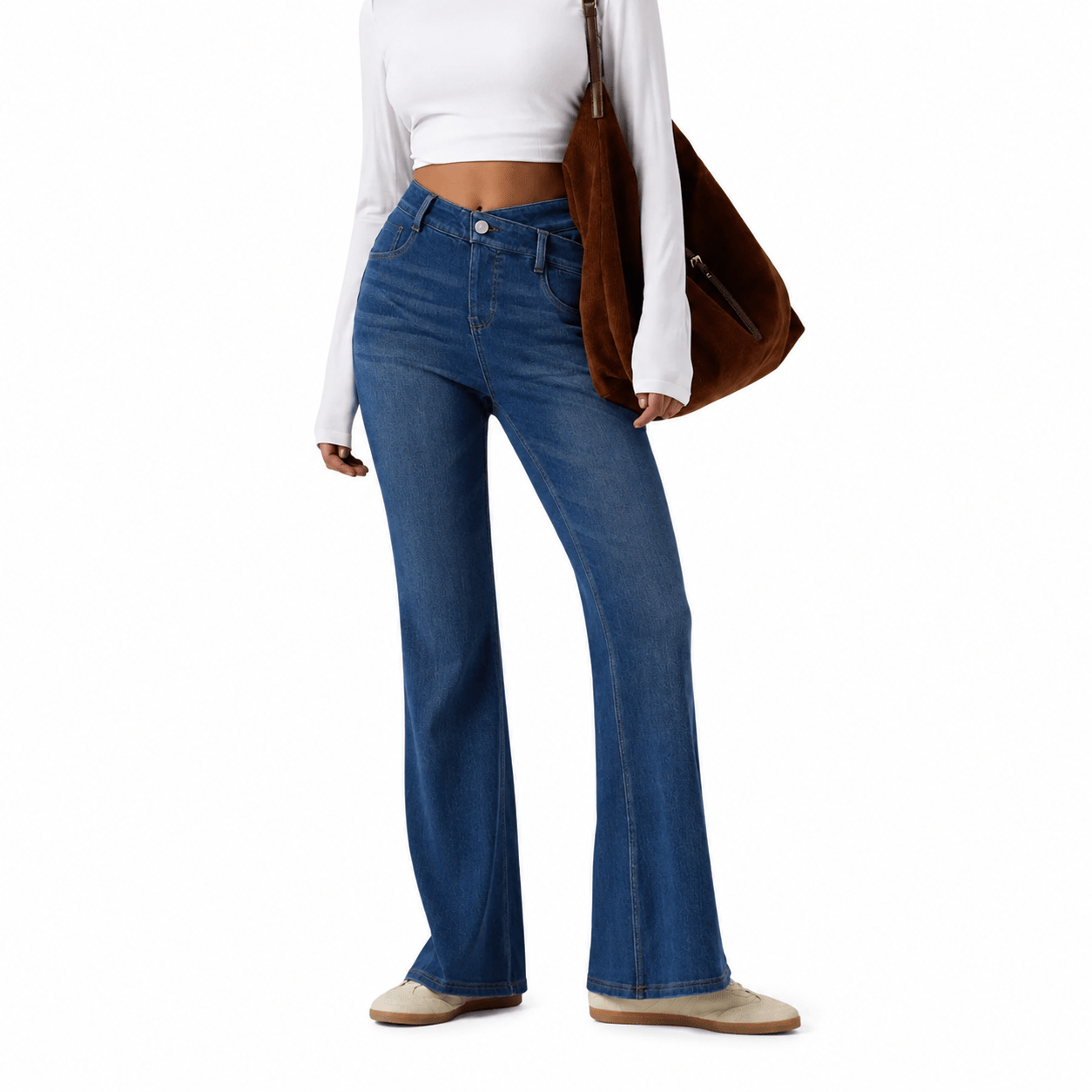
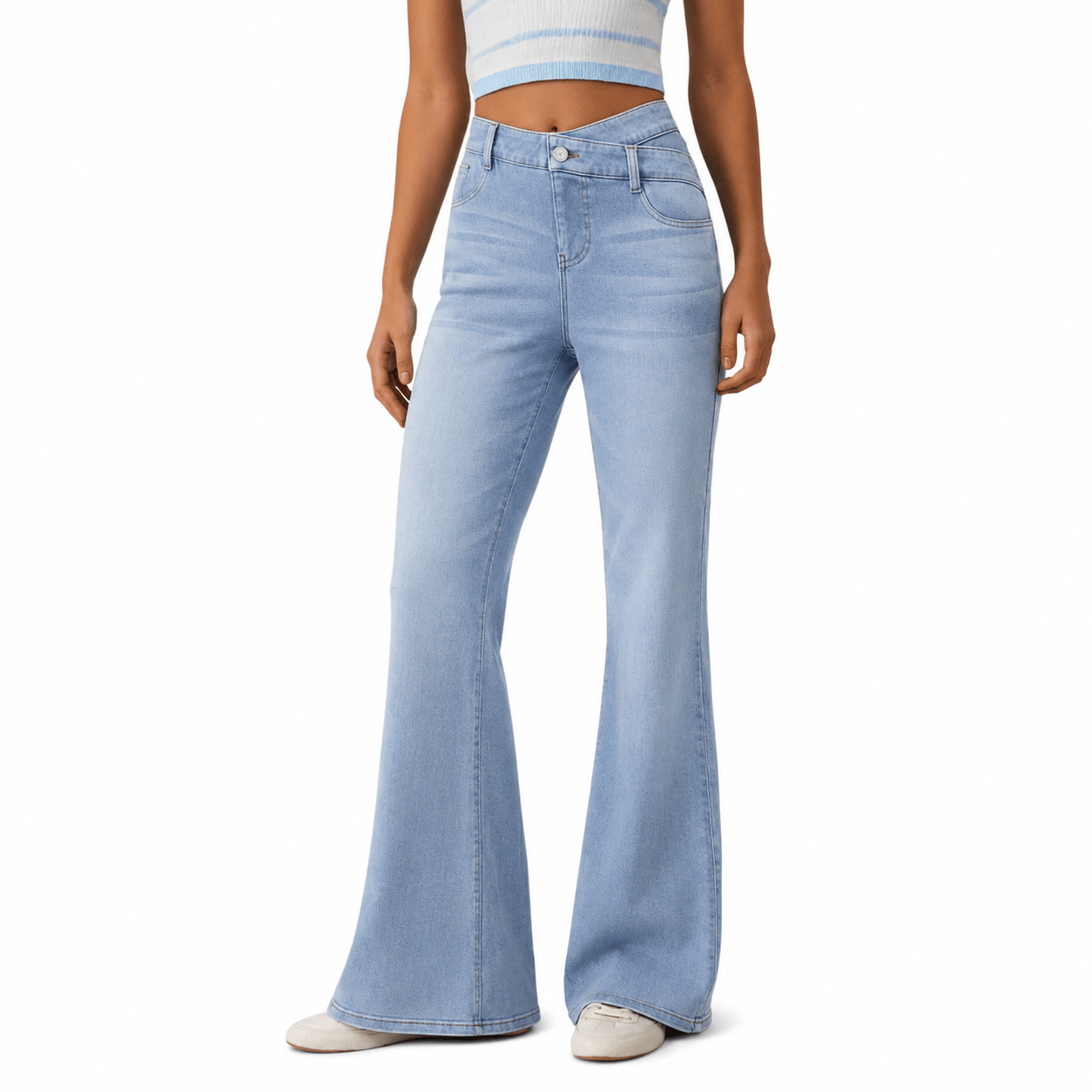
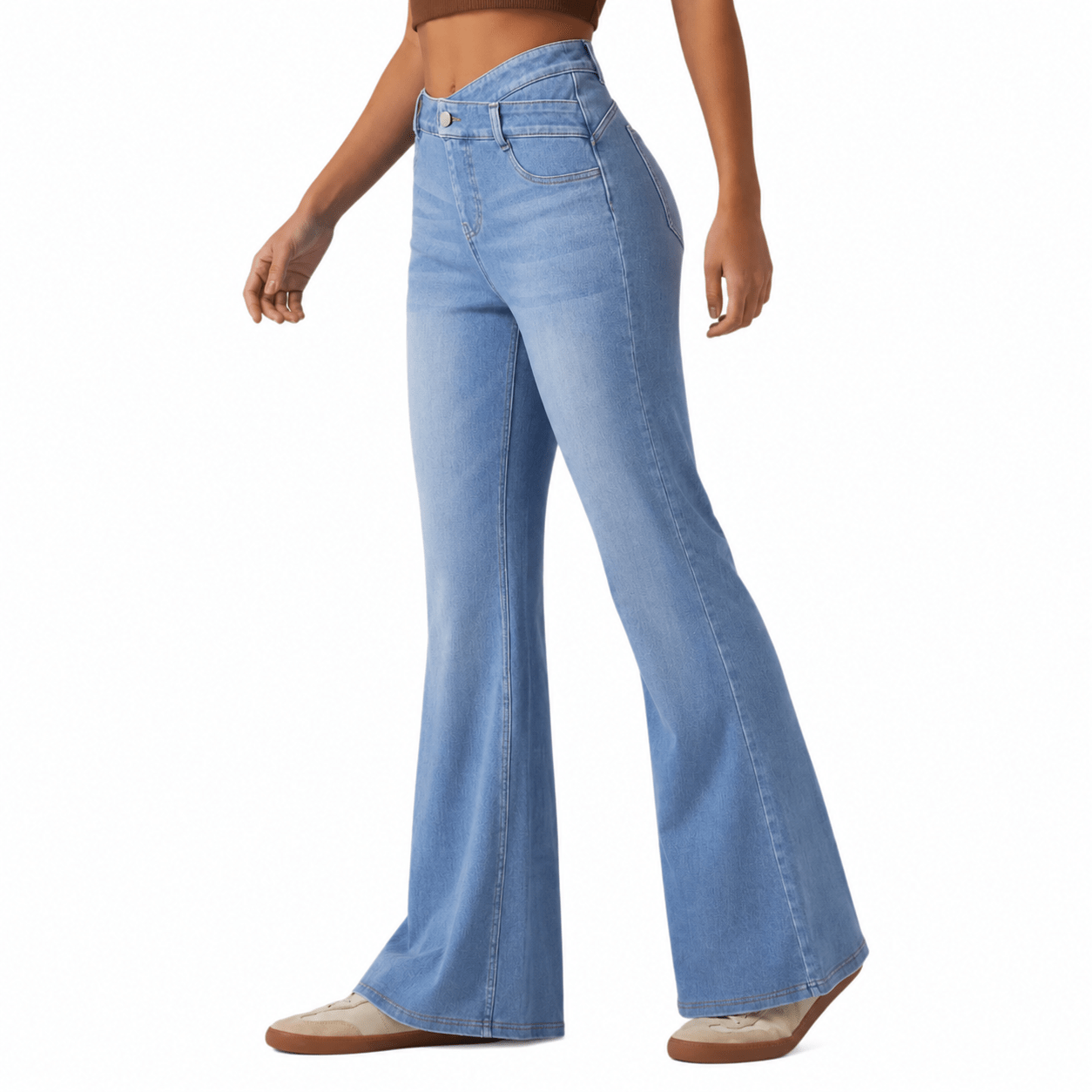
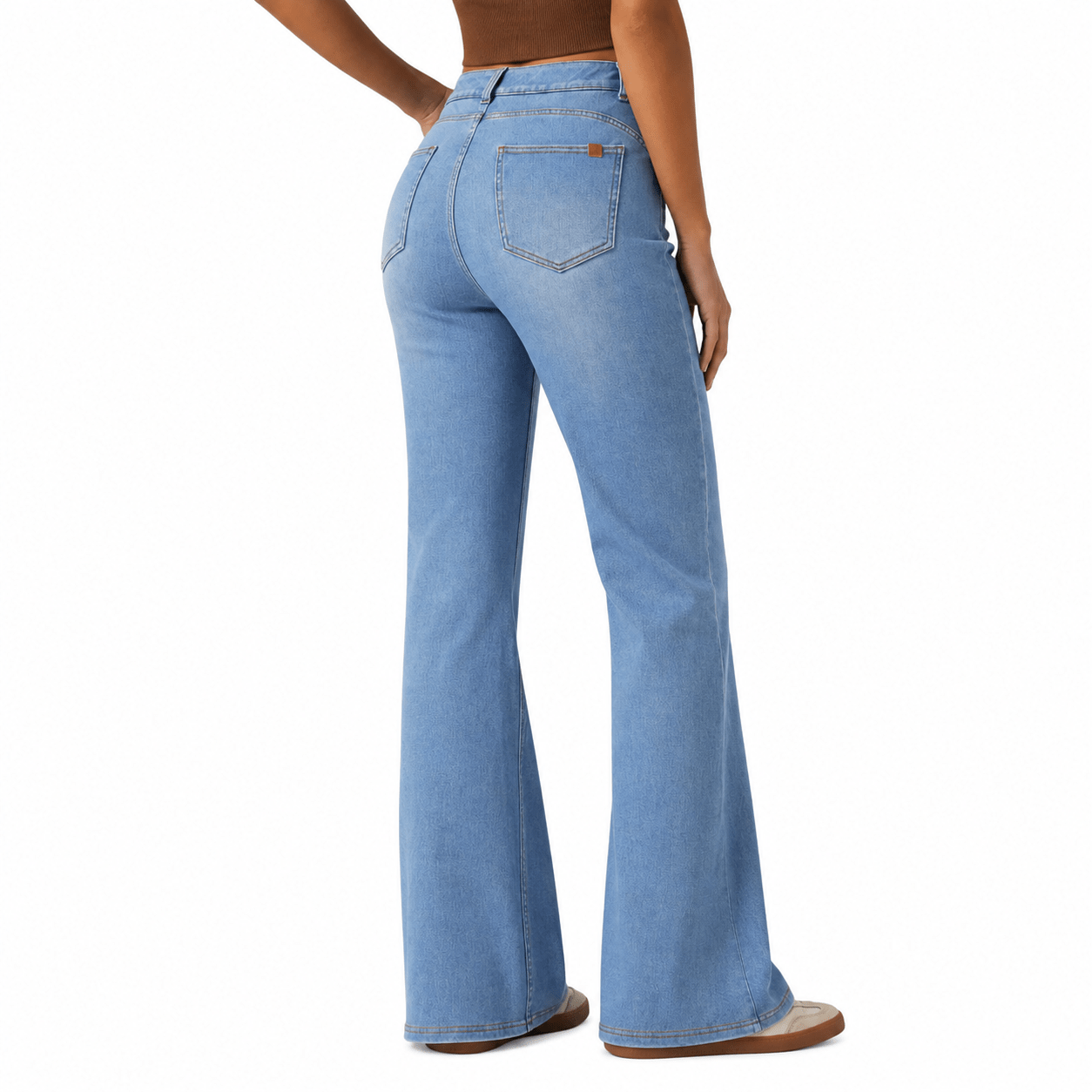
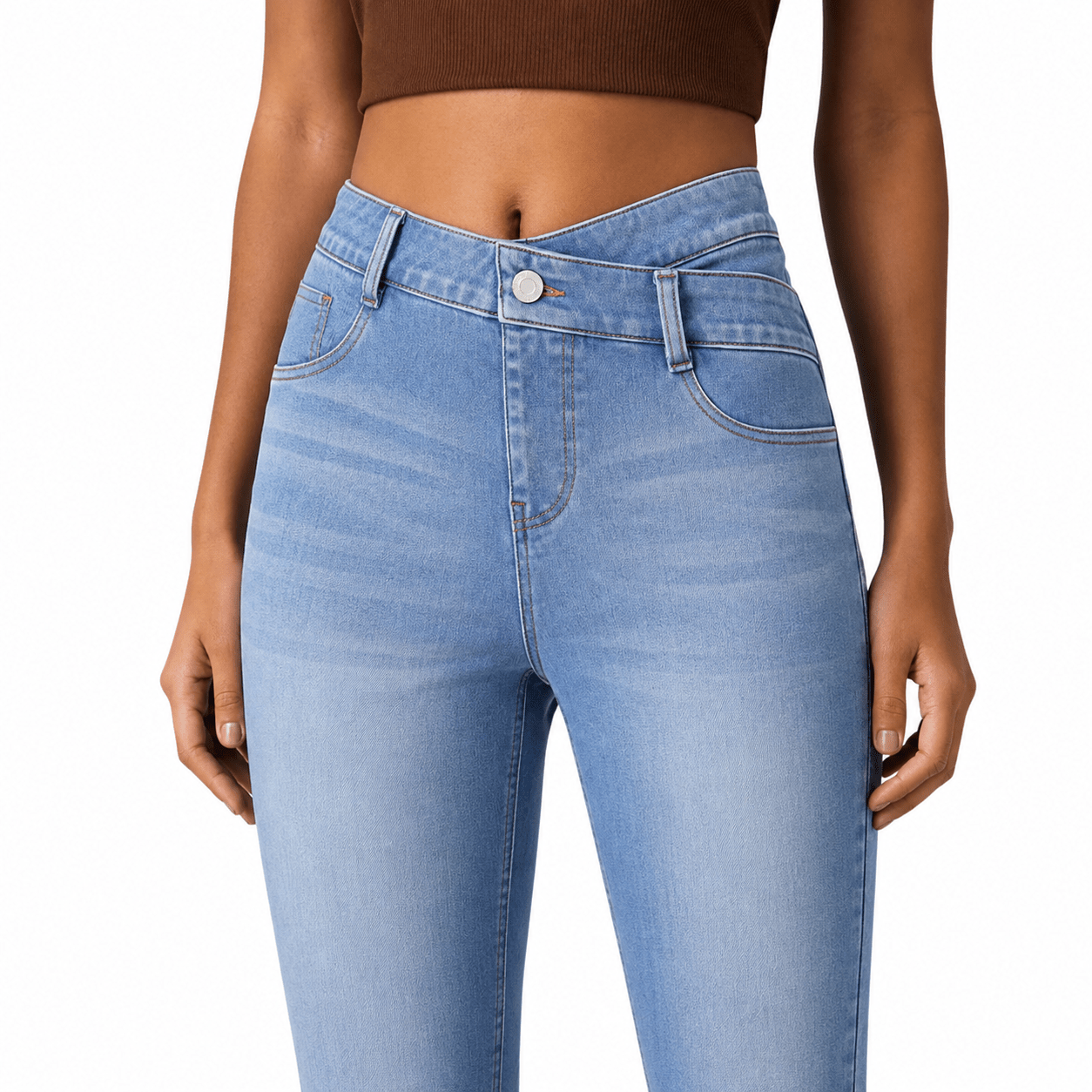
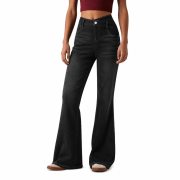
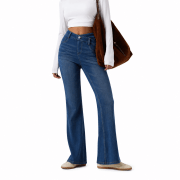
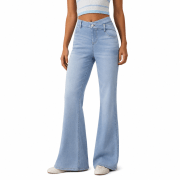
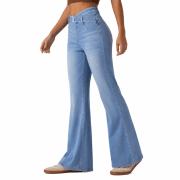
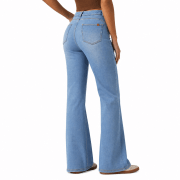
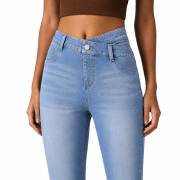
Develop custom crossover-waist flare jeans for OEM, ODM or private-label collections. Reference KLEK430 combines a high-waisted V-shaped crossover front, a fitted upper leg, a long flared silhouette, front fly construction and blue or black faded denim directions. Its verified composition is 54% cotton, 30% polyester and 16% elastane, with a soft hand and stretch-fabric.
Use the displayed style as a development reference or adapt it to a buyer specification. Approve the crossover geometry, waist-to-hip fit, closure, knee break, flare opening, length, fabric behavior, finish, measurements, labels and packaging before bulk production.
Quick Buyer Summary
review the wider jeans development range
| Item | Product and Development Detail |
|---|---|
| Product reference | KLEK430 |
| Product type | Women’s crossover-waist flare jeans |
| Rise | High waist |
| Silhouette | Fitted upper leg with pronounced full-length flare |
| Composition | 54% cotton, 30% polyester, 16% elastane |
| Stretch | Four-way stretch stated on the approved product brief |
| Waist detail | Asymmetric V-shaped crossover waistband |
| Closure | Top button and zip-fly direction visible; confirm final BOM |
| Pockets | Front pocket direction plus two back pockets stated on the approved product brief |
| Finish | Blue and black faded/washed directions; exact process not stated |
| MOQ | Flexible MOQ Available |
What Must Be Approved Before Bulk Production?
Approve the crossover angle and overlap, waist position, front and back rise, waist-to-hip balance, fly alignment, pocket placement, thigh and knee measurements, flare break point, leg opening and finished length. Approve the selected fabric and finish in garment form. State whether measurements apply before or after finishing and define any required recovery, shrinkage, opacity, grading or tolerance criteria in the buyer specification.
Crossover Waist and Fly Alignment
The V-shaped crossover front is the defining detail. Overlap angle, extension length, waistband width and center-front position must work with the fly, top button and belt loops. A small shift can make the V point look off-center, pull the fly or create uneven tension across the waist.
Define reference points from center front and side seams. Review the overlap on the worn fit sample, with the closure fastened, and record the approved geometry in the pattern and construction specification.
High-Waist Fit and Waist-to-Hip Balance
A high waist cannot be controlled by waistband circumference alone. Front rise, back rise, high hip, full hip, crotch shape and waistband contour determine whether the garment sits at the intended position without gaping, rolling or pulling.
Approve these points together on the fit sample. The approved product brief uses high-rise fit, but no verified compression system or performance result is available. If shaping is a project requirement, define the construction and measurable acceptance method before using a performance claim.
Flare Break Point, Opening and Floor Length
The silhouette depends on the transition from fitted thigh to knee and then into the flare. Knee position, knee width, flare start, leg opening and inseam must be treated as one proportion system. The long hem also needs a target wearing height or footwear context.
Approve the base-size knee break and finished hem position first. Review size-set samples so grading does not move the flare too high, narrow the opening or create excess floor contact.
Stretch, Recovery and Opacity Approval
The verified composition and stretch-fabric wording do not establish numeric recovery, growth, shrinkage or opacity performance. These properties affect waistband stability, seat and knee growth, pocket shape and the flare line after wear.
Approve the selected fabric in garment form. Where performance limits apply, document the conditioning method, extension or wear cycles, measurement method and acceptance criteria. Reassess the waist, hip, knee and length after the agreed procedure.
Pockets and Rear Proportion
Pocket openings near the crossover waist must not distort the overlap or add unwanted bulk. Confirm pocket type, opening angle, depth, bag construction and reinforcement. The live page states two back pockets; approve their dimensions and placement against the yoke, seat and flare silhouette.
Review pocket symmetry on the worn sample and across the size set. Pocket positions should follow the approved grading logic rather than move only by a fixed amount without fit review.
Faded Finish and Finished Measurements
review denim production-development controls
The gallery shows blue and black faded directions, but no wash chemistry or numeric shade standard is published. Provide an approved garment, swatch or visual reference for every required finish. Processing can change shade, hand feel, stretch response and garment dimensions.
State whether measurements apply before or after finishing. For repeat orders, compare the crossover waist, fly, pockets, flare line, hem and final measurements with buyer-approved finished references. Review New Asia’s denim fabric and wash development when preparing the specification.
Development Priorities
Product reference KLEK430 is positioned for B2B development around high-waist fit, straight upper leg transitioning to slight flare, fly and pocket construction. Buyer specifications and samples govern final production approval.
Private-Label Customization
Subject to development review, buyers can customize:
- crossover angle, overlap length, waistband depth and rise;
- waist-to-hip fit, crotch shape and grading direction;
- thigh, knee, flare start, leg opening, inseam and outseam;
- fly, button, belt loops, front and rear pocket construction;
- stretch-denim fabric, color and faded-finish direction;
- topstitching, trims, woven labels, care labels and hangtags;
- packaging and buyer-specific carton information.
Use the OEM clothing manufacturing route for complete buyer specifications. Projects starting from an image, reference garment or partial concept can use the ODM development route. Compare other silhouettes in the custom jeans range or review the bell-bottom jeans development guide.
Current Reference Size Table
These measurements are currently published for KLEK430. Confirm every POM definition, measurement state and tolerance before production use.
| Size | Waist (in / cm) | Hips (in / cm) | Length (in / cm) |
|---|---|---|---|
| S | 26.6 / 67.5 | 36.0 / 91.5 | 40.9 / 104 |
| M | 28 / 71 | 37.4 / 95 | 41.3 / 105 |
| L | 30.5 / 77.5 | 40.0 / 101.5 | 41.7 / 106 |
| XL | 33.5 / 85 | 42.9 / 109 | 42.1 / 107 |
| 2XL | 36.6 / 93 | 46.1 / 117 | 42.5 / 108 |
Order Planning
MOQ depends on the approved development route, fabric, wash, trims and size breakdown. For custom denim and other fashion-garment projects, planning commonly starts from 300 pieces per style; confirm the applicable quantity with the team after the specification is reviewed.
Sampling and Bulk Planning
Typical Sample Development: 5–10 days after key product requirements are confirmed.
Typical Bulk Production: 15–30 days after sample approval and material readiness.
Fabric, finish, fit revisions, crossover construction, trims and approvals can affect timing. Confirm the project schedule before ordering.
Care Reference
Wash separately in cold water before first wear. Machine wash cold inside out with like colors. Do not bleach. Tumble dry low. Cool iron if needed. Confirm the final care label for the selected fabric, finish and destination market.
What to Send for a Quotation
Send a tech pack, measurement chart, reference garment or product images. Include the crossover-waist geometry, rise, size range, fly and pockets, thigh-to-knee fit, flare opening, finished length, fabric, finish, branding, packaging, quantity and destination. State any required stretch, recovery, shrinkage, opacity, shaping, testing or tolerance criteria.
Email business@shanghai-newasia.com.cn for sampling and quotation review. You may request the displayed style, a modified version, a similar product or a buyer-designed development.