

Global Apparel Supply Chain: From Materials to Scalable Garment Production
A global apparel supply chain is only as reliable as the handoffs between materials, product development, manufacturing, quality control and logistics.
This guide explains how those stages connect, where apparel supply chains typically fail, and how brands can build more visible and resilient production systems. New Asia Garment contributes as a garment manufacturing partner across material coordination, sampling, bulk production, quality control and shipment preparation.
What Is the Global Apparel Supply Chain?
A global apparel supply chain is the network of material suppliers, textile mills, trim suppliers, product-development teams, garment factories, logistics providers, warehouses, retailers and other organizations required to turn raw materials into finished clothing and deliver it to the end market.
The greatest operational risk often appears not inside one isolated stage, but at the handoff between stages: a fabric change not reflected in the sample, a sample revision not documented for bulk production, a production delay not reflected in the shipment booking, or a compliance document that does not match the actual material or factory.
How Apparel Moves From Raw Material to Finished Product
The exact network varies by product, but most apparel programs move through a similar sequence of material, product, production and logistics handoffs.
Who Owns Each Stage of an Apparel Supply Chain?
Strong supply chains work because responsibility is clear. Brands, manufacturers, material suppliers and logistics partners do not own the same decisions.
| Stage | Brand / Buyer | Manufacturer | Material Supplier | Logistics Partner |
|---|---|---|---|---|
| Market / Product Strategy | Primary | Support | — | — |
| Product Specification | Primary or shared | Shared / technical support | — | — |
| Fabric & Materials | Approve | Source / coordinate | Produce / document | — |
| Sample Development | Approve | Develop / coordinate | Support materials | — |
| Bulk Production | Approve standard | Primary | Supply inputs | — |
| Quality Control | Define requirements | Execute / coordinate | Input quality | — |
| Packing | Define | Execute | — | — |
| International Freight | Commercial decision | Prepare / coordinate as agreed | — | Execute |
| Import / Distribution | Primary or appointed partner | Support documents as agreed | — | Support / execute |
Where Do Apparel Supply Chains Usually Break Down?
Many production failures are not caused by one “bad factory.” They happen because information, materials, approvals or responsibilities break between stages.
How Brands Can Control Risk Between Supply Chain Stages
| Handoff | Typical risk | Buyer / production control |
|---|---|---|
| Design → Material | Fabric does not match intended hand feel, weight or performance | Approved material specification and swatch |
| Material → Sample | Sample uses a different lot or substitute without clear approval | Approved material identity linked to sample |
| Sample → Bulk | Revisions are lost or old specifications are used | Approved pre-production sample + final specification |
| Cutting → Sewing | Measurement or construction drift | Pattern control + in-line inspection |
| Production → Finishing | Shade, wash or appearance variation | Approved physical standard + tolerance |
| Factory → Packing | Label, barcode, polybag or carton errors | Approved packing specification |
| Factory → Logistics | Missed booking, document gaps or unrealistic ship date | Shipment plan linked to production completion |
What Does Supply Chain Visibility Mean for Apparel Brands?
Supply-chain visibility means knowing what is being produced, where it is in the process, what has been approved, what is blocking progress and what needs to happen next.
Product Visibility
Which specification, sample and material version is the current approved standard?
Production Visibility
Has material arrived? Is cutting complete? Is sewing on schedule? Has finishing started?
Quality Visibility
What inspection standard applies, and are open quality issues documented and resolved?
Delivery Visibility
What approval, production, inspection or freight milestone determines the real ship date?
Factory Lead Time vs. End-to-End Apparel Supply Chain Lead Time
A factory's bulk-production lead time is only one part of the complete calendar. Brands should separate manufacturing time from the total time required to move from product decision to delivered inventory.
Single-Supplier vs. Multi-Country Apparel Sourcing
Diversification can reduce concentration risk, but a larger supplier network also creates more development, quality and coordination complexity.
| Strategy | Main advantage | Main risk | Best control |
|---|---|---|---|
| Single Factory | Simple communication and repeatable standards | Supplier concentration | Capacity visibility + contingency planning |
| Single Country | Deep ecosystem and easier regional coordination | Country concentration | Alternative supplier / logistics options |
| China + 1 | Balances ecosystem depth with diversification | Duplicated development and QC work | Shared specifications + aligned quality standards |
| Multi-Country Network | Flexibility across products, tariffs or capacity | Higher management complexity | Strong central data, standards and supplier governance |
What Makes an Apparel Supply Chain Resilient?
Supplier Specialization
Use suppliers that are technically suited to the category rather than forcing every product into one factory.
Approved Alternatives
Where practical, identify acceptable material, trim or capacity alternatives before disruption occurs.
Clear Specifications
Documented standards reduce dependence on individual people or informal conversations.
Capacity Visibility
Confirm production-slot availability before finalizing launch and delivery commitments.
Quality Standards
Use approved samples, tolerances and inspection criteria that remain stable across repeat production.
Communication & Escalation
Problems need clear owners, response expectations and documented decisions.
Logistics Options
Understand available sea, air or express options without assuming the fastest route is always economically sensible.
Decision Buffers
Build realistic time for material, approval, production, inspection and freight instead of planning every stage at zero margin.
Common Apparel Supply Chain Risks and Practical Controls
Risk levels are illustrative and should be adjusted for the actual product, supplier network and market.
| Risk | Typical likelihood | Potential impact | Practical control |
|---|---|---|---|
| Fabric delay | Medium–High | High | Early material confirmation and realistic lead time |
| MOQ mismatch | Medium | Medium | Confirm material and process minimums before development |
| Sample revision cycles | High | Medium | Clear development brief and consolidated comments |
| Quality drift | Medium | High | Approved standard + in-line + final QC |
| Capacity conflict | Medium | High | Production booking and schedule visibility |
| Shipping delay | Medium | High | Buffer + shipment planning before production completion |
| Compliance gap | Project-specific | High | Document scope and validity review |
| Demand change | High | High | Order planning, phased commitments where appropriate |
Why Material Suppliers Matter to Apparel Supply Chain Performance
Garment factories cannot separate product quality and lead time from the materials entering production. Fabric and trim suppliers can create some of the earliest and most important supply-chain constraints.
Material Lead Time
Fabric development, dyeing, finishing or trim production can determine when sampling and bulk can begin.
Material MOQ
Supplier minimums can set the commercial floor for colors, fabrics and custom components.
Lot Consistency
Shade, hand feel, stretch or performance can vary if material lots are not controlled.
Certification / Documentation
Material claims should be supported by documentation applicable to the actual fabric or component.
Quality Is a Supply Chain System, Not a Final Inspection
Final inspection cannot repair a product that was built from the wrong material, wrong specification or wrong approved sample. Quality needs control points across the chain.
Compliance Documents Must Follow the Supply Chain
Factory certification, material certification and product testing are different evidence layers. A logo on a supplier page should not be treated as proof that every material, product and order carries the same scope.
Factory Management Systems
Should match the legal entity, factory/site, scope, issuer and validity period.
Material Claims
Should be supported by documentation connected to the applicable fabric, trim or supply route.
Product / Order Requirements
Testing, labeling and market-specific requirements should be verified for the actual order.
What Should Apparel Brands Be Able to Trace?
Management Systems & Compliance References
New Asia maintains management-system and compliance documentation that can support buyer qualification. The applicable scope should be reviewed against the specific factory, material and order.
GB/T 19001/ISO 9001
Quality management system reference.
GB/T 24001/ISO 14001
Environmental management system reference.
GB/T 45001/ISO 45001
Occupational health and safety management system reference.
BSCI
Social-compliance reference for buyer qualification.
KCB-TE-OCS
Certification / compliance documentation available for applicable buyer review.
SC-KCB-TE
Certification / compliance documentation available for applicable buyer review.
What Apparel Brands Need From a More Resilient Supply Chain
Strong apparel supply chains reduce avoidable handoff risk by improving visibility, documentation, supplier fit, production coordination and the ability to respond when demand or operating conditions change.
Resilience
Reduce dependence on one fragile material, supplier, route or production assumption where practical alternatives are available.
Sourcing Diversification
Use alternative countries or suppliers only where they genuinely improve product fit, risk, capacity or market strategy.
Supply Chain Visibility
Track the actual status of materials, development, production, quality and shipment milestones instead of relying on disconnected updates.
Regulatory Documentation
Keep factory, material and product evidence matched to the relevant legal entity, site, material and order.
Digital Coordination
Use standardized data, order systems and traceability tools to reduce version confusion and information loss between stages.
Demand Flexibility
Plan order quantities, repeat programs and capacity around realistic demand while preserving the approved product standard.
How Different Manufacturing Regions Fit Different Supply Chain Strategies
There is no universal best country for every apparel program. Region choice depends on category specialization, material access, supplier ecosystem depth, scale, cost structure, duty exposure, lead time and risk strategy.
China
Deep textile and garment ecosystems can support product development, material sourcing and scalable production across many apparel categories.
Southeast Asia
Can support diversification and specialized categories, with supplier ecosystem depth varying by country, material and product type.
South Asia
Important for large-scale textile and garment production, with category specialization, material strengths and lead-time structures that differ by market.
Europe / Nearshore
Can support proximity, premium positioning or shorter regional replenishment for selected categories and buyer models.
Americas / Nearshore
Can reduce geographic distance to North American markets when suitable materials, capacity and commercial conditions are available.
Where New Asia Fits in Your Apparel Supply Chain
New Asia is a garment manufacturing and production-coordination node within the wider supply chain. Our role is strongest where material decisions, product development, manufacturing, quality and shipment preparation need to connect.
New Asia Directly Supports
- Fabric and trim coordination
- Product development and sampling according to the selected manufacturing route
- Bulk garment manufacturing
- Production planning and workshop coordination
- Production quality control
- Labels, packing and shipment preparation as agreed
Buyer / Appointed Partners Manage as Applicable
- Demand planning and retail strategy
- Final product and commercial decisions
- Import compliance and customs responsibility
- Destination warehousing and distribution
- Retail allocation and inventory planning
- Market-specific responsibilities outside the agreed manufacturing scope
Integrated Production System
Product development, garment manufacturing and supporting processes can be coordinated through an integrated production system rather than treated as isolated handoffs.
Central Scheduling & Order Planning
Hanger-line production is supported by central scheduling, while order-planning and workshop-management systems track production output, quality, labor time and other operating data.
Material Coding & Barcode Management
Materials are managed with standardized coding and barcode-supported warehouse movements, helping connect purchasing, inventory and production information.
How a Production Program Moves Through New Asia
The development path depends on whether the buyer starts from a finished specification, a product direction or an established base. The supply-chain principle remains the same: close each critical decision before the next stage increases cost or production commitment.
1. Product & Commercial Review
Confirm category, quantity, target quality, market, product starting point and delivery expectations.
2. Material & Development Route
Identify fabrics, trims and the appropriate development route. Standardized material information helps reduce handoff errors as the project moves forward.
3. Sample Development
Create the physical product standard. Typical sample development is 5–10 days after the key product and material inputs are confirmed.
4. Approval & Material Readiness
Close measurements, materials, finishing, labels, packing and other production references before bulk manufacturing.
5. Bulk Production & Planning
Typical bulk production is 15–30 days after approval and material readiness. Order-planning and workshop-management systems support production coordination during manufacturing.
6. QC, Packing & Shipment Preparation
Inspect the finished order, verify packing and prepare the agreed shipment documentation and handoff for the next logistics stage.
How Mature Is Your Apparel Supply Chain?
Supply-chain maturity is not about company size. It is about how repeatable, visible and resilient the operating system becomes over time.
What Should You Send Us About Your Apparel Production Program?
Buyers with repeat programs or supply-chain challenges should explain the product portfolio, order pattern and main operational problem as well as the immediate order.
Operational Evidence Behind Supply Chain Coordination
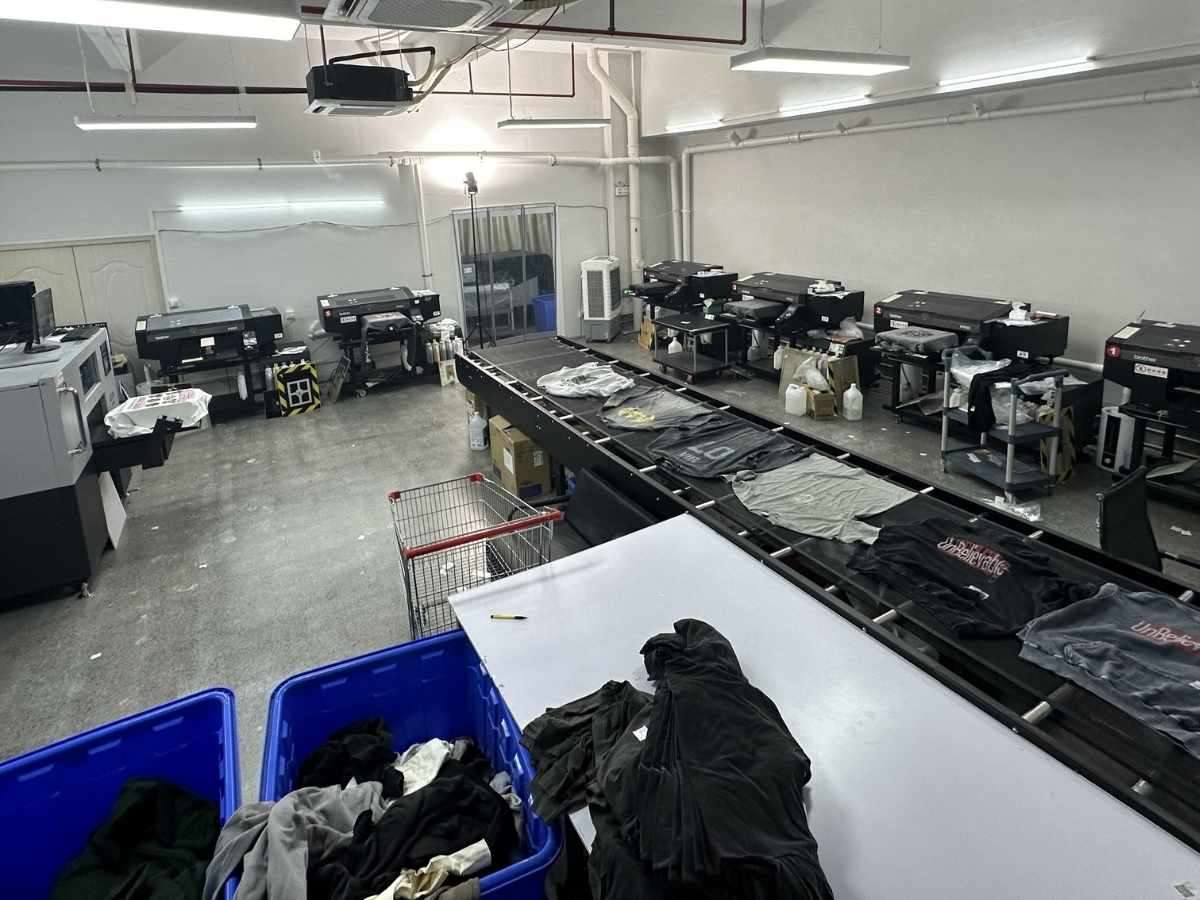
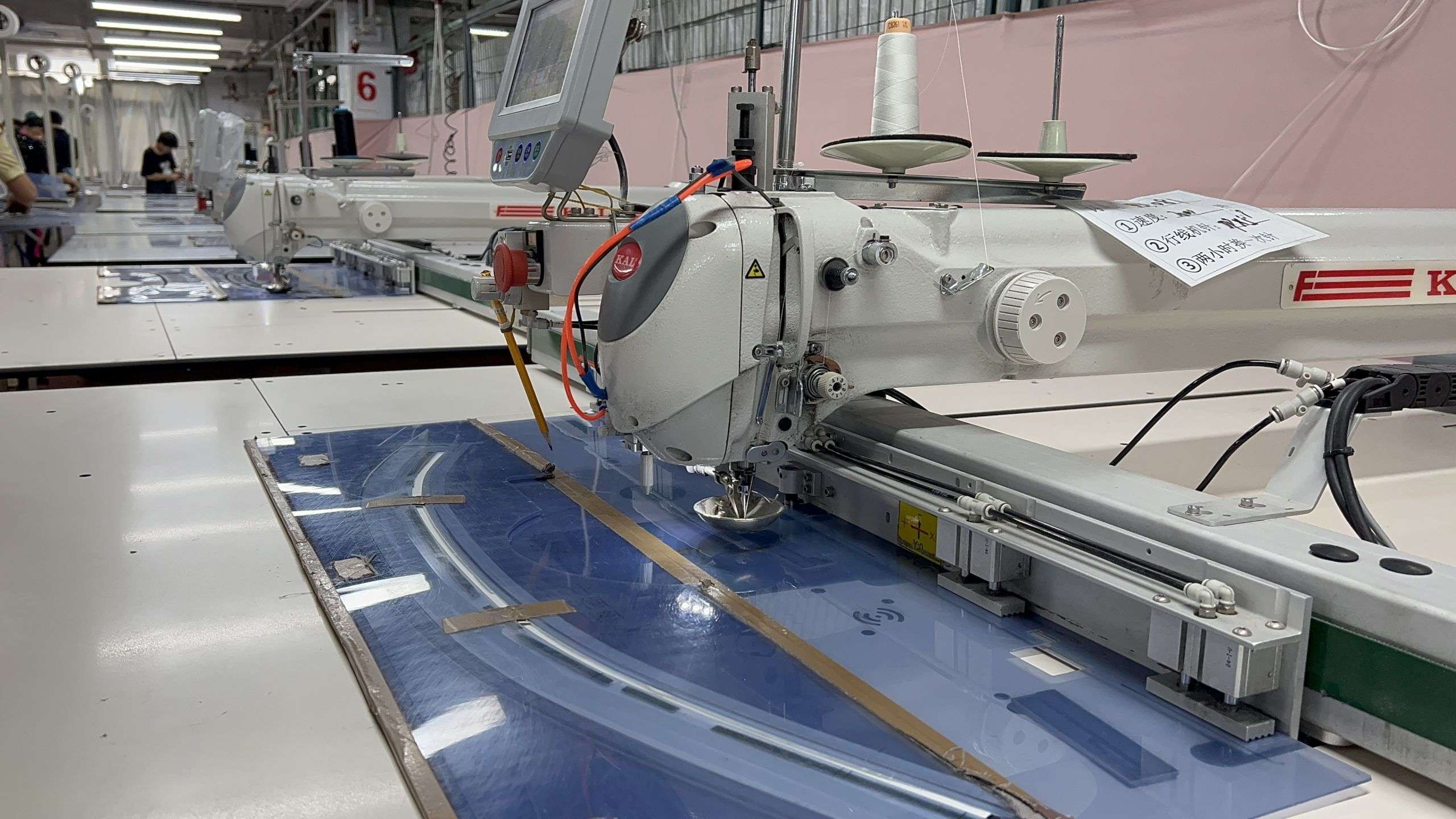
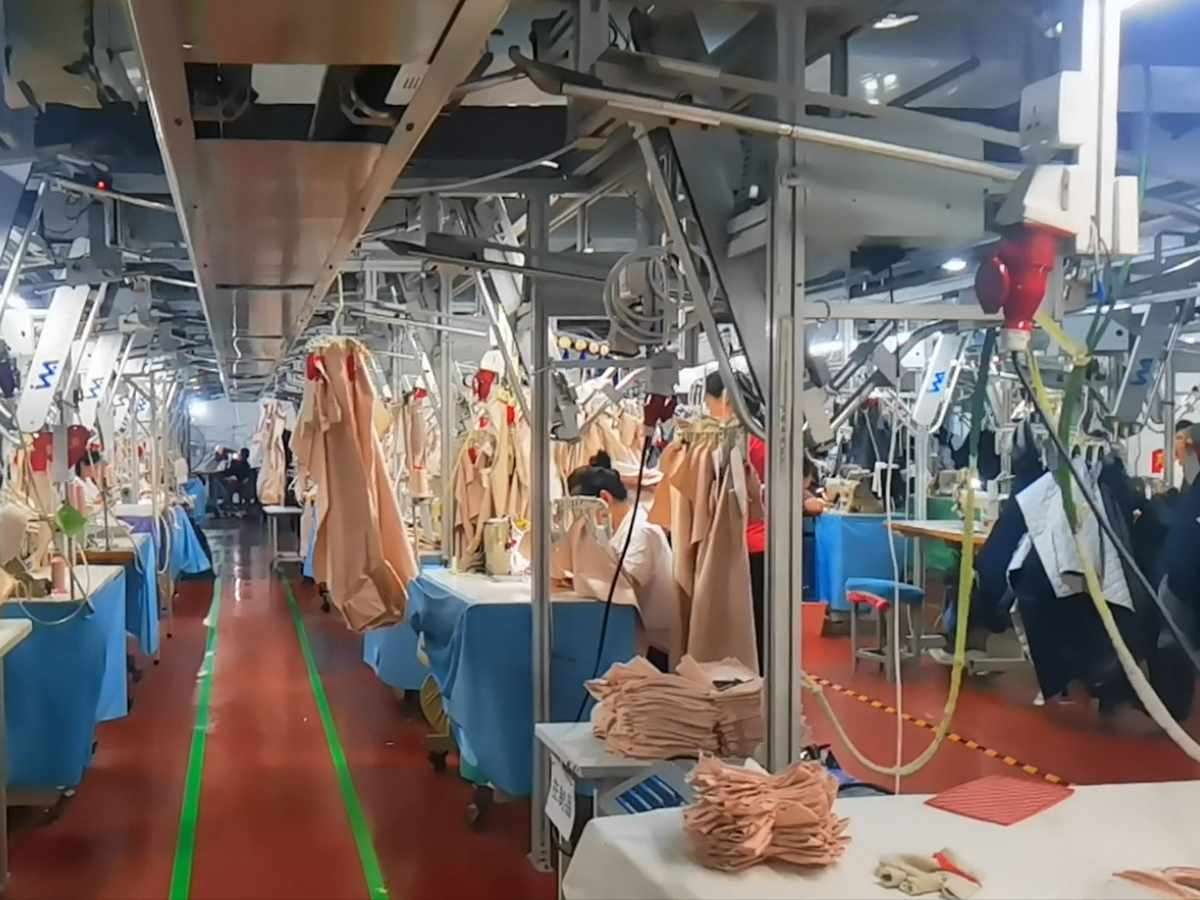
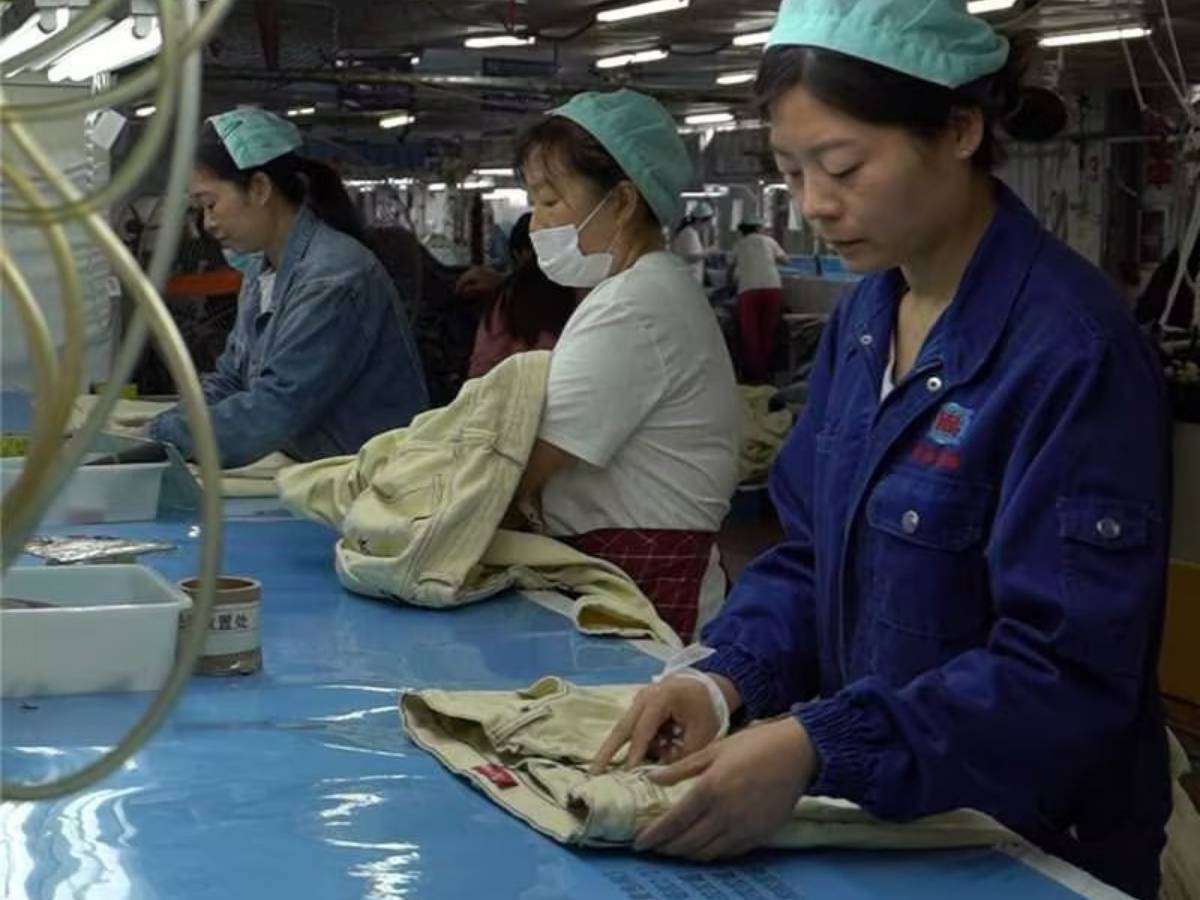
Supply-chain coordination is more credible when material control, production planning, workshop visibility and environmental infrastructure can be tied to actual operating systems and facilities.
Central Scheduling
Hanger-line production is supported by central scheduling that can adjust line allocation according to production needs and operator efficiency.
Digital Order & Workshop Management
Order-planning and workshop-management systems track production output, quality, labor time and other operating data during manufacturing.
Material Coding & Barcode Movements
Standardized material coding and barcode-supported warehouse movements help connect purchasing, inventory and production information.
On-Site Solar Power
Factory operations include on-site solar photovoltaic power generation as part of the company's environmental infrastructure.
Higg FEM & ZDHC Management
The company profile states that Higg FEM is used as an environmental-management tool and that New Asia has participated in ZDHC since 2019.
Wastewater Treatment Infrastructure
At the relevant facility, the 2025 company profile reports approximately 5,423 m³/day of wastewater generation, stable treatment capacity of 8,000 m³/day and a 3,500 m³ emergency pool.
Why Brands Use New Asia Within Their Apparel Supply Chain
The value of a manufacturing partner is not simply factory capacity. It is the ability to keep material, development, production and quality decisions connected as an order moves forward.
Integrated Manufacturing Capability
Woven and denim fabric development, garment design, testing, manufacturing and supporting finishing processes create a more connected route from material decisions to finished apparel.
Digital Handoff Controls
Order-planning systems, standardized material coding and barcode-supported material movements reduce dependence on disconnected manual updates.
China Operating Footprint
Company and business operations across Henan, Shanghai, Guangzhou and Zhejiang are supported by additional design and commercial resources.
Production Visibility
Workshop-management systems track output, quality and operating data while central scheduling supports capacity allocation during manufacturing.
Environmental Infrastructure
On-site solar generation and documented wastewater-treatment infrastructure add first-party operational evidence behind environmental management.
Scale After Approval
Once the product standard and commercial requirements are stable, 6 specialized factories / sites, 12,000+ skilled employees and 30M+ pieces of annual capacity support repeat and larger-volume planning.
Continue With the Resource That Matches Your Next Decision
Use the resources below to move from supply-chain strategy into supplier selection, manufacturing-model choice, product-specific production or factory capability review.
Understand Handoffs & Visibility
Review the complete materials-to-production model, major handoff risks and the information that should remain visible across stages.
Plan Sourcing in China
Move into supplier selection, qualification, commercial planning and China-specific sourcing decisions.
Review Manufacturing Evidence
See equipment, production systems, testing, workshops and other factory-level proof behind apparel manufacturing.
Choose the Right Production Route
Use the product starting point to decide whether the project belongs in OEM, ODM or private label manufacturing.
Go Deeper Into Denim Materials & Finishing
When fabric construction, wash, shrinkage, lot color or denim finishing becomes the main question, continue to the dedicated denim page.
Turn Supply Chain Strategy Into a Production Brief
Prepare the category, quantities, current manufacturing structure, main supply-chain challenge and delivery windows for review.
Global Apparel Supply Chain FAQs
What is a global apparel supply chain?
A global apparel supply chain is the network of material suppliers, textile mills, trim suppliers, product-development teams, garment factories, logistics providers, warehouses and commercial organizations required to turn raw materials into finished clothing and deliver it to the end market.
What are the main stages of the apparel supply chain?
Typical stages include raw materials, yarn or textile production, fabric dyeing and finishing, trims and components, product development, garment manufacturing, quality and compliance, packing, international logistics and final distribution.
What is the difference between apparel sourcing and supply-chain management?
Sourcing focuses mainly on selecting and managing suppliers and materials. Supply-chain management is broader and connects sourcing decisions to product development, production, quality, logistics, inventory and delivery.
Where do apparel supply chains usually fail?
Common failure points include unclear product definition, late materials, undocumented sample changes, supplier handoff errors, capacity conflicts, vague quality standards, late logistics planning and important decisions that remain only in informal conversations.
What does supply-chain visibility mean?
Visibility means knowing which product and material version is approved, where the order is in the production process, what issues are open, what quality standard applies and what milestone controls the realistic shipment date.
What makes an apparel supply chain resilient?
Resilience comes from suitable supplier specialization, documented standards, approved alternatives where practical, capacity visibility, reliable quality control, clear escalation responsibility and realistic logistics options.
Is multi-country sourcing always safer?
No. Diversification can reduce concentration risk, but it also creates more development, quality and coordination complexity. A multi-country strategy works best when product specifications, material requirements and quality standards remain consistent across the network.
What is the difference between factory lead time and total supply-chain lead time?
Factory lead time covers a specific manufacturing stage. Total supply-chain lead time includes material sourcing, sampling, buyer revisions, bulk production, inspection, international freight, customs and destination delivery. New Asia's typical bulk-production period is 15–30 days after approval and material readiness, not the entire end-to-end calendar.
How long does sample development take at New Asia?
Sampling typically takes 5–10 days after key product and material inputs are confirmed. More complex development or additional revision rounds can extend the full approval calendar.
How does quality control fit into the apparel supply chain?
Quality control begins with material and sample approval, continues through pre-production and in-line checks, and ends with final inspection, packing verification and corrective action where required.
How should brands verify supply-chain compliance?
Review each document against the relevant legal entity, factory/site, material, product, scope, issuer and validity period. Factory management certificates, material claims and product testing are different evidence layers and should not be treated as interchangeable.
What should apparel brands be able to trace?
Depending on the program, brands should be able to trace the approved factory, key material source, relevant fabric lot, approved trims, sample version, purchase order, production batch, QC result, packing list and shipment documents.
Where does a garment manufacturer fit in the supply chain?
A garment manufacturer sits between product development and shipment preparation, converting approved materials and product requirements into finished goods while coordinating production quality, packing and relevant material or trim inputs.
What role does New Asia play in the global apparel supply chain?
New Asia functions as a garment manufacturing and production-coordination node. It directly supports material and trim coordination, sampling, garment manufacturing, quality control, packing and shipment preparation according to the agreed project scope.
Connect Supply Chain Strategy to Scalable Garment Manufacturing
Send your product categories, current production setup, annual or seasonal quantity, main supply-chain challenge, material requirements and delivery windows.
We will review where New Asia can realistically support development, manufacturing, quality control and production coordination within your broader supply chain.