

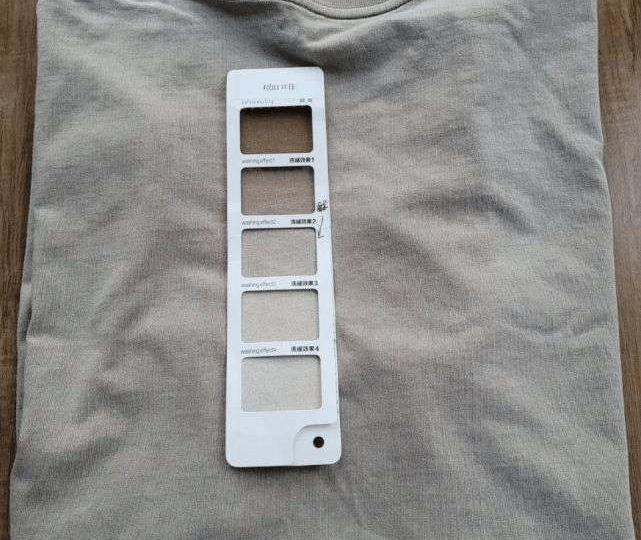
In heavyweight garment production, industrial washing has become a key step in turning heavy cotton tees from stiff blanks into soft, wearable products. It is now a core part of development rather than just finishing, directly affecting softness, drape, durability, and overall look—especially for 280gsm, 320gsm, and 385gsm T-shirts used in streetwear and premium basics. Techniques like enzyme wash and bio wash improve softness and reduce fuzziness, while garment wash stabilizes fit through pre-shrinking and cleaning residual chemicals. Silicone wash further enhances smoothness and gives heavyweight cotton a more premium hand-feel without losing structure.
At the same time, washing defines the garment’s visual identity. Stone wash creates a faded, worn-in vintage effect, while acid wash delivers bold, high-contrast finishes for stronger fashion expression. Together, these processes allow heavy cotton tees to move beyond basic essentials and become design-driven pieces with texture and character. In modern apparel manufacturing, the right wash combination is often what elevates a heavyweight T-shirt into a premium, brand-defining product.
At Newasia Garment Co.,Ltd., industrial washing is integrated into our OEM production system to help global fashion brands achieve consistent, scalable garment finishing results.
We are also a manufacturing partner of brands such as American Eagle Outfitters, Uniqlo, Zara, Gap, Levi’s, and Lee, where strict wash consistency and premium handfeel standards are required for global retail distribution.
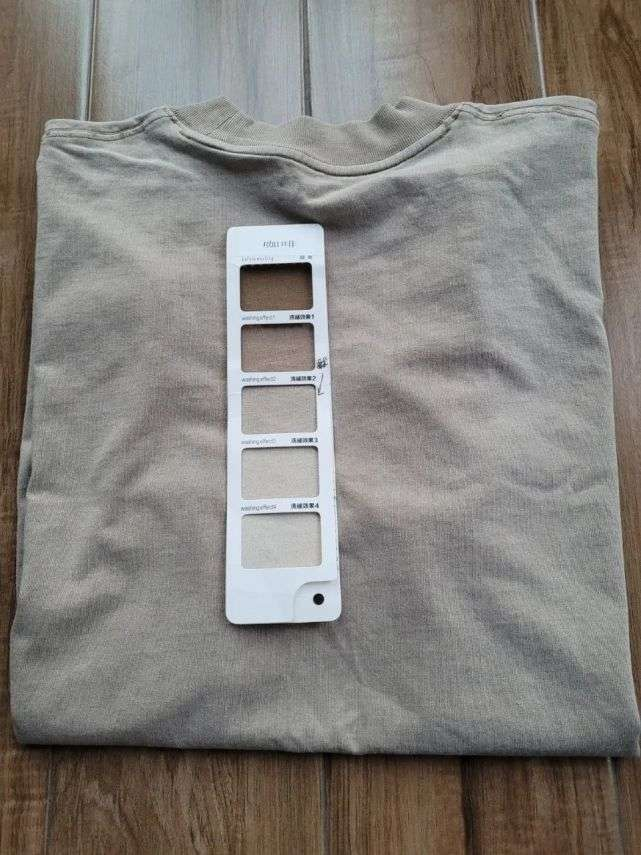
Why Industrial Washing Matters for Heavy Cotton T-Shirts
Heavy cotton fabrics are naturally dense and structured. While this gives them a premium look, it can also create issues such as:
- Stiff hand feel
- Shrinkage after first wash
- Excess surface fuzz
- Lack of comfort
- Flat or “raw” appearance
Industrial washing solves these problems by transforming raw garments into wear-ready, premium-quality finished products.
Key Benefits of Industrial Washing
- Improved softness and comfort
- Unique vintage or washed aesthetics
- Reduced shrinkage
- Better color depth and variation
- Higher perceived brand value
- Increased customer satisfaction
For fashion brands, this directly translates into higher conversion rates and more wholesale inquiries.
Garment Wash Types and Their Uses (Heavy Cotton Tees)
| Wash Type | What It Does | Best For |
|---|---|---|
| Enzyme Washing (Biopolishing) | Uses natural enzymes to remove micro-fibers, smooth fabric surface, reduce fuzz and pilling, and improve softness | Premium heavyweight T-shirts, streetwear basics, high-quality cotton garments |
| Garment Washing (Standard Industrial Wash) | Pre-washes finished garments to remove shrinkage risk, stabilize sizing, and improve comfort | Mass production tees, private label basics, export-quality apparel |
| Stone Washing | Uses pumice stones in industrial machines to create abrasion, fading, and a worn texture | Vintage streetwear, retro fashion, distressed heavyweight cotton tees |
| Acid Washing | Chemical treatment creates high-contrast, uneven fading patterns for bold visual effects | Statement streetwear, edgy fashion collections, 80s/90s inspired styles |
| Silicone Softener Wash | Applies silicone finish to improve smoothness, drape, and hand-feel without weakening fabric | Premium heavyweight tees, elevated basics, luxury streetwear |
| Pigment Dye + Wash | Garment is pigment dyed then washed to remove excess dye, creating natural fading and texture | Vintage streetwear, washed color collections, casual fashion brands |
| Reactive Dye + Wash | Deep dyeing process followed by washing for better color fastness and cleaner finish | Premium basics, solid-color heavyweight tees, export garments |
| Enzyme + Silicone Combined Wash | Combines fiber smoothing (enzyme) with surface softening (silicone) for maximum comfort | High-end OEM/ODM streetwear, luxury heavyweight T-shirts |
| Overdyed Wash (Garment Dye Wash) | Garment is dyed after construction and washed for layered, rich color effects | Fashion-forward brands, premium streetwear, designer collections |
| Industrial Pre-Shrinking Wash | Stabilizes fabric before sale to prevent shrinkage and ensure consistent sizing | Export production, retail-ready basics, large-scale manufacturing |
Why Washing Consistency Is the Biggest Manufacturing Challenge
One of the most difficult aspects of industrial washing is batch consistency control.
Even small variations in:
- temperature
- chemical concentration
- drum rotation speed
- washing duration
can lead to:
- color deviation
- inconsistent softness
- uneven fading
This is why many brands rely on experienced OEM manufacturers rather than small workshops.
How to Choose the Right Industrial Washing Technique
Different washing methods create different effects. Here’s a quick guide:
- Soft luxury basics → Enzyme + silicone wash
- Vintage streetwear → Stone wash / pigment wash
- High fashion distress → Acid wash
- Premium stable basics → Reactive dye + pre-shrink wash
- Unique fashion collections → Overdyed wash
How Leading Brands Control Washing Quality
Global brands require extremely strict washing standards across production batches.
At Newasia Garment Co.,Ltd., we follow standardized industrial control systems including:
- pre-production wash testing
- lab dip validation
- pilot washing runs
- batch-level quality inspection
- fabric shrinkage measurement
This ensures consistent results across large-scale production for international markets.
Our experience working with brands such as Uniqlo, Zara, Levi’s, Gap, American Eagle Outfitters, and Lee has strengthened our ability to meet global wash consistency requirements.
Industrial Washing Workflow at Newasia Garment Co.,Ltd.
At Newasia Garment Co.,Ltd., we follow a strict industrial washing system:
- Fabric inspection before washing
- Pre-treatment (desizing & cleaning)
- Enzyme or bio wash application
- Controlled temperature washing (40–60°C)
- Softener treatment (silicone or bio softeners)
- Hydro extraction
- Industrial drying & finishing
- Final quality inspection
This ensures every garment meets international quality standards.
Industrial Washing Experiment: Heavy Cotton Tees (Real Results)
We conducted controlled wash tests on heavyweight cotton T-shirts (280gsm, 320gsm, 385gsm) using three industrial washing methods: enzyme wash, stone wash, and acid wash. Each sample was tested through five wash cycles with tumble drying to simulate real consumer wear and long-term garment performance. Results reflect typical outcomes observed in production-level finishing for heavy cotton tees.
| Fabric Type (Heavy Cotton Tees) | Enzyme Wash Result | Stone Wash Result | Acid Wash Result | Best Use Case |
|---|---|---|---|---|
| 280gsm Cotton Jersey | Noticeably softer hand-feel, reduced fuzz, slight natural fading | Mild abrasion, soft vintage texture, ~2–3% shrinkage | Uneven fading, stronger contrast, slightly rough surface | Everyday streetwear tees, retail basics |
| 320gsm Heavy Cotton Jersey | Smooth surface, improved drape, balanced softness | Clear worn-in texture, visible fading, moderate structure loss | High-contrast visual effect, slight fiber weakening | Premium streetwear, washed essentials |
| 385gsm Ultra Heavy Cotton | Softens stiffness without losing structure, clean premium feel | Strong texture development, heavy vintage look, controlled shrinkage (~3–5%) | Bold distressed appearance, risk of uneven wear if overprocessed | Luxury heavyweight tees, high-end blank programs |
Key Observation:
Across all heavyweight cotton categories, enzyme wash consistently delivered the best balance of softness and fabric integrity, especially for 385gsm tees where structure must be preserved. Stone wash created the strongest vintage identity but introduced higher shrinkage and texture distortion, while acid wash provided the most aggressive visual effect but required strict control to avoid fabric damage.
In real production scenarios, combining enzyme + silicone finishing often produces the most commercially stable result for heavy cotton tees, offering both comfort and premium hand-feel without compromising durability.
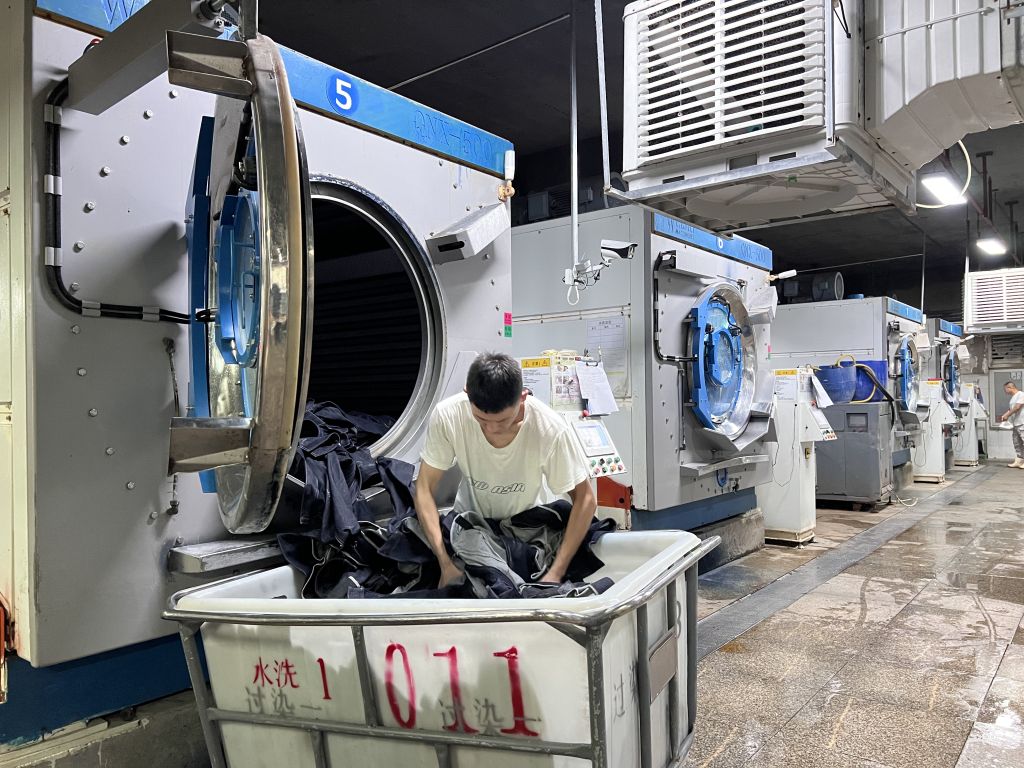
Newasia Garment Co.,Ltd. Industrial Washing Solutions
| Common Problem | Solution | Newasia Garment Co.,Ltd. Approach |
|---|---|---|
| Fabric Damage | Use controlled washing methods instead of harsh chemical or over-aggressive processes | We apply optimized enzyme formulations with low-impact washing cycles and conduct pre-production fabric testing to protect fiber strength while achieving softness |
| Color Inconsistency | Standardize dye formulas and machine settings | We use digital color matching systems, fixed machine calibration protocols, and pre-shipment color approval to ensure consistent results across all batches |
| Excess Shrinkage | Apply pre-shrinking treatment before finishing | We integrate industrial pre-shrinking and relaxation washes, plus controlled tumble-dry simulation to guarantee stable sizing in production |
| Pilling After Washing | Use better yarn and surface treatment | We use combed ring-spun cotton as a base standard and apply enzyme polishing to improve surface smoothness and reduce fiber pilling over time |
Production Considerations for Brands (Vintage Washing)
| Key Factor | Why It Matters | Newasia Garment Co.,Ltd. Solution |
|---|---|---|
| Shrinkage Tolerance | Vintage washing can alter fabric dimensions, making size consistency critical | We conduct pre-production shrinkage testing and controlled industrial pre-shrinking to ensure all garments stay within approved size specs |
| Color Fastness | Washing, dyeing, printing, and embroidery may react differently after garment wash | We perform fabric-to-finish testing (dye, print, embroidery) after wash cycles to guarantee stable color performance and durability |
| MOQ Flexibility | Specialized wash processes increase setup cost and require production efficiency | We offer scalable low MOQ production, allowing brands to test vintage wash styles without high upfront inventory risk |
| Consistency | Manual washing variations can cause uneven color and texture results | We use standardized machine-controlled wash systems to ensure batch-to-batch consistency across all production runs |
At Newasia Garment Co.,Ltd., we support small-batch and flexible production, making us a low MOQ clothing manufacturer ideal for emerging brands developing vintage-washed streetwear and heavyweight cotton collections.
Case Studies & Applications
- Streetwear Capsule Drops: Brands use enzyme + pigment wash to create one-of-a-kind hoodies with unique tones.
- Workwear-Inspired Jackets: Stone-washed denim remains the gold standard for authentic ruggedness.
- Sustainable Labels: Ozone wash appeals to eco-conscious consumers while saving water.
- Luxury Streetwear: Acid wash used sparingly on limited-edition runs to enhance exclusivity.
Our experience as a vintage clothing manufacturer allows us to advise brands on technique selection and long-term collection planning.
FAQ: Industrial Washing Techniques for Heavy Cotton Tees
Q1: What industrial washing techniques are used for heavy cotton tees?
Heavy cotton T-shirts typically use a combination of enzyme wash, garment wash, stone wash, acid wash, silicone wash, and specialized dye-wash processes. These techniques are used to control softness, shrinkage, texture, and visual effects in heavyweight fabrics such as 280gsm, 320gsm, and 385gsm cotton.
Q2: Why is enzyme washing commonly used?
Enzyme washing is one of the most important finishing methods for heavyweight cotton.
It works by removing surface micro-fibers through natural enzymes, resulting in a softer, cleaner fabric surface with reduced pilling and fuzziness. It is widely used for premium streetwear and basic heavyweight tees where comfort and durability are both required.
Q3: What is the purpose of garment washing?
Garment washing is a pre-treatment process applied to finished T-shirts before they reach customers.
It helps to:
- Stabilize fabric dimensions
- Reduce shrinkage risk
- Improve softness and comfort
- Create a natural lived-in feel
It is commonly used in mass production and private label manufacturing for consistent sizing.
Q4: How does stone washing affect heavy cotton tees?
Stone washing uses pumice stones inside industrial machines to create controlled abrasion on fabric surfaces.
It produces:
- Vintage worn texture
- Faded, aged appearance
- Strong visual depth
It is ideal for retro streetwear and distressed heavyweight cotton styles, but must be carefully controlled to avoid fabric damage.
Q5: What is acid washing used for?
Acid washing uses chemical treatment to partially bleach fabric surfaces, creating high-contrast and irregular fading effects.
It is mainly used for:
- Bold streetwear designs
- Fashion-forward statement pieces
- 80s/90s inspired collections
Due to its aggressive nature, strict production control is required for consistency.
Q6: What does silicone washing do?
Silicone washing is a finishing process that improves fabric smoothness and hand-feel.
It provides:
- Silky touch
- Improved drape
- Enhanced comfort
It is often combined with enzyme washing to achieve both softness and premium surface quality.
Q7: How do dye-wash techniques enhance heavy cotton tees?
Processes such as pigment dye + wash, reactive dye + wash, and overdyed washing are used to create depth and variation in color.
They help achieve:
- Vintage faded effects
- Unique garment character
- Rich layered tones
Each piece may have slight variation, adding exclusivity to the final product.
Q8: How are shrinkage and consistency controlled in industrial washing?
Heavy cotton tees require strict process control to maintain sizing and quality after washing.
This is managed through:
- Industrial pre-shrinking treatments
- Standardized machine settings
- Batch testing and wash simulation
These steps ensure consistent fit and performance across production runs.
Q9: Where are industrial washing processes typically carried out?
Industrial washing is performed in specialized garment washing facilities within vertically integrated manufacturing systems.
For example, at Newasia Garment Co.,Ltd., all washing processes are supervised by quality control teams to ensure consistency, color stability, and fabric performance across all heavyweight cotton T-shirt production.
Certified Professional Clothing Producer
We are very proud of these certificates! They represent Newasia Garment Co.,Ltd. ’s amazing achievements and accreditations. They show how much we care about quality, safety, and professionalism.
We’re proud to say that we have obtained BSCI and ISO 90001 certificates, and inspection certificates for filling materials such as down and cotton. We follow international standards throughout our production process and take responsibility for the quality of our products.
As one of China’s leading clothing manufacturers, we are pleased to be recognized by respected organizations. These certifications underscore our reliability as a trusted supplier to the global apparel industry.
Trusted Certificates:

Why Choose Us
 Independent base We have our own laboratory and can independently develop fabrics , China  Professional certification Certification: ISO 9001, ISO 14001,BSCI,GRS |  Full-equipped Full-equipped, from fiber manufacturing, yarn spinning, weaving, dyeing and processing to finished product production  Rich experience Professional, large and experienced design team, combined with the latest artificial intelligence technology |  Our Facilities 12,000 skilled employees, daily production capacity exceeds 100,000 pieces  Fashion exhibition Participated in domestic and foreign fashion weeks and exhibitions many times |
Trusted by Global Clients











How Do We Guarantee the Quality
Our quality assurance begins with designing and planning, then continues through every step of the production and post-production inspections. Delivery is not an ending. We still offer money-back guarantee for quality issues.
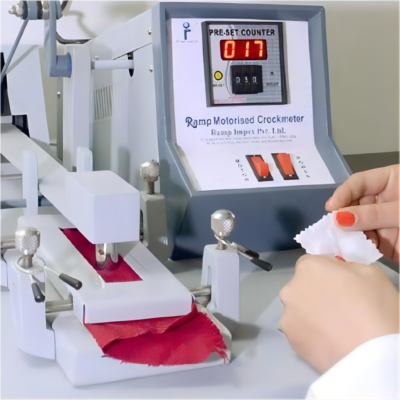
When sourcing fabrics, we will check all related fabric certificates from our suppliers.
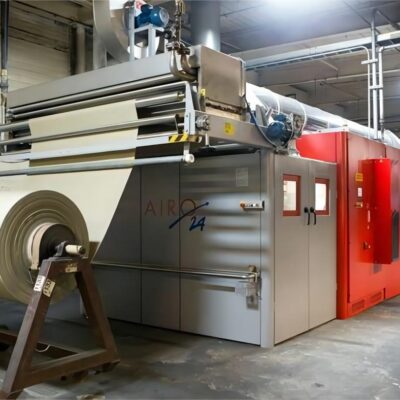
We make sure the fabric is well pre-washed to meet the standards before cutting.
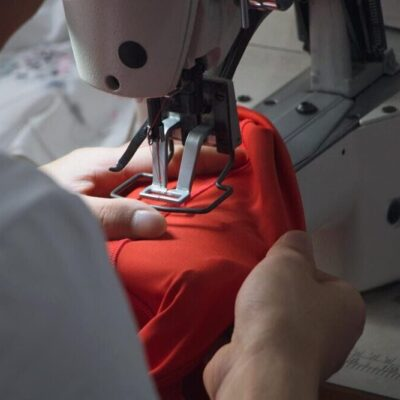
All our workers are well-trained and have many years of experience in the garment industry. They are all local workers with high stability.
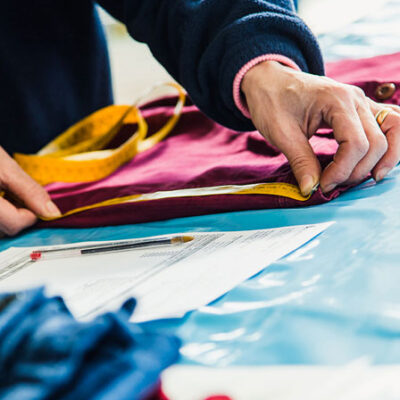
Our quality team will follow SOPs to conduct five times of quality checks before shipping.
Industrial Washing Techniques for Heavy Cotton Tees
✔️ Core Techniques: Enzyme wash, garment wash, stone wash, acid wash, silicone wash, pigment dye wash
✔️ Purpose: Improve softness, control shrinkage, create vintage effects, and enhance fabric performance
✔️ Fabric range: 280gsm / 320gsm / 385gsm heavy cotton tees
✔️ Application: Suitable for streetwear, premium basics, and vintage-inspired collections
✔️ Finishing options: Softening, fading, distressing, and surface refinement effects available
✔️ Production control: Machine-based standardized washing for consistent batch results
Want a custom washing effect or fabric finish for your brand collection? [📩Contact Us Now]
Process Overview & Production Control
✔️ Enzyme & Bio Wash: Softens fabric, removes fuzz, improves comfort
✔️ Garment Wash: Pre-shrinks fabric, stabilizes sizing, enhances wearability
✔️ Stone Wash: Creates vintage texture and natural worn-in look
✔️ Acid Wash: Produces high-contrast, fashion-forward distressed effects
✔️ Silicone Wash: Enhances smoothness, drape, and premium hand-feel
✔️ Dye + Wash Processes: Adds depth, fading, and unique garment character
All washing techniques are carefully controlled through industrial machines and quality checkpoints to ensure consistent results across production batches.
Shipping & Production Support
✔️ Sample : Global shipping, production cycle 5-10 days
✔️ Custom washed production: Lead time 15–30 days depending on wash complexity
✔️ Export handling: Full documentation provided for smooth customs clearance
✔️ Production flexibility: Small-batch testing and scalable bulk manufacturing available
✔️ Dropshipping: Available upon request for selected wholesale partners
All heavyweight cotton tees are processed under strict quality control to ensure stable shrinkage, consistent color performance, and premium finishing results suitable for global wholesale and private label brands.
Conclusion
Industrial washing techniques for heavy cotton tees are essential for transforming raw garments into premium, market-ready fashion products.
From enzyme washing to stone washing, each technique creates a different aesthetic, texture, and value level. The right combination can significantly elevate your brand positioning and increase customer demand.
If your goal is to build a strong apparel brand in the streetwear or premium basics market, investing in professional industrial washing is no longer optional—it is a competitive necessity.
Looking for Custom Heavy Cotton T-Shirt Manufacturing?
We specialize in OEM/ODM production of heavyweight cotton T-shirts with advanced industrial washing techniques, including:
- Enzyme wash & silicone finish
- Stone wash & vintage effects
- Pigment dye & overdyed garments
- Pre-shrunk heavyweight tees
- Custom branding & private label
Contact us for samples, pricing, and bulk production support.
- How to Validate Pocket Function and Placement Before Bulk Production
- How to Standardize Fabric Hand Feel Across Production Lots
- Movement Fit Testing for Apparel: How to Check Ride-Up, Slippage, and Range of Motion
- Pre-Production Sample Approval: What Brands Should Lock Before Bulk Production
- Custom Sports Jersey Manufacturing Quality Control: A Global Manufacturing Guide